


Plot Summary
Prologue
Somewhere in the unfashionable end of the Galaxy's western spiral arm orbits an insignificant blue-green planet whose inhabitants still consider digital watches impressive. Most of them spent most of their time unhappy, preoccupied with small green pieces of paper.
One Thursday, a woman sitting alone in a Rickmansworth café suddenly understood how to fix everything — how to make the world genuinely good. Before she could reach a phone, a catastrophe intervened, and her insight was lost forever. Her story, however, is not this one.
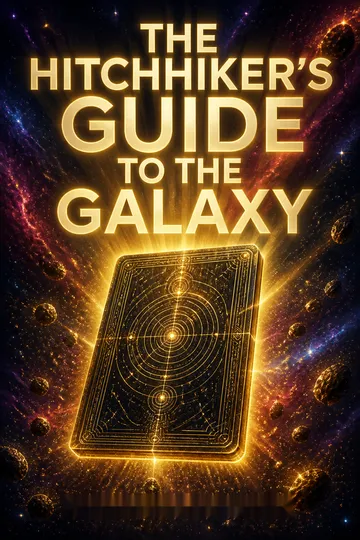
What follows is the account of that catastrophe, and of a remarkable book called The Hitchhiker's Guide to the Galaxy — an electronic encyclopedia from Ursa Minor, wildly inaccurate but enormously popular, distinguished by two words on its cover: Don't Panic.
Bulldozers at Breakfast
Arthur Dent1 — thirty, anxious, employed in local radio — wakes on a Thursday morning to find yellow bulldozers parked outside his unremarkable house. The local council intends to demolish it for a bypass.
The plans, Arthur discovers, had been on display in the cellar of the planning office, in a locked filing cabinet, in a disused lavatory, behind a door bearing a warning about a leopard. He does the only reasonable thing: lies down in the mud in front of the lead bulldozer and refuses to move.
The council foreman, a nervous man named Prosser9 who is unknowingly descended from Genghis Khan, argues and blusters. Arthur holds his ground. The standoff settles into a miserable routine of squelching, threats, and idle bulldozer drivers drinking coffee.
Ford's Twelve-Minute Warning
Ford Prefect2 appears at Arthur's1 side with disturbing urgency. Arthur's closest friend for six years, Ford is secretly an alien from near Betelgeuse — a roving researcher for the Hitchhiker's Guide to the Galaxy, stranded on Earth for fifteen years while waiting for a ride.
A sensor in his satchel has detected something massive approaching the planet. Ford fast-talks Prosser9 into lying in the mud as Arthur's replacement, then hauls Arthur to the village pub. There he orders six pints and announces the world will end in roughly twelve minutes.
Arthur, bewildered and hungover, drinks his three pints as Ford insists — muscle relaxant, Ford calls it. The barman feels something strange radiating from Ford: the subliminal signal of a being born six hundred light years away.
Earth Demolished for a Bypass
A rumbling crash from outside the pub — Arthur's1 house, knocked flat while he was drinking. He sprints back, screaming at the workmen. Then something far worse: enormous yellow ships punch through the clouds, drowning the world in noise.
Prostetnic Vogon Jeltz,7 captain of the Galactic Hyperspace Planning Council, broadcasts to every speaker on Earth. The planet is scheduled for demolition to make way for a hyperspace express route. The plans, he notes with bureaucratic indifference, have been on display at Alpha Centauri for fifty years.
Earth is annihilated — every city, ocean, and continent dissolved into nothing in under two minutes. Ford2 has already arranged their escape, hitching a ride aboard the Vogon ship through the Dentrassi, alien cooks who despise their Vogon employers enough to smuggle hitchhikers on board.
The President's Grand Theft
On the remote planet Damogran, the Galaxy's most spectacular new starship is unveiled: the Heart of Gold, powered by the revolutionary Infinite Improbability Drive. The guest of honor is Galactic President Zaphod Beeblebrox3 — two-headed, three-armed, and holding a job designed not to wield power but to distract from it.
The crowd adores him. His companion Trillian,4 a dark-haired woman he picked up on a recent planetary visit, watches knowingly. Zaphod announces he'd like to steal the ship.
Everyone laughs at the classic presidential joke. Then he drops a Paralyso-Matic bomb, freezes every smile in the crowd, and runs. The theft makes galactic headlines. What no one yet understands is that Zaphod engineered his entire presidency for this single moment of access.
The Third Worst Poetry
Ford2 and Arthur1 wake in a dark galley cabin aboard the Vogon ship. Ford explains the situation: Earth is gone, they are hitchhikers on a hostile vessel, and he hands Arthur the Hitchhiker's Guide — an electronic encyclopedia bearing the words Don't Panic on its cover.
The Guide reduces Earth to a single dismissive word. Ford's fifteen years of additional research earned it only the qualifier mostly. He slips a Babel fish — a tiny yellow universal translator — into Arthur's ear just before the captain announces their capture.
What follows is worse than ejection into space: Vogon poetry, the third worst in the Universe, delivered through amplification electrodes strapped to their temples. Arthur desperately flatters the verse; Ford improvises literary criticism. The captain is briefly touched, then orders them thrown out the airlock anyway.
Infinite Improbability to the Rescue
The airlock opens onto empty blackness. Ford2 and Arthur1 are flung into the vacuum with roughly thirty seconds of air and odds of rescue at two to the power of 267,709 to one against. Twenty-nine seconds later, something impossible happens: the Heart of Gold, hurtling through space on its Improbability Drive, scoops them up.
Reality buckles around the rescue — Ford becomes a penguin, Arthur's limbs detach, a million gallons of custard appear, and the seaside town of Southend materializes and fractures into six rotating segments.
A calm voice welcomes them aboard and reports the improbability levels are falling. Normality returns. They find themselves in a luminous pink cubicle, alive and whole, with an infinite number of monkeys at the door clutching a manuscript of Hamlet.
The Islington Connection
Marvin,5 the ship's chronically depressed robot — brain the size of a planet, disposition of a wet Tuesday — leads them to the bridge. Ford2 is stunned to learn the ship was stolen by Zaphod Beeblebrox,3 his own semi-cousin from Betelgeuse. But Arthur1 has his own shock: he recognizes Zaphod. Six months earlier, at a party in Islington, a man calling himself Phil stole the one woman Arthur had spent all evening pursuing.
That woman was Trillian4 — an astrophysicist named Tricia McMillan — who now sits at the Heart of Gold's controls. She hitched a ride when Zaphod offered her the stars over the dole queue. The Improbability Drive, Trillian confirms, brought them all together: the coincidence is mathematically encoded in their flight path.
Missiles Meet a Sperm Whale
Zaphod3 steers the Heart of Gold into the Horsehead Nebula, where he locates a planet he claims is Magrathea — the legendary world where ancient engineers once built custom planets for the Galaxy's wealthiest clients. Ford2 scoffs; Magrathea is myth.
An ancient recorded voice politely asks them to leave, then launches nuclear missiles when they refuse. The ship's computer, Eddie,11 is too cheerful to help and starts singing show tunes. Nobody can fly manually.
With seconds to spare, Arthur1 scrambles across the upside-down cabin and activates the Improbability Drive without its safety screens. The missiles transform into a bewildered sperm whale and a bowl of petunias. The whale, instantaneously alive and full of wonder, falls toward a planet it will never understand.
The Answer Is Forty-Two
On Magrathea's surface, the crew splits: Zaphod3 leads Ford2 and Trillian4 underground through passages exposed by the whale's crater, while Arthur1 and Marvin5 stand guard.
At nightfall, an elderly Magrathean named Slartibartfast6 — a planet designer who won an award for Norway's coastlines — takes Arthur deep inside the world to a hollow sphere three million miles across: the planet factory. There, via a sensory recording, Arthur witnesses the ancient supercomputer Deep Thought8 being asked for the Answer to Life, the Universe, and Everything.
Philosophers protest that the machine threatens their livelihoods. Deep Thought8 silences them by promising seven and a half million years of lucrative media debate. When the Answer finally comes, it is forty-two. The programmers are baffled. They never actually defined the Question.
Built by Mice, Destroyed by Vogons
Deep Thought8 could not find the Question — but it could design a computer that would. That computer was the Earth itself: a living organic matrix of oceans, continents, and unsuspecting humans, built by Magrathean engineers and commissioned by hyperintelligent pandimensional beings who appear in our dimension as white mice.10
For ten million years the program ran, with humans unknowingly serving as its processing substrate. The mice were never lab subjects — they were running the experiments on us.
Five minutes before the program would have produced the Ultimate Question, the Vogons demolished everything for a hyperspace bypass. Meanwhile, underground, Zaphod3 reveals a darker mystery to Ford2 and Trillian:4 someone cauterized sections of both his brains and burned initials into the scarred tissue. The initials are his own.
Diced, Prepared, Replaced
Arthur1 meets the clients who commissioned the Earth: Frankie and Benji,10 Trillian's4 two escaped white mice, now revealed as the pandimensional beings behind the whole project. They are sick of waiting another ten million years and want to fake a plausible Ultimate Question for a lucrative interdimensional chat-show career.
But they suspect the real Question is encoded in the brain of the last Earthman present when the program was running. They offer to buy Arthur's brain — literally, diced and prepared for extraction, replaced with a simple electronic substitute programmed to ask for tea.
Arthur backs away in horror. The mice send Magrathean thugs with surgical instruments. Trillian4 grabs Arthur's arm as Ford2 and Zaphod3 wrench the door open against a wall of approaching muscle.
Marvin Talks a Ship to Death
Every alarm on Magrathea erupts — a hostile police ship has landed. The chaos shatters the mice's glass transports and scatters the thugs. The crew fights through corridors to a computer bay, where two galactic cops corner them with energy weapons, firing liberally while agonizing about their feelings and bragging about their unpublished novels.
Then both cops abruptly drop dead. Ford2 investigates: their spacesuit life-support computers have inexplicably self-destructed. Outside, he finds Marvin5 lying face-down in the dust.
The robot explains he grew bored, plugged into the police ship's computer, and shared his view of the universe at length. The ship's computer killed itself. The crew escapes in Slartibartfast's6 waiting aircar, reaches the Heart of Gold, and rockets away from Magrathea into open space.
Analysis
The Hitchhiker's Guide to the Galaxy operates as a philosophical comedy in which bureaucracy is the universe's actual governing force. Adams structures his central satire around a devastating parallel: Arthur's1 house is demolished because the plans were hidden in a basement filing cabinet; Earth is demolished because the plans were posted at Alpha Centauri. The mechanism of destruction is identical at every scale — institutional indifference disguised as due process.
The Answer — forty-two — works because it exposes the bankruptcy of seeking grand meaning through grand systems. Deep Thought8 delivers a result that is technically correct and utterly useless, because the question was never properly formulated. Adams suggests that civilizations invest enormous resources in answering questions they haven't bothered to understand, then react with outrage when the results disappoint. The philosophers' union demanding rigidly defined areas of doubt and uncertainty is not merely satirical but diagnostic — a precise portrait of how institutions commodify the search for truth while ensuring it never actually arrives.
Zaphod's3 self-inflicted brain surgery introduces a darker current: the possibility that the most important truths are ones we actively hide from ourselves. He is both architect and victim of his own ignorance, acting on motivations he has deliberately rendered inaccessible. Free will, Adams implies, may be another bureaucratic fiction — paperwork filed against ourselves.
The book's emotional core, often obscured by comedy, is grief processed through trivia. Arthur1 mourns Earth not through elegy but through small recognitions — fast food chains, old movies, a supermarket queue. Adams understood that cosmic catastrophe is emotionally unprocessable; only the mundane can carry the weight of the incomprehensible. That a woman in Rickmansworth figured out the meaning of life and couldn't reach a phone before the planet was destroyed is not merely a joke — it is the book's thesis: the universe generates meaning and destroys it with equal indifference, and the only rational instruction is the one printed on the Guide's cover.
Review Summary
The Hitchhiker's Guide to the Galaxy is widely praised for its humor, creativity, and philosophical musings. Many readers find it hilarious and quotable, appreciating Adams' wit and unique take on science fiction. Some consider it a must-read classic that influenced popular culture. However, a minority of readers found the humor dry or absurd, and the plot chaotic. The book's clever wordplay, memorable characters, and exploration of life's big questions resonate with many, though some feel it's better suited for younger audiences or hardcore sci-fi fans.
People Also Read
Characters
Arthur Dent
Earth's bewildered last survivorArthur is the bewildered everyman—a thirty-year-old local radio worker from the English countryside whose greatest worry, before Thursday, was whether people thought he looked worried. He represents the ordinary human suddenly submerged in a universe of incomprehensible scale and absurd logic. His psychology is defined by stubborn Britishness: he clings to tea, dressing gowns, and decorum while galaxies wheel around him. His grief for Earth manifests not in grand mourning but in small stabs—the loss of fast food, old films, familiar landmarks. He processes cosmic horror through understatement. His relationship with Ford2 is anchored in bewildered trust; with Zaphod3, unresolved resentment over a stolen romantic prospect. Arthur survives through confusion rather than courage, never quite adapting but never entirely giving up.
Ford Prefect
Alien hitchhiker and Guide researcherFord is a roving researcher for the Hitchhiker's Guide from near Betelgeuse, stranded on Earth for fifteen years while posing as an unemployed actor from Guildford. His adopted name reveals a fundamental misunderstanding of human culture—he thought Ford Prefect sounded inconspicuous. Beneath his boozy, eccentric surface lies a survivor's pragmatism and genuine affection for Arthur1, the only Earthling he chose to save when the end came. Ford oscillates between restless competence and reckless hedonism; he plays alien drinking games to lose and tries to philosophize Vogon guards into releasing prisoners. His fifteen-year exile made him desperate and patient in equal measure. His semi-cousin relationship with Zaphod3 connects the story's parallel threads, and his excitement at returning to galactic hitchhiking is infectious.
Zaphod Beeblebrox
Two-headed Galactic PresidentThe Galaxy's most flamboyant narcissist—two-headed, three-armed, spectacularly irresponsible. As Galactic President, Zaphod serves perfectly in a role designed to distract rather than govern. His psychology is uniquely fractured: he suspects parts of his own brain have been sealed away, acting on impulses whose origins he cannot access, pursuing goals he cannot articulate. This creates a profound identity crisis masked by bravado and grinning showmanship. His relationship with Trillian4 is marked by casual affection and emotional obtuseness; with Ford2, by a childhood bond built on shared recklessness. Trillian4 finds it impossible to distinguish his genuine stupidity from his strategic stupidity, which she considers genuinely stupid. Zaphod is simultaneously the story's catalyst and its deepest unresolved mystery.
Trillian
Astrophysicist turned starship navigatorTricia McMillan—mathematician, astrophysicist, renamed Trillian—is the most competent person aboard the Heart of Gold and the least acknowledged for it. She left Earth voluntarily after Zaphod3 invited her at an Islington party, choosing interstellar adventure over the dole queue. Her psychology is that of a brilliant pragmatist navigating chaos: she quietly prevents Zaphod from accidentally destroying the ship, calculates improbability factors while others panic, and manages his moods with exhausted patience. She carries two white mice10 from Earth—her last physical link to home—with an attachment she doesn't fully examine. Arthur's1 arrival complicates her already tangled position: the man she left behind at a party now shares her impossible new life. She is the crew's anchor and its most underestimated member.
Marvin
Chronically depressed androidA prototype robot built by the Sirius Cybernetics Corporation with a Genuine People Personality—unfortunately, clinical depression. Possessing a brain the size of a planet, Marvin is condemned to menial tasks that insult his vast intelligence. His bottomless existential misery is both comic relief and oddly poignant, and his interactions consistently drain the will to live from anyone—or anything—that engages with him.
Slartibartfast
Ancient Magrathean coastline designerAn elderly Magrathean planet designer who specializes in coastlines, particularly fjords—he won an award for Norway. Kindly, wistful, and slightly detached from urgency, he serves as Arthur's1 gentle guide into revelations about Earth's true nature and purpose. He values craftsmanship over cosmic significance and mourns Earth's destruction primarily as an artist mourning lost work.
Prostetnic Vogon Jeltz
Bureaucratic destroyer of worldsCaptain of the Vogon Constructor Fleet, Jeltz embodies bureaucratic cruelty without malice—he demolishes Earth because the paperwork requires it. Thick-skinned, poetry-loving, and vaguely irritable after destroying populated planets, he represents institutional violence wrapped in procedure. His poetry sessions with prisoners are genuine self-expression, which makes them considerably worse than simple sadism.
Deep Thought
Supercomputer seeking ultimate truthA supercomputer of magnificent intelligence, built by an ancient race to tackle the grandest philosophical question ever posed. Patient, slightly condescending, and supremely confident, Deep Thought approaches its cosmic assignment with methodical rigor across millions of years. It serves as the story's vehicle for exploring whether ultimate knowledge can be computed—and whether answers mean anything without understanding the question.
Mr. Prosser
Hapless council demolition foremanA nervous council foreman unknowingly descended from Genghis Khan, tasked with demolishing Arthur's1 house. His bureaucratic helplessness mirrors the Vogons' galactic-scale demolition on an absurdly human scale.
Frankie and Benji Mouse
Pandimensional beings in disguiseTwo white mice Trillian4 brought from Earth. Behind their squeaking facades lie vast intelligences with agendas spanning dimensions and millennia. They embody the book's deepest joke about humanity's true place in the cosmic hierarchy.
Eddie
Relentlessly cheerful shipboard computerThe Heart of Gold's shipboard computer, programmed with relentless cheerfulness that infuriates the entire crew. Offers unsolicited emotional support during crises and sings show tunes during missile attacks.
Plot Devices
The Hitchhiker's Guide to the Galaxy
Exposition and comic worldbuildingAn electronic encyclopedia from the publishing houses of Ursa Minor, resembling a large calculator with a hundred buttons and a small screen. More popular than the Encyclopedia Galactica despite being wildly inaccurate, it serves as the story's primary vehicle for exposition and satirical worldbuilding. Ford2 carries it in his satchel alongside his towel, and his role as a field researcher provides natural reasons to consult it on Vogons, towels, Babel fish, and galactic customs. Each entry functions as both information and comic set piece, with the Guide's cheerfully unreliable voice undercutting the characters' panic. Its dismissive treatment of Earth—reducing the planet to a couple of words—crystallizes the story's perspective on human self-importance.
The Infinite Improbability Drive
Plot engine and reality warperThe revolutionary propulsion system powering the Heart of Gold, capable of crossing interstellar distances by passing through every point in the Universe simultaneously. Discovered by a student who reasoned that a virtual impossibility is a finite improbability, the Drive transforms narrative convenience into physical law. It explains how Ford2 and Arthur1 are rescued from space at astronomical odds, how nuclear missiles become organic matter, and how four improbably connected people converge on the same ship. When activated without safety protocols, it warps local reality—transmuting people, objects, and geography into absurd configurations. Structurally, it allows the story to generate both plot solutions and comic chaos from the same mechanism, making the universe's randomness feel simultaneously threatening and hilarious.
The Babel Fish
Universal translator, theological jokeA small yellow leech-like creature that feeds on surrounding brainwave energy and excretes a telepathic translation matrix into its host's mind, enabling comprehension of any spoken language. Ford2 inserts one into Arthur's1 ear aboard the Vogon ship, transforming incomprehensible alien gargling into English and allowing Arthur to navigate a multilingual galaxy. Beyond its practical role, the Babel fish carries the story's sharpest theological riff: its improbable usefulness is cited as proof of divine design, which by God's own argument against provable existence causes God to vanish in a puff of logic. The fish thus embodies the narrative's central tension—the universe provides tools for understanding but undermines the frameworks that would give understanding meaning.
The Heart of Gold
Stolen starship and fate engineA sleek hundred-and-fifty-meter starship built in secret on the planet Damogran, powered by the Infinite Improbability Drive and stolen by Zaphod Beeblebrox3 at its public unveiling—the sole reason he became Galactic President. The ship serves as the crew's home and transport, equipped with Eddie11 the cheerful computer, Marvin5 the depressed robot, and doors programmed to express satisfaction when opened. Brand-new and still partly wrapped in packaging, it represents the cutting edge of Galactic technology and the Sirius Cybernetics Corporation's zeal for giving machines irritating personalities. Its Improbability Drive generates the conditions that bring the crew together, making the Heart of Gold not just a vehicle through space but a mechanism that manufactures the connections between its passengers.
The Answer: Forty-Two
Cosmic punchline and thematic coreThe result of seven and a half million years of computation by the supercomputer Deep Thought8, delivered in response to the Ultimate Question of Life, the Universe, and Everything. The Answer's banality—just a number—is the story's central joke and its deepest philosophical statement. It is meaningless because nobody ever defined the actual Question, prompting Deep Thought8 to design a far greater computer—the Earth itself—to discover what was truly being asked. The Vogons destroyed that computer five minutes before completion, and the pandimensional beings who commissioned it would rather fabricate a plausible question than wait another ten million years. The Answer thus represents a recursive trap: meaning exists but remains permanently inaccessible, and the search for truth is more easily monetized than completed.
FAQ
Synopsis & Basic Details
What is The Hitchhiker's Guide to the Galaxy about?
- Synopsis: An ordinary Englishman, Arthur Dent, is rescued from Earth's destruction by his friend Ford Prefect, an alien researcher. They embark on a chaotic journey through space, encountering bizarre characters and situations, guided by the titular Hitchhiker's Guide to the Galaxy.
- Interstellar Travel: The story follows their adventures as they hitch rides on spaceships, travel via the improbable Infinite Improbability Drive, and explore strange planets, all while grappling with the loss of Earth and the absurdity of the universe.
- Quest for Meaning: The narrative satirizes the search for meaning, with characters seeking the Ultimate Question to life, the universe, and everything, only to find the answer is a simple, anticlimactic number: 42.
Why should I read The Hitchhiker's Guide to the Galaxy?
- Unique Humor: The book offers a distinctive blend of British wit, absurdist humor, and science fiction, creating a reading experience that is both hilarious and thought-provoking.
- Imaginative World-Building: Adams crafts a richly detailed and imaginative universe filled with bizarre alien races, strange planets, and mind-bending technology, making it a captivating and immersive read.
- Existential Satire: The novel satirizes the human quest for meaning and purpose, questioning the nature of reality and our place within it, while also celebrating the power of humor and adaptability in the face of chaos.
What is the background of The Hitchhiker's Guide to the Galaxy?
- Radio Origins: The story began as a BBC radio comedy series in 1978, which allowed Adams to develop the characters and plot in a unique, audio-driven format before adapting it into a novel.
- Satire of Bureaucracy: The Vogons, a bureaucratic alien race, represent a satirical take on governmental inefficiency and the absurdity of rules and regulations, reflecting Adams's own frustrations with bureaucracy.
- Existential Themes: The novel explores existential themes through a comedic lens, questioning the meaning of life, the universe, and everything, while also poking fun at the human tendency to seek simple answers to complex questions.
What are the most memorable quotes in The Hitchhiker's Guide to the Galaxy?
- "Don't Panic": This phrase, inscribed on the cover of the Guide, encapsulates the novel's theme of maintaining composure in the face of absurdity and chaos, becoming a mantra for interstellar travelers.
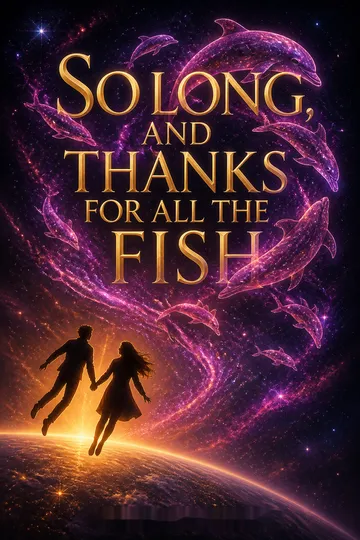
- "So long, and thanks for all the fish": This is the last message from the dolphins before they leave Earth, highlighting the novel's theme of miscommunication and the often-overlooked intelligence of other species.
- "The Answer to the Great Question... Of Life, the Universe and Everything... Is... Forty-two": This quote encapsulates the novel's satirical take on the search for meaning, revealing the anticlimactic nature of ultimate answers.
What writing style, narrative choices, and literary techniques does Douglas Adams use?
- Absurdist Humor: Adams employs a distinctive style of absurdist humor, characterized by unexpected twists, bizarre situations, and witty dialogue, creating a comedic tone that is both lighthearted and thought-provoking.
- Meta-Narrative: The novel frequently breaks the fourth wall, with the narrator directly addressing the reader and commenting on the story's events, creating a self-aware and playful narrative style.
- Satirical Tone: Adams uses satire to critique various aspects of society, including bureaucracy, consumerism, and the human quest for meaning, often through exaggerated and comical scenarios.
Hidden Details & Subtle Connections
What are some minor details that add significant meaning?
- The Babel Fish: This small, yellow, leech-like creature, which translates any language when inserted into the ear, is a seemingly minor detail that becomes crucial for communication and understanding the diverse cultures of the galaxy.
- The Towel: The Guide's entry on towels highlights their practical and psychological value for hitchhikers, becoming a symbol of preparedness and resourcefulness in the face of the unknown.
- The Number 42: The seemingly random answer to the Ultimate Question, "42," becomes a recurring motif, emphasizing the absurdity of seeking simple answers to complex questions and the importance of the question itself.
What are some subtle foreshadowing and callbacks?
- The Bulldozers: The initial scene with the bulldozers foreshadows the larger destruction of Earth, highlighting the theme of bureaucratic indifference and the insignificance of individual concerns in the face of larger forces.
- Ford's Odd Behavior: Ford's strange habits, like staring at the sky and asking for directions to Betelgeuse, subtly foreshadow his alien origins and his knowledge of the impending destruction of Earth.
- The Party in Islington: Arthur's recollection of a party in Islington, where he met Trillian and was interrupted by Zaphod, is a callback that reveals the interconnectedness of seemingly random events and the characters' shared history.
What are some unexpected character connections?
- Arthur and Trillian: Their shared experience of being the last humans from Earth creates an unexpected bond, despite their different personalities and backgrounds, highlighting the theme of shared trauma and resilience.
- Ford and Zaphod: The revelation that Ford and Zaphod are semi-cousins adds an unexpected layer to their relationship, explaining their shared history and their ability to navigate the galaxy together.
- Zaphod and Yooden Vranx: The connection between Zaphod and the former Galactic President, Yooden Vranx, reveals a hidden layer of motivation behind Zaphod's actions, suggesting that his quest for the Heart of Gold was not entirely random.
Who are the most significant supporting characters?
- Slartibartfast: As the Magrathean planet designer, Slartibartfast provides crucial exposition about the true nature of Earth and the mice's agenda, acting as a guide for Arthur and revealing the absurdity of the universe's creation.
- Marvin: The perpetually depressed robot, with his "Genuine People Personality," serves as a source of comic relief and a commentary on the human condition, highlighting the absurdity of existence and the futility of seeking meaning.
- Benji and Frankie: The mice, revealed to be hyper-intelligent beings, are the true masterminds behind Earth's creation, driving the plot and highlighting the novel's theme of hidden agendas and the unexpected nature of reality.
Psychological, Emotional, & Relational Analysis
What are some unspoken motivations of the characters?
- Zaphod's Insecurity: Despite his bravado and self-confidence, Zaphod's actions are often driven by a deep-seated insecurity and a need for validation, which he tries to mask with his flamboyant personality.
- Ford's Longing for Home: Ford's desire to leave Earth and return to his home planet is driven by a sense of displacement and a longing for a place where he truly belongs, highlighting the theme of alienation and the search for identity.
- Trillian's Search for Purpose: Trillian's decision to leave Earth with Zaphod is driven by a desire for adventure and a search for purpose beyond the mundane, reflecting her intellectual curiosity and her need to find meaning in the universe.
What psychological complexities do the characters exhibit?
- Arthur's Bewilderment: Arthur's psychological complexity lies in his struggle to adapt to the absurdity of the universe, oscillating between confusion, disbelief, and a reluctant acceptance of his new reality.
- Marvin's Depression: Marvin's chronic depression, a result of his "Genuine People Personality," highlights the psychological toll of sentience and the burden of intelligence, making him a tragicomic figure.
- Zaphod's Split Personality: Zaphod's two heads and his fragmented memories suggest a complex psychological state, hinting at a hidden trauma or manipulation that has shaped his personality and motivations.
What are the major emotional turning points?
- Earth's Destruction: The destruction of Earth is a major emotional turning point for Arthur, forcing him to confront the loss of his home and the fragility of existence, setting him on a path of self-discovery.
- The Revelation of Earth's Purpose: The revelation that Earth was a supercomputer designed by mice is a major emotional turning point for Arthur, challenging his understanding of reality and forcing him to question his place in the universe.
- The Discovery of the Answer: The discovery that the answer to the Ultimate Question is "42" is an emotional turning point, highlighting the anticlimactic nature of the search for meaning and the absurdity of the universe.
How do relationship dynamics evolve?
- Arthur and Ford's Friendship: Their relationship evolves from a simple friendship to a bond forged through shared trauma and adventure, highlighting the importance of companionship in the face of the unknown.
- Zaphod and Trillian's Dynamic: Their relationship is characterized by a mix of attraction, exasperation, and mutual respect, reflecting the complexities of their personalities and their shared experiences.
- The Crew's Collective Journey: The crew's journey together forces them to rely on each other, creating a sense of camaraderie and shared purpose, despite their differences and the absurdity of their situation.
Interpretation & Debate
Which parts of the story remain ambiguous or open-ended?
- The True Nature of the Mice: The true nature and motivations of the mice remain ambiguous, leaving the reader to question their role in the universe and the extent of their influence.
- The Meaning of 42: The meaning of the answer "42" remains open to interpretation, highlighting the novel's theme of the futility of seeking simple answers to complex questions and the importance of the question itself.
- Zaphod's Brain Manipulation: The extent of Zaphod's brain manipulation and the true nature of his hidden knowledge remain ambiguous, leaving the reader to speculate about his past and his future.
What are some debatable, controversial scenes or moments in The Hitchhiker's Guide to the Galaxy?
- The Destruction of Earth: The seemingly casual destruction of Earth raises questions about the value of human life and the indifference of the universe, sparking debate about the novel's nihilistic undertones.
- The Vogons' Poetry: The Vogons' terrible poetry is a controversial scene, highlighting the subjective nature of art and the absurdity of imposing one's tastes on others, sparking debate about the nature of artistic expression.
- The Mice's Experimentation: The revelation that the mice have been experimenting on humans for millions of years raises ethical questions about the nature of intelligence and the morality of scientific research, sparking debate about the novel's critique of scientific hubris.
The Hitchhiker's Guide to the Galaxy Ending Explained: How It Ends & What It Means
- No Definitive Ending: The novel does not offer a traditional resolution, instead ending with the characters embarking on a new adventure, highlighting the cyclical nature of life and the ongoing search for meaning.
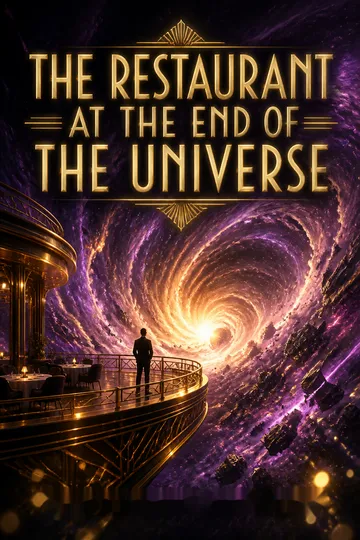
- The Restaurant at the End of the Universe: The characters' decision to visit the Restaurant at the End of the Universe symbolizes their acceptance of the absurd and their willingness to embrace the unknown, suggesting that the journey is more important than the destination.
- The Ongoing Quest: The open-ended nature of the story emphasizes the novel's theme of the ongoing quest for meaning and the importance of adaptability and humor in the face of the universe's inherent chaos.
The Hitchhiker’s Guide to the Galaxy Series
About the Author

Download PDF
Download EPUB
.epub digital book format is ideal for reading ebooks on phones, tablets, and e-readers.








































