
Plot Summary
Prologue: The Glass Wall
Once, a curious woman wandered into a faerie's domain and was transformed into a swan-like queen, bound by a glass wall. She accepted her fate, ruling a kingdom of darkness, but her longing for freedom led her to shatter the barrier, destroying the world she'd come to love. This prologue sets the tone for the story's central themes: the cost of curiosity, the allure and peril of faerie bargains, and the tragic consequences of breaking boundaries. The glass wall becomes a symbol of both protection and imprisonment, foreshadowing the struggles of future queens who must choose between safety and self-determination, and the price paid for stepping beyond the limits set by others.
Rituals in Underhill
Aisling, the new Raven Queen, leads rituals to calm the restless sluagh—once humans, now birdlike fae tormented by hunger and memory. She soothes them with magic and touch, showing empathy for their pain and her own cursed existence. The Underhill realm is a labyrinth of impossible stairways and shifting magic, a home for the forgotten and the monstrous. Aisling's compassion sets her apart from past rulers, but she is haunted by the burning ogham marks on her arms and the knowledge that her time is limited. Her relationship with the sluagh is maternal and healing, yet she is also isolated by her own transformation and the ever-present threat of ancient powers stirring in the dark.
Curses and Consorts
Aisling and Bran, the Raven King, are bound by curses that keep them apart—she becomes a swan by day, he a raven by night. Their rare moments together are filled with longing and determination to break their shared fate. Both seek answers: Bran through faerie courts, Aisling through her own initiative. Their love is tested by the demands of leadership and the pain of transformation. Aisling's familiar, Lorcan, provides sardonic support, reminding her of her humanity and the loneliness of witches. The chapter explores the tension between duty and desire, and the resilience required to love through suffering and separation.
The Whispering Sluagh
Aisling learns from the sluagh that Carman, the first witch and a figure of mythic terror, is whispering to the underfolk. Carman's legend is one of destruction and imprisonment, and her possible return threatens the fragile peace of Underhill. The sluagh's loyalty is tested by these whispers, and Aisling must navigate their fears while keeping the kingdom stable. The chapter delves into the power of stories, the weight of history, and the ever-present danger of old wounds reopening. Aisling's leadership is challenged by forces beyond her control, and she must decide whom to trust as the boundaries between myth and reality blur.
The Wild Hunt Summons
The former Raven King, Darcy, returns with news: the Wild Hunt is coming, and the Raven King and Queen are summoned to lead it. In exchange, their curses will be lifted temporarily, allowing them to be together—but only if they unleash the sluagh upon the human world to hunt changelings. Aisling is torn between her longing for Bran and her compassion for the hunted. The faerie courts' politics are ruthless, and the cost of even brief happiness is steep. The chapter explores the moral dilemmas of power, the exploitation of the vulnerable, and the seductive nature of faerie bargains that always demand a price.
Courtly Masks and Myths
Aisling and Bran must present themselves at the Wild Hunt's court, where alliances are fragile and every gesture is a test. They encounter old friends and rivals, including the Seelie King and Queen, and confront the prejudices against changelings and the underfolk. Aisling's past as a changeling and her outsider status are sources of both strength and pain. The court is a place of beauty and danger, where history and personal grievances intertwine. The chapter highlights the challenges of leadership, the necessity of performance, and the struggle to claim one's place in a world that resists change.
Carman's Shadow Awakens
Carman's influence grows, manifesting through possession and manipulation. Aisling is forced to confront the reality of Carman's power when a sluagh is overtaken and must be destroyed. The trauma of this act is so great that Lorcan removes the memory to protect Aisling's mind. The cost of leadership becomes personal, as Aisling must balance mercy with ruthlessness. The chapter explores the psychological toll of power, the ethics of memory and forgetting, and the insidious nature of evil that corrupts from within. Carman's threat is no longer abstract; it is intimate and immediate.
The Price of Power
The Wild Hunt is unleashed, and the sluagh hunt changelings across the human world. Aisling and Bran struggle to maintain control, torn between their roles as rulers and their empathy for the hunted. The hunt is a spectacle of violence and sorrow, exposing the darkness at the heart of faerie tradition. Some changelings are saved and brought to Underhill, but many are lost. The experience leaves Aisling questioning the legitimacy of her power and the possibility of justice in a world built on cruelty. The chapter examines the limits of agency, the burden of guilt, and the hope that even small acts of mercy can matter.
The Hunt and the Changelings
Aisling opens Underhill to the rescued changelings, creating a sanctuary for the unwanted. The influx of new souls brings both joy and anxiety, as the kingdom must adapt to its changing population. Aisling's maternal instincts are fulfilled, but she is also confronted by the limits of her ability to save everyone. The chapter is a meditation on community, belonging, and the possibility of redemption. The changelings' gratitude and trauma mirror Aisling's own journey, and the kingdom becomes a microcosm of the larger struggle for acceptance and healing.
A Night of Truths
In a rare night together, Aisling and Bran confess their love, breaking through the barriers of pride and fear. Their intimacy is both physical and emotional, a moment of respite in a world of constant threat. The chapter is a celebration of vulnerability, the courage to love despite pain, and the transformative power of mutual recognition. It is also a reminder that happiness is fleeting, and that the world outside their embrace remains dangerous and uncertain.
The Unseelie Fractures
Bran is called back to the Unseelie court, where his family is on the brink of civil war. Old wounds and rivalries resurface, and Bran must confront his past and the expectations of his lineage. The court is a place of cruelty and manipulation, and Bran's struggle to assert his identity is mirrored by Aisling's own journey. The chapter explores the dynamics of family, the inheritance of trauma, and the difficulty of breaking cycles of violence. The threat of war looms, and the personal becomes political as the fate of kingdoms hangs in the balance.
The Banshee's Bargain
Aisling and Lorcan journey to the kingdom of the banshees, seeking the aid of the Duchess of the Dead. The path is perilous, marked by trials of courage and self-knowledge. The banshee queen offers a bargain: knowledge and power in exchange for a personal sacrifice. Aisling must confront her own motivations and the reality that leadership often requires choices that cannot be undone. The chapter is a meditation on mortality, legacy, and the wisdom of the dead. The banshee's gift is both a blessing and a curse, a reminder that all power comes with a price.
The Questing Beast's Gift
Aisling faces the Questing Beast, a creature of legend and shame, and must prove her worth through empathy and understanding. The beast's story mirrors her own, and their exchange is one of mutual recognition and healing. The Questing Beast grants Aisling a portion of its power, adding another knot to the spell that will ultimately confront Carman. The chapter is a parable of acceptance, the importance of seeing oneself in the other, and the possibility of transformation through compassion.
Druidic Graves and Goddesses
Bran and Elva seek the help of Tlachtga, an ancient druidess whose grave holds the key to defeating Carman. The journey is both physical and spiritual, requiring them to confront their own histories and the legacies of those who came before. The Tuatha de Danann, ancient goddesses, intervene, offering their own power and perspective. The chapter is a tapestry of myth, memory, and the interconnectedness of all things. The past, present, and future are woven together in a spell that will determine the fate of Underhill.
The Witch Queen's Tomb
Aisling enters Carman's tomb, where the witch queen is both prisoner and master. Their confrontation is a battle of wills, stories, and identities. Carman tempts Aisling with visions of power, legacy, and the suffering of women throughout history. The choice is stark: join Carman and rule, or resist and risk everything. The chapter is a crucible of agency, the struggle to define oneself against the weight of history, and the realization that true power lies in the willingness to sacrifice for others.
The Rope and the Tree
Aisling chooses self-sacrifice, invoking the magic of the hanging tree and the witch's ladder to bind and destroy Carman. The act is both a death and a liberation, breaking the cycle of curses that have haunted the Raven Queens for generations. The chapter is a meditation on martyrdom, the redemptive power of suffering, and the possibility of ending cycles of violence through personal choice. Aisling's death is both an ending and a beginning, a moment of profound transformation.
Death and Rebirth
Aisling finds herself among the spirits of past Raven Queens, who reveal that her sacrifice has restored the balance of Underhill. She is not allowed to die; her bond with the land is now unbreakable. Reborn, she returns to a world transformed by her actions. The land flourishes, the curses are broken, and the possibility of a new era dawns. The chapter is a celebration of legacy, the endurance of love, and the hope that even the most broken worlds can be remade.
The New Underhill
Underhill is reborn, its people thriving under Aisling's renewed power. The sluagh are healed, the changelings find a home, and the kingdom becomes a place of beauty and acceptance. Aisling and Bran are finally united, their love no longer constrained by curses or fear. The chapter is a vision of utopia, the fulfillment of long-held dreams, and the promise of a future built on compassion and courage.
Coronation and Closure
The story concludes with a coronation, a gathering of faerie courts, and the recognition of Aisling's and Bran's achievements. Old wounds are acknowledged, if not fully healed, and the possibility of lasting peace is celebrated. Aisling's journey from outcast to queen is complete, and the kingdom she has built stands as a testament to the power of love, sacrifice, and the refusal to accept the world as it is. The final image is one of hope, as the next generation is blessed and the cycle of pain is finally broken.
Analysis
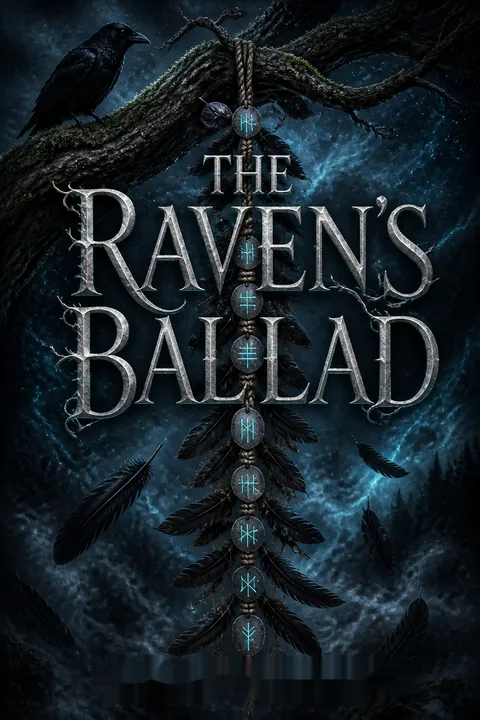
A modern myth of healing, agency, and chosen familyThe Raven's Ballad is a transformative fairy tale that interrogates the cost of power, the legacy of trauma, and the possibility of redemption. At its heart, the novel is about breaking cycles—of violence, abandonment, and self-hatred—through compassion, sacrifice, and the refusal to accept the world as it is. Aisling's journey from outcast to queen is both personal and political, a testament to the power of empathy and the necessity of community. The story challenges the reader to consider the ethics of leadership, the dangers of unchecked pain, and the hope that even the most broken worlds can be remade. In a modern context, The Raven's Ballad is a call to recognize the value of the marginalized, to honor the wisdom of the past without being bound by it, and to believe that love—chosen, hard-won, and fiercely defended—can heal even the deepest wounds.
Review Summary
The Raven's Ballad concludes Bran and Aisling's duology with mixed reception. Readers praised the strong chemistry between leads, feminist themes, and imaginative world-building blending Irish mythology with fairy tale retellings. The curse separating the couple—Bran transforms into a raven by day, Aisling a swan by night—creates emotional tension. Many appreciated the empowering female protagonist and characters from previous books appearing. Criticisms included slow pacing, editing errors, underdeveloped villains, and abrupt endings. Some felt the story warranted only one book. Overall rating averages 4.23/5, with fans loving the dark fantasy romance despite flaws.
Characters
Aisling
Aisling is the heart of the story—a changeling, witch, and ultimately the Raven Queen. Her journey is one of self-discovery, compassion, and sacrifice. She is defined by her empathy for the outcast and her refusal to accept the world's cruelty. Her relationship with Bran is both a source of strength and vulnerability, and her leadership is marked by a willingness to bear pain for others. Psychologically, Aisling is shaped by abandonment, but she transforms her wounds into a capacity for healing. Her arc is one of claiming agency, breaking cycles of violence, and redefining what it means to be powerful.
Bran
Bran is the Raven King, cursed to be apart from Aisling and burdened by the expectations of his lineage. He is haunted by trauma, family dysfunction, and the fear of unworthiness. His love for Aisling is transformative, challenging him to become more than the sum of his past. Bran's struggle is between the darkness of his inheritance and the possibility of redemption. He is both protector and partner, learning to lead with vulnerability and to accept help. His development is a testament to the power of love to heal even the deepest wounds.
Lorcan
Lorcan is Aisling's oldest companion, a witch who became a cat and serves as her familiar. He is sardonic, fiercely loyal, and deeply wounded by his own history of abandonment. Lorcan's relationship with Aisling is both protective and challenging, pushing her to question her choices and reminding her of her humanity. Psychologically, he is shaped by loss and the need for control, but his arc is one of learning to trust and to let go. Lorcan embodies the theme of chosen family and the resilience of those who survive on the margins.
Carman
Carman is the mythic first witch, imprisoned and vengeful, whose whispers threaten to unravel Underhill. She is both a villain and a tragic figure, driven by loss, jealousy, and the desire for power. Carman's relationship to Aisling is complex—she is both ancestor and adversary, a warning of what unchecked pain can become. Psychologically, Carman is consumed by the need to be seen and loved, and her arc is a cautionary tale about the dangers of refusing to let go of the past.
Darcy
Darcy is the previous Raven King, a figure of fear and resentment among the underfolk. He is charming, dangerous, and ultimately self-serving, embodying the worst aspects of faerie power. Darcy's interactions with Aisling and Bran are tests of their resolve and integrity. Psychologically, he is driven by a need for control and a refusal to accept his own limitations. His fate is a warning about the corrosive effects of power without empathy.
Elva
Elva is Aisling's estranged sister, a figure of both longing and resentment. Her journey is one of confronting her own failures and seeking forgiveness. Elva's relationship with Bran is complicated by history and unfulfilled desire, and her arc is about learning to accept herself and to let go of the need for external validation. Psychologically, she is shaped by regret and the fear of repeating old patterns, but her willingness to change is a source of hope.
The Sluagh
The sluagh are the underfolk, once human, now monstrous, who serve as both subjects and symbols of the story's themes. They are a collective character, embodying the pain of exile, the longing for acceptance, and the possibility of transformation. Their relationship with Aisling is maternal and redemptive, and their arc mirrors her own journey from outcast to beloved.
The Questing Beast
The Questing Beast is a creature of legend, shame, and compassion. Its encounter with Aisling is a test of empathy and a source of strength. Psychologically, the beast represents the parts of ourselves we are taught to hate, and its willingness to help Aisling is a testament to the healing power of recognition and acceptance.
Tlachtga
Tlachtga is an ancient druid whose grave holds the key to defeating Carman. She is wise, enigmatic, and deeply connected to the land. Her relationship with Bran and Elva is one of guidance and challenge, forcing them to confront their own histories. Psychologically, Tlachtga embodies the endurance of wisdom and the importance of honoring the past.
The Tuatha de Danann (Badb, Macha, etc.)
The Tuatha de Danann are the original fae, powerful and inscrutable, whose interventions shape the course of the story. They are both mentors and obstacles, representing the weight of tradition and the possibility of change. Their relationship to Aisling and Bran is one of both blessing and burden, and their presence is a reminder that all stories are part of a larger tapestry.
Plot Devices
Curses and Transformations
The central plot device is the curse that keeps Aisling and Bran apart, manifesting as physical transformation and emotional distance. The curse is both a literal barrier and a metaphor for trauma, inherited pain, and the difficulty of breaking free from the past. Its resolution requires sacrifice, self-knowledge, and the willingness to confront the darkest parts of oneself.
The Witch's Ladder (Knotted Rope)
The witch's ladder—a rope with nine knots—serves as a magical device that accumulates the power of various beings (banshee, questing beast, druids, goddesses) to create a spell capable of confronting Carman. Each knot represents an alliance, a sacrifice, or a lesson learned. The ladder is a symbol of interconnectedness, the necessity of community, and the idea that no one can change the world alone.
Possession and Memory
Possession—by Carman, by memory, by trauma—is a recurring device that explores the boundaries of selfhood and the dangers of losing control. The removal and restoration of memory (as with Lorcan's spell) raises questions about the cost of survival and the ethics of forgetting. The struggle for agency is central, as characters must reclaim their bodies, minds, and stories from those who would use them.
The Hanging Tree and Sacrifice
The hanging tree is both a literal and symbolic site of execution, memory, and transformation. Aisling's self-sacrifice at the tree is the climax of the story, breaking the curse and ending Carman's reign. The device is a meditation on the power of martyrdom, the possibility of redemption, and the hope that cycles of violence can be ended through personal choice.
Narrative Structure and Foreshadowing
The story is structured around interwoven timelines, with the past (the first Raven King and Queen, Carman's betrayal) echoing in the present. Foreshadowing is used to build tension and to suggest that history is both a burden and a guide. Mirrored arcs—between Aisling and Carman, Bran and his ancestors, Elva and Aisling—reinforce the themes of legacy, repetition, and the possibility of change.
The Otherworld Series
About the Author
Other books by Emma Hamm

Download PDF
Download EPUB
.epub digital book format is ideal for reading ebooks on phones, tablets, and e-readers.








































