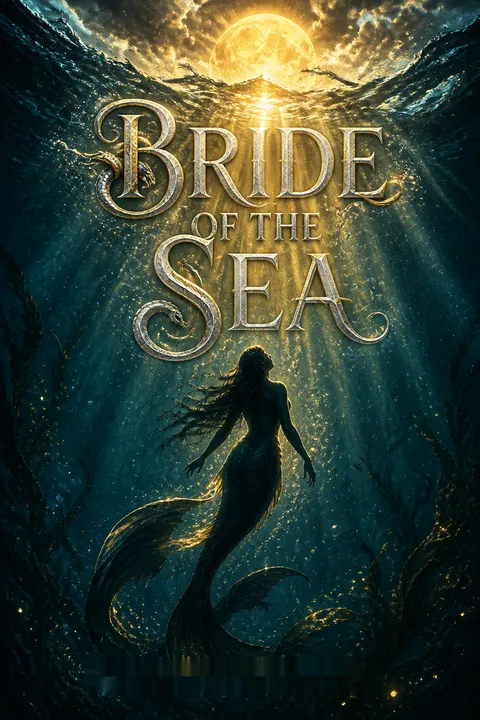

Plot Summary
Seashell and the Sailor
In the beginning, a tiny seashell, battered by the ocean, waits on the shore for something more. A rugged sailor named Manus nearly crushes her, but instead, he admires her beauty and promises to keep her safe. The seashell, personified by longing, falls in love with the man who sees her worth. He leaves her behind, vowing to return, but time passes and the world changes around her. The seashell's patient hope and the sailor's absence set the tone for a story about waiting, yearning, and the unpredictable tides of fate.
Storms and Shipwrecks
Manus, a sailor with a wild heart and a hint of faerie blood, braves the open sea, seeking purpose and belonging. His ship, crewed by rough men, is caught in a supernatural storm as they chase legends of faerie riches. The tempest, conjured by the Fae, destroys the vessel, scattering men and dreams alike. Manus, battered and nearly drowned, clings to life in the churning waters, haunted by the voices of the past and the call of the ocean. The storm is both a literal and metaphorical upheaval, casting Manus into the unknown and setting the stage for a fateful encounter.
Grotto of Longing
Deep beneath the waves, Saoirse, a merrow (mermaid), dreams of the world above. She is different from her kin—her hair is dark, her spirit restless, and she resists the fate of marrying a brutish merrow-man. In her secret grotto, she tends a magical tree, a symbol of her longing for land and freedom. Pressured by her father to choose a husband, Saoirse's heart aches for something more than the cold, confining traditions of her people. Her desire to escape and her fascination with humans foreshadow the crossing of worlds and hearts.
Fateful Rescue
After the shipwreck, Saoirse finds Manus sinking into the abyss. Drawn by curiosity and compassion, she saves him from death, pulling him to the surface and then to a deserted isle. Their first meeting is charged with wonder and fear—Saoirse is both fascinated and wary, while Manus, delirious, is entranced by his mysterious savior. The rescue is more than physical; it is the beginning of a bond that will challenge the boundaries between sea and land, faerie and human, longing and belonging.
Stranded Hearts
On the enchanted isle, Manus and Saoirse are isolated from their worlds. Saoirse brings him food and water, hiding her true nature, while Manus recovers and grows increasingly captivated by the enigmatic woman who saved him. Their conversations are filled with curiosity, teasing, and the slow blooming of trust. Both are outsiders—Manus, the misfit sailor, and Saoirse, the merrow who doesn't fit her people's mold. The island becomes a crucible for their growing affection, but also a place of secrets and unspoken desires.
Secrets Beneath the Waves
As their connection deepens, Saoirse reveals her merrow form to Manus, risking rejection. Instead, he is awed and accepting, and they share a magical, breathless journey beneath the sea. Together, they explore shipwrecks and hidden treasures, sharing stories and kisses in the deep. Yet, danger lurks—Saoirse's family searches for her, and the ocean's guardians watch with suspicion. The lovers' happiness is fragile, threatened by the rules of both their worlds and the price of crossing boundaries.
Forbidden Bonds
Saoirse and Manus's relationship becomes a true bond, sealed by the exchange of names—a faerie act that links their souls. This connection brings joy and vulnerability, as both realize the depth of their feelings and the risks they face. The merrow's inability to lie, the human's haunted past, and the looming threat of discovery create tension. Their love is both a sanctuary and a source of peril, as the ocean's laws and the land's expectations close in.
Isle of Becoming
On the isle, both characters are transformed. Saoirse learns to walk on land, to laugh and love as a human, while Manus confronts his own wounds and the possibility of a future beyond the sea. They share stories, dreams, and the pain of their pasts. The island, a liminal space, allows them to imagine a life together, but also reminds them of the impossibility of escaping their origins. The outside world, with its demands and dangers, waits just beyond the horizon.
Tides of Desire
Their idyll is interrupted by the lure of treasure and the intrusion of others—faerie dogs, leprechauns, and the ever-present threat of Saoirse's family. Manus is tempted by the promise of wealth, while Saoirse is torn between her love and her heritage. Jealousy, misunderstandings, and the pressure to choose between worlds strain their bond. The price of gold becomes a metaphor for the sacrifices required by love and the dangers of wanting too much.
Gold and Sacrifice
To survive on land, Saoirse risks returning to the sea to gather gold, facing the wrath of a banished bean sídhe and the truth about the cost of loving a human. She learns that faerie love is fatal—if her human dies, she will fade into sea foam. The knowledge is both a curse and a gift, forcing her to confront the limits of her choices. Manus, too, must reckon with his ambitions and the reality of what it means to love a creature of the sea.
Human Masquerade
Saoirse and Manus try to build a life together among humans, using faerie gold to buy a house and status. Saoirse struggles to fit in, bewildered by human customs, gossip, and the expectations of wealth. Manus is haunted by his past and the fear of losing her. Their masquerade is both comic and tragic, as they realize that happiness cannot be bought, and that the world will never fully accept what it cannot understand.
The Price of Freedom
Manus, restless and called by the sea, leaves on a voyage, promising to return. Saoirse, left behind, withers in his absence—their faerie bond draining her life. She is forced to choose between dying on land or returning to the sea. With the help of a leprechaun friend, she escapes, leaving behind a letter and a house full of memories. Manus returns to find her gone, devastated by the consequences of his choices and the realization of what he has lost.
Partings and Promises
Saoirse, now among a new pod of merrows, gives birth to their daughter, sacrificing her own life for the child's future. Manus, broken and desperate, learns the truth from the leprechaun and sets out on a perilous journey to faerie waters, determined to find her. Both are sustained by memories and the hope of reunion, even as the odds seem insurmountable. The ocean, once a place of adventure, becomes a realm of trial and redemption.
The Empty Shore
Manus's return to an empty home is a moment of utter despair. He rages, mourns, and finally resolves to risk everything to find Saoirse. The leprechaun, Declan, reveals the truth of her sacrifice and the only way to reach her—by braving the faerie-guarded waters. Manus gathers a crew and sets sail, his love now a quest that will test his courage, faith, and the strength of the bond that once saved him.
The Merrow's Choice
Saoirse, weakened and fading, clings to life for the sake of her newborn daughter. Among the merrows, she finds both acceptance and the pain of exile. The ocean's guardian aids her, but warns that time is short. As Manus's ship approaches, Saoirse must decide whether to risk everything for a final chance at happiness, or to let go and become a legend lost to the waves.
Waters Run Red
Manus's ship enters faerie waters, facing the wrath of the guardian and the merrow warriors. In a desperate act, Saoirse intervenes, risking her life to save him. The battle is fierce, the sea running red with struggle and sacrifice. At the last moment, the guardian recognizes their love and delivers Saoirse to Manus. Their reunion is both a miracle and a testament to the power of love that defies even the laws of the sea.
Reunion and Renewal
Manus and Saoirse, reunited at last, vow never to be parted again. They introduce their daughter to both worlds, forging a new family that honors the sea and the land. The wounds of the past begin to heal as they accept the cost of their choices and the gift of a second chance. Their love, tested by storms and separation, emerges stronger, a beacon for others who dare to cross boundaries.
Home Between Worlds
In the epilogue, Manus, Saoirse, and their daughter Orlaith find a home that bridges the worlds of sea and land. They sail together, explore, and share stories, their lives a testament to the possibility of belonging in more than one place. The ocean is no longer a barrier, but a path to adventure and connection. Their love, once forbidden, becomes a legend—a bride of the sea, a sailor of the heart, and a child of both.
Analysis
A modern myth of love, belonging, and the courage to cross boundariesBride of the Sea is a luminous reimagining of the selkie and mermaid legends, blending Celtic folklore with a deeply human story of longing, exile, and the search for home. At its heart, the novel is about the cost and necessity of transformation—how love demands the shedding of old skins, the risking of heartbreak, and the willingness to embrace the unknown. The narrative interrogates the limits of tradition, the dangers of conformity, and the power of individual choice. Through Saoirse and Manus, the story explores the pain of being an outsider, the hunger for connection, and the possibility of forging a new identity that honors both heritage and desire. The use of magical realism, rich symbolism, and psychological depth elevates the tale beyond romance, making it a meditation on what it means to belong, to sacrifice, and to hope. In a world increasingly defined by boundaries—of nation, culture, and self—Bride of the Sea offers a vision of love that is brave enough to cross the water, and wise enough to know that true home is found not in place, but in the hearts we choose.
Review Summary
Bride of the Sea is a Little Mermaid retelling blending Irish mythology and dark fantasy, earning a 3.68/5 rating. Readers praised the gorgeous world-building, Celtic folklore elements, and flawed, realistic characters. However, many criticized the male lead Manus as selfish, possessive, and unlikeable, with weak chemistry between him and protagonist Saoirse. The romance felt forced to some, though others appreciated its realistic portrayal of relationships requiring compromise. Positive reviews highlighted Emma Hamm's poetic writing style and character development. The standalone companion to the Otherworld series divided readers between those loving its darker twist and those disappointed by execution.
People Also Read
Characters
Saoirse
Saoirse is a merrow (mermaid) who never fits the mold of her people. With dark hair and a rebellious spirit, she resists the fate of marrying a merrow-man and dreams of the world above. Her longing for something more leads her to rescue Manus, a human, forging a bond that defies the laws of both sea and land. Saoirse is compassionate, curious, and courageous, but also vulnerable—her inability to lie and her deep need for belonging make her both strong and fragile. Her journey is one of self-discovery, sacrifice, and the pursuit of love that transcends boundaries. As a mother, she is fiercely protective, willing to risk everything for her child's future. Saoirse's arc is a transformation from longing and exile to acceptance and homecoming, embodying the hope that love can bridge even the widest oceans.
Manus
Manus is a sailor marked by restlessness, a touch of faerie blood, and a hunger for adventure. Orphaned and hardened by life, he is both fiercely independent and deeply lonely. His encounter with Saoirse awakens a capacity for love and vulnerability he never knew he possessed. Manus is stubborn, quick-tempered, and sometimes reckless, but also loyal, protective, and capable of great tenderness. His struggle is between the call of the sea and the pull of home, between ambition and intimacy. Manus's journey is one of reckoning with his past, learning to trust, and ultimately choosing love over pride. As a father and partner, he grows into a man who can finally belong, not just to the ocean, but to a family and a future.
Declan (the Leprechaun)
Declan is a leprechaun prince exiled among humans, both amused and frustrated by their ways. He befriends Saoirse, offering her a coin of protection and advice that is both mischievous and wise. Declan is a liminal figure—neither fully of the sea nor the land, he understands the pain of exile and the cost of longing. His role is that of a catalyst, pushing Saoirse and Manus to confront their truths and make hard choices. Though he teases and provokes, Declan's loyalty and compassion are genuine, and his own loneliness mirrors that of the protagonists. He represents the ambiguous morality of the fae—capable of both kindness and cruelty, but ultimately a force for change.
Alannah
Alannah is the tattooed leader of the merrow pod that takes Saoirse in. She is stern, pragmatic, and fiercely protective of her people. Alannah embodies the traditions and survival instincts of the merrows, but is also capable of compassion and flexibility. Her initial suspicion of Saoirse gives way to respect, and she ultimately allows Saoirse to choose her own path. Alannah's presence is a reminder of the costs and comforts of community, and the tension between individual desire and collective safety.
The Guardian
The guardian is a massive, enigmatic faerie who patrols the boundaries of faerie waters. Both terrifying and compassionate, the guardian enforces the laws of the sea but is moved by Saoirse's plight and Manus's devotion. The guardian's actions are guided by a deep sense of duty and an understanding of the balance between worlds. As a symbol, the guardian represents the power and impartiality of nature, as well as the possibility of mercy when love proves itself worthy.
Orlaith
Orlaith is the daughter of Saoirse and Manus, born of love that bridges sea and land. She embodies hope, possibility, and the future—a being who can move between realms and inherit the strengths of both. Orlaith's presence is a healing force, uniting her parents and offering a new beginning. Her innocence and curiosity are a reminder of what is at stake, and her existence challenges the boundaries that once seemed insurmountable.
Saoirse's Father
Saoirse's father is a figure of authority and tradition, determined to see his daughter married to a merrow-man and resistant to change. His rigidity and inability to understand Saoirse's longing make him both an antagonist and a tragic figure—bound by the same rules that imprison his daughter. His eventual disowning of Saoirse is both a punishment and a release, allowing her to seek her own destiny.
Saoirse's Mother
Saoirse's mother is a quieter presence, but her love and understanding are crucial. She aids Saoirse's escape, providing her with the means to communicate with the guardian and find her way. Her actions reveal a hidden strength and a recognition of the need for change, even at great personal cost. She represents the possibility of compassion within tradition.
The Bean Síde
The bean síde (banshee) is a spectral figure haunting a shipwreck, embodying the consequences of exile and the dangers of longing. She warns Saoirse of the fatal cost of loving a human, serving as both a threat and a mirror. Her presence is a reminder of the thin line between love and death, and the price of breaking the rules of the fae.
The Artisan
The artisan is a glassworker who befriends Saoirse and Manus, his hands marked by faerie enchantment. He represents the creative potential of those who live between worlds, and the pain of being changed by magic. His art becomes a symbol of memory, longing, and the beauty that can arise from suffering.
Plot Devices
Liminal Spaces and Transformation
The narrative is structured around liminal spaces—shores, islands, grottos, and shipwrecks—where the boundaries between sea and land, faerie and human, are thin. These spaces allow for transformation, revelation, and the forging of bonds that would be impossible elsewhere. The use of magical grottos, enchanted isles, and faerie waters creates a sense of otherworldliness and possibility, while also highlighting the dangers of crossing boundaries. Transformation—physical, emotional, and spiritual—is a constant motif, as characters shed old skins and discover new selves.
The Bond and Its Consequences
The act of exchanging true names creates a magical bond between Saoirse and Manus, linking their fates and making their love both a blessing and a curse. This device raises the stakes—distance becomes deadly, and choices have irreversible consequences. The bond is both a source of strength and vulnerability, forcing the characters to confront the limits of their autonomy and the depth of their commitment.
Foreshadowing and Prophecy
Throughout the story, characters are warned of the dangers of loving across worlds—the bean síde's prophecy, the guardian's caution, the leprechaun's riddles. These foreshadowings create tension and a sense of tragic inevitability, even as the characters strive to defy fate. The use of omens and prophecies also grounds the narrative in mythic tradition, connecting personal choices to larger patterns.
Symbolism of Gold and Treasure
Gold, jewels, and treasure are recurring symbols—representing both the lure of the unknown and the cost of desire. The pursuit of wealth brings Manus and Saoirse together, but also threatens to tear them apart. The treasures of the sea are both gifts and curses, forcing the characters to reckon with what truly matters. The motif of the seashell, the pearl, and the glass merrow all reinforce the theme of hidden value and the transformation of suffering into beauty.
Narrative Structure
The story alternates between Saoirse and Manus, allowing readers to experience both the human and faerie sides of the narrative. Their arcs mirror each other—both are outsiders, both long for belonging, both must sacrifice and change. The use of parallel journeys, converging and diverging, creates emotional resonance and a sense of inevitability. The structure also allows for moments of dramatic irony, as each character acts in ignorance of the other's pain and hope.
The Otherworld Series
About the Author
Other books by Emma Hamm

Download PDF
Download EPUB
.epub digital book format is ideal for reading ebooks on phones, tablets, and e-readers.








































