

Key Takeaways
A crash diet of nothing but protein can drop half a pound of fat daily
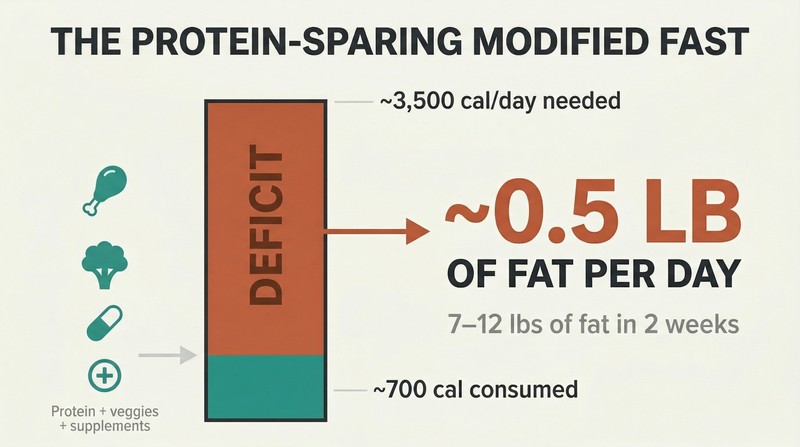
The diet is brutally simple. The modified PSMF (Protein Sparing Modified Fast) consists of lean protein sources — chicken breast, tuna, egg whites, fat-free cottage cheese — set at 0.8 to 2.0 grams per pound of lean body mass depending on bodyfat level and activity. Add unlimited non-starchy vegetables, 6 fish oil capsules daily for essential fatty acids, a multivitamin, and electrolyte supplements (sodium, potassium, magnesium). Total intake lands around 600 – 800 calories per day.
Expect real fat loss of roughly half a pound daily. A 250-pound person running a 3,000-calorie daily deficit could lose 12 pounds of true fat over two weeks, plus 10 or more pounds of water weight. Lighter individuals may see 7 pounds of fat in two weeks — still dramatically faster than conventional dieting.
The scale lies — most early crash diet pounds are water, not fat
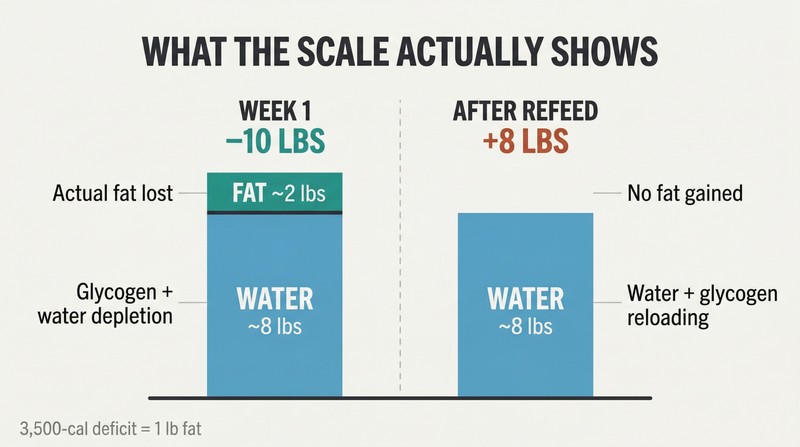
Water dominates early weight loss. Low-carbohydrate diets cause rapid glycogen depletion, and glycogen holds significant water. Average weight losses of 7 – 10 pounds in the first week of a low-carb diet are standard — almost entirely water. The PSMF's total 10 – 20 pound weight loss over two weeks is mostly water, not fat. One pound of actual fat requires a 3,500-calorie deficit to burn.
The reverse is equally true. When carbohydrates are reintroduced — during a refeed, a free meal, or transition to maintenance — bodyweight can spike 5 – 10 pounds overnight. It's just water and glycogen reloading, not fat. Understanding this prevents the psychological whiplash of watching the scale jump after one high-carb dinner and concluding the diet failed.
During starvation your body eats muscle — protein intake stops it
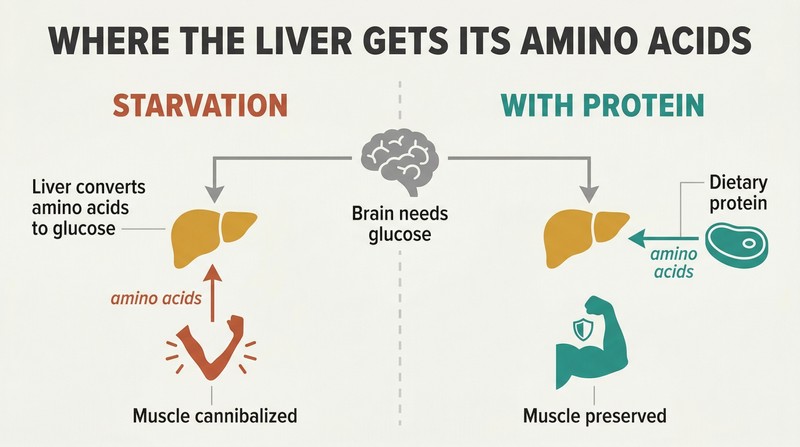
Starvation forces a grim trade-off. When you eat nothing, the body burns fat for fuel — which sounds ideal. But the brain can't use fatty acids directly. It needs glucose, which the liver manufactures through gluconeogenesis, converting amino acids from your muscles and organs into fuel. Without dietary protein, the body literally digests itself.
The PSMF solved this. Researchers discovered that providing just protein — roughly 1 to 1.5 grams per kilogram of ideal bodyweight — gave the liver dietary amino acids for gluconeogenesis instead of cannibalizing muscle. After weeks of carb restriction, the brain adapts to derive 75% of its fuel from ketones (fat-derived molecules), further reducing protein breakdown. The infamous Last Chance Diet of the 1970s killed people not because the PSMF concept was flawed, but because it used nutritionally worthless collagen protein with zero mineral supplementation.
Your bodyfat percentage sets your protein dose and max diet length
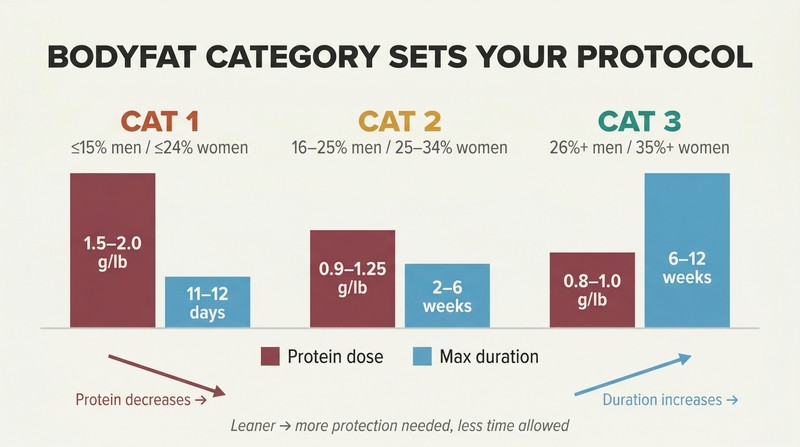
Three diet categories determine everything. Based on bodyfat percentage, the book stratifies dieters into tiers that dictate protein intake, diet duration, and break frequency:
1. Category 1 (men ≤15%, women ≤24%): Highest protein at 1.5 – 2.0 g/lb of lean body mass with weight training, but limited to 11 – 12 days maximum
2. Category 2 (men 16 – 25%, women 25 – 34%): Moderate protein at 0.9 – 1.25 g/lb, diet for 2 – 6 weeks
3. Category 3 (men 26%+, women 35%+): Lowest protein at 0.8 – 1.0 g/lb, can diet 6 – 12 weeks
Leaner people face steeper metabolic consequences. Their bodies fight harder against further fat loss, hunger is more intense, and muscle loss risk is greater — hence the tighter time limits and higher protein doses.
On a crash diet, lift heavy 2-3 times per week and skip the cardio
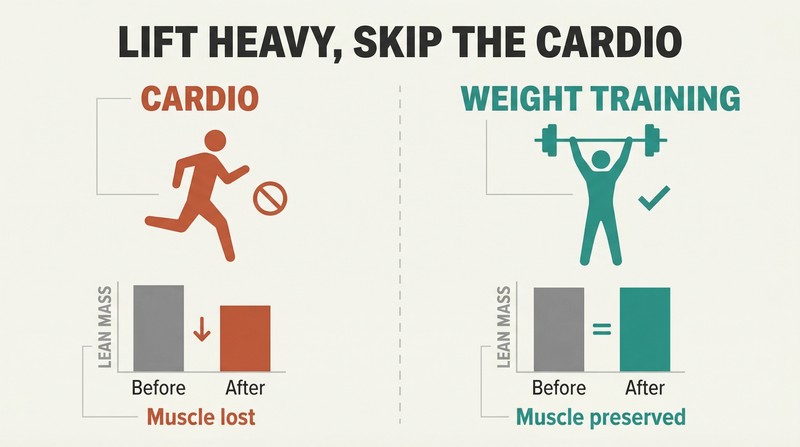
Cardio barely moves the needle. When food restriction alone creates a 1,500 – 2,000 calorie daily deficit, an extra 200 – 300 calories burned through aerobic exercise is a rounding error. Worse, at least one study found that adding roughly 6 hours of weekly cardio to a PSMF increased the metabolic rate drop without producing more weight loss over 4 weeks. Some rapid weight loss centers actually discourage exercise because it can maintain muscle, reducing scale-weight drops while improving body composition.
Weight training is the exception. A basic full-body routine — one exercise per bodypart, a few heavy sets in the 6 – 8 rep range, two to three times per week — maintains lean body mass and can even increase it in beginners. Taking 5 grams of fast-acting carbohydrate before training raises blood glucose enough to maintain workout intensity.
Metabolism slows in 3-4 days of crash dieting — but can't erase your deficit
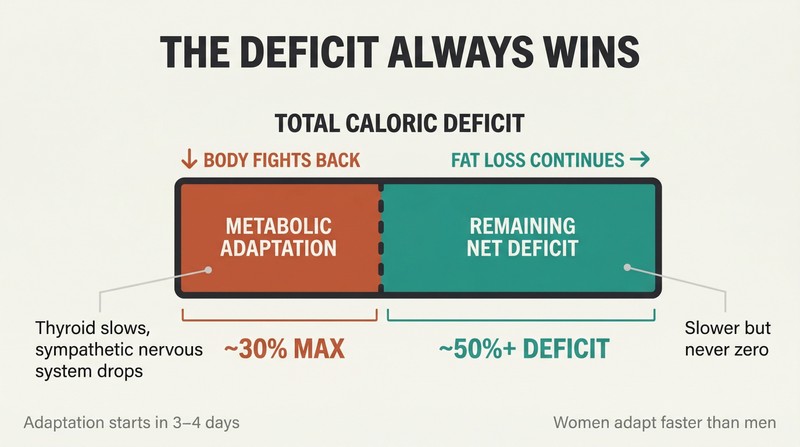
Two forces slow your calorie burn. The first is simple physics: a lighter body burns fewer calories. The second is the adaptive component — your body deliberately reducing metabolic rate beyond what weight loss alone would predict. Sympathetic nervous system output drops within 3 – 4 days of severe dieting; thyroid hormone follows over weeks. Women's bodies fight harder and faster than men's.
The slowdown has hard limits. The largest recorded adaptive reduction is roughly 30%, but the crash diet creates a deficit exceeding 50% of daily expenditure — so fat loss slows but never stops. The EC stack (ephedrine 20mg plus caffeine 200mg, three times daily) has been clinically shown to counteract this by increasing metabolic rate, blunting hunger, and sparing muscle. Start with half doses and never use it with cardiac or blood pressure issues.
Schedule free meals and full breaks — they make the diet work better
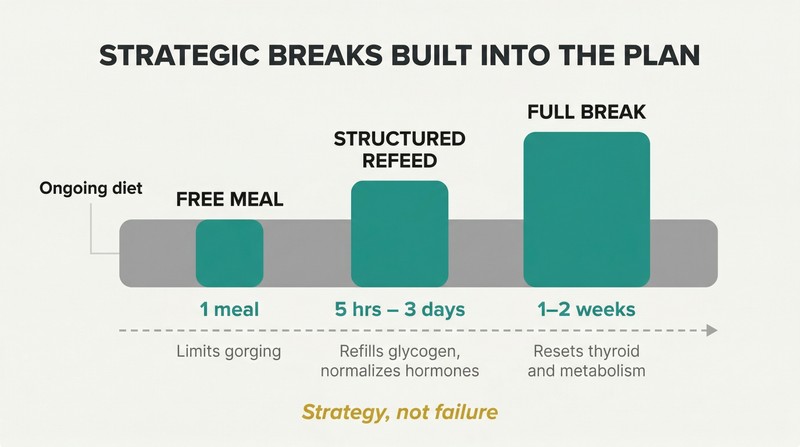
Three types of planned breaks exist. Free meals are single off-diet meals — best eaten at restaurants to limit gorging. Structured refeeds are deliberate high-carbohydrate overfeeding periods lasting 5 hours to 3 days that refill muscle glycogen and normalize hormones like leptin and insulin. Full diet breaks are 1 – 2 weeks at maintenance calories, upregulating thyroid hormone and nervous system output.
Research confirms breaks work. In one study, dieters forced to take 2 weeks off didn't gain significant weight and returned to dieting without difficulty. Because the break was planned, dieters interpreted it as strategy rather than failure. Category 1 dieters take a 2 – 3 day refeed every 11 – 12 days; Category 2 gets weekly free meals plus short refeeds with a full break every 2 – 6 weeks; Category 3 breaks every 6 – 12 weeks.
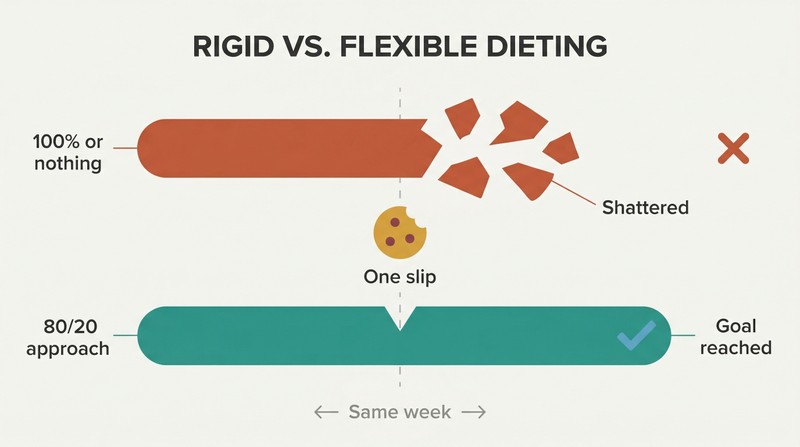
Strict dieters fail more often — ditch perfection for 80/20
Rigid dieting is self-defeating. Studies consistently show that flexible dieters — those who allow some deviation from their plan — weigh less and succeed more than rigid dieters who demand 100% adherence. Most dieters know the pattern: one cookie leads to eating the whole bag because the diet feels "ruined." Psychologists call this the 80/20 principle — get it right 80% of the time and the other 20% barely matters.
Free meals defuse the bomb. By building 1 – 2 free meals per week into the structure, slip-ups become scheduled events rather than moral failures. Rules: eat at a restaurant where you're less likely to binge, start with protein and a salad, have one dessert — not two entrées and three desserts. Make it dinner so you can return to the diet by morning.
Measure your food obsessively at first — eyeballing fails everyone
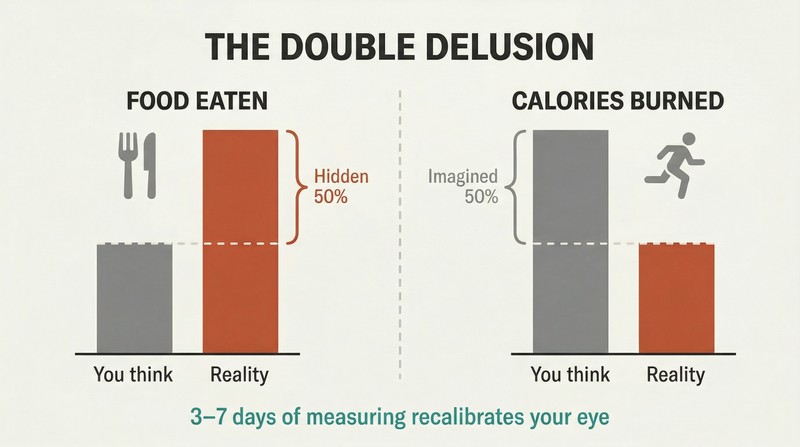
The tablespoon test is sobering. McDonald recommends pouring vegetable oil into a measuring tablespoon — that single tablespoon holds 14 grams of fat, roughly 126 calories, and represents the maximum fat to add per meal at maintenance. Most people would guess they use far less than they actually do. This blindness extends to all foods: typical pasta servings are 2 – 3 times the label amount, supersized bagels pack 400+ calories, and low-carb or low-fat processed foods hide calories from the other macronutrient.
Overestimating exercise compounds the error. People also overestimate calories burned by about 50%, creating a double delusion. Even 3 – 7 days of rigorous measuring dramatically improves your mental calibration of portion sizes, allowing you to return to intuitive eating with far better accuracy.
Spend more effort on maintenance than on the crash diet itself
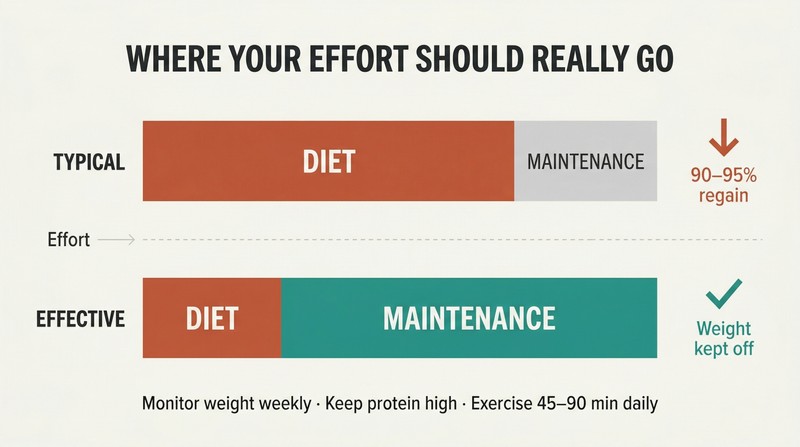
90 – 95% of dieters regain everything. The primary reason: they treat the diet as temporary and return to old habits. Maintenance means eating at a caloric level that keeps weight stable within a 3 – 5 pound window — monitored regularly via scale, bodyfat measurement, or how a specific pair of pants fits. Successful long-term dieters share this monitoring habit.
The maintenance formula has specific rules. Eat at least 100 grams of carbohydrates daily to upregulate thyroid hormone and metabolic rate. Keep protein high — at least 0.75 g/lb of lean body mass. Target moderate fat at 20 – 25% of calories, avoiding both extremes. Exercise matters most after the diet: research suggests roughly 2,500 calories per week of exercise — about 45 – 90 minutes daily — is needed to fully prevent weight regain.
Analysis
The Rapid Fat Loss Handbook occupies a peculiar niche in diet literature: it's a book that explicitly tells you not to do what it teaches, except when you should. McDonald's pragmatic nihilism — 'people will crash diet regardless, so let's minimize the damage' — is refreshingly honest in a field dominated by either breathless enthusiasm or moral hand-wringing.
What makes the book surprisingly sophisticated is that roughly 60% of its content addresses not the crash diet itself, but what happens after: maintenance, transition, and the psychology of diet breaks. This inversion is the book's real contribution. The modified PSMF has solid clinical lineage dating to the 1970s, and McDonald's category system — stratifying dieters by bodyfat percentage — elegantly solves the one-size-fits-all problem that plagues most diet books. By varying protein dose, diet duration, and break frequency across three tiers, the approach scales from contest bodybuilders to obese beginners without requiring separate protocols.
McDonald's advocacy of planned diet breaks anticipated the flexible dieting movement by nearly a decade. His insistence that scheduled diversions improve long-term outcomes — both metabolically via leptin and thyroid normalization, and psychologically by reframing breaks as strategy rather than failure — has since been supported by more rigorous research. The emphasis on real food over meal replacement shakes, despite the obvious financial incentive to sell a companion product, reveals intellectual honesty rare in the supplement-adjacent fitness industry.
The book's weakest elements are its EC stack recommendations, which are dated given regulatory changes around ephedra, and the absence of formal citations — which McDonald acknowledges with characteristic irreverence. The deepest tension throughout is between the psychological payoff of rapid results and the habit-building that prevents regain. McDonald threads this needle by using the PSMF's dramatic early weight loss as motivational fuel, then gradually transitioning dieters to whole-food maintenance patterns. It's an architecture of temporary extremism in service of permanent moderation — a paradox that works precisely because it doesn't pretend to be anything else. The conversational, profane, unapologetically opinionated writing style has aged better than specific supplement recommendations, which is itself a lesson about what matters in diet design.
Review Summary
The Rapid Fat Loss Handbook receives mostly positive reviews, with readers praising its no-nonsense approach to dieting and clear explanations of the science behind fat loss. Many found the protein-sparing modified fast effective for quick weight loss, though some noted it's challenging to follow. Readers appreciate the author's detailed guidance on exercise, supplements, and transitioning back to maintenance. Some criticisms include the book's length and lack of citations. Overall, readers find it informative and useful, even if they don't intend to follow the strict diet plan.
People Also Read






Glossary
PSMF
protein-only crash dietProtein Sparing Modified Fast. A very low calorie diet (600-800 cal/day) consisting almost exclusively of lean protein, minimal vegetables, essential fatty acid supplements, and a multivitamin. Originally developed in the 1970s as a safer alternative to total starvation, it provides the minimum essential nutrients while creating the largest possible caloric deficit for rapid fat loss while preserving lean body mass.
LBM
non-fat body weightLean Body Mass. The total weight of everything in the body except fat — including muscle, organs, bones, water, and connective tissue. Calculated by subtracting fat mass from total bodyweight. Central to PSMF setup because protein recommendations are based on grams per pound of LBM, not total bodyweight, ensuring that protein intake scales to the tissue that needs protecting.
Diet category
bodyfat-based dieter classificationA three-tier system based on current bodyfat percentage that determines protein intake, maximum diet duration, and break frequency. Category 1 (men ≤15%, women ≤24%) are leanest with highest protein needs and shortest diet stints. Category 2 (men 16-25%, women 25-34%) is moderate. Category 3 (men 26%+, women 35%+) can diet longest with the lowest protein requirements.
EC stack
ephedrine plus caffeine comboThe combination of ephedrine (20mg) and caffeine (200mg) taken up to three times daily as a metabolic support tool. Clinically studied for nearly two decades, it increases metabolic rate, blunts appetite, spares muscle, and enhances fat loss. The herbal form (ephedra) was banned in the US, but pharmaceutical ephedrine HCL remains available in products like Bronkaid. Contraindicated for individuals with cardiac or blood pressure issues.
Adaptive component
extra metabolic slowdown beyond weight lossThe portion of metabolic rate reduction during dieting that exceeds what losing bodyweight alone would predict. Driven primarily by decreased sympathetic nervous system output in the short term (within 3-4 days) and lower thyroid hormone over weeks. The maximum recorded adaptive reduction is roughly 30%. Fatter individuals experience less of it; women typically show a larger adaptive response than men.
Structured refeed
planned high-carb overfeedA deliberate period of high-carbohydrate overfeeding lasting from 5 hours to 3 days, designed to refill muscle glycogen, normalize diet-suppressed hormones (leptin, insulin, ghrelin), and provide psychological relief. Dietary fat is kept low to moderate (50g/day or less) during refeeds. Mainly carbohydrate-focused with limited sucrose and fructose. Duration and frequency depend on diet category.
Free meal
single off-diet mealA single meal that deviates from the diet in both food type and quantity. Primarily a psychological tool to maintain long-term adherence — not a deliberate binge. Best eaten at a restaurant to limit overconsumption. Recommended 1-2 times per week for Category 2 and 3 dieters. Should still include lean protein and vegetables, with added starches, moderate indulgences, and one dessert.
Full diet break
weeks at maintenance caloriesA planned 1-2 week period of eating at maintenance calories between stretches of active dieting. Serves both psychological purposes (preventing burnout) and physiological ones (upregulating thyroid hormone and sympathetic nervous system output). Requires at least 100 grams of carbohydrates daily. Frequency varies: every 11-12 days for Category 1, every 2-6 weeks for Category 2, every 6-12 weeks for Category 3.
Gluconeogenesis
glucose from non-carb sourcesA metabolic process occurring primarily in the liver that produces glucose from non-carbohydrate substrates including amino acids, glycerol from fat metabolism, lactate, and pyruvate. This is why dietary carbohydrate is not technically an essential nutrient — the body can manufacture the glucose the brain requires. During starvation without dietary protein, gluconeogenesis draws amino acids from muscle and organ tissue, which is the core problem the PSMF solves.
FAQ
What's "The Rapid Fat Loss Handbook" about?
- Crash Dieting Focus: The book provides a scientific approach to crash dieting, aiming to help readers lose 4-7 pounds of fat and 10-20 pounds of weight in just two weeks.
- Diet Structure: It outlines a modified protein sparing modified fast (PSMF), which is a very low-calorie diet focusing on lean proteins, minimal fats, and carbohydrates.
- Safety and Guidelines: The author emphasizes the importance of following the diet safely and intelligently, with specific guidelines and warnings to prevent potential health risks.
- Supplemental Information: The book includes recipes by Allie Faden to make the diet more palatable and offers advice on exercise and supplements to support the diet.
Why should I read "The Rapid Fat Loss Handbook"?
- Scientific Approach: The book offers a detailed, research-based method for rapid weight loss, distinguishing between weight and fat loss.
- Practical Guidance: It provides practical advice on setting up the diet, estimating body fat percentage, and incorporating exercise.
- Comprehensive Coverage: The book covers potential risks, metabolic slowdown, and how to safely end the diet, making it a comprehensive guide for crash dieting.
- Realistic Expectations: It addresses the reality of crash dieting, acknowledging that while not ideal, it can be necessary or beneficial in certain situations.
What are the key takeaways of "The Rapid Fat Loss Handbook"?
- PSMF Diet: The core of the book is the modified protein sparing modified fast, which is designed to maximize fat loss while minimizing muscle loss.
- Metabolic Considerations: The book discusses the metabolic slowdown that can occur with dieting and how to mitigate it using supplements like ephedrine and caffeine.
- Diet Breaks: It introduces the concept of planned diet breaks, including free meals, refeeds, and full diet breaks, to improve long-term success.
- Maintenance Transition: The book provides strategies for transitioning from the crash diet to a maintenance diet to prevent weight regain.
How does the PSMF diet work in "The Rapid Fat Loss Handbook"?
- Lean Proteins: The diet focuses on consuming lean proteins to spare muscle mass while creating a caloric deficit.
- Minimal Carbs and Fats: Carbohydrates and fats are kept to a minimum to maximize fat loss, with essential fatty acids supplemented.
- Caloric Deficit: The diet creates a significant caloric deficit, typically around 600-800 calories per day, to promote rapid weight loss.
- Short-Term Use: The PSMF is intended for short-term use, with specific guidelines on how long to follow it based on body fat percentage and activity level.
What are the potential risks of crash dieting according to Lyle McDonald?
- Metabolic Slowdown: Extended crash dieting can lead to a reduction in metabolic rate, making it harder to lose weight over time.
- Nutrient Deficiency: The diet's restrictive nature can lead to deficiencies in essential nutrients if not properly managed.
- Psychological Effects: The extreme nature of the diet can cause psychological stress and potential disordered eating behaviors.
- Health Risks: The book warns that crash dieting can be harmful if not done correctly and should be discussed with a health professional.
How does "The Rapid Fat Loss Handbook" address metabolic slowdown?
- Adaptive Component: The book explains that metabolic slowdown has an adaptive component, where the body reduces energy expenditure more than expected.
- Hormonal Changes: It discusses how dieting affects hormones like leptin and thyroid, which play roles in regulating metabolism.
- Supplement Use: The book suggests using supplements like ephedrine and caffeine to counteract the decrease in sympathetic nervous system output.
- Diet Breaks: Planned diet breaks, including refeeds, are recommended to help reset metabolic rate and hormone levels.
What is the role of exercise in "The Rapid Fat Loss Handbook"?
- Weight Training Focus: The book emphasizes weight training to help maintain lean body mass during the diet.
- Limited Cardio: It suggests minimal aerobic exercise, as excessive cardio can exacerbate metabolic slowdown.
- Exercise Benefits: Exercise can help improve diet adherence and prevent some of the metabolic slowdown associated with dieting.
- Post-Diet Exercise: Regular exercise is recommended post-diet to help maintain weight loss and prevent regain.
How does "The Rapid Fat Loss Handbook" suggest transitioning to maintenance?
- Gradual Increase: The book advises gradually increasing calories to maintenance levels over a week to avoid rapid weight regain.
- Protein Intake: Maintaining a high protein intake is crucial to support muscle mass and satiety.
- Carbohydrate Reintroduction: Carbs should be reintroduced to at least 100 grams per day to support thyroid function and metabolic rate.
- Monitoring: Regular monitoring of body weight and composition is recommended to ensure maintenance is achieved.
What are free meals and refeeds in "The Rapid Fat Loss Handbook"?
- Free Meals: These are single meals that break the diet, providing a psychological break and helping with adherence.
- Structured Refeeds: These are planned periods of high-carbohydrate intake to replenish glycogen stores and reset hormones.
- Frequency: The book provides guidelines on how often to incorporate free meals and refeeds based on dieting category.
- Benefits: Both strategies help prevent metabolic slowdown and improve long-term diet success.
What supplements does "The Rapid Fat Loss Handbook" recommend?
- Essential Fatty Acids: Fish oil or flaxseed oil is recommended to provide essential fatty acids.
- Electrolytes: Sodium, potassium, and magnesium are suggested to prevent fatigue and support metabolic function.
- Ephedrine and Caffeine: These are recommended to counteract metabolic slowdown and support fat loss.
- Multivitamins: A basic multivitamin is advised to cover any potential nutrient deficiencies.
What are the best quotes from "The Rapid Fat Loss Handbook" and what do they mean?
- "People are going to crash diet no matter what I or anybody else tell them." This highlights the reality that crash dieting is a common choice, despite its risks.
- "The least that can be done is to make sure that such crash diets are done as safely and as intelligently as possible." The author emphasizes the importance of safety and intelligence in dieting.
- "A single cookie (or even a single meal) can’t undo a week or more of dieting." This quote underscores the importance of flexibility and not letting minor slip-ups derail progress.
- "The goal of the diet is to provide only the essential nutrients, while removing everything that is nonessential." This reflects the diet's focus on essential nutrition while minimizing calories.
What are the different dieting categories in "The Rapid Fat Loss Handbook"?
- Category 1: For individuals with lower body fat percentages, this group follows the diet for the shortest duration.
- Category 2: This group has moderate body fat and can follow the diet for a longer period with more frequent breaks.
- Category 3: Individuals with higher body fat can follow the diet for the longest duration with the most frequent free meals.
- Guidelines: Each category has specific guidelines for diet duration, free meals, refeeds, and breaks to optimize results.
Download PDF
Download EPUB
.epub digital book format is ideal for reading ebooks on phones, tablets, and e-readers.








































