


Key Takeaways
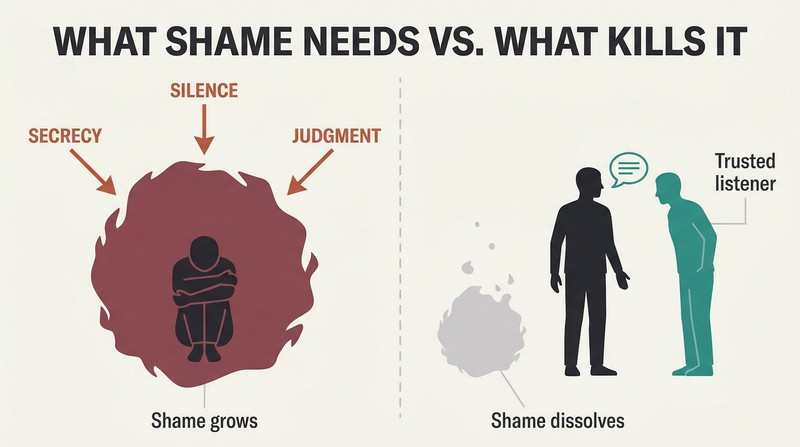
Shame can't survive being spoken to a trusted person
Shame attacks identity, not behavior. Brené Brown defines shame as the intensely painful belief that we are flawed and therefore unworthy of love and belonging. Unlike guilt ("I did something bad"), shame says "I am bad" — and it corrodes our belief that we can change. Guilt motivates apologies and growth; shame drives self-destruction, aggression, and addiction.
Brown's research uncovered four practices of shame resilience:
1. Recognize what triggers your shame
2. Reality-check the messages telling you you're inadequate
3. Reach out to someone who has earned the right to hear your story
4. Use the word "shame" — name the feeling and ask for what you need
After a disastrous speaking event, Brown called her sister, who responded with empathy instead of advice. The shame dissolved the moment it was shared.
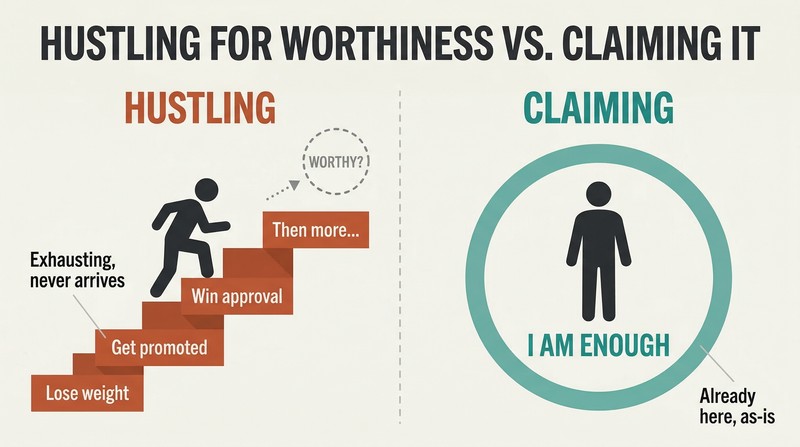
Worthiness isn't earned — claim it now, as-is
The only difference between people who feel deep love and belonging and those who struggle for it is one thing: belief in their own worthiness. Brown calls this Wholehearted living — engaging in life from a place of worthiness rather than constantly performing, perfecting, pleasing, and proving yourself.
Most of us carry unconscious prerequisites: "I'll be worthy when I lose twenty pounds," "when I make partner," "when my parents approve." Brown calls this cycle hustling for worthiness, and it's exhausting. Her research is unambiguous: worthiness doesn't have prerequisites. The men and women living Wholehearted lives weren't people who had "arrived" — they were people who had stopped waiting to arrive. They woke up thinking, "I am enough," and went to bed knowing they were imperfect but still worthy of love.
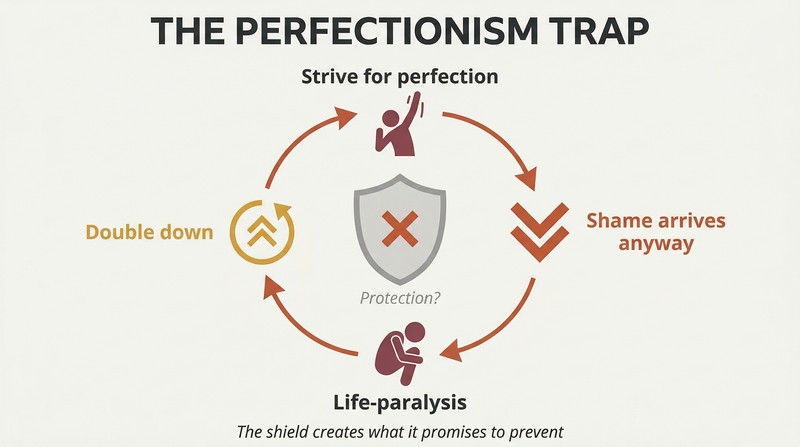
Perfectionism fuels the shame it promises to prevent
Perfectionism isn't high standards. It's the belief that living, looking, and doing everything perfectly will shield you from shame and judgment. It's other-focused ("What will they think?") rather than self-focused ("How can I improve?"). Research shows it hampers achievement and often leads to depression, anxiety, and addiction.
The trap is self-reinforcing. When shame arrives despite our best efforts, we don't question perfectionism's logic — we double down. Brown calls the fallout life-paralysis: the dreams unfollowed, the art unshared, the risks untaken because our self-worth is on the line. The antidote is self-compassion, which researcher Kristin Neff breaks into self-kindness, common humanity (suffering is shared, not uniquely yours), and mindfulness that neither suppresses nor exaggerates painful feelings.
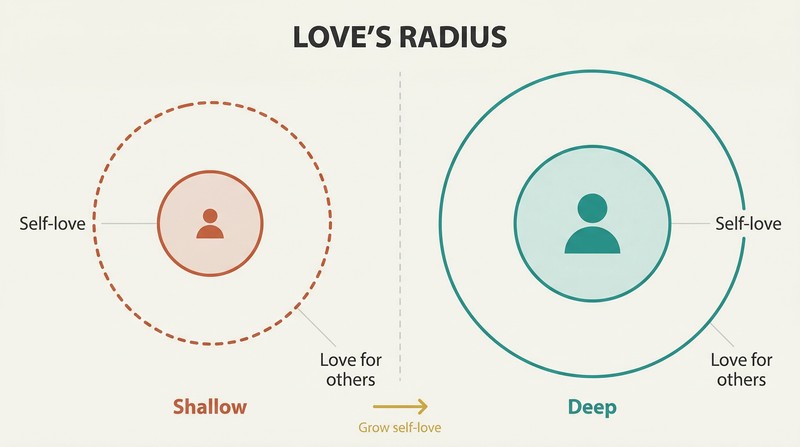
You can only love others as deeply as you love yourself
Brown spent years avoiding the word "love" in her research because she couldn't define it rigorously. After a decade of interviews, she landed here: love is cultivated when we allow our most vulnerable selves to be deeply seen, honored with trust, respect, kindness, and affection. Love isn't given or received — it's grown between two people, and it can only extend as far as each person's self-love allows.
This was personally painful for Brown. Loving her children was easy; turning that kindness inward was not. But the data was clear. If you'd never call someone you love "stupid" or "an idiot," you can't talk to yourself that way either. Practicing self-love means treating yourself with the same respect you'd offer someone you deeply cherish.
Fitting in is the opposite of belonging
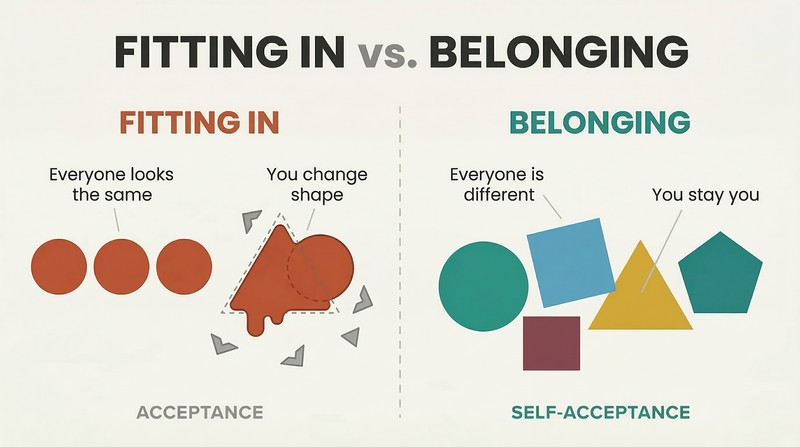
Most people confuse these terms. Brown's research reveals they're adversaries. Fitting in means assessing a situation and shapeshifting into whoever you need to be for acceptance — chameleon behavior. Belonging requires the opposite: showing up as your authentic, imperfect self and being embraced for it.
Belonging is hardwired, primal, connected to survival instinct. That's precisely why we settle for the hollow substitute of fitting in. It's easier to say, "I'll be whoever you need me to be, as long as I feel included." From gangs to gossip circles, we'll do almost anything to simulate belonging. But the paradox is inescapable: true belonging only arrives when we stop performing for it. And that requires a level of self-acceptance that our perfectionist culture actively undermines.
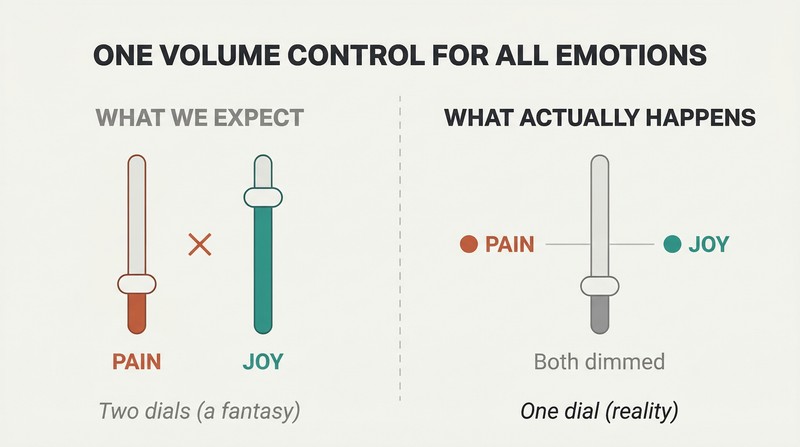
Numbing pain always numbs joy too
There are no separate volume controls for emotions. When we reach for alcohol, food, work, shopping, busyness, or perfectionism to dull vulnerability and pain, we simultaneously mute joy, gratitude, and connection. Brown calls this the most life-changing finding of her research.
The cycle is vicious: less joy means a smaller emotional reservoir when hard times hit, making pain feel sharper, which drives more numbing. Brown experienced this herself as what she calls a "take-the-edge-off-aholic" — not one dramatic addiction but a buffet of banana bread, email, busyness, and perfectionism. The Wholehearted people she studied weren't immune to numbing urges; they'd simply developed the ability to lean into discomfort. Addiction research confirms that intensely positive experiences trigger relapse as often as painful ones.
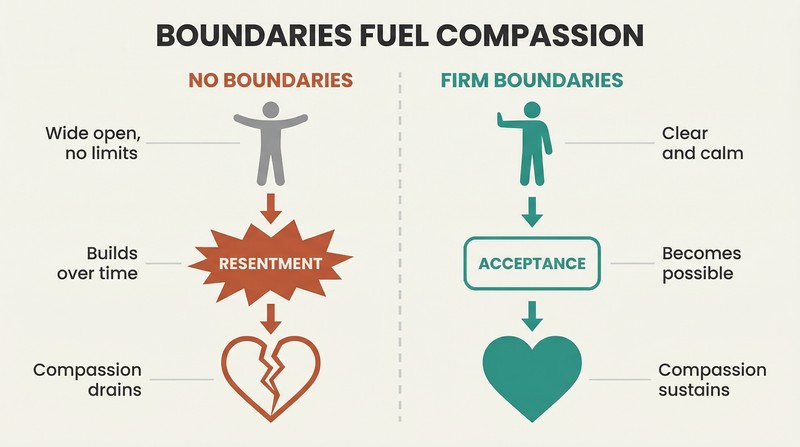
The most compassionate people set the firmest boundaries
This was the biggest surprise in Brown's compassion research. She expected warm, boundaried-less empaths. Instead, the most genuinely compassionate participants were the most boundary-conscious. The logic is simple: compassion requires acceptance, and it's nearly impossible to accept someone who's walking all over you. Without boundaries, resentment builds — and resentment poisons compassion.
Brown illustrates this with a manager who publicly humiliates employees instead of enforcing consequences. When asked about formal accountability — written warnings, HR involvement — he balked: "That's a big hassle." But shaming redirects attention from the employee's behavior to the manager's cruelty. Brown's principle: you can fire someone, fail a student, or discipline a child while treating them with dignity. Separate the person from the behavior.
Practice gratitude to create joy, not the reverse
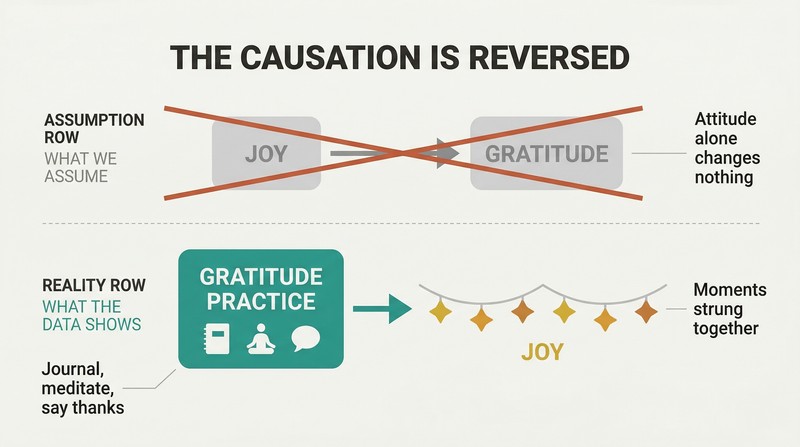
Brown assumed joyful people were grateful because they had so much to appreciate. Her data reversed the causation. Without exception, every person who described themselves as joyful actively practiced gratitude — keeping journals, doing daily meditations, saying thanks out loud mid-day.
The key word is practice. Brown distinguishes between a gratitude "attitude" and a gratitude practice. She compares it to her own "yoga attitude" — she valued mindfulness and owned the outfits but had never actually stepped on a mat. An attitude without action changes nothing. Meanwhile, scarcity thinking — "not enough sleep, time, money, beauty" — is the enemy of both gratitude and joy. Brown describes joy as twinkle lights: not a floodlight that stays on, but moments gracefully strung together by trust, gratitude, inspiration, and faith.
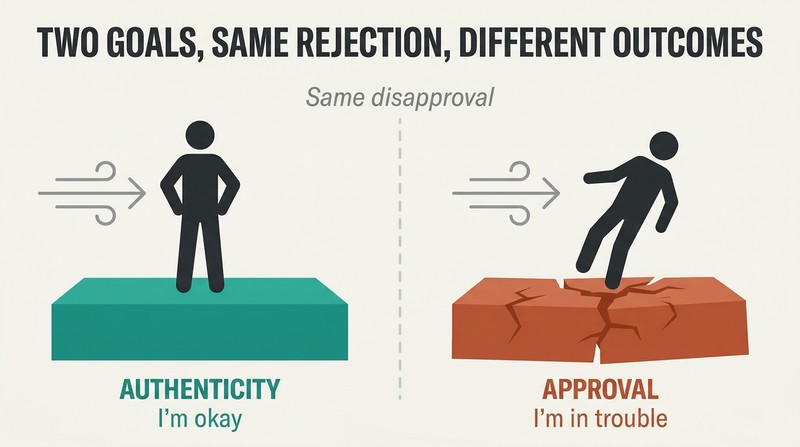
Make authenticity the goal and approval becomes irrelevant
Authenticity is a daily practice, not a personality trait. Brown defines it as letting go of who you think you're supposed to be and embracing who you are. Some days you nail it; other days, full of self-doubt, you sell yourself out to be whoever the room needs.
Brown tells of a speaking host who demanded she keep things "light and breezy" — no shame, no discomfort, just happiness tips. Brown complied and bombed spectacularly, delivering forty minutes of empty pleasantries. Years later, she told that disaster story at a prestigious event with astrophysicists and CEOs, risking total vulnerability — and finished in the top two speakers. The lesson was crystallized: trading authenticity for safety doesn't just feel bad, it backfires. Brown warns it can manifest as anxiety, depression, addiction, and inexplicable grief.
Exhaustion is not a status symbol — schedule play and rest
Play isn't optional. Psychiatrist Stuart Brown's research shows play shapes the brain, fosters empathy, and fuels creativity — and its opposite isn't work but depression. Yet in a culture where self-worth is tied to productivity, purposeless activity feels irresponsible. The CDC links insufficient sleep to diabetes, heart disease, obesity, and depression, but we still treat exhaustion as a badge of honor.
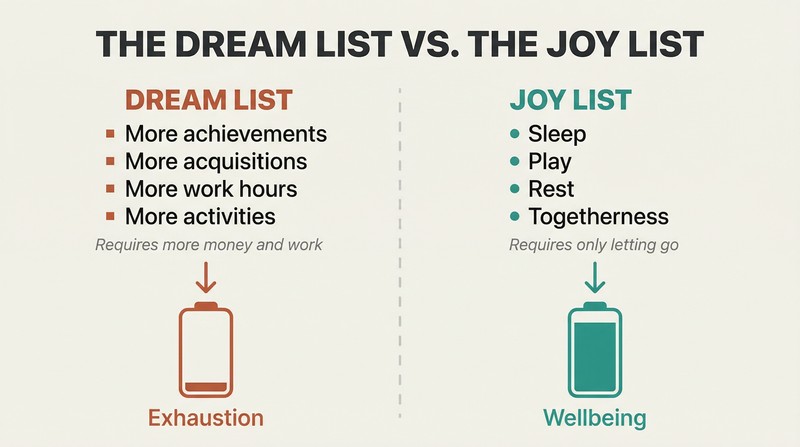
Brown and her husband made a radical experiment: they listed conditions present when their family felt genuinely good — sleep, exercise, cooking together, unstructured time. Then they compared it to their "dream list" of accomplishments and acquisitions. The dream list required more money and work; the joy list required only letting go. They cut work hours and their daughter's activities — and discovered they were already living their dream.
Analysis
Brené Brown's The Gifts of Imperfection occupies an unusual position in the self-help canon: it's a research-backed argument against the very self-improvement mindset that most self-help books reinforce. Where the genre typically promises optimization, Brown delivers something more subversive — the claim that our relentless drive to be better is itself the primary obstacle to living well.
The book's most significant intellectual contribution is the reframing of vulnerability. In Western culture, vulnerability is coded as weakness, something to be managed or eliminated. Brown's data inverts this entirely: vulnerability is the birthplace of love, belonging, joy, courage, empathy, and creativity. Without it, we get a life that looks polished from the outside but feels hollow within. This is not merely therapeutic intuition; it emerges from over a thousand research interviews using Grounded Theory methodology, giving the work a sturdier empirical foundation than most entries in the genre.
What makes the thesis particularly difficult to dismiss is Brown's willingness to be her own case study. Her 2007 breakdown — triggered by her own data contradicting how she lived — is not performative vulnerability but methodological honesty: the researcher discovered her life was an exhibit in the 'Don't' column. This self-implication gives the work a credibility that purely prescriptive books lack.
The most counterintuitive findings — that compassion requires boundaries, that fitting in sabotages belonging, that numbing pain numbs joy — function as the book's hidden architecture. Each reveals a mechanism where the culturally endorsed strategy (people-pleasing, conformity, emotional suppression) produces the opposite of its intended effect. This structural pattern mirrors the paradox at the book's heart: trying to avoid imperfection guarantees suffering, while embracing it unlocks connection. A decade after publication, this paradox has only become more urgent as social media has industrialized the performance of perfection Brown warned against.
Review Summary
Readers find Brown's approach refreshingly honest and relatable, appreciating her blend of research and personal anecdotes. Many praise the book for its practical advice on cultivating self-acceptance and resilience. Critics note that some concepts feel repetitive or oversimplified. Overall, most readers find the book insightful and potentially life-changing, though some struggle to implement the ideas in practice.
People Also Read









Glossary
Wholehearted living
Engaging from a place of worthinessBrown's central concept describing a way of living that cultivates courage, compassion, and connection by embracing vulnerability and imperfection. It emerged from analyzing thousands of research interviews with people who described deep love, belonging, and resilience. It is not a destination but a daily practice of believing 'I am enough' rather than performing, perfecting, and people-pleasing to earn worthiness.
Shame resilience
Recognizing and moving through shameThe ability to identify shame when it occurs, move through it constructively while maintaining worthiness and authenticity, and develop more courage, compassion, and connection as a result. Brown identifies four elements: recognizing personal shame triggers, reality-checking inadequacy messages, reaching out to trusted people, and speaking openly about shame using the word itself. Shame resilience grows stronger with practice.
Ordinary courage
Speaking your truth vulnerablyBrown's redefinition based on the Latin root 'cor' (heart). In its earliest form, courage meant 'to speak one's mind by telling all one's heart.' Ordinary courage is not heroics—it's putting vulnerability on the line by sharing honest feelings, asking for help, admitting confusion, or letting your imperfect self be seen. Brown contrasts it with heroic courage, which risks physical life rather than emotional exposure.
DIG Deep
Deliberate, Inspired, Going frameworkBrown's replacement for the old 'push through' mentality when exhausted or overwhelmed. Instead of soldiering on, get Deliberate in thoughts and behaviors through prayer, meditation, or intention-setting; get Inspired to make new and different choices; and get Going by taking action. Each of the book's ten guideposts includes a DIG Deep section with Brown's personal strategies and prompts for the reader's own.
Life-paralysis
Missed chances from perfectionism fearA consequence of perfectionism where people avoid putting anything into the world that could be imperfect. It encompasses unfollowed dreams, unshared creative work, and untaken risks because self-worth has become tied to flawless performance. Brown distinguishes it from healthy caution—life-paralysis is driven specifically by the fear of failing, making mistakes, or disappointing others.
Hustling for worthiness
Performing to earn love and belongingBrown's term for the exhausting cycle people enter when they don't believe they are inherently worthy of love and belonging. It manifests as constantly performing, perfecting, pleasing, and proving oneself. The hustle has its own 'soundtrack'—internal shame messages like 'What will people think?' and 'Who do you think you are?' Brown contrasts hustling with claiming worthiness as a birthright.
Gremlins
Internal 'never enough' shame voicesBrown's shorthand for the shame-driven internal messages that tell us we're inadequate. Also called 'shame tapes,' they whisper things like 'What will people think?' and 'Who do you think you are?' They are especially loud when we're about to be vulnerable, authentic, or creative. Brown recommends writing down gremlins' messages—not to give them power, but to acknowledge and disarm them.
FAQ
What's "The Gifts of Imperfection" about?
- Core Message: "The Gifts of Imperfection" by Brené Brown is about embracing one's imperfections and vulnerabilities to live a more authentic and wholehearted life.
- Wholehearted Living: The book introduces the concept of "Wholehearted Living," which involves engaging in life from a place of worthiness and cultivating courage, compassion, and connection.
- Guideposts: Brown outlines ten guideposts that help readers let go of societal expectations and embrace their true selves.
- Research-Based: The book is grounded in Brown's extensive research on shame, vulnerability, and resilience.
Why should I read "The Gifts of Imperfection"?
- Self-Acceptance: It offers insights into self-acceptance and the importance of embracing imperfections rather than striving for perfection.
- Practical Guidance: The book provides practical advice and strategies for cultivating a more authentic and fulfilling life.
- Research-Driven: Brené Brown's work is based on years of research, making her insights credible and relatable.
- Empowerment: Readers are encouraged to let go of societal pressures and live a life that aligns with their true values and desires.
What are the key takeaways of "The Gifts of Imperfection"?
- Embrace Vulnerability: Vulnerability is not a weakness but a source of strength and connection.
- Cultivate Worthiness: Feeling worthy is essential for experiencing love and belonging.
- Let Go of Perfectionism: Perfectionism is a shield that prevents us from taking risks and being authentic.
- Practice Gratitude and Joy: Regularly practicing gratitude can lead to a more joyful life.
What are the best quotes from "The Gifts of Imperfection" and what do they mean?
- "Owning our story...": This quote emphasizes the courage required to accept and love ourselves, flaws and all.
- "Wholehearted living is about...": It highlights the importance of self-worth and the courage to embrace imperfection.
- "The dark does not destroy the light...": This quote suggests that fear of vulnerability can overshadow joy, but embracing it can lead to a fuller life.
- "Courage is like...": It underscores the idea that courage is a habit developed through practice, not an innate trait.
How does Brené Brown define "Wholehearted Living"?
- Engagement from Worthiness: Wholehearted living involves engaging in life from a place of worthiness and self-acceptance.
- Courage, Compassion, Connection: These are the core components of wholehearted living, allowing individuals to embrace vulnerability and imperfection.
- Daily Practice: It is a continuous process of making choices that align with one's true self and values.
- Letting Go: It requires letting go of societal expectations and the need for perfection.
What are the ten guideposts in "The Gifts of Imperfection"?
- Cultivating Authenticity: Letting go of what people think.
- Cultivating Self-Compassion: Letting go of perfectionism.
- Cultivating a Resilient Spirit: Letting go of numbing and powerlessness.
- Cultivating Gratitude and Joy: Letting go of scarcity and fear of the dark.
- Cultivating Intuition and Trusting Faith: Letting go of the need for certainty.
- Cultivating Creativity: Letting go of comparison.
- Cultivating Play and Rest: Letting go of exhaustion as a status symbol and productivity as self-worth.
- Cultivating Calm and Stillness: Letting go of anxiety as a lifestyle.
- Cultivating Meaningful Work: Letting go of self-doubt and "supposed to."
- Cultivating Laughter, Song, and Dance: Letting go of being cool and "always in control."
How does Brené Brown address perfectionism in "The Gifts of Imperfection"?
- Perfectionism as a Shield: Brown describes perfectionism as a shield used to avoid blame, judgment, and shame.
- Self-Destructive: It is self-destructive because perfection is unattainable and leads to self-blame.
- Other-Focused: Perfectionism is about earning approval and acceptance from others, not self-improvement.
- Embrace Imperfection: Overcoming perfectionism involves embracing imperfections and practicing self-compassion.
What role does vulnerability play in "The Gifts of Imperfection"?
- Source of Strength: Vulnerability is portrayed as a source of strength and a prerequisite for connection and authenticity.
- Courageous Act: Embracing vulnerability is seen as a courageous act that leads to a more fulfilling life.
- Connection and Empathy: Vulnerability fosters connection and empathy, allowing for deeper relationships.
- Letting Go of Fear: It involves letting go of the fear of judgment and embracing one's true self.
How does Brené Brown suggest cultivating gratitude and joy?
- Gratitude Practice: Brown emphasizes the importance of actively practicing gratitude through journals, meditations, or verbal acknowledgments.
- Joy as a Spiritual Practice: Joy is described as a spiritual practice tied to gratitude and a belief in human interconnectedness.
- Difference from Happiness: Joy is distinguished from happiness as being more deeply connected to gratitude and less dependent on external circumstances.
- Overcoming Scarcity: Practicing gratitude helps overcome the scarcity mindset and fear of vulnerability.
What is the relationship between shame and resilience in "The Gifts of Imperfection"?
- Shame as a Barrier: Shame is identified as a barrier to worthiness and connection, often leading to feelings of unworthiness.
- Shame Resilience: Developing shame resilience involves recognizing shame triggers, practicing critical awareness, and sharing stories with trusted individuals.
- Healing Through Connection: Shame is healed through connection and sharing experiences with others.
- Empowerment: Building resilience empowers individuals to embrace their imperfections and live authentically.
How does Brené Brown define and explore the concept of "spirituality" in the book?
- Connection and Love: Spirituality is defined as recognizing and celebrating our interconnectedness through love and compassion.
- Foundation of Resilience: It serves as a foundation for resilience, providing meaning and purpose in life.
- Beyond Religion: Spirituality is not confined to religion but is about a broader sense of connection and belonging.
- Combatting Fear and Hopelessness: It helps combat feelings of fear, hopelessness, and disconnection.
How does "The Gifts of Imperfection" address the need for creativity?
- Creativity as Essential: Creativity is seen as essential for expressing originality and cultivating meaning in life.
- No Creative Types: Brown argues that everyone is creative, and unused creativity can lead to resentment and fear.
- Letting Go of Comparison: Embracing creativity involves letting go of comparison and societal expectations.
- Unique Contribution: Creativity is the unique contribution each person can make to the world, fostering self-acceptance and authenticity.
About the Author
Other books by Brené Brown






Download PDF
Download EPUB
.epub digital book format is ideal for reading ebooks on phones, tablets, and e-readers.








































