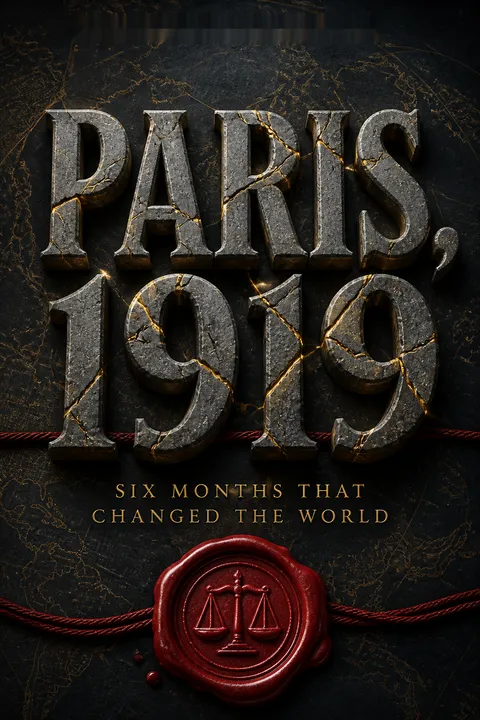

Key Takeaways
1. The Big Three's Personalities Shaped the Peace
Their failings and their strengths, their fatigue and their illnesses, their likes and dislikes were also to shape the peace settlements.
Diverse leaders. The Paris Peace Conference was dominated by three powerful figures: Woodrow Wilson of the United States, Georges Clemenceau of France, and David Lloyd George of Britain. Each brought a distinct personality, national agenda, and wartime experience to the negotiating table, profoundly influencing the outcomes. Wilson, the idealistic academic, sought a new world order; Clemenceau, the pragmatic "Tiger," prioritized French security and retribution; and Lloyd George, the adaptable politician, balanced imperial interests with public demands.
Personal dynamics. Their interactions were a mix of cooperation and intense friction. Wilson, often seen as rigid and self-righteous, frequently clashed with Clemenceau's cynicism and Lloyd George's perceived opportunism. Clemenceau, in turn, found Wilson naive and Lloyd George untrustworthy, while Lloyd George admired Wilson's vision but found him tactless. These personal chemistries, including moments of camaraderie and bitter arguments, were meticulously recorded by observers and significantly impacted the pace and direction of the negotiations.
Human element. Beyond policy, their individual traits—Wilson's health issues and stubbornness, Clemenceau's age and wit, Lloyd George's energy and political acumen—played a crucial role. Their ability to charm, persuade, or alienate each other often determined the fate of nations. The intense, often daily, face-to-face meetings forced them into a unique, if sometimes dysfunctional, intimacy that shaped the compromises and impasses of the conference.
2. Wilson's Idealism Clashed with European Realpolitik
The President said that he felt the people of the country were primarily interested in bringing about a peace which would insure them against another war, such as they had just gone through.
Moral crusade. Woodrow Wilson arrived in Europe as a messianic figure, believing the United States was "the only disinterested people at the Peace Conference" and that his Fourteen Points offered a blueprint for a just and lasting peace. His vision emphasized:
- Open covenants, openly arrived at
- Self-determination for nations
- A League of Nations for collective security
- No punitive damages or annexations
European skepticism. European leaders, however, viewed Wilson's idealism with a mix of admiration and exasperation. Clemenceau famously remarked, "God himself was content with ten commandments. Wilson modestly inflicted fourteen points on us." Britain and France, having borne the brunt of the war, prioritized tangible security, reparations for immense damage, and the expansion of their empires, often through secret wartime agreements that contradicted Wilsonian principles.
Compromise and disillusionment. The clash between these worldviews led to difficult compromises. Wilson often found himself forced to concede on specific territorial or economic demands to secure support for his overarching goal, the League of Nations. This process left him increasingly disillusioned with his European counterparts, whom he saw as clinging to outdated, self-serving diplomacy, and ultimately contributed to the perception that his principles had been betrayed.
3. The League of Nations: A Flawed Hope for Collective Security
For the first time an organisation was constructed, in essence universal, not to protect the national interest of this or that country . . . but to abolish war.
Central pillar. For Wilson, the League of Nations was the cornerstone of the peace, a mechanism to correct any imperfections in the treaties and prevent future wars through collective security. He insisted it be the first item of business and the opening section of the German treaty, believing it would represent "the organized opinion of humanity."
Design and debate. The League's covenant, largely drafted by British and American experts, envisioned a General Assembly, an Executive Council (dominated by the Great Powers), and a permanent secretariat. However, debates over its powers revealed deep divisions:
- French desire for teeth: France advocated for a League with its own army and compulsory arbitration, fearing a resurgent Germany.
- Anglo-American resistance: Britain and the U.S. opposed a strong military role, wary of open-ended commitments and infringement on national sovereignty.
- Unanimity rule: The requirement for unanimous decisions in most matters, a concession to Great Power concerns, later crippled the League's effectiveness.
Unfulfilled promise. Despite widespread public enthusiasm for the League, its creation was fraught with political maneuvering. Wilson's compromises, particularly on the Monroe Doctrine clause, aimed to secure U.S. ratification, but ultimately failed. The League came into being without its most powerful proponent, the United States, severely undermining its authority and foreshadowing its eventual inability to prevent another global conflict.
4. Self-Determination: A Noble Principle, a Complex Reality
When I gave utterance to those words [that ‘all nations had a right to self-determination’], I said them without the knowledge that nationalities existed, which are coming to us day after day.
A beacon of hope. Wilson's concept of "self-determination" ignited immense hope among oppressed peoples worldwide, from the emerging nations of Central Europe to colonial subjects in Asia and Africa. It promised the right of communities to choose their own governments and institutions, a radical departure from traditional imperial rule.
Ambiguity and challenges. However, the principle proved "controversial and opaque" in practice. Defining a "nation" was complex, often based on shifting criteria like language, religion, or historical claims. In regions like Central Europe and the Balkans, centuries of migration and intermingling had created ethnically diverse populations, making clear-cut borders impossible without creating new minorities.
Selective application. The peacemakers applied self-determination inconsistently, often prioritizing strategic interests or rewarding allies.
- Poland and Czechoslovakia: Gained significant territories, including German and Hungarian minorities, justified by historical claims or economic necessity.
- Austria and Hungary: Stripped of vast lands, leaving millions of their ethnic populations under foreign rule, despite their protests.
- Colonial peoples: Largely denied true self-determination, instead placed under "mandates" of Allied powers, often seen as thinly veiled colonialism.
The selective and often contradictory application of self-determination left a legacy of resentment and instability, fueling future nationalist conflicts.
5. Reparations: A Poisoned Legacy of War Costs and Blame
The subject of reparations caused more trouble, contention, hard feeling, and delay at the Paris Peace Conference than any other point of the Treaty.
The bill for war. The question of who would pay for the immense costs and damages of World War I became a central, and deeply divisive, issue. Allied publics, particularly in Britain and France, demanded that Germany "pay to the utmost," driven by a desire for justice, revenge, and economic recovery.
Defining "damages." Disagreements arose over what constituted "damages." Wilson initially limited it to direct civilian losses, but Lloyd George, under domestic pressure, successfully argued for including:
- Pensions for widows and orphans
- Separation allowances for soldiers' families
This significantly inflated the potential bill and increased Britain's share.
Unfixed sum and "war guilt." Unable to agree on a final figure, the treaty mandated a Reparations Commission to determine the amount later, leading to German accusations of signing a "blank check." Article 231, the "war guilt clause," assigned Germany and its allies responsibility for all war damages, becoming a potent symbol of perceived injustice and fueling German resentment, despite its original intent to establish legal liability for reparations.
Economic and political fallout. The reparations issue poisoned international relations for decades. While the actual payments Germany made were far less than initially demanded, the perception of an unbearable burden contributed to economic instability in Weimar Germany and provided fertile ground for nationalist propaganda, ultimately undermining the peace.
6. The Middle East: Imperial Ambitions and Broken Promises
The British had now some 500,000 men on Turkish soil. The British had captured three or four Turkish Armies and had incurred hundreds of thousands of casualties in the war with Turkey.
Dismantling an empire. The collapse of the Ottoman Empire presented the Allies with a vast territory to reorder. Britain and France, through secret wartime agreements like Sykes-Picot (1916), had already planned to divide the Arab lands, prioritizing their strategic and economic interests, particularly oil.
Conflicting pledges. These plans clashed with promises made to Arab leaders, notably Hussein, the Sharif of Mecca, who was offered British support for an independent Arab state in exchange for revolting against the Turks. The Balfour Declaration (1917) further complicated matters by promising a "national home for the Jewish people" in Palestine, a territory also claimed by Arabs.
Mandates as a compromise. Wilson's insistence on self-determination led to the concept of "mandates," where Allied powers would administer territories "not yet ready to stand by themselves." In practice, these became thinly veiled colonial possessions:
- Britain: Received mandates for Palestine and Mesopotamia (Iraq), securing access to oil and protecting routes to India.
- France: Gained a mandate over Syria (including Lebanon), despite Arab aspirations for independence under Prince Feisal.
Seeds of future conflict. The arbitrary drawing of borders, the imposition of foreign rule, and the conflicting promises left a legacy of deep resentment among Arabs, fueling nationalist movements and contributing to enduring instability in the region. The rise of Turkish nationalism under Mustafa Kemal Atatürk, largely ignored by the peacemakers, ultimately shattered the Treaty of Sèvres and forced a renegotiation of Turkey's borders.
7. Japan's Quest for Equality and Influence in Asia
The Japanese told me with all oriental courtesy that, if we didn’t take their side on this article of the treaty, they couldn’t sign the rest.
Rising power. Japan, a rapidly modernizing nation, arrived in Paris seeking recognition as a major power and the consolidation of its wartime gains in Asia. Having seized German concessions in China's Shantung peninsula and Pacific islands, Japan aimed to establish its influence in the region.
Racial equality clause. A key Japanese demand was the inclusion of a racial equality clause in the League of Nations covenant, reflecting deep-seated resentment over discrimination against Japanese immigrants in Western countries, particularly the U.S. and Australia. This liberal-sounding proposal, however, met strong opposition:
- Australia: Prime Minister Billy Hughes vehemently opposed it, fearing it would undermine the "White Australia" immigration policy.
- United States: Wilson, while personally sympathetic, feared alienating anti-Japanese sentiment in California and jeopardizing Senate ratification of the League.
Shantung compromise. The racial equality clause was ultimately rejected, a significant blow to Japanese prestige. In return, and to prevent Japan from walking out of the conference (especially after Italy's temporary departure), Wilson reluctantly conceded Japan's claims to the former German rights in Shantung, despite China's protests and the principle of self-determination. This decision sparked widespread nationalist outrage in China, leading to the May Fourth Movement.
Long-term implications. Japan's mixed experience in Paris—gaining territory but being denied racial equality—contributed to a growing sense of isolation and a shift towards more aggressive, nationalistic policies in the interwar period, ultimately leading to conflict with China and the Western powers.
8. The New States of Central Europe: Born of Hope, Beset by Conflict
The ‘submerged nations’ are coming to the surface and as soon as they appear, they fly at somebody’s throat. They are like mosquitoes—vicious from the moment of their birth.
A new map. The collapse of the Austro-Hungarian and Russian empires led to the creation or re-establishment of numerous states in Central Europe, including Poland, Czechoslovakia, Yugoslavia, and a much-reduced Austria and Hungary. These nations, long suppressed, eagerly presented their territorial claims in Paris.
Complex borders. Drawing borders based on self-determination proved immensely challenging due to:
- Ethnic intermingling: Centuries of migration created diverse populations, making purely ethnic lines impossible.
- Economic and strategic needs: New states demanded access to ports, railways, and industrial resources, often overriding ethnic considerations.
- Historical claims: Nations invoked ancient kingdoms and past glories to justify expansive territorial demands.
Internal and external strife. The new states were often fragile, grappling with internal divisions and external threats.
- Poland: Reborn after 123 years, it faced wars with Bolshevik Russia and disputes with Germany, Lithuania, and Czechoslovakia over its borders.
- Czechoslovakia: Praised for its democratic leaders, it nevertheless incorporated millions of Germans (Sudetenland) and Hungarians, sowing seeds of future conflict.
- Yugoslavia: An uneasy union of Serbs, Croats, and Slovenes, it struggled with internal ethnic tensions and external disputes with Italy, Rumania, and Bulgaria.
The peacemakers, often overwhelmed and lacking local knowledge, frequently made decisions that left significant minorities under foreign rule, creating new grievances and contributing to regional instability.
9. The Treaty of Versailles: A Compromise That Satisfied None
This fat volume was quite unnecessary. They could have expressed the whole thing more simply in one clause—‘L’Allemagne renonce à son existence.’
A monumental task. After months of intense negotiations, the Treaty of Versailles, dealing with Germany, was finalized. It was a complex document, a hybrid of traditional punitive measures and Wilsonian ideals, reflecting the compromises and contradictions of the conference.
Key German terms:
- Territorial losses: Alsace-Lorraine returned to France; significant land to Poland (Polish Corridor, Upper Silesia); Danzig became a free city; all colonies lost.
- Military restrictions: Army limited to 100,000 volunteers; no air force, tanks, or heavy artillery; Rhineland demilitarized and occupied.
- Reparations: Germany held liable for war damages, with the final sum to be determined later.
- War guilt: Article 231, assigning responsibility for the war, became a major point of contention.
German outrage. The German delegation, led by Ulrich von Brockdorff-Rantzau, reacted with shock and indignation, viewing the treaty as a "Diktat" (dictated peace) that betrayed Wilson's Fourteen Points. They particularly resented the war guilt clause and the open-ended reparations, which they believed condemned Germany to "perpetual slave labor."
Allied unease. Even among the Allies, there was significant unease. John Maynard Keynes famously denounced the treaty as a "Carthaginian Peace" that would cripple Europe. Lloyd George, though he secured concessions, worried about driving Germany to desperation. Smuts considered not signing. The treaty, a product of conflicting aims and exhausted negotiators, left all parties dissatisfied, laying the groundwork for future revisionism.
10. The Enduring Legacy: Seeds of Future Conflict
When war came in 1939, it was a result of twenty years of decisions taken or not taken, not of arrangements made in 1919.
A flawed peace. The Paris Peace Conference, despite its ambitious goals, is often blamed for setting the stage for World War II. The treaties, particularly Versailles, created deep resentments in Germany and left many unresolved issues across Europe and the Middle East.
Unenforced terms. The League of Nations, weakened by the absence of the U.S. and the unanimity rule, proved incapable of enforcing the peace terms. Allied powers, exhausted and divided, lacked the will to consistently uphold the treaty's provisions, allowing Germany to rearm and pursue aggressive policies in the 1930s.
Rise of new threats. The conference failed to adequately address the rise of new, aggressive ideologies:
- Bolshevism: Though contained, the Soviet Union remained a revolutionary force, and its alliance with Germany in the 1920s undermined the peace.
- Nationalism: Exacerbated by the uneven application of self-determination, it fueled irredentist movements and conflicts over minorities.
- Fascism: In Italy, the "mutilated victory" narrative contributed to the rise of Mussolini, who openly defied the international order.
Responsibility for the future. While the peacemakers made mistakes, the book argues that the outbreak of war in 1939 was not inevitable. It was the cumulative result of subsequent decisions, or lack thereof, by leaders in the interwar period. The legacy of Paris 1919 was a complex, imperfect framework that required ongoing commitment and wisdom from its successors, which ultimately proved lacking.
Review Summary
Reviewers widely praise Paris 1919 as a comprehensive, engaging account of the Paris Peace Conference, highlighting MacMillan's detailed portraits of Wilson, Clemenceau, and Lloyd George. Many appreciate her argument that the Treaty of Versailles wasn't directly responsible for Hitler's rise. Readers value the book's global scope, covering the Middle East, Balkans, and Far East. Common criticisms include occasional loss of narrative clarity amid dense detail and organizational challenges. Most reviewers award four or five stars, recommending it as essential reading for understanding twentieth-century history's foundations.
People Also Read
About the Author
Other books by Margaret MacMillan

Download PDF
Download EPUB
.epub digital book format is ideal for reading ebooks on phones, tablets, and e-readers.








































