
Key Takeaways
1. Germany's Unification: Forged in Conflict, Not Consensus
As Bismarck himself pointed out in his famous 1862 speech, it would take war to unify the German people.
A patchwork nation. Germany, a collection of thirty-nine individual states, was not a naturally cohesive entity. Centuries of regional loyalties, cultural differences, and the trauma of conflicts like the Thirty Years' War meant that a shared national identity was elusive. The Napoleonic Wars, however, provided a crucial external threat that galvanized a defensive nationalism, uniting Germans against a common French enemy.
Wars of Liberation. The period from 1813 to 1815, known as the Wars of Liberation, saw Prussians, Silesians, and Pomeranians rally as "Germans" against Napoleon. This collective experience of humiliation and subsequent triumph, particularly at the Battle of Leipzig, became a foundational myth for nationhood. Figures like Queen Louise and the volunteer Landwehr units, with their black-red-gold banners, symbolized a burgeoning patriotic movement that transcended local allegiances.
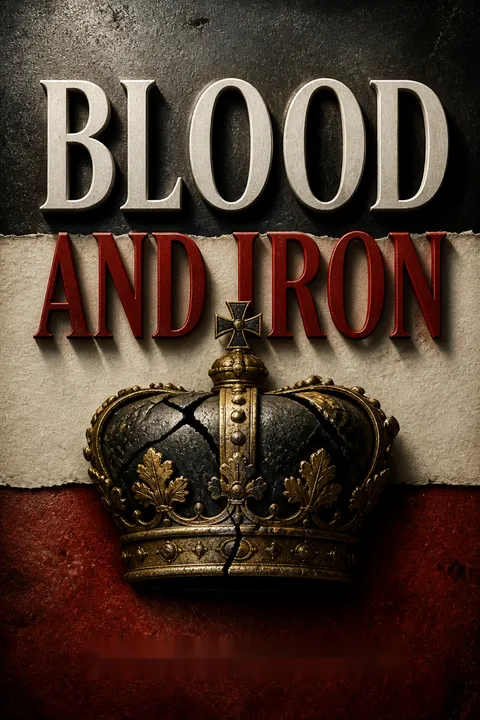
Bismarck's strategy. Otto von Bismarck, the architect of German unification, understood that cultural and economic ties alone were insufficient. He deliberately engineered conflicts against Denmark, Austria, and France to create a binding experience of "blood and iron." This strategy, while effective in forging a new state, also embedded conflict as a central element of German national identity, a precarious foundation for the future.
2. Bismarck's Realpolitik: A Master of Pragmatic Power
Germany is not looking to Prussia’s liberalism, but to its power; Bavaria, Württemberg, Baden may indulge liberalism, and yet no one will assign them Prussia’s role [...] it is not by speeches and majority resolutions that the great questions of the time are decided – that was the big mistake of 1848 and 1849 – but by iron and blood.
Pragmatism over idealism. Bismarck, an arch-conservative Prussian junker, was the epitome of "realpolitik," a political philosophy prioritizing practical considerations over moral or ideological ones. He believed that power, not liberal ideals or parliamentary debate, would decide the "great questions of the day." This conviction guided his actions, from manipulating King Wilhelm I to orchestrating wars.
Ruthless tactics. Bismarck employed a range of amoral and cunning tactics to achieve his goals. Examples include:
- Challenging protocol: Provocatively smoking a cigar in front of his Austrian counterpart in Frankfurt.
- Political maneuvering: Secretly meeting with socialist leader Ferdinand Lassalle to alarm liberals and divide opposition.
- Diplomatic manipulation: Fabricating the "Ems Telegram" to provoke France into declaring war, ensuring Prussia appeared as the injured party.
- Internal enemies: Perpetuating internal conflicts against Catholics (Kulturkampf) and socialists to foster unity against common "Reichsfeinde."
Unquestionable loyalty. Despite his ruthless methods, Bismarck cultivated an image of unquestionable loyalty to the Prussian monarchy, particularly to Wilhelm I. This personal bond, combined with his political genius and intimidating personality, allowed him to dominate German politics for decades, often overriding the Kaiser's reservations and parliamentary opposition.
3. The Empire's Flawed Constitution: A Balancing Act of Paradoxes
Most of the weaknesses of this set-up came from the inherent paradoxes of the German Empire, not from Bismarck’s deliberate attempts to frustrate the constitutional process.
A fragile compromise. Bismarck's constitution for the German Empire was a delicate balancing act, designed to appease diverse interests while preserving Prussian dominance. It created a federal state with significant powers for the twenty-five individual Länder, yet ensured Prussia's central role. This was achieved through a bicameral structure:
- Bundesrat (Upper Chamber): Prussia held 17 of 58 votes, enough to veto any legislation.
- Kaiser: The Prussian King was permanently the German Kaiser, head of state and commander-in-chief.
Limited democracy. While introducing universal male suffrage for the Reichstag (lower chamber), Bismarck carefully curtailed its power. The Reichstag could not initiate legislation and could be dissolved by the Kaiser. The Chancellor answered only to the Kaiser, not to parliament. This system, while appearing democratic, was designed to prevent "mob rule" and maintain elite control, often frustrating Bismarck himself who had to negotiate for budgetary approval.
Inherent contradictions. The constitution embodied fundamental paradoxes: how to maintain a union of states without sacrificing Prussian power, and how to have democracy without threatening monarchical rule. These inherent flaws, rather than Bismarck's personal machinations, created a system prone to conflict and instability. It was a testament to Bismarck's skill that this fragile construct lasted for forty-seven years.
4. Kulturkampf: Bismarck's Battle for a Secular German Identity
Bismarck and his allies the National Liberals were therefore entirely in agreement that action was required in the name of German unity. They saw in it nothing less than a battle for the soul of the German nation, a Kulturkampf.
Catholic minority. The exclusion of Catholic Austria from the German Empire made Catholics a significant minority (one-third of the population) under Protestant Prussian leadership. The newly formed Centre Party, representing Catholic interests, became a formidable political force, challenging Bismarck's vision of a unified, secular German identity.
Papal threat. Bismarck viewed the Catholic Church, particularly after the dogma of Papal Infallibility and the Syllabus of Errors, as a potential "Reichsfeind" – an enemy of the state. He feared papal interference and the divided loyalties of German Catholics, seeing it as a threat to the fragile unity of the new Reich. This paranoia fueled the "Kulturkampf" (culture struggle).
Aggressive secularization. From 1871, Bismarck, with National Liberal support, implemented a series of measures to limit the Church's influence and assert state control:
- "Pulpit Paragraph" (1871): Forbade political expression in churches.
- School Inspection Law (1872): Gave the state control over all schools, including confessional ones.
- Jesuit Expulsion (1872): Banned Jesuits from Germany.
- "May Laws" (1873): Subjugated the Church to state control, requiring state-approved degrees for clergy and state oversight of appointments.
- Civil Marriage (1874): Made civil ceremonies the only legal form of marriage.
These aggressive measures backfired, strengthening Catholic solidarity and boosting the Centre Party's electoral success. While many laws were later repealed, the Kulturkampf ultimately contributed to the secularization of German society, shifting the primary cultural reference point from denomination to nationhood.
5. Economic Transformation: Germany's Rise as an Industrial Giant
United, it was now the biggest European state in terms of both landmass and people and therefore had the potential to develop the largest economy.
Ideal conditions. Germany possessed ideal geographical conditions and vast natural resources—iron ore, coal, and minerals—alongside fertile agricultural land. The Zollverein (customs union) had already laid the groundwork for economic integration, and unification in 1871 unleashed Germany's full industrial potential, leading to the "Second Industrial Revolution."
The Gründerzeit boom. The early years of the Empire, known as the Gründerzeit (Founders' Period), saw a massive economic boom. French reparations from the Franco-Prussian War provided a financial injection, fueling investment in infrastructure, particularly railways, which doubled between 1871 and 1890. Heavy industry flourished, with pig iron production soaring, and new corporations like Deutsche Bank emerged.
From free trade to protectionism. The "Great Panic of 1873" triggered Germany's first recession, leading to disillusionment with liberal free-market policies. Bismarck, responding to pressure from industrialists and landowners (the "Marriage of Iron and Rye"), shifted to protectionism with the Tariff Act of 1879. This, combined with continued innovation in chemicals, electrical goods, and mechanical engineering, transformed Germany into a modern industrial giant, rivaling its Western European neighbors and establishing the "Made in Germany" reputation.
6. Wilhelm II's "New Course": From Caution to Global Ambition
He wanted a unified nation with a strong central monarchy that was world-leading in terms of technological, military and naval power.
Breaking with Bismarck. Upon ascending the throne in 1888, Wilhelm II, a young and ambitious Kaiser, sought to establish his personal rule, free from Bismarck's overbearing influence. He envisioned himself as a neo-absolutist monarch, a reincarnation of Frederick Barbarossa, who would lead Germany to greatness. This "New Course" marked a decisive shift from Bismarck's cautious foreign policy of "saturation."
Weltpolitik and Flottenpolitik. Wilhelm's ambition was to secure Germany's "place in the sun" as a global power (Weltpolitik), rivaling Britain and France. This necessitated a massive naval expansion (Flottenpolitik), driven by figures like Admiral Alfred von Tirpitz and inspired by Alfred Thayer Mahan's theories on sea power. Despite Bismarck's warnings about a "nightmare of coalitions," Wilhelm pursued:
- Colonial expansion: Acquiring territories in Africa and Asia, though often financially fruitless.
- Naval build-up: Passing Naval Laws (1898, 1900, 1906, 1908) to build a fleet capable of challenging Britain.
Diplomatic blunders. Wilhelm's personal rule, characterized by impulsive decisions and reliance on a "camarilla" of flatterers, led to diplomatic isolation. His clumsy attempts to drive a wedge between Britain and France, such as the First Moroccan Crisis (1905), only solidified the Entente Cordiale. His infamous "Hun Speech" and "Daily Telegraph Affair" further damaged Germany's international standing and his own authority.
7. Internal Divisions Persist: The Rise of Social Democracy
The SPD became the single largest party in the Reichstag in 1912 and thus posed a serious source of opposition on the eve of the First World War.
The "Social Question." Rapid industrialization created a growing urban proletariat, leading to debates about wealth distribution and working conditions. Karl Marx's ideas gained traction as workers faced long hours, low wages, and poor living conditions, especially after the 1873 recession. This fueled the growth of socialist parties.
Bismarck's dual approach. Bismarck initially branded socialists as "Reichsfeinde" (enemies of the state) due to their internationalist stance and perceived disloyalty. After two assassination attempts on Wilhelm I, he pushed through the Anti-Socialist Laws (1878), banning socialist organizations and publications. However, recognizing that repression alone was insufficient, he also introduced pioneering social welfare legislation:
- Sickness Insurance Act (1883): Provided sick pay.
- Accident Insurance Act (1884): Employer-funded accident insurance.
- Old Age and Disability Act (1889): Introduced pensions for the elderly and disabled.
SPD's growing power. Despite repression and welfare, the Social Democratic Party (SPD) continued to grow, becoming the largest party by popular vote in 1890 and the single largest party in the Reichstag by 1912. This reflected a shift from revolutionary rhetoric to a more pragmatic pursuit of social reform through parliamentary means, posing a significant challenge to the conservative establishment.
8. Militarism and Nationalism: A Double-Edged Sword for Unity
This intermingling of the concepts of nation, people and race found its conceptual outlet in the word völkisch, which self-appointed linguistic hygienists such as Hermann von Pfister-Schwaighusen even suggested as a replacement for the word ‘national’ as the latter had its origins in Latin, not German.
Romanticized military. The military held a special, romanticized status in German society, deeply intertwined with national identity. From the Wars of Liberation to the unification wars, soldiers were seen as heroes, and compulsory military service fostered a sense of national belonging and camaraderie among young men, regardless of class or region.
Aggressive nationalism. By the turn of the century, German nationalism evolved from its liberal roots into a more aggressive, "friend-foe" concept. Social Darwinism, emphasizing struggle and survival of the fittest, was applied to nations and races. Figures like Houston Stewart Chamberlain promoted "völkisch" ideology, defining nationhood on ethnic and racial grounds, which fueled virulent anti-Semitism and hostility towards minorities.
Unity through conflict. This aggressive nationalism, combined with a love for order and discipline, provided a powerful unifying force for elites and workers alike. The clamor for Weltpolitik and Flottenpolitik was framed as a struggle for national survival, diverting attention from internal divisions. The "Captain of Köpenick" incident (1906) humorously highlighted the ingrained obedience to military authority, even when wielded by a con artist.
9. The Road to Catastrophe: WWI as an "Escape Forwards"
One day the great European War will come out of some damned foolish thing in the Balkans.
Sarajevo spark. Otto von Bismarck's prophetic words from 1888 materialized with the assassination of Archduke Franz Ferdinand in Sarajevo on June 28, 1914. This event triggered a chain reaction in a Europe already militarized and entangled in complex alliances. Wilhelm II, initially viewing it as a localized conflict, offered Austria a "blank cheque" of military support, hoping to deter Russian intervention.
Moltke's "Now or Never." Germany's military leadership, particularly Chief of General Staff Helmuth von Moltke, had long believed a general European war was inevitable. They saw the assassination as an opportunity to strike before Russia's growing military power became insurmountable. The "Schlieffen Plan," designed for a two-front war, dictated a swift, pre-emptive strike against France through neutral Belgium, followed by a redeployment to the Eastern Front.
The "Spirit of 1914." Germany's declaration of war on Russia (August 1) and France (August 3) was framed by Chancellor Bethmann-Hollweg as a defensive necessity against a "world of enemies." This narrative, despite underlying anxieties, fostered a widespread "Augusterlebnis" (August experience) – a surge of defiant patriotism and national unity. Wilhelm II famously declared, "I no longer recognise parties, I know only Germans," temporarily silencing internal political strife and paving the way for the "Burgfrieden" (fortress truce).
10. Total War and Silent Dictatorship: The Empire's Final Years
The Silent Dictatorship was fully set up.
Burgfrieden and military control. The "Burgfrieden" saw the Reichstag voluntarily surrender its powers, suspending elections and parliamentary meetings. This allowed the military to seize executive control through Article 68 of the constitution, establishing a "Silent Dictatorship." Commanding officers of military districts became de facto political leaders, controlling all aspects of government, from policing to food distribution.
Trench warfare and attrition. The Schlieffen Plan's failure at the First Battle of the Marne led to a deadly stalemate on the Western Front, characterized by brutal trench warfare. Battles like Verdun and the Somme became synonymous with the futility of modern industrial warfare, resulting in millions of casualties for no territorial gain. Germany resorted to heinous tactics like poison gas, Zeppelin raids, and unrestricted submarine warfare, further cementing its image as the "hun."
Home front suffering. The British naval blockade severely impacted Germany's war economy, leading to critical shortages of raw materials and food. Walther Rathenau's War Raw Materials Department attempted to manage resources, but requisitioning and rationing became widespread, culminating in the "turnip winter" of 1916-17. The Hindenburg Programme (1916) implemented total war, prioritizing military needs over civilian welfare, leading to mass starvation and widespread discontent.
Erosion of legitimacy. The immense suffering, combined with the entry of the USA into the war (1917) and the Russian Revolution (1917), shattered the Burgfrieden. Mass strikes and calls for peace grew louder. The military duumvirate of Hindenburg and Ludendorff, who increasingly overshadowed the Kaiser, resisted peace efforts, forcing out Chancellor Bethmann-Hollweg and ignoring the Reichstag's Peace Resolution. This "Silent Dictatorship" ultimately eroded the monarchy's legitimacy and pushed Germany towards collapse.
11. The Empire's Fall: A Legacy of Blood and Iron
The German Empire did not fall to visions of democracy or socialism. Neither was it brought down by the German people or the Allies. The system fell because it was flawed from the outset, built on foundations of war, not fraternity.
Abdication and revolution. By late 1918, military defeat was inevitable, and the Allies demanded the destruction of Germany's "arbitrary power" as a precondition for peace. On November 9, 1918, facing widespread mutinies (e.g., Kiel) and revolutionary fervor, Chancellor Max von Baden unilaterally announced Wilhelm II's abdication and handed power to moderate SPD leader Friedrich Ebert. Wilhelm fled to the Netherlands, marking the end of the Hohenzollern monarchy.
A fractured future. The "German Revolution" of November 1918 was driven more by war-weariness and despair than by a clear vision for a socialist or democratic utopia. Philipp Scheidemann (SPD) declared a "democratic republic," while Karl Liebknecht (Spartakusbund) proclaimed a "free socialist republic," highlighting the deep ideological divisions that would plague post-war Germany.
Flawed foundations. The German Empire's spectacular demise was a direct consequence of its origins. Forged in "blood and iron," its national identity was perpetually reliant on conflict to overcome internal divisions. This constant hunger for external and internal enemies, combined with an inherently flawed constitution that struggled to balance democracy with authoritarianism, ultimately led to its catastrophic end in 1918. The sacrifices of millions had been for naught, leaving a legacy of resentment and disunity.
People Also Read


Download PDF
Download EPUB
.epub digital book format is ideal for reading ebooks on phones, tablets, and e-readers.








































