
Plot Summary
Gowns and Expectations Unravel
Princess Clíodhna Fionnáin of Álainndore faces the suffocating expectations of her royal parents as she prepares for a politically vital betrothal to Prince Domhnall of Scáilca. The palace buzzes with anticipation, but Clía's anxiety manifests in her obsession with the perfect gown—a symbol of her desire for control in a world where her choices are dictated by others. Her only solace comes from sewing with Sárait, a palace tailor, and the gentle support of Chief Ó Connor, her surrogate uncle. As the day of Domhnall's arrival nears, Clía's doubts about her worth and the future intensify, setting the stage for a confrontation between personal longing and public obligation.
Betrothal Broken, Futures Shattered
The long-awaited betrothal between Clía and Domhnall unravels in a single, devastating conversation. Domhnall, under pressure from his kingdom and father, tells Clía she is not the warrior queen Scáilca needs, shattering her confidence and their friendship. The court's whispers of weakness and failure echo in Clía's mind, and her carefully constructed future collapses. Humiliated and adrift, she is forced to confront the reality that her value has always been measured by others' expectations. The pain of rejection is compounded by the knowledge that her kingdom's fate—and her own sense of self—hangs in the balance.
Shadows on the Border
As Scáilca and Álainndore's alliance falters, external dangers grow. Ionróiran raiders attack Domhnall's caravan, and rumors swirl of Tinelann's collusion with foreign invaders. The political landscape is fraught with suspicion, and the once-stable peace between the five kingdoms teeters. Clía, Domhnall, and Ronan (Domhnall's loyal guard) are drawn into a web of intrigue, where every decision carries the weight of potential war. The Draoi, mystical keepers of balance, warn of the consequences of disunity. The personal and the political become inseparable, as Clía realizes that her private heartbreak is mirrored by the vulnerability of her homeland.
The Warrior's Path Chosen
Determined to prove her worth, Clía resolves to train at Caisleán Cósta, the legendary military academy. Despite her mother's doubts and the court's scorn, she leverages her connections and the support of Ó Connor to secure a place. Her decision is both an act of defiance and a desperate bid to reclaim her future. As she prepares to leave, Clía is haunted by the fear of failure but fueled by a newfound resolve. The journey to Caisleán marks a turning point: she will no longer be defined by others' perceptions, but by her own actions and growth.
Caisleán Cósta: Trials Begin
At Caisleán Cósta, Clía is stripped of her royal privileges and thrust into brutal training. The general, Kordislaen, is merciless, and her fellow trainees—especially the formidable Niamh—are quick to judge her as weak. Clía's first duel ends in humiliation and injury, reinforcing her insecurities. Yet, she finds unexpected camaraderie with Ronan, who quietly helps her learn the basics of swordplay. The academy is a microcosm of the world's harshness, but also a place where Clía can forge a new identity. Each failure is a lesson, and each small victory a step toward self-respect.
Allies, Rivals, and Masks
As weeks pass, Clía's relationships deepen. She forms a tentative alliance with Niamh, whose own ambitions and wounds mirror her own. Sárait, now the academy's tailor, becomes a confidante, while Ronan's steady presence grows into something more intimate. Domhnall, meanwhile, is revealed to be engaged to Niamh, further complicating loyalties. The lines between ally and rival blur, and Clía learns to navigate the shifting dynamics of trust, envy, and affection. Beneath the surface, secrets fester—rumors of spies, missing chiefs, and the Draoi's warnings of imbalance. The academy is both sanctuary and battleground.
Ghostwood: Monsters and Omens
Kordislaen sends the trainees into the haunted Ghostwood to slay mythical beasts—a trial meant to weed out the weak. Clía, Ronan, Domhnall, Niamh, and others must face not only physical danger but the specters of their own fears. The forest is alive with omens: the wail of a bean sídhe, the threat of the Sluagh, and the ever-present possibility of betrayal. Clía's courage is tested as she saves Niamh and confronts her own limitations. The quest for the onchú's head becomes a crucible, forging bonds of loyalty and exposing the cost of violence. Not all return unscathed.
Swords, Secrets, and Spite
Back at Caisleán, Clía and Ronan's partnership deepens through secret training sessions and late-night conversations. Both are haunted by past traumas—Ronan's mother's death, Clía's public failures—but find solace in each other's understanding. As Clía's skills improve, so does her confidence, though the shadow of Domhnall's rejection lingers. The academy's politics intensify: Kordislaen's manipulations, rumors of spies, and the ever-present threat of war. Clía's determination to prove herself is no longer about winning back Domhnall, but about claiming her own strength and agency.
The Onchú's Deadly Hunt
The group's quest to slay the onchú is both a triumph and a tragedy. Clía, Ronan, and their companions succeed in killing the beast, but the victory is marred by injury and the realization that violence leaves lasting scars. The return to Caisleán is bittersweet; the trainees are celebrated, but the cost of survival weighs heavily. Clía's sense of belonging grows, yet she is acutely aware of the fragility of life and the ever-present specter of war. The onchú's venom, collected as a trophy, will later become a tool of betrayal.
Lessons in Blood and Loss
Poison strikes within Caisleán: Sárait is nearly killed, and suspicion falls on Kordislaen. The academy's veneer of safety is shattered, and Clía is forced to confront the reality that even trusted mentors can be traitors. The death of Chief Ó Connor—revealed as a collaborator with Tinelann—devastates Clía, who must kill the man who raised her to save Ronan. The trauma of loss and betrayal is compounded by the knowledge that war is no longer a distant threat but an immediate reality. Clía's innocence is gone, replaced by a hard-won resilience.
Ambition, Betrayal, and Poison
Kordislaen's machinations come to light: he has been manipulating events, using Clía and Ronan as pawns, and collaborating with Tinelann. The academy is riddled with spies, and the lines between friend and foe blur. Clía is dismissed, her achievements dismissed as luck or manipulation. Ronan, torn between loyalty and conscience, infiltrates the enemy camp to uncover Kordislaen's plans. The revelation that the legendary general is a traitor shakes the foundations of trust and forces Clía and her friends to take control of their own destinies.
The General's Game Revealed
As the siege of Caisleán begins, Clía, Ronan, and their allies must rally the defenders and expose Kordislaen's treachery. The battle is brutal, with losses on both sides. Clía's leadership and the power of her enchanted sword—Ríoghain's Jewel—turn the tide. Kordislaen is confronted and defeated, but not before inflicting deep wounds on those who trusted him. The cost of victory is high: friends are lost, and the survivors are forever changed. In the aftermath, Clía and Ronan must decide what kind of future they will fight for.
Siege at Caisleán Cósta
The full force of Tinelann and Ionróir descends on Caisleán. Clía, Ronan, Niamh, and their friends fight desperately to hold the keep. The battle is chaotic and bloody, with moments of heroism and heartbreak. Clía's enchanted sword glows with divine power, and Murphy, her loyal dobhar-chú, becomes an unlikely ally. The defenders are pushed to their limits, and sacrifices are made. In the end, the castle holds, but the victory is bittersweet. The survivors must reckon with the trauma of war and the uncertainty of what comes next.
The Fall of Kordislaen
Kordislaen's death marks the end of an era. Clía, with the help of her friends, confronts and defeats the general, avenging the betrayals and losses he caused. The victory is not without cost: the scars of battle and the weight of leadership press heavily on Clía and Ronan. The keep is saved, but the war is not over. The survivors must rebuild, mourn their dead, and prepare for the challenges ahead. In the quiet after the storm, Clía and Ronan finally confess their love, choosing each other in the face of an uncertain future.
Aftermath: Grief and Growth
In the days following the battle, Caisleán is a place of mourning and renewal. Friends are buried, wounds are tended, and the survivors grapple with the trauma of what they have endured. Clía is recognized as a true curadh, and Ronan is offered a place as chief of war in Álainndore. The bonds forged in battle prove stronger than blood or politics. As the first snows fall, Clía and Ronan prepare to leave for Álainndore, determined to build a new life together and to lead their kingdoms into a more just and united future.
Love, Loyalty, and Leaving
Clía and Ronan say their farewells to the friends who have become family. The pain of parting is tempered by the knowledge that their love has survived every trial. They leave Caisleán for Álainndore, ready to face the challenges of leadership, war, and healing. The journey is both an ending and a beginning—a promise that, together, they can shape a better world. The lessons of the past—about trust, courage, and the cost of ambition—will guide them as they step into the unknown.
A New Dawn in Álainndore
In Álainndore, Clía and Ronan begin a new chapter. The wounds of war linger, but so does the hope of renewal. Ronan's father joins them, and the palace becomes a place of healing and growth. Clía's leadership is tested, but she rises to the challenge, supported by Ronan and the friends who remain. The enchanted sword is kept safe, a symbol of the power and responsibility they now bear. As spring returns, so does the promise of peace. Together, Clía and Ronan face the future—not as pawns, but as partners, ready to write their own story.
Analysis
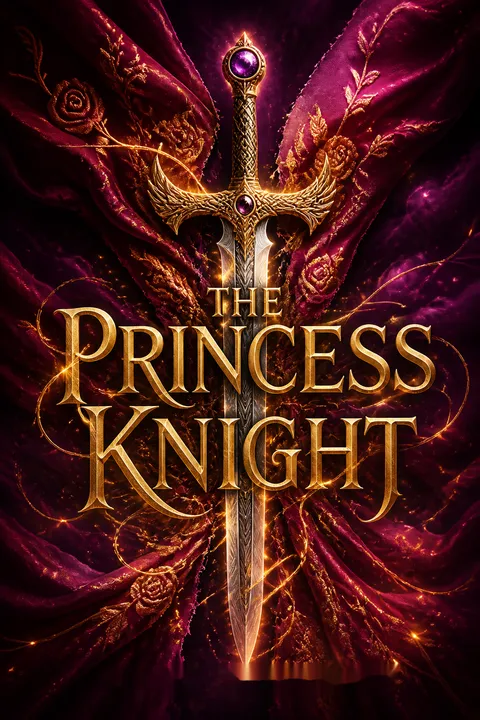
A modern tale of agency, trauma, and chosen familyThe Princess Knight is a subversive, emotionally resonant fantasy that interrogates the nature of strength, leadership, and self-worth. At its core, the novel is about reclaiming agency in a world that seeks to define you by your utility to others—whether as a princess, a pawn, or a weapon. Clía's journey from anxious royal to self-possessed warrior is both a feminist coming-of-age and a meditation on the cost of ambition. The story refuses easy binaries: love is not a reward for strength, nor is vulnerability a weakness. Instead, the characters' growth is rooted in their willingness to confront pain, to trust imperfectly, and to choose hope in the face of betrayal. The novel's use of magical artifacts and divine myth is not escapist, but a metaphor for the power—and danger—of believing in your own potential. In a world fractured by suspicion and war, The Princess Knight argues that true leadership is not about perfection, but about the courage to keep mending what is broken, in yourself and in others. The lessons are clear: trust must be earned, healing is communal, and the future belongs to those who dare to write their own story.
Review Summary
The Princess Knight receives mixed reviews averaging 3.67/5 stars. Readers praise its Legally Blonde-inspired premise, diverse representation, chronic pain portrayal, and protagonist Clía's character growth. Many appreciate the Irish folklore elements and found family dynamics. Common criticisms include the romance lacking chemistry and tension, juvenile writing style despite adult marketing, slow pacing, and Clía's unpreparedness for military academy. Several reviewers note difficulty pronouncing Irish names and wish for a pronunciation guide. The ending feels incomplete to many, who hope for a sequel.
People Also Read

Characters
Clíodhna Fionnáin (Clía)
Clía is the heir to Álainndore, raised in a world of rigid expectations and political machinations. Initially defined by her beauty and her role as a pawn in royal alliances, she is haunted by self-doubt and a desperate need for approval. Her journey is one of transformation: from a sheltered, anxious girl to a warrior and leader who claims her agency. Clía's relationships—with Domhnall, Ronan, Sárait, and her friends—reveal her capacity for loyalty, love, and growth. Her psychological arc is marked by the struggle to reconcile vulnerability with strength, and to find self-worth beyond others' validation. By the end, she is both a survivor and a visionary, determined to shape her own destiny.
Ronan Ó Faoláin
Ronan, born a commoner in Scáilca, is marked by trauma: the loss of his mother to invaders, chronic pain, and the burden of being "gods-blessed." Trained as a warrior and captain of Domhnall's guard, he is fiercely loyal, disciplined, and haunted by the need to prove himself. His relationship with Clía is transformative, offering him both love and a sense of home. Ronan's psychological journey is one of learning to accept his limitations, to trust others, and to choose his own path rather than live as a pawn in others' games. His struggle with pain and self-worth is deeply human, and his ultimate choice to follow Clía to Álainndore is an act of hope and self-acceptance.
Domhnall Lochlainn
Domhnall is the future king of Scáilca, raised to prioritize his kingdom above all else. Charming, clever, and sometimes manipulative, he is both Clía's childhood friend and the architect of her heartbreak. His decision to break their betrothal is driven by political necessity and personal insecurity. Domhnall's arc is one of learning humility, accepting the limits of control, and recognizing the value of true friendship. His engagement to Niamh is pragmatic, and his relationship with Ronan is a touchstone for loyalty and growth. Domhnall embodies the tension between public duty and private longing.
Niamh Morrigan
Niamh is a formidable fighter, the daughter of a legendary curadh, and Domhnall's eventual fiancée. Hardened by her father's death and her mother's paranoia, she is driven by the need to restore her family's honor. Niamh is initially antagonistic toward Clía, but their rivalry evolves into mutual respect and friendship. She is pragmatic about love and marriage, valuing loyalty and strength above sentiment. Niamh's psychological complexity lies in her struggle to balance vulnerability with the armor she wears—both literal and emotional. Her arc is one of learning to trust, to lead, and to find meaning beyond legacy.
Sárait Gráinne
Sárait, a skilled tailor from Álainndore, becomes Clía's closest friend and emotional anchor. Her journey is one of quiet rebellion: escaping a stifling family, forging her own path, and risking her life for the truth. Sárait's relationship with Kían is a subplot of gentle romance, and her near-fatal poisoning is a catalyst for the exposure of Kordislaen's treachery. She represents the power of kindness, resilience, and the importance of chosen family. Sárait's presence grounds Clía and offers a model of self-acceptance and quiet strength.
Kordislaen
Kordislaen is the legendary Sword of Scáilca, a curadh whose reputation is built on ruthlessness and strategic brilliance. Outwardly a mentor, he is ultimately revealed as a traitor, manipulating events for his own gain and collaborating with Tinelann. Kordislaen's psychological profile is marked by a hunger for control, a belief in the ends justifying the means, and a capacity for cruelty masked as pragmatism. His relationship with Ronan is paternal yet exploitative, and his downfall is both a personal and political reckoning. Kordislaen embodies the dangers of unchecked ambition and the corrosive effects of betrayal.
Chief Ó Connor
Ó Connor is Clía's childhood protector and advisor, a figure of warmth and wisdom. His betrayal—collaborating with Tinelann for what he believes is the greater good—devastates Clía and forces her to confront the complexity of loyalty and love. Ó Connor's arc is tragic: his actions are driven by disillusionment with Álainndore's rulers and a desperate desire to save what he can. His death at Clía's hand is a crucible moment, shattering her innocence and forcing her to accept the cost of leadership.
Kían Horgan
Kían, an Oileánstran lísoir, is a charismatic, gender-nonconforming warrior who brings levity and insight to the group. Their romance with Sárait is a subplot of hope and healing. Kían's journey is one of self-discovery, loyalty, and the courage to love openly. They are a bridge between worlds—noble and common, warrior and healer—and their presence is a reminder of the importance of joy and connection amid chaos.
Draoi Griffin
Griffin is a high-ranking Draoi, responsible for guiding the trainees and maintaining the spiritual and magical equilibrium of Inismian. Wise, enigmatic, and quietly powerful, Griffin represents the voice of tradition and the necessity of unity. Their role is to remind the characters—and the reader—of the larger stakes at play: the survival of the land, the will of the gods, and the cost of division.
Murphy
Murphy, Clía's dobhar-chú companion, is both a source of comfort and a reminder of the wild, magical world beyond human politics. His growth from a vulnerable pup to a fearsome ally mirrors Clía's own transformation. Murphy's presence is a thread of hope and resilience, a reminder that even in darkness, there is light.
Plot Devices
The Academy as Crucible
Caisleán Cósta serves as both a literal and metaphorical crucible, stripping characters of privilege and forcing them to confront their limitations. The academy's brutal trials, duels, and quests are not just tests of skill, but of character. The narrative structure uses the academy as a microcosm for the world's conflicts, allowing for intimate character development while foreshadowing the larger war to come.
Betrayal and Shifting Allegiances
The story is driven by betrayals—personal, political, and spiritual. The breaking of Clía and Domhnall's betrothal, Kordislaen's treachery, Ó Connor's collaboration, and the ever-present threat of spies create a landscape where trust is both precious and dangerous. Foreshadowing is used to build suspense, with rumors, missing chiefs, and the Draoi's warnings hinting at deeper rot. The ultimate revelation of Kordislaen's motives reframes earlier events and forces characters to choose their own loyalties.
Magical Artifacts and Divine Intervention
The enchanted sword—Ríoghain's Jewel—serves as both a plot device and a symbol. Its discovery is foreshadowed by legends and the Draoi's teachings, and its power is revealed gradually, paralleling Clía's growth. The artifact is a catalyst for change, granting strength but also demanding wisdom. The gods' presence is felt in omens, dreams, and the land itself, reminding characters that their actions have consequences beyond the mortal realm.
Trauma, Healing, and Self-Discovery
The narrative structure interweaves personal trauma (Ronan's chronic pain, Clía's self-doubt, Niamh's loss) with the external challenges of war and betrayal. Healing is depicted as a communal process—through friendship, love, and shared struggle. The story uses parallel arcs (Clía and Ronan, Domhnall and Niamh) to explore different responses to adversity, and the motif of sewing and mending as a metaphor for self-repair.
The Mask and the Self
Clía's journey is marked by the tension between the mask she wears for others and her true self. The motif of beauty as armor, and the act of sewing as self-expression, are used to explore the cost of living for others' approval. The narrative structure allows for moments of vulnerability—private conversations, secret training, confessions—that reveal the characters' inner lives and the courage required to be seen.
Download PDF
Download EPUB
.epub digital book format is ideal for reading ebooks on phones, tablets, and e-readers.








































