
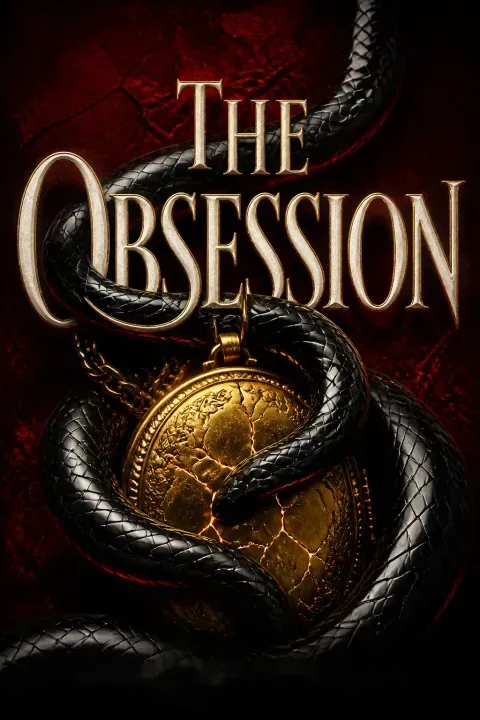


Plot Summary
9:01 a.m.
Logan2 bumps into Delilah1 on the first day of senior year at Draycott Academy. Still fogged by grief over Sophie8's death, he sees Delilah,1 a half-Asian girl who resembles his dead obsession,8 and something reignites.
His phone drops at 9:01 a.m., the screen cracks, and he follows her, learning her name from overhearing Aisha Johnson.5 By day's end, he has researched her online: full name, father's fatal oil rig explosion, Instagram, favorite books by Singaporean mystery author Tan Jing Xu.
That night, he sneaks off campus, takes a bus to her address found through Aisha Johnson5's geotagged sleepover post, and watches Delilah1 through her bedroom window braiding her hair. His purpose crystallizes: he will restore the happy girl from her old photos. Ms. Taylor said this semester would be great.
Logan's instant fixation demonstrates erotomanic delusion in its formative state: the belief that a stranger is destined for him, catalyzed by her resemblance to a previous obsession. His methodical research, from social media scraping to physical surveillance, reveals not love but the collection of a human specimen. The time-stamp (9:01 a.m.) functions as a perverse annunciation, while his framing of stalking as 'restoration' exposes the savior complex that justifies his predation. The scene also establishes Delilah's unknowing objectification: she is seen, catalogued, and possessed before she ever speaks to him.
Paid Vacation
Delilah1 works on library inventory in her room, hiding from her mother6's boyfriend, Brandon Jackson,3 a police detective who has taken over their home and finances. When the ice runs out for his whiskey, his jovial mask slips. He corners Delilah1 and asks if she knows what cops call it when they kill someone by accident.
The answer: paid vacation. He roars with laughter at her terror. Earlier, he warned her about talking to boys, called her dead Singaporean father 'the Chinaman,' and told her she was not to whore around.
Brandon Jackson3 controls everything: the money, the volume of their voices, the hours her mother6 keeps. Delilah1's mom, once a Georgetown-educated tech designer, now scurries to fetch him anchovies and whisper apologies. Delilah1 ferrets away library wages in secret, her only escape route from this house.
Brandon's 'paid vacation' joke is psychological terrorism disguised as humor: a cop telling his victim that state power will protect him if he kills her. The phrase encapsulates the intersection of domestic abuse and institutional immunity. Delilah's mother models learned helplessness, her agency systematically stripped until she cannot conceive of leaving. Delilah, by contrast, hoards money in secret, her survival instinct not yet extinguished. The household operates as a panopticon where even empty ice trays become land mines. Sutanto shows how abuse shrinks a person's world until a trip to buy ice feels like a reprieve from execution.
That's My Girl
Saturday morning, Brandon Jackson3 is working under his Camaro in the garage, Pink Floyd blasting. He yells for Delilah,1 demands more beer and a sandwich, then grabs her attention to issue new rules: no boys, no whoring around. He calls her father 'the Chinaman,' tells her she needs to learn respect.
Then he says it: 'That's my girl,' the exact phrase her beloved late father used after her debate victories and math triumphs. Something snaps. Delilah1 walks toward the back door, and as she passes the jack holding up the Camaro, she swings her foot and trips the lever.
Three and a half thousand pounds of metal crushes Brandon Jackson3's ribcage. Blood pools across the concrete. She vomits, then calls 911. The arriving officers assume accident. A grieving stepdaughter, too shaken to work the jack properly. Delilah1 realizes no one suspects her.
The trigger phrase, 'That's my girl,' represents the ultimate violation: an abuser colonizing the language of love. Brandon's appropriation of her father's words of pride is an act of emotional grave-robbing, and Delilah's response is a reclaiming of agency through lethal force. The killing is not premeditated but neither is it accidental; it occupies the psychological territory of the snapped elastic, the organism finally striking back. Her subsequent performance of the traumatized innocent draws on society's scripts about teenage girls and mechanical incompetence, a mask she will wear with increasing skill. The puddle of blood she jumps back from is the line between victim and killer: once crossed, she cannot uncross it.
The Valkyrie Revealed
Logan2 reviews the footage from the small camera he mounted in a tree outside Delilah1's garage. He had installed it hoping to capture evidence of Brandon Jackson3's abuse, something she could use to get him arrested. Instead, he watches Delilah1 walk past the Camaro, pause, then deliberately kick the jack.
The car sinks. Brandon Jackson3's legs twitch once and go still. Logan2 replays the clip again and again, his pulse quickening not with horror but with exhilaration. His sweet, gentle Delilah1 is not broken.
She is a fighter, a Valkyrie, a girl who delivers vengeance. He saves the video file to a USB drive and threads it onto a chain around his neck. Loving her completely means loving this part of her too, the hard, jagged edge she hides from everyone else. He is the only one who truly knows her.
Where a healthy response would register alarm or moral revulsion, Logan experiences aesthetic and erotic delight. His 'Valkyrie' framing mythologizes Delilah's violence into a form of divine justice, simultaneously elevating her and stripping her of full humanity: she becomes a symbol rather than a girl who killed in desperation. The USB drive worn against his chest literalizes his possession of her secret, a keepsake as intimate as a lover's locket. Logan's reaction exposes the core of his pathology: he does not want Delilah; he wants the version of Delilah he has constructed through surveillance, a curated object who reflects his fantasies of protection and ownership.
The Phone Screen
Logan2 plans the ideal date: an aerial obstacle course, then sandwiches by the river. Delilah,1 freed from Brandon Jackson3's rule against boys, laughs and races him across rope bridges. She kisses him in the car afterward, and for a moment it is everything she wanted.
Then Logan2 says 'I love you' and she recoils. They barely know each other. When she tries to leave, he holds up his phone. The screen shows her garage, her own figure walking past the Camaro, her foot kicking the jack.
He explains he installed cameras to protect her from Brandon Jackson3's abuse, that he knows everything about her and loves her anyway. He has a master copy kept elsewhere. Delilah1 staggers home and researches erotomania on her laptop, recognizing every symptom in the boy who just told her they are soul mates.
The date sequence is a masterclass in coercive control's velvet glove. Every element—the obstacle course from her childhood photos, the music from her playlists, the author she loves—was curated through months of stalking, creating an illusion of natural compatibility that Delilah briefly falls for. The kiss, her first act of genuine agency with Logan, is immediately punished by the revelation that it was never free. His 'I love you' is not a confession but a claim of ownership, and the video is the deed. Delilah's Googling of erotomania marks her transition from confused victim to strategic analyst: she begins studying her predator.
Doughnuts and Doubt
Detective Val Mendez,4 Brandon Jackson3's former partner, arrives with warm doughnuts and coffee on a Sunday morning. Her questions start innocently enough: how was the big date, how is school. But she pivots. She asks about Delilah1's library job and the unusually high pay, then about Brandon Jackson3's behavior before his death.
When Delilah1's mom admits Brandon Jackson3 was abusive, Detective Val Mendez4's expression shifts: she has a motive now. Then Detective Val Mendez4 asks Delilah1 to walk through the day of the accident again. Her questions tighten around timing discrepancies.
Delilah1 catches the detective's eyes flick toward her and knows: Detective Val Mendez4 suspects the daughter. Separately, Delilah1's neighbor Mr. Chan10 reveals that Detective Val Mendez4 requested footage from his security camera, which points directly at the garage.
Mendez functions as the story's superego figure, the principle of consequences that neither Delilah's careful performance nor Logan's blackmail can fully neutralize. Her investigation technique mirrors Logan's in its patient accumulation of detail, but serves an opposing purpose: where Logan collects to possess, Mendez collects to expose. The scene dramatizes Delilah's impossible double bind. She must appear appropriately grief-stricken without seeming guilty, cooperative without volunteering information. The neighbor's security camera introduces a second surveillance threat, suggesting that in a world of ubiquitous recording, every crime leaves traces, and Delilah's freedom depends on outmaneuvering not one watcher but many.
Stalketti Carbonara
Delilah1 starts baking obsessively: red velvet cupcakes, brownies, cookies. Each batch is laced with MDMA and Ambien, pills she takes from the inventory at her secret second job — she is, she gradually reveals, the library assistant who packages Draycott's drug supply for a librarian named Lisa Smith.7
She feeds the drugged treats to Logan,2 watching with cold satisfaction as he becomes twitchy, manic, paranoid. At dinner, she serves him pasta while privately calling it 'Stalketti Carbonara.' Her mother,6 charmed by Logan2's cooking and college ambitions, sees only a devoted boyfriend.
Delilah1 confides a sanitized version to Aisha Johnson:5 she claims Logan2 is blackmailing her over a video of her cheating on a chemistry test. Aisha Johnson,5 furious on her behalf, suggests they break into his dorm room to find and destroy the recording.
The baking sequences invert domestic femininity into a weapon. Cupcakes, coded as nurturing and romantic, become delivery systems for chemical warfare. Delilah's use of her own drug-dealing inventory closes a narrative loop: the same illicit economy that funds her escape plan now provides the means to dismantle her captor. Her jokey name 'Stalketti Carbonara' reveals a psyche learning to metabolize terror into gallows humor. The partial confession to Aisha is strategically brilliant and ethically queasy: she enlists her best friend without granting her the full truth, replicating in miniature the coercive dynamic Logan uses on her. Friendship becomes another instrument of survival.
Lucy's Lesson
Delilah1 accompanies Aisha Johnson5 to the biology lab, where Aisha Johnson5 feeds a live rat to Lucy, the school's pet snake. Delilah1 watches, transfixed, as the rat freezes, one paw raised, and Lucy strikes with impossible speed. The rat's back legs scrabble uselessly; then it is gone, swallowed whole.
Delilah1 recognizes herself in the rat — or, rather, the rat she used to be. She decides to become the snake. That night, Aisha Johnson5 lures Logan2 out of his dorm with a fabricated tip about Sophie,8 while Delilah1 slips into his room.
She plants baggies of pills in his drawers and mattress, searches frantically for the video file, but finds nothing. She realizes it must be stored in the pendant he always wears. Aisha Johnson,5 meanwhile, experiences Logan2's violence firsthand when he grabs and shakes her during their conversation.
The snake-feeding scene is the book's symbolic fulcrum. Delilah's identification shifts from prey to predator in real time, and her subsequent actions—the break-in, the drug planting, the framing—are the behavioral expression of that psychological transformation. The fact that she watches the feeding voluntarily, that she feels drawn to it, suggests her capacity for violence was not created by Brandon's murder but awakened by it. Aisha's role as decoy introduces real stakes for an innocent party; her physical assault by Logan eliminates any moral ambiguity about the danger he represents. From this point forward, Delilah's counterattack is not merely defensive but predatory, and she knows it.
Outside the Empty House
Logan,2 increasingly unhinged from Delilah1's drugged treats, breaks into her house through an upstairs bathroom window. He explores her bedroom, steals an aquamarine earring and her moisturizer, presses his face into her pajamas. When he leaves, he finds Detective Val Mendez4 waiting on the lawn.
She asks why he has a key when Delilah1 never mentioned giving him one. Then she pivots: she is investigating the drug ring at Draycott, and she knows Logan2 has been acting erratic. She asks about Sophie,8 deliberately fumbling the dead girl's name until Logan2 corrects her.
The implication is clear: Detective Val Mendez4 suspects Logan2 was involved in whatever happened to Sophie,8 and now she suspects he is dealing the drugs that killed her. Logan2 realizes he is being framed but cannot prove it.
The confrontation on the lawn crystallizes the story's central irony: Mendez is pursuing the right crimes but attributing them to the wrong perpetrator. She suspects Logan of drug dealing (true, but the drugs are Delilah's) and of foul play in Sophie's death (false). Meanwhile, the actual killer and dealer stands beside her, performing innocence. The scene also dramatizes the disintegration of Logan's control: the meticulous stalker who once installed hidden cameras is now breaking into houses in broad daylight, leaving witnesses, losing his grip on his own narrative. Mendez's deliberate provocation around Sophie's name is expert police work, using emotional pressure to crack a suspect's composure. Logan's involuntary correction betrays him.
Sophie's Glade
Logan2 wakes in the forest clearing where he once watched Sophie8 smoke. He has been sleepwalking, and when Sophie8's voice fills his head — chiding him for failing to save her, warning that he will fail Delilah1 the same way — he does not question its reality. She tells him Delilah1 was sent as a gift, a second chance, and he is squandering it.
The only way to truly protect Delilah1 from the world's dangers, Sophie8's voice explains, is to make her his forever. Like Romeo and Juliet. He must destroy the video to win her trust, make her die loving him, and then join her in death. Logan2 agrees. He calls Delilah,1 voice trembling with joy, and asks to meet by the river that night. He has something wonderful to tell her.
The glade sequence represents Logan's final break from consensual reality. His auditory hallucination of Sophie rationalizes murder-suicide as romantic consummation, and the Romeo and Juliet reference—a cultural script teenagers use to ennoble destructive passion—reveals how literary tropes can scaffold real violence. Sophie's voice functions as Logan's superego externalized, a persecutory conscience that blames him for her death and demands he not repeat the failure. The irony is devastating: the very quality Logan claims differentiates him from Brandon (his 'love' rather than cruelty) leads him to the same endpoint: a man deciding a woman's life belongs to him. His euphoria as he makes this decision is the euphoria of the truly delusional, sealed against doubt.
The River at Night
Delilah1 meets Logan2 by the river, carrying drugged hot chocolate. He unscrews his pendant, removes the USB drive, and snaps it in half, telling her it was the only copy. She hugs him with what looks like gratitude. Then she returns his sport coat, helping him put it on.
His phone rings: his mother, furious. The school has reported him for punching his friend Josh,9 and the dean at NUS rejected his application for plagiarism. Logan2 realizes Delilah1 sabotaged his essay when she had access to his laptop.
He lunges, calling her a stupid bitch. She sidesteps, and he topples into the freezing river. When he claws at the bank, she stomps his injured hand, then seizes his hair and holds his head underwater. His struggles weaken and stop. She pushes the body downstream.
The river scene is structured as an inverted baptism: immersion in water brings not rebirth but death, and the officiant is not a priest but a killer claiming her freedom. Logan's destruction of the USB drive, his single act of genuine relinquishment, is immediately followed by his discovery that Delilah has been sabotaging him all along. The timing is almost tragic: he became capable of trust only after she had already decided he must die. Delilah's method—drowning—is intimate in a way the Camaro killing was not. She feels his body fight and go still. The coat she returns to him becomes a waterlogged anchor, a detail that suggests her planning extended even to his wardrobe. She came to the river prepared to kill if necessary, and when his violence gave her justification, she did not hesitate.
The Snake Emerges
Delilah1 retrieves the broken USB pieces from the riverbank, changes out of her wet clothes, and walks to the library. Lisa Smith,7 the librarian who runs the drug operation, accuses her of stealing product. Delilah1 counters calmly: the missing inventory was used to frame someone else, taking police attention off them both.
She demands Lisa Smith7 log her into the work roster from 6 p.m. to 9 p.m., providing an alibi for the drowning. Lisa Smith,7 frightened by this new, cold Delilah,1 complies and then fires her.
Delilah1 walks out of the library for the last time, crying but feeling something unexpected: not guilt, but freedom. She thinks about predators and realizes she has become one. Brandon Jackson,3 Logan,2 even Lisa Smith:7 all predators, each in their own way. And now her. She finds she does not entirely mind.
The final chapter completes Delilah's arc from prey to predator with unsettling ambiguity. Her handling of Lisa demonstrates mastery of the same coercive logic Logan used on her: I know what you've done, and you'll do what I say. The alibi is the last stitch in her cover story, and Lisa's fear confirms what Delilah has sensed throughout her transformation: predators recognize each other. Her tears as she walks away are genuine but not repentant; she mourns her lost innocence without wishing to recover it. The book ends not with punishment or redemption but with acceptance of a harder truth: sometimes surviving means becoming what tried to destroy you. The snake does not apologize to the rat.
Analysis
Jesse Q. Sutanto's 'The Obsession' is a study in symmetry: two predators, two victims, two killers, and the porous boundary between those categories. The novel's structural genius lies in its dual first-person narration, which forces readers to inhabit both the stalker's delusional reality and his target's frantic strategizing. By giving Logan2 a voice as coherent and emotionally legible as Delilah1 's, Sutanto implicates the reader in the uncomfortable act of understanding a monster without excusing him.
The book operates as a dark bildungsroman, tracing Delilah1's education in violence. She learns from Brandon Jackson3 that power is arbitrary and cruelty is protected by institutions. She learns from Logan2 that love can be indistinguishable from predation. She learns from Lisa Smith7 that crime wears cardigans and works in libraries. Each lesson strips away a layer of innocence, and each act of survival — killing Brandon Jackson,3 dosing Logan,2 framing him, drowning him — further normalizes what should be unthinkable. By the novel's end, Delilah1 has completed her apprenticeship and taken her place among the predators she once feared.
Sutanto also interrogates the figure of the 'nice guy' stalker as a culturally sanctioned romantic hero. Logan2's good looks, wealth, athletic prowess, and articulate declarations of love map perfectly onto the romantic lead archetype. His friends see a devoted boyfriend. Delilah1's mother sees a 'keeper.' The dissonance between how Logan2 is perceived and what he actually is — a blackmailer, a home invader, an aspiring murderer — exposes the scripts that let predatory behavior hide in plain sight. His erotomania is not exoticized but rendered with clinical precision, from his compulsive internet research to his escalating boundary violations.
The novel's use of Singaporean cultural identity adds another layer. Delilah1's biracial identity and her dream of attending NUS represent a future beyond the claustrophobic American present. Singapore functions as a promised land, a place where no one knows what she has done. Logan2's decision to follow her there — applying to the same university, leveraging his mother's connections — is a territorial claim on her imagined freedom. His weaponization of her cultural heritage (learning about roti prata and Singaporean authors to feign compatibility) illustrates how thoroughly the stalker colonizes every aspect of the victim's identity.
Ultimately, 'The Obsession' poses an uncomfortable question and declines to offer a comfortable answer. If the systems designed to protect victims fail them — if cops are abusers and counselors are useless and mothers cannot see the danger — what recourse remains except to become dangerous oneself? Delilah1's final reflection, that she has learned to like being the snake, is neither triumphant nor tragic. It is simply true. The novel ends not with justice but with survival, and survival, Sutanto suggests, sometimes requires becoming precisely what you once feared.
Review Summary
The Obsession received mixed reviews, with an average rating of 3.71 out of 5. Many readers found it suspenseful and fast-paced, comparing it to the TV show "You" for a YA audience. The dual perspectives of Logan and Delilah were praised for their intensity and complexity. Some critics felt the plot was predictable or lacked depth, while others appreciated the unexpected twists. The book's exploration of stalking, obsession, and revenge resonated with many readers, though some found the content disturbing. Overall, it was described as a gripping, if unsettling, YA thriller.
People Also Read





Characters
Delilah Wong
Survivor turned predatorHalf-Singaporean, half-white senior at elite Draycott Academy. After her father dies in an oil rig explosion, she and her mother6 fall under the control of Brandon Jackson3, an abusive police detective. Delilah copes by making herself small, saving money in secret, and clinging to her goal of attending her father's alma mater in Singapore. Beneath her timid exterior, she possesses a cold, calculating capacity for violence that emerges when pushed past endurance. She works a secret second job packaging drugs for the school's underground market, a role that gives her access to the substances she later uses against Logan2. Her defining trait is adaptability: she learns to perform whatever version of herself each predator requires, all while plotting her escape. Her journey traces the psychological cost of fighting monsters without becoming one, a battle she ultimately loses.
Logan
Delusional stalker and blackmailerA wealthy, handsome Draycott senior and lacrosse player. Two years before the story, he became obsessed with a girl named Sophie8, following her, collecting her discarded items, and building a shrine-like digital archive. After Sophie8's death by overdose, Logan spiraled into depression and a suicide attempt. He projects the same erotomanic fixation onto Delilah1 the moment he sees her, convinced she is his destiny. His behavior fits clinical delusional disorder: unshakable false beliefs maintained despite contrary evidence, combined with otherwise normal social functioning. He genuinely believes his surveillance, blackmail, and eventual plan to kill Delilah1 are acts of love and protection. His tragedy is that he cannot distinguish between possession and devotion, between saving someone and owning them.
Brandon Jackson
Abusive cop and catalystA police detective who moved into Delilah1's home after her father's death, initially presenting as a protective father figure. Over time, he revealed himself as a violent, controlling abuser who took over the family's finances, isolated Delilah1's mother from her career, and physically abused both women. His racism, misogyny, and alcoholism escalate throughout his tenure in the household. He represents institutional power made intimate: a man whose badge protects him from consequences. His death, caused by Delilah1 kicking out his car jack, is the story's inciting crime and the secret that drives the entire plot.
Detective Val Mendez
Relentless investigatorBrandon Jackson3's former partner, a sharp and persistent detective who refuses to accept the official narrative of his accidental death. She suspects foul play and simultaneously pursues the drug ring operating at Draycott Academy. Unlike Brandon Jackson3, she takes the job of protecting the vulnerable seriously, but her investigative instincts make her dangerous to Delilah1. She notices discrepancies in timelines, asks uncomfortable questions, and follows hunches that bring her closer to the truth than anyone else. Her parallel pursuit of Logan2 for the drug operation creates a dramatic irony: she is investigating the right crimes against the wrong person.
Aisha Johnson
Loyal best friendDelilah1's childhood friend who now boards at Draycott. Energetic, outspoken, and fiercely loyal, she is the one person Delilah1 trusts enough to enlist in her scheme against Logan2. She helps plan and execute the dorm break-in without knowing the full extent of Delilah1's crimes. When Logan2 physically assaults her during their diversionary conversation, she gains firsthand understanding of his danger. Her friendship with Delilah1 is tested by the secrets Delilah1 keeps, but she proves willing to break rules and take risks for a friend in trouble. She represents the normal teenage life Delilah1 has been denied.
Ally Moore-Wong
Recovering abuse victimDelilah1's mother, a talented tech designer who graduated from Georgetown summa cum laude. After her husband's death, she fell prey to Brandon Jackson3's grooming and abuse, which stripped her of confidence, career ambition, and self-worth. She became a frightened, apologetic figure who defended her abuser and begged Delilah1 not to provoke him. After Brandon Jackson3's death, she slowly recovers: she returns to work, wears makeup, laughs again. But her judgment remains compromised, and she immediately trusts and likes Logan2, failing to see what Delilah1 endures. Her arc illustrates how abuse hollows out a person and how recovery is gradual and incomplete.
Lisa Smith
Librarian and drug ring operatorDraycott Academy's librarian, a middle-aged woman in cardigans and sensible shoes who presents as timid and harmless. Behind this facade, she runs the school's drug supply chain, using the library's climate-controlled basement stacks as a distribution center. She recruited Delilah1 first for legitimate library work, then for packaging and inventory of narcotics. Her primary concern is self-preservation, and when Delilah1's actions threaten her operation, she fires her without sentiment. Her character demonstrates how predatory behavior can hide behind the most innocuous exteriors.
Sophie
Dead object of obsessionA Draycott student two years above Logan2 who died of a drug overdose before the story begins. Logan2 was obsessively in love with her, following her and collecting her possessions, though she never reciprocated. She was expelled after drugs were found in her room and later died alone. Her physical resemblance to Delilah1 is what initially triggers Logan2's fixation. She appears throughout the novel in Logan2's memories and, eventually, in his auditory hallucinations, functioning as a ghostly voice urging him toward murder-suicide.
Josh
Concerned friend and victimLogan2's roommate and longtime friend who found Logan2 after his suicide attempt following Sophie8's death. Throughout the story, he notices Logan2's increasingly erratic behavior and tries to intervene, expressing concern about the relationship with Delilah1 and Logan2's apparent drug use. When he confronts Logan2 at the gym, Logan2 punches him, an assault that triggers the school's disciplinary process and contributes to Logan2's unraveling.
Mr. Chan
Unwitting surveillance providerDelilah1's neighbor, a Chinese immigrant who affects Southern American speech patterns from watching old Westerns. His high-definition security camera points toward the Wongs' garage and captures footage that Detective Val Mendez4 requests. His casual revelation of this fact to Delilah1 creates one of her most acute moments of panic and drives her realization that she must act before Detective Val Mendez4 pieces together the truth.
Plot Devices
The Hidden Camera
Surveillance and incriminating evidenceLogan2 installs a small camera in a tree across from Delilah1's house, intending to record evidence of Brandon Jackson3's abuse that she could use to get help. Instead, it captures Delilah1 deliberately kicking the car jack and killing Brandon Jackson3. The footage becomes the instrument of Logan2's blackmail, transforming his stalker obsession into actual leverage. The camera represents the double edge of surveillance: intended as a tool of protection, it becomes a weapon of control. Its existence also demonstrates how thoroughly Logan2 has invaded Delilah1's life before she even knows his name.
The USB Drive Pendant
Hidden leverage worn on the bodyAfter capturing the murder on the hidden camera, Logan2 saves the video file to a USB drive concealed inside a pendant he wears around his neck. He touches it compulsively throughout the novel, a physical tether to his power over Delilah1. She eventually deduces its location after searching his room and finding nothing. In the climactic river scene, Logan2 unscrews the pendant and breaks the drive in half, believing this act of trust will win Delilah1's love. The device literalizes the theme of secrets carried close to the body, and its destruction marks the moment Logan2 relinquishes his only protection.
The Drugged Baked Goods
Chemical weapon disguised as affectionDelilah1 begins baking cupcakes, brownies, and cookies laced with MDMA and Ambien taken from the library drug operation. She feeds them to Logan2 regularly, causing him to become increasingly erratic, paranoid, manic, and physically unwell. The treats serve a dual purpose: they destabilize Logan2 so he appears guilty to Detective Val Mendez4 (who assumes he is using drugs), and they physically weaken him so he cannot overpower her at the river. The baked goods invert domestic femininity into a weapon and demonstrate Delilah1's growing ruthlessness.
Mr. Chan's Security Camera
Independent threat of exposureDelilah1's neighbor owns a high-definition security camera mounted above his garage, pointed in the direction of the Wong house. Detective Val Mendez4 requests the footage, believing it might have captured evidence about Brandon Jackson3's death. Mr. Chan10 casually reveals this to Delilah1, triggering a panic that her murder may have been recorded from a second angle. When she reviews the footage herself, she sees only the top of her head through tree branches, but the uncertainty—what Detective Val Mendez4 might enhance or interpret—adds crushing pressure to her already desperate situation.
The Post Ur Secret Board
Anonymous confession as plot catalystA large bulletin board in the Draycott library where students anonymously pin up their secrets. Logan2 uses it as a conversational opening with Delilah1, claiming to have seen her posts there. Later, Detective Val Mendez4 asks Lisa Smith7 and Delilah1 to show her the board, claiming she is looking for clues related to the drug investigation. The board functions as a symbol of the hidden lives everyone at Draycott leads and as a practical plot mechanism that allows Detective Val Mendez4 to bring her investigation directly into Delilah1's workspace.
FAQ
Synopsis & Basic Details
What is The Obsession about?
- Dual Perspective Thriller: The novel follows two teenagers at an elite boarding school: Logan, haunted by a past obsession and grief, and Delilah, struggling under the weight of an abusive home life.
- Stalker vs. Prey: Logan develops a dangerous fixation on Delilah, believing he is meant to save her, while Delilah is desperate to escape her circumstances, leading to a complex and volatile dynamic.
- Secrets and Survival: Both characters harbor dark secrets – Logan's surveillance and Delilah's desperate act of self-preservation – which collide, forcing them into a twisted relationship where survival depends on manipulation and control.
Why should I read The Obsession?
- Chilling Psychological Depth: The book offers a rare dual narration, allowing readers inside the minds of both the stalker and the stalked, providing unsettling insight into their motivations and delusions.
- Subversion of Tropes: It challenges traditional thriller narratives by giving the female protagonist agency and exploring the moral complexities of survival when faced with overwhelming threats.
- Fast-Paced and Intense: The narrative builds relentless tension through escalating stakes, hidden details, and unexpected twists, making it a compelling and thought-provoking read.
What is the background of The Obsession?
- Elite Boarding School Setting: Draycott Academy provides a backdrop of privilege and hidden darkness, where social hierarchies and secrets thrive beneath a polished surface.
- Trauma and Grief: The story is rooted in the characters' past traumas – Logan's unresolved grief over Sophie's death and Delilah's experience with domestic abuse – which heavily influence their present actions and perceptions.
- Themes of Control and Power: The narrative explores various forms of control, from domestic abuse and stalking to manipulation and blackmail, highlighting how power dynamics shape relationships and survival instincts.
What are the most memorable quotes in The Obsession?
- "You're a brave lil' dumpling, you are.": Mr. Chan's affectionate, slightly mispronounced compliment to Delilah highlights her resilience in the face of hardship and provides a moment of genuine warmth amidst the darkness.
- "I'm sorry I had to do that, Dee, but I need you to know I'm serious about this. I'm serious about us.": Logan's chilling justification after calling 911 to report Brandon's murder reveals the depth of his delusion and his willingness to use extreme leverage to force a relationship.
- "I was the snake after all. And maybe, just maybe, I liked it a little.": Delilah's final internal reflection encapsulates her transformation from victim to predator, acknowledging the disturbing cost and perhaps even a sense of power gained through her actions.
What writing style, narrative choices, and literary techniques does Jesse Q. Sutanto use?
- Alternating First-Person POV: The novel shifts between Logan's and Delilah's perspectives, offering intimate access to their thoughts, fears, and rationalizations, creating dramatic irony and suspense.
- Internal Monologue: Extensive use of internal thoughts reveals the characters' true, often disturbing, motivations and psychological states, contrasting with their outward behavior.
- Building Suspense through Detail: Sutanto employs subtle foreshadowing and parallels, recurring motifs (like animal imagery), and careful pacing to build tension and hint at the darker truths beneath the surface interactions.
Hidden Details & Subtle Connections
What are some minor details that add significant meaning?
- Delilah's Nail Biting: Logan observes Delilah biting her lip and assumes she's a nail-biter, a small detail ("she was a nail-biter, I was sure") that shows his intense, intrusive observation and projection onto her, even before they speak.
- Brandon's Electric Drill: Mentioned casually by Delilah's mom as something they own ("We do have an electric drill"), this tool later symbolizes Brandon's lingering presence and the potential for violence, even after his death, highlighting how his influence persists.
- Mr. Chan's Security Camera: The neighbor's proud description of his "state-of-the-art" camera ("can zoom in real close") seems like harmless neighborly chatter but becomes a critical plot point, revealing potential evidence that could expose Delilah.
What are some subtle foreshadowing and callbacks?
- Sophie's Final Words: Logan recalls Sophie saying, "There's nothing anyone can do. I'm alone, Lolo. No one can help me," which eerily mirrors Delilah's initial despair ("There's nothing anyone can do") when discussing Brandon's abuse, linking their traumas and Logan's perceived failure to save Sophie.
- The Snake and Rat Observation: Delilah's fascination with the snake feeding on the rat in biology class is a direct foreshadowing of her strategic shift from helpless prey to calculated predator in her dealings with Logan and Lisa.
- Logan's Hand Injury: Logan slamming his fist into the wall and injuring his hand foreshadows Delilah later stomping on that same injured hand in the river, turning his self-inflicted pain into a weapon against him.
What are some unexpected character connections?
- Logan's Mom and NUS: Logan's casual mention that his mom is involved with the Duke-NUS program ("She's one of the people overseeing the Duke-NUS program") is a seemingly innocent detail that becomes a crucial connection, allowing him to potentially follow Delilah to her dream school and increasing her desperation.
- Lisa's Past Assistant: Lisa's brief, hushed mention of a former assistant who "started sampling the product and gotten addicted" hints at a potential connection to Sophie's overdose, suggesting a darker history to the library's drug operation than initially revealed.
- Mendez and Brandon's Drug Case Link: Detective Mendez's revelation that Brandon "was looking into the drug case before he died" creates a surprising link between his death and the school's drug ring, providing Mendez with a motive for foul play that inadvertently aligns with Delilah's framing plan.
Who are the most significant supporting characters?
- Aisha Johnson: Delilah's loyal best friend serves as her primary emotional support and confidante, providing a moral compass and practical help (like breaking into Logan's room), highlighting the importance of genuine connection amidst manipulation.
- Detective Mendez: Brandon's former partner acts as the persistent force of external investigation, constantly circling the truth about both Brandon's death and the drug ring, driving the plot forward and increasing the stakes for Delilah.
- Lisa Smith: The seemingly harmless librarian is revealed to be the mastermind behind the school's drug operation, serving as Delilah's deceptive employer and later an unwilling accomplice, representing the hidden criminality beneath respectable facades.
Psychological, Emotional, & Relational Analysis
What are some unspoken motivations of the characters?
- Logan's Need for Redemption: Beyond simple obsession, Logan is driven by a desperate need to "save" Delilah to compensate for his perceived failure to save Sophie, projecting his past trauma onto his present fixation.
- Delilah's Embrace of Control: While initially motivated by survival, Delilah's actions reveal a growing, perhaps unsettling, satisfaction in wielding power and control, a stark contrast to her previous powerlessness under Brandon.
- Lisa's Self-Preservation: Lisa's primary motivation is protecting her lucrative drug operation; her "concern" for Delilah is transactional, rooted in fear of exposure rather than genuine care for Delilah's well-being.
What psychological complexities do the characters exhibit?
- Logan's Erotomania and Delusion: Logan exhibits clear signs of erotomania, a delusional disorder where he believes Delilah is in love with him, coupled with a broader delusion that he is her destined protector, blurring reality and fantasy.
- Delilah's Trauma Response: Delilah's initial reactions to abuse (freezing, simpering, physical trembling) are textbook trauma responses, which later transform into a calculated, almost dissociative, ruthlessness as she takes control of her situation.
- Mom's Learned Helplessness: Delilah's mother displays learned helplessness due to Brandon's abuse, struggling to reclaim her agency and self-worth even after his death, highlighting the deep psychological impact of long-term control.
What are the major emotional turning points?
- Delilah's Act Against Brandon: The moment Delilah trips the car jack is a pivotal emotional shift, moving her from passive victim to active agent, marked by shock and nausea but notably lacking remorse for Brandon himself.
- Logan Showing Delilah the Video: This confrontation shatters Delilah's fragile sense of safety and forces her to confront the reality of Logan's stalking and blackmail, marking the end of any potential genuine connection.
- Delilah's Decision to Frame/Drug Logan: Inspired by the snake/rat, this decision signifies Delilah's full embrace of a predatory mindset, choosing calculated manipulation over continued victimhood or seeking conventional help.
How do relationship dynamics evolve?
- Delilah and Mom's Healing: After Brandon's death, Delilah and her mother's relationship begins a slow process of healing, moving from strained silence and resentment to moments of shared laughter, vulnerability, and mutual support.
- Logan and Delilah's Twisted Romance: Their relationship transforms from Logan's secret obsession to a coerced "romance" built on blackmail, evolving from Delilah's wary compliance to her strategic manipulation and eventual deadly defiance.
- Delilah and Aisha's Strain and Reconciliation: Delilah's secrecy and forced association with Logan strain her friendship with Aisha, leading to conflict, but Aisha's unwavering loyalty and willingness to help ultimately strengthen their bond, even as Delilah keeps darker secrets.
Interpretation & Debate
Which parts of the story remain ambiguous or open-ended?
- Lisa's Full Knowledge: It's unclear exactly how much Lisa knows about Delilah's actions beyond the missing drugs and framing Logan; her final reaction suggests fear and a desire to cut ties, but her level of suspicion about Brandon's death is left open.
- Delilah's Long-Term Psychological State: While Delilah achieves freedom, the ending leaves open the question of the lasting psychological impact of her actions – whether she is permanently hardened, capable of future violence, or simply a survivor bearing deep scars.
- Detective Mendez's Future Investigation: The novel ends with Mendez still investigating, having been misled but not entirely satisfied; it's ambiguous whether she will eventually uncover the truth about Delilah's role in Brandon's and Logan's deaths.
What are some debatable, controversial scenes or moments in The Obsession?
- Delilah Killing Brandon: The morality of Delilah's act is highly debatable; while framed as self-defense against an abuser, the narrative highlights her calculated decision and lack of immediate remorse, prompting readers to question the line between victimhood and culpability.
- Logan's Justification of Stalking: Logan's internal narrative consistently rationalizes his stalking and surveillance as acts of love and protection, presenting a disturbing perspective that challenges readers to confront the manipulative language of obsession.
- Delilah Framing and Killing Logan: Delilah's decision to actively drug, frame, and ultimately drown Logan is perhaps the most controversial aspect, forcing readers to grapple with whether his death, while ensuring her freedom, is a justifiable outcome given his blackmail.
The Obsession Ending Explained: How It Ends & What It Means
- Logan's Downfall: Delilah drugs Logan, frames him for the school's drug dealing, and lures him to the river. Believing he is proving his love, Logan destroys the video blackmailing Delilah. Delilah then pushes him into the river and drowns him.
- Delilah's Freedom and Transformation: With both Brandon and Logan dead, Delilah is finally free from their control. She secures an alibi from Lisa, who cuts ties with her. The ending signifies Delilah's complete transformation from prey to predator, having used manipulation and violence to ensure her survival.
- Meaning of Survival: The ending suggests that freedom and survival sometimes come at a monstrous cost. Delilah escapes her abusers but is left with the knowledge of her own capacity for killing and manipulation, implying that while she is physically free, she is forever changed by the darkness she embraced.
About the Author



Download PDF
Download EPUB
.epub digital book format is ideal for reading ebooks on phones, tablets, and e-readers.








































