
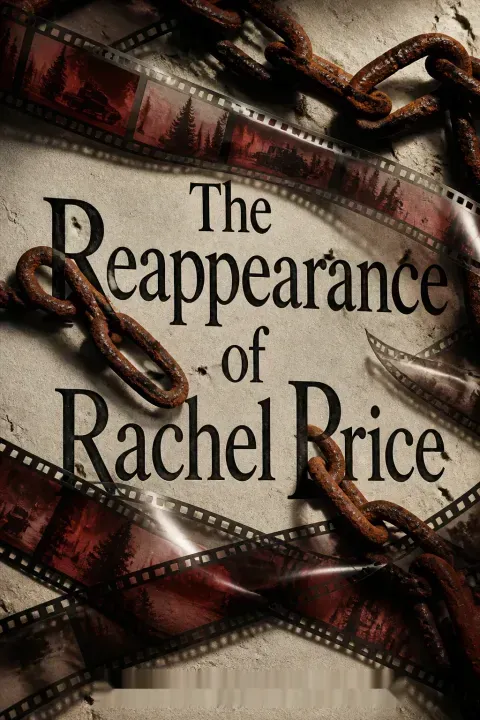


Plot Summary
The Unremembered Witness
Bel1 sits in a hotel conference room, the documentary lights too bright, as Ramsey7 asks what she thinks happened to Rachel Price.2 She says she believes Rachel2 is dead. The camera captures her unease, her body tensing at the word mother. When her grandmother Susan13 storms in, accusing Bel's father Charlie3 of murder, Bel1 fires back the irrefutable alibi: Charlie3 was at the hospital getting stitches, recorded on security cameras, when Rachel2 vanished.
After the confrontation, Bel1 steals a black queen from the chessboard, a secret act of control. Her dad3 arrives, infuriated that Susan13 ambushed them, and he reprimands Ramsey7 for letting the cameras roll. Bel1 learns the documentary is paying for her grandfather's5 care.
Bel's theft of the chess piece is a quiet rebellion, a way to reclaim power in a life defined by loss. The scene establishes the documentary as both an intrusion and a stage where family grievances are performed. Susan's abiding conviction that Charlie is a killer, despite his acquittal, mirrors the town's enduring suspicion, setting up the central conflict between public narrative and private truth. Bel's defense of her father reveals her fierce loyalty, yet also her dependence on a story she has memorized but never verified.
The Woman on the Road
After storming off the documentary reenactment set, Bel1 walks home and spots a woman in a torn red top and black jeans, feet shredded, shuffling along the road. She assumes it is the actress from the shoot. But the woman turns: gray-blue eyes, a pointed chin, a small brown birthmark on her forehead.
Bel1 runs in terror, locks herself inside the house, heart thrashing. Then she remembers her father's3 wish to hold Rachel2 again. She opens the door. Rachel2 collapses on the sofa, drinks water, and asks Bel1 to call the police. Bel1 calls Charlie3 instead. He arrives and freezes, face drained of color, staring at the wife2 he thought was dead.
This is the moment the impossible becomes physical. Bel's instinct to flee mirrors her emotional armor: she pushes people away before they can abandon her. But her choice to let Rachel in, driven by love for her father, cracks that shell. The physical details of Rachel's body, bleeding and broken, force Bel to reconcile the myth of a dead mother with a suffering human. The scene unsettles every assumption that had sustained the Price family for sixteen years.
Three Inconsistencies
Bel1 studies Rachel2 like a case file. At the mall, Rachel2 mentions the gold skull bracelet Bel1 once owned and later threw into a river, a detail impossible to know without seeing Bel's1 old Instagram photo. Then Rachel2 says she was locked up for 'fifteen years' before correcting to sixteen.
Later, she tells Charlie3 the kidnapper cut the engine before dumping her, but earlier she told Bel1 the engine kept running. Each slip feeds the knot in Bel's1 gut. At home, Rachel2 installs a double-sided lock on her door, claiming it helps her sleep. Bel1 recognizes the lock as a barrier against her own snooping.
The three slips function like an imperfectly rehearsed script, exposing Rachel's story as a construction. The bracelet error is the most damning, indicating Rachel had access to the outside world. The lock on her door signals a shift: Rachel now sees Bel as a threat to her narrative. Bel's hypervigilance, born of a lifetime of loss, transforms her into a detective within her own home. The tension between the feigned intimacy of mother-daughter outings and the guarded spaces between them defines the evolving power struggle.
The Red Top and Black Jeans
Bel1 confesses her suspicions to Ash,6 the film crew's eccentric camera assistant. He believes her. They drive to Baa-Baa Boutique in North Conway, where a woman named Alice posted that she saw Rachel Price2 months ago. Alice shows them a fuzzy photo of a masked woman buying a red long-sleeved top and black jeans in January, just before Rachel's2 supposed escape.
The clothes are identical to the ragged ones Rachel2 wore when she reappeared. Bel1 understands: Rachel2 was free and preparing her return, distressing the new clothes to fake sixteen years of wear. Ash6 records every word, building a secret counter-documentary.
This field trip turns Ash from a ridiculous sidekick into an ally, validating Bel's paranoia. The boutique is a mundane setting for a profound revelation: Rachel's captivity narrative is a fabrication. The red top and black jeans become costumes in a performance of victimhood, a visual language that Bel is learning to decode. The dynamic between Bel and Ash, flirty and combative, offers Bel a rare connection untainted by family secrets.
One Pink Sock
While Rachel2 is out, Bel1 searches the spare bedroom. In the nightstand drawer, behind an empty iPhone box, she finds a tiny pink frilly baby sock. The sock is worn, handled many times. Bel1 remembers the drawer was empty when Rachel2 moved in.
She takes the sock, hiding it among her own collection of stolen things. If Rachel2 took a souvenir on the day she vanished, she knew she was leaving. The lock on her door and the hidden sock together prove Rachel2 planned her disappearance, undermining the abduction story entirely.
The baby sock is a relic of maternal love twisted into evidence of abandonment. Bel's theft of it echoes Rachel's own act of concealing keepsakes, creating a strange symmetry between them. The sock also prefigures a deeper secret: it is not Bel's but belonged to another child, a clue Bel will not understand until much later. The scene highlights how the family's past is littered with overlooked objects that carry devastating meaning.
The Dinner Party Explodes
Ramsey7 films a formal family dinner in the Prices' home. Tension erupts immediately. Charlie3 demands an apology from Susan13 for accusing him of murder. She refuses. Sherry,9 Charlie3's sister-in-law, mutters that Rachel2 was cozy with another man before she disappeared.
Grandpa Patrick,5 confused, asks for his dead wife Maria. Rachel2 and Charlie3 trade bitter barbs about his girlfriend during her missing years. Wine spills across the white tablecloth. Bel1 stands and offers a toast to the most messed-up family in America. Grandpa5 laughs, Sherry9 cries, and Charlie3 walks out.
The dinner functions as a stage within a stage, the documentary crew capturing a family tearing itself apart. Sherry's muttered comment about Rachel's affair is a crack in the official history, offering Bel a new lead. The camera, far from neutral, intensifies every wound, forcing secrets to the surface. Bel's toast, both defiant and despairing, positions her as the family's truth-teller, even as she hides her own doubts.
A Teacher's Loan
Bel1 and Ash6 call Julian Tripp,10 Rachel's2 former colleague, using Rachel's2 phone. Posing as Rachel,2 Bel1 gets Tripp10 to confess he gave Rachel2 three thousand dollars in cash two days before she disappeared. He says she needed it urgently and couldn't use her own bank account.
When they later confront him at his house, Tripp10 admits he withheld this from police to avoid suspicion. He also recalls Rachel2 seemed scared of someone close to her, not a stranger. Bel1 realizes the loan was Rachel's2 escape fund, collected because she planned to flee Charlie,3 not a kidnapper.
The phone call is Bel's most daring act of deception, using Rachel's own methods against her. The cash loan reframes Rachel from passive victim to active escapee, with a deadline imposed by fear. Tripp's guilt and silence for sixteen years show how the community's focus on Charlie blinded them to other threats. The confession forces Bel to consider that her father might be the danger Rachel was fleeing, a thought she cannot yet tolerate.
Charlie Goes Missing
One morning, Charlie3 is simply not there. His truck sits outside, a packed bag and passport missing from his closet. His phone goes straight to voicemail. Bel1 searches the house, calls his work, checks with Uncle Jeff.8 Police chief Dave Winter12 is reluctant to treat it as a disappearance; he suspects Charlie3 left voluntarily under the strain of Rachel's2 return.
Days later, bank records show withdrawals in Vermont, and a final phone call pinged near Danville. A credit card turns up at a diner in Barton, found by a college student. The police conclude Charlie3 purchased a fake identity and crossed into Canada. Bel1 refuses to believe it.
Charlie's disappearance repeats the family's original trauma, leaving Bel abandoned again. Her desperate search and the police's dismissiveness mirror the institutional failures that marred Rachel's case. The evidence trail to Vermont seems too neat, too performative, echoing Rachel's own staged reappearance. Bel's instinct that Rachel is responsible for this too becomes her driving motive, a suspicion that isolates her from everyone except Ash.
Phillip Alves Returns
Late at night, Bel1 hears movement downstairs. It is Phillip Alves,11 the man who kidnapped her as a child, searching the living room. He claims he's been watching the house since Rachel2 returned. He saw Charlie3 leave that night alone with a packed bag, which means Rachel2 could not have forced him.
Phillip's11 obsession turns violent. Bel1 fights him off, breaking his nose, just as Rachel2 bursts in and drives him away with a rake. Rachel2 then tells the arriving police that Phillip11 is the stranger who kept her locked away, though earlier she failed to identify his photo.
Phillip functions as a dark mirror: another person consumed by the Rachel Price mystery. His claim that he saw Charlie leave voluntarily threatens Bel's belief in her father as a victim. Rachel's immediate framing of Phillip, contradicting her own earlier statements, reveals her opportunistic use of any available shield. The incident binds Bel and Rachel in a strange complicity, even as it deepens the cracks between them.
Demanding the Truth
Bel1 can no longer pretend. She confronts Rachel2 in the living room, listing the contradictions: the three thousand dollars, the baby sock, the boutique clothes, the engine story. Rachel2 breaks down, admitting she lied about Phillip,11 about the engine, about the basement.
But when Bel1 demands to know what really happened and what she did to Charlie,3 Rachel2 refuses. She says telling the truth would destroy Bel.1 The argument leaves them in a raw standoff, the house thick with tears and rage. Bel1 realizes she must find the answers herself, no matter the cost.
This confrontation is the emotional core, where the facade of reunion collapses. Rachel's admission that she is lying out of protection reframes her deception as maternal sacrifice, complicating Bel's black-and-white view. The scene forces Bel to accept that the story she has told herself about her father may be as constructed as Rachel's captivity narrative. It sets her on a path toward the original source of the silence: her grandfather and his lost memories.
A Message in a Book
During Patrick Price's5 eighty-fifth birthday dinner, Bel's1 attention snags on a gift: a copy of The Memory Thief, a book Grandpa5 used to read her as a child. Rachel2 had previously asked if someone gave Bel1 that book. That night, Bel1 pulls her own copy off the shelf.
She notices tiny pencil marks over individual letters scattered through the first forty pages. Transcribing them reveals a hidden message: 'Help. My name is Rachel Price.2 I am being kept by Patrick Price5 in a red truck on Price logging yard. Call police.' It is a plea Bel1 held in her hands countless times as a girl and never saw.
The book is a time capsule of Rachel's ordeal, turning a cherished childhood memory into evidence of a monstrous crime. Bel's failure to notice the markings as a child haunts her, but the message also empowers her: it is the first incontrovertible proof that Rachel was telling a deeper truth. The climactic turning of the page unites past and present, showing that the answers were always within reach, hidden in plain sight.
Grandpa's Library of Lies
Bel1 and Ash6 hurry to Grandpa's5 house. In the living room bookshelves, they start pulling books. Nearly every volume they check contains the same hidden message, from The Hunger Games to The Green Mile, inscribed faintly in pencil. One variation adds the word 'we,' hinting at another captive.
The sheer scale of Rachel's2 effort, writing the message hundreds of times over years, overwhelms Bel.1 They record everything. The library Bel1 remembered as a refuge is now a prison ledger, revealing that Grandpa5 kept Rachel2 in a red truck on his old logging yard, not in some distant basement. Bel1 now knows where to go.
The library's transformation mirrors Bel's own reeducation: every familiar object must be re-examined. The repeated messages are a monument to Rachel's determination, each book a bid for freedom that went unanswered. The discovery that Rachel was kept so close, within walking distance of home, intensifies the horror. Ash's camera captures the evidence, but the footage will become another secret to bury.
The Container Prison
Bel1 and Ash6 navigate the rusted junk at the logging yard until they reach a red semi-trailer with a shipping container. Inside, a flashlight reveals Charlie,3 dirty and thin, his ankle cuffed to a chain. He begs Bel1 to free him, claiming Rachel2 imprisoned him for no reason.
But Bel1 knows too much now. Rachel2 appears behind her and admits she locked Charlie3 there as payback. Then, with Charlie3 listening, she begins to tell Bel1 the full story of what happened to her, the story she has kept from everyone for sixteen years.
The container is Rachel's cell made into Charlie's. The image inverts the power structure: the man who planned a murder is now the one held captive. Charlie's pleading creates a moral test for Bel, who must choose between the father who raised her and the mother who came back from the dead. The physical space, with its foam insulation and bucket toilet, is a tangible record of Rachel's suffering and survival.
The Conspiracy Unspooled
Rachel2 tells Bel1 everything. When she decided to leave Charlie,3 he perceived it as a loss of control and asked his father Patrick5 to kill her, providing himself an alibi with a workplace injury. Patrick,5 whom Charlie3 had been blackmailing over their own mother's death, agreed but instead imprisoned Rachel2 in the container.
Rachel2 gave birth to a daughter, Carter,4 inside that cell, and Patrick5 gave the baby to Jeff8 and Sherry.9 Rachel2 escaped after Patrick's5 strokes and spent months planning her return, buying similar clothes, engineering Charlie's3 staged disappearance, and trapping him in the same prison. Charlie,3 hearing this, howls denials, but his wedding ring is already in Rachel's2 pocket.
The revelation rewrites every family story. Charlie's alibi, which Bel had memorized and wielded as a shield, was actually the tool of a murderer. The birth of Carter in captivity adds an almost mythic dimension, a child born in darkness who becomes the means of salvation. The conspiracy is patriarchal at its core: two men controlling women's lives through violence and secrecy. Rachel's revenge, while illegal, is presented as the only justice possible when institutions have failed.
Two Brothers Fall
Uncle Jeff8 arrives and, despite Rachel's2 warnings, uses a handsaw to free Charlie.3 Charlie3 seizes an axe and chases Bel1 and Rachel2 through the dark forest to a cliff overlook. He catches Rachel2 and pins her neck under his boot, raising the axe to kill her.
At the last second, Carter4 bursts from the trees and shoves Charlie.3 He stumbles backward, grabbing Jeff8 in a desperate reflex, and both brothers plunge over the edge into the blackness. Bel,1 Rachel,2 and Carter4 stand frozen on the rock, their breaths ragged, the axe lying where it fell.
Carter's push, born of a protective instinct toward the mother she only recently recognized, shatters the cycle of violence. Jeff's death is collateral, the price of his loyalty to a brother who abused that loyalty. The cliff is a literal and metaphorical abyss, swallowing the old family order. The scene transforms all three women into survivors bound by a terrible secret that will define their future.
The Night of Erasure
Rachel2 takes command. She tells Bel1 and Carter4 to eliminate every trace: the marked books must be erased, the footage on Ash's camera destroyed. Bel1 goes to Ash's6 hotel room and smashes the hard drives and memory cards, then carries away the broken laptop. Only a hidden memory stick remains, which Ramsey7 later returns to her.
Rachel2 descends into the mine shaft, dragging the bodies deeper inside. Then she convinces Sherry9 that Jeff8 fled to Canada and urges her to follow, using the old escape plan Rachel2 once prepared for herself. By morning, the nightmare has been tidied into an airtight story.
The cover-up is a dark inversion of the documentary's aim to capture truth. Bel's destruction of Ash's footage is the most painful sacrifice, severing the trust they built. Yet the act also liberates them from the public narrative that has trapped the family for sixteen years. Rachel's manipulation of Sherry shows the cost of freedom: someone else must be exiled in their place. The night seals the three women into a pact of silence, a family rebuilt on complicity.
Lights, Camera, Reunion
Weeks later, Ramsey7 films the exit interview. Rachel,2 Bel,1 and Carter4 sit together, presenting the official story: a stranger took Rachel,2 and Charlie,3 Jeff,8 and Sherry9 voluntarily vanished. Bel1 says goodbye to Ash6 in the parking lot. She gives him a ridiculous pug T-shirt and admits that he mattered, even if everything else was ephemeral.
Then she climbs into the backseat of her mom's2 car, unafraid for the first time. At the hardware store, the three of them argue over paint colors. Rachel2 reveals she was the anonymous online tipster who brought the documentary to Gorham. Bel1 laughs, and they disappear through the automatic doors.
The ending reframes disappearance not as loss but as chosen unity. Bel's ability to sit in the backseat without fear signals healing from the original trauma. Her goodbye to Ash is unsentimental but tender, acknowledging that some relationships are meaningful even when they end. The final image of the three women absorbed into a hardware store, bickering about shades of white, reclaims domesticity as an act of resilience rather than captivity.
Analysis
This novel operates as a relentless interrogation of the stories families tell themselves to survive. At its core, it is about how memory can be manipulated, both by those we love and by our own need to make meaning of abandonment. Bel's1 journey from fierce defender of her father3 to clear-eyed critic mirrors a young woman's psychological emancipation from the narrative she was handed at twenty-two months old. The documentary becomes a metaphor for the public appetite for tidy tragedy, while the hidden messages in the books suggest that truth is always present but often unreadable until one knows how to see it. Rachel's2 reappearance, far from offering closure, forces every character to confront the rot beneath the family's foundation. The novel ultimately argues that justice is not always served by institutions, and that sometimes survival requires a covenant of silence. The new family of three women who disappear together into a hardware store at the end is a defiantly hopeful image: chosen kinship built not on innocence but on complicity and fierce, protective love.
Review Summary
The Reappearance of Rachel Price received mixed reviews. Many readers found the premise intriguing and enjoyed the plot twists, praising Holly Jackson's ability to craft compelling mysteries. However, some felt the pacing was slow and the protagonist, Bel, was unlikeable. The book's ending drew conflicting opinions, with some finding it satisfying and others disappointed. Despite criticisms, many fans of Jackson's previous work still enjoyed the novel, though some felt it didn't quite match the quality of her earlier books.
People Also Read







Characters
Bel Price
Protagonist and relentless truth-seekerEighteen-year-old daughter of Rachel2 and Charlie Price3. Abandoned in a car as a toddler when her mother2 vanished, she grew up fiercely protective of her father3, who was acquitted of the murder. Outwardly hardened, she pushes people away before they can leave, yet she longs for connection. Her investigation into Rachel's2 inconsistencies reveals a sharp, resourceful mind and a deep, unacknowledged need to understand her own origins. She uses sarcasm and petty theft as armor, but beneath it is a girl desperate to be chosen.
Rachel Price
Returned mother with hidden agendaBel's1 mother, missing for sixteen years after she disappeared with her infant daughter. She reappears claiming a stranger imprisoned her, but her story is riddled with deliberate contradictions. Intelligent and fiercely protective, she orchestrated her own return to reclaim her daughters and punish those who destroyed her life. Her love for Bel1 and Carter4 is immense, though expressed through deception. She carries the physical and psychological scars of prolonged captivity, yet her resilience and strategic mind allowed her to survive and eventually escape.
Charlie Price
Father whose innocence is a facadeBel's1 devoted father, a former auto mechanic who raised her alone. He was tried for Rachel's2 murder and acquitted, a verdict that shaped his identity as a wronged man. Deeply controlling beneath his kind surface, he manipulated his daughter's1 memories to make her dependent on him. His love for Bel1 is real but twisted by his need to dominate, and his actions to eliminate Rachel2 stem from a pathological inability to accept losing her.
Carter Price
Bel's cousin and secret sisterA fifteen-year-old aspiring ballerina, long-haired and graceful. She has always been Bel's1 closest companion, a calm presence who tempers Bel's1 rage. Shy and often overshadowed by her overbearing adoptive mother Sherry9, Carter senses that her family history is not what it seems. Her DNA test reveals she is actually Bel's1 full sister, born to Rachel2 in captivity. The discovery forces her to claim a new identity and a new family.
Patrick Price
Grandfather with a monstrous secretCharlie's3 father, a former logger now wheelchair-bound with dementia. He once read to Bel1 from The Memory Thief, a book she loved. Beneath his gentle, confused exterior lies the truth that he imprisoned Rachel2 for fifteen years under the guise of saving her from Charlie3. His strokes erased his memory of the crime, but the evidence remains hidden in his bookshelves.
Ash Maddox
Camera assistant and unexpected allyThe young British camera assistant on the documentary crew, Ramsey's7 brother-in-law. Flamboyant clothes and a self-deprecating manner mask his perceptiveness. He becomes Bel's1 confidant and partner in investigation, matching her sarcasm with his own. He is the first person outside the family to truly believe her. His growing feelings for Bel1 complicate the transactional nature of their relationship, and his camera captures evidence that ultimately must be destroyed.
Ramsey Lee
Documentary directorThe filmmaker from London, determined to tell the Rachel Price2 story. He is sharp, observant, and more empathetic than Bel1 initially gives him credit for. He recognizes the human element in Bel's1 journey and ultimately proves willing to sacrifice the most explosive version of his film for her sake.
Jeff Price
Uncle caught between loyaltiesCharlie's3 older brother, affable and socially inept. He and Sherry9 adopted Carter4 as a baby, believing the child was from an undocumented mother. When Rachel2 returns, he gradually realizes Carter4 is her biological daughter, but his loyalty to Charlie3 prevents him from revealing the truth. His final choice to free Charlie3 leads to his death.
Sherry Price
Adoptive mother and pretenderJeff's8 wife, desperately eager to be a mother. She faked her pregnancy to adopt Carter4. Controlling and image-conscious, she pushes Carter4 into ballet and resents Rachel's2 intrusion. Her love for Carter4 is real, but her complicity in the deception makes her a threat. She is ultimately manipulated into fleeing the country.
Julian Tripp
Teacher and secret lenderBel's1 homeroom teacher and the man who found infant Bel1 in the abandoned car. He was a friend to Rachel2 before her disappearance and secretly loaned her three thousand dollars, a fact he hid from police to avoid suspicion. His knowledge of Rachel's2 fear of someone close to her provides a crucial clue.
Phillip Alves
Obsessive stalkerA plumber from Boston who became fixated on the Rachel Price2 case, losing his job and family to his obsession. He once kidnapped young Bel1 to interrogate her. He breaks into the house, attacks Bel1, and is then framed by Rachel2 as her captor, a lie she uses to deflect suspicion.
Dave Winter
Police chief with a debtThe Gorham police chief who arrested Charlie3 for Rachel's2 murder years ago. He carries guilt for the wrongful prosecution and agrees to search for Charlie3 when he disappears, though he ultimately concludes Charlie3 left voluntarily.
Susan Price
Bitter grandmotherRachel's2 wealthy mother from Massachusetts, still convinced Charlie3 killed her daughter. She shows little affection for Bel1 and remains a hostile presence in family events.
Bob Meyer
Fake ID providerA friend of Jeff8 living off-grid in Vermont who sells false identities. Rachel2 planned to use his services to escape with Bel1 sixteen years ago, and the same plan is later repurposed to send Sherry9 away.
Plot Devices
The Documentary Film
Framing device and catalystRamsey Lee's7 documentary, The Reappearance of Rachel Price2, motivates the family's participation, provides a public stage for their conflicts, and inadvertently gives Bel1 a reason to investigate. The camera captures raw emotional moments and becomes a repository of evidence that must later be destroyed. The film's existence also entices Rachel2 to return, knowing she can profit from her story.
Hidden Messages in Books
Evidence of captivityDuring her imprisonment, Rachel2 marked letters in dozens of books from Grandpa's5 shelves to spell out her name, her captor, and her location. The messages remained undetected for years, even as Bel1 read from the same copies as a child. The hidden text is both a cry for rescue and a testament to Rachel's2 relentless hope. Its discovery by Bel1 and Ash6 exposes Grandpa's5 crime and leads them to the red truck.
The Red Shipping Container
Prison and crime sceneA red semi-trailer container on the abandoned Price logging yard where Grandpa Patrick5 kept Rachel2 chained for over fifteen years. Insulated for soundproofing, it contained a mattress, toilet, and supplies. Later, Rachel2 uses the same container to imprison Charlie3 as part of her revenge. The container is the physical heart of the family's secret history.
The Baby Sock
Symbol of attachment and later clueA tiny pink frilly sock kept by Rachel2 as a memento of the infant she was forced to leave. Bel1 initially finds one sock in Rachel's2 drawer and believes it proves Rachel2 planned her departure. Later, Bel1 finds the matching sock in the container, revealing the sock belonged not to Bel1 but to Carter4, the baby born in captivity. The pair of socks links the two daughters and confirms Carter's4 true parentage.
Ash's Camera and Footage
Documentary evidence and moral burdenThe footage Ash6 records during their investigation captures Rachel's2 lies, Grandpa's5 role, and Charlie's3 imprisonment. It is the ultimate proof of what really happened, but preserving it would expose Carter4 and Bel1 to prosecution. Bel1 destroys the hard drives and memory cards, leaving only a single copy that Ramsey7 secretly returns to her, a gesture that acknowledges her right to own her story.
FAQ
Synopsis & Basic Details
What is The Reappearance of Rachel Price about?
- Sixteen years gone, now back: The story centers on Bel Price, whose mother, Rachel, disappeared when Bel was a toddler. Sixteen years later, Rachel mysteriously reappears, throwing Bel's life and her family into turmoil.
- Documentary unearths secrets: A documentary crew arrives to film Bel and her family, hoping to uncover the truth behind Rachel's disappearance, but instead, they reveal hidden family secrets and long-held resentments.
- Bel's search for truth: Bel, now eighteen, grapples with her mother's return, her own identity, and the inconsistencies in Rachel's story, leading her on a quest to uncover the truth about her mother's disappearance and reappearance.
Why should I read The Reappearance of Rachel Price?
- Intricate mystery: The novel presents a complex and compelling mystery with unexpected twists and turns, keeping readers guessing until the very end.
- Exploration of family dynamics: The story delves into the complexities of family relationships, exploring themes of loyalty, betrayal, and the impact of secrets on loved ones.
- Strong female characters: Bel and Rachel are both strong, complex female characters, each grappling with their own challenges and making difficult choices to protect themselves and their family.
What is the background of The Reappearance of Rachel Price?
- Small-town setting: The story is set in the small town of Gorham, New Hampshire, where everyone knows everyone, and the disappearance of Rachel Price has become a local legend.
- True-crime obsession: The novel taps into the public's fascination with true-crime stories, exploring how such cases can impact the lives of those involved.
- Documentary filmmaking: The presence of a documentary crew adds another layer to the story, highlighting the power of media to shape narratives and influence public perception.
What are the most memorable quotes in The Reappearance of Rachel Price?
- "I don't tell anybody anything.": This quote, repeated by Bel, highlights her guarded nature and her tendency to keep her thoughts and feelings to herself, a result of her traumatic past.
- "You're not nervous, are you? You'll be fine. Better get used to it, right? Soon you'll be way too famous to remember your poor old cousin.": This quote, spoken by Bel to Carter, reveals Bel's cynicism and her belief that people are temporary, a defense mechanism against the pain of loss.
- "I would just want to hold her. Wrap my arms around her and just tell her how much I love her. How much I've missed her. Before any questions, those can come later.": This quote, spoken by Charlie, reveals his deep love for Rachel and his longing for her return, highlighting the emotional core of the story.
What writing style, narrative choices, and literary techniques does Holly Jackson use?
- First-person perspective: The story is primarily told from Bel's first-person perspective, allowing readers to experience her thoughts, feelings, and suspicions firsthand, creating a sense of intimacy and immediacy.
- Non-linear timeline: The narrative jumps between the present and the past, gradually revealing the events leading up to Rachel's disappearance and reappearance, building suspense and intrigue.
- Foreshadowing and red herrings: Jackson uses subtle foreshadowing and red herrings to keep readers guessing, creating a complex and unpredictable mystery that challenges their assumptions.
Hidden Details & Subtle Connections
What are some minor details that add significant meaning?
- The missing queen: Bel steals the black queen from the chessboard at the Royalty Inn, symbolizing her desire to take control of her own narrative and her growing suspicion of Rachel.
- The red top: Rachel's red top, which she was wearing when she disappeared and when she reappears, becomes a symbol of her captivity and her attempts to reclaim her identity.
- The baby sock: The discovery of a baby sock in Rachel's nightstand reveals a hidden connection to Bel's past and suggests that Rachel had been planning her return for a long time.
What are some subtle foreshadowing and callbacks?
- The open door: Rachel's habit of leaving the front door open foreshadows her eventual disappearance and the vulnerability of her family.
- The wedding ring: Charlie's inability to remove his wedding ring, engraved with their wedding date, highlights his enduring love for Rachel and his struggle to move on.
- The "horsefucker" comment: Bel's outburst at her grandmother, calling her a "horsefucker," foreshadows her own capacity for anger and her willingness to protect her father.
What are some unexpected character connections?
- Julian Tripp and Rachel: The revelation that Julian Tripp, Bel's homeroom teacher, was a colleague of Rachel's and the man who found Bel after Rachel disappeared, adds a layer of complexity to his character and raises questions about his involvement in the case.
- Robert Meyer and Charlie: The connection between Robert Meyer, a dark web criminal, and Charlie Price, reveals a hidden side to Charlie and suggests that he was involved in illegal activities.
- Carter and Rachel: The revelation that Carter is Rachel's daughter, not Sherry's, creates a complex family dynamic and highlights the impact of secrets on relationships.
Who are the most significant supporting characters?
- Ash Maddox: Ash, the quirky camera assistant, becomes an unexpected ally for Bel, providing her with support and helping her uncover the truth about Rachel's disappearance.
- Sherry Price: Sherry, Bel's aunt, is a complex character who is both supportive and suspicious, revealing hidden resentments and secrets that contribute to the family's turmoil.
- Dave Winter: Dave Winter, the police chief, represents the limitations of law enforcement and the challenges of uncovering the truth in a complex case.
Psychological, Emotional, & Relational Analysis
What are some unspoken motivations of the characters?
- Rachel's need for control: Rachel's meticulous planning of her reappearance and her attempts to control the narrative suggest a deep-seated need for control, stemming from her years of captivity.
- Charlie's fear of abandonment: Charlie's actions are driven by a fear of abandonment and a need to control those around him, leading him to manipulate and betray those he loves.
- Bel's desire for normalcy: Bel's desire for a normal life is a driving force, but her past trauma and her mother's reappearance make it difficult for her to achieve.
What psychological complexities do the characters exhibit?
- Bel's trauma and resilience: Bel exhibits the psychological complexities of a child who has experienced trauma, struggling with trust issues, anger, and a need for control, while also demonstrating resilience and determination.
- Rachel's survival instincts: Rachel's years of captivity have shaped her into a survivor, making her resourceful, manipulative, and fiercely protective of her daughters.
- Charlie's manipulative tendencies: Charlie's manipulative tendencies and his need for control reveal a deep-seated insecurity and a willingness to betray those he loves to maintain his power.
What are the major emotional turning points?
- Bel's discovery of the baby sock: The discovery of the baby sock in Rachel's nightstand marks a turning point for Bel, solidifying her suspicions and fueling her determination to uncover the truth.
- The family dinner: The family dinner is a major emotional turning point, revealing the deep-seated tensions and resentments within the family and setting the stage for the final confrontation.
- The revelation of Carter's parentage: The revelation that Carter is Rachel's daughter is a major emotional turning point, forcing the characters to confront the truth about their relationships and their pasts.
How do relationship dynamics evolve?
- Bel and Rachel: The relationship between Bel and Rachel evolves from suspicion and distrust to a complex bond of love and understanding, as they navigate their shared trauma and their roles as mother and daughter.
- Bel and Charlie: The relationship between Bel and Charlie deteriorates as Bel uncovers his lies and manipulations, leading to a final confrontation that shatters their bond.
- Bel and Carter: The relationship between Bel and Carter evolves from a close cousin bond to a sisterly one, as they navigate their shared family secrets and their new roles as sisters.
Interpretation & Debate
Which parts of the story remain ambiguous or open-ended?
- The true nature of Phillip Alves: The true nature of Phillip Alves and his motivations remain ambiguous, leaving readers to question whether he was a pawn in a larger game or a genuine threat.
- The extent of Jeff's knowledge: The extent of Jeff's knowledge about Rachel's disappearance and his brother's involvement remains unclear, leaving readers to wonder about his true motives and his role in the family's secrets.
- The future of the Price family: The future of the Price family remains open-ended, leaving readers to wonder whether they will ever truly heal from the trauma they have experienced.
What are some debatable, controversial scenes or moments in The Reappearance of Rachel Price?
- Rachel's manipulation of Bel: Rachel's manipulation of Bel, using her as a pawn in her plan to expose Charlie, raises questions about her morality and her true intentions.
- The ending: The ending, where Rachel kills Charlie and Jeff, is a controversial moment, leaving readers to question whether Rachel's actions were justified and whether she has become a villain herself.
- The portrayal of mental health: The portrayal of mental health, particularly in the characters of Phillip Alves and Patrick Price, raises questions about the stigma surrounding mental illness and the impact of trauma on individuals.
The Reappearance of Rachel Price Ending Explained: How It Ends & What It Means
- Rachel's calculated plan: Rachel's reappearance was not a miracle but a calculated plan to expose Charlie and protect Bel, revealing her as a complex character driven by both love and revenge.
- The cycle of violence: The ending highlights the cycle of violence and the destructive nature of secrets, as the Price family is torn apart by their past actions and their inability to confront the truth.
- Bel's new path: Bel's decision to embrace her new family with Rachel and Carter, while leaving behind the lies and manipulations of her past, suggests a path toward healing and a new beginning, but one that is forever marked by the trauma she has endured.
About the Author
Other books by Holly Jackson


Download PDF
Download EPUB
.epub digital book format is ideal for reading ebooks on phones, tablets, and e-readers.








































