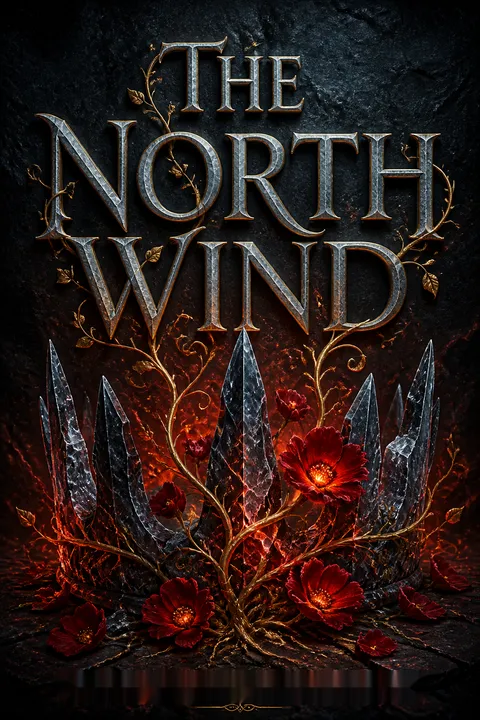

Plot Summary
Blood-Red Dawn Approaches
Wren, a hardened huntress, wakes to a blood-red dawn—a sign of tragedy foretold. In the starving, snowbound village of Edgewood, legends warn that the North Wind, the Frost King, will soon arrive to claim a bride. Wren's only concern is her twin sister, Elora, the gentle heart she's sworn to protect. As the village panics, Wren's desperation to provide for them both drives her deep into the deadly woods, where monsters called darkwalkers prowl. The world is a shell of what it once was, the Green now the Gray, and hope is as scarce as warmth. Wren's every action is shaped by love, fear, and the knowledge that survival means sacrifice.
Edgewood's Chosen Sacrifice
The Frost King descends upon Edgewood, his presence as chilling as the endless winter he commands. The village gathers its eligible women for a grim feast, knowing one will be taken. Wren's beautiful, gentle sister Elora is the obvious choice, and Wren's dread grows as the king's icy gaze lingers on her. When Elora is chosen, Wren's world shatters. In a desperate act of love, Wren bargains for her sister's life, setting in motion a dangerous deception. The king is both terrifying and mesmerizing, his power absolute, his motives inscrutable. Wren's hatred for him is matched only by her willingness to do anything to save Elora.
Sister's Desperate Bargain
Wren drugs Elora and takes her place, donning her sister's dress and courage. She presents herself to the Frost King, who is none the wiser. The journey north is harrowing, crossing the deadly Shade that separates the living from the Deadlands. Wren faces the king's cold indifference and the haunted, empty halls of his citadel. She is a prisoner, but also a survivor, determined to find a way home. The king's realm is a place of spirits and sorrow, and Wren's only weapon is her unbreakable will. She vows to kill the Frost King and end the winter that has stolen everything from her.
Crossing the Shade
Wren is forced to cross the Shade, a barrier between worlds that tests her mind and spirit. The journey is a nightmare of memories and illusions, a river of forgetting that threatens to erase her very self. The Frost King's power is both a prison and a shield, and Wren glimpses the depth of his isolation. In the Deadlands, she finds herself surrounded by the ghosts of the king's past, including a staff of specters bound to serve him. The citadel is a labyrinth of locked doors and hidden pain, and Wren's resolve hardens: she will not be broken, and she will not let the king win.
The Frost King's Bride
Wren is wed to the Frost King in a cold, binding ceremony. The king is beautiful and cruel, his heart seemingly frozen. Wren's defiance earns her his wrath, and she is thrown into a dungeon for her insolence. Yet even in captivity, she plots. The king's realm is full of secrets: doors to other worlds, a staff of the dead, and a history of mortal brides who never returned. Wren's hatred for the king is matched by her fascination with his loneliness. She begins to see cracks in his armor, hints of a man beneath the god, but her mission remains unchanged—she must find a way to kill him.
War of Wills
Wren and the Frost King engage in a battle of wits and wills. She refuses to submit, challenging his authority at every turn. The king is both infuriated and intrigued by her spirit. Their dinners are tense, their conversations barbed. Wren discovers the king's power is not limitless—he is haunted by loss, and his control over the darkwalkers is slipping. The Deadlands are changing, and so is the king. Wren's own defenses begin to falter as she glimpses the pain beneath his cold exterior. Their relationship is a dance of anger, attraction, and reluctant understanding.
Prisoner in the Deadlands
Wren's captivity is marked by loneliness and the struggle with her own demons. She turns to wine to numb her pain, but the king sees through her self-destruction. The specter staff, especially Orla, offer moments of kindness and insight. Wren learns the truth about the king's past: a lost wife and child, a heart broken by betrayal. The citadel's many doors become both a symbol of hope and futility—no escape is easily found. Wren's hatred for the king is complicated by growing empathy, and she begins to question whether vengeance is truly what she wants.
The King's True Nature
Wren discovers the king's darkest secret: he is becoming a darkwalker himself, corrupted by grief and the burden of endless winter. His power is waning, the Shade weakening, and the Deadlands are threatened by chaos. Wren bargains with Zephyrus, the West Wind, for a way to end the king's reign—an alliance that will have dire consequences. She ventures into the Garden of Slumber, risking her life to steal the poppy flowers needed for a sleeping draught. The lines between friend and foe blur, and Wren is forced to confront her own capacity for betrayal.
A Bargain with Spring
Zephyrus, the king's charming but dangerous brother, offers Wren a way out: a potion to put the Frost King into a deathlike sleep. Wren is torn between her old vow to kill the king and her new, complicated feelings. The West Wind's motives are not as pure as they seem, and Wren realizes she is a pawn in a larger game. The king's vulnerability is laid bare, and Wren must choose between revenge and mercy. The Deadlands tremble on the brink of war, and Wren's decision will shape the fate of both worlds.
Shadows and Secrets
As the king's power fades, the darkwalkers grow bolder, and the citadel is besieged. Wren's relationship with the king deepens, marked by moments of tenderness and passion. Yet secrets fester: her alliance with Zephyrus, her plan to kill the king, and the truth about her own heart. The king's confession of love is both a gift and a curse, and Wren is forced to confront the darkness within herself. The final battle looms, and the price of freedom may be higher than she ever imagined.
The Garden of Slumber
Wren and Zephyrus brave the lair of Sleep, a god whose power can erase memory and will. The quest for the poppy flowers is a test of courage and loyalty. Wren faces her deepest fears and the temptation to forget her pain. The cost of the bargain is steep, and the consequences ripple through the Deadlands. Wren returns changed, her resolve hardened, but the seeds of doubt have been sown. The king's fate—and her own—hang in the balance.
Betrayal and Revelations
The final confrontation arrives. Zephyrus betrays Wren and Boreas, unleashing chaos upon the citadel. The king is captured, his power stolen, and Wren must fight to save him. In the darkness of the cave, love and sacrifice are tested. Wren chooses Boreas over vengeance, over her old life, over everything she thought she wanted. The winter breaks, the Shade is healed, and the Deadlands are transformed. Wren and Boreas, both mortal now, must build a new life from the ruins of the old.
The Breaking of Winter
With the king's power gone, the eternal winter ends. The world begins to thaw, and hope returns to the Gray. Wren and Boreas, stripped of their old identities, face the challenge of living as mortals. Their love is tested by grief, guilt, and the scars of the past. Yet in each other, they find healing and the promise of a future. The Deadlands are no longer a prison, but a home. Wren's journey from vengeance to forgiveness is complete, and the world is remade by her choice.
The Price of Freedom
Wren returns to Edgewood, seeking closure with her sister. The reunion is painful, marked by anger, regret, and the realization that some wounds never fully heal. Wren chooses herself for the first time, refusing to be defined by sacrifice or suffering. She claims her place in the world, not as a victim, but as a survivor. The price of freedom is high, but it is hers to pay. In Boreas, she finds a partner who sees her strength and loves her for it.
Alone, Together
Wren and Boreas, now mortal, learn to live in the world they have remade. Their love is fierce and imperfect, marked by laughter, arguments, and the daily work of healing. The Deadlands bloom with new life, and the scars of winter begin to fade. Wren's journey is one of self-discovery, as she learns to accept love, to forgive herself, and to find joy in the present. Together, they create a home, a family, and a future.
The Heart's True Home
The story ends not with a grand victory, but with the quiet triumph of two wounded souls choosing each other. Wren and Boreas, once enemies, are now partners in every sense. Their love is hard-won, a testament to resilience and hope. The world is not perfect, but it is enough. Wren's heart, once closed by pain, is open at last. The North Wind is gone, but in his place is a man who loves her, and a life she has chosen for herself.
The End of the North Wind
In the epilogue, Boreas, now fully mortal, bakes a cake for Wren's birthday—a symbol of the ordinary happiness they have found. Their home is filled with laughter, warmth, and the promise of spring. The Deadlands are no longer a place of death, but of life and love. Wren's journey from sacrifice to selfhood is complete, and the story closes on the quiet joy of a family at peace. The North Wind's reign is over, but his legacy endures in the love he and Wren share.
Analysis
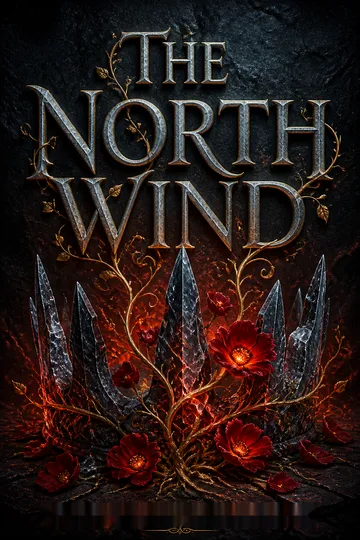
The North Wind is a lush, emotionally charged reimagining of the "Beauty and the Beast" and "Hades and Persephone" myths, set in a world where winter is both a curse and a shield. At its core, the novel is about the cost of survival and the courage it takes to choose oneself after a lifetime of sacrifice. Wren's journey from vengeance to forgiveness, from self-loathing to self-acceptance, is mirrored in Boreas' transformation from god to man, from isolation to intimacy. The story interrogates the nature of power—who wields it, who suffers for it, and what it means to relinquish it for love. Through its exploration of trauma, addiction, and the messy work of healing, The North Wind offers a modern meditation on the possibility of redemption and the necessity of vulnerability. Its ultimate lesson is that true strength lies not in control or sacrifice, but in the willingness to be seen, to be loved, and to build a life—however imperfect—out of the ashes of the old.
Review Summary
The North Wind receives mixed reviews averaging 3.58 stars. Many praise the Beauty and the Beast/Hades and Persephone retelling with its slow-burn enemies-to-lovers romance, arranged marriage trope, and witty banter between Wren and Boreas. Readers appreciate the character development and spicy scenes. However, critics cite an unlikeable protagonist, inconsistent world-building, predictable plot borrowed heavily from ACOTAR, pacing issues, and illogical character decisions. Some find Wren annoying and the romance forced, while others love her fierce, flawed nature and the atmospheric winter setting.
People Also Read
Characters
Wren
Wren is the story's protagonist, a huntress hardened by loss and the endless winter that has ravaged her world. Defined by her fierce love for her twin sister Elora, Wren's life is a series of sacrifices—her body, her pride, her dreams—all to keep Elora safe. Scarred both physically and emotionally, Wren is stubborn, resourceful, and deeply mistrustful. Her journey is one of self-discovery: from vengeance and self-loathing to acceptance and love. Wren's psychological arc is marked by her struggle with addiction, her inability to accept help, and her gradual realization that she is worthy of love and happiness. Her relationship with Boreas, the Frost King, evolves from hatred to empathy to passion, ultimately transforming them both.
Boreas (The Frost King)
Boreas, the North Wind, is a god exiled to the Deadlands, cursed to bring winter and sorrow. Outwardly cold, beautiful, and terrifying, he is haunted by the loss of his wife and child, betrayed by his own brother. His power is both a shield and a prison, and as the story unfolds, it becomes clear that he is as much a victim as a villain. Boreas' psychological complexity lies in his isolation, his fear of vulnerability, and his desperate need for control. His transformation—from a god clinging to power to a mortal capable of love—is the heart of the novel. Through Wren, he learns to forgive, to trust, and to choose life over vengeance.
Elora
Elora is Wren's twin, the embodiment of everything Wren is not: soft, beautiful, and beloved by all. She is the reason for Wren's every sacrifice, yet their relationship is fraught with resentment and misunderstanding. Elora's inability to see Wren's pain, her passive acceptance of comfort, and her eventual anger at Wren's choices force both sisters to confront the truth of their bond. Elora's arc is one of growth, as she learns to take responsibility for her own happiness and to see Wren as a person, not just a protector.
Zephyrus (The West Wind)
Zephyrus is Boreas' brother, the Bringer of Spring, whose warmth and wit mask a deep well of envy and pain. He befriends Wren, offering her a way to kill the Frost King, but his motives are far from pure. Zephyrus is a master manipulator, driven by old wounds and a desire to reclaim what he believes is rightfully his. His betrayal is both personal and cosmic, and his actions set the final conflict in motion. Psychologically, Zephyrus is a study in resentment, charm, and the destructive power of jealousy.
Orla
Orla is a member of the citadel's ghostly staff, sentenced to serve the Frost King for a crime of passion. She becomes Wren's confidante and emotional anchor, offering wisdom, comfort, and tough love. Orla's own story of abuse and survival mirrors Wren's, and her presence is a reminder that healing is possible, even in the darkest places. She represents the possibility of forgiveness and the importance of chosen family.
Pallas
Pallas is the captain of the Frost King's guard, a specter bound by duty and honor. He is both wary of Wren and ultimately supportive, recognizing her strength and the king's need for her. Pallas' loyalty is tested by the chaos that unfolds, and his actions in the final battle are crucial to Wren's survival. He embodies the cost of service and the quiet courage of those who stand in the shadows.
Thyamine
Thyamine is a member of the staff whose memory has been erased by the River of Forgetting. Her innocence and confusion are both comic and heartbreaking, and her fate is a subtle commentary on the collateral damage of power struggles. She is a symbol of the stories lost in the margins, and her small acts of bravery have outsized consequences.
Silas
Silas is the citadel's cook, a specter who finds meaning in small acts of care. His cakes and kindness are a thread of comfort for Wren, and his presence in the epilogue is a reminder that happiness is found in the ordinary. Silas represents the possibility of joy, even in a world shaped by loss.
Sleep
Sleep is a minor god whose power over dreams and forgetting is both a threat and a mercy. His garden is the site of Wren's greatest test, and his bargain with her and Zephyrus sets the stage for the final confrontation. Sleep's role is to remind the characters—and the reader—that memory, pain, and hope are inextricably linked.
Shaw
Shaw is Elora's husband, a carpenter who represents the life Wren thought she wanted to return to. His presence forces Wren to confront the reality that the past cannot be reclaimed, and that true belonging is found not in sacrifice, but in self-acceptance.
Plot Devices
Duality of Sacrifice and Selfhood
The North Wind is structured around the tension between sacrifice and selfhood. Wren's journey is defined by her willingness to give everything for her sister, but true freedom comes only when she chooses herself. The novel uses foreshadowing (the blood-red dawn, the king's growing weakness), parallelism (Wren and Boreas as mirror images of pain and resilience), and a slow-burn romance that transforms enemies into lovers. The doors in the citadel are both literal and metaphorical, representing the choices Wren must make and the worlds she must leave behind. The use of addiction as a motif grounds the fantasy in psychological realism, and the shifting power dynamics between Wren, Boreas, and Zephyrus drive the plot toward its inevitable, bittersweet conclusion.
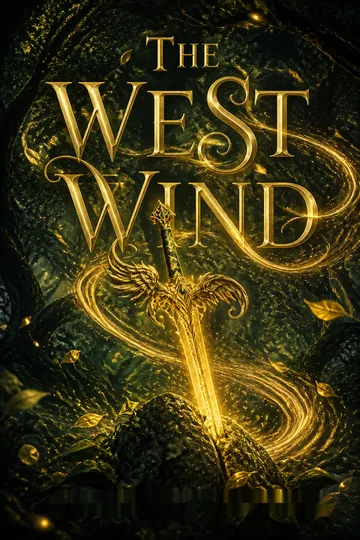
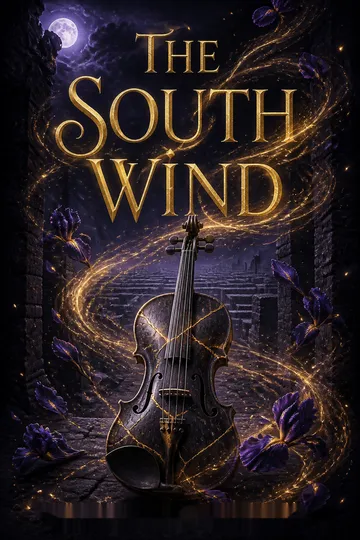
The Four Winds Series
Download PDF
Download EPUB
.epub digital book format is ideal for reading ebooks on phones, tablets, and e-readers.








































