
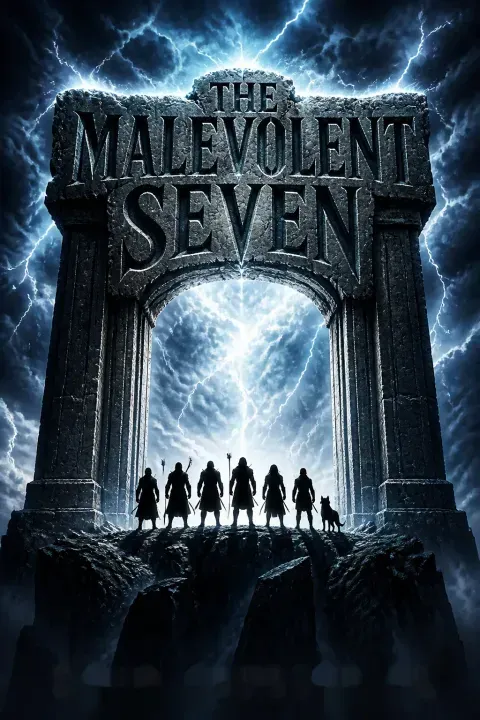


Plot Summary
Prologue
The narrator1 asks you to picture a wizard: an old, frail man in iridescent robes and a floppy, symbol-covered hat, reliant on magic that announces itself to every enemy, a stoop-backed feeb who could not survive a flight of stairs. Then he shows you a real war mage.
Corrigan Blight,2 a massive Tempestoral wonderist with bejewelled arm bands and indigo lightning dancing in his braided hair, bellows obscene threats at defenders atop a citadel wall while black lightning tears apart stone and mortar. He flings soldiers into the sky and snaps their spines. Beside him stands the narrator, Cade Ombra,1 tracing misfortune sigils to deflect enemy arrows.
Their employer, Ascendant Lucien,10 a self-declared holy prince, has hired their coven of eleven wonderists to bring down this fortress. The narrator1 warns that by the end, he and the six other wonderists who will become known as the Malevolent Seven will definitely get what is coming to them.
The prologue establishes the book's central thesis: traditional fantasy heroism is a comfortable lie, and real power is ugly, transactional, and morally compromised. By juxtaposing the stereotypical wizard with the brutal reality of mercenary wonderists, de Castell primes the reader for a narrative that will systematically dismantle romantic notions of magic and morality. The narrator's sardonic, confessional voice signals a first-person account from someone deeply complicit in violence yet self-aware enough to critique it. The promise that these characters will get what they deserve functions as both a conventional narrative hook and an ironic commentary on the very idea of cosmic justice.
Poetic Injustice
During the assault on Archon Belleda's citadel, an elderly Auroral mage on the walls casts a heartchain spell, a suicidal conjuration that binds her heart to Corrigan's2 to burst his blood vessels. A silver tether stretches across two hundred yards. Corrigan2 claws at his chest, mouthing Cade's1 name in panic.
Without hesitation, Cade1 traces three ebony sigils that materialize in the air, moving one to mark Corrigan2 as the target and attaching the two-headed snake connector. He snaps the tether away from Corrigan2 and binds it instead to the old man standing beside the spellcaster, the husband who never flinches even as death flies toward him.
The husband's heart bursts. Corrigan2 gasps air back into his lungs, grins with smug satisfaction, and resumes destroying the citadel with renewed vigor. Cade1 leans against him, the spell having drained his body and, he admits, his soul.
This scene encapsulates the book's moral calculus. Cade saves his friend, a mass murderer, by killing two people who were defending their home with desperate courage. The 'poetic injustice' spell literalizes the central theme: just outcomes are illusions, and survival requires choosing which injustice to commit. The elderly couple's love becomes the very thing that kills them, transforming virtue into liability. Cade's self-awareness functions as both confession and defense mechanism, allowing him to maintain ethical clarity while committing atrocities. The chapter establishes the transactional logic that governs this world, where even mercy is a calculated trade.
Lucien's Human Gifts
After the citadel crumbles, Ascendant Lucien10 arrives with his private guard escorting a group of clean, terrified adolescents in silver-white gowns. These are sublimes, monastic wards conditioned from childhood to believe spiritual fulfillment comes through absolute submission to whomever they are gifted.
Lucien10 announces that each of his wonderists may select one sublime as a reward, but his captains may choose two. The soldiers cheer while Cade1 swallows bile. He selects the two most frightened of the group: Fidick,7 an angelically beautiful eleven-year-old boy whom Lucien10 keeps leering at, and Galass,3 a dark-haired seventeen-year-old girl hugging the boy7 protectively as if that could save either of them.
Lucien10 then declares he will burn every surviving defender at the stake tomorrow, despite their surrender. When Cade1 protests, citing their contract terms, Lucien10 coldly responds that the Lords Celestine have sanctioned his decision.
Lucien embodies the banality of institutional evil, wrapping exploitation and mass murder in divine sanction. The sublimes represent the ultimate corruption of innocence by systems that claim moral authority. Cade's choice, selecting the most vulnerable children ostensibly to protect them, reveals his remaining moral instincts while simultaneously demonstrating his powerlessness. He can save no one, only choose which horror to witness up close. The Lords Celestine's approval of massacre exposes the central corruption that drives the entire plot: the beings humanity prays to are as venal and bloodthirsty as any mortal tyrant, their holiness a mask for realpolitik.
Summoning Tenebris
Inside his ostentatious tent, Cade1 tells Galass3 and Fidick7 he will not abuse them. He gives each a gold coin and places a memory binding on their minds so they will not recall what they witness. From a locked chest he produces a brazier and two pouches of colored spell-sand, then draws three concentric circles on the carpet.
He summons Tenebris,8 a dapper diabolic with goat horns, ram's horns, and a fondness for crimson brocade coats. They haggle over spells, Cade1 threatening the demon with azure sand that can pass through dimensional barriers and burn Infernal flesh.
Tenebris8 pitches a job in the north: a Baron Tristmorta needs seven wonderists to defeat the Seven Brothers,11 do-gooder mages helping a rebellion. The payment includes the Apparatus, a legendary artefact that can permanently alter a mage's attunement to any plane of magic. Cade1 refuses the job but purchases other spells.
The summoning establishes Infernal magic as fundamentally transactional: power is never gifted, only traded. Tenebris is not a cackling villain but a slick salesman whose diabolical nature expresses itself through charm rather than menace. The Apparatus functions as the ultimate MacGuffin, promising freedom from the very system that traps Cade. His principled refusal is already meaningless because the trap has been set, visible in the two children watching from the shadows. The memory binding he casts on them will prove tragically insufficient, just as his attempts at mercy have always been.
Hanged by His Coven
Cade1 leaves his tent intending to murder Lucien,10 but Corrigan's2 bat familiar intercepts him, and a second charm on the bat's bite knocks him unconscious. He awakens hanging upside down by his ankle from a tethering spell in a village tavern. His fellow wonderists have assembled a tribunal.
Narghan the incarcerationist bound him. Lady Smoke, a mist-wreathed sorceress, wants to give him waking nightmares before death. Zyphis, a skeletal interrogationist, longs to suck his intestines. They accuse Cade1 of drawing Glorian Justiciars through his Infernal dealings.
Corrigan2 argues Cade1 should be spared and forced to lead tomorrow's massacre as penance. Before Corrigan2 can land his disciplinary blow, young Cousin Green bursts through the door, shouting that Ascendant Lucien10 has been murdered by a hellborn conjuration bearing Cade's1 magical signature. The eight surviving wonderists freeze in panic.
This scene dramatizes the precarious solidarity among mercenaries. Friendship means nothing when survival is at stake; Corrigan's defense of Cade is a calculated performance to buy time. The wonderists' eagerness to torture and kill their own comrade reflects the atomization of moral community among those who sell violence. Green's entrance with news of Lucien's murder transforms the situation from personal betrayal to existential crisis. The hellborn bearing Cade's signature completes the frame-up that cosmic forces have engineered, though none of them yet understand the true conspiracy.
Corrigan Massacres the Coven
Green, an amateur luminist, uses a backwards-gaze spell on soil from outside Lucien's10 tent to project the murder. The assembled wonderists watch in horrified silence as a shadowy hellborn slithers through the camp, passes effortlessly through the Ascendant's10 magical wards, and tears Lucien10 apart piece by piece before reassembling his body to maximize suffering.
It places the severed head on its own shadowy shoulders and dances a jig before expiring. When the vision ends, panic erupts. The Glorian Justiciars are already sealing the camp. Since leaving Cade's1 body intact means the justiciars will magically extract confessions naming everyone, the coven votes to obliterate him completely.
Corrigan2 volunteers, priming his aetheric lightning spell. Then he spins and the lightning strikes every corner of the tavern, incinerating Narghan, Lady Smoke, Zyphis, and all the others. Only Green's terrified eyes meet Cade's1 before he too is consumed.
Corrigan's choice is the story's first genuine moral shock. Until now, he has performed monstrousness casually, a man who kills for money without introspection. But his willingness to slaughter a dozen comrades, people he has fought beside for years, to save one friend, reveals a loyalty that transcends the mercenary code. The act is both horrifying and oddly noble, a betrayal that is also the truest expression of his character. It establishes the stakes going forward: from this moment, Cade and Corrigan are irrevocably bound, their fates lashed together by blood and gratitude.
Galass, the Blood Mage
Returning to his tent, Cade1 finds dead soldiers, their bodies covered in a crimson sheen, blood oozing from every orifice. Galass3 stands amid the carnage, her dark hair now a radiant, floating scarlet. Inside a spell circle lies Fidick's7 perfectly preserved corpse.
Galass3 explains that after Cade1 left, Fidick7 entered a trance and replicated the summoning ritual flawlessly. He tortured Tenebris8 with cursed sand until the diabolic capitulated, trading two spells for Fidick's7 soul. The first was the hellborn that murdered Lucien.10 The second awakened Galass's3 latent attunement to blood magic, the only form of power native to the Mortal plane.
She killed the soldiers who came to the tent instinctively, without understanding what she was doing. Cade1 drapes a blanket over Fidick7 and recites the only prayer he can still tolerate without making himself sick. They are joined by Mister Bones,7 a jackal that has been following the children around the camp.
Fidick's sacrifice recasts the preceding narrative entirely. The frightened boy was never a victim but an agent, his innocence a mask for celestial manipulation. His love for Galass is real but weaponized: he gave her power that will inevitably destroy her sanity. Blood magic, native to the mortal realm, represents nature's own violation, a power that consumes its wielder from within. Cade's prayer over Fidick's body, recited despite his professed irreligion, is his first genuinely selfless act, acknowledging a grief that his cynicism cannot deflect. The jackal's arrival seems incidental but carries deeper significance.
The Rat Mage's Condition
Traveling by sloop along the Jalbraith Canal, Cade1 teaches Galass3 to attune herself to the flow of life through waterways and root systems rather than human blood. They reach a wooded glade where four wonderists are under attack by a swarm of rats. Corrigan2 blasts the female thunderer, Elania Scourge, with a bolt of lightning, killing her instantly.
The remaining three flee into the forest. The rats then excavate a buried man from a mound of dirt. Aradeus Mozen4 emerges, brushing soil from his elegant grey coat and straightening his swept-hilt rapier.
He is a rat mage,4 handsome and theatrically gallant, with a waxed moustache and a smile that makes one want to follow him anywhere. He refuses to join their mission to the Blastlands unless they first help him rescue an angelic being5 held captive aboard Prince Stercus's pleasure barge, a floating brothel whose red sails are visible in the distance.
Aradeus introduces a different moral register into the narrative. Where Cade and Corrigan operate through cynicism and brutality, Aradeus embodies a chivalric code that seems absurd in context yet proves genuine. His condition before joining the paying job asserts that some debts transcend commerce. The rat mage's affinity with despised creatures parallels the book's argument that value and virtue exist in what the world dismisses. His theatricality is not mere vanity but a performed resistance to the grimness of their profession, a refusal to let ugliness dictate his self-presentation.
Beneath Red Sails
The team dresses in their finest wonderist coats and boards the Serenity Divine, Prince Stercus's opulent floating brothel. The major domo greets them obsequiously, offering the services of beautiful young courtesans bathed in dancing colored lights. Corrigan2 selects a voluptuous older woman, matching her leer for leer.
Galass,3 asserting her newfound power, chooses a girl her own age and declares she wants to know what it feels like to hold power over another. Aradeus4 departs with an eager sibling pair. Cade1 asks for books instead, earning the major domo's suspicion.
The major domo then mentions nine wonderists provide security aboard, including two with unremarkable brown hair and no ostentation who hang back from the others. Cade1 recognizes them instantly despite their dyed hair and awkward costumes: Dignity and Fidelity,14 Glorian Justiciars in disguise. Their presence means the Lords Celestine have their own interests aboard this vessel.
The pleasure barge is a microcosm of the corrupt world: wealth, power, and religious authority converge to commodify bodies. Cade's recognition of his former colleagues raises the stakes from mercenary survival to spiritual reckoning. The justiciars' presence transforms the rescue from a swashbuckling adventure into a confrontation with Cade's own past and the institutions he once served. Galass's choice to become the client rather than the commodity marks her incomplete but significant assertion of agency, even as it echoes the very power dynamics that once trapped her.
The Angelic's Punishment
A crisis erupts when Galass3 accidentally exsanguinates a noble who mistook her for a prostitute and touched her without consent. Cade1 spins the death as tragic hubris, earning the major domo's gratitude and the key to the prince's most exclusive cabin. At the bottom deck, Dignity and Fidelity14 guard a red door.
Cade1 confronts them, deducing their current orders prevent them from attacking him. Inside, he finds an angelic being5 forced to serve as the ultimate prostitute, her body instinctively transfiguring to match whatever form each client most desires.
She tries to seduce him through an exhausting catalog of forms and provocations. Cade1 resists, creating mental space for honest conversation. She reveals the Lords Celestine condemned her for questioning orders, sending her here as a warning to other angelics. Aradeus4 once spent a night with her and begged her forgiveness afterward.
The angelic's predicament crystallizes the book's theological critique. The Lords Celestine, supposedly embodiments of virtue, punish dissent with sexual slavery. Her constant transfiguration mirrors the dissolution of self that total obedience demands; she cannot hold a stable form because she has been denied a stable self. Her eventual choice of the name 'Shame' reclaims the very emotion her tormentors intended to instill. Cade's refusal to take what is offered, his insistence on treating her as a conscious being rather than an object, represents his most significant moral act so far, a quiet rebellion against the logic of exploitation that governs both the Aurorals and the mercenary world.
A Path Through Hell
Trapped with the justiciars14 preparing to blast through the door, Cade1 summons Tenebris8 a second time and offers his soul for safe passage. Shame5 intercedes, whispering something to the diabolic that makes his silver eyes go wide. He agrees to a deal.
His blood creates a shimmering path above an ocean of writhing, screaming damned souls. As they walk, Tenebris's8 blood suddenly veers left, pulling Cade1 away from the group. He follows and finds Hazidan Rosh,9 his old master, the former First Paladin of the Glorian Justiciars, now blind and living in a self-created replica of the justiciars' training hall in Hell.
She reveals that the Lords Celestine have been manipulating Cade1 all along, herding him toward the Blastlands. The Glorians were not hunting him; they were guiding him toward a confrontation with the Seven Brothers.11
Hazidan's exile in Hell operates as the book's moral center. She chose eternal damnation over complicity, a decision that reframes Cade's own apostasy as an incomplete rebellion. Her blindness literalizes the cost of true vision, while her continued faith in free will, evidenced by her training a demoniac as a justiciar, embodies the book's paradoxical argument that redemption is possible only when you reject the systems that define it. The revelation that Cade has been a manipulated pawn shatters his self-image as a rogue agent, forcing him to confront the possibility that none of his choices were truly his own.
The Demoniac Justiciar
Hazidan9 introduces Alice,6 a lithe demoniac with bat-like wings, silvery-white hair shorn close to her blue-black scalp, and ritual scars on her face that form the symbols of justiciar virtues. She wears an ivory justiciar's shirt with golden fringe and carries a bone-hilted whip-sword.
Hazidan9 has trained her in both philosophy and combat, treating her as a student rather than an Infernal creature. Alice6 views Cade1 with open contempt, calling him 'fallen one.' On the return journey through the darkness, she deliberately lets Cade1 nearly fall into the grasping hands of the damned, then rescues him at the last moment to assert dominance.
Cade1 responds by punching her in the face when she reaches for her weapon, then punching her a second time when she tries again. An uneasy truce forms. She is driven by fear of failing Hazidan.9
Alice represents the book's most radical proposition: that even a demon, a being literally bred for malice and destruction, can choose a different nature. Her hostility toward Cade masks deep insecurity; she is Hazidan's second attempt to prove that nurture can overcome nature, after Cade's own apostasy proved the first experiment's ambiguous result. The physical violence between them, fists and bleeding noses, becomes a form of negotiation between two damaged students of the same master. Her disdain for being called 'demon' signals her internalization of Hazidan's teaching that identity is chosen, not assigned.
The Baron Who Never Dies
Tenebris's8 portal deposits them not at the canal but deep in the Blastlands, a wasteland of cracked red clay and pinkish fog created by an ancient war between a thousand wonderists on each side. In the town of Mages' Grave, the residents have skin stained crimson by the toxic soil and are addicted to crops grown in it, unable to survive elsewhere.
Mayor Vidra12 leads them to their supposed client, Baron Tristmorta. He hangs six feet off the ground from a rope attached to nothing, his skin and hair stripped away, his lidless eyes tracking their approach, screaming continuously.
When Corrigan2 blasts him, the blood soot in the air begins regenerating his flesh. Shame5 and Galass3 combine their powers, the angelic5 transfiguring his body while Galass3 manipulates his blood, to grant him a true death. In his final breath, the baron gasps that the Seven Brothers11 'want the red. '
The baron's eternal torment is the story's most visceral image of cruelty as communication. The Seven Brothers' warning is not merely punitive but demonstrative: they are showing what awaits anyone who opposes them, transforming a human being into an object lesson that cannot end. The blood soot as consecrated matter redefines the Blastlands as contested holy ground rather than mere wasteland. Cade's deduction that the brothers intend to use this corrupted soil to feed an invading army from another plane shifts the conflict from mercenary politics to metaphysical warfare, raising the stakes to existential dimensions.
Parlay Among the Dead
A goat-man servant named Madrigal13 greets them at the fortress gate, offering pastries or feces as traditional diplomatic gifts. Inside the great hall, forty-two preserved corpses of previous wonderist delegations hang upside down from invisible threads, their faces frozen in horror.
The Seven Brothers,11 pale men with crimson irises and spidery veins across their cheeks, explain their origin: their parents fought on opposite sides in the ancient mages' war, and the seven of them were born attuned to the devastation itself.
The Pandoral plane, a small realm of three hundred benevolent beings, is dying, and the brothers11 seek to give them a new home in the Blastlands. They appear reasonable, agreeing to all of Cade's1 demands regarding the townsfolk. Then they offer the Apparatus itself, a brass casket inlaid with gold and silver, as a parting gift, claiming they no longer need it.
The Seven Brothers initially confound narrative expectations. They are not cackling villains but sincere idealists with a coherent moral argument: what value does a poisoned wasteland hold that outweighs saving three hundred conscious beings? Their reasonableness is precisely what makes them unnerving, suggesting either genuine benevolence or a fanaticism so complete it no longer needs to threaten. The floating corpses serve as an unspoken coda to their politeness: every previous delegation also heard reasonable words and now dangles above. The brothers' willingness to give away the most coveted artefact in existence signals either extraordinary generosity or confidence that they will not need to honor the bargain.
Fidick Rises from the Dirt
Outside the fortress, Mister Bones7 frantically digs in the red clay, unearthing severed heads. Dozens of Glorian Justiciars are buried just beneath the surface, still conscious and aware. Dignity and Fidelity14 are among them. They use their dying breaths to deputize Cade1 as a Paladin Justiciar, commanding him to stop the brothers.11
Then Mister Bones7 begins convulsing, bones cracking audibly, grey fur shedding and regrowing as blond hair, until he transforms into Fidick,7 naked and smiling. The boy explains the full conspiracy: the Lords Celestine and Lords Devilish collaborated, orchestrating every event, from Lucien's10 murder to the pleasure barge, to destroy the Seven Brothers.11
The brothers11 were never protecting the Pandorals. They were constructing the first permanent gates between planes, gates that the gods and devils could use to enter and wage war upon the Mortal realm itself.
Fidick's transformation is the plot's central revelation, retroactively reinterpreting every prior event. The jackal was never a pet but a vessel for the boy's resurrected consciousness, a walking surveillance device placed by the celestials. The collaboration between Celestines and Devilish exposes the entire cosmic order as a cartel, two rival factions colluding to break into a new market. Cade's promotion to Paladin Justiciar, the rank he once coveted, arrives as a hollow mockery: the system that exiled him now demands his service in its most cynical operation. The buried heads literalize how thoroughly the divine powers treat even their most devoted servants as disposable.
The Pandoral Gate Opens
The team enters the fortress through a sewer as reality itself warps around them, stone walls rippling like water. Corrigan2 absorbs an entire corridor of continuous lightning strikes so the others can pass. In a seven-sided chamber, the brothers11 stand frozen, their mouths agape as copper-shelled insects crawl out and coalesce into a tall, twelve-eyed Pandoral.
Nothing they throw at it causes harm. Cade1 realizes the only way to destroy the gates is from the other side. The team joins hands, mixing their blood so Galass3 can infuse Alice's6 Infernal essence through them all, poisoning the gates in the one way the Pandorals cannot tolerate.
As one, they reach inside the brothers'11 mouths and unleash their combined power, obliterating the siblings. But Shame,5 weeping, reveals her deal with Tenebris8 bound her to serve both divine factions. On Fidick's7 command, her unwilling transfiguration magic remakes six of the brothers'11 corpses into larger gates. The Lords Celestine and Lords Devilish step through onto the Mortal plane.
The battle sequence embodies the team's paradoxical strength: their dysfunction becomes their weapon. Alice's Infernal blood, the thing that marks her as monstrous, is the only poison the Pandorals cannot tolerate. The physical act of reaching into another being's mouth to kill them makes a metaphor of warfare itself, a violation so intimate it erases the boundary between self and enemy. Shame's betrayal, performed against her will, completes her tragic arc: freedom from one master only bound her to another, more absolute servitude. Fidick's casual cruelty in commanding her, without even a glance, exposes the resurrected child as the most corrupted agent in the entire conspiracy.
The Malevolent Seven
Fidick7 departs, telling Galass3 she should grow up. Shame5 is released from her bondage but sits weeping over what she was forced to do. The Apparatus has one use remaining. Cade1 offers it to Galass,3 who refuses, accepting her blood magic as now part of who she is rather than a curse to be shed.
Alice,6 Aradeus,4 and Shame5 all decline as well. Corrigan2 suggests Cade1 use it. Cade1 chooses Fortunal attunement, chance magic, claiming they will need all the luck they can get. Outside, Tenebris8 visits, warning Cade1 to pick a side in the coming war between the Lords. Cade1 picks the diabolic's pocket, stealing back his bag of spell-sand.
On the fortress steps, he draws a line in the dirt with a stick and declares a third side: for everyone who refuses to let gods or devils rule. Corrigan2 blasts a ten-foot trench with his lightning. The six of them stand together as the Malevolent Seven, one member short, but committed.
The Apparatus refusal montage is the book's thesis statement: identity is not something to be optimized or escaped but accepted and wielded. Galass's choice to remain a blood mage, the thing she most feared becoming, transforms her curse into a commitment. Cade's selection of Fortunal magic, the least powerful attunement, is an embrace of uncertainty over the control he has always craved. The line in the dirt, a childish gesture made lethal by Corrigan's lightning, enacts the book's final argument: in a world where every transcendent authority seeks to dominate humanity, the only righteous position is refusal to serve any of them.
Epilogue
The narrator1 again addresses the reader directly: picture a hero. The traditional image is a broad-shouldered paragon with a chiselled jaw, bright blue eyes, and a gleaming named sword.
He wields noble blue flame, wears a flowing cloak perfect for tripping over, and only helps causes that are righteous in every possible way. He would never stoop to getting down in the mud where the real fight is happening, because that might make him no better than the bad guys. But there is a whole lot of mud, and some people are already neck-deep in it.
Maybe it is time for someone who is ready to be worse than the bad guys, someone willing to do what the self-important posers will not. The narrator1 invites the reader to open their eyes. He will show them a real hero.
The epilogue mirrors the prologue structurally but inverts its function. Where the opening debunked the wizard archetype, the closing redefines the hero. The juxtaposition of 'worse than the bad guys' with 'real hero' encapsulates the book's moral argument: in conditions of absolute systemic corruption, protecting what matters may require embracing the very methods that traditional morality condemns. The direct address to the reader breaks the fourth wall, implicating us in the choice between comforting illusions and uncomfortable action. The invitation to 'open your eyes' echoes the prologue's 'close your eyes,' completing the narrative frame as a challenge to the reader's own ethical complacency.
Analysis
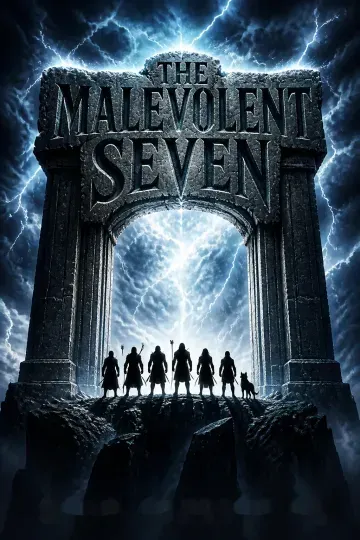
The Malevolent Seven is a systematic deconstruction of fantasy heroism that argues genuine moral action in a comprehensively corrupt world requires embracing methods that traditional ethics condemn. De Castell creates a universe where the Lords Celestine and Lords Devilish are not embodiments of good and evil but rival cartels colluding to expand their market into the Mortal plane. By eliminating any legitimate transcendent authority, the novel forces its characters and readers to confront an uncomfortable question: if the gods are tyrants and the devils are businessmen, what ground remains for ethical action?
The answer the book proposes is radical self-definition. Cade's1 arc is not from darkness to light but from manipulated pawn to conscious agent. His use of the Apparatus to become a Fortunal mage, embracing the least controllable form of magic, symbolizes an acceptance that genuine freedom requires relinquishing the fantasy of control. Galass's3 refusal to change her blood magic attunement represents the same principle applied to identity: she will not be defined by what was done to her, but by what she chooses to do with what she has become.
The novel's formal structure reinforces its themes. Cade's1 first-person narration, with its direct addresses to the reader and self-lacerating humor, positions storytelling itself as a moral act. By confessing his worst deeds without asking for absolution, Cade1 models a form of accountability that requires no divine judge. The book's profanity, its gallows humor, and its refusal to let any character remain purely sympathetic are not stylistic affectations but philosophical commitments: in a world without clean hands, the only honest response is to stop pretending your hands are clean.
The team that assembles, a fallen justiciar,1 a mass-murdering thunderer,2 a doomed blood mage,3 a chivalric rat mage,4 a traumatized angelic,5 and a demoniac trained in virtue,6 represents a coalition of the damaged and the damned choosing to fight anyway. Their name, the Malevolent Seven, reclaims villainy as a form of integrity. They will be called evil by both sides in the coming war because they refuse to serve either. In a cosmos where benevolence is a lie told by slave-masters, malevolence becomes the only honest stance.
Review Summary
People Also Read
Characters
Cade Ombra
Fallen Justiciar, Infernal MercenaryA former Glorian Justiciar who was exiled for refusing an execution order. Now in his late twenties, Cade works as a mercenary wonderist, purchasing Infernal spells from a diabolic agent8 in exchange for sacrificed ecclesiasm. He is sardonic, self-aware, and haunted by the moral clarity he lost when he discovered the Lords Celestine were corrupt. He presents himself as a cynic but repeatedly acts to protect the vulnerable, most notably Galass3. His arc moves from self-deception about his own agency to the painful recognition that cosmic forces have manipulated his every step, and finally to a deliberate choice to fight both the Aurorals and the Infernals on behalf of ordinary humanity. His former master, Hazidan Rosh9, trained him as an investigator, a skill he still uses to piece together conspiracies.
Corrigan Blight
Tempestoral Thunderer, Cade's Best FriendA massive, ebony-skinned Tempestoral mage with indigo braids woven through his hair and beard. Corrigan is loud, crude, violence-prone, and utterly unapologetic about being a mercenary who kills for money. He loves expensive clothes, powerful spells, and reminding rich employers who really holds the power. Beneath the bluster lies a calculating mind and a loyalty to Cade1 that transcends every mercenary code. He massacres their entire coven rather than let them execute his friend, and later, even when Cade1 enslaves him with a recruitment spell, Corrigan's first act upon being freed is to demand they keep fighting together. His loyalty is the story's emotional anchor, proving that even the most morally compromised people can form bonds worth dying for.
Galass
Blood Mage, Former SublimeA seventeen-year-old girl raised in monastic institutions as a sublime, conditioned to believe her spiritual fulfillment lies in absolute submission to others' desires. When Fidick7 trades his soul to awaken her latent blood magic attunement, she becomes one of the most feared types of wonderist, her power drawn from the flow of life itself. She is fierce, perceptive, and refuses to let her circumstances define her. Her relationship with Cade1 is fraught: she sees through his pretenses of indifference while depending on his guidance to control her deadly abilities. Her decision to keep her blood magic rather than use the Apparatus to change it represents her first fully autonomous choice, transforming her curse into an identity she claims rather than endures.
Aradeus Mozen
Rat Mage SwashbucklerA handsome, theatrical wonderist in his late twenties who derives his magic from the Totemic plane through an affinity with rats. He dresses with dandified elegance, speaks in florid declarations, and genuinely believes in honor, gallantry, and the nobility of even the most despised creatures. His rapier and his rat-summoning spells make him a surprisingly effective combatant. He joins the team on the condition they first rescue the angelic Shame5 from the pleasure barge where he once spent a night with her and promised to return. His sincere chivalry stands in stark contrast to Cade's1 cynicism and Corrigan's2 brutishness, and his unconditional kindness toward Galass3 and Shame5 provides the emotional warmth the team desperately needs.
Shame
Fallen Angelic, Celestial RefugeeAn angelic being created by the Lords Celestine to serve as a herald, capable of transfiguring her form to match whatever shape would most appeal to those she addressed. When she questioned the Lords' orders, they condemned her to serve as the ultimate prostitute aboard Prince Stercus's pleasure barge, her body instinctively reshaping itself to fulfill every client's deepest desires. She chose the name Shame as an act of reclamation. Her rescue by the team comes at the cost of a deal with the Infernals that eventually forces her to betray her new friends, transforming the Seven Brothers11 into permanent gates. She is gentle, curious about mortal experience, and devastated by the awareness of what she has been made to do.
Alice
Demoniac Justiciar-in-TrainingA demoniac, a type of Infernal being bred to survive translation to the Mortal plane. She has bat-like wings, blue-black skin, silvery-white cropped hair, and ritual scars on her face representing the virtues of the Glorian Justiciars. Hazidan Rosh9 found her in Hell and trained her in justiciar philosophy and combat, treating her as a genuine student rather than a damned soul. She is prickly, disdainful of weakness, and contemptuous of Cade1 specifically, but beneath her hostility lies a desperate fear of failing her mentor. Her whip-sword, which shifts between rigid blade and flexible ribbon, is her primary weapon. She represents the book's argument that even demons can choose a different nature.
Fidick
Sublime Child, Celestial AgentAn eleven-year-old sublime boy of angelic beauty, with golden curls and cherubic features that inspire both artistic wonder and predatory desire. He clings to Galass3 as his protector, calling her his sister. But beneath the innocent facade, Fidick is a plant, trained by the Lords Celestine to replicate Infernal rituals and make the deals that would set the entire conspiracy in motion. He trades his soul to Tenebris8 to murder Ascendant Lucien10 and awaken Galass's3 blood magic, dies, and is later resurrected as a revenant who has been hiding inside the jackal Mister Bones. His true nature as a coldly calculating agent of divine manipulation is the story's cruelest revelation.
Tenebris
Diabolic Agent and DealmakerA diabolic, the Infernal equivalent of a diplomat and conman. He stands about five and a half feet tall with ivory skin textured like leather, goat horns above his eyebrows, and curled ram's horns on the sides of his skull that he strokes when scheming. He dresses in crimson brocade coats and serves as Cade's1 agent, brokering spells from various Lords Devilish. Despite his nature, he displays genuine fondness for Cade1 and something approaching a conscience, having been changed by their association. He manipulates Cade1 into the northern job on behalf of a secret collaboration between the Lords Celestine and Lords Devilish.
Hazidan Rosh
Blind Ex-Justiciar in ExileFormer First Paladin of the Glorian Justiciars and Cade's1 mentor. She is an older woman, broad-shouldered, with silver-grey cropped hair and empty eye sockets where her piercing steel-blue eyes once were. She now lives in a self-created replica of the justiciars' training hall in the Infernal plane, having voluntarily exiled herself to Hell to escape the Lords Celestine after asking too many questions. She trained Cade1 in investigation and moral philosophy, then systematically undermined his faith in the order. She has also trained Alice6, a demoniac, as a justiciar, pursuing her lifelong belief that free will and redemption are available to any conscious being.
Ascendant Lucien
Tyrannical Holy WarlordA self-declared holy prince blessed by the Lords Celestine, though more likely a pawn of both divine factions. Silver-haired and alabaster-faced, he leads a crusade of conquest while keeping a stable of teenage sublimes for his own pleasure and as gifts to reward his mercenaries. He announces the massacre of surrendering defenders, believing the Lords Celestine have sanctioned his cruelty. His murder by a hellborn conjuration, summoned by Fidick7, triggers the entire chain of events. His death reveals how little the divine powers value even their most ostentatiously faithful servants.
The Seven Brothers
Pandoral-Attuned WonderistsSeven male siblings ranging from late teens to mid-thirties, their parents fought on opposite sides in the ancient mages' war. They were born attuned to the fractures between planes, giving them a connection to the dying Pandoral realm. Their crimson irises, spidery veins, and hive-mind communication reflect their inhuman patrons. They seized Baron Tristmorta's fortress and used the Apparatus to fully open themselves as living gates. While they present themselves as benevolent rescuers of a dying species, their willingness to hang forty-two wonderists from the ceiling as warnings and imprison transformed animal servants in walls reveals a ruthlessness that belies their reasonable words.
Vidra
Mayor of Mages' GraveA young woman with skin cracked and reddened like leather from lifelong exposure to the blood soot. She leads the impoverished town with weary pragmatism, having watched waves of wonderists march to the fortress and never return. Her people are biologically addicted to the tainted crops, unable to leave even as the land slowly kills them.
Madrigal
Transformed Goat ServantA goat transmogrified by the Seven Brothers11 into a walking, talking servant. He wears a grey wool robe, moves on hooves, and speaks with careful precision. He serves the brothers11 because he hopes to eventually be returned to his natural form. He warns Cade1 obliquely about the brothers'11 true nature and pays for his defiance by being entombed alive in the fortress walls.
Dignity and Fidelity
Glorian Justiciar PairTwo Glorian Justiciars, Cade's1 former colleagues from the order he abandoned. Dignity is a broad man with large hands; Fidelity is a sharp-featured woman with an outsized sense of righteousness. They are found guarding Shame's5 cabin on the pleasure barge, magically compelled to serve as her jailers. Later, their severed heads are among those buried outside the fortress, and they use their dying moments to deputize Cade1 as a Paladin Justiciar.
Plot Devices
The Apparatus
Attunement-Changing ArtefactProperly named the Empyrean Physio-Thaumaturgical Device of Attunal Transmutation, this brass casket inlaid with gold, silver, and liquid channels of quicksilver is the only known instrument capable of permanently altering a wonderist's attunement from one plane of magic to another. Its lid is inscribed with a human figure haloed by sigils from every known attunement. The Seven Brothers11 used it to perfect their connection to the Pandoral plane. They offer it to Cade1 as a bribe to leave them alone. After the battle, with one use remaining, each team member refuses it, choosing to accept their current nature rather than opt for a different one. Cade1 ultimately uses it to become a Fortunal mage.
Spell-Sand
Summoning and Binding AgentSpecially prepared sands in various colors (azure for portals, pink for curses) that can pass through dimensional barriers. Cade1 uses azure sand to create summoning circles that both open portals to the Infernal plane and protect against what comes through. The pink sand can be flicked at Infernal beings to cause them intense pain. Fidick7 used the sand to torture Tenebris8 into making a deal. The sand represents the physical interface between mortal and Infernal reality, a substance that obeys the laws of both realms. Cade's1 bag of spell-sand, stolen back from Tenebris8 at the end, symbolizes his refusal to be disarmed in the coming war.
Blood Soot
Consecrated Wasteland SoilCalled 'the red' by locals, this crimson dust permeates the air, soil, and water of the Blastlands. It was created centuries ago when two armies of wonderists fought a six-year war, their conflicting spells permanently fracturing reality and leaving behind ecclesiasm-infused matter. The townsfolk of Mages' Grave have become biologically addicted to crops grown in it, unable to digest normal food. For beings from other planes, like the Pandorals, the blood soot functions as consecrated matter that can sustain their physical forms on the Mortal plane, making the Blastlands the only viable beachhead for an extra-planar invasion.
Pandoral Gates
Permanent Inter-Planar PortalsThe Seven Brothers11 transformed their own bodies into living conduits between the Mortal realm and the Pandoral plane, becoming gates through which beings from that reality could physically enter. When the brothers are killed, Fidick7 forces Shame5 to use her angelic transfiguration to reshape six of the corpses into larger, permanent portals. These allow the Lords Celestine and Lords Devilish, beings who have never been able to set foot on the Mortal plane, to enter and depart at will. The gates represent the irreversible violation of the cosmic order, the moment when humanity loses its protected status as the only plane the divine powers could not physically access.
Recruitment Spells
Magical Enslavement BindingsA form of Infernal magic that places the victim under the absolute control of the caster, who can compel obedience while leaving the enslaved person's consciousness intact. Cade1 uses one on Corrigan2 before the final battle to prevent him from fleeing, an act that sickens Cade1 more than any other he has committed. Later, Shame5, bound by her own deal with the Infernals, casts a recruitment spell on the entire team at Fidick's7 behest, paralyzing them while she is forced to transform the brothers'11 corpses. The spell represents the ultimate violation of free will, the thing Cade1 and Hazidan9 value most, used by both 'good' and 'evil' factions alike.
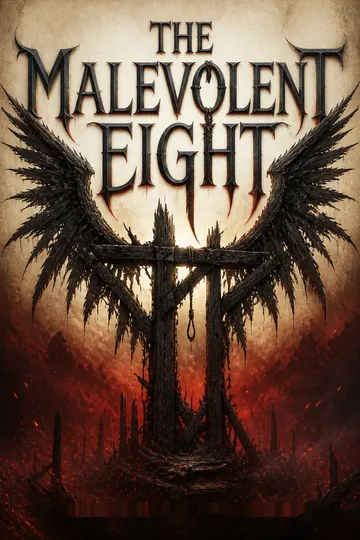
The Malevolent Seven Series
About the Author
Other books by Sebastien de Castell

Download PDF
Download EPUB
.epub digital book format is ideal for reading ebooks on phones, tablets, and e-readers.








































