

Plot Summary
Shadows of the Bunker
In a Bavarian police station, ex-president Danny Daniels witnesses the mysterious death of Hanna Cress, a Belarusian courier. Her last word—"Kaiser"—and a packet of cryptic documents hint at a secret that could shake modern Europe. The documents point to the final days of Hitler's bunker, raising doubts about the fates of Martin Bormann and Eva Braun. The past, it seems, is not as settled as history claims. Daniels, sensing the gravity, enlists Cotton Malone and Cassiopeia Vitt to investigate, setting in motion a global hunt for the truth behind a word that still haunts Germany's soul.
The Web Unspools
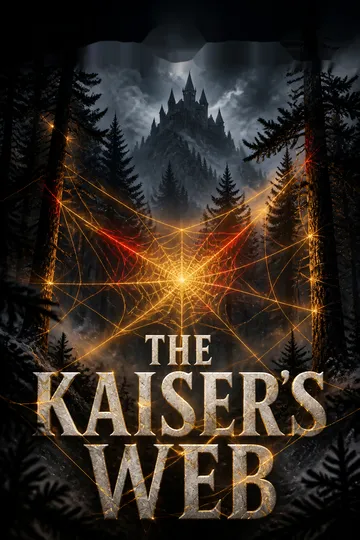
Cotton Malone and Cassiopeia Vitt, at Daniels' request, travel to Belarus to trace Hanna Cress's origins and her connection to Gerhard Schüb, the enigmatic source behind the documents. Their investigation quickly turns deadly, forcing them to escape by air, only to be shot down and barely survive a harrowing parachute jump. The sense of being manipulated grows as they realize powerful forces are watching—and steering—them. The "Kaiser's web" is not just a metaphor, but a living network of secrets, lies, and deadly intent, stretching from the Cold War to the present.
Ghosts in the Alps
As Germany faces a pivotal election, Chancellor Marie Eisenhuth and her rival, Theodor Pohl, become entangled in the web's shadow. Eisenhuth, a symbol of stability, is haunted by her family's Nazi-tainted past and the specter of new right-wing extremism. Pohl, a charismatic populist, rides a wave of nationalist sentiment, his campaign echoing dangerous themes of exclusion and ethnic purity. Both are drawn into a high-stakes game as the documents hint that Pohl may be the son of Martin Bormann, Hitler's shadowy lieutenant. The past threatens to upend the future, and the ghosts of the Alps stir.
The Chancellor's Dilemma
Eisenhuth, pressured by Daniels and her own conscience, must decide whether to weaponize the explosive information about Pohl's possible parentage. She fears the consequences: exposing Pohl could either destroy him or make him a martyr. Meanwhile, her own family's history—her father's complicity with the Nazis and the taint of ill-gotten wealth—threatens to surface. The chancellor's struggle is not just political, but deeply personal, as she confronts the moral cost of victory and the weight of Germany's unresolved guilt.
The Populist's Rise
Theodor Pohl's campaign surges, fueled by xenophobia and nostalgia for a "pure" Germany. He is a master of coded language, never openly embracing Nazism but exploiting the same fears and resentments. His inner circle, including the ruthless Josef Engle, orchestrates a campaign of manipulation, violence, and misinformation. As Pohl's popularity grows, so does the threat to the fragile postwar order. The web tightens, and the line between past and present blurs, as Pohl's true origins become the fulcrum of the nation's fate.
Secrets in South America
Malone and Vitt follow the trail to Chile, uncovering a trove of Nazi memorabilia and photographs that suggest Bormann and Braun survived and fled to South America. They encounter Ada, a survivor and reluctant caretaker of the Nazi diaspora, who reveals that the web is a carefully constructed trap. The evidence they find is both tantalizing and suspect, designed to implicate Eisenhuth's family as much as Pohl's. The truth is elusive, and every answer only deepens the mystery.
The Hunt for Truth
In Chile and South Africa, Malone and Vitt discover that the Nazi legacy is not just a matter of bloodlines, but of money and influence. They trace the flow of Hitler's Bounty—vast sums funneled out of Germany by Bormann—into modern corporations, including those owned by Eisenhuth's family. The web's architect, Pohl, has set a trap: the investigators are meant to expose Eisenhuth's tainted inheritance, destroying her as surely as any revelation about his own past. The hunt for truth becomes a race against time, with lives and nations in the balance.
Bloodlines and Betrayals
As the investigators close in, the tangled relationships between Bormann, Braun, Schüb, and the next generation come to light. Pohl's identity is revealed as a product of Nazi ambition and postwar subterfuge, but the truth is more complex than anyone imagined. Eisenhuth, too, is forced to confront her own origins and the possibility that she is not who she believed. Betrayals multiply, and the line between victim and perpetrator blurs. The web is not just political, but deeply personal, binding its victims in a legacy of shame and secrecy.
The Nazi Legacy
The story's heart is the enduring power of the Nazi legacy: not just in hidden gold or secret children, but in the ideas that refuse to die. The rise of the new right across Europe, the persistence of anti-Semitism and xenophobia, and the willingness of ordinary people to believe comforting lies—all are woven into the narrative. The characters' struggles mirror a nation's, as Germany—and the world—grapples with the unfinished business of history. The web is not just a plot, but a warning.
The Money Trail
The investigators uncover the financial heart of the web: Hitler's Bounty, laundered through South American banks and funneled into modern German industry. The money implicates both Pohl and Eisenhuth, threatening to destroy them both. The revelation that Eisenhuth's family profited from Nazi plunder is as devastating as any secret about Pohl's parentage. The web's true power is its ability to ensnare the innocent and the guilty alike, making the past inescapable.
The Father's Sins
The climax unfolds in Pohl's ancestral castle, where the truth about his origins and Eisenhuth's is finally revealed. Gerhard Schüb, the last living witness, confronts Pohl with the reality of his parentage—and his own complicity. The confrontation is both personal and historical, a reckoning for the sins of the fathers. Violence erupts, and the web is torn apart, but not before it claims its final victims.
The Daughter's Burden
Eisenhuth, shattered by the revelation of her true parentage, chooses to end her life rather than let the past destroy her country. Her suicide is both an act of despair and of courage, a final attempt to break the cycle of guilt and vengeance. The nation mourns, but the lesson is clear: the past cannot be buried, and the price of denial is always paid in the end. The web is broken, but its scars remain.
The Trap Closes
In the aftermath, the truth is made public. The Nazi gold is confiscated, the journals and evidence revealed, and the world is forced to confront the uncomfortable reality that the past is never truly past. The survivors—Malone, Vitt, Schüb, and others—are left to pick up the pieces, changed by what they have learned. The web's architect is dead, but the dangers he embodied persist. The story ends not with triumph, but with a somber recognition of history's enduring power.
The Final Confrontation
The novel closes with a funeral, a nation in mourning, and the hope that, at last, the cycle of denial and extremism has been broken. The characters reflect on the cost of truth, the dangers of forgetting, and the necessity of vigilance. The web is gone, but the lessons remain: history is never finished, and the willingness to believe comforting lies is humanity's greatest weakness—and its greatest danger.
Analysis
A modern reckoning with history's shadowThe Kaiser's Web is a gripping, multi-layered thriller that uses the conventions of the genre to explore the enduring legacy of Nazism in contemporary Europe. At its core, the novel is a meditation on the dangers of denial, the seduction of populism, and the moral cost of forgetting. The web is not just a plot device, but a warning: history's poison endures, and the willingness to believe comforting lies is humanity's greatest weakness. The characters' struggles—with identity, guilt, and agency—mirror the broader societal challenge of confronting uncomfortable truths. The novel's resolution is deliberately ambiguous: there are no easy answers, no pure heroes or villains, only survivors marked by what they have learned. The lesson is clear: the past cannot be buried, and the price of denial is always paid in the end. In an age of rising extremism and resurgent nationalism, The Kaiser's Web is both a cautionary tale and a call to vigilance, reminding us that the web of history is never truly broken.
Review Summary
The Kaiser's Web receives mixed reviews with an overall 4.18/5 rating. Positive reviewers praise Berry's blend of historical fact and fiction, fast-paced action, and globetrotting adventure across Germany, Chile, and South Africa. The plot explores whether Hitler's associates survived WWII and connections to modern German politics. Critics appreciate the Cotton Malone-Cassiopeia Vitt partnership and historical insights. However, negative reviews criticize the book's overt political messaging against populism and right-wing movements, calling it preachy and agenda-driven. Some longtime fans found it boring, overly political, and a departure from earlier series quality.
People Also Read


Characters
Cotton Malone
Cotton Malone, a former U.S. Justice Department operative turned bookseller, is drawn into the web by loyalty to Danny Daniels and a sense of duty. His analytical mind, eidetic memory, and moral compass make him the ideal investigator for a mystery that spans continents and generations. Malone's journey is as much about confronting his own fears and limitations as it is about solving the case. His relationship with Cassiopeia Vitt provides emotional grounding, and his willingness to risk everything for the truth marks him as the story's conscience. Malone's development is a gradual shedding of cynicism, replaced by a hard-won wisdom about the persistence of evil and the cost of justice.
Cassiopeia Vitt
Cassiopeia Vitt, a wealthy, resourceful adventurer, is Malone's equal in intellect and bravery. Her personal history—marked by loss, resilience, and a fierce independence—mirrors the novel's themes of inheritance and choice. Cassiopeia's acrophobia and vulnerability are counterbalanced by her determination and loyalty. She serves as both a foil and a complement to Malone, challenging his assumptions and supporting him in crisis. Her role in the investigation is active and essential, and her emotional journey—especially her empathy for Eisenhuth—adds depth to the narrative.
Marie Eisenhuth
Chancellor Marie Eisenhuth embodies the struggle of modern Germany: a leader committed to democracy and reconciliation, yet burdened by her family's Nazi past and, ultimately, by the revelation of her own origins. Eisenhuth's psychological complexity is central to the novel—her sense of duty, her moral clarity, and her vulnerability to guilt and shame. Her relationship with her husband, Kurt, is fraught with betrayal and disappointment, reflecting the broader theme of generational conflict. Eisenhuth's ultimate choice—to end her life rather than let her legacy destroy her country—is both devastating and redemptive, a final act of agency in a world shaped by forces beyond her control.
Theodor Pohl
Theodor Pohl is the embodiment of the new right: intelligent, persuasive, and deeply dangerous. His rise is fueled by resentment, fear, and a carefully cultivated image of strength. Pohl's true origins—as the son of Martin Bormann and, it is revealed, not even Bormann's biological child—are both a source of power and a fatal flaw. His psychological makeup is a study in inherited trauma and the seductive appeal of authoritarianism. Pohl's relationship with his acolyte, Josef Engle, and his manipulation of the political system reveal a man who believes in nothing but power. His downfall is both a personal tragedy and a warning about the dangers of demagoguery.
Gerhard Schüb
Gerhard Schüb is the novel's most enigmatic figure: a survivor, a witness, and ultimately, a confessor. His role as Bormann's aide and the caretaker of Nazi wealth makes him both a perpetrator and a victim. Schüb's relationship with Ada, his sister, and with his son, Jan Bruin, is marked by regret and a longing for redemption. His final act—killing Pohl and revealing the truth—serves as a reckoning for his own complicity. Schüb's psychological journey is one of self-awareness, as he moves from denial to acceptance of his role in history's crimes.
Josef Engle
Engle is Pohl's right hand, a man shaped by the brutality of East Germany and the cold logic of the Stasi. His loyalty is absolute, his conscience absent. Engle's actions—murder, manipulation, and the orchestration of violence—are driven by a belief in the ends justifying the means. He is both a product and a perpetuator of the web, and his eventual death is a necessary, if not redemptive, end. Engle's psychology is a study in the banality of evil: efficient, unfeeling, and ultimately expendable.
Ada
Ada, Schüb's sister, is a complex figure: both a caretaker of the Nazi diaspora in South America and a saboteur of the web. Her actions are motivated by guilt, revenge, and a desire to atone for past complicity. Ada's manipulation of Malone and Vitt, and her eventual decision to help them, reflect the novel's theme of personal responsibility. Her bitterness and regret are palpable, and her role as a witness to history is both a burden and a form of resistance.
Kurt Eisenhuth
Kurt is Marie's husband and the manager of the family's business empire. His complicity in accepting Nazi-tainted money, his emotional distance, and his ultimate betrayal of Marie reflect the corrosive effects of denial and self-interest. Kurt's psychological arc is one of self-preservation, rationalization, and, finally, resignation. He is both a victim and an agent of the web, his choices shaped by fear and ambition.
Danny Daniels
The former U.S. president serves as the story's instigator and conscience. Daniels' friendship with Eisenhuth and his trust in Malone drive the investigation. His outsider's perspective allows him to see the dangers of the web more clearly than those enmeshed in it. Daniels' role is both practical and symbolic: a reminder that the world is watching, and that the lessons of history are everyone's responsibility.
Jan Bruin
Jan, Schüb's son, is the inheritor of a legacy he neither sought nor wanted. His role as a protector, a witness, and, ultimately, a survivor, reflects the novel's theme of the burden of inheritance. Jan's actions—helping Malone and Vitt, confronting Engle—are motivated by a desire to break the cycle of violence and secrecy. His psychological journey is one of acceptance and agency, as he chooses to use his knowledge for good.
Plot Devices
The Web as Metaphor and Structure
The "Kaiser's web" is both a literal network of Nazi survivors, money, and influence, and a metaphor for the inescapable entanglement of history, guilt, and identity. The novel's structure mirrors the web: multiple threads—political intrigue, personal drama, historical mystery—intersect and reinforce each other. The use of foreshadowing is constant: every clue, every betrayal, every revelation is seeded early and paid off later. The narrative moves across continents and generations, using shifting perspectives and timelines to build suspense and deepen the sense of inevitability. The web is also a commentary on the persistence of evil: it cannot be destroyed by force alone, but only by confronting the truth and accepting responsibility.
False Leads and Misdirection
The plot is driven by deliberate misdirection: forged documents, staged evidence, and manipulated investigations. The characters—and the reader—are constantly forced to question what is real and what is a trap. This device heightens suspense and mirrors the psychological confusion of living in the shadow of history. The ultimate revelation—that both Pohl and Eisenhuth are products of the Nazi legacy, but in different ways—forces a reckoning with the limits of knowledge and the dangers of certainty.
Dual Protagonists and Parallel Arcs
The novel uses parallel arcs for Malone/Vitt and Eisenhuth/Pohl, highlighting the ways in which personal and political histories intersect. The investigators' journey is both a literal search for evidence and a metaphorical search for meaning. The political contest between Eisenhuth and Pohl is mirrored by their personal struggles with identity, guilt, and agency. The use of dual protagonists allows for a richer exploration of the novel's themes and a more nuanced emotional arc.
Historical Documents and Testimony
The use of letters, journals, and eyewitness accounts is central to the plot. These documents serve as both clues and red herrings, their authenticity always in question. The tension between official history and personal memory is a recurring motif, and the ultimate power of the web lies in its ability to control the narrative. The revelation of the true parentage of Pohl and Eisenhuth is both a plot twist and a commentary on the dangers of hidden history.
The Castle as Symbol
Pohl's ancestral castle is the novel's central stage for the final confrontation. It is both a literal repository of Nazi relics and a symbol of the enduring power of the past. The underground chambers, the hidden tombs, and the secret passages all reinforce the theme of buried secrets and the impossibility of escape. The castle's destruction—physical and symbolic—marks the end of the web and the beginning of a new, uncertain future.
Cotton Malone Series












About the Author
Other books by Steve Berry

Download PDF
Download EPUB
.epub digital book format is ideal for reading ebooks on phones, tablets, and e-readers.








































