
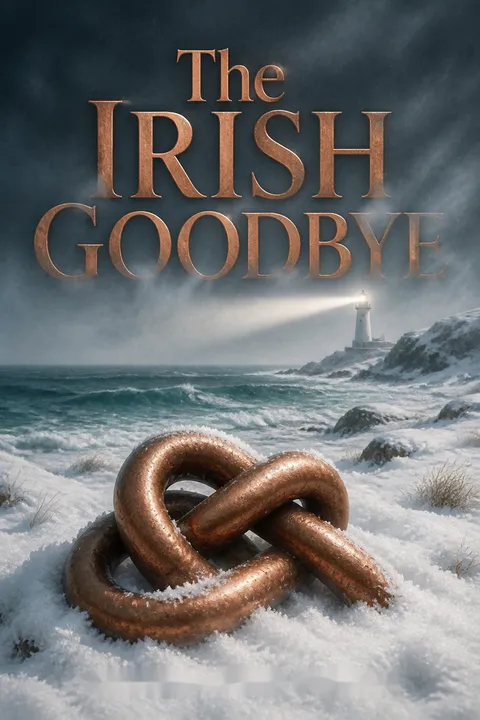


Plot Summary
Prologue
August 1990, Port Haven, Long Island. Nine-year-old Maggie1 hears a crash from the beach club and watches her brother Topher8 dive off his skiff near the lighthouse. At the dock, Topher8 performs CPR on Daniel Larkin15 — his best friend Luke's6 fourteen-year-old brother — while police photograph the dent in his boat.
Daniel15 had been driving when the steering jammed and struck a rock. The paramedics take Daniel15 away. Maggie1 waits with her sisters while her brother talks to officers and her parents pace the narrow dock.
She plans to make Daniel15 a welcome-back poster. Walking home along the pebbled beach that evening, her oldest sister Cait2 tells her the truth: Daniel15 is dead. Everything is different now. It will take twenty-five years to learn how.
The Folly Fills Up Again
It's the day before Thanksgiving 2015. The three Ryan sisters converge on the Folly, their family's crumbling Victorian on Long Island's North Fork. Maggie,1 the youngest, drives from Vermont with her girlfriend Isabel5 — the first she's ever brought home — concealing a recent encounter with her married ex, Sarah.14
Cait,2 the eldest, flies from London with five-year-old twins, freshly divorced and secretly jobless, her phone destroyed by her daughter mid-flight. Alice,3 the middle sister who never left, manages everything: caterers, her two sons, aging parents — their father prowling the property with a shotgun after raccoons.
Their mother Nora4 assigns Isabel5 to a freezing guest cottage rather than Maggie's1 bed, an exile disguised as propriety. The first crack opens before anyone unpacks.
Luke Larkin Gets an Invitation
On a pizza run with Maggie,1 Cait2 detours past the Larkin house and honks. Luke6 emerges — gorgeous, drinking, devastated from packing up his dead mother's belongings alone. Cait2 invites him to Thanksgiving before Maggie1 can object. Luke6 accepts without hesitation, promising to bring a game.
Back at the Folly, the announcement detonates. Alice3 is furious: the Larkins' wrongful death lawsuit after Daniel's15 accident nearly bankrupted their parents and forced Topher8 to accept legal responsibility. Nora4 absorbs the blow quietly, deflating before their eyes.
Their father Robert9 tries to ease tensions, but Alice3 corners Cait2 in the kitchen — this house is where their parents suffered for decades, and Luke's6 presence reopens wounds everyone spent years trying to seal. Cait2 holds firm. He's coming.
The Test in the Garbage
After vomiting at her son Finn's11 basketball game — triggered by something more than bad milk — Alice3 drives to a gas station bathroom and takes a pregnancy test. Two pink lines confirm what her body already knew. She'd missed one birth control pill the month before; Halloween night with her husband Kyle,7 brief and half-clothed, had been enough.
At thirty-nine, with a history of near-fatal preeclampsia and a nascent interior design career finally gaining traction, another child would obliterate the life she is just beginning to build for herself. She stuffs the positive test deep into the outdoor garbage at the Folly — the same bin the raccoons have been raiding all week. The evidence won't stay buried for long.
Maggie Finds Her Brother
Thirteen years earlier, twenty-year-old Maggie1 sat in a dentist's waiting room, mouth packed with gauze, wondering why Topher8 hadn't picked her up. At home, she found his half-made sandwich on the counter and a note duct-taped to his bedroom door: her name, instructions not to come in, and an apology.
She picked the lock with a butter knife. The room was empty, but the storage closet door stood ajar, and a sneaker jutted out at an angle that made no sense — until it did.
He was hanging from an extension cord tied in an impossible sailor's knot. Too heavy to hold, too high to reach. She called 911 with blood still filling her gums, tasting copper, and sat on his bed facing the lighthouse until the EMTs arrived. She was the only patient who needed tending.
How Daniel Ended Up Driving
The day after losing her virginity to Luke6 at seventeen, Cait2 arrived at his boat party consumed with the need to be near him before he left for college. But Luke6 spent the afternoon ignoring her, and when departure time approached, she grew desperate. She cornered Topher8 and demanded he take Daniel15 on his own boat so she could ride back alone with Luke.6
When he refused, she threatened to tell their parents he'd bought his boat with drug money. Topher8 relented, tossing his keys to a fourteen-year-old Daniel15 who'd been drinking beer since noon. Cait2 rode with Luke,6 who kissed her and invited her to visit in Boston. Minutes later came the crash near the lighthouse. For twenty-five years, no one in the family knew her part in what happened.
Father Kelly's Empty Remedy
After Nora4 caught teenage Maggie1 in the cottage with her friend Julia — arms wrapped around each other after their first kiss — she called Julia's parents, confiscated Maggie's1 private phone line, and drove her to Father Kelly10 for spiritual counseling.
Over Nilla wafers and milk in the rectory kitchen, the priest told Maggie1 that desire wasn't the point; faith was. But sitting across from him, she suddenly recognized what she'd never had words for: his delicate hands, his soft voice, his crossed legs. He was gay. The recognition should have created kinship; instead, it produced fury at the hypocrisy.
He closed by reminding her that her parents had already suffered enough — as if the family's finite supply of compassion had been emptied by Daniel's15 death. Maggie1 left determined to keep herself hidden, a habit she would carry for years.
Isabel Finds the Texts
On Thanksgiving morning, while Maggie1 stood in the shower, Isabel5 walked into the bathroom holding her phone. She'd read Sarah's14 apology, Maggie's1 furious reply telling Sarah14 never to contact her again, and pieced together what they meant.
Isabel5 demanded to know why Maggie's1 ex was the mother of one of their students, why she'd visited Sarah's14 house in Boston, why she'd concealed all of it. Maggie,1 shivering in a guest towel, tried to explain but couldn't assemble a coherent defense.
When Cait2 pounded on the bathroom door demanding her turn, the confrontation paused but didn't resolve. Isabel5 announced to the assembled family that she and Maggie1 had argued and left through the front door, bag over her shoulder. Maggie,1 still in yesterday's wrinkled clothes, drove her to the train station.
Maggie Boards a Leaving Train
At the station, the 3:24 to Penn arrived in the snow. Isabel5 stepped aboard without a word. As the doors began closing, Maggie1 jumped on. She found Isabel5 in the back of a nearly empty car, and they rode facing backward — an apt direction for the reckoning that followed.
Maggie1 told her everything: the yearlong affair with Sarah,14 a married woman and the mother of one of their students. How Sarah14 had kissed her in Boston the previous weekend before her husband walked in. How Maggie1 had frozen instead of pulling away.
Isabel5 pushed back hard: kisses don't just happen, and Maggie's1 refusal to take responsibility — for the secrecy, the hiding — was the real problem. When frozen tracks halted the train mid-route, they called Kyle7 for a ride back to the Folly — together, at least for now.
One Million Thirty-Four Thousand
At dinner, with Maggie1 and Isabel5 back in their seats, Luke's6 colleague Nicole praised him as a self-made philanthropic success — a characterization that ignited something in Cait2 that three glasses of Malbec couldn't contain. She asked, with acid precision, how much of Luke's6 fortune owed to the Larkins' lawsuit settlement.
Before he could respond, Nora4 spoke from the head of the table and stated the exact sum her family had paid: one million thirty-four thousand dollars. The figure, never before disclosed to the children, settled over the room like a detonation's echo.
Robert9 slammed the table. Luke6 stood, insisting he'd never wanted the money, and locked eyes with Robert,9 who quietly confirmed it. Then Luke6 guided Cait2 out of the dining room with his hand on her back, leaving the rest of the family stunned around untouched pies.
The Check Robert Refused
Alone in the cottage, Cait2 accused Luke6 of bringing a date and being cavalier about their families' wounds. Luke6 explained he'd brought Nicole to show Robert9 that the settlement money had been put to good use — because years ago, he'd offered to write Robert9 a check returning the full amount.
Robert9 refused. He told Luke6 that Topher8 had made a mistake and he didn't want the money back. The revelation struck Cait2 like a key turning in a lock she didn't know she'd been pressing against.
Her father had acknowledged Topher's8 guilt — not as punishment but as fact. Something calcified inside her began, almost imperceptibly, to shift. Then Luke6 kissed her, the old scar on his lip tickling her skin after twenty-five years, and a shotgun cracked outside the window.
Robert Sees His Dead Son
Alice3 rushed to the driveway and found her father standing with his hunting shotgun aimed at the garbage can, her nine-year-old son James12 beside him. The raccoon was dead. But when Robert9 turned to James12 and called him Topher8 — earnestly, as though his dead son stood before him — the entire family froze.
Kyle7 approached with outstretched hands to take the weapon. Robert9 looked down at his own trembling fingers, mumbled a confused apology, and let the shotgun slide through his grip. It hit the pebbled driveway and discharged a second round into a sycamore tree.
In the stunned aftermath, before anyone could absorb the near-miss, a police cruiser rolled up with its lights flashing. The officer wasn't there about gunshots. He was looking for a boy named Finn,11 found injured on the road after sneaking out.
Alice Claims the Reins
In the upstairs hallway, while the dinner party splintered below, Alice3 told Kyle7 she wanted to terminate the pregnancy as quickly as possible. He invoked God; she countered with her nearly fatal preeclampsia and a forty percent recurrence risk.
When he protested she was forcing him to choose between her and their child, she corrected him: she wasn't asking permission. She was stating her decision. Later, at the hospital where Finn11 was being treated for a broken collarbone and concussion, Kyle7 said he would go with her to the doctor on Monday.
Driving home, Alice3 told Nora4 the truth. Her deeply Catholic mother paused, then offered a secret of her own — a miscarriage before marriage she'd carried in silence for decades — and said she understood. In the dark car, Alice3 wept with relief.
The Oldest Secret Spoken
At O'Reilly's Tavern that night, over beers and pool, Cait2 told Luke6 what she'd never confessed to anyone: Daniel15 ended up driving Topher's8 boat because of her. She'd blackmailed Topher8 with his drug dealing so she could be alone with Luke.6 She'd volunteered that Topher8 would let Daniel15 drive. Luke6 said he already knew — he'd seen them arguing and pieced it together.
They were all responsible. He'd bought the beer. Topher8 handed over the keys. No one stopped a drunk fourteen-year-old from taking the wheel. When Luke6 leaned against her between pool shots, Cait2 stepped away. She needed him as a friend, not a lover. Her plate was already overflowing — two children, no job, parents who needed her. She chalked her cue and lined up her shot.
Nora's Midnight Question
Past midnight, Maggie1 found Nora4 in her painting studio, working on a seascape with a solitary figure standing on a boat. They shared tea while Nora4 switched her brush between hands — the nuns had forced her to write with her right, but art she painted with her true left.
Nora4 asked if Maggie1 was happy. Maggie1 said yes, then waited. Her mother admitted she'd always worried Maggie1 would spend her life alone. Maggie1 offered the confession she'd held since adolescence: that was exactly why she'd needed her mother.
Nora4 nodded, as though something long misaligned had finally clicked. Later, carrying Cait's2 sleepy daughter to the bathroom, Isabel5 paused at the doorway when Maggie1 said those three words aloud for the first time. Isabel5 returned them.
Mrs. Larkin's Four Sentences
The morning after Thanksgiving, Alice3 led her sisters to their parents' bedroom and opened a shoebox she'd discovered in Nora's4 closet — condolence cards from Topher's8 death that their mother had kept for thirteen years without reading. Among them, a small green envelope from Connie Larkin.
Cait2 unsealed it. Four lines: an acknowledgment of shared sorrow, an offering of what little could be given. The sisters sorted the pile, preserving what mattered and burning the rest in the kitchen fireplace.
Cait2 pocketed Mrs. Larkin's note for their mother, then announced she was moving the twins home to the Folly. Alice,3 stunned, pressed her with questions. Cait2 said she was miserable in London. Outside, Isabel5 and the children chased the geese across the snow until the flock lifted into formation and soared over the bay.
Analysis
"The Irish Goodbye" takes its title from leaving without saying farewell — a social habit, but also a family inheritance. Topher8 leaves a note on his door instead of a conversation. Cait2 moves to London the month after his funeral. Maggie1 deletes her text history with Sarah14 as though erasure equals resolution. The novel argues that the opposite of an Irish goodbye isn't a proper farewell — it's the willingness to stay in the room when the conversation turns unbearable.
O'Neill structures the novel around three sisters orbiting the same wound: Maggie's1 crisis of honesty, Cait's2 crisis of guilt, and Alice's3 crisis of autonomy all trace back to a 1990 boating accident that killed Daniel Larkin15 and the suicide that followed twelve years later. The innovation is the insistence on compound causality. Daniel15 died because a teenage girl wanted five minutes alone with a boy, because a brother yielded to blackmail, because a fourteen-year-old was handed beer no one should have given him, because no adult was watching. Topher's8 death resists similarly clean narratives. The novel refuses to grant any single character — or any single failure — the relief of being the sole cause.
The most radical act belongs to Alice,3 who rejects her faith, her husband's authority, and her family role by choosing to terminate a pregnancy — then telling her Catholic mother. Nora's4 response, sharing her own secret miscarriage and offering acceptance, constitutes the book's most unexpected reversal and its thesis: moral rigidity is not moral strength, and real love requires seeing your children as they are, not as you need them to be.
The burning of Topher's8 condolence cards in the final chapter enacts this principle materially. The sisters keep what matters — Mrs. Larkin's15 four compassionate sentences, a coach's honest remembrance — and release the rest. They cannot undo the past, but they can stop letting it sit unopened on the shelf, growing heavier with each year they refuse to look.
Review Summary
People Also Read








Characters
Maggie Ryan
Youngest sister, truth-seekerThe youngest of four Ryan siblings, Maggie teaches English at a Vermont boarding school and has never brought a partner home. Her defining wound is being the one who found her brother Topher8 after his suicide—an event that calcified her instinct to keep herself hidden from those she loves. Intellectually confident and emotionally guarded, she gravitates toward unavailable women, most recently conducting a yearlong affair with a married parent at her school. Her relationship with her mother Nora4 is shaped by the collision between Nora's4 Catholicism and Maggie's sexuality; a counseling session in high school taught her that being herself meant forfeiting maternal approval. Her arc hinges on whether she can stop burying her truth and let Isabel5—the first partner who demands honesty—see her fully.
Cait Ryan
Eldest sister, guilt-carrierThe eldest Ryan daughter, Cait is a recently divorced corporate lawyer living in London with five-year-old twins. Beneath her polished exterior—designer clothes, sharp wit, first-class tickets—lies a woman consumed by a guilt she has never fully articulated, even to herself. Her lifelong fixation on Luke Larkin6, her brother's former best friend, is tangled in shared history and loss from a summer day in 1990. Controlling and impulsive by turns, she pushes people away while desperately craving connection. She married her ex-husband days after Topher's8 death and fled to London, wielding a prestigious job as justification. Whether testing others or punishing herself, she cannot stop reaching for what she fears she doesn't deserve.
Alice Ryan Williams
Middle sister, load-bearing wallThe middle sister, Alice is the family's structural support. She moved back to Port Haven after Topher's8 death, married Kyle7, had two sons, and assumed near-total responsibility for her aging parents. Dutiful, competent, and perpetually underestimated, she has recently begun to outgrow the caretaker role that both sustains and confines her. A budding interior design career represents the first thing she has ever pursued for herself. Her faith is genuine but increasingly negotiated—she seeks divine forgiveness while insisting on her own moral authority. Where Cait2 fled and Maggie1 hid, Alice stayed, and she carries the specific resentment of someone who knows they chose the harder road and wonders if anyone noticed.
Nora Ryan
Matriarch, orphan, believerAn Irish immigrant raised by nuns in a Cork orphanage, Nora is the family matriarch—tiny, opaque, and formidable. Her faith is the architecture of her survival: it carried her through a destitute childhood, a teenager's death on her son's boat, and the loss of Topher8 himself years later. She believes Maggie's1 sexuality imperils her soul, a conviction rooted less in cruelty than in a worldview where obedience equals safety. She paints landscapes with obsessive precision, often through the night, and has kept a box of Topher's condolence cards in her closet for over a decade without opening them. Her relationship with each daughter is defined by what she cannot say—and by the rare, devastating moments when she can.
Isabel
Maggie's grounding forceA Venezuelan-American playwright and Maggie's1 girlfriend, Isabel is the writer-in-residence at Grove Academy, completing a play about her grandmother reading tarot for Eleanor Roosevelt. Warm, direct, and allergic to evasion, she represents everything Maggie1 has avoided in relationships: a partner who demands honesty rather than accommodating secrecy. Her tarot practice and artistic confidence make her a steadying presence amid the Ryans' turmoil, and she connects with the family—especially the children—with natural ease.
Luke Larkin
The past made fleshDaniel's15 older brother and Topher's8 former best friend, Luke is a wealthy philanthropist who sold his tech company and now funds nonprofits. His lifelong push-and-pull with Cait2 is entangled in shared grief and unspoken knowledge from a summer day in their youth. Charismatic, sun-weathered, and emotionally elusive, he oscillates between pursuing Cait2 and retreating—a pattern established when they were teenagers and hardened by decades of avoidance.
Kyle Williams
Alice's devout, rigid husbandAlice's3 husband and principal at Saint Mary's Catholic school, Kyle is disciplined, devout, and accustomed to authority. His Eagle Scout discipline and military background mask a genuine tenderness, but his instinct to control situations and his deep faith create friction when Alice's3 needs diverge from their shared framework. He loves his family thoroughly but struggles when his wife asserts an autonomy that threatens the moral order he relies on.
Topher Ryan
The absent centerThe only Ryan son, dead by suicide at twenty-nine. In life, he was charming, reckless, and self-destructive—a college dropout who drifted between lobster boats and communal farms, sending postcards with knock-knock jokes. He carried crushing guilt over Daniel Larkin's15 death, compounded by the lawsuit that forced him to accept legal negligence. He made wind chimes from driftwood and drew beautiful sketches of the lighthouse. His absence defines every room in the Folly and shapes every relationship in the family.
Robert Ryan
Gentle patriarch, slowly fadingThe Ryan patriarch, a retired engineer approaching eighty. Gentle and evasive, he retreats to his elaborate model train collection rather than confront the family's financial and emotional decay. His relationship with Nora4 is tender but shadowed by her unspoken belief that his decision to settle the Larkins' lawsuit contributed to Topher's8 downward spiral. He still hikes, still jokes with the grandchildren, but the cracks in his sharpness are beginning to show.
Father Kelly
Family priest, closeted counselorThe Ryan family's parish priest, a compact Irishman from West Cork who baptized all four children and officiated Topher's8 memorial. He counseled teenage Maggie1 to suppress her sexuality—a session steeped in irony, as Maggie1 recognized he was closeted himself. He functions as both a pillar of the family's spiritual life and a living embodiment of its institutional contradictions, offering platitudes the family no longer fully believes but cannot bring themselves to refuse.
Finn
Alice's restless eldest sonAlice3 and Kyle's7 thirteen-year-old son, sulky and chafing under the scrutiny of having a principal for a father. He oscillates between boyish sweetness and adolescent deception, caught at the age where small rebellions carry outsized consequences.
James
Alice's younger son, Topher's echoAlice3 and Kyle's7 nine-year-old, sweet-natured and curious. He bears an uncanny physical resemblance to Topher8—the same strawberry curls, the same hazel eyes—a likeness that haunts the family and grows more unsettling as Robert9 ages.
Poppy
Cait's fierce little mirrorCait's2 five-year-old daughter, one half of the twins. Relentless, dramatic, and prone to tantrums timed for maximum humiliation, she mirrors her mother's bottomless temperament and provides both comic chaos and unexpected tenderness throughout the weekend.
Sarah
Maggie's married, hidden exMaggie's1 former lover and the mother of one of her students, married to a school trustee. Poised and self-protective, she represents the pattern of secrecy and unavailability that Maggie1 must break to move forward.
Daniel Larkin
The boy who died at fourteenLuke's6 younger brother, killed in a boating accident in 1990. His death is the foundational tragedy that fractured the Ryan and Larkin families and set every subsequent event in motion.
Plot Devices
The Folly
Family identity made physicalThe Ryan family's century-old Victorian on Long Island's North Fork serves as both setting and barometer. Built by Cait's2 great-grandfather and mortgaged to pay the Larkins' lawsuit, the house physically embodies the family's inheritance—its rotting shingles, collapsed fences, and leaking roof mirror the relationships crumbling within. Each sister's attitude toward the property reflects her relationship to the past: Alice3 maintains it daily, Cait2 funds it from London, Maggie1 avoids it. The question of what happens when their parents can no longer stay threads through every conversation. The Folly is where Topher8 died, where the grandchildren play, and where the family reconvenes for the first time in years—making it simultaneously the wound and the operating table.
The Shoebox of Condolence Cards
Grief preserved, unprocessedA worn shoebox on the top shelf of Nora's4 closet contains every condolence card the family received after Topher's8 death—all of them unopened, including one from the mother of the boy whose death Topher8 was held responsible for. Nora4 looks at the box every day but cannot bring herself to move it or read its contents. It crystallizes the family's pattern of sealing pain away rather than confronting it. When Alice3 discovers the box and the three sisters eventually unseal Mrs. Larkin's card—finding four brief, compassionate sentences—the act of reading, sorting, and burning the generic cards in the fireplace becomes the story's closing ritual of release, a physical reckoning with loss long deferred.
The Pregnancy Test
Alice's buried choice, exposedAlice3 takes the test at a gas station and hides the positive result in the Folly's outdoor garbage bin, hoping to delay the crisis. But raccoons scatter the trash overnight, and Cait's2 five-year-old son retrieves the test the next morning without understanding what it is. The device traces a path from concealment to involuntary exposure: Alice3 stuffs it in the garbage, an animal digs it out, a child picks it up, and Cait2 confronts her sister. The test functions as a physical manifestation of the novel's central argument—that secrets buried in haste will surface through channels you cannot control.
Robert's Shotgun
Old danger, newly uncontrolledRobert's9 12-gauge hunting shotgun, stored for years in the cottage closet, reemerges when he fixates on raccoons raiding the garbage. Introduced as an eccentric nuisance—the aging patriarch insisting he can handle the problem himself—the weapon escalates into genuine peril when he fires it near his grandson, mistakes the boy12 for his dead son, and accidentally discharges a second round as the gun slips from his trembling hands. The shotgun concentrates the family's mounting anxiety about Robert's9 decline, the house's deterioration, and the dangers of pretending everything is fine while the infrastructure—literal and familial—rots beneath them.
The Larkin Settlement
Financial and moral debt engineThe one-million-thirty-four-thousand-dollar settlement paid to the Larkin family after Daniel's15 death created the mortgage that still burdens the Ryans decades later. More than a financial obligation, it required Topher8 to accept legal negligence—a demand Nora4 fought against and Robert9 accepted. The undisclosed figure becomes a weapon when Cait2 deploys it at Thanksgiving dinner, and its meaning deepens when Luke6 reveals he tried to return the money, only for Robert9 to refuse. The settlement binds every character to the past: it shaped Topher's8 guilt, strained his parents' marriage, funded Luke's6 philanthropy, and remains the unspoken price of the family's continued existence in the house it nearly cost them.
Download PDF
Download EPUB
.epub digital book format is ideal for reading ebooks on phones, tablets, and e-readers.








































