
Plot Summary
Blue Eyes, Unwritten Stories
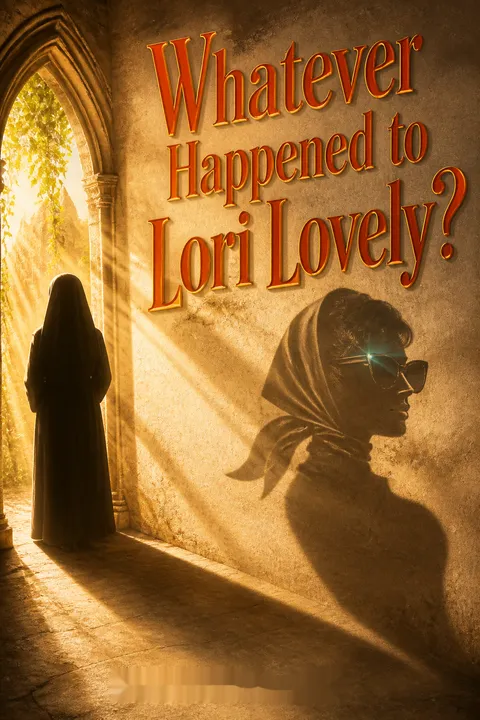
Lucille-Marie "Lu" Tibbott, a drifting college student, arrives at her aunt's Connecticut abbey, seeking answers for her thesis—and for herself. Her aunt, once the dazzling 1960s movie star Lori Lovely, is now Mother Lori, cloistered and enigmatic. Lu's blue eyes mirror her aunt's, but their lives have diverged. Lu's sense of not fitting in, her academic failures, and her longing for identity all converge in this visit. She's determined to uncover the real story behind her aunt's transformation from sex symbol to saint, hoping that by writing Lori's story, she might finally understand her own. The air is thick with unspoken questions, family secrets, and the ache of wanting to belong.
Becoming Lori Lovely
Born Lucille Hickey in postwar North Carolina, Lori grows up in a pragmatic, loving family. Her father's showmanship and her mother's resilience shape her, but it's her older sister Marie's move to New York that cracks open the world. Lori's journey north is both escape and adventure, a chance to become someone new. In the city's vibrant chaos, she discovers the thrill of possibility, the pain of leaving home, and the first taste of ambition. The seeds of reinvention are sown, but the cost of transformation—leaving behind the familiar, embracing uncertainty—begins to reveal itself.
New York Dreams, New Names
In New York, Lori works at her sister's photography shop, learning to see herself—and others—through the lens. A chance portrait in the shop window draws the attention of a would-be talent scout, and soon, a real opportunity: an audition for a Paramount musical. With the help of her new friend Ginny, Lori navigates the world of auditions, headshots, and the subtle art of self-presentation. She learns that names, like identities, can be changed; that beauty is both a blessing and a burden; and that ambition often means keeping secrets from those you love most.
Auditions, Friendships, Firsts
Lori's first audition is a whirlwind of nerves, luck, and the kindness of strangers. Ginny, a seasoned hopeful, becomes her confidante and guide, teaching her the tricks of the trade and the importance of solidarity in a cutthroat world. Together, they land roles as dancers in a musical film, forging a bond that is both fierce and tender. The thrill of being chosen, the joy of new friendship, and the ache of leaving childhood behind all collide. Lori's world expands, but so do the risks—of heartbreak, of failure, of losing herself in the pursuit of dreams.
London's Stage, London's Heart
With Ginny by her side, Lori sets her sights on London's Italia Conti Academy, determined to become more than a chorus girl. The city is a feast of cultures, ambitions, and temptations. Lori and Ginny share a flat, a bed, and their wildest hopes. The academy is both crucible and sanctuary, a place where talent is tested and identities are forged. Lori's Southern roots and Ginny's Oklahoma grit are recast in the cosmopolitan fire of 1960s London. The dream of stardom is no longer distant—it's within reach, but it demands everything.
The Troubadours' Circle
At the academy, Lori and Ginny fall in with the Troubadours, a group of flamboyant, talented, and often marginalized young men. Their world is one of coded language, secret alliances, and the intoxicating freedom of chosen family. Flynn, Ben, and the others teach Lori about transformation, about the power of names and performance, and about the dangers of standing out. The lines between friendship, love, and desire blur. The club scene, the parties, and the endless auditions are exhilarating but fraught. Lori learns that to survive, she must become both more herself and more what others want her to be.
Juliet's Audition, Juliet's Fate
When famed director Nico Cellini arrives to cast a new musical adaptation of Romeo & Juliet, the academy is electrified. Lori, now "Lori Lovely," is thrust into the spotlight, her audition with Lucas Wesley—America's Sing King—crackling with chemistry. The role of Juliet is both a dream and a crucible, demanding vulnerability, courage, and the willingness to be seen. As rehearsals begin, Lori and Lucas's on-screen romance spills into real life, blurring the boundaries between character and self. The cost of fame, the weight of expectation, and the fragility of first love all come into play.
Italian Sun, Celluloid Love
In Italy, the cast and crew become a surrogate family, but the pressures of stardom and the intensity of the shoot strain every relationship. Lori and Lucas's love is both real and performative, shaped by the gaze of the camera and the demands of the studio. Ginny's absence—due to a devastating injury—haunts Lori, a reminder of the sacrifices made for ambition. The magic of Italy, the thrill of creation, and the ache of what's lost all swirl together. The film's success catapults Lori and Lucas to global fame, but the cracks beneath the surface widen.
Stardom's Price, Ginny's Absence
As Romeo & Juliet, The Musical becomes a sensation, Lori is swept into a whirlwind of premieres, press, and public adoration. But the demands of fame are relentless, and the personal costs mount. Lucas drifts into other relationships; Ginny, left behind, disappears from Lori's life. The gap between public persona and private pain grows. Lori's attempts to reconnect—with Ginny, with her family, with herself—are stymied by the machinery of celebrity and her own guilt. The loneliness of the spotlight becomes acute, and the seeds of future crisis are sown.
Hollywood Nights, Haunted Days
In Los Angeles, Lori's life unravels. A toxic relationship with her new manager, Tony, becomes a nightmare of manipulation, stalking, and psychological torment. Haunted by the ghosts of the past—literal and figurative—Lori spirals into insomnia, paranoia, and dependence on pills. The glamour of Hollywood is revealed as a façade, masking exploitation and danger. A disastrous film project, Noises in the Night, compounds her sense of failure and isolation. Salvation comes in the form of unexpected kindness: Dawn, a hair and makeup artist, offers Lori refuge and the first steps toward healing.
Breaking, Healing, Becoming
With Dawn's support, Lori begins to rebuild. Volunteering at a soup kitchen run by nuns, she finds solace in service, community, and the rhythms of ordinary life. The trauma of the past lingers, but the possibility of grace emerges. A new home, new friends, and the slow return of hope mark this period. When Nico calls with an offer to return to Italy for a new film, Lori seizes the chance—not just for work, but for redemption. The journey back to Europe is both a return and a reckoning, a chance to reclaim agency and purpose.
The Abbey's Sanctuary
After a series of devastating losses—including the death of Lucas in a car accident and an unplanned pregnancy—Lori seeks sanctuary at a Connecticut abbey. The sisters welcome her without judgment, offering a space for healing, reflection, and transformation. Here, the cycles of nature, the rituals of prayer, and the bonds of chosen family provide a new foundation. Lori's decision to give her child to her sister Marie is both an act of love and a sacrifice. The abbey becomes the crucible in which Lori is remade, her past integrated into a new calling.
Truths in the Library
Lu, digging through her aunt's "Library of Grace," uncovers letters, photographs, and the fragments of a hidden life. The boundaries between fact and fiction, history and memory, blur. The discovery of letters from Tony, the truth about Ginny, and the realization of her own parentage force Lu to confront the complexities of love, loss, and identity. The act of writing—of shaping narrative from chaos—becomes both a means of understanding and a form of forgiveness. The past is not a fixed thing, but a living story, always being rewritten.
The Past Unveiled
The final secrets come to light: Lori's role in Lucas's death, her pregnancy, the adoption of her daughter by Marie, and the true nature of her calling. Lu, reeling from the revelation that she is Lori's biological daughter, must process anger, relief, and a new sense of self. The confrontation is raw but necessary, a breaking of generational silence. Through honest conversation, both women find a measure of peace. The truth, once forbidden fruit, becomes the seed of new understanding and connection.
The Accident and Aftermath
The night of the accident is recounted in harrowing detail: Lori's confession, the loss of Lucas, the burden of survival. The aftermath is a blur of shock, police investigations, and public scrutiny. Lori's guilt is both personal and societal, compounded by the expectations of motherhood, fame, and morality. The decision to give up her child, to seek refuge in the abbey, and to embrace a life of service is both penance and liberation. The past cannot be undone, but it can be transformed.
Motherhood, Sacrifice, and Grace
Lori's journey into motherhood is marked by sacrifice: giving her daughter to Marie, choosing a life of chastity and service, and accepting the limits of forgiveness. The abbey becomes a place of rebirth, where Lori's wounds are tended and her gifts redirected. The rituals of the Clothing ceremony, the bonds with the sisters, and the quiet joys of daily life offer a new kind of fulfillment. The story of Lori Lovely becomes one of grace—not the absence of pain, but the presence of love in its wake.
Full Circle, New Beginnings
Lu, having learned the truth of her origins, graduates and completes her thesis. The act of writing—of bearing witness, of shaping narrative—becomes an act of healing for both women. The family, once fractured by secrets, is made whole by honesty and acceptance. The story ends not with closure, but with the promise of new beginnings: the cycles of love, loss, and transformation continue. The question "Whatever happened to Lori Lovely?" is answered not with a single fact, but with a living testament to the power of reinvention, forgiveness, and the stories we tell ourselves and each other.
Analysis
Whatever Happened to Lori Lovely? is a luminous meditation on identity, reinvention, and the cost of both fame and secrecy. Through its dual narrative, the novel explores how the stories we inherit—and the ones we choose to tell—shape our sense of self and our capacity for love. At its heart, the book is about the search for belonging: in family, in friendship, in art, and in faith. The transformation of Lori from starlet to nun is not presented as a simple escape or punishment, but as a complex, hard-won act of grace—a way of integrating the wounds of the past into a new, purposeful life. The novel interrogates the nature of truth: how history is constructed, how memory is both reliable and slippery, and how forgiveness is possible only when secrets are brought into the light. In a modern context, the book resonates as a feminist reclamation of agency, a queer celebration of chosen family, and a compassionate exploration of trauma, healing, and the enduring power of love. The lesson is clear: our stories—messy, unfinished, and full of contradictions—are the truest inheritance we have, and the act of telling them is itself an act of hope.
Review Summary
Characters
Lucille/Lori Lovely
Lori is the heart of the novel—a Southern girl whose beauty and ambition propel her from small-town North Carolina to the heights of 1960s stardom. Her journey is one of continual reinvention: from Lucille Hickey to Lori Lovely, from ingénue to icon, from lover to nun. Her relationships—with her sister Marie, her best friend Ginny, her lover Lucas, and her niece/daughter Lu—are marked by longing, sacrifice, and the ache of never quite belonging. Psychologically, Lori is driven by a need for approval and a fear of abandonment, but also by a deep well of empathy and resilience. Her transformation into Mother Lori is both an escape from and an embrace of her past, a testament to the possibility of grace after ruin.
Lucille-Marie "Lu" Tibbott
Lu is both narrator and detective, piecing together the fragments of her family's history to understand her own identity. Her blue eyes, inherited from Lori, are a symbol of both connection and difference. Lu's struggles—with academic failure, self-doubt, and the burden of secrets—mirror her aunt's, but her journey is one of moving from the periphery to the center of her own story. Her psychoanalytic arc is one of individuation: breaking free from the shadows of her mothers to claim her own voice. The revelation of her true parentage is both a shock and a liberation, allowing her to integrate the past and step into her future.
Ginny Wilde (Jennifer Cockburn)
Ginny is Lori's first true friend and the embodiment of possibility and heartbreak. Their relationship is charged with intimacy, loyalty, and the unspoken tensions of love that transcends labels. Ginny's own rise to stardom, her struggles with injury, abandonment, and reinvention, parallel Lori's but also serve as a cautionary tale. Psychologically, Ginny is both a muse and a warning—a reminder of what is gained and lost in the pursuit of dreams. Her later reappearance at the abbey is a testament to the enduring power of chosen family and forgiveness.
Lucas Wesley
Lucas is the archetypal 1960s heartthrob: talented, beautiful, and doomed. His relationship with Lori is both real and performative, shaped by the demands of fame and the impossibility of privacy. Lucas's own struggles—with addiction, expectation, and the search for authenticity—mirror Lori's. His death is the novel's emotional fulcrum, the event that shatters and remakes everyone it touches. Psychologically, Lucas is both a fantasy and a real, wounded man—his vulnerability and kindness are as central to his character as his star power.
Marie Hickey Tibbott
Marie is the pragmatic, nurturing counterpoint to Lori's volatility. Her struggles with infertility, her role as surrogate mother to Lu, and her unwavering support for her sister are all acts of quiet heroism. Marie's psychoanalytic arc is one of acceptance: learning to love what is, rather than what might have been. Her relationship with Lori is marked by both rivalry and deep, unconditional love—a bond that survives betrayal, loss, and the shifting sands of identity.
Tony Rischio
Tony is the embodiment of Hollywood's dark side: charming, controlling, and ultimately dangerous. His relationship with Lori is a study in gaslighting, exploitation, and the insidious ways power can be abused. Psychologically, Tony represents the externalization of Lori's fears—of being used, discarded, and blamed. His stalking and threats catalyze Lori's descent into crisis, but also her eventual reclamation of agency.
Dawn
Dawn, the hair and makeup artist, is a minor character with major impact. Her kindness, practical support, and willingness to share her own vulnerabilities provide Lori with the first real steps toward healing. Dawn's own story—of heartbreak, abortion, and resilience—mirrors Lori's, offering a model of survival and grace in the face of adversity.
Flynn Winston
Flynn is the flamboyant, witty heart of the Troubadours, offering both comic relief and genuine wisdom. His friendship with Lori is a lesson in transformation, self-acceptance, and the power of chosen family. Flynn's own struggles with identity and belonging are woven subtly through the narrative, a reminder of the costs and joys of living authentically in a world that punishes difference.
Mother Abbess
The Mother Abbess of the Connecticut abbey is both a literal and symbolic figure: the authority who welcomes, challenges, and ultimately affirms Lori's transformation. Her wisdom, compassion, and willingness to bend the rules for the sake of love are central to the novel's themes of forgiveness and belonging.
Sister Evangelista
Sister Evangelista is a minor but memorable character, her intensity and humor providing both levity and insight. Her background as a social worker, her devotion to the abbey, and her willingness to embrace the messiness of life make her a symbol of the novel's embrace of imperfection and grace.
Plot Devices
Dual Narratives and Fractured Timelines
The novel employs a dual narrative structure, alternating between Lu's present-day investigation and Lori's recollections. This allows for a gradual unveiling of secrets, mirroring the psychological process of integration and healing. The fractured timeline—jumping between childhood, stardom, crisis, and sanctuary—creates suspense and emotional resonance, inviting the reader to piece together the story alongside the characters.
Metafiction and the Act of Storytelling
The act of writing—Lu's thesis, Lori's letters, the "Library of Grace"—is both a plot device and a thematic core. The novel is self-aware about the limitations and power of narrative: history as a series of choices, omissions, and interpretations. The process of storytelling becomes a means of healing, reconciliation, and self-discovery for both women.
Symbolism: Eyes, Names, and Mirrors
Blue eyes, inherited and reflected, symbolize both connection and difference. The changing of names—Lucille to Lori, Ginny Wilde, the adoption of religious titles—marks the fluidity of identity. Mirrors, photographs, and film serve as recurring motifs, highlighting the tension between appearance and reality, self and other.
Foreshadowing and Repetition
The novel is rich in foreshadowing: the repeated references to Romeo & Juliet, the cycles of loss and rebirth, the motifs of forbidden fruit and second chances. Repetition—of lines, images, and events—creates a sense of destiny, but also of the possibility of breaking free from the past.
Confession and Testimony
The climactic revelations—Lori's confession of her role in Lucas's death, the truth of Lu's parentage—are structured as testimonies, both legal and spiritual. The act of telling the truth is fraught with risk but ultimately redemptive, allowing for forgiveness and new beginnings.
Download PDF
Download EPUB
.epub digital book format is ideal for reading ebooks on phones, tablets, and e-readers.








































