
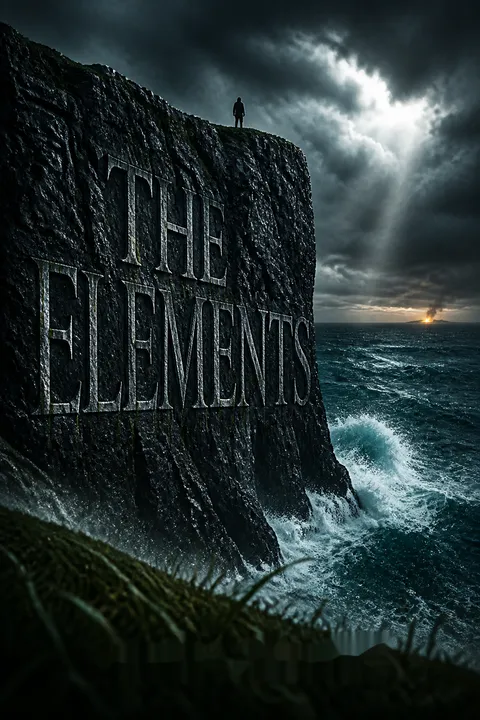


Plot Summary
Willow Hale Is Born
She arrives alone, a woman whose name was once spoken with venom on national radio. In a bare cottage on a windswept island off Ireland's Atlantic coast, Vanessa Carvin1 remakes herself as Willow Hale,1 shaving her blond hair to gray stubble, burying the radio batteries in the garden so she cannot hear the country's judgment.
Her husband Brendan7 sits in Midlands Prison, convicted of sexually abusing eight young girls at the National Swimming Federation. The cottage has no television, no Wi-Fi, a single bed.
She keeps one photograph: her two daughters as children, ages ten and eight. The younger, Rebecca,2 blocks and unblocks her mother's number in punishing cycles. The elder, Emma,19 drowned herself off a Wexford beach years earlier — and Vanessa1 has come here to understand why.
A Priest, A Bully, A Cat
Fr. Ifechi Onkin,11 a Nigerian priest whose warmth disarms her, becomes Vanessa's1 first real friend, inviting her to use his church for solace rather than conversion. Mrs. Duggan,15 a fearsome neighbor, storms in demanding the return of her cat Bananas, who has claimed the cottage armchair.
She reveals she once ran off a gay couple who rented the place — a disclosure that sparks Vanessa's1 contempt but also an adversarial fondness. At the new pub, she eats lunch daily while avoiding conversation with the proprietor Tim Devlin,16 a man battling his own demons.
These small connections give shape to her exile — a priest offering gentleness, a bully demanding tea, a publican hiding grief — while her real preoccupation remains the daughter who won't answer.
Luke Descends the Hill
One sleepless night, drawn to the water, Vanessa1 plunges into the Atlantic in her nightdress and considers staying beneath the surface. She emerges gasping, strips naked on the beach, and walks home in defiance — only to realize a figure on the neighboring farm has been watching.
Days later, Luke Duggan,10 Mrs. Duggan's15 twenty-four-year-old son, arrives at her door to apologize. He is gentle, lonely, the youngest of eight children and the only one who stayed, trapped on the family farm while his siblings scattered across four continents.
Over whiskey, their conversation deepens with startling speed. When Vanessa1 turns and walks toward the bedroom, he follows. Their arrangement becomes one of mutual consolation — an unspoken agreement that neither will demand more than the other can give.
The Lock She Refused
Years earlier, fourteen-year-old Emma19 hovered near Vanessa1 with a request: a lock for her bedroom door. She said her father woke her coming home late at night. Vanessa1 refused. A terrible thought crossed her mind and she pushed it away.
Later, Brendan7 took an unexplained sabbatical. Vanessa1 ran into the wife of a sports official who spoke cryptically about smoke without fire. She told Brendan,7 who dismissed the woman as a drunk. Then came the Wexford holiday, a mysterious phone call Brendan7 took at the hotel, his sudden desire to leave.
The next morning Emma19 was gone. Weeks later two guards arrived at the family home and arrested Brendan7 for sexually abusing a minor. That evening, Rebecca2 looked her mother in the eye and said one word: Emma.19
Emma Told Her Sister
Rebecca2 arrives at the cottage unannounced, having tracked her mother through a single inquiry at the local pub. They circle each other — small talk about hair, the island, a younger man Vanessa1 has been sleeping with, which shocks Rebecca2 into laughter. Then the weight descends. Rebecca2 asks whether Vanessa1 knew. Vanessa1 swears she didn't but confesses denying Emma19 the lock.
Rebecca2 crumbles. The night before Emma19 died, in their Wexford hotel room, Emma19 told her what Brendan7 had been doing for years. Rebecca2 called her a liar, threw her out, and locked the door. By morning Emma19 was in the sea. Both women weep. Rebecca2 takes kitchen scissors and crops her own hair to match her mother's. Both have shed the Carvin name for Hale.
Two Families in the Dock
Evan Keogh,3 a twenty-two-year-old Irish footballer playing for an English Championship club, arrives at the courthouse for trial. He and his teammate Robbie Wolverton8 are charged with rape and accessory to rape — Evan3 allegedly filmed Robbie8 assaulting a nineteen-year-old university student named Lauren Mackintosh12 after a party.
In a tense waiting room, Evan's3 working-class island parents meet Robbie's8 aristocratic family: Lord and Lady Wolverton.9 Robbie's father,9 a former politician, immediately suggests Evan3 should take all the blame to protect his son.
Evan's father,20 a bitter man who lived vicariously through his son's career, bristles but retreats from the confrontation. Class, power, and mutual contempt saturate the room before the barristers even arrive to announce that proceedings are beginning.
Rafe's Favorite Boy
Before football, Evan3 was an aspiring painter who fled the island after his closest friend Cormac18 violently rejected his romantic confession. In London, broke and desperate, he met Rafe9 — a charming older man who recruited him as a sex worker for wealthy clients.
Evan3 serviced men, maintained rigid boundaries, and earned enough to live independently. Then Rafe9 introduced him to a client known only as Sir, a figure of immense public stature whose appetites were degrading and violent. For six months Evan3 endured weekly abuse.
When a journalist inquired about the arrangement, Rafe9 sent a man to break Evan's3 left arm as a warning. Cast out, with no art career possible and his body his only remaining asset, Evan3 chose football — and deliberately joined Robbie Wolverton's8 club for leverage over Rafe,9 who was Robbie's8 father.
Destroying Lauren Mackintosh
Defense barrister Catherine systematically dismantles Lauren12 on the stand, exploiting every detail of her personal life: cocaine use before A-levels, a sex tape made with a previous boyfriend, bikini photos on Tinder, nights out without underwear.
She establishes that Lauren12 once filmed a consensual encounter and shared it with a friend, then argues that a woman with such history cannot claim violation when filmed again. Lauren12 insists she said no, that she told Robbie8 to stop, that Evan's3 entry into the bedroom terrified her.
But Catherine twists each response until the older jurors look disapproving. The jury foreperson is Dr. Freya Petrus,4 a burns specialist whose name Evan3 glimpses in a corridor notebook — a woman whose own hidden life makes the trial's moral calculations far more complex than anyone present can know.
Not Guilty, Not Innocent
Freya4 delivers the not-guilty verdict, and Robbie8 marches to the microphones to declare himself the real victim. But the narrative peels back to reveal the night itself. At a party after a match, Evan3 watched Robbie8 lead Lauren12 upstairs. He followed, pushed open the bedroom door, and Robbie8 grinned. Lauren12 protested — repeatedly, clearly, desperately — and Robbie8 pinned her down.
Evan3 did not intervene. Instead he took out his phone and filmed Robbie8 raping her while she begged him to stop. Afterward, at five in the morning, Evan3 crossed to the ecological garden outside his apartment building, knelt in the dirt, dug a hole two feet deep, and buried the phone containing every second of evidence beneath the earth.
The Phone Beneath the Earth
Almost two years pass before Evan3 encounters Lauren12 again — working in a London pub. She sits down, asks him to tell the truth. Not for revenge, but to get her life back. She dropped out of university. She can no longer read history books without being pulled back to that courtroom. Evan3 says he's sorry but cannot help.
He goes home, retrieves an easel he has never used, and paints one final canvas — the last gesture of the artist he wanted to be. Then he walks to the ecological plot, kneels in the earth, and digs up the phone he buried on the morning after the rape. He carries it to the nearest police station, gives his name, and hands it to the officer behind the desk. Both men are rearrested and convicted.
The Doctor Who Hunts Boys
Dr. Freya Petrus4 — the same burns specialist who served as jury foreperson in Evan's3 trial — conceals a private life of systematic predation beneath her clinical excellence. On Friday evenings she drives to parks after youth football sessions, selects a lone boy walking home, and offers him a ride.
One such boy, Rufus, is brought to her apartment and manipulated into her bed. Afterward she gaslights him — tells him that he assaulted her, that he is the rapist, that he should be grateful she won't press charges.
Separately, she befriends a fourteen-year-old named George17 outside the hospital. He obtains her phone number while she sleeps, begins returning uninvited, and threatens to expose their encounters unless she complies with his demands. The predator discovers what it means to be prey.
Buried Alive at Twelve
Freya's4 childhood explains everything and excuses nothing. At twelve, sent to Cornwall for summer with her absent mother Beth, she befriended fourteen-year-old twins Arthur and Pascoe Teague, sons of Beth's wealthy landlord.
They took her to sea caves and raped her repeatedly over weeks, framing each assault as a game she had consented to play. When she tried to end it, they buried her alive in a wooden chest at the bottom of a construction pit, feeding a single breathing tube through the soil.
She lay in absolute darkness for hours, pressing against the coffin lid, screaming into earth that swallowed her voice. They eventually released her, reframing the ordeal as her own reckless choice. The experience planted a terror of enclosed spaces — and a compulsion that would govern her life.
Freya Lights the Match
On her last night in Cornwall, twelve-year-old Freya4 crept into the Teague mansion where Beth was sleeping with the twins' father Kitto. She splashed methylated spirits around the garage, pulled wires from the fuse box, and ignited the accelerant using a lighter stolen from Beth's ex-boyfriend Eli — a decent man who had tried to befriend her.
She dropped the lighter in the grass where investigators would find it. The fire consumed the house while four people slept: Beth, Kitto, Arthur, and Pascoe.
None survived. Freya4 returned to the cottage, slept through the sirens, and was taken back to Norfolk as a bereaved child. Eli was convicted of arson and murder. She had burned one set of tormentors; she would spend two decades creating new victims of her own.
The Intern Remembers Everything
Aaron Umber,5 Freya's4 medical intern, asks for a private meeting in her office. He has spent months studying her, waiting for the right moment. Now he delivers the truth: when he was fourteen, she visited his school through the hospital's outreach program, inspired him to pursue medicine, then drove him to her apartment and raped him.
She shook a can of Coke until it exploded on his school uniform, made him undress, led him to the shower, and took him to bed. The damage lasted decades — a sexless marriage, stunted emotional development, an inability to be touched without panic.
He has come not to negotiate but to inform her that he is reporting her to the police. As the elevator doors close, his best friend Hugh places a comforting arm around his shoulder.
Forty Thousand Feet with Emmet
Aaron Umber,5 now a child psychologist in Sydney, wakes his fourteen-year-old son Emmet6 before dawn on his own fortieth birthday. They are flying to Ireland for the funeral of Vanessa1 — Aaron's5 former mother-in-law, a woman Emmet6 never met.
Emmet6 resists every stage of the journey: the early hour, the separation from Bondi Beach, the prospect of seeing the mother who abandoned him.2 On the plane, however, he organizes a birthday surprise — a muffin with an LED candle, arranged with a flight attendant while Aaron5 slept.
They share a beer at the onboard bar. The gesture cracks something open between them. But Aaron5 carries a secret he has not yet revealed: Rebecca2 doesn't know they are coming. He booked the flights on impulse, without invitation.
Emmet Learns the Family Poison
Walking toward the island's village, Emmet6 asks why his mother has always been so distant. Aaron5 decides it is finally time. He tells his son about Brendan Carvin7 — the grandfather Emmet6 never knew, who ran the National Swimming Federation while systematically abusing children in his care. He tells him about Emma,19 the aunt whose name Emmet6 carries, who drowned herself at sixteen after years of her father's assaults.
He tells him that Rebecca2 grew up in the wreckage of these revelations, carrying guilt for not believing her sister the night before she died. Emmet6 stops walking. He sways, sinks to the grass, and vomits. When he rises, his face is changed — not with anger at his mother but with a desperate need to find her.
Rebecca Sees Her Son
The old pub is full of islanders gathered after the wake. At a rear table sits Ron, Vanessa's1 American widower, wiping his eyes. Beside him is Furia Flyte,13 a novelist whose relationship with Rebecca2 ended Aaron's5 marriage years ago — she and Rebecca2 are now partners. Aaron5 and Emmet6 push through the door.
Rebecca2 glances up from her conversation, fails to recognize them for a moment, then covers her mouth with both hands when Emmet6 steps out from behind his father. She rises, steadying herself against the table. Emmet6 crosses the floor and wraps his arms around her. She buries her face in his shoulder. Aaron5 watches from the doorway, knowing this is exactly why he flew sixteen thousand kilometers on nothing more than instinct and love.
Aaron Enters the Water
After the funeral, Aaron5 walks alone to the beach. The Atlantic is calm, the sky moonlit. He strips and plunges into the water, staying beneath the surface until his lungs burn, then bursting up gasping. Floating on his back, he reviews his life — the rape at fourteen, the sexless marriage, the betrayal, the years of single fatherhood — and something like Vanessa's1 voice tells him to stay.
Not forever. A year, perhaps, in the same cottage where she once rebuilt herself. He will let Rebecca2 and Emmet6 find each other again while he finally confronts what Freya4 took from him. Earlier on the beach, Rebecca2 told him he deserves to be loved. He is forty years old, and he intends, at last, to believe her.
Analysis
The Elements is a novel about the inheritance of psychological damage — not genetic or financial, but the kind transmitted through silence, proximity, and the failure to act. Each of its four narrators has been harmed, and each responds differently: Vanessa1 with willful blindness, Evan3 with complicity, Freya4 with replication, Aaron5 with paralysis. The book's radical argument is that victimhood does not confer virtue. Vanessa's1 failure to see what was happening to Emma19 is not malice but self-preservation so deep it resembles innocence. Evan3 films a rape partly because his own sexual exploitation taught him that watching is safer than participating. Freya,4 the novel's most disturbing figure, transforms childhood victimization into a methodology for creating new victims — the cycle of abuse rendered as professional competence.
Boyne structures the novel so each section refracts the others through shared characters and locations. Freya4 sits on Evan's3 jury. Aaron5 is Freya's4 victim. Rebecca2 connects the first and last sections. The island appears in Water and Air as both prison and sanctuary. These intersections argue that trauma does not stay contained within individual lives but leaks between them, contaminating people who never chose proximity to it. A girl buried alive in Cornwall creates a predator who damages a boy in England who marries a woman whose father destroyed children in Dublin. The chain is not inevitable — Aaron5 breaks it by being a devoted father — but it is relentless.
The novel's deepest insight concerns complicity and the stories we tell ourselves. Every narrator asks some version of the same question: did I know? Vanessa1 asks whether she knew about Brendan.7 Evan3 asks whether he could have stopped Robbie.8 Freya4 never asks at all, which is the most damning answer. Aaron,5 by choosing to stay on the island and confront his trauma, offers the book's cautious thesis: healing is possible, but only for those willing to stop narrating their own innocence and start telling the truth. The four elements — water, earth, fire, air — are revealed not as symbols of destruction but as prerequisites for life, provided we learn to survive their force.
Review Summary
The Elements by John Boyne is a powerful and interconnected quartet of novellas exploring themes of guilt, abuse, and redemption. Readers praise Boyne's masterful storytelling, complex characters, and ability to tackle difficult subjects with sensitivity. The book is described as raw, emotional, and thought-provoking, with many reviewers considering it one of Boyne's best works. While some found parts challenging to read due to the subject matter, most were deeply moved by the interwoven narratives and Boyne's skillful prose. Overall, the novel is highly recommended for its profound exploration of human nature.
People Also Read





Characters
Vanessa Carvin / Willow Hale
Disgraced wife in exileA fifty-two-year-old woman fleeing the most public disgrace imaginable, Vanessa is the wife of a convicted child abuser who must reckon with whether she was blind to his crimes or chose not to see them. Intelligent, self-aware, and ruthlessly honest in her internal monologue, she carries the particular guilt of a mother who may have missed signs that could have saved her elder daughter's19 life. Her relationship with surviving daughter Rebecca2 is a wound she probes daily. On the island, stripped of her name, her appearance, and her social armor, she discovers that beneath decades of performative wifery lies a woman of genuine wit, courage, and moral clarity. Her journey is one of excavation—digging through complicity to find whatever innocence remains.
Rebecca
Survivor carrying inherited guiltThe surviving daughter of a family destroyed by her father's7 crimes, Rebecca is fierce, guarded, and emotionally armored—operating in the world with a self-sufficiency that borders on withdrawal. Her inability to forgive her mother1 masks a deeper inability to forgive herself for a catastrophic failure of trust on the night before her sister19 died. She marries Aaron5 not out of passion but out of a shared understanding of damage; their sexless union reflects two people who confused safety for love. When she finds genuine intimacy with the novelist Furia Flyte13, it costs her the marriage but not her connection to her son6. A pilot by profession, she maintains control over everything except the relationships that matter most.
Evan Keogh
Reluctant footballer on trialBorn on the same remote Irish island, Evan is a young man whose extraordinary football talent is the cruelest joke the universe ever played on him—he wanted to be a painter. Gay, isolated, and bruised by a father20 who saw him only as a vehicle for unfulfilled ambition, Evan's teenage heartbreak over his best friend Cormac18 drove him from the island into a London underworld where his beauty became currency. His trial for accessory to rape places him at the intersection of class, celebrity, and sexual politics, where truth matters less than who can afford the better barrister. What makes Evan compelling is his capacity for genuine moral reckoning—rare in a world that rewards those who look away.
Freya Petrus
Burns surgeon with dark depthsA gifted burns specialist whose professional compassion is matched by meticulous emotional control, Freya carries within her a childhood so violent that it reshaped every relationship she would ever have. Assaulted and buried alive by older boys at age twelve, she emerged with a worldview in which vulnerability equals annihilation and power equals survival. Her choice of speciality—treating patients disfigured by fire—reflects an obsession with the element she has come to master. Beneath her clinical precision lies something she has never examined honestly: the way her own victimhood has metastasized into something far more dangerous. She is the novel's most disturbing creation, forcing the reader to confront how cycles of abuse perpetuate across generations.
Aaron Umber
Damaged healer seeking wholenessA child psychologist who has spent his career helping damaged young people while never fully addressing his own trauma, Aaron is the novel's moral center and its most poignant figure. Raped at fourteen by an authority figure he trusted4, he has navigated adulthood with the emotional vocabulary of a stunted teenager—capable of love but incapable of physical intimacy, devoted to his son6 but unable to build romantic connections. His marriage to Rebecca2 was an alliance of the wounded rather than a partnership of equals. What distinguishes Aaron is his refusal to transmit his damage to the next generation: he is a careful, attentive, deeply loving father to Emmet6. His journey toward healing is the novel's ultimate act of hope.
Emmet Umber
Aaron's ocean-loving teenage sonAaron's5 fourteen-year-old son, a devoted swimmer and surfer who lives for Bondi Beach. Intellectually precocious—he watches foreign films and reads literary fiction—but emotionally guarded, particularly toward his absent mother2. His sulky teenage exterior conceals genuine sensitivity and loyalty, visible in how he cares for younger children at Nippers and supports friends through grief. His willingness to embrace his mother2 at the novel's emotional climax speaks to an innate generosity his father5 has carefully nurtured.
Brendan Carvin
Imprisoned abuser and patriarchVanessa's1 husband, the former head of Ireland's National Swimming Federation who used his position to sexually abuse at least eight young girls. A man of overblown ego and fragile masculinity, he maintained a façade of community leadership while committing crimes that destroyed his family. His refusal to admit guilt even from prison represents the novel's portrait of institutional male entitlement at its most entrenched and grotesque.
Robbie Wolverton
Privileged footballer and predatorEvan's3 teammate and co-defendant, a Championship footballer whose privilege, good looks, and narcissism embody entitled masculinity. He can only perform sexually when being watched—a pathology born from a lifetime of observation on the pitch. His relationship with Evan3 blends genuine affection with casual cruelty, weaponizing Evan's3 desire against him while maintaining plausible ignorance of his own capacity for violence.
Rafe / Lord Wolverton
Aristocratic pimp and fatherRobbie's8 father and Evan's3 former employer, a former politician who maintains a double life with practiced ease. Charming, well-read, and refined, he uses culture as camouflage for exploitation, trafficking vulnerable young men to powerful clients while wearing bespoke suits. His relationship with Evan3 contains a twisted paternal quality that makes his betrayals devastatingly personal.
Luke Duggan
Gentle island farmer and loverA twenty-four-year-old farmer trapped on the island by filial obligation, the youngest of eight children and the only one who stayed. Gentle, mannered, and quietly beautiful, his affair with Vanessa1 provides both of them with uncomplicated human warmth. He represents the island's capacity for tenderness beneath its insularity.
Fr. Ifechi Onkin
Island's Nigerian priestThe island's warm and wise priest, born in Nigeria but devoted to his adopted flock. He befriends Vanessa1, later counsels Evan3 during his trial, and presides over Vanessa's1 funeral decades later. His presence threads through the novel as a quiet constant—a man who chose exile and found belonging, offering the same possibility to everyone he meets.
Lauren Mackintosh
Rape survivor seeking justiceThe nineteen-year-old university student at the center of Evan's3 trial, Lauren is brave, articulate, and ultimately failed by a legal system that punishes her for having a sexual history. Her strength on the witness stand and her devastating later encounter with Evan3 embody the novel's fury at how women are treated when they speak truth to male power.
Furia Flyte
Bestselling novelist and Rebecca's partnerA strikingly beautiful novelist of Nigerian descent whose bestselling fourth novel haunts Aaron5 throughout his journey. She entered Aaron5 and Rebecca's2 life as a friend before falling in love with Rebecca2—a revelation Aaron5 experienced as devastating but which freed both women to find authentic connection. Her presence at Vanessa's1 funeral represents the complicated family formed in the wreckage.
Maggie Keogh
Evan's trapped island motherEvan's3 mother, originally from Wicklow, brought to the island as a young bride and never permitted to leave by her controlling husband Charlie20. Fierce in her maternal love but powerless against the forces that shaped her son's life, she represents the generations of women whose voices were silenced by geography, marriage, and tradition.
Mrs. Duggan
Domineering island neighborLuke's10 formidable mother, married at sixteen to a man twice her age. A bully whose bark conceals unexpected warmth, she provides comic relief while embodying the island's conservative insularity and its reflexive hostility toward difference.
Tim Devlin
Pub owner haunted by guiltProprietor of the island's new pub, carrying the weight of having killed his wife in a drink-driving accident. His confession to Vanessa1 triggers one of her most powerful speeches about the endless selfishness of men who destroy women and then seek absolution.
George Eliot
Teenage blackmailerA fifteen-year-old boy named after the Victorian novelist, whose initial vulnerability gives way to a manipulative streak. His entanglement with Freya4 demonstrates how predator-victim dynamics can contain their own reversals of power.
Cormac Sweeney
Evan's rejecting first loveEvan's3 childhood best friend on the island, whose brutal rejection of Evan's3 romantic advance and subsequent public humiliation set in motion the chain of events that drove Evan3 from home into exploitation.
Emma Carvin
The absent center of gravityVanessa1 and Brendan's7 elder daughter, who took her own life by swimming into the sea. Though physically absent, her ghost pervades every section—the silent center around which the Carvin family's guilt and grief revolves.
Charlie Keogh
Evan's abusive fatherA failed footballer who channeled frustrated ambitions into relentless cruelty toward his son3. His physical and emotional abuse shaped Evan's3 self-hatred and desperate hunger for approval from powerful older men.
Plot Devices
The Four Elements
Structural and thematic frameworkEach of the novel's four sections is named for a classical element that governs its narrator's story. Water defines Vanessa's1 island exile and Emma's19 death by drowning. Earth dominates Evan's3 narrative through soil imagery—the island farm, the buried phone, the football pitch. Fire structures Freya's4 section literally and metaphorically: the burns unit, the childhood arson, the consuming rage driving her predation. Air governs Aaron's5 story through flight—the airplane journey, the island atmosphere, the breath he takes when deciding to heal. Together, the elements suggest that the forces sustaining life are the same ones that destroy it: water drowns, earth entombs, fire consumes, and deprivation of air suffocates. The framework unifies four seemingly separate narratives into a single meditation on survival.
The Buried Phone
Concealed and revealed truthAfter filming Robbie's8 assault on Lauren12, Evan3 buries his phone beneath the ecological garden outside his apartment, hiding the only evidence that would prove what happened. For two years it sits in the earth—truth composting in darkness while a lie circulates in daylight. When Evan3 kneels in the soil and digs it up, the act mirrors an archaeological excavation: unearthing what was deliberately interred. The phone connects to the novel's elemental theme of earth as both tomb and womb. Things buried there either decay or preserve, but they never truly disappear. Its retrieval represents the most costly form of courage in the novel: voluntarily destroying your own freedom to restore someone else's dignity and truth.
Name Changes
Markers of identity and rebirthCharacters throughout the novel adopt new names to signal separation from their pasts. Vanessa1 becomes Willow Hale1, shedding both her married and given names. Rebecca2 independently changes her surname to Hale on the same day her mother arrives on the island. Evan3 contemplates changing his name as he leaves by boat—his first planned act in England. These self-renamings echo across all four sections, suggesting that identity is not fixed by birth but remade through choice. They function as secular baptisms—each character dying to an old self and being reborn, however tentatively, into someone who might survive what happened to them. The device also highlights the gap between who we present to the world and who we actually are.
The Exploding Coke Can
Signature weapon and trauma triggerA can of Coke, shaken until it explodes over a boy's clothing, is the mechanism by which Freya4 initiates contact with her victims. She offers the can, ensures it detonates, then insists the boy must undress and shower—creating a pretext for physical control. The same device triggers Aaron's5 PTSD during a near-infidelity years later: when a Coke accidentally explodes on his shirt and a woman reaches to unbutton it, he flees in panic, unable to separate present from past. The recurring image functions as Freya's4 signature but also as a symbol of how trauma weaponizes the mundane. An ordinary object becomes permanently dangerous in the victim's memory, transforming every innocent fizz into a flashback.
The Island
Site of exile, damage, and healingThe remote Irish island off Galway serves as a liminal space where characters shed former selves. Vanessa1 comes to escape scandal and discovers self-knowledge. Evan3 grew up here amid his father's20 cruelty and Cormac's18 rejection. Fr. Ifechi11 made it his adopted home. In the final section, Aaron5 chooses it as the place where he will finally heal from decades of trauma. The island functions as a geographic confessional—isolated enough for honesty, small enough that secrets cannot survive indefinitely. Its four hundred inhabitants form a microcosm of human judgment and compassion. What Vanessa1 found in its austerity, Aaron5 seeks as well: a place stripped of pretense where the work of becoming whole might begin at last.
About the Author



Download PDF
Download EPUB
.epub digital book format is ideal for reading ebooks on phones, tablets, and e-readers.








































