


Plot Summary
Prologue
The story opens in a trap: a narrator with a broken nose, blood streaming down their lips, locked in a claustrophobic space with a man who promises to break every bone in their body. The attacker stalked his victim, waited until they were alone, and sealed the door.
The narrator confesses to a terrible mistake, that they had no idea their day would end this way. Everything about the scene signals that Millie1 — the protagonist readers know — is cornered and bleeding. But the assumption that she is the victim is the story's first deception. The truth of who is breaking and who is broken won't surface until the final pages.
Death Threat Before Breakfast
Millie1 wakes on the morning of her wedding to a phone call: a man's harsh whisper promising to cut her throat. She recognizes the pattern immediately — over several years of helping women escape abusive husbands, she's accumulated enemies.
She hangs up, refuses to let it rattle her, and lies to Enzo2 that it was a telemarketer. Their wedding at Manhattan City Hall is only four hours away. Millie1 is five months pregnant — the reason Enzo2 proposed, though his speech about knowing she was the one felt genuine.
Her parents, estranged for over a decade since she went to prison as a teenager for killing her best friend's attacker, have agreed to attend. It's a fragile reconciliation. Snow begins falling outside their cramped Bronx apartment, and Millie1 wonders whether any of this counts as luck.
The Dress Won't Zip
She'd bought the powder-blue A-line at Macy's on markdown — nearly her entire budget — and it fit perfectly seven days ago. Now her belly has popped, and the zipper won't budge. Enzo2 pulls gently to avoid tearing the fabric, then surrenders. Millie1 sinks onto the bed. She can't return the dress without a receipt and can't afford a replacement.
Enzo2 calls a tailor friend6 who owes him a favor, takes her measurements with a tape measure from his toolbox, and leaves with the dress in a plastic bag. Her mother3 is bringing an heirloom gold locket as her something old, the dress covers something blue and new, and borrowed earrings complete the set. Without this dress, the whole fragile architecture of her wedding day begins to buckle.
Check Your Coat Closet
Alone in the apartment, Millie1 answers the phone one more time. The caller5 identifies himself as a husband whose wife she helped escape, then asks a question that stops her cold: has she checked the coat closet since Enzo2 left? He claims he has a great view of her. Millie's1 eyes fix on the closed closet door.
The deadbolt wasn't locked after Enzo2 departed — she was in the bathroom with the blow-dryer running. She grabs the biggest butcher knife from the block and crosses the room in five steps, knuckles bloodless around the handle. Before she can turn the knob, keys jingle in the front door. Enzo2 is home. He opens the closet himself, baffled by her knife — and finds nothing inside but five pairs of boots.
He Knows the Blue Dress
At a Manhattan cafe, Enzo's tailor friend Giuseppe6 arrives with the altered dress in a paper bag. Millie1 tries it on in the restroom — the zipper glides up easily this time, blue fabric draping over her belly. Then her phone rings.
She answers without checking the number. The familiar voice5 describes her dress, says he can't wait to see her blood spill across it, and claims to be standing right outside the bathroom door. The knob begins to turn.
Millie1 reaches for the Mace she always carries — but she lent it to a classmate weeks ago and forgot to replace it. A woman's voice calls from outside, asking if anyone's in there. Just a patron. Back in the dining area, Millie1 notices a bald man in an ill-fitting suit watching her from across the room.
Mother Won't Come
Outside city hall, Millie1 spots the bald man again near the steps. Then her phone rings — not the threatening number but her mother's3 name on the screen. A long silence precedes the verdict: they're not coming.
Her mother3 calls the pregnancy proof that Millie1 is still a mess and dismisses Enzo2 as a blue-collar immigrant chasing a green card. Enzo2 overhears, takes the phone, and speaks with controlled fury: Millie1 never needed to change because nothing was ever wrong with her.
He tells her mother3 they don't want her in their lives and ends the call. Millie1 stands in the December cold without a witness, without the heirloom necklace, and with the bald man still staring from across the sidewalk — the person she now believes has been threatening to kill her all morning.
Millie Confronts Her Stalker
She's had enough. Millie1 strides across the snow-dusted sidewalk and jams her finger in the bald man's face, telling him she knows exactly who he is and that she's tougher than he thinks. He blinks at her, then says her name — not with menace, but with awe. His name is Paul.4 His sister is Dee Widmayer, a woman Millie1 rescued from a violent marriage about a year ago.
Dee's husband had police connections; she was trapped until Millie1 intervened. Paul's4 eyes fill with tears as he clasps Millie's1 hand and tells her she saved his sister's life. Enzo2 seizes the moment: they need a witness. Paul4 agrees instantly, straightening his tie with the eagerness of a man who's been waiting to repay an impossible debt.
Antonia's Butterfly Pin
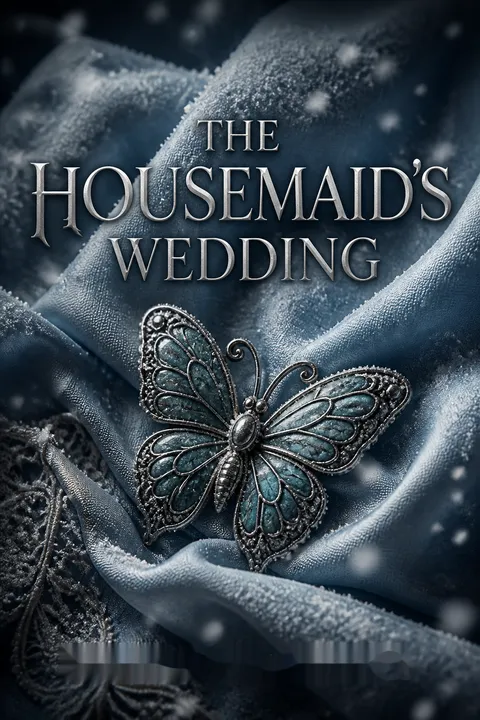
With Paul4 out of earshot, Enzo2 pulls Millie1 aside and reaches into his pocket. He produces a small turquoise butterfly pin — something he carries every day. It belonged to his sister Antonia,7 who was killed by her own husband, the tragedy that first brought Millie1 and Enzo2 together. Their mother gave it to Antonia7 when she was a girl, and Enzo2 has kept it since her death, a piece of his sister he refuses to let go.
He pins it to Millie's1 shoulder, where the turquoise complements the blue dress as though it were chosen to match. Now she has everything: the dress for something new and blue, borrowed earrings, and a dead sister's butterfly for something old. Millie1 asks if they can get married now.
Number Twenty-Six Is Called
They take a number and sit in plastic chairs — getting married, Millie1 thinks, works much like ordering at a deli counter. While waiting, she feels a fluttering in her belly: the baby's first kick. Enzo2 rests his hand on her stomach but can't feel it yet — for now, the kicks belong only to her.
Their number is called. In a chapel that resembles a conference room, a kind-faced judge administers the standard two-minute vows. When asked if the duration of marriage is sufficient, Enzo2 says it isn't long enough but yes.
The ring — a simple gold band bought online — slides onto Millie's1 finger without protest, a small mercy after the morning's catastrophes. They kiss in a way that is thoroughly inappropriate for a courthouse, and for once, Millie1 is grateful her parents aren't there to witness it.
Epilogue
The story shifts to Enzo's2 perspective. After the ceremony, he spots a thin man who has been tailing them since the cafe — not Paul,4 but the actual stalker.5 Enzo2 locks the men's room door, slams the man against the wall, and breaks his nose with one punch.
The man confesses: Millie1 convinced his wife to leave and take their children, and he wants her to pay. Enzo2 corrects him — she's his wife now — and promises to shatter every bone in his body if the man ever comes near her again. He pockets the stalker's5 driver's license and leaves him crumpled on the tile floor.
The prologue's bruised, bleeding narrator was never Millie.1 Outside, she's waiting with a smile and a suggestion: naming their daughter after Enzo's sister Antonia7 — something close, like Ada. He wraps his arms around his wife and takes her home.
Analysis
The Housemaid's Wedding operates as a structural magic trick: a wedding-day story that uses thriller mechanics to explore what it means to be protected by people you didn't know were watching. Millie1 spends the entire day hiding danger from Enzo;2 Enzo2 spends the epilogue hiding violence from Millie.1 Their marriage, before it's even official, is built on parallel acts of shielding — a dynamic that reads as love but carries an undercurrent of mutual isolation. Neither partner fully trusts the other with their fear or fury, and the story never questions whether this is healthy. It simply presents it as the texture of a relationship between two people who've survived too much to practice full transparency.
The treatment of family cuts deeper than its thriller layer. Millie's parents3 represent a wound that no amount of self-reliance can close. Her mother's3 last-minute withdrawal isn't just cruelty — it's a repetition of the original abandonment during Millie's1 prison years, proving that the girl who committed violence in defense of a friend and the woman now studying social work occupy the same slot in her parents' taxonomy of failure. The replacement of the mother's heirloom necklace with Antonia's butterfly pin enacts the story's quiet thesis: family is not inherited but assembled from those who choose you, and the dead who loved you are better witnesses than the living who refuse to show up.
McFadden's prologue misdirect is more than a genre trick. By opening with what appears to be Millie1 in mortal danger and closing with the revelation that Enzo2 was the aggressor, the story interrogates which character the reader instinctively assumes needs saving. Millie1 is tough enough to face a closet with a butcher knife; Enzo2 is dangerous enough to break bones without remorse. The marriage these two forge isn't a fairy tale — it's an alliance between two people whose capacity for violence and tenderness runs in equal measure, each aimed at exactly the right target.
Review Summary
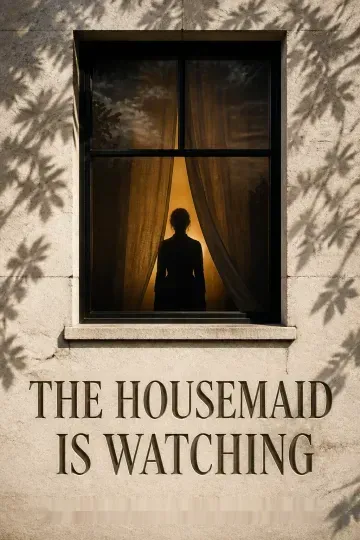
The Housemaid's Wedding receives mixed reviews, with many readers finding it unnecessary and lacking the usual thriller elements. Critics argue it adds little to the series and feels rushed. Some appreciate the glimpse into Millie and Enzo's relationship but feel the novella falls short of expectations. Positive reviews highlight the romantic aspects and closure for the characters. Many fans express disappointment, urging the author to conclude the series. The book's cover change and short length are frequently mentioned.
People Also Read









Characters
Millie Calloway
Bride with a dangerous pastMillie is a woman forged by abandonment and self-reliance. Imprisoned as a teenager for killing the man who attacked her best friend, she was disowned by her parents3 and left to rebuild herself from nothing. Now studying social work, she channels her survival instincts into rescuing women from abusive marriages—a mission that earns enemies as readily as gratitude. She is fiercely independent, sometimes to a fault: she hides death threats rather than risk derailing her wedding day, preferring to face a potential intruder with a butcher knife alone. Beneath the toughness lies a persistent hunger for familial love and legitimacy. Her pregnancy and wedding represent everything she never believed she deserved. Her deepest wound isn't danger—it's the fear that her parents3 were right about her.
Enzo Accardi
Protective groom, quiet enforcerAn Italian immigrant whose gentleness masks a capacity for decisive violence. Having lost his sister Antonia7 to domestic abuse—the event that first connected him to Millie1—Enzo carries grief like a compass, directing his protective instincts toward the people he loves. He is pragmatic, warm, and disarmingly charming, the kind of man who solves a dress crisis with a single phone call and diffuses tension with humor. His fractured English becomes a source of both comedy and tenderness. But Enzo operates on a separate moral axis from polite society: he will break a man's nose without hesitation and hide it from his wife with the same ease she hides threats from him. They protect each other through parallel silences, a partnership built on mutual ferocity.
Millie's Mother
Voice of parental rejectionMrs. Calloway represents the rejection Millie1 has spent her adult life trying to outrun. Cold, judgmental, and maddeningly logical, she abandoned her daughter after the prison sentence and agrees to attend the wedding only to withdraw at the final moment. Her cruelty is precise rather than passionate—she frames rejection as reason, calling Millie1 a mess and dismissing Enzo2 with casual prejudice. She weaponizes respectability against her own child.
Paul
Grateful stranger turned witnessBrother of Dee Widmayer, a woman Millie1 rescued from a violent marriage. Paul appears as a seemingly threatening bald man who follows the couple through Manhattan, but his intentions are the opposite of sinister. Emotional and earnest, he represents the unseen ripple effects of Millie's1 work—lives saved, families made whole. He becomes their sole wedding witness, transforming from apparent threat to unexpected gift.
The Anonymous Caller
Stalker and disgruntled ex-husbandA disgruntled ex-husband whose wife Millie1 helped escape. He spends the wedding morning terrorizing Millie1 with escalating phone calls, demonstrating intimate knowledge of her location, her dress, and her fiancé's2 movements. Thin, fortyish, and ultimately cowardly, he represents the dangerous backlash that accompanies Millie's1 work—the kind of man who threatens women from behind a phone until forced to answer for it in person.
Giuseppe
Enzo's tailor friendEnzo's2 tailor friend who alters Millie's1 wedding dress in under three hours. His timely arrival at the Manhattan cafe with the resized blue gown is one of the day's small miracles.
Antonia
Enzo's murdered sisterEnzo's2 deceased sister, killed by her abusive husband. Though never present, she haunts the story through Enzo's2 grief and the turquoise butterfly pin that becomes Millie's1 something old at the ceremony.
Plot Devices
The Threatening Phone Calls
Thriller engine through the dayA series of anonymous calls from a 718 number that shadow Millie's1 entire wedding morning. The caller5 escalates from generic death threats to disturbingly specific surveillance: he knows when Enzo2 leaves the apartment, suggests he's hiding in the coat closet, describes Millie's dress while she's in a cafe bathroom, and claims to be just outside the door. Each call forces Millie1 to choose between self-preservation and protecting the day's fragile happiness. She repeatedly decides to handle the threat alone, hiding it from Enzo2, which creates dramatic irony as the reader watches her compartmentalize genuine danger. The calls function as a parallel thriller track running beneath the wedding story, sustaining tension even during moments of tenderness.
The Blue Wedding Dress
Symbol of fragile aspirationA powder-blue A-line dress purchased on markdown at Macy's for just over one hundred dollars—Millie's1 attempt to claim normalcy and beauty on a day she never believed would come. When the dress refuses to zip, her growing belly having expanded in just one week, it threatens to unravel her composure entirely. The dress serves triple duty in wedding tradition as both something new and something blue. Its alteration by Giuseppe6 becomes a test of trust, as Millie1 must surrender it and wait. When the caller5 later describes the dress over the phone, the garment transforms from a symbol of hope into evidence that she's being watched. The dress carries the story's emotional weather, reflecting whether Millie's1 luck is holding or breaking.
Antonia's Butterfly Pin
Bridges grief and new beginningsA small turquoise butterfly pin that belonged to Enzo's2 murdered sister, given to Antonia7 by their mother when she was a child. Enzo2 has carried it in his pocket every day since her death, a portable memorial. When Millie's mother3 reneges on bringing the heirloom necklace, Enzo2 offers the pin as something old—replacing one family's rejection with another family's love. The pin's turquoise color happens to complement the blue dress, as if the substitution were meant to be. It carries additional weight because Antonia's7 murder by her husband is what originally connected Millie1 and Enzo2. The butterfly becomes a bridge between grief and celebration, a quiet suggestion that Antonia7 is present at the wedding in the only way she can be.
The Wedding Traditions Checklist
Framework for escalating setbacksThe four wedding traditions—something old, new, borrowed, and blue—serve as a checklist that the story systematically threatens and restores. The blue dress covers new and blue but nearly fails when it won't zip. Borrowed earrings from a former client remain secure throughout. Something old, originally the mother's3 heirloom gold locket, collapses when the parents refuse to attend, then is replaced by the butterfly pin. Each tradition becomes a pressure point: the dress crisis tests Millie's1 composure, the necklace's loss measures her parents'3 cruelty, and the pin's substitution demonstrates Enzo's2 devotion. The framework transforms simple superstition into the story's emotional architecture, tracking whether Millie's1 fragile hopes survive a morning determined to dismantle them.
The Prologue Misdirect
Inverts reader assumptions entirelyThe story opens with a first-person account of someone trapped in a claustrophobic space, nose broken, blood streaming, facing a man who promises to break every bone in their body. Every signal suggests this is Millie1—the protagonist readers expect to be in danger. The narrator confesses to a terrible mistake and says it's too late. The truth reverses completely in the epilogue: the bleeding narrator is the stalker5, and the violent man is Enzo2, who has cornered him in a city hall bathroom after the wedding ceremony. The misdirect exploits the series' established pattern of putting Millie1 in physical jeopardy, then reveals that the true threat was never directed at her—Enzo2 intercepted it before she ever knew.
The Housemaid Series

About the Author
Other books by Freida McFadden





Download PDF
Download EPUB
.epub digital book format is ideal for reading ebooks on phones, tablets, and e-readers.








































