
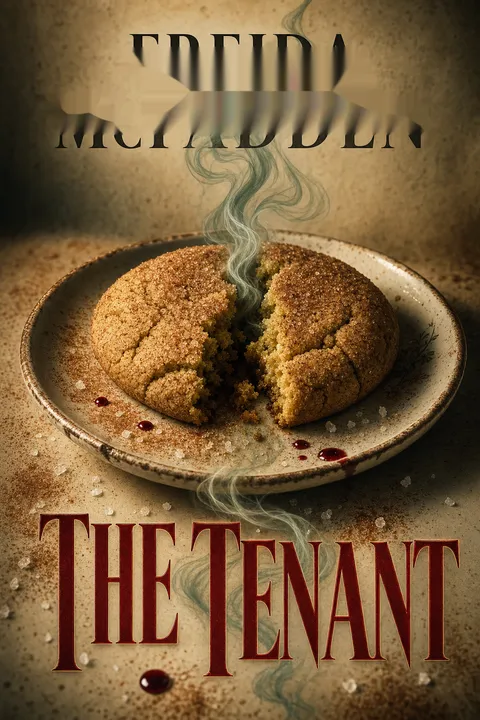


Plot Summary
The VP's Last Five Minutes
Blake1 has spent a week admiring the view from his new corner office at Coble & Roy, the Manhattan marketing firm where he clawed his way from entry level to vice president. He's engaged to Krista,2 living in an Upper West Side brownstone, planning children.
Then his boss Wayne9 calls him in and accuses him of selling their Henderson campaign to a competitor. Blake1 protests — he's given this company a decade — but Wayne9 wants him out immediately, with no severance and a threat of prosecution. Security escorts him from the building.
In a single afternoon, Blake1 loses the promotion, the job, and the professional reputation he spent years constructing. He stares at the twenty-five-story drop from his office window and, for the first time, understands his predecessor's impulse to jump.
The Psychic's Bloody Warning
Two months of unemployment have drained Blake's1 savings. Krista2 persuades him to rent out their spare bedroom, and they post an ad. The candidates are catastrophic — a kickboxer puts a hole in the wall, a man tries to drill through their plaster.
Then a woman in multiple robes and what appears to be a tinfoil hat arrives, introducing herself as Quillizabeth.10 She sprinkles salt across their threshold to repel evil spirits and critiques their cookies as toxic.
When she shakes Krista's2 hand, she recoils in terror and announces that Blake1 is going to stab Krista2 to death in the living room — she saw the vision clearly, him crouching over her bleeding body. Blake1 dismisses her as deranged, but Krista2 goes pale, and a new uncertainty settles between them.
The Perfect Tenant Arrives
After Quillizabeth's10 dramatic exit, Whitney Cross3 arrives — normal, polite, and genuinely delighted by the prospect of a dishwasher. She waitresses at a nearby Greek diner and owns so little that everything she has fits in a borrowed car's trunk. Blake1 notices she's pretty, perhaps dangerously so, but Krista2 seems unbothered.
Whitney's3 background check comes back clean, her boss praises her, and they offer her the room. She moves in with two boxes, two bags, and no furniture. Blake1 is uneasy — what thirty-year-old woman has no belongings, no social media presence, and no history? — but their bank account can't afford to be selective. He helps carry her things upstairs and tells himself it will be temporary.
Not Friends — Just Landlord
At first, Blake1 and Whitney3 coexist pleasantly. They share cereal, trade childhood memories over Frosted Flakes, and watch late-night television together when neither can sleep. She calls him handsome; he notices her dimple. But when Whitney3 finishes his cereal, empties his soap and shampoo, and leaves nothing behind, Blake1 marches to her workplace to tell her they need to keep things separate — that they're not friends, just landlord and tenant.
The words land like a slap. Whitney's3 warmth hardens into open hostility. She tells him the reason he succeeds is that he's a self-absorbed asshole, and she hopes Krista2 figures that out. The brief window of possible friendship slams shut, and Blake1 now shares a home with someone who loathes him.
Maggots, Rashes, Midnight Thumps
Blake's1 skin erupts in a furious allergic rash — he traces it to limonene, a fragrance chemical he's deathly sensitive to, somehow contaminating his laundry. Thumping sounds shake his ceiling at one in the morning, but every time he storms upstairs, Whitney3 claims she was reading quietly.
Fruit flies colonize the kitchen, multiplying beyond anything their traps can manage. When Blake1 climbs a wobbly stool to investigate the upper cabinets, he discovers a paper bag of rotting apples crawling with maggots, hidden on an unreachable shelf.
The stool collapses under him. Convinced Whitney3 planted the rot to torment him, Blake1 carries the bag upstairs and overturns its contents onto her clean bedspread. He feels a brief, savage satisfaction — followed by the creeping certainty that he has just escalated a war he cannot win.
The Phone in Whitney's Bed
The torment compounds. Red lipstick appears on Blake's1 shirt collar — a shade Krista2 never wears. Then Krista2 discovers Blake's1 cell phone buried in Whitney's3 sheets. A jug of bleach surfaces in their bedroom closet, weeks after Blake1 accused Whitney3 of poisoning their goldfish Goldy with it.
Each discovery looks damning, and Blake's1 insistence that Whitney3 is framing him sounds increasingly unhinged. Krista2 has heard enough. She packs half a suitcase and leaves for her best friend Becky's7 apartment, telling Blake1 she needs space.
He follows her to the curb, pleading, but a taxi materializes instantly and she climbs in without looking back. Blake1 stands on the sidewalk watching the cab vanish — and realizes he may have just lost the only good thing remaining in his life.
The Neighbor Won't Complain Again
Mr. Zimmerly,5 the ninety-three-year-old neighbor who harangued Blake1 weekly about garbage bins, fails to bring in his cans — a first in their entire acquaintance. Blake1 enters the unlocked brownstone next door and finds him dead on the bathroom floor, blood pooled around his head.
Police initially assume a fall, but the medical examiner determines it was blunt force trauma from an antique clock found on the mantel. Detective Garrison11 visits Blake,1 probing about their public altercation the week before — when Blake1 hurled a trash can at the old man.
After the detective leaves, Blake1 checks his kitchen counter. The antique clock he and Krista2 bought at a flea market is gone. His fingerprints are all over the murder weapon, and the frame is tightening around someone who has no idea who built it.
Three Fingers, Pink Nail Polish
Blake1 discovers a paper bag wedged behind the refrigerator, swarming with flies and reeking far worse than rotting fruit ever could. Inside are three decomposing human fingers with pink-painted nails.
His instinct is to call 911, but reporting dismembered body parts in his own kitchen — while a detective11 already suspects him of murder — seems like a fast track to handcuffs. Instead, Blake1 pursues a lead: Whitney's3 background check listed a hometown called Telmont, New Jersey.
He calls the high school, where a secretary remembers Whitney Cross3 vividly — a brilliant, manipulative girl whose ex-boyfriend Jordan Gallo14 jumped off the school roof after she systematically destroyed his life. Jordan's14 parents believed she pushed him. Blake1 rents a car and drives south, desperate for answers about the woman living above his bedroom.
The Girl in the Family Photo
Mrs. Cross13 welcomes Blake1 into the yellow house where Whitney3 grew up. She describes a daughter who shoved her four-year-old brother off a jungle gym for breaking a toy, who stole treasured heirlooms and destroyed them as punishment, who likely murdered her boyfriend14 and waited six years to kill the girl he cheated with.
Then Blake's1 gaze lands on the family photo above the fireplace. The teenage daughter is not the woman living in his spare bedroom. It's Krista2 — his fiancée. His vision tunnels.
His fiancée2 is the real Whitney Cross, and the tenant3 is someone else entirely. And the bag of cookies Krista2 pressed into his jacket pocket that morning was never an act of tenderness. Blake1 stumbles outside, shoves a finger down his throat, and vomits until his ribs ache.
One Night, Total War
The narrative rewinds eight months into Krista's2 perspective. Her real name is Whitney Cross — the girl from Telmont who fled after Jordan Gallo's14 death, lived in Portugal, and returned to New York under the forged identity of Krista Marshall.
The woman they know as their tenant Whitney3 is actually Amanda Lenhart, who purchased the dormant name to hide from her own debts. Krista2 loves Blake1 fiercely. Then one night she unlocks his phone and discovers a text from Stacie,8 his boss's9 assistant, confirming they slept together.
Blake1 cheated once, regretted it immediately, and swore never to repeat it. But for Krista,2 once is enough. She copies his confidential work files and sells them to a competitor. Wayne9 fires Blake1 within the week. And Krista2 begins constructing an elaborate machine of revenge.
Every Crumb Was Calculated
She empties Blake's1 soap and cereal the morning after Amanda's3 arrival, knowing he'll blame the new tenant. She hides fruit on an unreachable shelf to breed flies. She mixes limonene into his hypoallergenic detergent, drop by drop.
She plays thumping sounds from a phone hidden in their closet, killing the audio the instant Blake1 leaves to investigate. She writes hostile sticky notes to Amanda3 in Blake's1 handwriting, ensuring the two will never become allies.
She hired actors for the terrible tenant interviews and enlisted Elijah,4 a childhood friend and hacker who forged her Krista Marshall identity, to play the man with the drill. Every symptom Blake1 attributed to his tenant — the rash, the insomnia, the paranoia — was manufactured by the woman who kissed him goodnight and asked for a level-nine hug.
A Clock, a Car, a Slit Throat
With Blake1 spiraling, Krista2 accelerates. She bashes Mr. Zimmerly's5 skull with their kitchen clock and leaves it on his mantel, covered in Blake's1 fingerprints.
She poses as an Uber driver to pick up Stacie,8 coaxes a full confession of the affair during the ride, then drugs her, drives to the woods near Telmont, and kills her — keeping three fingers to plant in Blake's1 kitchen. She visits Elijah,4 her lovesick hacker, sleeps with him one final time, then slits his throat because he knows too much.
Finally, she bakes a batch of snickerdoodle cookies laced with tetrodotoxin — blowfish poison — and slips a forged suicide note confessing to multiple murders into Blake's1 jacket pocket. The endgame is elegant: Blake1 dies, Amanda3 dies, and Krista2 walks free.
Blood on the Living Room Floor
Krista2 stabs Amanda3 in the living room while waiting for Blake's1 poison to take hold. But Blake1 discovered the truth in Telmont. He vomited the cookies and raced back, though the toxin he absorbed is shutting his body down — his vision doubles, his speech slurs, his lungs labor.
He arrives home barely upright and finds Krista2 standing over him, watching him die with detached calm. She confirms everything: the murders, the poison, the frame. Then Amanda3 — not dead from the stab wound — rises from the blood-soaked sofa and drives a knife into Krista's2 back.
Krista2 collapses beside Blake.1 He crouches over her, weeping, telling her he loves her even now. She dies in his arms. The psychic's vision comes true at last: blood on the living room floor, but the wrong body.
Epilogue
Four months later, Blake1 packs his car and leaves Manhattan for Cleveland, where he'll take over his father's12 hardware store. Wayne9 offered him his old VP job after the truth about Krista's2 sabotage surfaced, but Blake1 declined — the city holds nothing for him now.
Amanda3 stays behind to facilitate the brownstone sale, and the two part warmly after a brief, complicated fling. But Amanda3 harbors a final secret. Her sympathetic backstory — the dying mother, the desperate loan — was entirely fabricated.
She's a gambler whose debts were forgiven by Frank Gallo, Jordan Gallo's14 uncle, in exchange for one task: killing the woman who murdered his nephew. The knife Amanda3 drove into Krista's2 back was never heroism. It was the fulfillment of a contract — one that saved her own life, not Blake's.1
Analysis
The Tenant is a domestic thriller that inverts its own architecture at the midpoint. For forty-four chapters, readers inhabit Blake Porter's1 increasingly unreliable perception — a man convinced his tenant is sabotaging his life while everyone around him wonders if he is the problem. Part II then reveals that every paranoid suspicion Blake1 held was correct in substance but wrong in attribution. The tormentor was never the tenant; it was the woman baking his cookies.2
McFadden constructs a precise study in how intimate knowledge becomes the most lethal weapon available. Krista2 doesn't need surveillance technology or hired muscle — she has years of shared meals, inside jokes, and pillow talk. She knows Blake's1 allergy to limonene, his obsession with cleanliness, his inability to resist her snickerdoodles. The horror is not that a stranger invaded his home but that the invasion originated inside the relationship itself, camouflaged by affection.
The novel also dissects how quickly the gap between 'difficult' and 'dangerous' closes in others' perceptions. Blake's1 real behaviors — hurling cereal boxes, throwing a trash can at an elderly man,5 pounding on Whitney's3 door at midnight — are genuine reactions to genuine provocations, but stripped of context, they paint the portrait of a man unraveling. McFadden demonstrates that gaslighting doesn't require the victim to doubt their own senses; it only requires everyone else to.
The epilogue's final twist — Amanda3 was contracted by Jordan Gallo's14 family to kill Krista2 — reframes the entire moral architecture. The person who appears to save Blake's1 life was executing her own mercenary bargain. No one in the brownstone was who they claimed to be, and the only truly innocent resident was a goldfish named Goldy. The novel suggests that beneath every domestic surface — every shared cookie, every numbered hug — lies the possibility that love is not merely vulnerable to betrayal but is the very architecture through which betrayal operates most efficiently.
Review Summary
The Tenant receives mixed reviews, with an average 4.19/5 rating. Many readers praise McFadden's ability to create suspenseful, binge-worthy stories, though some find it predictable. The plot follows Blake, who takes in a tenant after losing his job, leading to unsettling events. Readers appreciate the fast-paced narrative and plot twists, but some criticize the characterization and predictability. Despite mixed opinions, most agree it's an entertaining, quick read that keeps them engaged throughout.
People Also Read






Characters
Blake Porter
Fired VP, desperate fiancéBlake is a driven marketing executive who measures his self-worth against his father's12 financial struggles. Raised in working-class Cleveland, he clawed his way through NYU and up the corporate ladder, fueled by the determination never to worry about money the way his parents did. He's genuinely devoted to his fiancée2 and craves domestic stability—a fish, a brownstone, children—but possesses a competitive streak that makes him effective at work and occasionally abrasive at home. His pride is both his engine and his vulnerability: when stripped of his job and status, he spirals into obsessive exercise, sleeplessness, and escalating paranoia. Blake is fundamentally decent but imperfect, capable of both deep tenderness and reckless anger, and his greatest flaw is a single moment of weakness he believed he could bury forever.
Krista Marshall
Blake's cookie-baking fiancéeBlake's1 fiancée presents as his perfect complement—a warm, grounded dry-cleaner manager who bakes snickerdoodle cookies and invented a ten-point hug scale for bad days. She seems to anchor Blake's1 ambition with domestic sweetness, and her patience during his job loss reads as genuine love. But Krista's inner world is far more volatile than her gentle exterior suggests. She craves the maternal affection she never received, writes unsent letters to a mother13 she can't visit, and defines loyalty in absolute, unforgiving terms. Her devotion operates like a binary switch: total love or total destruction, with nothing in between. She is someone who, when wounded, doesn't grieve—she engineers. What drives Krista is not malice but an almost spiritual conviction that betrayal must be answered with proportional devastation.
Whitney Cross
The enigmatic new tenantThe woman who moves into Blake1 and Krista's2 spare bedroom introduces herself as Whitney Cross, a waitress at a Greek diner with almost no possessions and no online presence. Friendly and unassuming at first, she has an easy laugh and a directness that occasionally surprises. Her background check comes back clean, but the near-total absence of a digital footprint hints at someone living carefully off the grid. She withstands Blake's1 hostility with remarkable composure, alternating between amusement and cold fury, and she builds a quiet rapport with Krista2 even as her relationship with Blake1 deteriorates. Whitney appears to be exactly what she claims—a harmless person between apartments. But the gap between her presented self and her actual history is wider than anyone in the brownstone suspects.
Elijah Myers
Enigmatic penguin-hat strangerA short, bespectacled man in a white Linux baseball cap who first appears as one of the brownstone's disastrous tenant candidates, wielding a drill. He resurfaces near Blake1 at unexpected moments, watching from a distance with unsettling familiarity. His motivations and connections remain opaque for most of the story, but his repeated appearances suggest he knows far more about what's unfolding in Blake's1 life than any stranger should.
Mr. Zimmerly
Cantankerous elderly neighborBlake's1 ninety-three-year-old neighbor, perpetually clad in fuzzy slippers and consumed by grievances about garbage bins and dirty steps. Beneath his curmudgeonly exterior is a profoundly isolated man whose daughter lives across the country and whose dusty brownstone shows signs of years without visitors. He represents both the irritation and the fragility of solitary urban aging.
Malcolm
Becky's husband at Coble & RoyBecky's7 husband and Blake's1 uneasy social obligation. Malcolm works at Coble & Roy—a job Blake1 helped him land—and has a nervous habit of repeating words. He is well-meaning but mediocre, the kind of person who ascends through inoffensiveness rather than talent. His loyalty to Blake1 is genuine but limited, and he becomes an unwitting messenger in Blake1 and Krista's2 unraveling.
Becky
Krista's loyal best friendKrista's2 best friend and fierce gatekeeper, Becky is intensely loyal and slightly superstitious—the kind of person who takes psychic warnings seriously. She flirts harmlessly with Blake1 but turns protective the moment Krista2 expresses doubt about him. Her apartment becomes Krista's2 refuge, and she serves as the voice urging caution, sometimes helpfully, sometimes by reinforcing fears.
Stacie Parker
Blake's office temptationWayne's9 assistant at Coble & Roy, Stacie is attractive, confident, and unabashedly flirtatious. She represents Blake's1 single moment of weakness—a temptation he succumbed to once and spent months trying to bury. She is the catalyst for consequences far larger than a single evening's indiscretion, though she has no idea what her connection to Blake1 has set in motion.
Wayne Vincent
Blake's boss and executionerBlake's1 longtime boss and mentor at Coble & Roy, Wayne taught him everything about marketing before firing him without a second chance over what appeared to be corporate espionage.
Quillizabeth
Salt-sprinkling robed psychicA psychic in multiple robes who visits the brownstone and delivers a terrifyingly specific prophecy about Blake1 killing Krista2. Whether her gift is genuine or theater, her warning haunts every page that follows.
Detective Garrison
The probing NYPD detectiveThe investigator assigned to Mr. Zimmerly's5 death, whose calm questions and request for Blake's1 fingerprints signal that Blake1 has shifted from witness to suspect.
Blake's father
Patient Cleveland store ownerA widowed hardware store owner in Cleveland who repeatedly offers Blake1 a simpler life. His patience and understated wisdom represent the road not taken—until circumstances force Blake1 to reconsider.
Mrs. Cross
Whitney's estranged motherA woman in small-town New Jersey whose guarded demeanor and haunted eyes suggest she has lived through something terrible connected to her estranged daughter.
Jordan Gallo
Krista's doomed high school boyfriendA football player from Telmont who dated the real Whitney Cross2 in high school and cheated on her. His death—ruled a suicide after he jumped from the school roof—is the earliest known catastrophe in Krista's2 wake.
Plot Devices
The Snickerdoodle Cookies
Love symbol turned murder weaponKrista's2 signature cookies anchor the couple's relationship from its earliest days—Blake1 fell in love with her partly because of them, and they appear at every emotional milestone. Their warmth, cinnamon scent, and the ritual of baking them represent everything good about the relationship. The cookies are so woven into Blake1 and Krista's2 shared identity that he would never suspect them as a delivery system. When Krista2 laces them with tetrodotoxin in the final act, she transforms the most intimate symbol of their love into a mechanism for murder, weaponizing the very thing that made Blake1 trust her completely. The device literalizes how intimacy becomes vulnerability when love turns to vengeance.
The Antique Kitchen Clock
Domestic prop turned frame jobPurchased at a flea market during happier times, the antique clock sits on Blake1 and Krista's2 kitchen counter as a relic of their shared domestic life. When Krista2 uses it to kill Mr. Zimmerly5 and leaves it on his mantel, Blake's1 fingerprints—accumulated through months of casual contact—cover the murder weapon. The clock also establishes the story's central pattern: ordinary household objects repurposed for violence. Bleach kills the goldfish, limonene causes the rash, a kitchen knife ends two lives. The clock's disappearance from Blake's1 counter is the moment he first understands the evidence is being orchestrated, not coincidental.
Quillizabeth's Prophecy
Foreshadowing through misdirectionThe psychic's10 prediction that Blake1 will stab Krista2 in the living room functions on multiple levels. To Blake1, it's nonsense from a woman in a tinfoil hat. To Krista2, who hired Quillizabeth10 as part of her scheme, it's scripted theater designed to plant doubt. But Quillizabeth10 insists the vision was genuine—she saw blood on the living room floor. The prophecy creates persistent dread and is referenced throughout to justify others' suspicion of Blake1. It ultimately comes true in inverted form: blood does soak the living room floor, but it is Krista2 who dies there, not Blake1. The device interrogates the gap between what is foreseen and what is understood.
The Stolen Identity
Creates the central confusionThe entire plot hinges on a collision of identities. When Krista2 fled Telmont as a teenager, she abandoned her birth name—Whitney Cross—and became Krista Marshall using forged documents. Years later, a desperate woman named Amanda Lenhart3 purchased the dormant Whitney Cross identity to escape her own debts. When Krista2 discovers a waitress using her old name, she feels viscerally violated and targets Amanda3 alongside Blake1. The stolen identity creates the story's fundamental dramatic irony: Blake1 believes his tenant is Whitney Cross, never suspecting his fiancée2 already holds that title by birth. It also drives the thematic question of whether identity is something you own or something others can simply take.
The Forged Suicide Note
Krista's capstone framing deviceKrista2 plants a handwritten note in Blake's1 jacket pocket that confesses to multiple murders and expresses suicidal intent, forged convincingly in his handwriting. It serves as the final piece of her frame: after Blake1 dies from poisoned cookies and Amanda3 is found stabbed, the note would explain everything neatly to investigators. Blake's1 discovery of the note in Telmont is the moment he fully comprehends the scope of Krista's2 plan—she doesn't merely want him dead, she wants him remembered as a monster. His destruction of the note removes one piece of evidence but not the others, illustrating how difficult it is to dismantle a frame built by someone who knows you intimately.
FAQ
Synopsis & Basic Details
What is The Tenant about?
- Ambitious man's downfall: Blake Porter, a rising marketing executive, loses his high-stakes job under suspicion of corporate theft, plunging him into financial distress and threatening his relationship with his fiancée, Krista.
- Desperate search for income: Facing foreclosure on their Manhattan brownstone, Blake and Krista reluctantly decide to take in a tenant to help cover the mortgage, leading to a series of bizarre and unsettling interviews.
- Psychological thriller unfolds: The arrival of seemingly normal tenant "Whitney Cross" (Amanda Lenhart) triggers a series of strange occurrences and manipulations that push Blake to the brink of paranoia, making him question his sanity and the motives of those around him.
Why should I read The Tenant?
- Masterclass in psychological suspense: The novel expertly uses unreliable narration and shifting perspectives and gaslighting to keep readers guessing, mirroring the protagonist's descent into confusion and paranoia.
- Chilling exploration of revenge: It delves into the dark consequences of betrayal and the lengths to which someone will go to exact vengeance, revealing a chilling antagonist hidden in plain sight.
- Twists that redefine the narrative: The story features significant perspective shifts and shocking revelations that force readers to re-evaluate everything they thought they knew, culminating in a surprising and dark conclusion.
What is the background of The Tenant?
- Contemporary urban setting: The story is set in modern-day Manhattan, using the high-pressure environment of corporate marketing and the close quarters of a brownstone to amplify themes of ambition, financial stress, and claustrophobia.
- Focus on psychological manipulation: Freida McFadden, known for her thrillers, centers the narrative on the psychological unraveling of the protagonist, driven by subtle yet relentless manipulation rather than overt physical threats initially.
- Exploration of identity and secrets: The plot is deeply intertwined with characters hiding their true identities and pasts, highlighting how secrets can corrode relationships and lead to devastating consequences.
What are the most memorable quotes in The Tenant?
- "Blake Porter, Vice President.": This quote, seen on Blake's desk nameplate (Chapter 1), encapsulates his identity and ambition, making his sudden downfall and the nameplate's later destruction (Chapter 2) a powerful symbol of his lost status.
- "He's going to kill you... Blake is going to kill you, Krista. You have to get away from here.": Quillizabeth's dramatic warning (Chapter 4), initially dismissed as the ramblings of a "nutjob," becomes chillingly prophetic, though not in the way initially assumed, highlighting the novel's thematic focus on hidden dangers and misdirection.
- "You don't even know me.": Krista's dying words (Chapter 66) to Blake underscore the profound deception at the heart of their relationship and the narrative, revealing that the person he loved was a complete stranger with a hidden, violent past.
What writing style, narrative choices, and literary techniques does Freida McFadden use?
- First-person, unreliable narration: The majority of the story is told from Blake's perspective, immersing the reader in his increasingly paranoid and confused state, making it difficult to discern reality from manipulation.
- Dramatic shifts in perspective: The sudden switch to Krista's (Whitney Cross') first-person narration in Part II completely re-frames the preceding events, revealing her calculated planning and true nature, a signature McFadden twist.
- Pacing and suspense building: McFadden employs short chapters, escalating incidents of sabotage, and a constant sense of unease to build relentless tension, driving the reader forward through Blake's psychological thriller experience.
Hidden Details & Subtle Connections
What are some minor details that add significant meaning?
- The antique clock: The antique metal clock bought at a flea market (Chapter 3) seems like a simple decorative item but later becomes the murder weapon used to bludgeon Mr. Zimmerly (Chapter 33), directly linking Blake's home to the crime and serving as planted evidence.
- The broken step: Mr. Zimmerly's slightly crumbled bottom step (Chapter 7), which Blake offers to fix, symbolizes the neighborly friction and Blake's failed attempt at connection, becoming a poignant detail after Zimmerly's death and Blake's final confrontation with him (Chapter 27).
- The fruit flies' location: Blake's observation that fruit flies gather around specific areas like the top cabinet shelf (Chapter 21) and the gap behind the refrigerator (Chapter 38) subtly hints that the source of the infestation is intentionally hidden, not just general uncleanliness, foreshadowing the discovery of rotting items and later, the fingers.
What are some subtle foreshadowing and callbacks?
- Predecessor's attempted suicide: The opening anecdote about the man who tried to jump from Blake's office window (Chapter 1) foreshadows Blake's own mental unraveling under pressure and his moments of despair, suggesting the job's inherent toxicity.
- Krista's baking habit: Krista bakes when she's "happy or bored or especially stressed" (Chapter 3), a seemingly innocent detail that later takes on a darker tone when she bakes poisoned cookies (Chapter 61), revealing baking as a coping mechanism tied to her emotional state, even extreme stress.
- The "dangerous" warning: Quillizabeth's urgent plea to Krista to "get away" from Blake because he is "dangerous" (Chapter 4) is a direct foreshadowing of danger, but the narrative misdirects the reader to believe Blake is the threat, when the psychic's vision might have been about the location or the situation rather than Blake himself being the sole source of danger to Krista.
What are some unexpected character connections?
- Malcolm and Whitney/Amanda: Malcolm, Blake's colleague and rival, knows "Whitney" (Amanda) from Cosmo's Diner (Chapter 35), a seemingly innocuous connection that raises Blake's suspicion and highlights how Amanda has integrated into the local community under her false identity.
- Elijah and Krista/Whitney: Elijah, the tech nerd who helps "Krista" (Whitney Cross) create her new identity (Chapter 46), is revealed to be a long-time admirer from her past, demonstrating the depth of her manipulative history and her ability to leverage others' feelings for her own gain.
- Amanda and Frank Gallo: The Epilogue reveals Amanda was coerced into killing Krista by Frank Gallo, the uncle of Jordan Gallo (Krista/Whitney Cross's high school boyfriend she allegedly killed), connecting Amanda's actions directly to Krista's violent past and the long-reaching consequences of her crimes.
Who are the most significant supporting characters?
- Mr. Zimmerly: Beyond being a grumpy neighbor, Zimmerly serves as a symbol of the life Blake aspired to (owning a brownstone for decades) and becomes a crucial pawn in Krista's framing plot, his murder escalating the stakes dramatically and drawing police attention.
- Amanda Lenhart (as Whitney Cross): Initially presented as a potential victim of Blake's paranoia or a co-conspirator, Amanda is vital as the catalyst for the climax, her own hidden past and desperate situation leading her to ultimately kill Krista and save Blake.
- Elijah Myers: Elijah is the enabler of Krista's new identity and subsequent manipulations, representing the dangers of blind loyalty and unrequited love, and his murder by Krista underscores her ruthlessness and need to eliminate anyone who knows too much.
Psychological, Emotional, & Relational Analysis
What are some unspoken motivations of the characters?
- Blake's need for validation: Blake's intense focus on career success and material wealth ("I came from nothing and hated it," Chapter 1) stems from a deep-seated insecurity about his working-class background, driving his ambition and making his job loss particularly devastating to his self-worth.
- Krista's control compulsion: Krista's seemingly sweet demeanor masks a profound need for control, stemming from past trauma (implied by her mother's reaction to Joey's accident, Chapter 49). Her elaborate revenge plots are not just about punishment but about regaining absolute control over situations and people who have wronged her.
- Amanda's survival instinct: Amanda's primary motivation is survival, driven by debt to dangerous people ("If I didn't come up with it, they were going to kill me," Chapter 56). Her actions, including stealing an identity and ultimately killing Krista, are born out of desperation rather than inherent malice, highlighting the extreme measures people take under duress.
What psychological complexities do the characters exhibit?
- Blake's paranoia and gaslighting: Blake's psychological state deteriorates under Krista's manipulation, leading to genuine paranoia, sleep deprivation, and questioning his own reality ("Are you imagining some of the things that you say Whitney is doing?", Chapter 24), illustrating the devastating effects of gaslighting.
- Krista's sociopathic traits: Krista exhibits classic signs of sociopathy: superficial charm, lack of empathy (seen in her casual discussion of murder and lack of remorse), manipulative behavior, and a history of calculated violence against those who cross her, even for minor perceived offenses.
- Amanda's moral ambiguity: Amanda is complex because she is both a victim (of debt, of Krista's manipulation) and a perpetrator (identity theft, killing Krista). Her actions are morally gray, driven by self-preservation, forcing the reader to consider the circumstances that lead people to commit crimes.
What are the major emotional turning points?
- Blake's firing: The sudden and public termination of Blake's job (Chapter 2) is the initial emotional shock that triggers his downward spiral, leading to financial strain, loss of identity, and setting the stage for the need for a tenant.
- Krista's discovery of infidelity: Krista finding evidence of Blake's affair with Stacie (Chapter 48) is the pivotal emotional turning point for her, transforming her from a loving fiancée into a vengeful schemer and initiating her elaborate plan for retribution.
- Blake's discovery of the fingers: Finding the severed fingers (Chapter 38) is a horrifying emotional climax for Blake, shifting his fear from psychological manipulation to tangible, gruesome evidence of murder, confirming his worst suspicions about the danger in his home.
How do relationship dynamics evolve?
- Blake and Krista's erosion of trust: Their relationship deteriorates from loving partnership ("I love you, Krista. So much. I can't wait to marry you, babe," Chapter 47) to suspicion and alienation, fueled by Blake's stress and Krista's deliberate manipulations, culminating in her leaving and attempting to murder him.
- Blake and Whitney/Amanda's shifting antagonism: Their dynamic changes from initial wary cohabitation to open hostility ("You're despicable," Chapter 20) and mutual suspicion, driven by Krista's framing, before evolving into a complex alliance and bond forged through shared trauma after Krista's death.
- Krista and Amanda's deceptive alliance: Krista cultivates a false sense of camaraderie with Amanda ("Maybe...the two of us can get an apartment together," Chapter 56) based on shared grievances about Blake, while secretly planning Amanda's murder, highlighting Krista's manipulative skill and the superficiality of her connections.
Interpretation & Debate
Which parts of the story remain ambiguous or open-ended?
- The full extent of Krista's past crimes: While several murders are revealed (Jordan Gallo, his girlfriend, Mr. Zimmerly, Stacie Parker, Elijah Myers), the phrase "After all the lives I've taken" in the suicide note (Chapter 44) suggests there may have been other victims not explicitly detailed in the narrative.
- Krista's true feelings for Blake: Despite her elaborate revenge, Krista tells Blake she loves him (Chapter 47) and shows moments of genuine affection (the hug, the cookies, Chapter 36). It's debatable whether her love was real but overshadowed by her need for vengeance, or if it was always a calculated part of her manipulation.
- Amanda's future and true nature: The Epilogue leaves Amanda's future uncertain, still dealing with loan sharks and having committed murder. While presented sympathetically, her capacity for violence and deception ("I also love how he believed every word I told him," Epilogue) leaves her true character open to interpretation – is she a survivor forced into terrible acts, or inherently manipulative like Krista?
What are some debatable, controversial scenes or moments in The Tenant?
- Quillizabeth's psychic vision: The scene where Quillizabeth warns Krista about Blake (Chapter 4) is controversial because it presents a seemingly supernatural element in a psychological thriller. Readers can debate whether her vision was genuine psychic ability, a lucky guess based on Blake's stress, or even subtly influenced by Krista herself.
- Blake's reaction to the fruit flies and fingers: Blake's extreme reactions, such as dumping maggot-infested fruit on Amanda's bed (Chapter 22) and his internal thoughts about violence, are controversial. Readers may debate whether his behavior is a justifiable response to extreme gaslighting and provocation, or evidence of his own underlying instability, as Krista suggests.
- Amanda's decision to kill Krista: Amanda's act of stabbing Krista (Chapter 66) is a highly debated moment. Was it self-defense, given Krista was about to kill her? Or was it a calculated act to fulfill her debt to the Gallo family, as suggested in the Epilogue, making her a cold-blooded killer?
The Tenant Ending Explained: How It Ends & What It Means
- The Climax (Chapters 66-67): Blake, poisoned by Krista, races home to stop her from killing Amanda. He arrives as Krista is attacking Amanda. Despite his weakened state, Blake witnesses Amanda stab Krista in self-defense. Krista dies from the wound, confessing her identity as the real Whitney Cross and hinting at her violent past ("You...don't...even...know me," Chapter 66). Blake survives the poisoning thanks to Amanda's intervention and calling 911.
- The Aftermath (Chapter 68): Blake recovers in the hospital and is cleared of suspicion as Krista's history of murders (including Mr. Zimmerly and Stacie Parker) is uncovered. Amanda, whose real name is revealed, confesses her own secret: she was coerced into killing Krista by the Gallo family as payment for her gambling debts, connecting her actions directly to Krista's past crimes.
- The Resolution (Epilogue): Blake sells the brownstone, leaves New York, and takes over his father's hardware store in Ohio, seeking a simpler life away from the trauma. Amanda remains in New York, having paid her debt, and reflects on her survival and the ease with which she deceived Blake, suggesting her own capacity for manipulation and highlighting the theme that appearances can be deceiving and everyone has secrets. The ending means that the cycle of violence and deception initiated by Krista is broken, but the characters are permanently scarred, and the line between victim and perpetrator remains blurred.
About the Author
Other books by Freida McFadden





Download PDF
Download EPUB
.epub digital book format is ideal for reading ebooks on phones, tablets, and e-readers.








































