
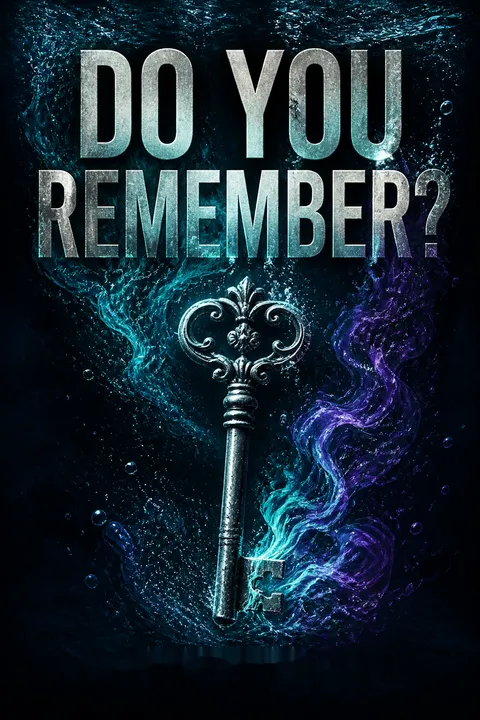


Plot Summary
The Wrong Man Beside Her
She remembers falling asleep beside Harry Finch,3 her fiancé, celebrating their engagement with Cabernet in their fixer-upper in Queens. But the ceiling is wrong. The bathroom has a bidet. Her hair is short with streaks of gray, and fine lines frame eyes that belonged to a twenty-nine-year-old last night. When she screams his name, the man who stumbles in isn't Harry.3
He's blond, blue-eyed, wearing boxer shorts and wire-rimmed glasses. His name is Graham,2 and he claims to be her husband. Tess1 snatches up a pair of tweezers as a weapon. Graham2 doesn't argue — he simply opens the nightstand drawer and hands her a folded piece of paper, worn soft from a hundred unfoldings. It's a letter. In her own handwriting.
A Letter From Herself
The letter lays everything out like a field guide to a life Tess1 can't recall. A car accident damaged her brain. Some mornings are tolerable; others erase the last seven years entirely. Graham2 has been a devoted husband through it all. Harry,3 the letter insists, did something unforgivable and is no longer part of her life.
In the shower, Tess1 traces a C-shaped surgical scar on her scalp — proof the letter's claims are real. But before the hot water blurs it away, she glimpses a word scrawled in pen on her upper thigh: Find. She can't make out the second word. Someone — herself — left a message in a place only she would see. The shower erases it before she can read the rest.
Prisoner With a Phone
Every door requires a key from the inside. A beautiful young woman named Camila5 arrives — ostensibly a housekeeper, transparently a guard. Then Tess's phone buzzes with a text from an unknown number warning her not to trust the man who calls himself her husband. The stranger knows about Camila,5 knows her dog Ziggy's7 name, knows the grocery routine.
They arrange to meet at a nearby dog park, but Graham2 comes home early and the outing is canceled. At the supermarket, a security guard intercepts Tess1 before she can slip out the exit. Camila5 reveals Graham2 is Tess's1 legal guardian, with court documents to enforce it. If Tess1 tries to leave, the police will bring her back. The dog park, when they finally drive past it, sits empty.
The Accountant, Not the Hero
Graham2 told Tess1 he saved her from oncoming traffic the day they met — love at first rescue. But when Lucy,4 her oldest friend, finally calls back, she laughs at the story. Graham2 was an accountant Tess1 hired for My Home Spa, the luxury bath product company she built from nothing into a multimillion-dollar empire. Confronted, Graham2 crumbles.
He admits the lie, explaining that waking every morning to a wife who sobs for another man drove him to invent a better origin story. Tess1 softens at his vulnerability — and they share a genuine kiss in his home office. But beside the laptop on his desk, she notices something: a drawer that won't open. Locked, Graham2 says. Sensitive work documents. Nothing to worry about.
Residue at the Bottom
Over dinner, Tess's1 speech begins to slur. Her eyelids grow leaden. Twenty minutes ago she felt sharp; now her mind swims as if she'd been drinking for hours. Then she spots it in her water glass: a thin white film coating the bottom, like dissolved powder. She lunges for the kitchen, tearing open drawers, searching for the phone Graham2 confiscated earlier.
She can't find it. So she grabs a pen, shuts herself in the bathroom — which no longer has a lock — and pulls down her pants. On her inner thigh, where Graham2 will never look, she writes a warning for the woman she'll become tomorrow morning: that Graham2 is drugging her. She finishes just before he bursts through the door.
Harry Behind the Beard
Day two dawns with yesterday's warning still legible on her thigh — an accusation that Graham2 is drugging her. Tess1 calls 911; the responding officer already knows Graham2 by name and sides with him. Then her phone buzzes during The Price is Right with the exact price of an air fryer — a game only Harry3 ever played with her.
At the dog park, a bearded man in a Mets cap and sunglasses sits beside her on a bench. When he removes the shades, Tess1 nearly collapses. Harry3 tells her she found him a month ago, desperate for help. He's consulted doctors who say daily memory loss doesn't match a brain injury — it matches a drug. He points her toward the locked drawer in Graham's2 office. Then he walks away before Camila5 can notice.
The Sofa Confession
That night, Tess1 wakes at eleven with her memory still intact. A seizure-flashback shows her the original scene that destroyed everything: Lucy4 grabbing Harry3 and kissing him, then slapping him when Tess1 walked in — the staged betrayal that ended her engagement.
Minutes later, she descends the stairs and finds Graham2 and Lucy4 together on the sofa, very much not staged. In the confrontation that follows, Graham2 drops the mask. The kiss was theater — Lucy4 initiated it at Graham's2 request so Tess1 would catch them and blame Harry.3
Lucy4 wanted career advancement; Graham2 wanted Tess.1 Harry's3 bewildered protests had been genuine all along. Tess1 threw her ring at an innocent man. Before she can act on any of this, the drug pulls her under and the night dissolves.
Graham Rewrites Everything
Day three arrives without a thigh message — she didn't manage to write one. Graham2 invents a new origin story and pushes the pomegranate juice Tess1 always despises, insisting she loves it. When she dumps her drugged water into a plant, he catches her red-handed.
He discovers Harry's3 phone number on her arm, calls the number, and threatens Harry3 directly. Then he confiscates her phone for good, producing prescription bottles labeled for seizures from a respected Mount Sinai neurologist to prove the dissolved powder was legitimate medication.
Exhausted and confused, she relents and takes the pills. By the next morning — day four — Graham2 claims she never had a phone. But Harry3 appears at the padlocked backyard fence and whispers through the gaps: her phone is hidden in the ottoman beside the recliner.
Ziggy Brings the Keys
Tess1 retrieves the hidden phone and reads weeks of desperate texts from Harry.3 A seizure-flashback strikes: she's in Graham's2 office at My Home Spa, confronting him about a secret Caribbean bank account — embezzlement. She fires him, kicks him out of the company and her house.
The flashback ends as she's speeding away in her car, and everything goes white. Back in the present, Ziggy7 trots over and drops Graham's2 keys at her feet. Tess1 loads the dog into Graham's2 BMW and races to the McDonald's where she and Harry3 used to eat when they were broke newlyweds-to-be.
Harry3 meets her there. They kiss for the first time in years. Then Graham2 appears in the parking lot — he tracked the phone she forgot to leave behind. Police arrest Harry3 for violating a restraining order.
The Nightly Needle
Back at the house, Graham2 slides a blank piece of paper across the kitchen island and tells Tess1 exactly what to write. The new letter must warn her future self that Harry3 is dangerous, that he's in jail for attempted kidnapping. When she refuses, Graham2 threatens to drive Ziggy7 to the pound first thing tomorrow — and by then, she won't even remember the dog existed.
Tess1 writes every word he dictates. Hours later, in the darkest stretch of the night, a sharp pricking in her hip jolts her awake. Graham2 stands at the foot of the bed holding a capped syringe. He admits calmly that this is what he does every single night, and that it's easier when she cooperates. He tells her to go back to sleep. Within seconds, she can't fight it.
The Soup and the Key
Day five. Tess1 reads Graham's dictated letter and nearly believes Harry3 is a monster — until she finds two words written on her inner thigh: a plea to find Harry,3 with a phone number beneath. He answers. Harry3 is driving to her father's6 house, having discovered that the number saved as Dad in Tess's1 contacts was a burner phone Graham2 controlled — her father6 never received a single voicemail.
Back in the kitchen, Camila5 carries Graham's2 bowl of soup to the table and lets her hand spasm. Boiling broth cascades into his lap. While he storms upstairs cursing, Camila5 presses a small key into Tess's1 palm. It opens the locked desk drawer. She tells Tess1 she's sick of the lies. Everyone deserves the truth.
Terminal in the Top Drawer
The drawer holds no pills, no signed confession. Just paper — a thick stack of medical records from Mount Sinai bearing her name. Harry3 had begged her by phone not to open it, but she turned the key anyway. Page after page repeats the same words: stage four glioblastoma.
Terminal. Poor prognosis. Graham2 finds her reading and explains everything. The headaches came first, then a seizure caused the car accident. Surgeons removed what they could. Chemotherapy failed.
Tess1 was so terrified of dying like her mother1 that her psychiatrist proposed an experimental injectable drug to erase short-term memory nightly. She would forget her diagnosis and live her remaining months in peace. It worked — until it erased too much. Then her father6 bursts in, and for the first time in years, he calls her Princess.
Lucy Finally Tells the Truth
Harry3 arrives moments after her father.6 Tess1 chooses him — she wants to spend whatever months remain with the man she loves, not the stranger she married. Graham2 agrees to let her go in exchange for control of My Home Spa, drafting a contract within the hour.
Tess1 is ready to sign when Lucy4 appears at the door. Graham2 tries to dismiss her, but Lucy's4 guilt overpowers her self-interest. She confesses that Graham2 was embezzling from the company before Tess1 got sick, that the kiss with Harry3 was entirely staged, and that she kept silent in exchange for a job and a promotion.
Tess1 takes Graham's2 contract — the document that would hand him her life's work — and tears it in half. The pieces flutter to the floor of the house she will never return to.
Epilogue
The book's epilogue rewinds to one month before Day One. Tess1 and Graham2 sit in her oncologist's office, braced for the worst. Instead, the doctor delivers a miracle: the tumor has shrunk dramatically. Her cancer is in remission. Tess1 floats home dreaming of cooking classes, travel, returning to run her company.
Over a candlelit spaghetti dinner she cooked herself, Graham2 grows quiet. He doesn't want her back at work. He doesn't want things to change. Tess1 takes a sip of water and the room tilts — white powder coats the bottom of her glass.
Graham2 admits he prefers her as she's been: compliant, homebound, his. She stumbles to the bathroom and, with a tube of dark red lipstick and hands that are already going numb, scrawls a desperate instruction on her thigh — find Harry3 — before unconsciousness takes her.
Analysis
Do You Remember? inverts the amnesia thriller by making the protagonist both detective and crime scene. Tess1 must solve her own life every twenty-four hours, armed only with notes from a version of herself she can no longer verify. The novel's most unsettling insight isn't that Graham2 controls her — it's that every mechanism of that control (the letter, the medication, the legal guardianship) originates from legitimate protective structures. The prenup was real. The court-appointed guardianship was legally obtained. The drug was prescribed by a psychiatrist. McFadden demonstrates how systems built to protect vulnerable people can be repurposed into instruments of captivity without anyone altering the paperwork.
The five-day structure creates a Sisyphean rhythm: Tess1 pushes the boulder uphill each morning only to lose it at midnight. But traces survive each reset — a phone number inked on skin, a dog's name carrying hidden allegiance, muscle memory that knows how to swipe an iPhone screen. The novel argues that identity isn't housed solely in explicit memory; it persists in habits, instincts, and the body itself. Tess's thigh becomes her most secure server, storing data her brain cannot retain.
The maternal cancer subplot does far more than explain a doctor phobia. Tess's mother1 died of the disease Tess1 believes she's dying of — a genetic echo that makes the deception emotionally airtight. The epilogue's revelation that her cancer is actually in remission reframes every preceding page: each day of confusion, each midnight injection, each locked door was inflicted on a woman who was getting better. Graham2 didn't weaponize her illness. He weaponized her cure.
The book ultimately asks whether ignorance can constitute bliss when someone else holds the syringe. Tess's1 answer is unequivocal: she would rather face a terminal diagnosis as herself than live contentedly inside someone else's fiction.
Review Summary
Do You Remember? received mixed reviews. Many readers found it gripping and praised the twists, while others felt it was repetitive and predictable. Some compared it to "Before I Go to Sleep." The premise of a woman waking up with no memory each day intrigued readers, but the execution divided opinions. Critics noted similarities to other works and found the ending unsatisfying. Despite mixed reactions, many fans of Freida McFadden's previous books enjoyed this psychological thriller, though some considered it weaker than her other novels.
Characters
Tess Thurman
Amnesiac entrepreneur seeking truthThe founder of My Home Spa, a self-made multimillionaire who built a luxury bath product empire from a one-bedroom apartment. Tess is resourceful, stubborn, and deeply scarred by watching her mother die of breast cancer as a child—a trauma that left her with a paralyzing fear of doctors and hospitals. She is fiercely loyal in love but trusting enough to be vulnerable to manipulation. Despite losing her memory nightly, her instincts persist: she names her dog7 after Harry's3 pet bird, her body remembers how to use an iPhone, and her subconscious fights to preserve truths her conscious mind cannot retain. Her thigh becomes her most secure storage, holding messages her brain refuses to keep. She is simultaneously the most powerful and most powerless person in the story.
Graham Thurman
Controlling husband and guardianTess's1 husband, an accountant who transitioned from employee to spouse to legal guardian within a few years. Graham is handsome, meticulous, and disarmingly patient—the kind of man who will explain the same facts every morning without complaint. He dresses in Armani suits, manages Tess's1 multimillion-dollar company, and insists every restriction exists for her protection. Behind wire-rimmed glasses, his blue eyes project both warmth and something harder to name. Graham craves control the way other men crave admiration; he thrives in the role of caretaker-in-chief and grows volatile when that role is questioned. Whether his need to control constitutes love or possession is a line the novel deliberately blurs. He signed a prenup that limited his claim on Tess's1 wealth—a detail that shaped everything after.
Harry Finch
Devoted ex-fiancé in disguiseTess's1 ex-fiancé, a tech-savvy introvert who fell in love with her at a computer store and never fell out. Harry is the kind of man who memorizes retail prices for fun, wears T-shirts with IP address jokes, and named his pet finch Ziggy7. Shy enough that their first kiss required a doorman's encouragement, he is the polar opposite of Graham's2 polished confidence. In Tess's1 intact memories, Harry is vivid and beloved—the last person she remembers holding a ring out to her. In the present, he exists as a question mark: a name her letter warns against, a phone number scribbled on skin, a bearded figure glimpsed through fences and across dog parks. Every version of the story Tess1 hears casts him differently, and his true nature sits at the center of the novel's mystery.
Lucy
Best friend with divided loyaltiesTess's1 best friend since their first day of college, a striking redhead who is chronically late and prone to backhanded compliments. Lucy never supported Tess's1 business ventures and was never Harry's3 biggest fan. Now she works at My Home Spa and maintains a close—possibly too close—relationship with Graham2. Her loyalties remain one of the book's most unsettling ambiguities: she claims to have Tess's1 back while clearly knowing more than she reveals.
Camila
Caretaker with a conscienceTess's1 live-in caretaker, a strikingly beautiful young woman with a raspy voice and bitten-down fingernails. Hired by Graham2 to keep Tess1 safe and supervised, Camila knows every detail of Tess's1 preferences—how she takes her toast, her birthday, her secrets. She lost her own grandmother as a child and was never told the truth about the death, an experience that left her with a fierce conviction that people deserve honesty, no matter how painful.
Douglas Strebel
Tess's estranged fatherTess's1 emotionally distant father who never recovered from his wife's death to breast cancer. Once warm and playful—he used to call his daughter Princess—Douglas retreated into himself after losing the love of his life. His conspicuous absence from Tess's1 daily life, despite her desperate voicemails, raises questions no one around her can satisfactorily answer.
Ziggy
Tess's loyal golden retrieverTess's1 golden retriever, named after Harry's3 pet finch—a subconscious loyalty to her true love that even memory loss couldn't erase. Ziggy adores Tess1, tolerates Camila5, and openly despises Graham2, once biting through the leg of his Armani trousers.
Plot Devices
The Letter to Herself
Establishes daily false trustEach morning, Tess1 reads a letter in her own handwriting that explains her situation: a car accident, brain damage, a loving husband named Graham2, and a warning to stay away from Harry3. Because it's written by herself, Tess1 trusts it implicitly—making it the most effective tool of manipulation in the story. The letter frames Graham2 as a hero and Harry3 as a villain, setting the emotional baseline that Tess1 must fight against each day. Its power lies in the fact that handwriting feels like identity: if you can't trust your own words, what can you trust? Later, Graham2 forces Tess1 to write an even more hostile version, weaponizing her handwriting against her future self.
Messages on Tess's Thigh
Secret cross-day communicationTess1 writes messages to her future self on her inner thigh—a location she knows Graham2 won't see when dressing her for bed, positioned above where her nightshirt ends. These messages function as the book's counter-narrative to the letter: where the letter is sanctioned and visible, the thigh messages are covert and subversive. The first message washes away in the shower before Tess1 can read the second word. Subsequent messages survive long enough to redirect her behavior the following morning. The device transforms Tess's1 own body into a smuggled document, a hidden server that bypasses every lock Graham2 has installed in the house.
The Locked Desk Drawer
Repository of hidden truthA single locked drawer in Graham's2 mahogany desk becomes the story's gravitational center. Introduced casually on Day One—Graham2 dismisses it as containing sensitive work documents—the drawer grows in significance with each failed attempt to open it. Harry3 identifies it as the likely hiding place for whatever Graham2 uses to control Tess1. Tess1 searches for the key across multiple days, each time forgetting by morning that she tried. The drawer is a physical manifestation of the gap between what Tess1 knows and what she's been prevented from knowing. Its contents, when finally revealed, reframe the entire story.
The Nightly Injection
Mechanism of daily memory erasureGraham2 administers an injectable drug each night while Tess1 sleeps, erasing her short-term memories and resetting her to a state where she believes she's twenty-nine and engaged to Harry3. The injection was originally prescribed by a psychiatrist as part of a clinical trial—a compassionate measure designed with Tess's1 consent. But context changes everything: what begins as a mercy becomes a weapon when the circumstances justifying it no longer apply. Graham2 dissolves supplementary sedatives in Tess's1 evening water to ensure she's unconscious for the injection, creating a two-stage system of chemical control that Tess1 must overcome to retain any information overnight.
Tess's iPhone
Lifeline and tracking leashThe phone serves a dual purpose that mirrors Graham's2 entire relationship with Tess1: it appears to be a gift of freedom but functions as a tool of surveillance. Graham2 uses it to locate Tess1 instantly when she flees, and he confiscates or returns it depending on how much control he feels he needs on any given day. For Tess1, the phone is her only connection to Harry3, Lucy4, and her father6—yet every text she sends can be monitored, every call traced. The device embodies the novel's central tension between protection and imprisonment, communication and control. When Tess1 forgets to leave it behind during her escape, it becomes the chain that drags her back.
FAQ
Synopsis & Basic Details
What is Do You Remember? about?
- Amnesia victim seeks truth: Tess wakes up with amnesia, finding herself married to a stranger named Graham and with no memory of the last seven years of her life. A letter she wrote to herself explains her condition is due to a car accident.
- Locked in a gilded cage: As Tess tries to adjust, she discovers she's essentially trapped in her own home, with all exits locked and a caretaker named Camila constantly watching her.
- Unraveling a web of lies: Tess receives cryptic messages suggesting Graham isn't who he seems, leading her to question everything she thought she knew about her life and the people in it.
Why should I read Do You Remember?
- Twisty psychological thriller: The novel offers a suspenseful plot filled with unexpected twists and turns, keeping readers guessing until the very end.
- Exploration of memory and identity: The story delves into the complexities of memory and how it shapes our sense of self, raising questions about what it means to truly know someone.
- Emotional exploration of relationships: The novel explores the dynamics of love, trust, and betrayal, examining how these forces can both bind us together and tear us apart.
What is the background of Do You Remember?
- Focus on memory and identity: The story explores the fragility of memory and its impact on personal identity, a theme relevant in an age of increasing awareness of neurological conditions.
- Exploration of manipulation and control: The novel touches on themes of manipulation and control within relationships, reflecting contemporary concerns about power dynamics and gaslighting.
- Modern domestic setting: The story is set in a modern, upper-middle-class domestic environment, making the characters and their struggles relatable to a wide audience.
What are the most memorable quotes in Do You Remember?
- "You have been in a car accident. You were the one driving, and nobody else was hurt...Unfortunately, you suffered a brain injury during the accident.": This quote establishes the central conflict and the protagonist's unreliable perception of reality.
- "Don't trust the man who calls himself your husband.": This cryptic message ignites the central mystery and plants seeds of doubt in Tess's mind, driving the plot forward.
- "If you relax and try to have a good day, you will be much happier. Just remember that the people around you care about you very much and only want you to be safe. Do what they say.": This quote encapsulates the deceptive nature of Tess's reality, highlighting the manipulation disguised as care.
What writing style, narrative choices, and literary techniques does Freida McFadden use?
- First-person unreliable narrator: The story is told from Tess's perspective, whose memory loss and confusion create an unreliable narration, heightening suspense and reader engagement.
- Fast-paced and suspenseful: McFadden employs a quick pace and short chapters to maintain tension and keep readers hooked, eager to uncover the truth alongside Tess.
- Foreshadowing and red herrings: The author skillfully uses foreshadowing and red herrings to create misdirection and keep readers guessing about the true nature of the characters and events.
Hidden Details & Subtle Connections
What are some minor details that add significant meaning?
- The broken wedding photo: The cracked glass obscuring Tess's face in the wedding photo foreshadows the fractured nature of her marriage and the distorted reality she experiences.
- The locked doors: The fact that both the front and back doors require a key to open from the inside symbolizes Tess's imprisonment and lack of control over her own life.
- The pomegranate juice: Tess's initial aversion to the pomegranate juice, despite Graham's insistence that she loves it, hints at the manipulation and control he exerts over her preferences and memories.
What are some subtle foreshadowing and callbacks?
- Harry's absence from photos: The lack of photos of Harry in the house, compared to the abundance of photos with Graham, subtly foreshadows the erasure of Harry from Tess's life and the manipulation of her memories.
- The "As you wish" line: Tess's use of the line "As you wish" from The Princess Bride and Graham's lack of recognition foreshadows a disconnect in their shared history and hints at the constructed nature of their relationship.
- The dog's name, Ziggy: The dog's name, Ziggy, being the same as Harry's childhood pet finch, foreshadows Tess's lingering feelings for Harry and the connection that Graham is trying to suppress.
What are some unexpected character connections?
- Lucy's job at My Home Spa: Lucy's employment at Tess's company, despite her initial skepticism about the business, suggests a deeper involvement in Tess's life and a potential motive for her actions.
- Camila's knowledge of Tess's preferences: Camila's familiarity with Tess's preferences, such as how she likes her toast, hints at a closer relationship than initially revealed and raises questions about her true allegiance.
- The police officer's familiarity with Graham: The police officer's casual acquaintance with Graham and his immediate acceptance of Graham's explanation for the 911 call suggests a pre-existing relationship and potential corruption.
Who are the most significant supporting characters?
- Camila, the housekeeper: Camila's role evolves from a simple housekeeper to a key player in uncovering the truth, demonstrating the importance of seemingly minor characters in revealing the larger plot.
- Lucy, the best friend: Lucy's complex relationship with Tess, marked by both loyalty and betrayal, highlights the challenges of trust and the potential for hidden motives even in close friendships.
- Tess's father, Douglas: Though largely absent, Tess's father represents a connection to her past and a potential source of support, emphasizing the importance of family ties in navigating difficult situations.
Psychological, Emotional, & Relational Analysis
What are some unspoken motivations of the characters?
- Graham's desire for control: Graham's unspoken motivation is to maintain control over Tess and her company, fueled by a desire for power and financial gain.
- Lucy's hidden resentment: Lucy harbors a hidden resentment towards Tess, stemming from jealousy or unrequited feelings, which influences her actions and contributes to the story's conflict.
- Harry's guilt and longing: Harry is driven by a sense of guilt over his past actions and a deep longing to reconnect with Tess, motivating him to help her uncover the truth and reclaim their lost love.
What psychological complexities do the characters exhibit?
- Tess's identity crisis: Tess grapples with a profound identity crisis, struggling to reconcile her fragmented memories and construct a coherent sense of self in the face of manipulation and deception.
- Graham's savior complex: Graham exhibits a savior complex, believing he is acting in Tess's best interest while simultaneously exerting control over her life and manipulating her reality.
- Lucy's conflicting loyalties: Lucy experiences conflicting loyalties, torn between her friendship with Tess and her involvement in Graham's scheme, leading to internal conflict and moral ambiguity.
What are the major emotional turning points?
- The discovery of the locked doors: Tess's realization that she is trapped in her own home marks a significant emotional turning point, shifting her from confusion to fear and fueling her determination to escape.
- The meeting with Harry at the dog park: The reunion with Harry triggers a wave of nostalgia and longing, prompting Tess to question her current reality and consider the possibility of reclaiming her past.
- The revelation of the brain tumor: The discovery of the brain tumor and Graham's deception shatters Tess's sense of trust and forces her to confront her own mortality, leading to a profound emotional reckoning.
How do relationship dynamics evolve?
- Tess and Graham's relationship: The relationship between Tess and Graham deteriorates from a seemingly loving marriage to one of suspicion and distrust, culminating in a complete breakdown of their bond.
- Tess and Harry's relationship: The relationship between Tess and Harry evolves from a lost love to a renewed connection, offering Tess a chance at redemption and a sense of purpose in her final months.
- Tess and Lucy's relationship: The friendship between Tess and Lucy is tested by betrayal and conflicting loyalties, ultimately leading to a complex and bittersweet reconciliation.
Interpretation & Debate
Which parts of the story remain ambiguous or open-ended?
- The extent of Graham's manipulation: The degree to which Graham manipulated Tess's life before the accident remains ambiguous, leaving readers to speculate about the true nature of their relationship and his motives.
- The long-term impact of the brain tumor: The long-term impact of the brain tumor on Tess's cognitive abilities and emotional state is left open-ended, raising questions about her future quality of life.
- The future of My Home Spa: The future of My Home Spa under Graham's leadership is uncertain, leaving readers to wonder whether he will be able to maintain its success or if his actions will ultimately lead to its downfall.
What are some debatable, controversial scenes or moments in Do You Remember?
- Graham's decision to drug Tess: Graham's decision to administer a drug to erase Tess's memory is highly debatable, raising ethical questions about autonomy, consent, and the right to know one's own medical condition.
- Lucy's involvement in Graham's scheme: Lucy's participation in Graham's scheme, even if motivated by a desire to protect Tess, is a controversial act that challenges the boundaries of friendship and loyalty.
- Tess's decision to leave with Harry: Tess's decision to leave with Harry, despite his past betrayal and the uncertainty of their future, is a controversial choice that raises questions about the nature of forgiveness and the pursuit of happiness.
Do You Remember? Ending Explained: How It Ends & What It Means
- Tess chooses love and truth: The ending sees Tess choosing to spend her remaining months with Harry, embracing love and authenticity over a life built on lies and manipulation.
- Confronting mortality and reclaiming agency: The ending emphasizes the importance of confronting mortality and reclaiming agency in the face of terminal illness, highlighting the power of choice and self-determination.
- Bittersweet resolution: The ending offers a bittersweet resolution, acknowledging the pain and loss of Tess's situation while celebrating the resilience of the human spirit and the enduring power of love.
About the Author
Other books by Freida McFadden





Download PDF
Download EPUB
.epub digital book format is ideal for reading ebooks on phones, tablets, and e-readers.








































