
Plot Summary
Sisters and Sacrifice
In the soot-choked city, Birdie and her younger sister Magpie are inseparable, their love a rare comfort in a world of deprivation. When their family's only hope for a better future is to send Magpie for a mysterious "procedure" that might grant her special abilities, Birdie is forced to leave home and work as a maid to help pay for it. The sisters promise to find each other again, clinging to dreams of a small house filled with flowers and books. Birdie's departure is both an act of love and a wound that never heals, setting her on a path of relentless determination to reunite with Magpie, no matter the cost or the secrets she must uncover.
Arrival at the House
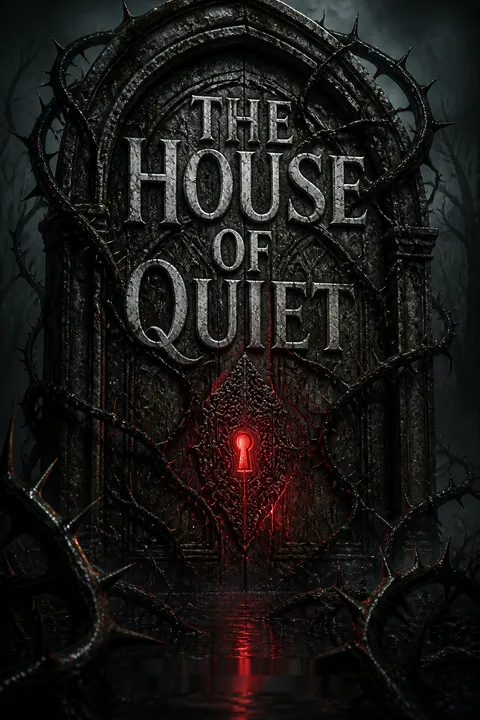
Birdie's journey leads her to the House of Quiet, a remote, forbidding institution surrounded by deadly bogs. She arrives under false pretenses, having blackmailed her way into a coveted maid's position, joined by two other girls, Rabbit and Minnow. The house is filled with wealthy, troubled youths—each with strange abilities and secrets. Birdie's true mission is to find Magpie, but she must navigate a labyrinth of locked doors, cryptic rules, and a staff that seems as haunted as the residents. The House Wife, a spectral figure, oversees the house with a chilling detachment, hinting at deeper horrors beneath the surface.
Secrets Behind Locked Doors
As Birdie explores, she discovers that the House of Quiet is not just a hospital but a prison. The upper floors hold evidence of past suffering: scratched poems, chains, and lists of names—many from the oppressed north, where children are stolen for the procedure. The residents' rooms are luxurious, but the emptiness and lack of personal effects reveal their temporary, disposable status. Birdie's old friend Nimbus is among the residents, now a hollow shell. The house's true purpose remains hidden, but Birdie senses that the answers—and Magpie—lie behind the doors she's forbidden to open.
The Residents' Abilities
The residents each possess—or are believed to possess—extraordinary abilities: empathy, mind-reading, emotional projection, and more. These powers are both gifts and curses, often overwhelming or isolating their bearers. Birdie learns that the procedure is supposed to grant such abilities, but the reality is far more dangerous and unpredictable. The wealthy children's presence is an anomaly, as the procedure was once reserved for the poor. The house's staff, especially Cook and the House Wife, are complicit in a system that exploits and discards the vulnerable, while the residents struggle with their own traumas and the threat of being "treated" into oblivion.
The Missing and the Lost
Birdie's hope of finding Magpie dims as she realizes her sister is not among the current residents. Rabbit, one of the new maids, deteriorates rapidly under the House Wife's care, becoming a ghost of her former self. The house's routines are revealed to be a cover for something more sinister: children disappear, and no one speaks of them again. Birdie's investigation is hampered by locked doors, unreliable allies, and the ever-present threat of exposure. The sense of loss is pervasive—not just for Magpie, but for all the children who have vanished into the house's depths.
Maid, Spy, and Survivor
Birdie juggles her roles as maid, secret agent for Dr. Bramble, and desperate sister. She forms uneasy alliances with Minnow (later revealed as Arrow, a northern spy) and Rabbit, while keeping her true motives hidden. The maids' code of mutual protection is tested as suspicions grow and the house's dangers escalate. Birdie's skills—lock-picking, observation, and emotional resilience—are her only weapons. She must decide whom to trust, knowing that betrayal could mean death for herself and the others. The line between survival and complicity blurs as Birdie is drawn deeper into the house's web.
The House Wife's Agony
The House Wife is both jailer and victim, her mind fractured by years of channeling the residents' pain. She is the "heart" of the house, absorbing the "noise" (the psychic agony of those with abilities) and transferring it elsewhere. Her existence is a warning of what the procedure can do: strip away identity, leaving only a vessel for others' suffering. Birdie glimpses the House Wife's past and realizes that the house's system is designed to perpetuate this cycle, feeding on the young to sustain the powerful. The House Wife's longing for peace is a silent plea for release.
Games, Lies, and Alliances
Amid the house's gloom, moments of connection and joy emerge. Birdie, Arrow, River, and Forest form a fragile alliance, sharing secrets and dreams. River and Arrow's romance blossoms, offering hope and vulnerability. Forest, a silent boy with a dangerous compulsion ability, becomes Birdie's confidant and protector. The group's camaraderie is tested by suspicion—anyone could be a spy or traitor. Games and shared stories become acts of resistance, small rebellions against the house's dehumanizing rules. Yet, every alliance is shadowed by the knowledge that the house consumes those who get too close.
Rabbit's Fate
Rabbit's decline ends in tragedy: she is killed by the House Wife during a failed "treatment." Her body is disposed of in the bog, joining countless others. The staff's indifference and the residents' helplessness expose the house's true nature as a machine for consuming the young. The event galvanizes Birdie and her allies, who realize that the only way to survive is to uncover the house's secrets and destroy its power. Rabbit's fate is a grim reminder of what awaits them all if they fail.
Arrow's True Target
Arrow, revealed as a northern insurgent, was sent to assassinate a southern agent but finds herself unable to kill Birdie. Instead, she becomes Birdie's partner in uncovering the house's crimes. Arrow's backstory—her family's suffering under southern oppression, her mother's death, and her own survival—fuels her determination. She realizes that the true enemy is not a single person but the system that exploits and destroys children for the benefit of the powerful. Arrow's aim shifts from vengeance to revolution, and she chooses to fight for a future where no more children are sacrificed.
Forest's Silent Power
Forest, Birdie's old friend and the minister's hidden son, possesses the most dangerous ability: his words compel absolute obedience. Traumatized by the harm he's caused, Forest isolates himself, making others forget he exists. His love for Birdie draws him out, and together they break the barriers of class and silence. Forest's power becomes both a weapon and a burden—he can save his friends, but at the risk of repeating the house's abuses. Ultimately, he chooses to use his ability to free the House Wife and end the cycle of suffering, even as it costs him his own peace.
The Procedure's Real Cost
The group uncovers the truth: the procedure is not a gift but a violent opening of the mind's natural channels, often resulting in madness or death. The House of Quiet exists to siphon the psychic energy ("noise") of those with abilities, transferring it to wealthy patrons seeking youth and vitality. Northern children are stolen for their rarity and power, their lives consumed to sustain the privileged. The staff—Cook, the driver, and the House Wife—are complicit, motivated by love, desperation, or self-preservation. The system is revealed as a monstrous engine of exploitation, fueled by suffering.
The Heart of the House
Birdie discovers Magpie, alive but broken, the new "heart" of the house. Magpie's mind is a void, her only relief coming from draining the life of others. Hawthorn, the manipulative tutor, tries to use Magpie to seize power, but Birdie and Arrow intervene. Birdie, now able to close the channels opened by the procedure, heals Magpie as best she can, ending her torment. The group realizes that the only way to stop the cycle is to destroy the house and expose its crimes. The final confrontation is both a rescue and an act of mercy.
Betrayal and Revolution
The arrival of Dr. Bramble, Iron (a traitorous northern agent), and Hawthorn brings the house's secrets to a head. Iron's betrayal is revealed, and the staff's complicity is laid bare. Forest uses his compulsion to free the House Wife and send the staff into the bog, ending their reign. Birdie and Arrow refuse to sacrifice Magpie or any more children, choosing instead to dismantle the system. The group gathers evidence of the house's crimes, vowing to use their abilities to fight for justice and change. The revolution begins with the burning of the House of Quiet.
Magpie in the Dark
Birdie and Magpie are reunited, but the cost is immense. Magpie is forever changed, her mind scarred by the procedure and her time as the house's heart. Birdie's love and determination save her sister, but the trauma lingers. The group mourns their losses—Rabbit, the other victims, and the innocence stolen from them all. Yet, in their survival and solidarity, they find hope. The bonds forged in suffering become the foundation for a new future, one where they fight not just for themselves, but for all the lost and voiceless.
The House Burns Down
With the house in flames behind them, Birdie, Arrow, Forest, River, and the others escape into the unknown. They carry with them the evidence of the house's crimes and the determination to bring down the system that created it. The journey ahead is uncertain, but they are no longer alone or powerless. The story ends with the promise of revolution, the hope of healing, and the unbreakable bonds of chosen family. The House of Quiet is gone, but its survivors are ready to make the world listen.
Analysis
Kiersten White's The House of Quiet is a haunting, intricately layered exploration of power, trauma, and resistance. At its core, the novel interrogates the costs of survival in a world that commodifies the vulnerable—children, the poor, and the marginalized—for the benefit of the privileged. The procedure, a violent opening of the mind, is a potent metaphor for the ways in which systems exploit and destroy those they claim to help. The House of Quiet itself is both a literal and symbolic engine of suffering, its locked doors and hidden rooms representing the secrets and silences that enable abuse. Yet, the novel is also a testament to the resilience of love, friendship, and hope. Birdie's journey—from powerless maid to revolutionary, from desperate sister to healer—embodies the possibility of agency and change, even in the face of overwhelming odds. The found family she builds with Arrow, Forest, River, and the others is a model of solidarity, offering a vision of collective action as the antidote to isolation and despair. Ultimately, The House of Quiet is a call to listen to the silenced, to break the cycles of exploitation, and to imagine a world where no one is sacrificed for another's comfort. Its lessons resonate in our own era, challenging readers to confront injustice and choose kindness, even when the world demands quiet.
Review Summary
The House of Quiet is a gothic fantasy thriller that has received mixed reviews. Many readers praised its atmospheric setting, unique premise, and well-developed characters. The story follows Birdie as she searches for her sister in a mysterious house filled with children possessing supernatural abilities. While some found the world-building confusing and the pacing slow, others appreciated the complex plot and satisfying ending. The book's eerie tone and exploration of class dynamics were highlights for many readers.
People Also Read




Characters
Birdie
Birdie is the heart of the story—a working-class girl whose life is defined by sacrifice and love for her younger sister, Magpie. Forced to become a maid at a young age, Birdie is resourceful, observant, and fiercely protective. Her journey is one of transformation: from powerless servant to secret agent, from victim to revolutionary. Birdie's psychological depth lies in her struggle between duty and desire, guilt and hope. Her relationships—with Magpie, Forest, Arrow, and the other residents—are marked by loyalty, vulnerability, and the courage to choose kindness in a brutal world. Birdie's development is a testament to the power of love and the refusal to be silenced.
Magpie
Magpie is Birdie's beloved younger sister, whose fate drives the entire narrative. Subjected to the procedure in hopes of a better life, Magpie becomes the new "heart" of the House of Quiet, her mind hollowed out to absorb others' pain. She is both a symbol of lost innocence and the embodiment of the system's cruelty. Magpie's relationship with Birdie is the emotional core of the story, representing both the cost of sacrifice and the possibility of healing. Her psychological journey is one of suffering, survival, and, ultimately, fragile restoration through her sister's love.
Arrow (Minnow)
Arrow, initially posing as Minnow, is a complex figure shaped by loss, anger, and a longing for justice. Her family's suffering under southern oppression and her mother's death fuel her mission to infiltrate and destroy the House of Quiet. Arrow's psychological arc moves from vengeance to solidarity, as she forms deep bonds with Birdie, River, and the others. Her relationship with River is a rare source of joy and vulnerability. Arrow's willingness to question her orders and choose mercy over violence marks her growth from weapon to leader, embodying the hope for a better world.
Forest
Forest is Birdie's old friend and the hidden son of the minister, possessing a terrifying compulsion ability—his words must be obeyed. Traumatized by the harm he's caused, Forest isolates himself, making others forget him. His love for Birdie draws him back into the world, and his power becomes both a shield and a danger. Forest's psychological struggle is with guilt, loneliness, and the fear of repeating the house's abuses. His ultimate choice to use his ability for liberation, not control, is an act of redemption and love. Forest's silent strength and devotion are central to the group's survival.
River
River is a wealthy resident with a mysterious ability to enter and influence dreams. Outwardly vivacious and flirtatious, River hides deep wounds from her family's rejection and the burden of her power. Her romance with Arrow is a source of healing and hope, allowing her to embrace vulnerability. River's psychological complexity lies in her dual role as both observer and participant, using her ability to protect her friends and confront her own fears. Her journey is one of self-acceptance and the choice to use her gifts for justice.
The House Wife (Mouse)
The House Wife is the tragic remnant of a girl once known as Mouse, now the "heart" of the house. Her mind shattered by years of absorbing others' pain, she is both jailer and victim. The House Wife's longing for peace and her inability to escape her role highlight the system's cruelty. Her relationship with Cook (her mother) is marked by desperation and denial. The House Wife's psychological state is one of dissociation, agony, and, ultimately, release through Forest's intervention. She represents the ultimate cost of the procedure and the house's existence.
Cook (Sable)
Cook is the house's matron and the House Wife's mother, driven by love and guilt. She enables the house's atrocities in the hope of staying close to her lost daughter, rationalizing her actions as necessary. Cook's psychological profile is one of compartmentalization, self-deception, and eventual despair. Her relationship with the driver (her husband) and the House Wife is fraught with unspoken pain. Cook's complicity is a cautionary tale about the dangers of prioritizing personal attachment over justice.
Rabbit
Rabbit is a lower-class girl who undergoes the procedure and becomes a maid at the House of Quiet. Initially cheerful and eager, she quickly succumbs to the house's horrors, becoming a shell of herself before dying during a failed treatment. Rabbit's fate is a stark reminder of the system's indifference to the vulnerable. Her psychological journey is one of hope crushed by exploitation, and her death galvanizes the other characters to action.
Hawthorn
Hawthorn is Nimbus's former tutor and an agent of Dr. Bramble, seeking to exploit the house's secrets for personal gain. He is cold, calculating, and willing to sacrifice anyone for power. Hawthorn's psychological makeup is defined by ambition, moral flexibility, and a lack of empathy. His interactions with Birdie and the others are marked by condescension and manipulation. Hawthorn's downfall comes from underestimating the very people he seeks to control.
Dr. Bramble
Dr. Bramble is the mastermind behind the procedure and the house's operations. He is driven by curiosity, greed, and a total lack of compassion. Dr. Bramble's psychological profile is that of a sociopath, viewing children as resources to be mined and discarded. His downfall comes when Birdie uses her new ability to force him to feel empathy, breaking his mind. Dr. Bramble represents the ultimate danger of unchecked power and the dehumanization of the vulnerable.
Plot Devices
The Procedure and Abilities
The procedure is the central plot device—a government-sanctioned operation that opens psychic channels in children, granting them abilities at the cost of their sanity or lives. It is a metaphor for systemic exploitation, promising hope while delivering suffering. The abilities themselves—empathy, mind-reading, compulsion—are double-edged, isolating their bearers and making them valuable commodities. The procedure's unpredictability and the secrecy surrounding its true effects drive the narrative's tension and the characters' quests for truth.
Locked Doors and Hidden Rooms
The house's architecture—its locked doors, hidden staircases, and secret rooms—serves as both literal and symbolic barriers. Birdie's lock-picking and exploration mirror her psychological journey, as she uncovers layers of trauma, complicity, and resistance. The hidden third floor and the underground chamber are sites of revelation and confrontation, where the characters face the house's darkest secrets and their own fears.
The House Wife and the Heart
The House Wife's role as the "heart" of the house is a unique plot device, embodying the system's mechanism for managing and profiting from pain. Her ability to absorb and transfer "noise" (psychic agony) is both a curse and a commodity, making her the linchpin of the house's operations. The cycle of taking and giving pain is a metaphor for generational trauma and the perpetuation of injustice.
Foreshadowing and Prophecy
Lake, one of the residents, experiences time nonlinearly, offering cryptic prophecies about who will die and how the future can be changed. Her warnings create suspense and guide the characters' choices, emphasizing the possibility of agency even in a rigged system. The repeated motif of "changing the target" underscores the theme of revolution and the refusal to accept predetermined fates.
Found Family and Chosen Bonds
The formation of a chosen family among Birdie, Arrow, Forest, River, and the others is a key narrative device. Their alliances, romances, and mutual support provide both emotional depth and practical means of survival. The contrast between biological and chosen family highlights the power of solidarity in the face of systemic oppression.
About the Author
Other books by Kiersten White





Download PDF
Download EPUB
.epub digital book format is ideal for reading ebooks on phones, tablets, and e-readers.








































