
Plot Summary
The White City's Masks
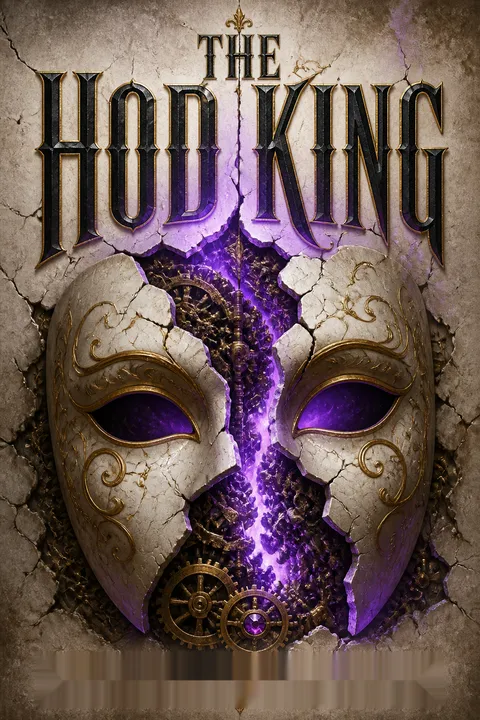
Pelphia, the fifth ringdom of the Tower, is a city obsessed with appearances, fashion, and spectacle, but beneath its whitewashed streets and endless parties, it is a place of deep social rot and casual cruelty. Thomas Senlin, disguised as the dull Boskop accountant Cyril Pinfield, arrives alone, tasked by the enigmatic Sphinx to investigate the Colosseum and avoid contact with his lost wife, Marya, now the Duchess Pell. The city's relentless pursuit of novelty and its disregard for the suffering of its hods—indentured laborers—set the stage for Senlin's struggle to maintain his purpose and identity amid a society that rewards conformity and punishes vulnerability. The city's masks are literal and figurative, and Senlin's own disguise is both protection and prison.
Sphinx's Orders and Exiles
The Sphinx, a mysterious and powerful figure, separates Senlin from his friends, sending him ahead to Pelphia as a spy while Edith Winters, now captain of the Sphinx's warship, the State of Art, prepares to follow. Voleta and Iren, Senlin's loyal companions, are tasked with infiltrating Pelphian society to discreetly contact Marya. The Sphinx's orders are absolute: Senlin must not approach his wife, and the crew must operate independently to avoid detection. The Sphinx's manipulations, both protective and controlling, force each character to confront their own desires, regrets, and loyalties. The separation is painful, especially for Senlin and Edith, whose unspoken feelings for each other simmer beneath the surface.
The Mermaid's Tale
Through society columns and gossip, Senlin traces Marya's transformation from a lost tourist to the celebrated "Mermaid" of Pelphia. Her musical genius and candid spirit win her fame, but her sudden withdrawal from public life sparks rumors of illness, scandal, and imprisonment. The narrative, filtered through the eyes of Pelphia's press, reveals both the city's adoration and its capacity for cruelty. Marya's marriage to Duke Wilhelm Pell is shrouded in ambiguity—was it rescue or captivity? Senlin's longing for clarity is sharpened by the city's refusal to acknowledge his existence, and by the play that rewrites his own history as farce. The truth of Marya's heart remains elusive.
A Spy in Pelphia
Senlin's attempts to investigate the Colosseum and the Coterie Club—an elite society of Pelphian nobles—are met with suspicion and violence. His efforts to bribe his way into the club are rebuffed, and his presence at a murder scene draws the attention of General Eigengrau and Wakeman Georgine Haste. Senlin's disguise as a Boskop is both a shield and a source of isolation, and his every move is shadowed by the Sphinx's mechanical spies. The city's indifference to suffering is made manifest in the public executions of hods, and Senlin's intervention only deepens his peril. The lines between justice and spectacle blur, and Senlin's own sense of self begins to fracture.
The Duke and the Duchess
Through a calculated ruse, Senlin secures a meeting with Duke Wilhelm Pell, proposing to turn Marya's fame into a financial enterprise. The duke's charm is seductive but hides a ruthless possessiveness. Senlin's proximity to Marya at a lavish party is both agony and revelation; their masked encounter on the Merry Loop ride is charged with longing, regret, and the impossibility of return. Marya's refusal to leave her new life is both a shield and a plea for Senlin's safety. The encounter leaves Senlin adrift, forced to accept that love cannot be reclaimed by force or nostalgia, and that Marya's choices are shaped by forces beyond his understanding.
The Colosseum's Secrets
The Colosseum, once a university, is now a theater of violence and exploitation. Senlin's investigation uncovers a hidden world beneath the arena: a secret library, a network of tunnels, and a cadre of hods working in secret. The brawlers' fights are revealed to be choreographed, a performance for the betting nobles, while the real work is done in the shadows. The discovery of a book on trilobites, covered in cryptic notes, hints at a deeper plot. The city's magpies, trained to destroy the Sphinx's mechanical spies, are both a symbol and a tool of resistance. The Colosseum is both a prison and a laboratory for revolution.
The Brawlers' Pact
Senlin's brief alliance with the hods is fraught with suspicion and danger. The brawlers, led by figures like Sodiq and Tarrou, are caught between survival and rebellion. The city's justice is swift and merciless, and the execution of hods for the crimes of others is both a warning and a rallying cry. The Sphinx's spies are blinded, and the city's authorities are blind to the real threat growing beneath their feet. The brawlers' pact is one of necessity, forged in the crucible of oppression, and Senlin's own role as both outsider and potential ally is precarious. The seeds of revolution are sown in blood and silence.
The Leaping Lady
Voleta, disguised as the Sphinx's niece, becomes an accidental celebrity in Pelphia after a rooftop escapade and a public defense of a parrot. Her fame is both a shield and a snare, drawing her into the orbit of Prince Francis and the city's most dangerous parties. The city's obsession with novelty and scandal is mirrored in Voleta's own struggle to maintain her identity and purpose. Her friendship with Iren and Ann, and her uneasy alliance with Xenia, are tested by the city's relentless demands. The Leaping Lady is both a symbol of freedom and a warning of the city's appetite for destruction.
The Prince's Trap
At the Vivant Music Hall, Voleta's quest to reach Marya brings her into the clutches of Prince Francis, whose predatory charm masks a capacity for violence. The confrontation in the Mermaid's dressing room is a collision of hope and horror: Marya's secret child, her terror of the duke, and Voleta's own near-death at the prince's hands. Iren's rescue is both brutal and redemptive, but Voleta's life hangs by a thread. The city's indifference to suffering is laid bare, and the cost of resistance is measured in blood. The prince's trap is both personal and political, a microcosm of the Tower's cruelty.
The Black Trail Beckons
Betrayed and captured, Senlin is cast onto the black trail—the Old Vein—by the duke, his head locked in a blinder and his identity erased. The black trail is a world of darkness, hunger, and violence, where hods are both prisoners and outcasts. Senlin's journey with Tarrou and Finn Goll is a test of endurance and faith, as they navigate the labyrinthine tunnels, evade chimney cats, and confront their own pasts. The trail is both a graveyard and a crucible, and Senlin's survival depends on his ability to adapt, to trust, and to deceive. The black trail is the Tower's shadow, and its heart is rebellion.
The Hod King's Engine
At Mola Ambit, Senlin and his companions discover the true scope of Marat's ambition: the construction of the Hod King, a colossal siege engine built from the Tower's own bones and the Sphinx's stolen technology. The engine is both a weapon and a symbol, a rat king of hods bound together in purpose and desperation. Marat's vision is seductive and terrifying, promising liberation through annihilation. Senlin's own loyalties are tested as he is forced to play the role of convert, offering up his past and his hope for the future. The revolution is no longer a rumor—it is a machine, and it is waking.
Siege and Surrender
As the Sphinx's warship, the State of Art, arrives in Pelphia, the city's rulers plot to seize it, fearing both the hods' uprising and the Sphinx's power. Edith's negotiations with King Leonid and General Eigengrau are a dance of threats and promises, but the city's duplicity is revealed in a night of violence. The State of Art is attacked, its envelope destroyed, but the ship's hidden levitator saves it from destruction. Edith's retaliation is swift and devastating: the Ararat is obliterated, the port reduced to ruins, and the city's leaders scattered. The cost of betrayal is measured in fire and ash.
The Sphinx's Curse
Edith learns the true nature of the Sphinx's curse: the Tower's lightning mill is a ticking bomb, and only the Sphinx's vigilance prevents catastrophe. The Sphinx's collection of failed engines and lost friends is both a museum and a warning. The burden of knowledge is isolating, and Edith's own transformation—her new arm, her command, her loneliness—mirrors the Sphinx's own. The curse is not only technological but existential: the Tower's survival depends on secrecy, compromise, and the willingness to bear impossible burdens. The Sphinx's war is not only against Marat, but against despair itself.
Monsters and Miracles
The State of Art's defense against Pelphia's assault is both monstrous and miraculous. Reddleman, the resurrected Red Hand, is both savior and horror, dispatching the city's soldiers with inhuman efficiency. Byron, the stag-headed footman, is forced to confront his own fears and limitations, while Edith's duel with Georgine Haste—revealed as a zealot and traitor—ends in death and regret. Voleta's own resurrection, through the Sphinx's medium, is both a miracle and a curse, her fate uncertain. The line between monster and miracle is blurred, and the cost of survival is paid in blood and memory.
The Fall of Port Virtue
The aftermath of the battle is both triumph and tragedy. The State of Art, now crewed by survivors and fugitives, flees a city in ruins. The port is destroyed, the Ararat sunk, and Pelphia's leaders are dead or disgraced. Edith rescues Marya and her child, Olivet, from the duke's clutches, and the crew is reunited in grief and hope. The Sphinx's silence is ominous, and the future is uncertain. The Tower's balance of power has shifted, but the cost is measured in lost friends, broken trust, and the scars of violence. The fall of Port Virtue is both an ending and a beginning.
The Price of Loyalty
Edith's loyalty to her friends and her mission is tested at every turn. The betrayal of Georgine Haste, the loss of Ferdinand, and the burden of command weigh heavily on her. Byron's devotion is both a comfort and a source of guilt, as he struggles to reconcile his duties with his conscience. Iren's love for Voleta is both strength and vulnerability, and Ann's arrival offers hope for healing. The crew's loyalty to each other is the only constant in a world of shifting allegiances and broken promises. The price of loyalty is paid in sacrifice and forgiveness.
The Awakening
Voleta's awakening from her coma is both a miracle and a mystery. The Sphinx's medium has saved her life, but at what cost? The crew is reunited, but the wounds of the past linger. Marya and Olivet are safe, but Senlin's fate remains uncertain. The State of Art, now a ship of exiles and survivors, sets out on a new journey, carrying the hope of reunion and the promise of change. The Tower's future is unwritten, and the crew's bonds are both their greatest strength and their greatest vulnerability.
The Tower's Next Move
The Tower is on the brink of revolution. Marat's Hod King is ready to march, the Sphinx's warship is wounded but unbroken, and the balance of power has shifted. The crew of the State of Art must navigate a world where every alliance is suspect, every victory is costly, and the future is uncertain. The lessons of the past—of love, loss, and loyalty—are both guide and warning. The next move belongs to the Tower, and the storm is coming.
Analysis
Josiah Bancroft's The Hod King is a masterful exploration of power, identity, and the cost of revolution, set within the dazzling and treacherous world of the Tower of Babel. The novel interrogates the nature of freedom and captivity, exposing how systems of oppression are maintained not only by violence but by spectacle, conformity, and the seductions of comfort. Through the intertwined journeys of Senlin, Edith, Voleta, and their companions, Bancroft examines the limits of loyalty, the dangers of idealism, and the necessity of compromise. The Tower itself is both setting and symbol—a place where every ascent is also a descent, and where every act of resistance risks becoming a new form of tyranny. The novel's emotional power lies in its refusal to offer easy answers: love cannot undo the past, revolution cannot guarantee justice, and survival often demands the sacrifice of innocence. In a world where every mask conceals both pain and possibility, The Hod King challenges readers to consider what it means to be true to oneself, to others, and to the future. The lessons are as relevant to our world as to Bancroft's: that hope is both fragile and essential, that power corrupts even the best intentions, and that the struggle for meaning and connection is never truly finished.
Review Summary
The Hod King receives overwhelmingly positive reviews, with readers praising Josiah Bancroft's masterful prose, original worldbuilding, and compelling character development. Most reviewers rate it 5 stars, calling it the best in the series and a modern fantasy classic. The book focuses on the ringdom of Pelphia, where Senlin continues searching for his wife Marya while the crew undertakes separate missions from the Sphinx. Readers highlight the emotional depth, themes of class inequality and abuse, exceptional pacing, and unpredictable plot twists. The narrative structure splits between three main POV characters across the same timeline, creating intense suspense and convergence.
People Also Read



Characters
Thomas Senlin
Senlin is a former schoolmaster whose journey up the Tower began as a search for his lost wife, Marya, but has become a quest for self-understanding and redemption. His intelligence, adaptability, and stubborn hope are both his greatest strengths and his deepest flaws. Senlin's relationships—with Marya, Edith, Voleta, and his crew—are marked by longing, regret, and the struggle to reconcile past failures with present responsibilities. His time in Pelphia, his descent into the black trail, and his confrontation with Marat force him to shed old identities and embrace the uncertainty of transformation. Senlin's arc is one of humility, resilience, and the painful acceptance that love cannot be reclaimed by force.
Edith Winters
Edith is the heart and backbone of the crew, elevated to captain of the State of Art by the Sphinx. Her new mechanical arm is both a symbol of her strength and a source of alienation. Edith's loyalty to her friends, her sense of justice, and her willingness to bear impossible burdens make her both a formidable leader and a deeply human figure. Her relationship with Senlin is charged with unspoken love and mutual respect, while her rivalry and eventual confrontation with Georgine Haste reveal the cost of compromise and the pain of betrayal. Edith's journey is one of self-discovery, sacrifice, and the struggle to balance duty with compassion.
Marya
Marya is the catalyst for Senlin's journey and the embodiment of the Tower's power to transform and consume. Her rise to fame as the Mermaid is both a triumph and a tragedy, as she is both celebrated and imprisoned by Pelphian society. Her marriage to Duke Wilhelm Pell is a complex web of rescue, captivity, and survival, and her secret child, Olivet, is both a source of hope and a point of vulnerability. Marya's choices are shaped by fear, love, and the need to protect her child, and her reunion with Senlin is marked by both longing and resignation. She is a figure of strength, sacrifice, and the cost of survival.
Voleta
Voleta is a force of nature—impulsive, fearless, and fiercely loyal. Her transformation from street urchin to Pelphian celebrity is both a satire of the city's fickle affections and a testament to her resilience. Her rooftop escapades, her defense of the parrot, and her confrontation with Prince Francis reveal both her courage and her vulnerability. Voleta's near-death and resurrection through the Sphinx's medium mark a turning point, raising questions about identity, memory, and the cost of survival. Her bond with Iren and her role as the Leaping Lady make her both a symbol and a warning.
Iren
Iren is the crew's muscle and Voleta's devoted guardian. Her strength is matched by her emotional depth, and her journey is one of learning to care, to trust, and to love. Iren's past as an enforcer in New Babel haunts her, and her relationship with Ann offers hope for healing. Her loyalty to Voleta is both her greatest strength and her deepest vulnerability, and her willingness to do violence in defense of her friends is both redemptive and tragic. Iren's arc is one of transformation, from weapon to protector to friend.
Byron
Byron is the Sphinx's creation—a blend of animal, machine, and man—whose wit, loyalty, and anxiety make him both comic relief and emotional anchor. His devotion to the Sphinx, his role as the crew's caretaker, and his struggle to reconcile duty with conscience are central to his arc. Byron's relationship with Edith is marked by mutual respect, while his friendship with Ann and his care for Olivet reveal his capacity for tenderness. Byron's journey is one of self-acceptance, courage, and the search for belonging.
Reddleman (The Red Hand)
Once a feared Wakeman, the Red Hand is resurrected by the Sphinx's medium and installed as the State of Art's pilot. His childlike innocence is at odds with his capacity for violence, and his loyalty is shaped by dependency rather than conscience. Reddleman's actions—both monstrous and miraculous—force the crew to confront the limits of forgiveness and the dangers of unchecked power. He is both savior and threat, a living embodiment of the Sphinx's curse.
Georgine Haste
Haste is Pelphia's Wakeman, a figure of strength, humor, and hidden loyalties. Her friendship with Edith is genuine, but her allegiance to Marat and the hods leads her to betray the crew. Haste's role as both enforcer and revolutionary is a study in compromise and conviction, and her death at Edith's hands is both a tragedy and a warning. Haste embodies the Tower's capacity to corrupt even the best intentions.
Luc Marat
Marat is the architect of the hods' rebellion, a master manipulator whose vision of liberation is both seductive and terrifying. His charisma, intelligence, and ruthlessness make him a formidable adversary. Marat's construction of the Hod King—a monstrous siege engine—is both a symbol of hope and a harbinger of destruction. His philosophy is both a critique of the Tower's injustices and a blueprint for a new tyranny. Marat is both liberator and oppressor, prophet and monster.
Ann Gaucher
Ann is a stabilizing presence amid chaos—a governess whose care for Xenia, Iren, and Voleta is both professional and deeply personal. Her relationship with Iren offers hope for healing and redemption, and her arrival on the State of Art is a balm for the wounded crew. Ann's wisdom, patience, and resilience make her an unsung hero, a reminder that survival depends as much on kindness as on strength.
Plot Devices
Disguise and Identity
Throughout the novel, characters adopt disguises—literal and figurative—to survive, infiltrate, and manipulate. Senlin's transformation into Cyril Pinfield, Voleta's role as the Sphinx's niece, and Edith's new arm and command all force the characters to confront the fluidity of identity. The Tower itself is a place where names, roles, and histories are rewritten, and the struggle to maintain a sense of self is both personal and political. Disguise is both protection and prison, and the revelation of true identity is always fraught with danger.
The Sphinx's Manipulations
The Sphinx is both puppetmaster and prisoner, her orders and contracts binding the crew to her will while concealing her own vulnerabilities. Her technological marvels—mechanical spies, the State of Art, the medium—are both tools of control and sources of unintended consequences. The Sphinx's curse—the threat of the Tower's destruction—hangs over every action, and her silence is both a warning and a challenge. The crew's struggle to interpret, obey, and resist the Sphinx's will is central to the narrative's tension.
Revolution and Rebellion
The Tower's social order is built on exploitation, and the hods' rebellion is both inevitable and tragic. Marat's vision of liberation is realized through the construction of the Hod King, a monstrous engine that promises both freedom and annihilation. The revolution is both a response to injustice and a vehicle for new forms of tyranny. The line between oppressor and oppressed is blurred, and the cost of resistance is measured in blood, betrayal, and the loss of innocence.
Foreshadowing and Irony
The novel is rich in foreshadowing: the play that rewrites Senlin's history, the rumors of the Hod King, the Sphinx's warnings, and the city's obsession with spectacle all hint at the coming storm. Irony pervades the narrative—heroes become monsters, saviors become captors, and victories are always tinged with loss. The Tower's cycles of hope and despair are mirrored in the characters' own journeys, and the story's reversals are both surprising and inevitable.
Found Family and Loyalty
Amid betrayal, violence, and loss, the crew's loyalty to each other is their greatest strength. The bonds between Senlin, Edith, Voleta, Iren, Byron, and Ann are forged in adversity and tested by circumstance. The found family is both refuge and responsibility, and the willingness to sacrifice for each other is both redemptive and costly. The price of loyalty is paid in forgiveness, compromise, and the willingness to begin again.
The Books of Babel Series
About the Author
Other books by Josiah Bancroft
Download PDF
Download EPUB
.epub digital book format is ideal for reading ebooks on phones, tablets, and e-readers.








































