
Plot Summary
Blood and Beginnings
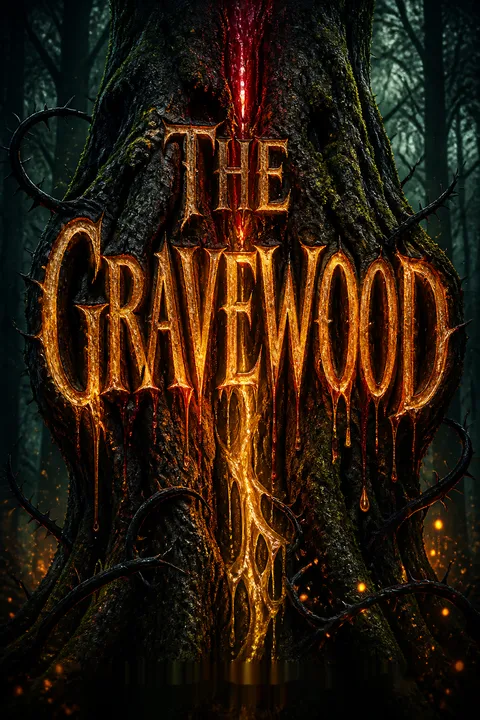
In the haunted Mercy Ridge, the northern stronghold for the undead, Oliver Lysander, the infamous Gravewood "devil," initiates desperate runaways, including Tristan, under threat of violence or transformation. In a chilling, quiet world governed by hunger and the fear of the Rot—a corruption that infects blood and mind—Shea Parker, a deaf girl from Little Hill, ventures with a wounded palm to Lysander's hearth, seeking a perilous bargain. A single encounter entwines their fates: she offers blood and secrets in return for hope, supplies, and safety. But with every promise, deeper currents of loneliness and need drive both toward decisions with costlier consequences than either understands.
Deals with the Devil
As missing girls' posters multiply, Shea struggles alone in a world reduced to scarcity. Her every step is shadowed by Little Hill's cured desperation, whispered trauma, and the memory of a vanished father and fading mother. The Rot is everywhere—a slow apocalypse that corrupts food, water, and the fabric of trust. Shea's day-to-day survival depends on careful trades and bolder thefts, but her connection to Lysander is dangerous, both for her own life and for those she loves. Guilt gnaws at her for the bargains she makes—even as she's drawn closer to the center of everything she should fear.
Sanctuary Marked by Hunger
Home for Shea is a place of both safety and terror, with her mother chained in a violent, unnatural hunger in the house's darkness—the consequence of drinking from the Gravewood. Escalating danger and exposure force Shea into increasingly risky and heartbreaking choices. When Asher, Camellia's brother and Shea's childhood friend, returns—now a trained soldier—Shea's lies about her mother's fate unravel dangerously. With a shotgun at the basement door and old friendships turned desperate, the line between loyalty and blackmail grows perilously thin.
Living With Ghosts
Every step Shea and Lysander take is shadowed by the deals and wounds of the past. Shea's relationships with Asher and Poppy are complicated by old promises, secrets, and years of feeling unwanted. Lysander, haunted by his own beginnings, works to outmaneuver his rivals to ensure the survival of his found family and his own tenuous humanity. Both are locked in battles against isolation—always just one wrong move away from being devoured by the forest or each other.
Mercy Boys and Betrayal
Mercy Ridge is a kingdom of outcasts, but even its heart is rotted by suspicion and violence. Lysander juggles pressure from the powerful southern vampire Keeling, subterfuge from would-be allies, and growing insubordination within his gang. The wounds—physical and psychological—multiply as the cost of survival rises. Nowhere is safe: Mercy is always conditional and violence inevitable as threats close in from both inside and outside the Gravewood's walls.
Pledged in the Shadows
As Lysander contends with emissaries and traitors, the tensions between freedom and submission burn at Mercy Ridge—a microcosm of the world's collapse into war and infection. Galvanized by exposure to the southern regime's threats and the raw hunger that drives all creatures of the wood, alliances are tested in blood. Shea's complicated relationship with Lysander quickly grows less transactional and more intimate, even as the rules of their arrangement become lines in the sand waiting to be crossed.
Bonds, Bites, and Secrets
Every feed leaves Shea and Lysander both more entangled and more vulnerable. The seductive power of the bite overtakes guilt and confusion, threatening their autonomy and control. Trapped between the protection Lysander offers and the growing suspicion from his lieutenant Cyrus, Shea's future edges closer to disaster—whether from Lysander's own growing instability or the mortal enemies closing in.
The Pull of the Gravewood
As attacks rise, both human and monstrous, the tension between hunger and control accelerates. Shea's secrecy about her mother's condition, the true fate of Camellia, and her role in Lysander's weakening control set the stage for tragedy. The lines between predator and prey blur, with the forest itself a living, hungry adversary and both Asher and Lys forced to reckon with what they would destroy or save for the people they love.
Hunters, Watchers, Wolves
Exile and pursuit are now the only certainties. Paris Keeling manipulates the northern and southern territories to bring Lysander to heel. The road trip south—toward the revel, the cure, and a reckoning—makes enemies of friends and allies of necessity. Deals are struck with guns, blood, and secrets, and the border between autonomy and monstrous compulsion is crossed again and again with each act of survival or affection.
Outlaws in the North
The road trip is one of necessity and suspicion: Asher, Shea, Lys, Poppy, and Camellia haunted by what they have lost and terrified of what they could still lose. Every town, every night brings new danger from both the living and the dead—traps laid by Paris, betrayal by Mercy Boys-turned-spies, and the ever-growing complications of hunger and blood bonds. The past follows every step: guilt, old promises, the possibility of one more terrible trade.
Monsters in the Family
Lysander's origin—a carefully manufactured apocalypse by Paris Keeling, his monstrous father—moves from rumor to reality. The party in the south is no simple confrontation, but an orchestrated ritual: Shea's very blood and heart, the linchpins for Lysander's transformation and the keystone for Paris's new world order. Shea is forced to face her part in the cycle: the uncanny echo of her father's disappearance, her mother's fate, and her own compulsion toward dangerous intimacy.
Rot Runs Deep
The long history of the Rot, the desperate searches for cures, and the legacy of infection catch up with every character: bonds are betrayed, mothers are lost, and the hunger always wins its due. No bargain is without its cost, and love itself borders on a curse as bonds of hunger, obsession, and violence threaten to annihilate everyone who reaches for survival or happiness outside the Gravewood's rules.
Cataclysm Unleashed
Paris Keeling's monstrous ambitions are exposed at the climactic revel—a decadent, predatory "party" that is actually a ritual to break Lysander's last shreds of restraint and humanity. Shea is both the catalyst and the target: her loyalty and blood, fruits of so many bargains, now serve as the key to awakening the true "age of the beast." The horror is intimate and cosmic, with every personal betrayal mirrored in apocalyptic violence.
Revelations in Red
In the sun-drenched southern mansion, Shea faces the full truth: everything—her mother's fate, Asher's betrayal under blackmail, Lysander's collapse into monstrosity—was orchestrated. Shea must decide whether to escape, to trade her life for her mother's, or to destroy the boy she loves. The battle is not just physical, but also a shattering reckoning of trust, regret, and the boundaries of self.
Cat and Mouse Moon
A bloodbath ensues: Lysander, sacrificed by her hand, and Shea, alive but deeply fractured, escape the burning disaster. Asher's own survival hangs by the slimmest of margins, his own betrayals and bargains torn into public view. Every victory hurts as much as every loss. No one is clean; no redemption is easy.
Dying for a Cure
Shea's quest to save her mother ends in shattering ambiguity, the "cure" for the Rot as much metaphor as medicine. Survival—individual and communal—is always catastrophic, bought by compromise and violence. Shea's attempts to repair, to atone, or to return home, are marred by loss and absence, and the boundaries of human and monster remain blurred.
All Things End Here
In the wake of the southern apocalypse, Shea, Poppy, Camellia, and the fading world they inhabit are left gutted and haunted. Asher faces execution, an ending befitting achingly broken promises. Lysander, transformed beyond recognition and hunted as a living curse, haunts Shea's memory even as she tries to forget. Every character is forced to live in the ruins their bargains built. The future is only as bright as the will to survive darkness.
Symbiosis and Survival
The Gravewood and all it stands for—that restless collision of predator and prey, curse and craving—remains, even as Shea and the survivors try to find a place in the ruins. The line between love and hunger is not erased but deepened. As new threats rise and old wounds fester, the book ends on the fragile hope that surviving is enough—or perhaps, that survival itself is just the beginning of another story.
Analysis
The Gravewood is a modern gothic tragedy that reimagines the monstrous as both curse and kin, using the language of blood and bargains as metaphors for adolescence, survival, and inherited trauma
At its heart, the novel is about the cost of agency—the price we are willing to pay for belonging, autonomy, or hope in a world designed for disappointment. Through Shea's deafness, the horror of the Rot, and the relentless betrayal among friends, family, and lovers, the book examines the limits of sacrifice and the impossibility of returning to innocence. Each relationship—be it Shea and Lysander's obsession, the broken promises between Asher and Shea, or the corrupted bonds of parent and child—asks what it means to choose who (or what) we become, even as the world tilts toward disaster. The cyclical violence, the hunger at the heart of love, and the constant recasting of savior as destroyer all serve to collapse the distance between hero and villain, turning survival itself into an ambiguous victory. Ultimately, The Gravewood leaves us with uneasy hope: that in the wreckage, new bargains can be struck—not of innocence regained, but of pain, transformation, and the brief, burning moments where love and horror converge.
People Also Read
Characters
Shea Parker
Shea is a deaf teenager from Little Hill, burdened with the legacy of abandonment by her father, the increasing inhumanity of her mother, and the collective guilt for the missing and lost in her ravaged community. Driven by need as much as by longing—be it for sustenance, batteries, family, and, ultimately, love—she's forced into impossible bargains to survive. Shea's journey is about reconciling her vulnerability with her drive, her self-loathing with her agency, and her attraction to danger—embodied most profoundly in Lysander. Shea's arc traces the slow, raw awakening to her own role as both catalyst and sacrifice, her commingled capacity for ruthlessness and tenderness, and her ultimately unresolved status as hero or victim.
Oliver Lysander Keeling ("Lys")
Raised in the shadow of the Gravewood and marked as its "devil," Lysander is both victim and agent of the world's monstrous infection. The product of dark family ambitions and his own desperate search for control, he schemes and manipulates to survive—a king among runaways, but always at risk of losing himself to hunger and the Rot. Lysander's obsession with control, with autonomy, and with the possibility of attachment war with his monstrous nature at every step. His relationship with Shea begins as transactional but evolves into a feverish, desperate love—one as much about self-destruction as protection. His psychological complexity is rooted in his inability to separate desire for intimacy from necessity, and his ultimate arc is a tragic unspooling of restraint in the face of orchestrated betrayal.
Asher Thorley
Once Shea's childhood friend and Camellia's devoted brother, Asher is shaped by both the pressures of military life and the burdens of a dying world. He is determined to save Camellia—even as it means bargaining with devils in both flesh and metaphor. For Asher, the terror of loss is matched only by the terror of being rendered helpless; every act of violence sits uneasily beside old loyalties and half-fulfilled promises to Shea. When manipulated into betraying his friends for the promise of family, Asher's arc is one of increasing self-loathing, culminating in self-sacrifice and the desperate, lonely need for forgiveness he may never receive.
Camellia Thorley
Camellia, once Shea's bright companion, is violently "transformed"—her absence the initial spark that sets the plot in motion. She exists as both symbol and person: a reminder of all who vanish into the Gravewood, of the lives altered by infection, and of the consequences of negligence, desperation, or misplaced hope. By the time Shea and Asher find her, Camellia is marked by the trauma of survival, her relationship to hunger and humanity as fractured as the world's. Her arc suggests that what is lost may not be fully reclaimed, especially in a world that swallows innocence whole.
Poppy Zahar
Poppy is the steady friend—eclectic, deeply caring, and fiercely protective. A voice of reason and conscience, she challenges Shea and Camellia to cling to hope and to each other. Her unspoken love for Camellia adds emotional depth, and her resilience in the face of horror is critical for the group's survival. She is the emotional glue, yet even she is not immune to trauma and loss, always forced to live at the ever-narrowing edge of endurance.
Cyrus Talbot
Lysander's trusted second, Cyrus is at once loyal and seething with resentment—a survivor who resents the choices that keep him subservient, as well as the softness he perceives in Lys. He is the voice of practicality, a necessary evil, and at times, a malignant force working from the inside to maintain brutal order. Cyrus' capacity for violence is matched by an occasional flash of chilling honesty and a consuming lust for control, especially as Lysander's grip on himself weakens.
Tristan Choi
Tristan is emblematic of all those coerced by the system into transformation, his initial pledge rooted in fear, sickness, and pressure. His betrayal as a spy—set in motion by the promise of a cure—demonstrates the devastating consequences of a world that rewards desperation with ruin. Tristan's arc is a warning to others: bargains with devils are never made on equal terms.
Paris Keeling
The southern vampire lord and Lysander's father, Paris stands as the grand manipulator—a man with vision for a monstrous "new order." Coldly charismatic and deeply strategic, Paris plays a long game of betrayal, ritual, and sacrifice. His love is that of a scientist's for his experiment; his ultimate aim is not salvation but transformation, regardless of suffering. Paris embodies the threat of power wielded without empathy—an omnipresent force who bends others' narratives to his own ends.
Egor van Haut
Egor is the outsider, the botanist whose scientific curiosity and personal losses have made him both potential ally and adversary. His love for his own lost son, his uneasy regret over his involvement with Lysander, and his willingness to barter Shea for a cure make him both pitiable and dangerous. Representing the failed hope of a cure and the limits of rationality in chaos, Egor exposes the ethical chasms this world creates.
Ivy Parker (Shea's mother)
Once Shea's solace and support, Ivy's infection and slow transformation embody the apocalypse's personal cost. Her fate—starved, chained, and ceaselessly hungry in her own cellar—haunts Shea with the horror of loss, the curse of inheritance, and the limits of love. Ivy's silence gnaws at the boundaries of grief and survival, her memory too tender to be borne.
Plot Devices
Blood as Bargain and Curse
The novel's primary engine is the perpetual negotiation of power through blood: it binds, betrays, and transforms. A bite is hunger or love, sacrament or curse; to offer blood is to offer agency, but at tremendous risk. Blood compels loyalty and obsession, but also destroys autonomy and will. Human relationships—platonic, familial, or romantic—are all recast as bargains, with feverish consent and bitter consequence.
Rot as Apocalypse and Inheritance
The Rot is literal and symbolic: it ruins food, blights families, and splinters the world into frightened enclaves ruled by violence and scarcity. It is also metaphoric for inherited trauma, generational damage, and the impossibility of true return to "before." The threat is as much internal as external, as hunger and infection warp love, hope, and the psyche.
Duality and Duplicity
Dual identities—devil/kind boy, lover/beast, parent/monster—are echoed in both narrative structure and relationships. Friends become foes, protectors become predators, bargains made for rescue lead to doom. The book frequently uses plot twists (bites made in love and violence; "cures" that kill) and unreliable bargains to force characters (and readers) to question where agency ends and manipulation begins.
Ritual and Fate
The recurring structure of parties, initiations, and ceremonies are both points of hope and sites of horror, designed to enforce the status quo or upend it with blood. The climactic "hunter's revel"—ostensibly a celebration—reveals itself as both trap and prophecy, orchestrated to force surrender of autonomy, the destruction of self, and the final collapse of resistance.
Silence, Voice, and Perception
Shea's deafness is not simply a vulnerability. It grants her unique entry points into violence and manipulation, as well as shelter from horrors that depend on sound or compulsion. Narrative shifts (between sound and silence, insight and misunderstanding, communication and miscommunication) become central metaphors for knowledge, vulnerability, and the fragile power of chosen family.
Intertextuality, Allusion, and Irony
The book's structure and imagery return again and again to A Midsummer Night's Dream, the Velveteen Rabbit, biblical motif ("mercy," "devil"), and the trappings of classical tragedy—destined betrayals wrapped in romance, every bargain both tragedy and transformation. Names and childhood stories haunt the story as fateful blueprints for the present.
Psychological and Bodily Transformation
The line between human and monster is crossed and recrossed: infection remakes the body, desire remakes the mind, and love is never "pure," but reshapes all who attempt it. "Turning" is at once empowerment, damnation, and a metaphor for the ways we become what we need to survive.
Download PDF
Download EPUB
.epub digital book format is ideal for reading ebooks on phones, tablets, and e-readers.








































