
Plot Summary
Fire and Spark
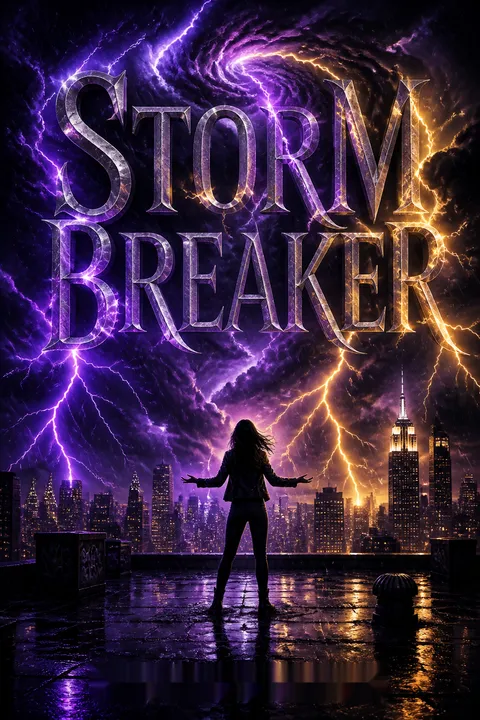
In a storm-battered Manhattan, Poet Graves is the reluctant heir of House Fiama, a society built atop old-world ruins and restrictive tradition. Engaged to the callous Knox, her life is ruled by duty and the constant threat posed by the city's deadly Spark storms, which annually kill the unprotected and power the city's grid through General Sol and her guard of Storm Breakers. Poet feels the Spark differently—drawn to the electrifying pain and euphoria the storms bring her, harboring a secret she must keep at all costs: she, too, is a Spark Keeper, able to survive the storms. This burden is isolating and dangerous, for Keepers are hunted and executed by the ruling Extinguishers if discovered. Her sense of otherness, and the demands of lineage, set the stage for everything that follows.
Rules, Rivals, Rain
Poet's world tightens with the start of Amery Academy, where ideals of unity dissolve into House rivalries, social maneuvering, and the pressure of legacy. Alongside friends Trinity and Edward—and pursued by rivals like Winter and Lacey—Poet must navigate new academic and emotional terrains. Initiations loom: rites meant to test not just allegiance, but conformity. At home, parental expectations and haunting physical scars from childhood abuse remind her that rebellion might cost her everything. As she absorbs Spark in secret to sate her addiction and keep her sanity, storms rage, and so does the quiet violence of survival. Even friendships flicker beneath the threat of betrayal and the specter of being different in a world built on strict divides.
Academy's Shadowed Halls
At Amery, divisions sharpen as students split by House, legacy, and wealth. The arrival of Rook, a tattooed Solitude from the Wastes, unsettles the carefully ordered social structure. His raw presence and outsider status inflame tension—especially as Poet becomes his academic partner. Amid House games and ritualized hazing, Poet must maintain her façade while absorbing Spark storms in the shadows. Her engagement to Knox—a hollow bond—feels ever more claustrophobic. But the magnetic pull between her and Rook kindles curiosity and a sense of kindred strangeness, rousing questions about strength, mercy, and what is truly monstrous: those outside the wall, or the secrets one keeps inside.
Storm Breaker's Secret
Poet's desire to become a Storm Breaker intensifies, even as her father forbids it. After rejecting the first, brutal Fiama initiation—killing a prisoner on command—she instead chooses Aria's "tower of fire" trial, risking disgrace. Passing that, and feeling the exhilarating pain of Spark, she's both empowered and afraid. News of students dying in failed initiations underscores the stakes. Rook's own prowess emerges during his trial, and reluctant trust forms between them. Meanwhile, the rules are rewritten for House pledges, forcing Poet to choose between inherited duty and forging a new path. Every trial forges new bonds and betrayals, as the cost of survival is revealed to be higher than anyone admitted.
Burning Bonds, Chosen Paths
Poet's pledge to Aria, against House Fiama's wishes, cleaves her from family—and from Knox, whose anger and violence erupt. Trinity, suffering her own wounds from failed trials, begins drifting toward Aria's Extinguisher squad. Poet, outcast, leans into honest friendships with Domino and Journey—other society outsiders—while her mother's support remains silent. Rook draws closer; their mutual isolation a haven, yet Poet's ability and addiction to Spark become more dangerous as Extinguishers patrol ever more aggressively for infected Keepers. Together, Poet and Rook discover the peace possible in their shared secret, even as House and heart threaten to tear them apart.
Threads of Betrayal
With houses fracturing and lines of loyalty constantly redrawn, betrayals cut deep. Trinity's allegiance shifts as she joins the E-squad, Aria's infamous Keepers-hunting corps. Friendships fray as fear of exposure increases, suspicion clouds every gesture, and small acts of violence mark Poet's daily existence. When Extinguishers arrest a former roommate, Lacey, during a party, Poet misses exposure by a razor's edge. Secrets become currency; Poet even steals her father's key card, plotting with Rook and Edward to break into The Shield's files. Yet in these hard spaces, Poet and Rook's bond—something gentle and desperate—grows, as does the sense that the city's greatest threat may come from within.
Trials of Blood and Strength
Cadet training becomes the locus of Poet's hope and punishment: arduous physical regimens, harrowing Spark exposure, and forgiveness in the face of injury and exclusion. Poet is assaulted, her childhood bear ripped to shreds—a last link to a lost innocence—and Rook repairs it in her moment of collapse. Winning the Storm Guard's final exam, she finally earns a place among those sworn to protect. Yet even as she achieves her dreams, violence outside the city surges: Keeper murders, increasingly frequent and brutal, are met with new Extinguisher technologies. Rook's origins and motivations become clouded, as both he and Poet confront the true cost of power—enduring pain and carrying others' wounds.
Smoke, Shards, and Needles
Preparing for the annual masquerade ball—both party and prelude to the heist—Poet, Rook, and Edward execute their dangerous plan. Using a stolen key card, they infiltrate The Shield's secure computers during the chaos of a Blood Storm. The revelations are paradigm-shifting: video reveals that Poet's brother, Raine, was a Keeper, and rather than dying at the hands of Solitudes, was removed by General Sol herself, with the complicity of House leaders. Simultaneously, Rook's past is laid bare—he was present the night Raine vanished, and his allegiance proves turbulent. Trust among Poet's small circle is shattered; the city's justifications for fear and execution appear more monstrous than anything beyond the Wall.
Thorns Under Silk
When Trinity, once loyal friend, now Extinguisher, betrays Poet—publicly naming her as a Keeper at the ball—all hell breaks loose. Poet and Rook are forced to flee by rooftop and net, hunted by Guards and former friends alike. Knox, full of jealousy and desperation, physically attacks Poet in a last twisted display of ownership. Poet, for the first time, refuses to be victimized, fighting back as their lives become a gauntlet. Even in victory, the cost is high: the city's fabric is tearing, and the old safe havens of family, House, and tradition betray or abandon Poet entirely. Escape into the Wastes, guided by Rook's shadowy knowledge and a secret exit, becomes the only way forward.
Ascension and Exile
Pursued into the Wastes, Poet must choose between remaining prey and trusting the only ally left to her—Rook, mortally wounded and vulnerable. As she stitches his wounds and cares for him, the two face the barren beauty and danger of the world beyond the city. Poet's survival is no longer theoretical; her strength is fully claimed, not gifted by lineage but demanded by her choices. Rook's own story emerges—he is more than he seemed, with ties to other Keepers and hidden allegiances—yet it's their shared resilience, their willingness to choose each other out of love and necessity, that gives hope for what's next. For the first time, Poet is not running from, but toward, her own becoming.
The Heart of the Storm
As storms rage—literal and social—ravage New Manhattan, Poet's trajectory arcs toward something transformative. She and Rook's union, transgressive and passionate, reveals a new kind of strength: two Keepers finding rare peace together, able to weather Spark storms without the madness or agony that's claimed others. If the city's cruelty is about maintaining control through fear, this forbidden relationship hints at what might be possible if its lies are exposed. Poet's journey, from hidden victimhood to fierce survivor, redefines what it means to protect, to belong, and to love.
Ruins and Revelations
In exile, Poet discovers through Greta—a Hollow connected to her childhood nanny—that much of what she accepted was built on murder and hiding: her own father killed to conceal Poet's Keeper status; General Sol and The Shield maintained lies to root out, not protect, unique abilities. Poet learns her brother survived the Solitude attack, only to be taken by General Sol, revealing the emptiness of supposed safety and the hollowness of House loyalty. Truth is a knife but also a key, pushing Poet towards whatever new world can be built from honest ruins.
Outcast Among Wolves
Poet, once sheltered, now an outcast, becomes inured to the cruelty of others. Roommates sabotage her, friends fall away, and The Shield's new devices for identifying Keepers make existence a daily terror. Yet even as her world narrows, she finds unlooked-for camaraderie with Domino and Journey, sharing solidarity among the outcast. Rook's devotion remains an anchor; within their private world, hope flickers: someone who will choose her, fight for her, and not merely for a House or duty. As the grip of power tightens, and justice is revealed as little more than violence, Poet chooses her own tribe.
Descent Into Wastes
Betrayed, stunner-paralyzed, and carried by the bleeding Rook through tunnels and shadows, Poet is forced to trust when all certainties have fallen away. The Wastes—once the bogeyman—become both tomb and promise. Rook's world is not as advertised. Commandos greet their arrival: not saviors, but another set of captors, revealing new complications and truths yet unspoken. Freedom remains elusive, but within the darkness, resilience and selfhood are forged—not given by societies, but claimed.
Trust Broken, Promises Forged
As the adrenaline fades, Poet stitches up Rook—as he once did her bear. Laying together among the quiet trees, bruised but alive, they allow themselves finally to be known. Promises are made: of truths to come, of a future neither can define, but one chosen, not inherited. Poet's great act is not in storm-breaking, but in refusing old scripts: no more sacrifice or smiling through pain, but fierce, mutual protection. The person she becomes is no longer forged by blood or by Spark, but by the act of choosing—and being chosen in return.
Blood Over Stone
In the face of city collapse—Blood Storms, Keepers exposed, violence wielded by House and Shield alike—Poet claims her fate. Battles with Knox finish with her, not as victim, but as fighter; with Trinity, as tragedy—a friendship ended in pain. Rook, too, is revealed in contradiction: fighter, lover, liar, protector. What unites all their fates is not the founding blood, but the shared willingness to bear the world's violence and survive. As tunnels collapse behind them, and the city becomes a story, their lived truth—messy, hopeful—prepares them for what lies ahead.
Masked Truths Unveiled
In the aftermath, new enemies rise. Poet and Rook, hunted, are met in the Wastes not by freedom, but by another circle of scrutiny and blame—a new commander, new laws. Even beyond the city, society's grip endures. Yet for Poet, the journey is clearer: she loves, she endures, she fights with both torch and tenderness. Everything up to now has only been prelude. The future remains unwritten—but for the first time, she is the one holding the pen.
Analysis
Storm Breaker reanimates dystopian fiction, fusing high-stakes survival, political intrigue, and the ache of found family into a story as electric as its setting. Beneath the adrenaline and romance, Tuli's novel deconstructs the machinery of repression: the violence institutions wield to maintain order, and the psychic cost to individuals coerced into destroying not just each other, but themselves, in service to "greater good." Poet's journey is a masterwork in trauma and agency; her transformation—rejecting the roles of dutiful daughter, compliant partner, and hidden "monster"—challenges both gendered expectation and the dichotomy of villain/victim. The city's initiation trials and relentless classism expose how systems reproduce their own cruelty, even among friends. Yet the real revolution is personal: Poet's choice to embrace pain as power, to love against rules, and to see her darkness as her own. Romance, here, is not merely escape, but rebellion—a refusal to let others define what makes a monster or a hero. Storm Breaker insists that freedom is earned by those who are willing to name, survive, and transform the worst of themselves and the broken world they inherit. And while hope is fragile, Tuli asks us to believe that creation is possible even among ruins—so long as at least two outcasts refuse to surrender their spark.
Review Summary
Storm Breaker receives an overall 4.33/5, with readers praising its nostalgic return to 2000s YA dystopian fiction, drawing frequent comparisons to Divergent and The Hunger Games. Highlights include a compelling brown-skinned FMC named Poet, a broody love interest in Rook, and creative climate-change world-building set in a flooded New Manhattan. Many found it fast-paced and addictive, though some critics noted predictable plot beats, flat side characters, and inconsistent writing. The forbidden romance and female empowerment themes resonated strongly, and most readers eagerly anticipate the sequel.
People Also Read
Characters
Poet Graves
Poet is the daughter of House Fiama's powerful, abusive leader—a girl shaped by dualities: duty and rebellion, yearning and conformity. Betrothed against her will, she hides that she is a Spark Keeper, able to survive the city's deadly storms. This ability is both ecstasy and curse: she craves it like an addiction, yet must hide it under pain of death. Poet is fiercely loyal to friends, compassionate to strangers, but increasingly ruthless in her pursuit of selfhood. Her psychological journey is one of trauma, emerging strength, and ultimately agency—she moves from pawn to storm breaker, transforming her curse into the power to choose, to fight, and to love.
Rook Athira
Rook, first encountered as a Solitude—tattooed, formidable, and contemptuous of society's pretensions—embodies the "other." Underneath, he is shaped by loyalty, secrets, and the need to survive at all costs. His immunity to Spark marks him as like Poet, but his motivations are initially unclear: is he a spy, a rebel, or a kindred spirit? His past is revealed in fragments: survivor of violence, bearer of a mission, witness to Poet's brother's disappearance. Rook's growth is entwined with Poet's; his devotion emerges not from tradition but from trust built through shared pain, truth-telling, and a belief that two outsiders can remake the world together.
Knox Arden
Knox represents everything constraining Poet: entitled, charming, and dangerous, his need for control manifests in cheating, emotional abuse, and moments of outright violence. His relationship with Poet warps from childhood friendship to toxic partnership to adversarial fixation. Ultimately, Knox's downfall comes not through noble sacrifice or redemption, but by becoming a casualty of the very house politics and repression he worked to enforce. He is the scion the system produces: willing to hurt others to avoid being seen as weak.
Trinity Robins
Trinity begins as Poet's fiercely loyal best friend, sharing childhood secrets and school triumphs. Wounded by failed trials, abandoned by family, she seeks power and safety in Aria's E-squad—the Extinguishers, tasked with hunting Keepers. Her betrayal of Poet, though heartbreaking, is more an act of self-preservation than malice. Trinity illustrates how systems of fear and loyalty can turn victims against each other, and how the longing to belong can corrode bonds of love.
Domino Parsons
Born outside Society's elite, Domino earns her place through merit and grit. Her friendship offers Poet a mirror: what might a chosen family or true loyalty look like, untainted by obligation? Domino withstands bullying and exclusion with humor and tenacity, becoming a touchstone for Poet—proof that kindness and belonging are possible, even in exile. Her survival reinforces the theme that our chosen bonds may be more meaningful than inherited ones.
General Sol
The city's legendary Spark channeler, Sol is worshipped as savior but is complicit in the regime's propaganda and violence. Her immunity to Spark, her role in Poet's brother's disappearance, and her authority over life and death make her both ideal and monster. Sol represents the ambiguity of leadership in a broken world: is power justified by necessity, or does it always corrupt? Her silence and secrets play a pivotal role in the city's ongoing dystopia.
Edward Chu
Edward is the steady, intelligent companion navigating between personal loss and technological prowess. His devotion—first to Trinity, then to Poet—serves as a lifeline in a world where alliances are always shifting. His willingness to help with the break-in and his heartbreak reveal the costs of being good in a treacherous world. Edward's arc is one of quiet resilience, and the need to find new meanings in the aftermath of betrayal.
Grady Graves
Poet's father is dictator and enforcer, a man whose own wounds have become weapons with which he shapes those around him. His love is transactional; his discipline, monstrous. He chooses House before family and power before love. Yet, in rare moments, he reveals the depth of what is lost when power supersedes care. He is not merely villain, but a product of a world wound tight with fear—and by the end, Poet's willingness to leave him behind becomes reclamation.
Greta Parsons
Greta is key to unlocking the rot at society's center. The daughter of Poet's childhood nanny—herself a victim of Grady's violence—Greta's existence bridges past and present, truth and lie. Her revelations force Poet to confront the cost of secrets kept in the name of safety; Greta's rage is a rightful indictment of the system's cruelties, and her presence a haunting reminder that even accidental survival comes at the cost of others' suffering.
Journey
Journey, Domino's energetic friend, survives as the perennial outsider—her cheer is a mask over hard-won self-sufficiency, and her presence grounds the gravity of their shared dangers. She demonstrates that community can be built from unlikely source material, and that the will to live and find meaning surpasses the restrictions of heritage or expectation.
Plot Devices
Initiation Trials and House Loyalty
The plot is driven by the city's tradition of initiation: students must pass a trio of brutal, often fatal trials to win entry into Society's Houses. Each trial is both a literal obstacle and a psychological crucible: alternatives (like switching Houses, or refusing to kill) have real consequences, upending relationships and hierarchy. These trials also function as rites of passage and metaphors for self-invention. As Poet's path diverges—choosing mercy during Fiama's test, self-sacrifice in Aria's—they chart her psychological growth from resigned pawn to self-determining agent. House loyalty, sometimes arbitrary and always dangerous, forces characters to weigh kin, love, and survival.
Hidden Powers and Persecution
Much of the suspense derives from Poet's need to conceal her Keeper abilities—a supernatural plot device explored through foreshadowed close calls, mounting Extinguisher patrols, and increasingly sophisticated Keeper-detection technologies. Mix in Rook's similar but mysterious strength, and the foreshadowing becomes multiplicative: the sense that two "monsters" might not be monstrous at all, but evolutionary. The city's cycle of scapegoating, execution, and repression is maintained as both a plot engine and a metaphor for all marginalized identities.
The Heist and Unveiling of Truth
The second half pivots into a dystopian heist as the trio (Poet, Rook, Edward) break into The Shield's computers during the masquerade—using distraction, stolen key cards, and complicit staff to gain entry. The narrative structure here borrows from classic thrillers, with heightened tension, split perspectives, and surveillance as both literal risk and theme: who owns the truth, and who benefits when secrets remain buried? The heist reveals not just personal secrets (about Poet's brother or Rook's loyalties), but systemic ones: the city's safety is built on violence and lies.
Betrayal and Flight
Betrayals—especially Trinity's—are foreshadowed throughout and detonated at the story's climax. Poetry's flight with Rook moves through rooftop chases, storm-fueled havoc, and final escape through labyrinthine tunnels. The plot device of pursuit recasts internal struggles (for selfhood, forgiveness, or trust) as physical trials, making Poet's resilience and capacity for violence, and mercy, tangible. The story's structure thus mirrors its emotional arc: risk, escape, and the ever-present threat that everything might collapse.
The Storm as Metaphor
Storms (Empire, Blood, Emerald) serve as both world-building detail and as recurring metaphors. Spark is literal power, social threat, and personal addiction—it's what makes Poet and Rook different, but also what binds them. Sharing the experience of absorbing storms together is a device for intimacy, trust, and healing: their ability to withstand pain when united (to be "untouched by madness") recasts trauma as chrysalis, and love as the rarest shelter.
About the Author
Other books by Nisha J. Tuli


Download PDF
Download EPUB
.epub digital book format is ideal for reading ebooks on phones, tablets, and e-readers.








































