
Plot Summary
1. Prophecy Amidst Salt Mirrors
Soldier Elegy Ahn and Talusar general Rava Vidar are summoned by augurs to the sacred Cenobium, standing unprotected on a salt flat. There, a fractured, ambiguous prophecy unfolds: one will lead their nation to glory over the other, but they do not know which. Through a kaleidoscopic ritual, each is told their fate revolves around a fateful third: a man Elegy will come to love, though she already loves her husband, Shir. The prophecy is storm and tumult, a fulcrum balancing on three voices—each a bloodline's blade edge, setting Elegy and Rava on a path toward collision, victory, or devastation. In leaving, Elegy's old life shatters and her sense of self is supplanted by an inescapable, mythic weight.
2. Fever's Gift and Sacrifice
In a planet scarred by the Fever—a virus that kills, resurrects, and bestows supernatural gifts—the Talusar build an empire upon devotion to its cruel whim. Cedre, sealed and obsessed with survival, rigidly avoids infection. Elegy's people see power as a curse, Talusar as a godsend. Skirmishes and grudges are older than memory; loved ones are both shields and potential traitors. The Fever's gift—precognition, memory-reading, alteration—is a knife that divides families, giving rise to cults, knights, and exiles. Elegy's unease blooms as the prophecy demands she forfeit peace and embrace a battle she neither sough nor understands, while Rava is forged relentlessly by a faith that sanctifies pain.
3. Oath of the Traitor's Son
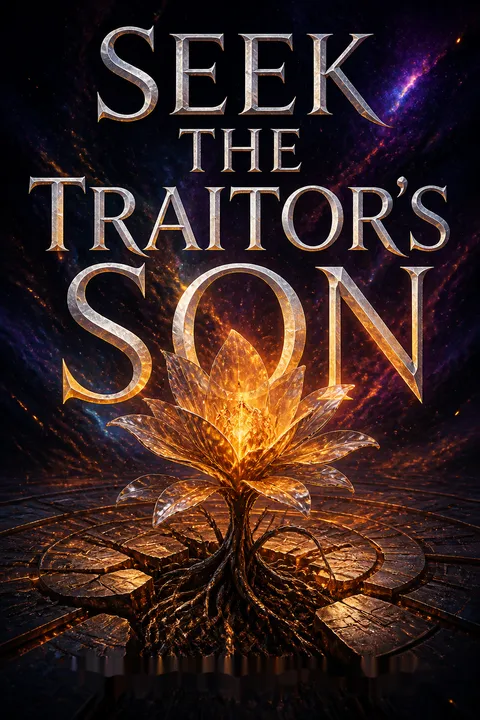
Theren Forint, the hidden son of a Talusar exile and a Cedrae teacher, resists his fate but is summoned to swear the Knight's Oath to Elegy. His life, his sense of citizenship, have ever been transactional: considered a liability, a shield and not a weapon, a child exiled and assimilated. In a public ceremony beneath the looping branches of Cedre's history, Theren kneels and binds himself to Elegy. On the very night of his induction, Talusar soldiers breach the walls; chaos descends, prophecies reel, and Theren's first duty is to choose—fight, flee, or betray. His actions fracture bonds and decide who inherits hope or guilt.
4. Thunder at the Getty
During the interval of fragile peacetime, Cedre's institutional confidence is violated by an unexpected Talusar attack at the sacred Getty, killing Elegy's mother, the Sword, and her husband Shir. Rava Vidar orchestrates the violence with mythic precision; the prophecy's storm unleashes loss and numb terror. Elegy is yanked from passive subject to hunted target, and Theren—from reluctant Knight to accused traitor. The survivors' world changes in a night, echoing torments of the Fever: some revived, others gone forever. Elegy cannot grieve—she must run, grasping at what family remains, stunned by the future's cruelty.
5. Augur's Warring Futures
Elegy and Rava, each given their own slice of prophecy, spiral into investigations and self-doubt. The augurs reveal that the fulcrum—three persons in harmony—will tip fate. One is a Vidar, one tastes Cenobium salt, one brings death and love. Elegy, already broken by the loss of Shir, must accept another deep betrayal and find the third voice foretold. Across fractures old and new, prophecy incites action: betrayal becomes necessary, doubt breeds resolve, and the riddle of three echoes in every hardship—offering both hope and warning.
6. Shattered Bonds, Uncertain Choices
Theren, the son of exiles, finds himself the focal point of competing ideologies. Consumed by guilt—his "Coward Knight" moment at Getty—and by the tangled loyalty to his mother Kesia, who played both sides, Theren and Cedre's remaining Knights are forced into the desert. There, knights and family are tested: infected with Fever, betrayed by allies, forced to choose comfort or conviction. Memory is both wound and anchor. Far from their home, what remains of hope hangs upon oaths and the possibility of second chances.
7. Exile and Human Shields
Knights—children of exiles—are pressed into service as pawns, shields, and symbols, not fighters. Oath-sworn, they exist between states and identities, always suspect and never quite belonging. Their loyalty is tested not just in action but in the pain of being forgotten, manipulated, or forced into sacrificial roles. The Cedrae weaponize trauma and fate, their most vulnerable pressed forward as living proof of progress, but always kept at arm's length. For Elegy and Theren, this enforced in-betweenness is agony and armor.
8. The Infection of Memory
Theren and his companions are forcibly infected with the Fever, an ordeal both mournful and hallucinatory. Some die, others revive "new" and marked, their previous selves sacrificed for survival. These resurrections change not only the body but the mind: new powers, suppressed memories, knowledge that wounds. In this crucible, Theren's true nature takes root—he can read emotions as others read text, his pain deepened by visions of past and loved ones lost. Each test is a death unto itself, and the revived must learn whether hope survives the breaking.
9. Strangers in the Garden
Among ruined ships and secret gardens, characters chase the shadows of strangers: scraps of metal that don't match Earthly elements, plants that bloom only by the touch of the "traitor's son." History hints at interstellar contacts and cosmic invitations, but misunderstanding and fear—augurs, priests, governments—distort any path toward new meaning. Science and myth, plant and blood, dream and memory all entwine as new threats, mysteries, and revelations promise further upheaval.
10. Diverging Paths of Survival
As Elegy and Theren are driven apart by necessity, family ties and wounds fester. Elegy forges an outlaw's life with her Talusar-born foster sister, Hela, as a Scout. Theren's memories and loyalties are repeatedly erased, altered, and sold. Against the backdrop of approaching war, each must redefine what survival means. The lines between traitor, hero, and wanderer flare and blur—choice and destiny fighting for dominance in hearts still aching for home and a future unclouded by prophecy.
11. Beneath Valla's Shadow
Risking everything, Elegy infiltrates Valla, relying on false identities and Scout skills honed in exile. She is swiftly captured and interrogated, only to discover Theren alive—ostensibly Rava's joyless truthsayer, but his own man in disguise. Their fragile reunion challenges both: the agony of past betrayals, the reality of love born from chaos. Together, battered but unbroken, they escape, carrying not just wounds but the seeds of a new rebellion—one shaped by trust and the necessity of uncovering what must come next.
12. Knight, Hope, and Butcher
The prophecy's triangle finally closes: Elegy, now a symbol and soldier without an army; Rava, the Butcher, tyrant and victim both; Theren, once traitor's son, now fulcrum. Each has lost home, kin, lovers, and faith; each finds meaning in the other's willingness to risk everything. Love is no longer a salve, but a spark—enough to ignite both hope and devastation, enough to bring out the best and worst in each. As war looms, it becomes clear that only by confronting the paradox of destruction and compassion can Cedre's future be chosen.
13. The Fulcrum's True Shape
The prophecy resolves: to tip the fate of nations, the fulcrum must unite three—"Vidari name," "Cenobium salt," "death and love." What first seemed abstract is literal: Theren, Fenn, and an augur, or perhaps Elegy herself if she dares drink the Fever's cup. Only possession of all three ensures hope; otherwise, the future belongs to the Talusar. New alliances emerge amid loss, sacrifice, and moral ambiguity. Destiny names both villain and savior among them—reminding all that power, especially the power to love and die, is the axis on which the world turns.
14. The Blooming of Betrayal
As the ultimate threat to Cedre—biological, spiritual, and existential—erupts, the intertwined destinies are further complicated by conspiracy, cosmic inheritance, and the truth of Theren's parentage. Worlds intersect: alien legacies, hidden technology, plants from beyond, and a patternless code only the traitor's son and his kin can break. The mystery of the bloom, a plant that responds only to Theren, leads to a contact across worlds and a summons to a "doorway in the stars." Betrayals flower as much from necessity and fate as from intention.
15. Truthsayer in Chains
Theren's gift of emotional reading places him in the crosshairs of every claimant to power. He is both indispensable and suspect: tortured for the secrets he keeps, further changed by every exposure to suffering. Rava and her lieutenants aim to control him; Cedre's leaders eye him with suspicion or seek his talents for their own ends. Truth is weapon and poison; the mind is battlefield and prize. Only through recovery of lost memories, and the difficult task of trusting others, does Theren claim agency.
16. Love After Ruin
In exile and on the run, Elegy and Theren face not only pursuing enemies but the wounds left by past relationships. Love between them is a slow risk, haunted by the dead—particularly Shir—and by the sense that to move forward is to betray what once was sacred. Desire and vulnerability become both medicine and scar. Amid sleepless nights, confessions, and shared silences, the possibility emerges that healing is not only possible but necessary for hope.
17. Siege on Cedre Station
The attack long foreseen comes not as invasion but as infection: the Talusar, aided by traitors and by the manipulation of ancient technologies, unleash priests of the Fever upon Cedre Station. Mass panic, suffering, and devastation test every bond. Elegy and her allies race to identify the threat, decode the augurs' messages, and save what can be saved. In the chaos, acts of mercy and ruthless strategy coexist. The choices made now will echo through generations—will they sacrifice freedom for peace, or risk everything on one last, impossible chance?
18. The Doorway in the Stars
With the Sundial poised to journey beyond the solar system, the threads converge: Theren's parentage revealed as interstellar, the plant's cosmic signal decoded, augurs' roles clarified. Elegy submits to the Fever, risking her life for future-seeing power necessary to guide Cedre's escape. Love—messy, haunted, defiant—survives amid death and resurrection, carrying with it both the memory of loss and the promise of what is yet unknown. The trio of prophecy steps forward, ready or not, into the darkness, carrying the hope of their world with them into the next.
Analysis
Veronica Roth's Seek the Traitor's Son is a layered, emotionally charged hybrid of dystopian fantasy, romantic epic, and philosophical myth. At its heart lie urgent, contemporary questions: Is hope an intrinsic power, or is it manufactured by circumstance and narrative? What is the moral cost of survival—of leadership, of loving again after shattering loss? The story's dystopian world is both unique and sharply allegorical, drawing on pandemic anxieties, cycles of violence, and inherited trauma. The Fever is both literal pandemic and metaphor for cultural amnesia, personal transformation, and the randomness of survival—raising uneasy questions about who gets chosen and why. Roth's blend of prophecy and unreliable narration highlights how stories can be both prison and salvation, how the "truth" is always a negotiation between memory, desire, and power. Love is not redemptive in a simple sense, but transformative—it is the "fulcrum" upon which fates balance, requiring sacrifice but also demanding the courage to choose again after loss. The cosmic subplot—alien heritage, invitations to join a vaster order—reminds readers that all conflict, even at its most insular, occurs on a precipice of something greater. Ultimately, Seek the Traitor's Son dramatizes how the quest for a future is forged through the tension between fate and will, betrayal and forgiveness, and the necessity of risking transcendence. The lesson is not that prophecy—personal or collective—can save us, but that in the act of forging meaning from chaos and loving despite it, we become worthy of the worlds we hope to inhabit.
Review Summary
Seek the Traitor's Son receives overwhelmingly positive reviews, averaging 4.21/5 stars. Readers praise its rich worldbuilding, compelling dystopian sci-fi-fantasy blend, and frequent Dune comparisons. The main characters Elegy and Theren are widely beloved, with the audiobook's full-cast narration receiving particular acclaim. The most common critique centers on the romance feeling rushed past the halfway point, transitioning too quickly from slow-burn to fully developed. Despite minor pacing concerns, most reviewers eagerly anticipate the sequel in this duology.
People Also Read

Characters
Elegy Ahn
Elegy is Cedre's "spare," a soldier comfortable with danger but unprepared for leadership. Raised apart from her official mother (the Sword) and haunted by the loss of her father and later her husband, Shir, Elegy is both fiercely loyal and deeply independent. She is forced by prophecy to be Cedre's hope, a role she resists due to trauma and guilt—but steps into with authenticity, making choices on gut and compassion. Her relationships with Theren and Hela reveal vulnerabilities she would otherwise hide; she is a reluctant leader who learns, painfully, that courage is a choice and love a risk, even when prophecy binds her to acts of betrayal.
Theren Forint
Theren embodies the conflict between identity and duty. The son of a Talusar exile and a Cedrae citizen, he is never fully at home. His powerful Fever ability—reading emotions and "truths"—renders him both asset and outsider, manipulated by both Cedre and the Talusar. Guilt, particularly over perceived cowardice and the deaths of comrades, shapes his every interaction. Yet he is deeply empathetic, seeking belonging while guarding his own wounds. As "the traitor's son," he is both the fulcrum of prophecy and a man learning, slowly, to forgive himself enough to move forward.
Rava Vidar
Rava is both villain and victim, shaped by Talusar myth and the burdens of conquest. Endowed with the rare Fever gift of seeing the deep past (epocha), she is compelled by prophecy to greatness, yet repeatedly violated by the moral costs of her ambitions. Her relationships—with her fanatical mother, with her lessers, and with Theren—are transactional, sometimes cruel, sometimes vulnerable. She sees herself as actor and pawn, unsure whether her victories are genuinely hers or only a script written by fate and others' expectations.
Hela Tausia
Hela is a Talusar-born survivor spirited away from infection and conscription by Elegy's father. Sharp, irreverent, and practical, she refuses to be defined by Cedre's suspicions or her own painful inheritance. As Elegy's chosen sister, she supports—and tempers—her, serving as conscience, comic relief, and strategist. Hela's astronomical curiosity and interactions with alien artifacts provide literal and symbolic bridges between worlds, while her pragmatic approach to violence, memory, and loyalty grounds the story's more mystical themes.
Shir Alexios
Shir, Elegy's husband and fellow soldier, serves as the story's conscience and wound, symbolizing both the fragility of peace and the tragic cost of prophecy. His death at Getty catalyzes Elegy's plunge into guilt, rage, and reluctant destiny. His memory shapes Elegy's standards for courage and mercy, and his "ghost"—whether literal or figurative—accompanies her through pain and renewal.
Kesia Forint
Kesia is at once a symbol of Cedre's refugee bargains and the embodiment of divided loyalties. Her choices—defection, bargains, betrayals—stem not only from survival but from a pragmatic devotion to family (though not always in the ways her children wish). Her relationship with Theren is fraught, full of tender intention and devastating consequences. As the link to extra-terrestrial legacies and secret plans, she is both architect and pawn of tragedy.
Fenn Kovek
Fenn, one of the few Knights, is essential to prophecy as an epocha (seer of the deep past) and as a symbol of friendship betrayed and redeemed. Wry, stubborn, and often abrasive, Fenn's relationship with Theren is a poignant blend of rivalry, intimacy, and loss. His ultimate fate underscores the costs of fighting fate, and the price of knowledge, resilience, and undesired reverence.
Orda Selio
Orda, first a trainer in the Talusar fighting arena, then a reluctant supporter of Cedrae, embodies the hard-earned wisdom of survival. A practitioner of compassion through pain, he is resourceful, world-weary, and skilled at reading battle and people alike. His connection to Theren and Fenn is that of chosen family—he offers hope and tactical guidance in lieu of sentimentality.
Larke Rosyk
Larke, Elegy's half-sister and the Sword's true heir, stands as a figure of institutional power, burdened both by expectation and by Elegy's reluctant stardom. She is driven, calculating, and often unable to transcend her own traumas and the political game. Her relationship with Elegy is both adversarial and supportive, shaped by rivalry, jealousy, and buried care. Her failure (or refusal) to fully heed prophecy emerges as both a flaw and a survival strategy.
Augurs (Collective)
A chorus of future-seers, the augurs are less individuals than narrative forces: they shape history, manipulate the powerful, and embody the story's theme that knowledge is never absolute. Whimsical, adversarial, and enigmatic, their actions spark every major turn—sometimes through guidance, sometimes through deliberate confusion. Their relationships with Elegy and Rava crystallize the narrative's core tension between fate and freedom.
Plot Devices
Prophecy and Fulcrum
The prophecy—deliberately fragmented and misinterpreted—frames the entire narrative. It promises inevitable victory to either Elegy or Rava but never reveals which. Its "fulcrum of three" (Vidari blood, Cenobium salt, a bringer of death/love) drives alliances, betrayals, and personal sacrifice, refracting the characters' choices through ambiguity and cosmic irony. This unresolvable tension between free will and predestination powers decision points, forces betrayals, and generates both tragedy and desperate hope.
The Fever as Metaphor and Engine
The Fever is not only a pandemic but also a mechanism for memory, prophecy, erasure, and resurrection. It bestows powers (precognition, retrocognition, emotional reading), divides societies, and functions as a test of faith and self. The Fever's randomness (fifty-fifty survival) is the planet's dire fate and cruel lottery. It also literalizes change, rebirth, and the necessity of letting the past die to embrace a new self—a pattern repeated in love, war, and nationhood.
Memory Manipulation and Erasure
Throughout the novel, personal and collective memory are weaponized: erased, altered, and returned. Characters struggle to recover lost memories, sort false from real, and resist the violence of monsters who would edit history to suit their interests. Memory's fluidity—emotional, subjective, shared—serves as counterpoint to cold, written destiny.
Dual Narratives and Parallels
The book is structured around the doubling of Elegy and Rava, Cedre and Talusar, past and future, love and betrayal. Triangles—romantic and prophetic—abound: Elegy/Theren/Rava, Cedre/Talusar/alien, prophecy/free will/trauma. Patterns repeat in dialogue, action, and even in names. These dualities reinforce the moral and psychological ambiguity underpinning every battle and alliance.
Alien Technology and Cosmic Inheritance
The subplot involving alien plants, artifacts, and the long-thwarted Sundial mission reframes the struggle on Earth as part of a vaster, cosmic arc. Hidden legacies, mysterious ship materials, and a plant that blooms only at Theren's touch remind both characters and readers that fate and family are not always of this world. The plant as bridge—both literally (telepathy or vision) and metaphorically (connection, hope)—ushers the surviving heroes toward a new future beyond familiar stars.
Love, Loss, and Resurrection
Romantic love, especially between Elegy and Theren, is fraught: haunted by death (Shir), shadowed by prophecy, forged in guilt and need. But it also becomes weapon and shield: a space where betrayal is confessed and survived, a fulcrum on which personal and world-changing decisions pivot. Healing—physical, emotional, communal—demands risk, trust, and the willingness to resurrect joy from the ashes of grief.
Download PDF
Download EPUB
.epub digital book format is ideal for reading ebooks on phones, tablets, and e-readers.








































