
Plot Summary
Shadows Over The Green
Violet sits by Viggo's hospital bed, haunted by his near-death and the trauma of her brother Tim's suffering. The Liberators, led by Desmond, offer hope and a cause, but Violet's trust is fragile. She's torn between loyalty, survival, and the need to save Viggo, whose heart injury can only be healed by a rare surgical laser. The world is divided by gendered nations—Matrus and Patrus—each with their own cruelties. Violet's brother, a victim of genetic experiments, is a living reminder of the system's brutality. As Violet prepares to leave on a dangerous mission to save Viggo, she's forced to rely on a new team, uncertain of their motives and her own place in the coming conflict.
Mission For Viggo's Heart
Violet joins a team of Liberators—Owen, Amber, Solomon, and Quinn—on a mission to steal the laser from Patrus. Each member carries scars from the gendered regimes. The journey through The Green, a toxic, monster-filled wilderness, is fraught with danger and tension. Violet's leadership is tested as she navigates the group's inexperience and her own fears. The mission is not just about the laser; it's about trust, trauma, and the hope of healing. As they move deeper into enemy territory, Violet's resolve hardens: she will not let Viggo die, no matter the cost.
Through Toxic Wilderness
The group's trek through The Green is a crucible. They face deadly wildlife, environmental hazards, and the psychological toll of survival. Around the campfire, stories are shared—of past traumas, betrayals, and the horrors of the Matrian experiments. Violet's guilt over the deaths she's caused weighs heavily, but her teammates' admiration and pain remind her she's not alone. The journey is both physical and emotional, forging bonds that will be tested in the trials ahead. The river crossing looms, a symbol of the boundary between worlds and the risks they must take for love and loyalty.
River Of Secrets
The team's escape from The Green is aided by Alejandro, a river pilot with his own losses. On the boat, Violet senses Alejandro knows more than he lets on. The river is both a lifeline and a barrier, its toxic waters a reminder of the world's corruption. Disguises are donned as they near Patrus, and Violet is forced to confront the discomfort of passing as a man in a society that devalues women. The journey is a liminal space—between safety and danger, truth and lies, past and future.
Disguises And Deceptions
To enter Patrus, the team must pose as flesh dealers, selling Amber as a Matrian captive. The ruse is degrading, especially for Violet, who is haunted by memories of past abuse. Their Patrian contacts are members of the misogynistic Porteque gang, and the threat of exposure is constant. The team's ability to act, to lie, and to endure humiliation is tested. The cost of the mission is not just physical risk, but the erosion of dignity and the blurring of moral lines.
Into The Lion's Den
The team is smuggled into Patrus through the sewers by a rival rebel faction. The underground world is claustrophobic and foul, mirroring the corruption above. They meet Thomas, a brilliant but damaged strategist, whose trauma and outsider status make him both invaluable and unpredictable. Plans are laid for the heist, but trust is fragile. The team's unity is threatened by secrets, suspicions, and the ever-present risk of betrayal.
Underground Alliances
In Thomas' lair, the team prepares for the heist. Thomas' strategic brilliance is matched by his social awkwardness and deep wounds from a lifetime of abuse. The group's dynamics shift as they come to understand his value and his pain. The plan to steal the laser is complex, requiring precision and luck. As the day of the heist approaches, nerves fray and doubts grow. The mission is a test not just of skill, but of the team's ability to hold together under pressure.
The Strategist's Lair
The team draws lots for the split mission: half will search the warehouse, half the office. Subvocalizers and camouflage suits are distributed, and the risks are laid bare. Violet's insistence on non-lethal force is met with grim acceptance. The night before the heist is sleepless, filled with anxiety and the weight of what's at stake. The group's unity is fragile, held together by shared purpose and the hope of saving Viggo.
Waiting In The Dark
The heist is set in motion under cover of darkness. Power is cut, and the team moves with precision—until unexpected guards appear. The plan unravels as violence erupts. Solomon kills a guard, shattering Violet's hope for a bloodless mission. The team is forced to improvise, communication is jammed, and the risk of failure—and death—rises. The cost of the mission is no longer abstract; it is paid in blood and trauma.
The Heist Unravels
As the mission spirals out of control, Violet and Solomon are separated from the others. Injuries mount, and the team is forced to split up. The laser is finally found, but at great cost. Solomon, to save Violet, takes an experimental enhancement pill, sacrificing his sanity for her safety. The team's unity is shattered, and the price of survival is paid in pain, guilt, and the loss of innocence.
Blood On The Floor
The team regroups, battered and broken. Amber is gravely wounded, Solomon is lost to madness, and trust is in tatters. The laser is secured, but the victory is hollow. Violet is forced to confront the consequences of her choices—the lives lost, the friends harmed, the lines crossed. The mission's cost is measured not just in blood, but in the scars left on every survivor.
Escape And Betrayal
The team flees Patrus, pursued by enemies and haunted by their own actions. Amber's life hangs by a thread, and Violet's guilt over Solomon's fate is overwhelming. Desmond's decisions are called into question, and the team's faith in their leader is shaken. The journey back is a gauntlet of pain, regret, and the desperate hope for redemption.
Consequences And Confessions
Back at the Liberator base, Amber is treated, Solomon is confined, and Violet confronts Desmond over her lies about the enhancement pills. The team's unity is fractured, and Violet's relationship with Viggo is strained by guilt, pride, and the trauma of survival. The cost of leadership, the burden of choice, and the limits of forgiveness are laid bare.
Solomon's Sacrifice
Solomon's mind is shattered by the enhancement pill, a living testament to the dangers of playing god. Violet and Owen are forced to reckon with the consequences of their choices, and the limits of their power to save those they love. The cost of victory is measured in broken bodies and broken minds.
Amber's Ordeal
Amber's recovery is slow and painful, a testament to the resilience of the human spirit. The team rallies to support her, but the scars—physical and emotional—are deep. The ordeal is a crucible, forging new bonds and testing old ones. The will to live, to fight, and to hope is all that remains.
Foundation Day Chaos
The team's attempt to escape Patrus is complicated by Foundation Day celebrations. Disguises are compromised, and Violet is exposed as a woman in a society that forbids it. A desperate rooftop chase ensues, culminating in a narrow escape onto Alejandro's boat. The public nature of the escape raises the stakes, making return impossible and marking the team as fugitives.
Recovery And Regret
Back at the Liberator base, Viggo awakens from his coma, healed but weakened. Violet and Viggo struggle to reconnect, their relationship strained by pride, guilt, and the trauma of separation. The process of healing is slow, marked by setbacks and the need for forgiveness. The cost of survival is measured in the willingness to be vulnerable, to ask for help, and to accept love.
The Boys' Awakening
Viggo begins training the rescued boys, forging a new path for them and for himself. The program is a beacon of hope, a chance to heal the wounds of the past and build a better future. The boys' progress is slow but steady, a testament to the power of discipline, camaraderie, and the human spirit. The possibility of redemption, for the boys and for the world, is born.
Desmond's True Colors
Desmond's true intentions are revealed as she manipulates the boys, feeding them propaganda and preparing them for war. The line between liberator and oppressor blurs, and Violet and Viggo are forced to confront the reality that the enemy is not just outside, but within. The cost of revolution is measured in the willingness to sacrifice truth, innocence, and even love.
The Queen's Gambit
The true architect of the coming war is revealed: Queen Elena, a sociopath shaped by Matrian experiments, has been manipulating Desmond and the Liberators all along. The plan is to use the boys as weapons, to manufacture a war between Matrus and Patrus, and to seize power in the chaos. Violet and Viggo are pawns in a game they barely understand, and the stakes are nothing less than the fate of two nations.
The Final Betrayal
Desmond's coup is complete. Violet and Viggo are exposed as traitors, the boys are turned against them, and the Liberators are revealed as tools of the queen's ambition. The cost of trust is betrayal, and the price of hope is despair. Violet and Viggo are cast out, hunted by those they tried to save, and forced to flee into the wilderness.
Flight Through The Green
Fleeing through The Green, Violet, Viggo, Tim, Ms. Dale, and Jay are pursued by the enhanced boys, now loyal to Desmond and the queen. The wilderness is both enemy and refuge, a place of danger and possibility. The group's unity is tested by exhaustion, fear, and the knowledge that they are being hunted by those they once called brothers.
The River's Edge
The group reaches the river, their only hope of escape. A desperate crossing ensues, with the boys in pursuit. The cost of survival is measured in courage, sacrifice, and the willingness to let go of the past. The river is both a barrier and a bridge, a symbol of the possibility of redemption.
Alejandro's Rescue
Alejandro rescues the group, ferrying them to safety. News of Desmond's attacks on Patrus—bombings, assassinations, and the murder of children—shatters any remaining illusions. The war has already begun, and the cost is measured in innocent blood. The group resolves to stop Desmond and the queen, no matter the cost.
The Temple Bomb
The group races to Matrus to stop Owen, now an unwitting pawn in Desmond's plan, from bombing the queen's Solstice ceremony. The temple is a place of beauty and tradition, now threatened by violence. Violet and Viggo risk everything to stop the attack, confronting Owen and saving the queen—only to be betrayed and arrested.
The Sociopath Queen
In captivity, Violet learns the truth: Queen Elena, a sociopath created by Matrian experiments, has orchestrated everything. Desmond has always been her agent, and the Liberators were pawns in her plan to seize power. The boys are to be used as weapons, the war is to be manufactured, and Violet and Viggo are to be executed as scapegoats. The cost of truth is the loss of all hope.
Vows Of Vengeance
Faced with the enormity of the betrayal, Violet's grief and rage crystallize into resolve. She vows to destroy Desmond and Elena, to free the boys, and to stop the war. The story ends with Violet in chains, but unbroken, her spirit forged in the crucible of loss and betrayal. The fight is not over; it has only just begun.
Analysis
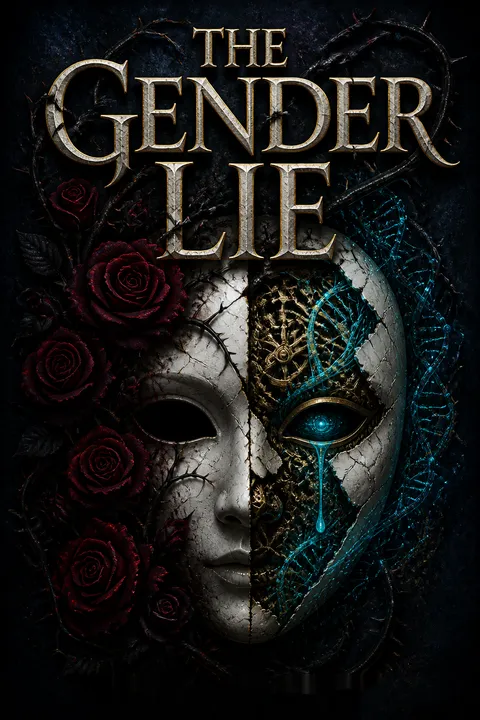
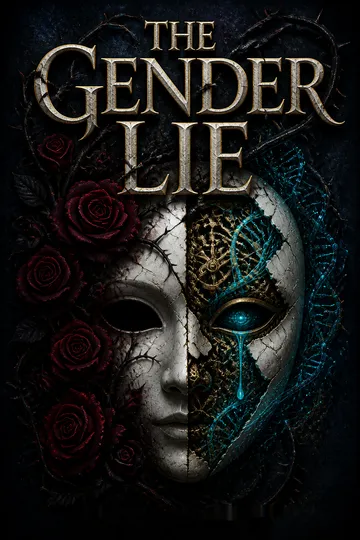
Bella Forrest's The Gender Lie is a dystopian thriller that interrogates the dangers of binary thinking, the corrupting influence of power, and the cost of revolution. Through the dual perspectives of Violet and Viggo, the novel explores the psychological scars left by systemic cruelty and the struggle to maintain humanity in a world that demands sacrifice. The story's greatest strength lies in its refusal to offer easy answers: every victory is paid for in blood, every act of heroism is shadowed by guilt, and every hope is threatened by betrayal. The gender-divided world is both a critique of real-world inequalities and a warning about the perils of seeking liberation through violence. The ultimate revelation—that the revolutionaries are pawns in the queen's sociopathic game—forces readers to question the nature of agency, loyalty, and justice. In the end, The Gender Lie is a story about the resilience of the human spirit, the necessity of hope, and the courage required to fight for a better world, even when the odds seem insurmountable.
Review Summary
The Gender Lie receives mixed reviews averaging 4.01/5 stars. Positive reviews praise the plot twists, character development, and mature relationship between Violet and Viggo. Readers appreciate the fast-paced action and engaging story that keeps them invested. Critical reviews highlight poor writing quality, repetitive phrases, convenient plot devices, and pacing issues with a slow first half. Many note the book feels like filler, stretching the series unnecessarily. Common complaints include out-of-character moments, underutilized plot elements (especially the rescued boys), and excessive cliffhangers designed to sell more books. Despite flaws, most readers remain invested enough to continue.
People Also Read




Characters
Violet Bates
Violet is the emotional and moral center of the story, shaped by trauma, loss, and the relentless brutality of both Matrus and Patrus. Her love for Viggo and her brother Tim drives her to risk everything, but she is constantly torn between loyalty, guilt, and the need to do what is right. Violet's journey is one of self-forgiveness and the struggle to maintain her humanity in a world that demands sacrifice. Her relationships—with Viggo, Tim, and her found family—are marked by fierce loyalty, but also by the scars of betrayal and the burden of leadership. Violet's greatest strength is her refusal to give up, even when hope seems lost.
Viggo Croft
Viggo is a former Patrian warden, marked by a deep sense of justice and a capacity for violence tempered by compassion. His relationship with Violet is both a source of strength and vulnerability, as pride and trauma threaten to drive them apart. Viggo's journey is one of recovery—physical, emotional, and moral. He becomes a mentor to the rescued boys, seeking redemption for his own past by helping them find hope. Viggo's struggle is to reconcile his ideals with the realities of a world that punishes goodness, and to accept help and love when he needs it most.
Desmond Bertrand
Desmond is the enigmatic leader of the Liberators, driven by a desire to avenge the wrongs done to her family and to overthrow the corrupt regimes of Matrus and Patrus. Her leadership is marked by pragmatism, ruthlessness, and a willingness to sacrifice anything—including her own children—for the cause. Desmond's relationship with Violet is complex, oscillating between mentorship and manipulation. Ultimately, Desmond is revealed as a pawn of Queen Elena, her revolutionary zeal twisted into a tool for tyranny. Her tragedy is that her quest for justice becomes indistinguishable from the cruelty she seeks to destroy.
Tim Bates
Tim is Violet's younger brother, a victim of Matrian genetic experiments that left him with enhanced reflexes but crippling tactile pain. His trauma and isolation are profound, but his bond with Violet is unbreakable. Tim's journey is one of gradual healing, as he learns to trust, to connect, and to hope. He is both a symbol of the system's cruelty and of the possibility of redemption. Tim's innocence and resilience inspire those around him, and his small acts of courage are often the catalyst for change.
Owen
Owen is Desmond's right hand, a skilled operative whose loyalty is ultimately exploited. His camaraderie with Violet and the team is genuine, but he is manipulated into becoming the instrument of Desmond's most heinous act—the attempted assassination of the queen. Owen's fate is a reminder of the cost of blind loyalty and the ease with which good intentions can be twisted into evil.
Amber
Amber is a young woman scarred by the patriarchal violence of Patrus and the experiments of Matrus. Her humor and courage mask deep wounds, and her ordeal during the heist is a crucible that tests the team's unity. Amber's recovery is a testament to the power of friendship and the will to survive.
Solomon
Solomon is a physically imposing but kind-hearted member of the team, whose love for his family and the boys drives him to self-sacrifice. His decision to take the enhancement pill to save Violet is both heroic and tragic, resulting in the loss of his sanity. Solomon's fate is a warning about the dangers of playing god and the limits of human endurance.
Thomas
Thomas is the team's strategist, a brilliant but socially awkward man scarred by a lifetime of abuse. His genius is indispensable, but his trauma makes him unpredictable. Thomas' loyalty is hard-won, and his role in the heist is both vital and fraught with risk. He is a reminder that the line between asset and liability is often thin.
Ms. Dale (Melissa)
Ms. Dale is a former Matrian operative whose complicity in the system's crimes is matched only by her guilt. Her relationship with Violet and Viggo is marked by suspicion, resentment, and the slow growth of trust. Ms. Dale's journey is one of atonement, as she seeks to make amends for her past by helping the boys and standing against Desmond.
Queen Elena
Elena is the ultimate antagonist, a product of Matrian genetic engineering whose brilliance is matched only by her lack of empathy. Her plan to use Desmond, the Liberators, and the boys to manufacture a war is a masterstroke of cruelty and cunning. Elena's sociopathy is both her strength and her weakness, allowing her to manipulate others but blinding her to the possibility of genuine connection. Her reign is a warning about the dangers of unchecked power and the cost of sacrificing humanity for control.
Plot Devices
Dual-Narrative Structure
The story is told through the alternating first-person perspectives of Violet and Viggo, allowing readers to experience the emotional and psychological complexity of both protagonists. This structure deepens the narrative, providing insight into their motivations, fears, and growth. The dual perspective also heightens tension, as secrets and misunderstandings drive the plot forward and force the characters to confront their own limitations.
Dystopian Gender Politics
The setting is a world split into Matrus (female-dominated) and Patrus (male-dominated), each with its own brand of oppression. The gendered regimes serve as both backdrop and engine for the plot, exposing the dangers of binary thinking and the ease with which power corrupts. The story uses the extremes of gender politics to explore themes of identity, agency, and the cost of revolution.
Foreshadowing and Misdirection
The narrative is rich with foreshadowing—hints of Desmond's true allegiance, the queen's sociopathy, and the ultimate betrayal. Misdirection is used to keep readers (and characters) off-balance, as allies become enemies and enemies become pawns. The slow reveal of the queen's plan is a masterclass in narrative tension, culminating in a devastating twist that redefines everything that came before.
Moral Ambiguity and Psychological Realism
The story refuses to offer simple solutions or clear heroes. Every character is marked by trauma, guilt, and the need to survive. The cost of victory is measured in blood, betrayal, and the loss of innocence. The psychological realism of the characters—their pride, their pain, their need for connection—grounds the dystopian setting in emotional truth.
Symbolism of The Green and The River
The Green is both a literal and symbolic wilderness—a place of danger, transformation, and the testing of character. The river is a barrier, a bridge, and a symbol of the possibility of redemption. The journey through these spaces mirrors the characters' internal journeys, as they are forced to confront their own darkness and the possibility of hope.
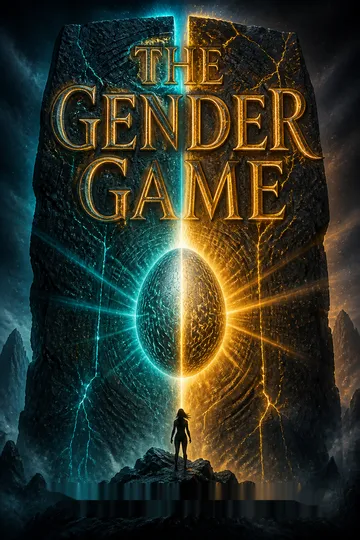
The Gender Game Series




About the Author

Download PDF
Download EPUB
.epub digital book format is ideal for reading ebooks on phones, tablets, and e-readers.








































