


Plot Summary
The Horror with a Pretty Face
Captain Forest Farnam2 — a pale, rotund carnival pitchman who never sweated — ran a ten-in-one freak show within a traveling carnival. His star attraction was Alida,1 a girl he purchased from her mother at age two.
He exhibited her nearly naked on a padded stool, her deformed body reflected in stage mirrors while spectators gawked. Her face was beautiful — golden hair, flawless skin, blue eyes — but from the neck down she was, by her own account, a grotesquerie that no amount of pitchman bravado could overstate.
During off-seasons, Captain2 toured her through upscale speakeasies. At Blue Mood in San Diego, September 1930, a vulgar comedian turned her into a prop, and the audience's roaring laughter broke something in her. For the first time in seventeen years, she considered ways to die.
Forty Thousand Dollar Ransom
Franklin4 and Loretta Fairchild3 — wealthy Hollywood producers on vacation — watched from Blue Mood's second seating as Alida1 endured the comedian's cruelty. They stormed the dressing room, demanding to know Captain's2 claim on the girl.
Loretta3 jabbed his chest and told him no one had the right to sell entertainment built on a child's degradation. Franklin4 seized Captain's2 throat and pressed him against the wall. When Captain2 invoked forged legal papers, Franklin4 called his bluff: the charge would be kidnapping.
Negotiations escalated from thirty thousand to forty thousand dollars in cash. Franklin4 drove to Los Angeles for the money while Loretta3 stayed behind with Alida1 and a small pistol in her lap. By midnight, Captain2 counted the bills, took his fortune, and walked out — or so they hoped.
Kissed Hands, Not Pitied
At the Beverly Hills Hotel bungalow, Loretta3 summoned Marjorie Merrimen,15 a renowned costume designer, to measure Alida1 for a new wardrobe. When Alida1 reluctantly removed her hooded robe and long johns, revealing the full extent of her deformities, the couturiere15 neither gasped nor offered the thin whimper of pity that Alida1 dreaded most.
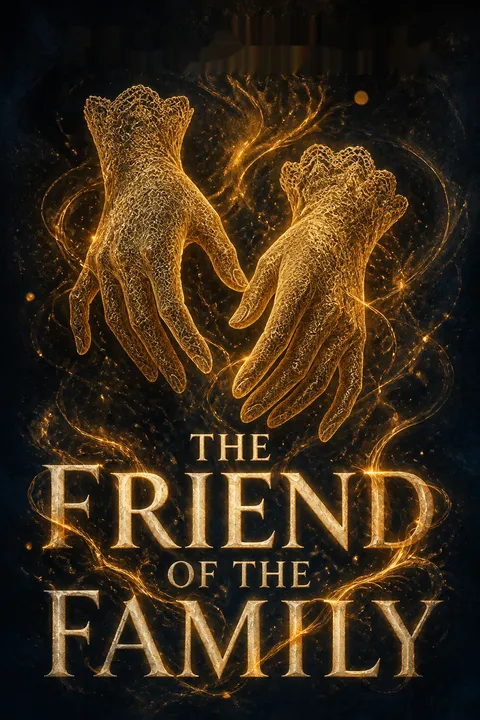
Instead, she dropped to her knees, took Alida's1 gnarled hands in hers, and kissed them — first the left, then the right. She promised seven robes in quiet colors with elegant lace and gloves so fine they would elevate any outfit.
A master shoemaker arrived the next day with equal tenderness, crafting shoes for feet no cobbler had ever measured. Where Captain2 had concealed a freak, these artisans were dressing a girl.
The Shepherd's Verdict
Bramley Hall loomed like a palace — limestone, carved balconies, a portico shading the entrance. Franklin4 parked the yellow Cadillac and told Alida1 this all belonged to her now. Inside, she met the household staff and three children in the schoolroom: twelve-year-old Isadora,6 ten-and-a-half-year-old Gertrude,5 and nine-year-old Harry.7
Each read a welcoming rhyme. Then Alida1 noticed Gertrude's5 left hand — two fingers and half her palm missing from birth, the disability carried without a trace of shame. In that moment, she understood why these particular parents had rescued her.
When Rafael the German Shepherd8 was released from the bathroom, he studied Alida1 intently, then settled at her feet and rolled onto his back, offering his belly. Franklin4 pronounced her family membership official. She had received a four-paw rating.
Every Word Remembered
In the Bram's vast library, Alida1 pulled Great Expectations from a shelf and began reciting the opening paragraph from memory. Franklin4 tested her — chapter nineteen, then twenty-eight, then a hundred pages ahead. She delivered every passage perfectly.
His hand shook as he returned the book to its shelf. Loretta3 asked how anyone could memorize so much. Alida1 insisted it was nothing special; she assumed everyone retained books this way, word for word, the way you remember a beloved dream.
When Franklin4 explained that no one else could do what she did — recall every page of every book she had ever read, hundreds of novels spanning thirteen years — Alida1 panicked. She begged them never to make her a freak twice over. They swore secrecy and promised this was her home forever. No blood oath was required — only their word.
Clues in Slippers and Hats
The three children appeared at Alida's1 door at midnight, flashlights under their chins, and recruited her into the Clyde Tombaugh Club — their secret investigating society. In the wine cellar, they revealed mysterious evidence someone had been planting: photos of a convicted killer linked to a Fairchild film, dead birds in slippers, mice under pillows.
Alida1 cracked the code. The dead purple martin birds, the mice, and a baby hare each spelled out the murder victim's name — Martin Souris Leveret. The trail led to Miss Blackthorn,12 the children's teacher, a eugenics zealot who despised the Fairchilds for making popular films rather than ideological art.
With Chef Lattuada9 hidden as a witness and Alida1 drawing out Blackthorn's12 rant about sterilizing the deformed, the teacher was exposed and dismissed. Alida1 became the children's new instructor.
The Gift Nobody Knows
A tabloid photographer, scheming to break into the Bram and photograph Alida1 naked for profit, enlisted a housemaid's13 troubled brother as an inside source. To eliminate the guard dog, he tossed poisoned meat over the estate wall.
Alida1 found Rafael8 in a grove of trees, convulsing and barely breathing. She lay beside him, pulled him close — and felt the poison migrate from his body into hers. His convulsions became her convulsions; a toxic scent overwhelmed her; she blacked out. When she woke moments later, Rafael8 stood panting with delight, restored to full health.
She had healed him, though she could not explain how. Terrified of being called a freak twice over, she told no one about what happened, presenting the family only the remaining tainted bait as evidence of an intruder's plot.
Alida Becomes Adiel
Anna May,13 the anxious housemaid, finally confessed that her brother and the photographer had schemed to infiltrate the Bram. Franklin4 and Loretta3 responded not with police but with cinema — hiring two stuntmen to pose as corrupt detectives who lured the photographer to a staged murder scene complete with pig blood and planted evidence, terrifying him into permanent retreat.
Meanwhile, attorneys finalized the adoption. Alida1 — now legally Adiel Fairchild,1 the Hebrew name meaning ornament of God — signed the papers with a hand that twice dropped the pen.
At the celebration dinner, every member of the estate staff sat at the table alongside the family. The best part, she reflected, was not that they had been asked to celebrate with her, but that they wanted to.
Gertie's Last Half Hour
Four years later, in January 1934, thirteen-year-old Gertrude5 developed what seemed like a cold. Within forty-eight hours, a sinus infection had seeded her bloodstream with staph toxins, and she arrived at the hospital in septic shock — temperature at 106, blood pressure collapsing, organs failing.
Adiel1 raced there with Lynette,11 a maid who had lost her own daughter to the 1918 flu and could not bear to lose another child. At the bedside, Adiel1 placed her hands on her dying sister5 and willed the sickness across.
She felt the fever spike through her own body, felt poisoned blood racing through her veins, felt herself plummeting toward unconsciousness. She collapsed. When she woke less than a minute later, Gertie5 was sitting up, demanding to know why she was tangled in hospital tubes. Adiel1 now understood with certainty: each healing shortened her own life.
Isadora at the Palomar
In the years between Gertie's5 recovery and 1938, the siblings found their callings. Isadora6 — trained by Harmony,10 the maid whose pianist career ended in the 1919 Boston Molasses Flood — evolved from classical prodigy into a jazz vocalist.
She left the Bram at eighteen and eventually sang with Tommy Dorsey's orchestra. When the family saw her debut with the Bob Crosby Orchestra at the Palomar Ballroom, Adiel1 watched her sister6 command ten thousand people with a voice of smoke and steel.
Gertie,5 meanwhile, had been writing feverishly — producing novellas of such craft that Adiel1 recognized genuine literary talent. And Harry,7 consumed by military history, spent his days re-creating famous battles with hand-painted soldiers, studying strategies as though preparing for something he could not yet name.
Captain Returns with a Monster
On a July morning in 1938, Captain Farnam2 walked through the front gate of Bramley Hall for the first time in eight years. Seated on the great lawn — where no birds sang and even Rafael8 kept his distance — he demanded one hundred thousand dollars.
His leverage: a psychopathic boy he called Jack,16 purchased from a corrupt psychologist who had stolen the child from a Midwest farm family. Jack16 had murdered his cousin at thirteen for a flattened lucky penny. Captain2 described the boy as physically freakish, monstrously strong, and obedient to his commands — for now.
If the Fairchilds refused to pay, Jack16 would be sent for Adiel.1 Franklin4 pretended to agree, requesting until Thursday to arrange funds, then immediately called Pinkerton. What no one realized was that Jack16 was already inside the Bram, hiding between floors.
Ten Rounds Through the Door
While Pinkerton agents secured every door and window, Jack16 watched through heating vents from the service mezzanine between floors. He stole house keys, admitted Captain2 after midnight, and kept watch while the pitchman emptied two hundred twenty-five thousand dollars from the family vault.
Gloating through the barricaded bedroom door, Captain2 let slip that he planned to abandon Jack16 and never open the promised freak show. The boy who killed his cousin for a penny did not tolerate betrayal. Captain's2 scream was brief. Then Jack16 attacked the bedroom door with inhuman force, cracking the lock assembly, splintering the bracing chair.
Harry7 — seventeen and armed — fired seven rounds through the wood panels and three more into the fallen body. Both Captain2 and his creature16 were dead. A war-hero sheriff arrived before dawn and helped dispose of the evidence, sparing the family from tabloid catastrophe.
Bare Hands on the Rooftop
After Pearl Harbor, Harry7 enlisted in the Marines. He excelled in boot camp, earned top honors, and returned home briefly in Dress Blues so sharp the family was struck speechless. On his last evening, Adiel1 found him at the rooftop parapet, storing up the view of a city he might never see again.
He revealed that Lynette11 had told him about the healing power, and he called Adiel1 anything but a freak — one of his three sisters, each unique, all the best. Then he asked to hold her hand without the glove. She warned him it would not be pleasant.
He took her bare, deformed hand and held it for more than an hour while they talked about everything and nothing, the moon drifting through clouds above them. She had been touched by thousands of gawkers in speakeasies. None had ever simply held on.
Second Lieutenant Fairchild
On November 21, 1943, during the Battle of Tarawa — a three-day assault on a fortified Japanese atoll where nearly a thousand Marines perished — Second Lieutenant Harold Percy Fairchild7 was killed in action. The family learned twenty-three days later when a decorated Marine major arrived at Bramley Hall.
In crisp, unsentimental prose, a letter from Harry's7 commanding officer praised his intrepid bravery, the lives his sacrifice had saved, and recommended him for the Navy Cross. Lynette11 had gathered everyone in the library without revealing why. They stood while the letter was read.
No one sat down. Gertie5 delivered the eulogy at a memorial. Isadora6 sang. Adiel1 recited lines from the Marines' Hymn, changing two pronouns so they belonged to Harry7 alone. The ship carrying his remains was sunk by a Japanese submarine. There would be no grave to visit.
Wings from a Carnival Freak
In March 1944, Rafael8 died peacefully in Adiel's1 bed, mid-sigh. Grief upon grief clarified what she had sensed since healing Gertie: each bestowing of health cost years of her own life, and the greatest gift she could give was permanent vitality.
On a Friday morning, she embraced Franklin,4 Loretta,3 Isadora,6 and Gertie5 one by one, feeling warm currents pass from her body into theirs. That evening she collapsed. In the night, her body transformed — the twisted torso straightened, the sagging skin on her arms unfurled into wings, her deformities resolved into something luminous.
Loretta3 found her glowing with soft inner light, more beautiful than anything she had ever witnessed. Adiel1 whispered that she loved her mother3 and died in Loretta's3 arms. From the balcony earlier, Loretta3 had heard laughter like silvery bells and watched her daughter fly.
Epilogue
Three months after Adiel's1 passing, Loretta3 added a final note to the memoir her daughter had been secretly writing for fourteen years — a complete history of the family, composed with the perfect recall of a mind that never forgot a single word.
Loretta3 described the transformation she witnessed: the deformities that once defined Alida1 were gone, replaced by something radiant and winged, a body that seemed to have become what it was always intended to be. She affirmed that Adiel1 had flown from her balcony that night, laughing softly, before returning to die.
She called her daughter not a freak, not a human oddity, but an ornament of God — which is what the Hebrew name Adiel means. The memoir was her final gift. Every word was precise, because Adiel1 remembered every word she had ever read, and she wrote the way she loved: completely.
Analysis
Koontz constructs a sustained argument against biological determinism — the notion that our bodies define our worth. Adiel1 is born into a form that repulses, yet she develops the most refined consciousness in the narrative. Her eidetic memory, her healing power, and her ultimate transformation emerge not from her deformities but from the love those deformities inadvertently attracted. The Fairchilds4 rescue Alida1 not because she might possess hidden gifts; they rescue her because they witness a child being humiliated. The gifts follow the love, not the reverse — a sequence that quietly demolishes any transactional reading of compassion.
The novel's structural gambit is disguising a supernatural fable as Depression-era historical fiction. By grounding fantastical elements — healing touch, prophetic dreams, bodily metamorphosis — within the concrete texture of speakeasies, big bands, and World War II, Koontz makes the impossible feel earned. A reader who accepts that a girl can memorize every word she has ever read will gradually accept that she might draw poison from a dog's blood. Each miracle is purchased by the domestic realism surrounding it.
Eugenics functions as the ideological antagonist — more dangerous than Captain Farnam2 because it operates through respectable institutions. Miss Blackthorn's12 elite degree makes her ideology more insidious than any pitchman's cruelty. The novel argues that the gravest threats to vulnerable people come not from carnival barkers but from credentialed authorities who decide which lives merit continuation.
The memoir-within-a-memoir structure adds a metacritical layer: Adiel's1 purpose is not merely to live among the Fairchilds but to record them with perfect fidelity. Her eidetic memory — initially a survival mechanism — becomes the instrument of literary creation. The book proposes that bearing witness, honestly and with generous interpretation, is itself a form of love as potent as healing. What Adiel1 leaves behind is not a miracle — it is a story, told completely, because she remembered every word.
Review Summary
The Friend of the Family receives mixed reviews averaging 4.47/5 stars. Many readers praise Koontz's beautiful writing, rich historical detail set in 1930s-1940s Hollywood, and the heartfelt story of Alida, rescued from a carnival freak show by the Fairchild family. Positive reviews highlight the tender character study, spiritual themes, and emotional depth. However, critics cite a slow, dull plot with minimal action, overly saccharine moments, unrealistic dialogue, and excessive description. Several note this isn't typical Koontz thriller material but rather historical fiction with supernatural elements exploring disability, eugenics, and compassion.
People Also Read





Characters
Adiel Fairchild (née Alida)
Narrator and carnival survivorThe narrator—a girl born with severe, undefined physical deformities that make her body grotesque from the neck down, paired with a face of striking beauty. Sold by her mother to a carnival pitchman2 at age two, she endured seventeen years of public exhibition before being rescued. Her psychological architecture is remarkable: despite lifelong humiliation, she developed profound empathy rather than bitterness, sustained by an eidetic memory that lets her inhabit hundreds of novels simultaneously. She carries an unshakable conviction that the world has profound meaning and that everyone has a purpose. Her central tension is between yearning for normalcy and growing awareness that she possesses gifts setting her further apart from ordinary humanity. She discovers her purpose in loving and protecting the family that saved her.
Captain Forest Farnam
The pitchman who owns herThe antagonist—a pale, rotund carnival pitchman who never sweats and wears three-piece tweed suits in any weather. He stole a dead man's identity and purchased Alida1 from her mother, exhibiting her as his star freak-show attraction. Captain is not physically violent but weaponizes indifference; he views Alida1 as livestock, his best chance for early retirement. His psychology is that of a pure transactionalist—every relationship is an investment, every human being a mark. He possesses the pitchman's gift for reading people and manipulating situations, yet his greed consistently blinds him to the intelligence and resilience of those he underestimates. His self-regard is so inflated that he believes himself immune to consequences that destroy lesser con men.
Loretta Fairchild
The mother who chose herAdiel's1 adoptive mother—a Hollywood screenwriter and producer whose toughness was forged by catastrophe. Orphaned at nine in the 1906 San Francisco earthquake, she survived a corrupt orphanage and years of sweatshop labor before co-founding a successful film company with Franklin4. She combines fierce protectiveness with razor-sharp wit, capable of threatening a man's life while channeling gangster-film bravado. Beneath the steel is a woman who bargained with God as a child: she promised to save a lost girl if He gave her a future. Her driving force is the conviction that compassion is the highest form of practical intelligence. She gravitates toward broken things—not to fix them, but to recognize their worth exactly as they are.
Franklin Fairchild
The father who fought for herAdiel's1 adoptive father—a film director and producer whose childhood was marked by a mother who poisoned his sister through Munchausen syndrome. Sent to the same orphanage as Loretta3, he became her protector and eventually her husband and business partner. Franklin combines physical courage with financial shrewdness, capable of punching a man in the face and then calmly negotiating terms. He distrusts academic credentials after being burned by a teacher's12 elite pedigree, preferring to judge people by their actions. His humor runs dry and understated—he turns impending tears into laughter with self-deprecating absurdity. His deepest drive is to build for his children the magical, secure childhood he and Loretta3 were denied.
Gertrude 'Gertie' Fairchild
The sister with six fingersThe middle Fairchild child, born missing two fingers and half her palm—a disability she carries with indifference, never concealing or apologizing for it. Elfin and beautiful, Gertie is the family's quickest wit, deploying smart-aleck commentary as both weapon and love language. She discovers a fierce passion for writing fiction at sixteen and attacks it with perfectionism that borders on self-flagellation, dismissing her own brilliant work as beautiful crap until her adopted sister1 provides honest feedback. Her psychological profile is shaped by early accommodation of physical difference, which gave her a head start on emotional maturity. She values self-sufficiency pathologically—refusing help even for childhood cuts, which she calls not boo-boos but so-so's.
Isadora 'Izzy' Fairchild
The eldest daughter, a singerThe eldest Fairchild child—a classically trained pianist who discovers her true calling in jazz and swing vocals. Ambitious and restless, she dreams of crossing oceans and eventually leaves home at eighteen to pursue music professionally. Her talent is genuine, her dedication fierce, and her journey from sheltered prodigy to touring vocalist with major orchestras mirrors the family's ethos of earning one's own way through relentless work and honest self-assessment.
Harry Fairchild
The boy who studies battlesThe youngest Fairchild child—an impish boy who evolves into a serious military historian obsessed with battles, strategy, and the patterns through which civilizations rise and fall. Beneath his boyish humor and occasional silliness runs a deep sense of responsibility toward those weaker than himself. His fascination with military history is not escapist play but something more purposeful—an instinct to understand the machinery of conflict, as though some part of him knows he will one day need that knowledge.
Rafael
The family's German ShepherdA German Shepherd originally bred for movies but too honest to fake emotions—he becomes the family's nighttime sentry and honorary member of the children's investigating club. Rafael possesses an uncanny ability to judge character, instantly accepting Adiel1 despite her unusual nature. His role is both literal protector and emotional barometer for the household, his reactions to visitors revealing truths that human senses miss. He distributes his nightly companionship among family members with diplomatic fairness.
Chef Luigi Lattuada
The Bram's philosopher-cookThe Bram's cook—a tall, handsome man of Jamaican-British and Italian heritage who speaks with a London accent and cooks with Milanese brilliance. Equal parts philosopher and comedian, he serves as Adiel's1 confidant and intellectual sparring partner. His kitchen is a sanctuary where heavy conversations are deflected by absurdist banter about smoked peaches and deadly coffee, until the moment arrives when seriousness alone will serve.
Harmony Sussman
The maid who lost her musicA housemaid whose parents were killed in the 1919 Boston Molasses Flood and whose broken fingers ended her promising piano career. She gives Adiel1 the mantra that echoes throughout the story: enjoy life but stay alert. She later becomes Isadora's6 piano teacher, channeling her lost ambitions into nurturing the next generation's talent with fierce dedication and no trace of self-pity.
Lynette Rollins
Keeper of the deepest secretsA petite brunette maid who rises to become the Bram's estate manager. She lost her ten-year-old daughter Libby to the 1918 Spanish flu and took the Bram job to be near children without risking the pain of having more. Her grief is a permanent resident in her heart, but she refuses to let it dictate her life. She becomes a trusted keeper of the family's most extraordinary secret.
Miss Imogene Blackthorn
The ideologue in the nurseryThe children's teacher—a summa cum laude graduate who conceals a eugenics ideology beneath maternal warmth, secretly propagandizing the Fairchild children and planting coded threats about a death on their parents' film set.
Anna May
The guilty housemaidA pretty but anxious housemaid whose troubled brother entangles her in a photographer's scheme to exploit Adiel1. Scarred by an abusive father, she carries guilt for others' sins as if they were her own.
Victoria Symington
Seeker of evidence for faithThe Bram's head housekeeper—a childless woman of stubborn empiricism who, before retiring, confronts Adiel1 about unexplained healings, seeking evidence that the world contains more mystery than her cautious heart dares accept.
Marjorie Merrimen
The couturiere who kneltA renowned Hollywood costume designer whose response to Adiel's1 deformed hands—kneeling to kiss them—marks the first time anyone treated the girl's body with tenderness rather than horror or pity.
Midwest Jack
Captain's purchased weaponA psychopathic boy with mantis-like facial deformities, purchased from a corrupt psychologist after murdering his cousin. Born perhaps with the capacity for love, he was shaped by isolation, exploitation, and a family that could not bring themselves to take him into town.
Mr. Reinhardt
The weeping groundskeeperThe Bram's sentimental German groundskeeper who weeps over baby rabbits and unwittingly provides Adiel1 with ecological clues that help crack the mystery of the dead creatures planted around the estate.
Buddy Beamer
The comedian who broke herThe vulgar comedian at Blue Mood whose onstage humiliation of Alida1 triggers the Fairchilds'4 intervention—Oliver Hardy's body, Chaplin's mustache, and a quick wit weaponized against those who cannot fight back.
Plot Devices
Adiel's Eidetic Memory
Salvation through total recallAdiel1 can recall every word of every book she has ever read—hundreds of novels retained verbatim since age four. In childhood, this ability allowed her to escape the degradation of the freak show by inhabiting entire fictional worlds. At Bramley Hall, it becomes a bond with the Fairchilds and the instrument of her teaching career. It also enables the memoir that constitutes the novel itself—a perfect record written by someone who never forgot a sentence. The memory symbolizes her deepest paradox: the power that isolates her from everyone else is also what connects her to the greatest works of human compassion. She believed everyone retained books this way, learning only at seventeen that her gift was singular.
The Healing Gift
Love made physically transferableAdiel1 discovers she can absorb illness and injury from others through physical contact and empathic will. First revealed when she unknowingly draws poison from the family dog8, and confirmed when she consciously heals her sister's5 septic shock, the gift operates by pulling sickness from the afflicted into Adiel's1 own body, where she processes and expels it. Each use exacts a toll measured in years of her remaining life—a cost she accepts as the price of purpose. The gift was always latent, but it could not activate until love unlocked it; her years of isolation with Captain2 produced empathy but not the reciprocated love required. It cannot raise the dead, a limitation that makes certain losses permanent and irreversible.
The Clyde Tombaugh Club
Childhood agency meets real dangerNamed for the astronomer who discovered Pluto, this secret midnight investigating society gives the Fairchild children and Adiel1 a vehicle for adventure, bonding, and—unexpectedly—genuine detective work. The Club evolves from invented ghost hunts into a real investigation when someone begins planting dead creatures and coded clues around the estate. Its greatest narrative function is transforming Adiel1 from grateful ward into equal sibling, bound by the children's code of loyalty. The code of secrecy forces Adiel1 into a moral dilemma: report the threats to the parents or honor the trust of children who value her loyalty above all else. Through the Club, Adiel1 solves the mystery of the teacher's12 hidden ideology and earns her place in the family hierarchy.
Bramley Hall (The Bram)
Eden with a hidden mezzanineThe Fairchild estate serves as a character in its own right—a limestone fortress of imagination with secret wine cellars behind Japanese cabinets, hidden staircases through a grotto, a rooftop mirrored obelisk, and a service mezzanine between floors. Built by Franklin4 and Loretta3 to kindle wonder in their children, the Bram's architectural whimsy reflects the family's commitment to making childhood magical. But the estate's beauty also makes it a target: its walls cannot keep out ideological corruption disguised as education, poisoners who know its routines, or psychopaths who have studied its blueprints at the public building department. The Bram is both sanctuary and the place where sanctuary can be breached.
Books and Literary References
Moral compass and survival codeSpecific novels function throughout as emotional and ethical guideposts. The Great Gatsby teaches Alida1 that lifting oneself requires lifting others. A Tale of Two Cities provides the sacrificial ethos she will eventually embody—its final lines recurring in her thoughts at pivotal moments. The Wizard of Oz becomes a coded signal at a hospital bedside. Dickens shapes her conviction that the world is meaningful. Books are not decorative here; they are literally the reason Adiel1 survived seventeen years of enslavement without losing her mind or her capacity for love. Her eidetic memory means every novel she read is permanent architecture inside her, making her a walking library and a living testament to fiction's power to save lives.

Download PDF
Download EPUB
.epub digital book format is ideal for reading ebooks on phones, tablets, and e-readers.








































