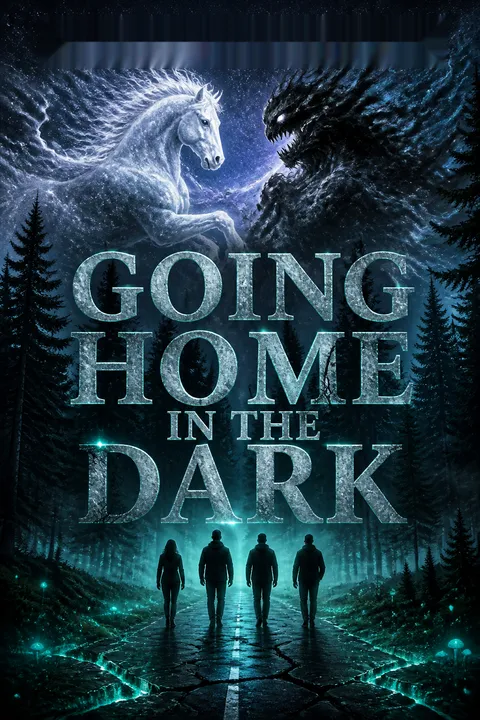

Plot Summary
Four Amigos, One Secret
Rebecca, Bobby, Spencer, and Ernie—once outcasts in idyllic Maple Grove—have grown into a famous actress, a bestselling novelist, a celebrated artist, and a reclusive songwriter. Despite their achievements, each is haunted by gaps in memory and recurring nightmares. When Ernie falls into a coma, the others are drawn back to their hometown, compelled by a sense of unfinished business and a love that transcends time. Their reunion is tinged with unease, as if some dark force awaits them in the place they once called home. The emotional weight of their shared past and the uncertainty of what they've forgotten set the stage for a journey that will test the limits of their friendship and their understanding of reality.
Comas and Forgotten Fears
The news of Ernie's critical condition acts as a catalyst, pulling the amigos from their scattered lives back to Maple Grove. As they travel, each is plagued by a sense of déjà vu and the eerie conviction that comas—and the inexplicable—are woven into their shared history. Their conversations are laced with confusion: why do they all feel as if they've known many people in comas, yet can't recall a single name? The town's postcard-perfect surface belies a deeper, collective amnesia. The friends' fear is not just for Ernie's life, but for the truth lurking in the shadows of their minds—a truth that feels both personal and cosmic in its implications.
Slime, Dreams, and Dread
As the amigos converge on Maple Grove, their dreams intensify—filled with monsters, slime, and suffocating dread. Spencer's fugue-state paintings, Rebecca's obsessive cleanliness, Bobby's restless travels, and Ernie's fixation on amnesia stories all point to a trauma too vast to face. The town itself seems complicit, its beauty masking a rot beneath. The friends sense that their nightmares are not mere anxieties, but encoded memories of something monstrous. The arrival of strange, molting creatures and the reappearance of a name—Wayne Louis Hornfly—signal that the past is clawing its way back, demanding to be reckoned with.
The Call to Maple Grove
Despite their reluctance, the amigos are compelled to return, each feeling manipulated by an unseen hand. Their journey is marked by omens and a growing sense of unreality. The town's perfection is unsettling, its residents too friendly, its streets too clean. The Keppelwhite Institute, a sprawling research facility, looms over everything, its purpose shrouded in secrecy. The friends' memories begin to stir, but the details remain elusive. They are united by love and fear, determined to save Ernie and uncover the truth, even as they sense that the cost may be more than they can bear.
Ernie's Vanishing Act
After a harrowing escape from the hospital, the amigos hide Ernie in his own home, only for him to vanish without a trace. Their search leads them into the house's cellar, where they encounter grotesque, molting slime creatures and evidence of something inhuman at work. The friends' memories flicker—images of comatose bodies, unfinished men, and a church basement filled with horrors. The sense of being watched, manipulated, and tested grows stronger. The disappearance of Ernie is not just a personal crisis, but a sign that the boundaries between memory, reality, and nightmare are collapsing.
Monsters Beneath Perfection
As the amigos investigate, they discover that Maple Grove's tranquility is enforced by something unnatural. The Keppelwhite Institute's influence is everywhere, and the town's residents are disturbingly content, almost robotic in their neighborliness. The friends encounter Warren Weber, a newcomer who feels suffocated by the town's enforced happiness. The revelation that crime has vanished, and that even would-be criminals are transformed into model citizens, points to a force shaping the town's very soul. The amigos realize that the perfection of Maple Grove is a mask for something ancient, powerful, and possibly malevolent.
The Town That Smiles Back
A neighborly gathering at Spencer's old house becomes a surreal ordeal, with the Nelsoneers' relentless friendliness bordering on cult-like. The friends feel trapped, their every move observed, their privacy invaded. The town's collective memory seems to have been rewritten, and dissent is subtly but firmly discouraged. The sense of being in a controlled experiment grows, as does the suspicion that the town's peace is maintained by more than social pressure. The amigos' bond is their only refuge, but even that is tested as the forces arrayed against them close in.
Memory's Door Reopens
Through a series of recovered memories, the amigos recall their teenage encounter with Wayne Louis Hornfly—a monstrous, shape-shifting being—and the ten unfinished men in the church basement. They remember being drawn into the Keppelwhite Institute, subjected to experiments by entities known as Alpha and Beta. Their memories had been wiped to protect them, but now the truth is flooding back: Maple Grove is the battleground for two ancient, intelligent fungi, each with its own agenda for humanity. The friends' trauma is not just personal, but the residue of a cosmic conflict.
The Fungus Among Us
The amigos learn that beneath Maple Grove lie two colossal, sentient fungi: Alpha, benevolent and telepathic, and Beta, malevolent and bent on humanity's destruction. Alpha has made the town crime-free, radiating happiness and remorse, while Beta seeks to exterminate most of humankind. The avatars of these fungi—Hornfly for Beta, a white horse for Alpha—manifest in the world, manipulating events and memories. The friends realize that their lives, and the town's destiny, are entangled in a struggle between these ancient powers, with their own agency hanging in the balance.
Alpha, Beta, and Betrayal
The confrontation with Ernie's mother, Britta, and Pastor Larry reveals their allegiance to Beta and their contempt for humanity. The friends are forced to confront the reality that evil can wear familiar faces, and that betrayal can come from those closest to them. The parlor becomes a battleground of ideology and survival, as the amigos face the prospect of death at the hands of Hornfly. The tension between free will and manipulation, love and hatred, reaches its peak, forcing each character to choose what kind of person they will be in the face of annihilation.
The Rectory Reckoning
In a climactic showdown, the amigos face Hornfly, Britta, and Pastor Larry. Rebecca's courage and wit buy precious seconds, while the friends' unity gives them strength. At the last moment, Alpha intervenes, destroying Hornfly and saving the amigos. The victory is bittersweet, as the cost of survival is the knowledge of how close they came to destruction—and how fragile the boundary between good and evil truly is. The friends emerge changed, their bond deepened by ordeal, but aware that the struggle between Alpha and Beta is far from over.
Hornfly's Last Stand
Alpha's intervention saves the amigos, but the danger posed by Beta remains. The friends rescue Ernie from suspended animation, and Alpha, in the form of a white horse, explains its love for humanity and its regret for the pain caused. The amigos are urged to leave Maple Grove, as the battle between Alpha and Beta will continue for centuries. The friends' neuroses are revealed as the scars of memory manipulation, and they are given the chance to heal and move on. The town's perfection is exposed as both a blessing and a curse, the product of forces beyond human understanding.
Alpha's Gift, Beta's Threat
The amigos say farewell to Alpha, who promises to watch over them from afar. They leave Maple Grove, carrying with them the lessons of love, trauma, and resilience. The town remains a place of beauty and danger, its fate tied to the ongoing war between Alpha and Beta. The friends' journey is both an ending and a beginning—a testament to the power of memory, the necessity of facing the past, and the enduring light of friendship in a world shadowed by darkness.
The Light of Friendship
Sixteen months later, the amigos are reunited in California, far from the horrors of Maple Grove. Their lives are ordinary, but suffused with gratitude and joy. The trauma of their youth has been transformed into wisdom, and their friendship is a shelter against the darkness. The story ends not with monsters, but with the quiet triumph of love over fear, and the promise that, whatever comes, they will face it together. The journey home in the dark has led them into the light.
Going Home in the Dark
The amigos' odyssey through memory, terror, and revelation is complete. They have faced the monsters beneath the surface—both literal and metaphorical—and emerged with their humanity intact. The meaning of home is redefined: not a place, but the people who love you, the memories you share, and the courage to face the unknown. As the friends go home in the dark, they carry with them the light of friendship, the lessons of the past, and the hope that, in the end, love is stronger than fear.
Analysis
A modern fable of trauma, memory, and the search for meaning"Going Home in the Dark" is a genre-bending meditation on the nature of evil, the ethics of intervention, and the redemptive power of friendship. By blending horror, science fiction, and dark comedy, Koontz crafts a narrative that is both deeply personal and cosmically ambitious. The story interrogates the costs of safety—what we lose when we trade freedom for peace, memory for comfort. The duality of Alpha and Beta serves as a metaphor for the human condition: our capacity for both creation and destruction, love and hate, hope and despair. The amigos' journey is a testament to resilience—the idea that healing is possible, but only through the painful work of remembering, confronting, and choosing to love in the face of darkness. The novel's ultimate message is one of cautious optimism: that even in a world shaped by forces beyond our understanding, the light of friendship can guide us home, and the monsters within can be faced, if not vanquished, by the courage to remember and the will to connect.
Review Summary
Going Home in the Dark received mixed reviews, with many longtime Koontz fans expressing disappointment. Critics found the writing style jarring, with frequent fourth-wall breaks and explanatory asides. Some appreciated the humor and unique narrative approach, while others felt it detracted from the story. The plot, involving childhood friends reuniting to face supernatural threats in their hometown, was praised for its character development but criticized for pacing issues. Overall, reactions were polarized, with some calling it Koontz's worst and others finding it enjoyable despite its quirks.
People Also Read



Characters
Rebecca Crane
Rebecca is a successful Hollywood actress whose sunny exterior masks deep-seated anxieties and compulsions. Her obsession with cleanliness and her recurring nightmares of violent death are symptoms of a trauma she cannot recall. Raised by neglectful relatives, she found solace and identity among the amigos, who became her chosen family. Rebecca's journey is one of self-discovery and courage: she is the emotional anchor of the group, fiercely loyal and unafraid to confront danger for her friends. Her development is marked by a gradual reclaiming of agency, as she moves from victim of her past to active shaper of her destiny, ultimately finding healing in love and friendship.
Bobby Shamrock
Bobby is a bestselling author whose wanderlust and vivid imagination are both gifts and curses. Raised by emotionally distant foster parents, he is driven by a need to escape, to understand, and to belong. Bobby's charisma masks a deep vulnerability; he is haunted by gaps in memory and a sense of being pursued by something he cannot name. His role as the group's investigator and skeptic is balanced by a profound loyalty to his friends. Bobby's arc is one of reconciliation—with his past, with his fears, and with his capacity for love. His relationship with Rebecca evolves from platonic to romantic, symbolizing his journey from isolation to connection.
Spencer Truedove
Spencer is a renowned visual artist whose creativity is both a refuge and a symptom of his fractured psyche. Abandoned by his parents, he grew up alone, developing a unique style marked by fugue states and amnesia. Spencer's inability to draw in a conscious state reflects his struggle to access and process trauma. He is the group's moral compass, compassionate and self-effacing, yet capable of surprising insight and courage. His attachment to his signature hat is a symbol of his quest for identity and visibility. Spencer's development is a movement from self-doubt to self-acceptance, finding strength in vulnerability and the support of his friends.
Ernie Hernishen
Ernie is the most unassuming and pure-hearted of the amigos, a gifted songwriter who shuns the spotlight. His life in Maple Grove is marked by modest dreams and a longing for connection. Ernie's coma and subsequent disappearance are the catalysts for the group's return and the unraveling of the town's secrets. His innocence and resilience are both a shield and a source of danger, as he becomes the focal point of the struggle between Alpha and Beta. Ernie's journey is one of awakening—both literally and metaphorically—as he confronts the truth of his origins, his mother's betrayal, and the power of unconditional love.
Britta Hernishen
Britta is a formidable presence—brilliant, domineering, and emotionally cold. Her relationship with Ernie is defined by control and manipulation, and her allegiance to Beta marks her as an antagonist. Britta's psychological complexity lies in her blend of genuine intelligence and profound narcissism; she is both a victim and perpetrator of trauma. Her interactions with the amigos are laced with contempt, but also reveal a deep-seated fear of irrelevance and loss of control. Britta's arc is one of exposure: her crimes and motivations are laid bare, and she is ultimately left isolated, a cautionary figure of intellect divorced from empathy.
Pastor Larry Turnbuckle
Pastor Larry is the spiritual leader of Maple Grove, but his faith is a mask for nihilism and self-interest. His alliance with Beta and his role in the town's dark history position him as a key antagonist. Larry's charm is undercut by a profound emptiness; he is both a manipulator and a pawn, driven by envy and a desire for power. His relationship with Britta is transactional, united by shared contempt for humanity. Larry's development is a descent into irrelevance, as his schemes are undone and his true nature revealed.
Wayne Louis Hornfly
Hornfly is the physical manifestation of Beta's will—a shape-shifting, acid-spewing monster who delights in violence and terror. His presence is both literal and symbolic: he is the embodiment of the friends' repressed trauma, the town's hidden rot, and the existential threat posed by Beta. Hornfly's interactions with the amigos are marked by mockery, menace, and a perverse fascination with their resilience. His ultimate defeat at the hands of Alpha is both a victory over external evil and an exorcism of internalized fear.
Alpha
Alpha is the ancient, sentient fungus beneath Maple Grove, whose telepathic influence has shaped the town's peace and the amigos' lives. Alpha's love for humanity is genuine but not without consequences; its interventions have both protected and traumatized the friends. Alpha's avatars—most notably the white horse—are symbols of wisdom, humility, and the possibility of redemption. Alpha's role is that of a cosmic parent: flawed, well-intentioned, and ultimately committed to the flourishing of its human charges.
Beta
Beta is Alpha's younger, darker counterpart—a sentient fungus bent on the eradication of humanity. Its avatars, including Hornfly, are agents of chaos and death. Beta's philosophy is one of purity through destruction, and its influence is felt in the town's undercurrents of fear, disease, and betrayal. Beta's struggle with Alpha is both a literal battle and a metaphor for the duality of creation and destruction, love and hate, within the world and within the self.
The Nelsoneers
The Nelsoneers are the residents of Maple Grove's most exclusive block, whose relentless friendliness and surveillance embody the town's loss of individuality. They are both victims and enforcers of Alpha's influence, their happiness a mask for repression and control. The Nelsoneers' interactions with the amigos highlight the dangers of utopia achieved through manipulation, and the necessity of dissent and authentic connection.
Plot Devices
Memory Suppression and Recovery
The central plot device is the suppression and gradual recovery of traumatic memories. This mechanism serves multiple functions: it creates suspense, explains the characters' neuroses, and allows for a gradual revelation of the town's true nature. The process of remembering is both painful and liberating, forcing the amigos to confront the monsters within and without. The device is used to explore themes of trauma, identity, and the ethics of intervention—raising questions about the cost of safety and the value of truth.
Dual Superorganisms: Alpha and Beta
The rivalry between Alpha and Beta is the engine of the plot, transforming a small-town mystery into a cosmic struggle. Their avatars—Hornfly and the white horse—personify the battle between benevolence and malevolence, collectivism and individuality, creation and destruction. The fungi's telepathic powers, memory manipulation, and ability to shape reality blur the line between science fiction and horror, grounding the story's supernatural elements in a plausible, if unsettling, biology.
Foreshadowing and Metafictional Asides
The story is laced with foreshadowing—ominous dreams, authorial asides, and direct addresses to the reader. These devices create a sense of inevitability and playfulness, inviting the reader to participate in the unraveling of the mystery. The metafictional tone allows for commentary on genre conventions, the nature of storytelling, and the relationship between fiction and reality.
The Power of Friendship
The amigos' bond is the emotional core of the narrative, providing both motivation and resolution. Their loyalty, humor, and willingness to sacrifice for one another are repeatedly tested by external threats and internal doubts. The story uses their friendship as a counterpoint to the town's enforced conformity, suggesting that authentic connection is the only true defense against manipulation and despair.
Setting as Character
The town itself is a living entity, shaped by the will of Alpha and Beta. Its beauty, order, and tranquility are both seductive and suffocating, reflecting the dual nature of the forces at work beneath its surface. The setting is used to explore themes of utopia, control, and the price of peace, making the environment an active participant in the story's drama.
About the Author

Download PDF
Download EPUB
.epub digital book format is ideal for reading ebooks on phones, tablets, and e-readers.








































