


Plot Summary
Prologue
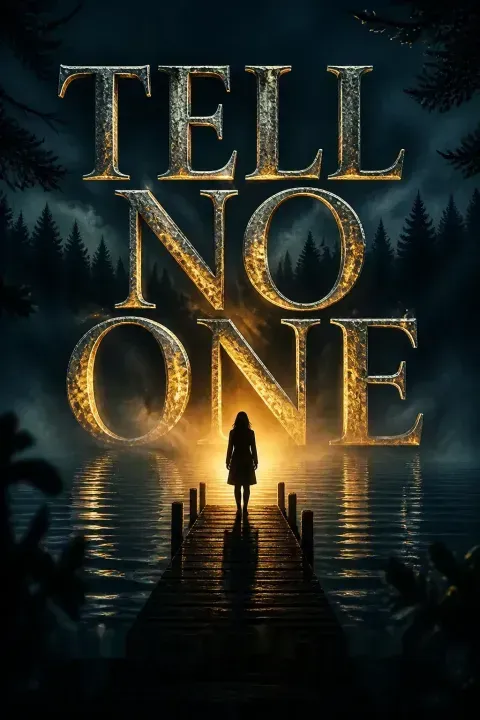
David Beck1 and his wife Elizabeth2 drive to Lake Charmaine for their thirteenth anniversary. They have been soulmates since age seven, carving a new line into their tree each year. They swim in the dark lake. Beck1 drifts on a raft, deciding to finally confess a secret to Elizabeth.2
Then he hears a car door open. Elizabeth2 screams. Beck1 swims frantically toward the dock, but before he can reach her, a baseball bat slams into his solar plexus, then his skull. He topples back into the water, hearing Elizabeth2 scream his name as everything fades to black.
The prologue functions as both love story and horror film. Beck's nostalgic reverie (childhood sweethearts, the tree carving ritual, the moonlit swim) creates almost unbearable dramatic irony because the reader knows tragedy is imminent. The attack is rendered with visceral physicality: the bat hitting the solar plexus, the crack in the skull, the gurgling water. But what haunts is the psychological architecture: Beck's decision to tell her everything is the last thought before his world shatters. The prologue establishes the central wound that will define Beck for eight years: survivor's guilt fused with the mystery of what really happened.
The Twenty-One Line Email
Eight years after Elizabeth's2 murder, Dr. David Beck1 works at a Washington Heights pediatric clinic, numbly going through motions. Sheriff Lowell contacts him about two bodies unearthed near Lake Charmaine along with a bloody baseball bat. Then Beck's1 computer chimes. An email appears from an untraceable address with the subject line showing his and Elizabeth's2 initials and twenty-one slashes, matching the tree carving they would have made for this anniversary.
The message instructs him to click a hyperlink at kiss time. Beck's1 blood runs cold: kiss time was 6:15 P.M., the exact moment of their first kiss at age twelve, a secret he never told anyone. He saves the email, prints it, and waits, counting the minutes until the designated hour.
The coded email weaponizes intimacy into a lure. The twenty-one lines represent years of shared history converted into a message only Beck could fully decode. The simultaneous appearance of Lowell's bodies and the cryptic message creates causal tension, as though the past is being literally unearthed on multiple fronts. Beck's immediate recognition and visceral reaction reveal his psychological state: eight years of suspended grief have left him exquisitely vulnerable to hope. The anonymous remailer signals that whoever is communicating understands not just the couple's history but also the need for operational security.
Kiss Time Ghost
At precisely 6:15 P.M., Beck1 clicks the hyperlink. A grainy black-and-white street cam feed loads, showing a busy urban sidewalk from above. Pedestrians stream past in waves. Then a woman steps into frame directly beneath the camera. She turns, lifts her chin, and looks straight up into the lens. It is Elizabeth,2 older with short hair, but unmistakably her.
Beck1 presses his fingers to the warm screen, tears spilling down his cheeks, as she mouths the words I am sorry and walks away. Moments later, a second email arrives instructing him to check a Bigfoot.com account under username Bat Street and password Teenage at the same time tomorrow, plus two hours. The message ends with five words: They are watching. Tell no one.
The street cam scene subverts the grief narrative in a single indelible image. Beck touching the screen captures the liminal space between technology and miracle. Elizabeth's silent apology raises more questions than it answers: sorry for leaving, for lying, for returning now? The warning transforms reunion from private joy into shared danger. The childhood codes—Bat Street and Teenage—establish that the communicator understands the couple's entire hidden language, confirming both authenticity and the reality of the threat that requires such elaborate secrecy.
Sarah Goodhart's Photographs
Sheriff Lowell brings FBI agents Carlson9 and Stone to intercept Beck1 outside his clinic. In a federal building conference room, they produce photographs Beck1 has never seen: Elizabeth2 bruised on her ribs, her eye swollen, holding her hair back to reveal cuts on her neck.
Beck1 stammers that Elizabeth2 told him it was a car accident while he was at a Chicago conference. The agents are openly skeptical, asking if he ever beat his wife.
They reveal the photographs came from a safety-deposit box registered to Sarah Goodhart,2 an alias combining Elizabeth's2 middle name and childhood street. The key to that box was found in the shoe of one of the dead men at the lake, Melvin Bartola. Beck1 calls his high-powered attorney, Hester Crimstein,10 and walks out shaken.
The photographs function as a double exposure: evidence of Elizabeth's hidden suffering and evidence of Beck's ignorance about his own wife's life. The alias Sarah Goodhart is a ghost constructed from fragments of Elizabeth's childhood, a self she created for purposes Beck cannot yet comprehend. Carlson's interrogation weaponizes Beck's own guilt against him, while the dead man's key physically connects the current investigation to the original crime. The photographs raise the central question that will drive the narrative: what was Elizabeth hiding, and from whom?
Rebecca's Fatal Honesty
Beck1 visits Rebecca Schayes,11 Elizabeth's2 closest friend and a successful photographer. After eight years of estrangement, Rebecca11 admits the car accident story was fabricated: she came home to find Elizabeth2 badly bruised, and Elizabeth2 made her promise to back up the story if anyone asked, especially Beck.1
Rebecca11 refuses to say more before a photo shoot calls her away. That night, Eric Wu,7 a lethal Korean enforcer with dead eyes and callused hands, and Larry Gandle,8 a heavyset fixer with a bad comb-over, wait in her dark studio.
Wu7 tortures Rebecca11 with nerve strikes that leave no marks, demanding to know where Elizabeth2 is. When she can tell them nothing, Gandle8 shoots her twice in the head. They plant the murder weapon in Beck's1 garage.
Rebecca's death is the pivot from mystery to mortal threat. The timing, immediately after Beck's visit, makes causality inescapable: his investigation has activated a kill response from whoever has been watching for eight years. Wu's torture method, inflicting maximum pain without leaving evidence, reveals professional discipline. The frame job weaponizes the state itself against Beck, converting him from investigator to quarry. Rebecca becomes the first casualty of Beck's hope, and her murder raises the stakes from personal redemption to survival.
The Fugitive Pediatrician
Hester Crimstein10 calls: Beck1 is about to be arrested for Rebecca's11 murder. The evidence, including the murder weapon and gunpowder-residue gloves found at his house, seems overwhelming. Beck1 panics and slips out the clinic's back door.
Police chase him through Washington Heights streets. Trapped in an alley, he tackles a young officer, breaking the man's jaw, and flees deeper into the neighborhood. Desperate, he calls Tyrese Barton,5 a drug dealer whose blind, hemophiliac son TJ has been Beck's1 patient for six years.
Tyrese5 orchestrates a diversion, having his men fire guns from a housing project while others run through the streets shouting about a white man with a gun. His massive silent enforcer Brutus13 drives Beck1 through the chaos to a crack house hideout.
Beck's transformation from respected pediatrician to cop-assaulting fugitive completes in a single afternoon. The irony is structural: the man who judges his patients' life choices now depends on a drug dealer's expertise for survival. Tyrese's rescue is not charity but loyalty earned through years of treating TJ without judgment. The crack house sequence strips away Beck's remaining illusions about his own moral superiority. When Tyrese hands him a loaded Glock with no safety, Beck's acceptance signals a permanent line-crossing.
Morewood and Sex Poodles
In Tyrese's5 office at the crack house, Beck1 puzzles over the failed Bigfoot login. He realizes Bat Street refers not literally to bats but to a creepy neighbor they called the Bat Lady who lived on Morewood Street. Teenage is shorthand for Teenage Sex Poodles, their high school intramural softball team name. At a Kinko's copy shop, Beck1 logs in as Morewood with password Sex Poodles.
A message awaits: meet at Washington Square Park, southeast corner, 5 P.M. tomorrow. You will be followed. No matter what, I love you. Beck1 prints the message. This late-night Kinko's visit, with his dog Chloe causing a commotion and multiple witnesses remembering him, will later provide an airtight alibi for the time of Rebecca's11 murder.
The code-breaking sequence externalizes the novel's central thesis: Beck and Elizabeth's shared private language is both sanctuary and cryptographic key. The childhood memories are not nostalgia but a lock-and-key mechanism only two people could operate. The incremental decoding mirrors the larger investigation: each revelation requires the right set of memories to unlock. Elizabeth's warning about being followed confirms Beck's recent experience, while her declaration of love, arriving after eight years of silence, functions as both promise and plea.
Van Ambush
Beck1 waits for hours on the designated bench. Elizabeth2 never shows. As he leaves Washington Square Park, a hand grips his shoulder. Eric Wu,7 a muscular Korean man with dyed-blond hair and a Walkman playing nature sounds, applies excruciating pressure to Beck's1 nerve clusters.
Beck1 collapses. A white van screeches up. Men drag him inside, cuffing him spread-eagle to the floorboard. Wu7 tortures Beck1 for information, driving fingers into his liver and arm nerves with casual, almost bored precision. Beck1 nearly breaks, but then the van's front doors fly open.
Tyrese5 and Brutus,13 who had followed Beck,1 hold guns on the kidnappers. Tyrese5 shoots one man dead. Wu7 escapes through the side door. Beck1 is free but battered, and now he understands the people hunting Elizabeth2 are lethal professionals.
The failed meeting and brutal capture mark the story's darkest turn before the climb toward resolution. Wu represents a different category of threat: not legal or psychological but purely physical, as indifferent as a natural disaster. The torture scene strips away all pretense of control. Tyrese's second rescue elevates him from convenient ally to essential partner. The episode confirms that the pursuers do not have Elizabeth yet, they are hunting both of them, and the failed meeting raises the agonizing possibility that she was intercepted before reaching the park.
The False Alibi
Following initials from Elizabeth's2 old day planner, Beck1 visits Peter Flannery,14 a seedy storefront lawyer who once worked as a public defender. Flannery14 reveals that eight years ago, Elizabeth2 gave a false alibi to Helio Gonzalez, a street criminal arrested for murdering Brandon Scope, the billionaire philanthropist's son.
Elizabeth2 claimed she and Gonzalez were having an affair, placing him with her at the time of the murder. The alibi freed Gonzalez. Beck1 tracks down Gonzalez himself, who admits the truth: Elizabeth2 was never with him.
She simply saved him from a wrongful conviction because he was robbing a house that night and had no other alibi. Elizabeth,2 who worked alongside Scope at a charitable foundation, chose to publicly humiliate herself to protect an innocent man from being framed for a crime he did not commit.
Elizabeth's false alibi reframes her entire character. The woman Beck thought he knew was willing to destroy her reputation, claiming infidelity, to save a stranger from a corrupt system. This act of moral courage also placed her directly in the crosshairs of whoever actually killed Brandon Scope. The revelation connects two seemingly separate crimes, Elizabeth's murder and Scope's, into a single conspiracy. Flannery's reluctance to tell the story suggests everyone involved understood the danger of crossing the Scope family. Gonzalez's admission, that a privileged white woman sacrificed her name for a street criminal, inverts every assumption about Elizabeth's motivations.
The Autopsy Betrayal
FBI Agent Carlson,9 now privately convinced of Beck's1 innocence, shows Shauna4 Elizabeth's2 autopsy file. The physical measurements are wrong: the corpse was five-foot-seven and ninety-eight pounds. Elizabeth2 was five-foot-four and a hundred fifteen.
Toxicology shows long-term cocaine and heroin use, impossible for the woman Shauna4 knew. Carlson9 also reveals that a Smith and Wesson revolver found in Sarah Goodhart's2 safety-deposit box once belonged to Beck's1 father. A ballistics test just matched it to the bullet that killed Brandon Scope eight years ago.
Meanwhile, the autopsy file sign-out log shows only one person ever accessed it: Hoyt Parker,3 Elizabeth's2 father. The body in that grave was a Jane Doe, branded postmortem with a K to impersonate KillRoy's signature, identified by a father who knew it was not his daughter.
The autopsy file is the novel's Rosetta Stone. Scientific evidence dismantles the narrative everyone accepted for eight years: the height, weight, and toxicology are irreconcilable with the woman Beck married. The gun connecting Beck's family to Scope's murder ties the two tragedies together with a causal knot that cannot be untied. Hoyt Parker's solitary access to the file, combined with his fraudulent identification, transforms him from grieving father into architect of an elaborate deception. Carlson's turn from antagonist to uneasy ally reflects the novel's insistence that institutions pursue truth only when individuals demand it.
Hoyt's Bugged Confession
Beck1 confronts Hoyt3 at his home. The older man, drunk and hollowed out, finally tells the truth. Eight years ago, billionaire Griffin Scope6 sent two men, Bartola and Wolf, to kill Elizabeth2 because she had discovered his son Brandon was running drugs and prostitutes through his charitable foundation.
Hoyt3 intercepted the hit, killed both men on the dirt road, found a Jane Doe corpse, branded her cheek with a K, and tearfully identified the body as his daughter. He sent Elizabeth2 into hiding overseas.
Then, climbing into his car, which he knows the Scopes have bugged, Hoyt3 announces loudly that HE killed Brandon Scope. Beck1 understands: Hoyt3 is deliberately creating a recorded confession he knows the Scopes6 will hear, sacrificing himself to end the cycle of violence and protect his daughter2 and son-in-law.1
Hoyt's confession operates on multiple levels simultaneously. To Beck, it is a long-overdue explanation for eight years of suspended grief. To the Scopes listening via the surveillance bug, it is confirmation that Hoyt, not Elizabeth, was their quarry. To Hoyt himself, it is both a genuine admission of his sins, including betraying Beck's father years earlier, and a strategic sacrifice. The bugged car transforms from instrument of surveillance into mechanism of redemption. Hoyt's moral arithmetic is bleak but coherent: one corrupted life traded for the safety of everyone he loves.
Reunion at the Tree
Elizabeth2 contacts Shauna4 through a bathroom meeting at a photo shoot and arranges to meet Beck1 at Dolphin, a ruined summer camp cabin deep in the woods at Lake Charmaine. When Beck1 arrives, he encounters Jeremiah Renway,15 a wild-bearded hermit who has been hiding from a 1970s bombing charge for thirty years.
Renway15 reveals he was watching that night eight years ago: he pulled Beck1 from the water, dragged him to the cabin, and called 911. He also admits to recently digging up Bartola and Wolf's bodies, hoping to force the truth into the open as an act of redemption.
Beck1 races to their tree. Elizabeth2 is there. Eight fresh lines have been carved below the original thirteen. She walks toward him. They embrace, years of grief and secrecy collapsing into a single held breath as she whispers that she always knew his secret.1
The reunion scene earns its emotional power through earned restraint. The tree, now bearing twenty-one carved lines, provides tangible evidence that Elizabeth never stopped marking their anniversaries even in exile. Renway's revelation solves a minor mystery, how Beck survived the lake, while introducing a thematic mirror: another person who has been hiding from the truth for decades. His decision to dig up the bodies, to force revelation against his own self-interest, mirrors Elizabeth's decision to send the emails. Both acts are risks taken in desperate hope of redemption.
TJ Held Hostage
Eric Wu7 tracks down Tyrese5 through police mug books. He breaks into the apartment of Tyrese's5 ex-partner Latisha, finds blind, hemophiliac six-year-old TJ playing with Hot Wheels on the floor, and places his massive hand gently on the boy's head. Wu7 calls Tyrese5 and puts TJ on the phone. The demand is simple: deliver Dr. Beck1 or the child dies.
Devastated, Tyrese5 calls Beck1 to relay the ultimatum. Beck1 understands this is the endgame. He contacts Agent Carlson9 and volunteers to wear a wire. He will walk into the Scope estate,6 exchange himself for TJ, and trust that the taped confession Hoyt3 created in his bugged car will provide the evidence needed to finally bring down the remains of the Scope operation6 and free everyone he loves.
The kidnapping of a blind, hemophiliac child represents Wu's tactical escalation to total war and the novel's moral nadir. TJ's vulnerability makes the threat unbearable; Tyrese's desperate call forces Beck to confront the collateral damage his quest has caused. Beck's decision to wear a wire reclaims agency from chaos and completes his transformation: the man who fled police now voluntarily walks into the enemy stronghold as a weapon rather than a victim. The alliance with Carlson, a federal agent Beck once viewed as an adversary, completes the inversion of institutional trust.
The Stables Standoff
Hoyt3 drives Beck1 into the Freedom Trails Stables on Griffin Scope's6 estate. Four armed men await, including Wu7 and Gandle.8 Hoyt3 presents a manila envelope of evidence documenting Brandon's crimes, offering it in exchange for his family's safety.
Griffin Scope,6 holding a microcassette player, presses play. Hoyt's3 car confession fills the night air: his voice claiming responsibility for killing Brandon. Hoyt3 then reaches into an ankle holster, pulls a hidden gun, and fires three shots at Scope.6 Before anyone can react, he turns the weapon on himself.
FBI helicopters thunder overhead as Agent Carlson's9 voice booms through a megaphone. Gandle8 and Wu7 are arrested. TJ is freed. Hoyt3 dies at the scene, having traded his corrupted life for the safety of everyone he loved, his daughter2 and son-in-law1 finally free.
The climax operates as ritual sacrifice and purification. Hoyt's suicide is both confession and atonement: he dies as he lived, a violent man who used violence to protect what he loved. The microcassette player symbolizes the Scope surveillance apparatus turned against its owners. Hoyt's final shots ensure that even if the taped confession failed legally, the threat of Griffin Scope dies with him. The estate setting, luxurious stables and manicured grounds, underscores the rot beneath generational wealth and power. The arrest of Gandle and Wu severs the beast's remaining heads.
Epilogue
Four days after Hoyt's3 funeral, attended by thousands of uniformed cops who believe he died a hero, Beck1 lies in bed watching Elizabeth2 breathe. He has barely slept, terrified she will vanish again. He finally tells her what he meant to confess that night at the lake eight years ago: he was the one who killed Brandon Scope. Brandon broke into their house with a knife while Beck1 was home alone.
They struggled. Beck1 grabbed his father's old Smith and Wesson and fired in self-defense. He panicked, fled. When he returned, the body was gone. Elizabeth2 closes his mouth with a finger and tells him she always knew. She kept the evidence in the safety-deposit box to protect him. They hold each other as dawn breaks, together at last.
The final twist recontextualizes the entire narrative. Beck, the grieving widower, the wrongly accused, the victim, was always the killer. But the distinction between murder and self-defense collapses under scrutiny: Brandon Scope came with a knife; Beck fired the gun his father bought for protection. The novel's moral universe refuses easy categories. Elizabeth's lifelong secret-keeping, which seemed like betrayal or mystery, was actually protection. The safety-deposit box was not evidence against Beck but a shield for him. The epilogue ends on an image of two people who have spent eight years hiding from each other and from the world finally fully seen.
Analysis
Tell No One is a thriller built on the architecture of secrets, each layer of deception concealing not villainy but protection. The novel's central insight is radical for the genre: every character who lies does so not from malice but from love. Elizabeth2 fakes an affair to save an innocent man from prison. Hoyt3 fakes his daughter's death to save her from assassins. Beck1 conceals a killing to avoid destroying his marriage. Even the villains, the Scope family,6 are motivated by the same primal force: a father's grief curdled into vengeance. The book suggests that the line between protector and predator is thinner than any legal system can accommodate. The novel also functions as a devastating critique of institutional failure. The FBI, the NYPD, the medical examiner's office, and the media all accept the KillRoy narrative because it is convenient. The system rewards closure over truth, and Beck's1 eight-year nightmare is a direct consequence of institutions preferring neat stories to messy realities. His eventual alliance with Agent Carlson,9 the one official who insists on looking at the discrepancies, suggests that redemption is possible but depends entirely on individual integrity rather than systemic design. The book's structure mirrors its theme: the reader, like Beck,1 is kept in the dark about the central truth until the final pages. We trust Beck's1 first-person narration, only to learn he has been hiding the most important fact of all, that he killed Brandon Scope. This narrative betrayal implicates the reader in Beck's1 self-deception. We wanted him to be innocent, and he was, but not in the way we assumed. The novel asks whether there is a meaningful difference between killing in self-defense and murder, and refuses to answer cleanly. Ultimately, Tell No One argues that love is a form of violence and secrecy is a form of care. The characters who survive are those who learn to tell the truth, but only after they have spent years telling necessary lies. The tree at Lake Charmaine, with its twenty-one carved lines, becomes a monument not just to enduring love but to the cost of survival. Each line represents a year someone spent hiding so someone else could live.
Review Summary
Tell No One is a thrilling page-turner that keeps readers guessing until the very end. Many praise Coben's masterful plot twists and compelling characters, particularly the protagonist Dr. David Beck. The fast-paced narrative and suspenseful atmosphere captivate readers, making it difficult to put down. While some criticize certain plot elements as implausible or convoluted, most agree that the novel is an addictive and satisfying mystery. Coben's writing style and ability to craft intricate storylines are widely appreciated, solidifying his reputation as a skilled thriller author.
People Also Read
Characters
David Beck
Pediatrician haunted by his wife's murderA pediatrician serving Medicaid patients in Washington Heights, Beck lost his wife Elizabeth2 eight years ago to serial killer KillRoy during their anniversary trip. He has never recovered, living in his grandfather's house, drinking steadily, and burying himself in work. Elizabeth2 was his childhood sweetheart from age seven; their relationship was the organizing principle of his life. His guilt over surviving the attack that killed her shapes every decision. Intelligent but emotionally walled-off, Beck has told no one the full truth about the night Elizabeth2 died, carrying a secret that has festered for eight years. His defining trait is suspended grief: he functions but has not healed. When cryptic emails begin arriving using codes only Elizabeth2 could know, the hope he has suppressed threatens to destroy what remains of his carefully constructed existence.
Elizabeth Beck
Beck's wife, presumed murdered by KillRoyA lawyer who worked with Covenant House rescuing homeless children, Elizabeth possessed an unwavering faith in human goodness that Beck1 both loved and found naive. She grew up on Goodhart Road and met Beck1 at age seven; they were inseparable ever since, marrying after college. Her middle name was Sarah, and she had a melancholy streak that could surface unexpectedly. She was also capable of profound secrecy, compartmentalizing parts of her life even from Beck1. Her body was identified by her father Hoyt3 after being found branded with the letter K in a ditch off Route 80. But the woman Beck1 mourned for eight years may not be the woman he actually married, and the secrets she kept from him prove to be both more dangerous and more protective than he ever imagined.
Hoyt Parker
Elizabeth's father, a New York City copA burly, rock-solid veteran of the NYPD, Hoyt always made Elizabeth2 feel unconditionally safe. He never approved of Beck1, feeling his daughter's intense relationship with one person stunted her growth. He identified Elizabeth's2 body at the morgue after the KillRoy investigation. A man who projects gruff integrity while harboring decades of moral compromise, Hoyt has worked as a paid informant for the Scope family6 for years. His love for his daughter is absolute, but it is a love expressed through violence and deception. He is willing to break any law, betray any friend, and commit any crime to keep Elizabeth2 safe, a paternal ferocity that ultimately consumes him.
Shauna
Beck's fiercely loyal best friend and modelA plus-size supermodel known by one name, Shauna was accidentally assigned as Beck's1 roommate freshman year at Amherst College and became his closest friend. She later fell in love with Beck's sister Linda12; they had a commitment ceremony and raised a son, Mark, together. Six-foot-one and blunt to the point of aggression, Shauna is the person Beck1 trusts most in the world. She is volatile, narcissistic, and incapable of backing down from a fight. Her loyalty to Beck1 is absolute, even when he is accused of murder. When she begins to suspect Elizabeth2 might actually be alive, she becomes instrumental in uncovering the truth, using her celebrity connections and fearless temperament to support Beck1 through his transformation from grieving widower to fugitive.
Tyrese Barton
Drug dealer whose son Beck savedA twenty-five-year-old drug dealer who became fiercely loyal to Beck1 after Beck1 correctly diagnosed his infant son TJ with hemophilia rather than shaken baby syndrome, saving Tyrese from a wrongful arrest. Tyrese pays Beck1 in cash slipped discreetly into handshakes and insists Beck1 call him for anything. He runs a crack house operation while planning to leave the life within two years and move to Florida with his family. Street-smart and morally complex, Tyrese becomes Beck's1 protector and guide through the criminal underworld, providing refuge, weapons, and tactical support when Beck1 becomes a fugitive.
Griffin Scope
Billionaire patriarch seeking vengeanceA seventy-year-old billionaire whose family fortune spans three generations. Griffin prides himself on loyalty, surrounding himself with friends from his Newark high school days. His beloved son Brandon was murdered eight years ago, a loss that shattered him. Griffin's grief has curdled into a ruthless determination to protect his son's legacy at any cost. He employs a network of fixers, including Larry Gandle8 and Eric Wu7, to eliminate anyone who threatens the Scope name. His wealth makes him nearly untouchable, a mythical beast that keeps growing new heads when old ones are cut off, as Hoyt3 describes him.
Eric Wu
Lethal enforcer for the Scope familyA twenty-six-year-old Korean man of squat, granite-muscular build with bleached-blond hair, multiple piercings, and a yellow Walkman perpetually playing soothing nature sounds. Wu's hands are his weapons: callused cement blocks with steel-talon fingers, trained through years of punching cinder blocks and one-finger push-ups. He can kill with nerve strikes that leave no marks and can tear flesh with his bare hands. His dead eyes are those of a child in a war newsreel. Rumored to have survived a brutal North Korean childhood, Wu is the deadliest man in the Scope organization6, utterly without emotion or mercy.
Larry Gandle
Scope family fixer and strategistA heavyset man in his forties with a disastrous comb-over and a rumpled appearance that no tailored suit can fix. Larry inherited his role as the Scopes'6 closest confidant from his father, who went to high school with Griffin Scope6 in Newark. He runs the family's dirty work with cold pragmatism, ordering murders and cover-ups without sadism but without hesitation either. A diabetic married to Patty, he compartmentalizes his life so completely that he can discuss taking his medication in one breath and order an execution in the next. His loyalty to the Scopes6 is absolute and his competence makes him dangerous.
Nick Carlson
FBI agent who questions Beck's guiltAn impeccably groomed FBI special agent with gelled hair, tortoiseshell glasses, and obsessive-compulsive tendencies. Carlson initially believes Beck1 murdered his wife and Rebecca Schayes11. But as evidence mounts and inconsistencies multiply, he becomes the rare institutional figure willing to question the official narrative. His fastidious attention to detail and discomfort with overly neat cases lead him to uncover the autopsy discrepancies and the connection to Brandon Scope's murder. Carlson eventually becomes an unlikely ally to Beck1, prioritizing the truth over bureaucratic convenience.
Hester Crimstein
Beck's ferocious defense attorneyA famous criminal defense attorney with her own Court TV show, known for eviscerating opponents on air and in court. Shauna4 hires her to represent Beck1. Hester is brilliant, combative, and pragmatic to a fault. She initially quits when Beck1 flees, viewing his flight as a personal betrayal that damages her credibility with the DA's office. But she ultimately returns to negotiate Beck's1 surrender and leverage his Kinko's alibi into a complete exoneration on the Schayes11 murder, proving that even her self-interest yields to effective advocacy.
Rebecca Schayes
Elizabeth's oldest friend, a photographerA successful freelance photographer specializing in male celebrity portraits, Rebecca was Elizabeth's2 roommate before the Becks married. She knew Elizabeth's2 secrets, including the truth about injuries Elizabeth2 passed off as a car accident. After Elizabeth's2 death, Beck1 cut off contact with her for eight years. When he finally reaches out to ask about the old incident, her honesty costs her life. She is murdered that same night by Wu7 and Gandle8, her death weaponized to frame Beck1 for a crime he did not commit.
Linda Beck
Beck's sister, runs the Scope charityBeck's1 older sister, a genuinely good person who has spent her life trying to hold her fractured family together. She is Shauna's4 life partner and co-parent to their son Mark. Linda runs the Brandon Scope Memorial Charity, a position that places her directly within the Scope orbit6. She took the photographs of Elizabeth's2 bruises years ago, keeping her sister-in-law's secret out of a mix of loyalty and fear of damaging the charity. Her moral compromises, while more passive than Hoyt's3, make her complicit in the web of silence that nearly destroyed her brother1.
Brutus
Tyrese's silent giant enforcerA massive, stoic man who serves as Tyrese's5 driver and bodyguard. Brutus almost never speaks and never removes his sunglasses. He is lethally efficient with his fists and a firearm, and his loyalty to Tyrese5 is absolute. He helps rescue Beck1 twice.
Peter Flannery
Attorney who reveals Elizabeth's false alibiA seedy storefront lawyer who once worked as a public defender. He represented Helio Gonzalez in the Brandon Scope murder case and reveals to Beck1 that Elizabeth2 gave Gonzalez a false alibi, claiming they were having an affair. Flannery's worn-out idealism and reluctant honesty provide a crucial key to the conspiracy.
Jeremiah Renway
Hermit who saved Beck at the lakeA fugitive from a 1970s bombing who has hidden in the woods around Lake Charmaine for three decades. The children who visited the camp called him the Boogeyman. He witnessed the attack on Beck1 and Elizabeth2, pulled Beck1 from the water, and years later dug up the buried bodies to force the truth into the open. His appearance at the end closes a crucial gap in the chain of events.
Plot Devices
The Tree Carving Code
Secret communication between Beck and ElizabethSince their first kiss at age twelve, Beck1 and Elizabeth2 carved a new line into a tree each anniversary under their initials: E.P. + D.B. surrounded by a heart. By the night of the attack, there were thirteen lines. The first email Beck1 receives uses this code in the subject line, with twenty-one slashes to represent the years that would have passed. Only Beck1 and Elizabeth2 knew about the tree, the carving ritual, kiss time (6:15 P.M., the moment of their first kiss), and the childhood references to the Bat Lady on Morewood Street and the Teenage Sex Poodles softball team. These shared memories become an unbreakable cryptographic key.
The Sarah Goodhart Safety-Deposit Box
Hidden evidence connecting both murdersRegistered under the alias combining Elizabeth's2 middle name and childhood street, this box at United Central Bank contained photographs of Elizabeth's2 bruises (taken by Linda12) and Beck's1 father's Smith and Wesson revolver. The key was hidden in Melvin Bartola's shoe when Hoyt3 killed him and buried his body. When the bodies were unearthed eight years later and the key was traced, the box's contents connected Elizabeth's2 faked death to Brandon Scope's murder. Ballistics later matched the gun to the bullet that killed Scope, and the photographs proved Elizabeth2 was investigating Brandon before her disappearance.
The Jane Doe Autopsy File
Scientific proof Elizabeth's death was fakedThe autopsy file for Elizabeth Beck2, originally prepared by the Sussex County medical examiner and later signed out exclusively by Hoyt Parker3, contains irrefutable evidence of fraud. The body's height (five-foot-seven) and weight (ninety-eight pounds) do not match Elizabeth's2 measurements (five-foot-four, one hundred fifteen pounds). The toxicology report shows long-term cocaine and heroin use inconsistent with Elizabeth's2 character. The branding with the letter K was done postmortem, unlike KillRoy's known practice. The photographs were missing from the file, having been removed to prevent anyone from noticing the physical discrepancies. Agent Carlson's9 discovery of these inconsistencies unravels the official narrative.
The Scope Surveillance Network
Monitoring Beck and Hoyt for eight yearsAfter Elizabeth's2 disappearance, Griffin Scope's6 operatives installed listening devices in Beck's1 home, office phone, and computer, as well as Hoyt Parker's3 house and car. This surveillance was designed to detect any sign that Elizabeth2 was still alive or had left incriminating evidence behind. Eric Wu7 used a digital network tracker to monitor Beck's1 computer in real time, reading his emails and tracking his web activity. The same surveillance infrastructure that was meant to protect the Scope family6 ultimately entrapped them when Hoyt3 deliberately confessed to killing Brandon Scope while sitting in his bugged car, creating a recording that justified federal intervention.
The Kinko's Alibi
Proves Beck could not have killed Rebecca SchayesOn the night of Rebecca Schayes's11 murder, Beck1 brought his dog Chloe to a twenty-four-hour Kinko's to access the coded Bigfoot email account. He was initially refused entry because of the dog, creating a memorable scene. Surveillance footage and multiple independent witnesses confirmed Beck1 was at the Kinko's from approximately midnight to 12:23 A.M., the exact time window of Rebecca's11 murder. Hester Crimstein10 used these witness statements to destroy the prosecution's case against Beck1, proving the physical evidence at his house (the gun and gloves) had been planted by the real killers.
FAQ
Synopsis & Basic Details
What is Tell No One about?
- Grief-stricken doctor's quest: Eight years after his wife's murder, Dr. David Beck receives a mysterious email suggesting she might be alive, sending him on a dangerous quest to uncover the truth.
- Conspiracy and deception: As Beck investigates, he becomes entangled in a web of lies, false accusations, and a conspiracy involving powerful figures who want to keep the truth hidden.
- Love and loss: The story explores themes of love, loss, and the lengths one will go to for the truth, as Beck navigates a treacherous path to find out what really happened to his wife.
Why should I read Tell No One?
- Intricate mystery: The novel offers a complex and suspenseful plot with unexpected twists and turns that keep the reader guessing until the very end.
- Emotional depth: The story delves into the emotional turmoil of grief, love, and betrayal, creating a compelling and relatable narrative.
- Fast-paced thriller: Coben's writing style is fast-paced and engaging, making it a page-turner that is hard to put down.
What is the background of Tell No One?
- Suburban setting: The story is set in the seemingly idyllic suburbs of New Jersey, contrasting the peaceful setting with the dark secrets and violence that unfold.
- Technological elements: The use of email, webcams, and digital technology adds a modern twist to the mystery, highlighting the potential for both connection and deception in the digital age.
- Social commentary: The novel touches on themes of class, power, and corruption, as it explores the lengths to which powerful figures will go to protect their interests.
What are the most memorable quotes in Tell No One?
- "Memories, you see, hurt. The good ones most of all.": This quote highlights the bittersweet nature of memory and the pain that can accompany even the most cherished moments.
- "Don't show me paradise and then burn it down.": This quote captures the raw emotion of loss and the devastation of having something precious taken away.
- "It's better to have loved and lost than never to have loved at all.": This quote, while a common saying, is challenged by the narrative, suggesting that the pain of loss can sometimes outweigh the joy of love.
What writing style, narrative choices, and literary techniques does Harlan Coben use?
- First-person perspective: The story is told from David Beck's point of view, allowing readers to experience his thoughts, emotions, and confusion firsthand.
- Fast-paced and suspenseful: Coben uses short chapters, cliffhangers, and a quick-moving plot to keep readers engaged and on the edge of their seats.
- Foreshadowing and red herrings: The novel is filled with subtle clues and misdirection, creating a sense of unease and making it difficult to predict the outcome.
Hidden Details & Subtle Connections
What are some minor details that add significant meaning?
- The tree carving: The annual carving of lines on the tree at Lake Charmaine symbolizes the enduring nature of David and Elizabeth's love, but also foreshadows the tragic events that unfold.
- The "kiss time": The seemingly insignificant detail of the time of their first kiss becomes a crucial element in the mystery, highlighting the personal and intimate nature of their relationship.
- The mention of Sarah Goodhart: The childhood game of creating a new name using a middle name and street name becomes a key to understanding Elizabeth's hidden identity and her connection to Goodhart Road.
What are some subtle foreshadowing and callbacks?
- Elizabeth's melancholy: Her quiet and unpredictable nature during their anniversary drive foreshadows the secrets she is keeping and the danger she is in.
- The mention of the Boogeyman: The childhood stories of a Boogeyman in the woods foreshadow the presence of Jeremiah Renway, who is watching and waiting.
- The recurring phrase "Tell no one": This phrase, which appears in the email, becomes a recurring motif, highlighting the need for secrecy and the danger of revealing the truth.
What are some unexpected character connections?
- Hoyt Parker and Griffin Scope: The connection between Elizabeth's father and the powerful Griffin Scope reveals a complex web of corruption and betrayal.
- Tyrese and David Beck: The unlikely friendship between a pediatrician and a former drug dealer highlights the theme of loyalty and the unexpected places where one can find help.
- Jeremiah Renway and the Beck family: The revelation that Renway has been watching the Beck family for years adds a layer of complexity to the story, suggesting that their lives are more intertwined than they realize.
Who are the most significant supporting characters?
- Shauna: As David's best friend, she provides emotional support, practical advice, and a voice of reason, helping him navigate the dangerous path he is on.
- Hoyt Parker: As Elizabeth's father, he is a complex character whose actions are driven by a desire to protect his daughter, even if it means making difficult choices.
- Tyrese: As an unlikely ally, he provides street smarts, loyalty, and a unique perspective, helping David survive and uncover the truth.
Psychological, Emotional, & Relational Analysis
What are some unspoken motivations of the characters?
- Hoyt Parker's guilt: He is driven by a deep sense of guilt over his role in Elizabeth's death and his betrayal of Stephen Beck, leading him to make drastic choices to protect his family.
- Elizabeth's fear: She is motivated by a fear of being found and a desire to protect David, leading her to create a complex plan to stay hidden and communicate with him.
- David Beck's grief: He is driven by a deep sense of loss and a desire to find closure, which makes him vulnerable to manipulation and willing to risk everything for the truth.
What psychological complexities do the characters exhibit?
- David Beck's denial: He struggles to accept Elizabeth's death, clinging to the hope that she might still be alive, even when faced with evidence to the contrary.
- Hoyt Parker's internal conflict: He is torn between his loyalty to his daughter and his desire to protect his family, leading him to make morally ambiguous choices.
- Elizabeth's need for control: She is driven by a need to control her own narrative and protect those she loves, even if it means keeping secrets and putting herself in danger.
What are the major emotional turning points?
- The email: The anonymous email reignites David's hope and sets him on a path to uncover the truth, marking a major emotional shift from grief to determination.
- The street cam: Seeing Elizabeth on the webcam confirms his hope and intensifies his desire to find her, leading to a surge of both joy and fear.
- The discovery of the autopsy report: The revelation that Elizabeth's body was misidentified and that she had a drug problem shatters David's understanding of his wife and their relationship, leading to a moment of deep despair.
How do relationship dynamics evolve?
- David and Elizabeth: Their relationship evolves from a seemingly perfect love story to a complex web of secrets and lies, highlighting the challenges of trust and communication.
- David and Shauna: Their friendship deepens as they navigate the dangerous path together, revealing the strength of their bond and their unwavering loyalty to each other.
- David and Hoyt: Their relationship evolves from one of suspicion and resentment to one of understanding and shared grief, as they both grapple with the loss of Elizabeth and the secrets that surround her death.
Interpretation & Debate
Which parts of the story remain ambiguous or open-ended?
- The true nature of Elizabeth's investigation: While it is revealed that she was investigating Brandon Scope, the full extent of her knowledge and the specific details of her findings remain somewhat ambiguous.
- The motivations of the antagonists: While Griffin Scope's desire to protect his family's legacy is clear, the specific motivations of other antagonists, such as Eric Wu, remain somewhat mysterious.
- The long-term consequences: The novel ends with David and Elizabeth reunited, but the long-term consequences of their ordeal and the impact on their relationship are left open to interpretation.
What are some debatable, controversial scenes or moments in Tell No One?
- Hoyt Parker's actions: His decision to cover up Elizabeth's death and frame KillRoy raises questions about the morality of his actions and the lengths one will go to protect a loved one.
- Elizabeth's deception: Her decision to keep secrets from David and stage her own death raises questions about the nature of trust and the impact of deception on relationships.
- The use of violence: The novel contains several scenes of graphic violence, which may be disturbing to some readers and raise questions about the author's use of violence as a plot device.
Tell No One Ending Explained: How It Ends & What It Means
- Reunion and resolution: The novel ends with David and Elizabeth reunited, but the path to their reunion is fraught with danger, loss, and sacrifice.
- Sacrifice and redemption: Hoyt Parker's sacrifice and confession reveal the complex nature of his character and his desire to protect his daughter, even if it means sacrificing himself.
- Hope and new beginnings: Despite the challenges and losses, the ending offers a sense of hope and the possibility of a new beginning for David and Elizabeth, as they navigate the aftermath of their ordeal.
About the Author
Other books by Harlan Coben




Download PDF
Download EPUB
.epub digital book format is ideal for reading ebooks on phones, tablets, and e-readers.








































