
Plot Summary
Jungle Sanctuary's Quiet Tension
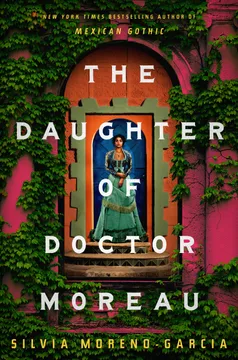
In the remote Yaxaktun estate nestled deep within the Yucatán jungle, fourteen-year-old Carlota Moreau lives a sheltered life under the care of her enigmatic father, Dr. Moreau, and their housekeeper Ramona. Unlike most children, Carlota's playmates are not quite human but hybrids—beings whose bodies blend animal and human characteristics, creations of her father's scientific genius. The estate is both paradise and prison, simultaneously protected from civil unrest outside yet also defined by secrecy. Carlota's childhood is hemmed in by comforting rituals, science lessons, and the ache of isolation. Here, the threads of her destiny are spun quietly, even as the jungle hums with watchful tension, hinting that her innocent world is on the verge of upheaval.
Arrival of Outsiders
The tranquil sanctuary is disrupted when outsiders arrive: the estate's patron, wealthy and powerful Hernando Lizalde, and Montgomery Laughton, a brooding Englishman with debts and regrets, who is to serve as the new mayordomo. Their arrival is met with nervous anticipation by Carlota and distrust by the wary hybrids. As Montgomery settles in, drawn by both curiosity and necessity, he finds himself embroiled in Dr. Moreau's strange household, caught between his role as supervisor and his own fractured past. The estate's reassuring routines begin to crack beneath the scrutiny of strangers, and Carlota, ever watchful, senses the stirrings of irreversible change both within herself and the world she thought she knew.
Unveiling Strange Creations
Dr. Moreau introduces his guests to the heart of his research: animal-human hybrids painstakingly crafted through his controversial science. In the sanctified spaces of his laboratory, he demonstrates his methods, even including young Carlota as proof of his life-saving knowledge—her weekly injections are more than simple medicine. The hybrids, each a grotesquely beautiful marvel, are presented as potential solutions to social problems, laborers immune to jungle disease and full of promise. Yet, the lines between compassion and exploitation blur. For Montgomery, the spectacle is both awe-inspiring and chilling; for Carlota, loyalty to her father grapples with a rising shame and confusion. The dignity and suffering of the hybrids become increasingly apparent, as the laboratory's wonders conceal painful realities.
Childhoods of Isolation
Carlota's world—a fortress of books and solitude—is shaped by ambiguities of origin. While cherished by her father, she feels set apart, not only from the distant world of cities and polite society but from the hybrids, too. Her companions, especially Lupe and Cachito, express cravings for freedom and recognition, clashing with Carlota's contentment and Ramona's stories of survival. For Montgomery, the ghosts of his own tormented childhood and failed marriage drive his sense of alienation. Each character's inner world is marked by loss, abandonment, and unfulfilled longing. The question of what it means to be family, to be loved—or even human—percolates beneath the estate's daily rituals. Outside, political strife and rumors of rebellion encroach, setting the stage for inevitable confrontation.
The Hybrid's Escape
When Carlota and her friends, driven by dare and defiance, break into the laboratory, they unwittingly trigger tragedy. A prematurely birthed hybrid, monstrous and suffering, breaks free, unleashing violence that shatters any illusions of harmless invention. The mayhem forces Montgomery to kill the creature, thrusting Carlota into guilt and Dr. Moreau into cold fury. Consequences ripple: the hybrids are terrified, Carlota's relationship with her father is strained, and Montgomery steps more firmly into his role as both protector and outsider. This nocturnal chaos exposes the dangers of unchecked science and childish innocence alike. In the aftermath, childhood innocence ebbs away, replaced by heavy secrets, lies, and the revelation, as boundaries between creator, creation, and family begin to blur.
Mayordomo's Dilemma
Years pass into a precarious new normal. Montgomery, now established as mayordomo, slides into dependency on alcohol while fulfilling his endless duties—managing supplies, tending livestock, and overseeing hybrids whose complex needs stretch medical and moral limits. His bond with Carlota deepens, shaped by shared burdens and unspoken longing. Meanwhile, hybrids mature uneasily, their condition always a step from disaster; old and young suffer from physical ailments, and Dr. Moreau's mixture of devotion and detachment casts a shadow. The estate balances on the edge—Dr. Moreau's scientific ambitions at odds with Montgomery's growing doubt and the hybrids' yearning for liberty. Rumors of indigenous unrest and outside threats intensify, underscoring the fragility of their haven.
Paradise Frays
The apparent peace of Yaxaktun fractures with the arrival of Lizalde's sons, particularly the radiant Eduardo, and the return of simmering social tensions. Eduardo's city-bred confidence and interest in Carlota set off a swirl of excitement, envy, and possibility. Montgomery bristles, both as an employee and as a man unable to articulate his own feelings. The hybrids sense new dangers: suspicion from outsiders, renewed vigilance from Dr. Moreau. Carlota, balancing filial duty and budding curiosity, is caught between her affection for her unusual family and the seductive vision of a wider, more glamorous existence. The lines between inside and outside, trust and betrayal, begin to fray, and beneath the surface, alliances and resentments simmer, threatening to ignite.
Suitors and Deceptions
An uneasy courtship unfolds between Carlota and Eduardo, to the delight of her father, who sees a wedding as salvation. Beneath Eduardo's charm lies a mix of genuine affection and calculation; for Carlota, the possibility of escape, love, and security is intoxicating. Yet, the estate crackles with duplicity. Montgomery, torn by jealousy and self-recrimination, battles his own impulses and is drawn into intrigues not entirely of his making. Isidro, Eduardo's cousin, senses scandal, and political gossip swirls about supplies being smuggled to rebels. Issues of dowry, inheritance, assimilation, and identity swirl, with Carlota's body and fate positioned as the price of liberty for everyone around her. The hybrids, meanwhile, remain both centerpiece and collateral in the unfolding drama.
Courtship and Collisions
The fragile courtship tips into crisis as Carlota and Eduardo consummate their relationship in secret, while external threats close in. Rumors of rebellion, financial ruin, and insurrection intersect, and Montgomery—haunted by regrets—must decide where his true loyalties lie. During a confrontation, Carlota is exposed before all as something both more and less than wholly human; her hybrid nature, long repressed and hidden, violently emerges. The revelation leads to heartbreak and panic: Eduardo recoils, Dr. Moreau's schemes shatter, and Montgomery is forced into a position of protector and avenger. The boundaries of love, family, and species collapse, propelling Carlota toward the painful knowledge of her own origins and the consequences of her father's ambitions.
The Hybrid Revolt
Threatened by the Lizalde family's resolve to seize Moreau's hybrids for their own ends, the estate becomes a fortress under siege. As Carlota fights to secure the hybrids' escape and safety, alliances shift. Old debts and complicity, both Montgomery's and Ramona's, surface in the face of violence. Hybrids, once docile and dependent, rise up to protect themselves, aided by indigenous rebel leader Cumux. The flight from Yaxaktun is marked by decisive battles, bloodshed, and sacrifice. Some hybrids perish, others escape into the untamed wild. The cost of autonomy is steep—for Montgomery, wounded and guilt-ridden; for Carlota, who must witness the destruction of her home and the end of an era.
Revelations of Origin
In the aftermath, Carlota—cast adrift and bereft—forces her dying father to reveal the details of her conception. She learns she was not born in the ordinary fashion but created: her mother was a surrogate, her body spliced with animal gemmules. Dr. Moreau's dream of perfecting nature through science has left her trapped between worlds, neither wholly human nor wholly beast. The painful legacy of secrets, lies, and manipulation culminates in her father's death, leaving Carlota with both trauma and inheritance: the key to the past, and responsibility for the future. The old patriarchal order that defined her life unravels, and Carlota stands at a crossroads, unmoored but not defeated.
The Patron's Betrayal
Betrayals mount in both love and loyalty. The Lizaldes' return for vengeance results in violence—Moreau dies, Montgomery is nearly killed, and chaos reigns. Eduardo, once lover and would-be savior, reveals himself to be as controlling and unkind as his father, seeking to keep Carlota as a possession, not a partner. Trapped by hopes for safety and loyalty to her father's memory, Carlota is almost subdued, but the bonds of domination transform into resistance. When all options are stripped away, she harnesses the animal strength and rage within her—killing Eduardo to protect herself and those she loves, severing the cycle of possession and betrayal forever.
Flight and Loss
With Yaxaktun destroyed—purchased in blood, sacrifice, and shattered illusions—Carlota and her chosen family, including Lupe and the injured Montgomery, flee to the city. Grieving loss of home, loved ones, and the tattered remnants of her innocence, Carlota must navigate a world that views her as illegitimate in more ways than one. She claims her father's inheritance after a legal struggle, only to be denied the right to bear his name. Yet freedom brings new possibility: she dreams of founding a sanatorium, of reuniting the scattered hybrids, and creating a home not out of domination, but of healing and choice. It is a new, uncertain paradise.
Violence and Transformation
Haunted by violence—her own and others'—Carlota battles guilt, alienation, and longing. Her relationships with both Montgomery and Lupe deepen into solidarity, not romance. Each must make peace with the ghosts that trail them: Montgomery departs to seek the lost hybrids, struggling against his own self-destructive urges, while Carlota prepares for a future she now owns but cannot define. The animal within is neither curse nor blessing, but an inescapable part of selfhood. Through trauma and survival, she claims agency, choosing empathy over vengeance, and a path marked by compassion and fidelity to those the world disdains.
Aftermath and Rebuilding
Emerging from mourning, Carlota rejects both the oppressive Moreau legacy and the strictures of respectability imposed by her French kin. She forges a new identity—no longer just "doctor's daughter" but a woman with resources and ambition to provide sanctuary to others. Supported by Lupe, she seeks to bring together the lost and wounded, not as specimens or workers, but as equals and kin. Love, for her, is service, acceptance, and freedom. In hope and faithful anticipation, she prepares the ground for reunions and new community, resolved to shape a healing future out of sorrow and survival.
A Name of Her Own
Ultimately, Carlota becomes nameless—refused the Moreau surname by her French relatives, freed from the boundaries of legacy and laboratory. In this new anonymity, she discovers agency, the power to name herself, to reimagine kinship and purpose beyond blood and scientific experiment. Together with Lupe, she lays plans for a real Eden: a house of sanctuary, built not by men seeking to master nature, but by those who cherish and accept it. The final image is one of quiet determination and newfound faith: Carlota standing at the gate, ready to welcome home those she loves, embracing the future with clear eyes and an open heart.
Analysis
**The Daughter of Doctor Moreau is a lush, thought-provoking reimagining of the classic mad-scientist tale, refracted through the prism of gender, colonialism, and the search for belonging. Silvia Moreno-Garcia's novel challenges the binaries that structure both science fiction and society: human/animal, male/female, civilization/savagery, love/power. Dr. Moreau's jungle experiment becomes an allegory for the violence of domination and the wounds inflicted by love that is also possession. Carlota's journey—from docile daughter and token of exchange to self-claimed, self-made woman—is a profound exploration of agency and trauma. The text interrogates the meaning of family: chosen versus created, sustaining versus controlling. Its careful attention to context—the Caste War, racial mixture, the marginalization of the indigenous, the costs of science untethered from ethics—renders its critique sharp and modern. Ultimately, the novel suggests that paradise and monstrosity are not fixed destinations but open choices, and that hope resides not in perfection, but in love, solidarity, and the will to choose one's own destiny.
Review Summary
People Also Read

Characters
Carlota Moreau
Carlota lies at the heart of the story: a girl—and later, a young woman—born from both human endeavor and animal essence. Raised in near-total isolation, she is the obedient daughter, star pupil, and naive dreamer, but beneath this docility lies an extraordinary being wrestling with longing, identity, and rage. Psychoanalytically, her trajectory moves from dependence and self-abnegation to awakening and autonomy, catalyzed by betrayal, loss, and the eventual acceptance of her hybrid nature. Her ability to both love and fight for the marginalized, sustained by deep empathy, positions her as both victim and rebel. Carlota's relationship with her father is fraught with devotion and trauma; her affections for Eduardo and Montgomery both seductive and doomed. She emerges as a complex figure—neither monster nor miracle, but a survivor forging new paradigms of kinship.
Dr. Gustave Moreau
Dr. Moreau is both creator and destroyer, a man whose brilliance is equaled by his blindness to suffering. He seeks to conquer nature, to transcend death and frailty through science, channeling his grief for lost wife and child into monstrous acts. Psychoanalytically, he embodies the patriarchal drive for mastery, rationalizing exploitation as benevolence. His affection for Carlota is genuine yet rooted in control and denial—she is both child and experiment. His relationship with his creations is one of detachment, viewing hybrids as means to an end. In the end, his illusions collapse, and his legacy is revealed to be one of pain. Moreau's fate serves as both cautionary tale and catalyst: his death opens space for new, more ethical ways of being.
Montgomery Laughton
Montgomery serves as a perennial outsider: his Englishness, failed ambitions, addiction, and tragic past render him both observer and participant. Duty, guilt, and longing churn within him; his care for Carlota and the hybrids is marked by silence and sacrifice. Psychologically, he oscillates between self-loathing and empathy, haunted by the failures of his family and inability to rescue his sister or his own lost innocence. His love for Carlota is deeply felt but tinged by awareness of its inevitable disappointment. Forced into violence to protect those he cares for, Montgomery is ultimately a tragic figure—a man who cannot quite belong or redeem himself, but who strives to do right at the critical moment. His choice to depart at the end is a gesture of humility and hope.
Lupe
Lupe is Dr. Moreau's most successful hybrid after Carlota: clever, quick, and yearning for freedom. Her kinship with Carlota alternates between rivalry and fierce affection, mirroring siblings tested by fate and circumstance. Psychologically, Lupe is the voice of dissidence—a creature who demands dignity, who questions authority, and who risks all for those she loves. Her escape attempts and readiness to fight signal the impossibility of permanently subjugating the will to autonomy. Lupe becomes Carlota's anchor—her presence ensures the latter's survival and growth. In the end, Lupe's loyalty and solidarity model new forms of family unconstrained by blood or scientific design.
Cachito
Cachito offers a lens into innocence and the longing for acceptance. Though physically marked by his animal origins, his spirit is playful, resilient, and quick to learn. His dynamic with Carlota and Lupe embodies both sibling rivalry and profound loyalty; his trust in Montgomery speaks to the emotional web of chosen kinship at Yaxaktun. When forced into violence to defend those he loves, Cachito's transformation signals the tragic costs inflicted on innocents by the schemes of their creators. Psychoanalytically, Cachito's growth marks the passage from innocence to painful experience, yet he retains hope and tenacity.
Ramona
Ramona, the Maya housekeeper, stands at the heart of the estate's ethical life—a nurturer, survivor, and mediator between worlds. Her stories, rituals, and remedies offer solace and guidance in a landscape fraught with tension. Her motivations are shaped by her own experiences of abuse and flight, granting her compassion toward the hybrids and skepticism of more powerful men. She enables acts of resistance, including aiding rebels, and forms the stable emotional base for Carlota and the household. Psychologically, Ramona's resilience and wisdom contrast with Dr. Moreau's rationalist myopia, grounding the story's ethical vision in lived experience.
Hernando Lizalde
Hernando is the embodiment of colonial and patriarchal authority: wealthy, controlling, and self-interested. His investment in Moreau's science is pragmatic—producing exploitable labor, not ethical marvels. Unmoved by suffering, he is driven by profit and fears rebellion, representing the broader system of oppression shadowing the estate. When threatened, he resorts to violence, and his undoing is marked by cruelty both to kin and strangers. His dynamic with his son Eduardo lays bare the generational cycle of domination and expectation.
Eduardo Lizalde
Eduardo arrives as the harbinger of modern society—fresh, attractive, and seemingly full of promise. Beneath the veneer, his affections are shallow, power-hungry, and transactional. He is both a product and perpetuator of the systems that cage Carlota: his love turns to possession, his promises to threats. His unwillingness to accept Carlota's difference reveals the limits of conventional romance and acceptance. Psychologically, Eduardo is the shifting mirror of Carlota's desire for escape: what begins as liberation is unmasked as another form of captivity.
Isidro
Isidro functions as both observer and agent: his suspicions, interventions, and conservatism contribute to the unravelling of the estate's fragile peace. Jealous of Eduardo, he operates within the codes of patriarchy but is less dangerous than his uncle or cousin. His actions and biases underscore the unbridgeable chasm between the estate's society and the world beyond, setting the disaster in motion.
The Hybrids
The hybrid population as a group embodies both the hope for a new humanity and the tragedy of exploitation. Their community is marked by solidarity, suffering, and yearning to choose. Each individual, from Aj Kaab to K'an to the aging and the young, reflects a facet of the costs of the doctor's ambitions. Ultimately, their revolt and escape signify the power of resistance and the possibility of kinship beyond the laboratory, echoing Carlota's own journey toward self-acceptance and agency.
Plot Devices
Dual perspective and alternating voices
By alternating between Carlota and Montgomery, the novel generates a layered, fractured structure that enables readers to inhabit intersecting identities—insider and outsider, human and hybrid, colonized and colonizer. This device destabilizes easy sympathies, inviting readers to question every account and every motivation. Their alternating voices parallel their gradual convergence: as both become more honest with themselves, the narrative itself shuffles back and forth between reason and emotion, action and reflection.
The hybrid as symbol
Hybrids function not just as science-fictional marvels, but as potent metaphors for mixed identities, colonial subjects, and the marginalized. The tension between appearance and essence, control and freedom, marks every relationship—parent and child, patron and servant, lover and beloved. Through foreshadowing, the hybrids' bodies—ailing, beautiful, abnormal—mirror both the injustice of their creation and the resilience of their will. Their ultimate revolt and escape embody the themes of agency, self-determination, and the destructiveness of mastery.
Secrecy, lies, and the revelation
The estate is a crucible of secrets, from Carlota's true origins to Ramona's assistance of rebels and Montgomery's silent sufferings. Tight control of information—a classic gothic device—heightens narrative and emotional stakes. Every confession is a key to unlocking not only plot but character; the climactic revelation of Carlota's hybrid nature collapses the system of lies and enables transformation, both personal and collective.
Foil relationships and doubling
Carlota's connections—with her father, with Lupe, with Eduardo and Montgomery—mirror and invert each other. Each pairing explores kinship, power, and desire: Moreau's "daughter" is unfinished project and jailer; Lupe and Carlota are sisters but not by blood; Montgomery is both failed father/brother and potential lover. Eduardo embodies both promised escape and new oppression. The proliferation of doubles—sanctuary and prison, family and experiment, paradise and jungle—constructs a world where meaning is always unstable.
Historical and gothic tropes
The use of an isolated estate, the laboratory, the monstrous creation—these gothic tropes are cunningly transplanted into the context of colonial Mexico, enriching original literary resonances. Historical detail—the Caste War, debt peonage, the multicultural reality of the Yucatán—laces the novel with echoes of real injustice and rebellion, highlighting the universal and the particular in human suffering and resilience.
About the Author

Download PDF
Download EPUB
.epub digital book format is ideal for reading ebooks on phones, tablets, and e-readers.








































