
Plot Summary
Princess in the Shadows
Devon Fairweather, a book eater, lives on the fringes of human society, hiding her true nature and that of her son, Cai. She is a predator forced to act like prey, navigating a world that doesn't know she exists. Her life is a careful performance—buying books to eat, feeding her son, and avoiding detection. Devon's existence is defined by secrecy, guilt, and the constant threat of discovery. She is haunted by her past and the rules of her Family, which dictate every aspect of her life. The darkness she moves through is both literal and metaphorical, as she struggles to protect her son from a world that would destroy them both if it knew the truth.
Hunger and Motherhood
Devon's son, Cai, is a mind eater—a rare and feared variant among their kind, who must consume human minds to survive. Devon's love for Cai is fierce and desperate, driving her to commit terrible acts to keep him alive. She lures victims for him, choosing those she deems "good" in a futile attempt to preserve his innocence. Each feeding erases a life and overwrites parts of Cai's identity, leaving Devon wracked with guilt and fear for his soul. Motherhood, for Devon, is a series of impossible choices, each one more monstrous than the last. Her devotion is both her strength and her curse, binding her to a cycle of violence and regret.
The Family's Fairy Tales
Devon's childhood in Fairweather Manor is steeped in the rituals and stories of the Six Families, a secretive society of book eaters. She is the only girl among many brothers, cherished and isolated, raised on fairy tales that teach obedience and sacrifice. The Family's traditions are both a source of identity and a cage, dictating her future as a bride to be traded for alliances. The stories she consumes shape her understanding of the world, instilling in her a longing for agency even as they reinforce her role as a commodity. The Family's love is conditional, their protection suffocating, and their rules absolute.
Forbidden Knowledge
Devon's hunger for knowledge extends beyond the books she is allowed to eat. She secretly reads, an act forbidden to book eaters, and questions the purpose of their existence. Her encounter with a human journalist, Mani, exposes her to the wider world and plants seeds of doubt about the Family's insular ways. Devon's curiosity is dangerous, leading her to challenge the boundaries set for her and to dream of a life beyond the manor's walls. The forbidden knowledge she acquires becomes both a weapon and a liability, fueling her eventual rebellion against the Family's control.
The Price of Survival
As Devon grows, she is forced into marriage contracts designed to preserve the Family's dwindling bloodlines. Her body becomes a vessel for children she will not be allowed to raise, her desires subsumed by duty. The birth of her daughter, Salem, awakens a fierce protectiveness, but the Family's rules demand separation. Devon's attempts to keep her child are met with manipulation and betrayal, teaching her that survival often requires complicity in her own oppression. Each act of resistance is met with punishment, and each compromise erodes her sense of self.
Marriage and Betrayal
Devon's marriages are transactional, devoid of love and marked by power imbalances. Her husbands range from indifferent to cruel, and her attempts at connection are met with disappointment or violence. The birth of her son, Cai, is both a blessing and a curse, as his mind eater nature makes him a target for the Family's fear and the knights' control. Devon's alliances shift as she navigates betrayals from those she once trusted, including her own brother, Ramsey. The cycle of marriage and loss leaves her hardened, her capacity for trust diminished.
The Monster Within
When Devon is pushed to the brink—her son threatened, her own life in danger—she discovers a capacity for violence that both terrifies and empowers her. She kills to protect Cai, crossing a line that cannot be uncrossed. The act is both a liberation and a damnation, marking her as a monster in her own eyes and in the eyes of others. Devon's identity fractures as she grapples with the consequences of her actions, her love for Cai both justifying and condemning her choices. The monster within is not just hunger, but the will to survive at any cost.
Exile and Escape
Branded a murderer and fugitive, Devon flees the Families with Cai, pursued by knights and haunted by the ghosts of her victims. Life on the run is a constant negotiation between safety and exposure, hunger and guilt. Devon's only hope lies in finding the Ravenscars, a renegade Family rumored to possess the drug Redemption, which could free Cai from his monstrous hunger. The journey is fraught with danger, betrayal, and the ever-present threat of discovery. Exile becomes both a punishment and a crucible, forging Devon into something new.
The Search for Redemption
Redemption, the drug that allows mind eaters to survive on books instead of brains, becomes Devon's obsession. Her quest to find it is a race against time, as Cai's hunger grows and her options dwindle. Along the way, she forms uneasy alliances—with Hester, a mind eater with her own scars; with Mani, the human journalist now entangled in the Ravenscars' fate; and with Jarrow, a friend from her past. Each ally brings new complications, and each step toward Redemption is shadowed by the possibility of failure. Hope is a fragile thing, easily shattered.
Allies and Enemies
Devon's journey brings her into contact with a cast of characters whose loyalties are as uncertain as her own. Hester, haunted by her brother Killock's descent into madness, becomes both confidante and co-conspirator. Mani, once a victim, now holds the keys to the Ravenscars' secrets. Jarrow, exiled and wounded, offers technical expertise and emotional support. Against them stand the knights, led by Ramsey, whose love for Devon is twisted by duty and resentment. Every alliance is fraught with risk, and every enemy is a mirror of Devon's own potential for betrayal.
The House of Saints
The Ravenscars, once a beacon of hope, are revealed to be a house of mind eaters led by Killock, whose vision of freedom has curdled into cultish tyranny. The promise of sanctuary is undermined by the reality of violence, control, and the perversion of communion into ritualized murder. Devon and Cai are welcomed as kin, but the cost of belonging is too high. The House of Saints is both a refuge and a trap, its walls echoing with the same cruelties Devon fled. The line between savior and oppressor blurs, and Devon must decide where her loyalties lie.
The Coup and the Cult
Killock's coup against the old patriarch was meant to free the mind eaters, but instead it replaces one form of oppression with another. The cult of personality that grows around him is fueled by trauma, hunger, and the seductive power of shared suffering. Hester, once hopeful, is now trapped by loyalty and fear. Devon recognizes the same patterns she fought to escape—control masquerading as salvation, violence justified by love. The revolution devours its children, and Devon must choose whether to become complicit or to break free once more.
The Labyrinth Burns
The arrival of the knights at Traquair House ignites a final, bloody confrontation. Devon, Hester, Cai, and Mani flee through the burning labyrinth, pursued by Ramsey and the remnants of the old order. Betrayals are revealed, debts are paid in blood, and the cost of survival is counted in bodies. The maze becomes a crucible, burning away illusions and forcing each character to confront the truth of who they are. In the chaos, Devon and Cai are finally freed from Ramsey's control, but at the cost of family, home, and innocence.
Blood and Family
The final battle is not just against external enemies, but against the bonds of blood and the legacy of violence. Devon and Cai must face the consequences of their choices—Cai's consumption of Ramsey, Devon's willingness to kill for her son, Hester's betrayal of her brother. Family is revealed as both a source of strength and a wellspring of pain, its ties binding and wounding in equal measure. In the aftermath, the survivors are left to reckon with what they have become, and what they have lost.
No More Fairy Tales
With the old orders destroyed and the future uncertain, Devon and Cai step into a world stripped of comforting stories. The fairy tales that once shaped Devon's understanding of herself and her place in the world are revealed as lies—tools of control, not liberation. The promise of a happy ending is gone, replaced by the hard truth that survival is its own kind of victory. Devon's journey is not toward a fairy tale ending, but toward a new beginning forged in pain, love, and the refusal to surrender.
Monsters Choose Each Other
In the ruins of their old lives, Devon, Cai, Hester, Mani, and Jarrow form a new kind of family—one bound not by blood or tradition, but by choice and shared struggle. They are monsters, each in their own way, but they choose each other. The bonds they forge are imperfect, fraught with guilt and regret, but they are real. Together, they reject the narratives imposed on them and claim the right to define themselves. Love, in this new world, is not redemptive or pure, but it is enough.
The Road to Freedom
With the knights defeated and the Ravenscars in ruins, Devon and her chosen family make their escape. The road ahead is uncertain, the future unwritten. They carry with them the scars of their pasts, the weight of their choices, and the fragile hope that they can build something better. The journey is not an ending, but a beginning—a chance to live outside the boundaries of the stories that once confined them. Freedom is not a destination, but a process, and every step is an act of defiance.
Promises and New Beginnings
As they cross the bridge into the unknown, Devon reflects on the promises she has made—to Cai, to Salem, to herself. The past cannot be undone, and the wounds will never fully heal, but the future is theirs to claim. The monsters have chosen each other, and in doing so, have created the possibility of something new. There are no more fairy tales, no more happy endings promised by others. There is only the promise they make to each other: to keep going, to keep choosing, to keep loving, no matter the cost.
Analysis
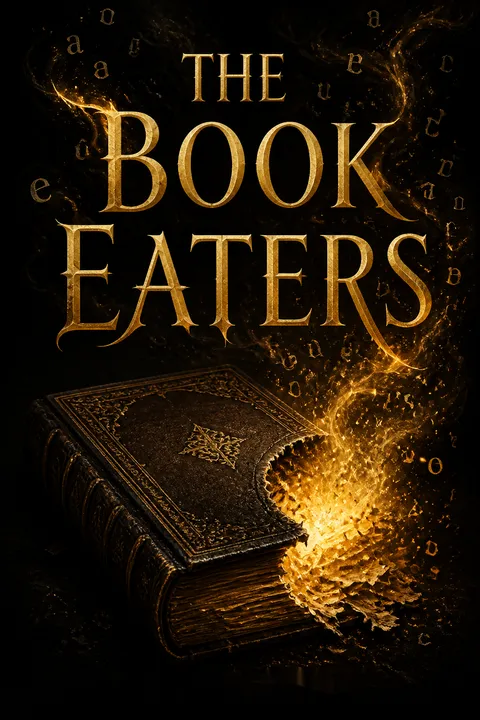
Sunyi Dean's The Book Eaters is a dark, inventive reimagining of the vampire myth, blending horror, fantasy, and feminist critique into a story about the cost of survival and the possibility of self-determination. At its core, the novel interrogates the stories we inherit—fairy tales, family myths, cultural scripts—and the ways they can both sustain and imprison us. Devon's journey is a relentless stripping away of illusion: she learns that love is not redemptive, that tradition is a cage, and that survival often requires monstrous choices. The book's central metaphor—the hunger for books and minds—serves as a powerful lens for exploring desire, trauma, and the legacy of violence. Dean refuses easy answers or happy endings; instead, she offers a vision of freedom that is hard-won, uncertain, and always incomplete. The novel's greatest strength lies in its refusal to flinch from the darkness of its subject matter, while still holding space for hope, connection, and the possibility of change. In a world where the old stories no longer serve, The Book Eaters asks what it means to write your own.
Review Summary
The Book Eaters receives mixed reviews, with many praising its unique premise and atmospheric writing. Readers appreciate the exploration of motherhood, identity, and oppressive systems. Some find the story gripping and thought-provoking, while others feel it falls short of its potential. Criticisms include underdeveloped worldbuilding, flat characters, and a plot that doesn't fully capitalize on the book-eating concept. Despite these issues, many reviewers still recommend it for its originality and dark fantasy elements.
People Also Read
Characters
Devon Fairweather
Devon is the protagonist, a book eater whose life is defined by the tension between love and violence. Raised in the suffocating traditions of the Six Families, she is both a victim and a rebel, shaped by fairy tales and forced marriages. Her love for her children—especially her mind eater son, Cai—drives her to acts of both tenderness and brutality. Devon's psychological complexity lies in her capacity for self-sacrifice and her willingness to become a monster to protect those she loves. Her journey is one of painful self-discovery, as she learns to reject the narratives imposed on her and claim agency over her own life. Her relationships—with her children, her brother Ramsey, her friend Hester, and others—are fraught with betrayal, guilt, and the desperate hope for redemption.
Cai Devonson
Cai is Devon's son, a mind eater whose survival depends on consuming human minds. His identity is a patchwork of the people he has fed on, leaving him both precociously wise and heartbreakingly lost. Cai's relationship with Devon is central—he is both her reason for living and the source of her greatest guilt. As he grows, Cai struggles with the burden of his hunger and the knowledge of what he must do to survive. His psychological arc is one of self-acceptance and the search for agency, as he moves from being a passive victim of his nature to an active participant in his own fate. His bond with Devon is tested by secrets, lies, and the violence they are forced to commit together.
Hester Ravenscar
Hester is a mind eater and member of the Ravenscar family, marked by trauma and a longing for a better world. She is both a victim of her brother Killock's cult and a participant in its violence, having sacrificed her own ability to feed in the hope of creating a safer haven. Hester's relationship with Devon is complex—initially wary, then deeply bonded by shared suffering and mutual recognition. Her psychological journey is one of disillusionment and the painful acceptance that love and loyalty can be as destructive as they are redemptive. Hester's choice to join Devon in escape is both an act of self-preservation and a leap of faith in the possibility of something better.
Ramsey Fairweather
Ramsey is Devon's brother and a knight, tasked with enforcing the Families' rules and hunting down mind eaters. His love for Devon is twisted by resentment and duty, leading him to become both her protector and her greatest threat. Ramsey's psychological makeup is defined by his need for control and his inability to reconcile his loyalty to the Family with his affection for his sister. His descent into violence and eventual death at Cai's hands is both tragic and inevitable, the culmination of a lifetime spent serving a system that ultimately destroys him.
Killock Ravenscar
Killock is the patriarch of the Ravenscar mind eaters, a revolutionary whose vision of freedom devolves into cultish tyranny. Consumed by the minds he has eaten—especially his father's—Killock becomes a vessel for the traumas and ambitions of his predecessors. His psychological unraveling is both a personal tragedy and a cautionary tale about the dangers of unchecked power and the seductive allure of martyrdom. Killock's relationship with Hester is fraught with love, disappointment, and the unbridgeable gulf between their ideals.
Mani (Amarinder Patel)
Mani is a human journalist who stumbles into the world of the book eaters and becomes an unwilling participant in their dramas. His role as scribe and facilitator gives him unique insight into the Families' secrets, but also makes him a perpetual outsider. Mani's psychological resilience is tested by years of captivity and the constant threat of violence. His alliance with Devon is pragmatic, rooted in mutual need and a shared desire for escape. Mani represents the possibility of survival without complicity, and the importance of bearing witness.
Jarrow Easterbrook
Jarrow is Devon's friend from her second marriage, a rare source of kindness and support in a world defined by betrayal. Exiled for his refusal to conform, Jarrow becomes Devon's lifeline, providing the technical expertise and emotional grounding she needs to escape. His relationship with his sister Victoria and his loyalty to Devon are central to his character, reflecting the theme of chosen family. Jarrow's psychological arc is one of quiet heroism, marked by the willingness to risk everything for those he loves.
Victoria Easterbrook
Victoria is Jarrow's sister, a former bride whose trauma has left her withdrawn and damaged. Her presence is a reminder of the cost of the Families' traditions and the resilience required to survive them. Victoria's decision to join Devon and Jarrow in escape is an act of quiet defiance, a refusal to be defined by her suffering. Her psychological journey is one of gradual reawakening, as she moves from silence to solidarity.
Salem Winterfield
Salem is Devon's first child, a daughter taken from her by the Family's rules. Though physically absent for most of the narrative, Salem's presence haunts Devon, representing both the pain of loss and the hope for eventual reunion. Salem is the embodiment of the future Devon fights for—a life beyond the Families' control, where love is not a weapon or a curse.
The Knights
The knights are the enforcers of the Families' rules, tasked with controlling mind eaters and arranging marriages. They are both jailers and victims, clinging to a fading power as the world changes around them. Their psychological makeup is defined by loyalty, fear, and the desperate need to maintain relevance. The knights' decline mirrors the collapse of the old order, and their violence is both a symptom and a cause of the Families' decay.
Plot Devices
Dual Narrative Structure
The novel alternates between Devon's present-day flight and her memories of childhood, marriage, and motherhood. This structure allows the reader to see the cumulative effects of trauma, tradition, and resistance on Devon's psyche. The gradual revelation of secrets—about the Families, the nature of mind eaters, and Devon's own crimes—creates a sense of mounting tension and inevitability. The dual narrative structure also highlights the cyclical nature of violence and the difficulty of breaking free from inherited patterns.
The Fairy Tale Motif
Fairy tales are both literal and metaphorical nourishment for the book eaters, shaping their worldview and justifying their oppression. The motif is used to critique the ways in which stories can be weaponized—teaching obedience, reinforcing gender roles, and masking violence. As Devon's journey progresses, she learns to reject these narratives, recognizing them as tools of control rather than sources of hope. The subversion of the fairy tale motif is central to the novel's critique of tradition and its celebration of agency.
The Hunger Metaphor
Hunger—whether for books, minds, love, or freedom—is the central metaphor of the novel. It represents both the literal needs of the characters and their deeper psychological and emotional longings. The mind eaters' hunger is a curse that drives them to violence, but it is also a metaphor for the ways in which desire can shape and distort identity. The struggle to control, satisfy, or transcend hunger is at the heart of every character's arc.
Foreshadowing and Repetition
The novel uses foreshadowing and repetition to create a sense of inevitability and to highlight the difficulty of escaping the past. Phrases, images, and events recur—Devon's dreams of hell, the question "Are you a good person?", the motif of the labyrinth—underscoring the cyclical nature of trauma and the challenge of forging a new path. These devices also serve to connect the personal and the political, showing how individual choices are shaped by larger systems of power.
The Found Family Trope
As Devon's ties to her biological family are severed by betrayal and violence, she forms a new family with Cai, Hester, Mani, Jarrow, and Victoria. This found family is imperfect, forged in crisis, but it represents the possibility of connection and solidarity outside the structures of tradition and blood. The trope is used to challenge the idea that family is destiny, suggesting instead that love and loyalty are choices.
Download PDF
Download EPUB
.epub digital book format is ideal for reading ebooks on phones, tablets, and e-readers.








































