
Key Takeaways
1. Greek Intellectual Life Flourished Under Roman Rule
One such is the period of Greek history between the point when Greece came definitively under Roman rule in the second half of the first century BC up to the time when Christianity became the dominant religion of the empire in the fourth century AD.
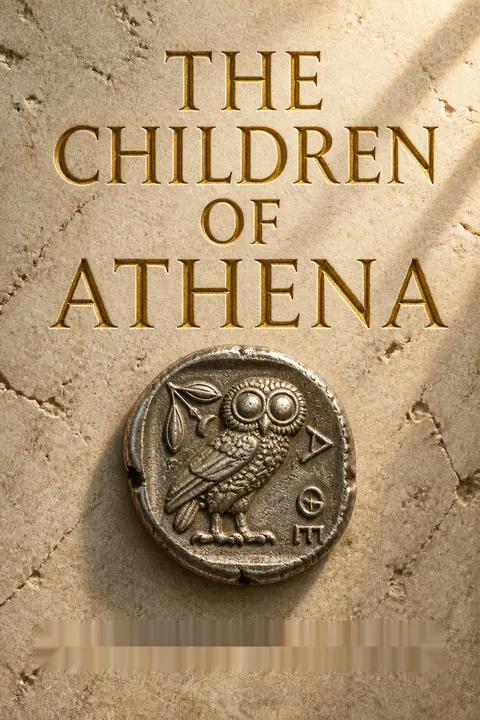
A vibrant era. Contrary to historical neglect, the centuries of Roman rule over Greece (2nd century BC to 5th century AD) were a period of remarkable intellectual activity, not indolence. This era, often overshadowed by the Roman Empire's exploits, saw Greek thinkers, aptly named "Children of Athena," continue to produce significant works across diverse disciplines. The stability brought by the Pax Romana provided a fertile ground for intellectual pursuits, allowing wealthy, educated Greeks to pursue knowledge without the constant threat of war.
Imperial Hellenism. While Romans initially viewed Greek culture with suspicion, a mutual respect gradually emerged. Educated Romans were drawn to Greek philosophy and science, often speaking Greek themselves, and recognized the Greeks as the originators of civilization and literature. This "imperial Hellenism" saw Roman patronage of Greek cities and institutions, with emperors like Hadrian actively supporting Greek culture and heroes, further cementing the integration of the two elites.
Acquiescence and adaptation. The Greeks, having experienced the brutality of Roman conquest, largely accepted Roman hegemony as an unchangeable reality. Shrewd commentators like Polybius and Plutarch advised their countrymen to embrace this new order, recognizing that Roman administration, though dominant, was often light-handed, allowing Greek cities to manage their own affairs and prosper. This pragmatic adaptation ensured the survival and continued evolution of Greek intellectual traditions.
2. Paideia: The Enduring Foundation of Greek Culture
The commitment to personal virtue extended to the ambition of bringing concord to city life.
A holistic education. Paideia, the Greek ideal of comprehensive education, remained central to intellectual life, focusing on virtue, wisdom, and ethical living. This rigorous training, starting from an early age, encompassed grammar, literature, and rhetoric, often culminating in advanced studies in philosophy in centers like Athens and Alexandria. It instilled a profound sense of cultural heritage and a powerful self-confidence in the Greek elite.
The pursuit of excellence. For these "men of culture" (pepaideumenoi), the search for arete (excellence) and eudaimonia (flourishing) was paramount, extending from individual self-improvement to the harmonious functioning of city life. They believed that true leadership stemmed from self-governance and a commitment to civic concord, often expressed through eloquent oratory. This emphasis on public service and moral leadership distinguished them from those outside their elite circle.
Textual mastery. A defining characteristic of paideia was an unparalleled absorption in centuries of classical texts, from Homer to Plato and Aristotle. Despite the precariousness of papyrus scrolls and the challenges of copying, libraries in cities like Alexandria, Pergamum, and Ephesus provided access to a vast literary heritage. This deep textual knowledge allowed intellectuals not only to draw inspiration from the past but also to manipulate and reinterpret these sources to create original works.
3. Diverse Philosophical Schools Shaped Thought and Debate
Philosophy, as pioneered by the Greeks, concerned itself with making the Earth and the universe surrounding it intelligible and considering the possibilities of spiritual dimensions beyond its observable reality.
A vibrant intellectual landscape. The Roman period saw the continued vitality of the major Greek philosophical schools, each offering distinct approaches to understanding the world and achieving a virtuous life. These schools provided frameworks for intense debate, fostering a dynamic intellectual environment where ideas were constantly challenged and refined.
Key schools and their tenets:
- Platonism: Emphasized the immaterial world of Forms, the eternal soul, and the pursuit of knowledge through reason. Plato's Dialogues remained highly influential, inspiring later developments like Middle Platonism and Neoplatonism.
- Aristotelianism: Focused on empirical observation, logic, and understanding the natural world. Peripatetics meticulously studied and commented on Aristotle's vast body of work, ensuring its preservation and influence.
- Stoicism: Advocated living in harmony with a benevolent, divinely ordered cosmos, emphasizing self-discipline, arete, and active participation in society. It resonated strongly with Roman values.
- Epicureanism: Sought tranquility through the avoidance of mental anxiety and physical pain, believing in an atomic universe and the unimportance of gods in human affairs.
- Scepticism: Questioned the possibility of certain knowledge, advocating for a suspension of judgment to achieve peace of mind.
- Cynicism: Rejected all social conventions and material possessions, embracing an ascetic, often provocative, lifestyle to achieve true freedom.
Fluidity and synthesis. While schools often engaged in fierce rivalries, there was also significant intellectual fluidity. Philosophers frequently drew insights from different traditions, and rhetoricians incorporated philosophical ideas into their speeches. This cross-pollination of ideas ensured that Greek philosophy remained a living tradition, constantly evolving and adapting to new challenges.
4. Historians and Geographers Documented a Changing World
It is not the historian’s business to show off his ability to his readers, but rather to devote his whole energy to finding out and setting down what was really and truly said.
Chronicling Roman ascent. Historians like Polybius, writing in the 2nd century BC, meticulously documented Rome's rise to power, analyzing its military strategies and unique constitutional balance. His Universal History aimed to explain how Rome conquered the Mediterranean, offering a pragmatic perspective on Greek acquiescence to Roman hegemony, even if he later expressed reservations about Roman ruthlessness.
Mapping the known world. Geographers such as Strabo, in his Geography, provided comprehensive surveys of the Mediterranean world, integrating philosophical insights with detailed topographical and ethnographic observations. He revered Homer as a foundational geographer and drew on a vast array of sources, including earlier scientists like Eratosthenes and Hipparchus, to describe the relationship between peoples, climate, and environment.
Diverse perspectives. Arrian, a Roman citizen and governor, chronicled Alexander the Great's conquests in his Anabasis, offering a military perspective while also critically assessing Alexander's character. Pausanias, in his Guide to Greece, meticulously documented ancient sites, myths, and cults, often highlighting the Greek struggle for freedom against both foreign and internal adversaries, providing invaluable information for modern archaeologists. These works, though varied in scope and style, collectively preserved a rich understanding of the past and the physical world.
5. Science and Medicine Advanced Through Empirical Inquiry
I have had an unceasing inquisitiveness regarding knowledge of this subject [the healing power of plants].
Pioneering botany. Dioscorides, a physician and botanist of the 1st century AD, exemplified empirical inquiry in his De materia medica, the most comprehensive herbal to survive from antiquity. He meticulously documented some 600 plants, 35 animal extracts, and 90 minerals, detailing their properties, uses, harvesting methods, and side-effects. His work, based on extensive travel and observation, became an authoritative medical text for over 16 centuries.
The father of experimental physiology. Galen of Pergamum, the most influential physician after Hippocrates, seamlessly integrated philosophy, logic, and empirical medical practice. His rigorous approach involved detailed patient examinations, pulse diagnosis, and even live animal dissections to understand anatomy and physiology. Though some observations were flawed (e.g., blood circulation), his work, particularly On the Usefulness of Parts of the Body, established the brain as the control center and advanced understanding of nerves and digestion, earning him the title of "father of experimental physiology."
Mathematical astronomy and geography. Claudius Ptolemy, working in Alexandria in the 2nd century AD, combined observation with mathematical logic to create monumental scientific works. His Almagest presented a sophisticated Earth-centered model of the universe, predicting planetary movements with remarkable accuracy and compiling a catalogue of over a thousand stars. His Geographike established the use of longitude and latitude for mapping, providing a framework that influenced cartography for centuries, even if his Earth circumference calculations were flawed.
6. Orators and Satirists Reflected and Challenged Society
For me, oratory means everything, signifies everything.
The power of the spoken word. Oratory was the most important medium for transmitting knowledge and influencing public opinion in the Greek world, with rhetoricians like Dio Chrysostom and Aelius Aristides achieving celebrity status. These masters of the "Second Sophistic" honed their skills through rigorous paideia, delivering eloquent speeches that blended philosophical principles with civic concerns, often in grand public spaces like theatres and agoras. They used their influence to advocate for harmonious city life, secure imperial patronage, and promote their cities' prestige.
Satirical critiques. Lucian of Samosata, a Syrian outsider, used satire to brilliantly mock the pretensions of his age, from the absurdities of philosophical schools to the credulity of religious cults. His works, like Philosophies for Sale and A True Story, challenged conventions and exposed charlatans, offering a witty, often cynical, commentary on the intellectual and social landscape. Lucian's sharp observations provide invaluable insights into the cultural dynamics and intellectual debates of the 2nd century AD.
Philanthropy and public image. Wealthy figures like Herodes Atticus, a prominent Athenian orator and Roman senator, channeled their immense fortunes into grand philanthropic projects, such as the Odeion in Athens and the Nymphaeum at Olympia. These benefactions served not only to embellish cities and provide public amenities but also to enhance the patrons' status and leave a lasting legacy, reflecting a complex interplay between personal ambition, civic duty, and public perception.
7. Neoplatonism Bridged Pagan and Christian Thought
Sleeplessly alert, pure of soul, ever striving towards the divine which he loved with all his being, he laboured strenuously to free himself and rise above the bitter waves of this blood-drenched life.
Plotinus's synthesis. Plotinus, the last great philosopher of antiquity, reformulated Platonism into Neoplatonism, a coherent system that profoundly influenced later religious thought. His Enneads, compiled by his student Porphyry, posited a hierarchical reality emanating from "the One" (an ineffable, transcendent source), through the Intellect (containing Platonic Ideas), to the World Soul, and finally to passive matter. This framework offered a path to mystical contemplation and reunion with the divine.
Alexandrian intellectual fusion. In Alexandria, theologians like Clement and Origen embraced Greek philosophy, particularly Platonism and Stoicism, as preparatory studies for Christianity. They argued that Greek philosophy was not an alternative but a culmination, a "stolen truth" from earlier Jewish prophets like Moses. This approach allowed them to integrate classical learning with Christian doctrine, creating a sophisticated theological tradition that contrasted with the more anti-pagan sentiments in the Latin West.
Hypatia: A beacon of learning. Hypatia, a female Neoplatonist philosopher and mathematician in early 5th-century Alexandria, exemplified this intellectual synthesis. She taught both pagan and Christian students, emphasizing mathematical logic as a gateway to philosophical understanding and virtuous living. Her school, rooted in Plotinus's less aggressive doctrines, represented a final flourishing of broad, inclusive pagan scholarship before the increasing assertiveness of Christian orthodoxy.
8. The Rise of Christianity Transformed the Intellectual Landscape
The final resolution created a very different intellectual and cultural world from that of classical antiquity and the Hellenistic centuries.
From toleration to orthodoxy. The 4th century witnessed a dramatic shift as Christianity moved from a tolerated religion to the dominant faith of the Roman Empire. Emperor Constantine's Edict of Milan (313) granted toleration, but his successors, notably Theodosius, actively promoted a specific Trinitarian orthodoxy (Father, Son, and Holy Spirit as "consubstantial") at councils like Nicaea (325) and Constantinople (381). This imperial imposition of doctrine marked a departure from the fluid, open-ended philosophical debates of earlier centuries.
Suppression of paganism. Theodosius's decrees in the 390s banned all pagan shrines and festivals, leading to widespread destruction of temples and statues by zealous monks and bishops. This systematic dismantling of pagan institutions, coupled with the rise of powerful bishops as key civic figures, fundamentally altered the cultural and intellectual environment. The traditional paideia that had sustained Greek learning for centuries found itself under threat, with many schools closing or shifting their focus.
The murder of Hypatia. The brutal murder of Hypatia in 415 by a Christian mob in Alexandria symbolized the tragic consequences of this religious zealotry. Her death extinguished a vibrant center of pagan philosophical and mathematical learning, marking a turning point where the open exchange between pagan and Christian intellectuals became increasingly difficult. This period saw a narrowing of acceptable discourse, with theological conformity prioritized over intellectual diversity.
9. The Enduring Legacy of Greek Thought Across Civilizations
All told, there are very few scientific writers, whether from antiquity or any other historical period, whose work so strongly influenced posterity as did Ptolemy’s.
Survival and transmission. Despite the decline of paganism and the challenges of manuscript preservation, many Greek texts survived, often through Byzantine scholarship or Arabic translations. Works by Dioscorides and Galen became canonical medical texts in the Byzantine, Islamic, and later Latin worlds for centuries, while Ptolemy's Almagest and Geographike profoundly shaped astronomy and cartography until the Renaissance.
Renaissance rediscovery. The Renaissance saw a fervent rediscovery of Greek originals, often brought to the West by Byzantine scholars. Plutarch's Parallel Lives, translated into Latin and vernaculars, became a foundational text for understanding classical heroes and republican virtues, influencing figures like Montaigne and Shakespeare. Lucian's satires, championed by Erasmus, offered a model for witty critique of superstition and pretension.
Modern relevance. The intellectual contributions of these Greek thinkers continue to resonate today. Epictetus's Stoicism informs modern mindfulness and cognitive therapies, while Hypatia's story inspires discussions on reason and religious intolerance. Pausanias's Guide to Greece remains an invaluable resource for archaeologists and cultural historians, demonstrating the enduring power of detailed observation and historical memory.
Review Summary
Reviewers widely praise The Children of Athena: Greek Intellectuals in the Age of Rome as an engaging and accessible survey of Greek intellectual life under Roman rule, filling a neglected historical gap. Freeman's biographical approach, covering figures like Plutarch, Galen, and Hypatia, earns consistent acclaim for its clarity and scholarship. Most criticisms are minor, citing occasional dryness, the biographical format's unevenness, and a lack of helpful back matter such as maps and character guides. The book is broadly recommended for both casual readers and those with deeper academic interests in classical antiquity.
People Also Read




Download PDF
Download EPUB
.epub digital book format is ideal for reading ebooks on phones, tablets, and e-readers.








































