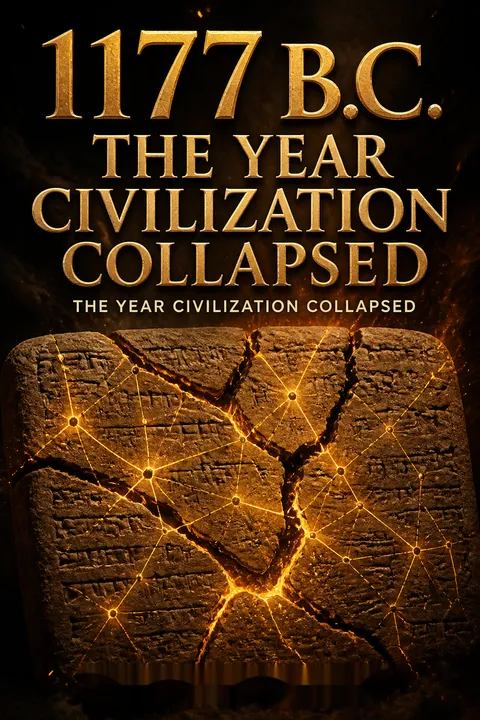

Key Takeaways
1. The Late Bronze Age fostered an unprecedented era of globalized interconnectedness.
The existence of perishable trade goods can sometimes be identified in written texts or by depiction in wall paintings that have survived to the present.
A vibrant network. From approximately 1500 BC to 1200 BC, the Mediterranean region, stretching from Greece and Italy to Egypt and Mesopotamia, was a highly interconnected world. This era saw extensive diplomatic, commercial, and cultural exchanges between major powers like the Minoans, Mycenaeans, Hittites, Egyptians, Babylonians, Assyrians, Mitannians, and Cypriots. Evidence for this globalization includes:
- Minoan frescoes in Egyptian palaces (e.g., Tell ed-Dab‘a)
- Egyptian artifacts in the Aegean (e.g., Amenhotep III plaques at Mycenae)
- Near Eastern goods in Greece (e.g., tin, lapis lazuli on Uluburun shipwreck)
Diplomacy and trade. International relations were often conducted through elaborate "gift giving" between kings, as documented in the Amarna Letters. These exchanges, while ceremonial, masked underlying commercial motives and fostered a sense of "brotherhood" among rulers. Messengers often served as both diplomats and merchants, facilitating the flow of goods and ideas across vast distances.
- Royal marriages cemented alliances (e.g., Amenhotep III marrying Mitannian and Babylonian princesses).
- Requests for skilled artisans, physicians, and even specific raw materials like gold and tin were common.
Cultural exchange. Beyond material goods, ideas and innovations also traveled along these routes. Similarities between epic tales (Gilgamesh and Homer) and architectural techniques (Cyclopean masonry in Greece and Hittite structures) suggest a deep level of cultural diffusion. This cosmopolitan environment created a rich tapestry of shared knowledge and influence, making the Late Bronze Age a truly globalized society.
2. The "Sea Peoples" were a complex, multifaceted phenomenon, not simply destructive invaders.
So often fingered by earlier scholars as the sole culprits responsible for the end of civilization in this widespread area, they may have been as much the victims as the oppressors.
Enigmatic identity. The "Sea Peoples" were a confederation of diverse groups, including the Peleset (Philistines), Tjekker, Shekelesh, Shardana, Danuna, and Weshesh, who appeared in the Eastern Mediterranean around 1207 BC and again in 1177 BC. Egyptian records, particularly those of Pharaoh Ramses III at Medinet Habu, depict them as marauding invaders who swept through the region, destroying kingdoms. However, their origins and motivations remain debated.
- Possible origins: Sicily, Sardinia, Italy, Aegean, western Anatolia, or Cyprus.
- Egyptian depictions show varied attire, suggesting diverse cultural backgrounds.
Beyond simple invasion. While they undoubtedly caused destruction, archaeological evidence suggests their role was more nuanced. Some scholars propose they were refugees, pushed from their homelands by other calamities like drought or internal strife, seeking new lands. They may have been opportunistic, exploiting already weakened kingdoms rather than initiating the collapse.
- Some groups, like the Philistines, settled in Canaan, establishing new cultural patterns.
- Their material culture often shows a blend of Aegean, Cypriot, and local elements, suggesting hybridization rather than pure conquest.
Victims or aggressors? The traditional narrative of the Sea Peoples as the sole cause of the Bronze Age collapse is now largely dismissed. They were likely a symptom of the broader instability, perhaps even a consequence of the same "perfect storm" of factors that brought down the established powers. Their movements represent a complex demographic shift rather than a singular, coordinated military campaign.
3. A series of devastating earthquakes contributed significantly to regional instability.
Such a series of earthquakes in antiquity is now known as an “earthquake storm,” in which a seismic fault keeps “unzipping” by unleashing a series of earthquakes over years or decades until all the pressure along the fault line has been released.
Widespread seismic activity. Archaeoseismological research reveals that the Aegean and Eastern Mediterranean experienced a prolonged period of intense seismic activity from approximately 1225 BC to 1175 BC. This "earthquake storm" caused severe damage across numerous sites, including major palatial centers and cities.
- Mycenae, Tiryns, Midea, Thebes, and Pylos in Greece.
- Troy, Karaoglun, and Hattusa in Anatolia.
- Ugarit, Megiddo, Ashdod, and Akko in the Levant.
- Enkomi on Cyprus.
Archaeological indicators. Evidence of earthquake damage includes:
- Collapsed, patched, or reinforced walls.
- Crushed human skeletons found under fallen debris.
- Toppled columns lying parallel to one another.
- Walls leaning at impossible angles or offset from their original positions.
Contributing, not sole cause. While these earthquakes caused immense destruction and loss of life, they alone were likely not enough to trigger a complete societal collapse. Many sites show signs of reoccupation and partial rebuilding after seismic events. However, the cumulative impact of repeated quakes would have severely weakened infrastructure, diverted resources to reconstruction, and made societies more vulnerable to other stressors.
4. Widespread climate change, drought, and famine severely impacted agricultural societies.
This climate shift caused crop failures, dearth and famine, which precipitated or hastened socio-economic crises and forced regional human migrations at the end of the LBA in the Eastern Mediterranean and southwest Asia.
Scientific evidence emerges. Long-debated theories of climate change and drought as factors in the Late Bronze Age collapse are now gaining scientific support. Pollen analysis from coastal Syria and Cyprus indicates a severe, prolonged drought episode beginning in the late 13th/early 12th centuries BC and lasting for centuries.
- Pollen from Tell Tweini (Syria) and Larnaca Salt Lake Complex (Cyprus) shows drier conditions.
- Oxygen-isotope data from Soreq Cave (Israel) and carbon isotope data from Lake Voulkaria (Greece) corroborate low precipitation.
Famine and resource scarcity. Textual evidence from the Hittite Empire and Ugarit explicitly mentions widespread famines and urgent requests for grain shipments. This suggests that agricultural productivity plummeted, leading to food shortages and societal unrest.
- Hittite queen writing to Ramses II: "I have no grain in my lands."
- Ugarit letter: "There is famine in your [i.e., our] house; we will all die of hunger."
Trigger for migration. Drought-induced famine could have been a significant "push" factor, forcing populations to migrate in search of sustenance. This environmental pressure may have contributed to the movements of the "Sea Peoples" and other groups, exacerbating existing tensions and leading to competition for dwindling resources. While not the sole cause, climate change likely created a critical vulnerability across the region.
5. Internal rebellions and external invasions further destabilized already fragile kingdoms.
The evidence points to the devastation of Level VI by a strong and resolute enemy, but the archaeological data provide no direct clue as to the nature and identity of that enemy or to the immediate circumstances surrounding the city’s downfall.
Unrest from within. Internal rebellions are a plausible, though often unproven, hypothesis for some destructions. Famine, economic hardship, or dissatisfaction with ruling elites could have triggered revolts, as suggested for Hazor in Canaan, where evidence points to an attack on the city's elite structures without clear signs of external invaders. Such uprisings would have further weakened central authority and societal cohesion.
External pressures. Beyond the "Sea Peoples," other established powers engaged in conflicts that contributed to the overall instability. The Assyrians, under kings like Tukulti-Ninurta I, expanded their empire at the expense of Mitanni and even defeated the Hittites, shifting the balance of power. The Hittites themselves invaded Cyprus, possibly to secure copper resources in increasingly tumultuous times.
- Elamite army, under Shutruk-Nahhunte, invaded and sacked Babylon, bringing an end to the Kassite dynasty.
- Hittite texts mention a renegade subject, Piyamaradu, destabilizing western Anatolia, possibly with Mycenaean backing.
Uncertain culprits. While many sites show violent destruction (e.g., Ugarit, Troy VIIA, Lachish), identifying the specific perpetrators remains challenging. Arrowheads in walls and burnt debris indicate warfare, but whether by Sea Peoples, local rivals, or internal factions is often unclear. This complex web of conflicts, both internal and external, prevented societies from recovering from other disasters.
6. The disruption of vital international trade routes crippled interdependent economies.
The fact that Ugarit never rose from its ashes, as did other LBA cities of the Levant which suffered a similar fate, must have more substantial grounds than the destruction inflicted upon the city.
Vulnerable networks. The highly globalized economy of the Late Bronze Age relied heavily on intricate international trade routes for essential raw materials like tin and copper, as well as luxury goods. This interdependence made the entire system vulnerable to disruption. The Uluburun shipwreck, laden with goods from at least seven different regions, exemplifies the scale of this trade.
- Tin, crucial for bronze, came from distant Afghanistan.
- Copper, vital for tools and weapons, was primarily from Cyprus.
Economic fragility. When these routes were cut, whether by invaders, pirates, or political instability, the economic consequences were severe. Cities like Ugarit, which thrived as international entrepôts, were particularly susceptible. The inability to import necessary raw materials would have halted production, leading to economic decline and social unrest.
- Hittite embargo against Assyria, preventing trade through Amurru, shows deliberate disruption.
- Ugarit's continued international connections until its sudden destruction suggest trade disruption was a critical factor in its inability to recover.
Beyond destruction. The ultimate failure of many cities to rebuild after destruction, even if the initial damage was not total, points to a fundamental breakdown of the economic system. Without the flow of goods, capital, and information, the specialized palatial economies could not sustain themselves, leading to abandonment and long-term depopulation.
7. A "perfect storm" of calamities triggered a cascading systems collapse.
Perhaps the inhabitants could have survived one disaster, such as an earthquake or a drought, but they could not survive the combined effects of earthquake, drought, and invaders all occurring in rapid succession.
Interconnected failures. No single factor—earthquakes, climate change, internal rebellions, or invasions—was sufficient on its own to cause the widespread collapse of Late Bronze Age civilizations. Instead, a "perfect storm" of these interconnected calamities created a "multiplier effect," where each factor exacerbated the others, leading to a systemic breakdown.
- Droughts led to famine, weakening populations and potentially sparking rebellions.
- Earthquakes destroyed infrastructure, making defense against invaders harder and disrupting trade.
- Invasions further disrupted trade and prevented recovery from natural disasters.
Domino effect. The highly interdependent nature of the Late Bronze Age world meant that the collapse of one civilization had ripple effects across the entire network. This "hyper-coherence" made the system inherently unstable; a significant change in any part could destabilize the whole.
- The fall of the Hittite Empire, weakened by Assyrian conflicts and internal strife, removed a major stabilizing force in the Levant.
- The disruption of trade to Mycenaean Greece, already reeling from earthquakes, contributed to its decline.
Beyond simple causes. This complex interplay of factors led to a "systems collapse," characterized by the disintegration of central administrative organizations, the disappearance of elite classes, the breakdown of centralized economies, and significant population shifts. The scale of the catastrophe was unprecedented, preventing the usual recovery seen after isolated disasters.
8. The collapse was a fluid, multi-decade process, not a singular, instantaneous event.
The end of the Late Bronze Age in the Aegean and Eastern Mediterranean regions, an area that extended from Italy and Greece to Egypt and Mesopotamia, was a fluid event, taking place over the course of several decades and perhaps even up to a century, not an occurrence tied to a specific year.
A rolling catastrophe. While 1177 BC, the year of Ramses III's decisive battle against the Sea Peoples, serves as a convenient benchmark, the collapse was not a single, abrupt event. Instead, it unfolded over several decades, roughly from 1225 BC to 1130 BC, with different regions experiencing destruction and decline at varying times.
- Early destructions: Some Cypriot sites (ca. 1225 BC), Hazor (late 13th/early 12th C BC).
- Peak turmoil: Ugarit, Troy VIIA, Pylos, Mycenae, Tiryns, Hattusa (ca. 1190-1180 BC).
- Later destructions: Megiddo, Lachish (ca. 1130 BC).
Regional variations. The impact and timing of the collapse varied geographically. Some areas, like Phoenicia, appear to have been less affected, while others, like the Mycenaean heartland, experienced severe depopulation for centuries. This uneven progression highlights the localized nature of some stressors and the differential resilience of various societies.
Gradual disintegration. Rather than a sudden, apocalyptic end, many areas experienced a chaotic but gradual disintegration. Cities were abandoned, populations dispersed, and the intricate networks that had sustained the Bronze Age world slowly unraveled. The transition to the Iron Age was a prolonged period of upheaval and restructuring, not an overnight transformation.
9. The ensuing "Dark Age" paved the way for new civilizations and innovations.
Out of the ashes of the old world came the alphabet and other inventions, not to mention a dramatic increase in the use of iron, which gave its name to the new era—the Iron Age.
Loss and renewal. The collapse led to a "Dark Age" characterized by a significant decline in literacy, centralized administration, monumental architecture, and long-distance trade. However, this period of disruption also created a vacuum that allowed for the emergence of new peoples and sociopolitical structures.
- Disappearance of traditional elites and palatial systems.
- Transition to smaller, decentralized city-states.
Emergence of new powers. From the ruins of the old order, new civilizations arose, shaping the future of the ancient world.
- Neo-Hittites in southeastern Anatolia and north Syria.
- Phoenicians, Philistines, and Israelites in Canaan.
- Early Greeks, who would eventually lay the foundations for classical Greece.
Technological and cultural shifts. The collapse spurred innovation, particularly in metallurgy. With the disruption of tin supplies, iron, a more abundant but harder-to-work metal, became increasingly prevalent, giving the new era its name. The development of the alphabet, a simpler writing system than cuneiform or hieroglyphs, also emerged, facilitating broader literacy and communication. This period of "creative destruction" ultimately led to a new, albeit different, flourishing.
10. Lessons from this ancient collapse offer insights into our modern globalized world.
In a complex system such as our world today, this is all it might take for the overall system to become destabilized, leading to a collapse.
Echoes of interdependence. The Late Bronze Age serves as a powerful historical analogy for our contemporary globalized society. Its intricate web of diplomatic, economic, and cultural interconnections mirrors the hyper-connectedness of today's world. The vulnerabilities exposed by its collapse offer crucial lessons for modern challenges.
- Dependence on global supply chains for critical resources (e.g., tin then, oil now).
- Economic crises in one region impacting distant economies.
The fragility of complexity. The concept of "hyper-coherence" suggests that as systems become more complex and interdependent, they also become more susceptible to collapse. A single point of failure or a combination of stressors can cascade through the entire system, leading to widespread instability.
- Climate change, pandemics, and geopolitical conflicts are modern "stressors."
- The 2008 financial crisis demonstrated how interconnected global systems can reach a "tipping point."
Foresight and resilience. While ancient leaders could not have fully predicted the "perfect storm" that ended their era, their responses to symptoms rather than root causes offer a cautionary tale. Understanding the dynamics of past collapses can inform strategies for building resilience and fostering sustainable systems in our own complex world, emphasizing diversification and adaptability over rigid interdependence.
Review Summary
1177 B.C.: The Year Civilization Collapsed by Eric H. Cline examines the Late Bronze Age collapse around 1200 BCE in the Eastern Mediterranean. Reviews are mixed: many appreciate Cline's scholarly rigor and detailed synthesis of archaeological evidence, while others criticize the misleading title and packaging, noting the collapse took decades, not a single year. Readers praise the book's examination of interconnected Bronze Age civilizations and the "perfect storm" theory—combining drought, earthquakes, Sea Peoples invasions, and systems collapse—but some find it repetitive, overly detailed, or lacking narrative coherence for general audiences.
People Also Read






About the Author
Other books by Eric H. Cline

Download PDF
Download EPUB
.epub digital book format is ideal for reading ebooks on phones, tablets, and e-readers.








































