


Plot Summary
The Bat Lady's Impossible Words
Mickey Bolitar,1 a towering new sophomore in Kasselton, carries three fresh wounds: a father buried, a mother locked in rehab,12 and a girlfriend named Ashley5 who vanished without a goodbye. Passing the neighborhood's dreaded ruin of a house, he watches the door creak open and an ancient woman in a torn white gown7 lift a bony finger and speak his name.
She insists his father is not dead but very much alive. The words strike like a physical blow, because Mickey1 rode in the car that killed him and watched him die. He pounds on her door for an explanation. No one answers. The certainty of grief collides with a stranger's certainty, and Mickey1 cannot let it go.
Coben opens on the psychology of denial disguised as hope. A grieving adolescent who witnessed his father's death is offered the one thing bereavement forbids: reversal. The Bat Lady functions as an oracle whose cruelty or kindness cannot yet be sorted, and Mickey's refusal to dismiss her marks him as a boy who needs a mystery to metabolize loss. The dilapidated house externalizes his interior state, a structure half-swallowed by decay yet still standing. By fusing the town-bogeyman myth with a specific, personal address, the chapter converts folklore into stakes and transforms a rumor into an engine driving the entire narrative forward.
Breaking Into the Lair
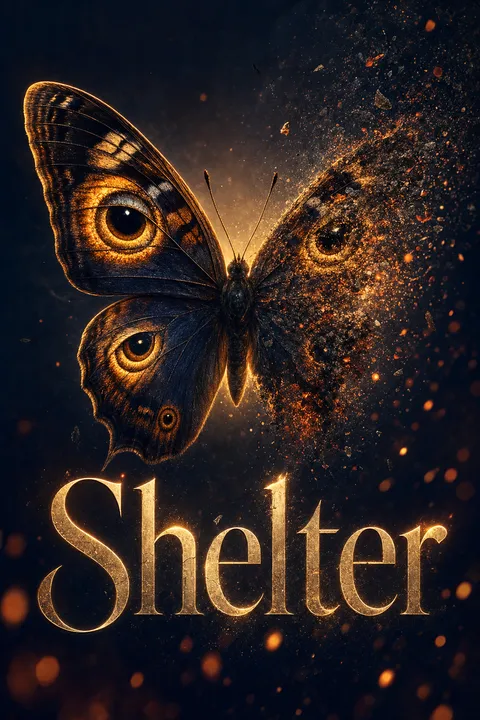
Teaming with Ema,2 a sharp-tongued goth loner he defended during a humiliating orientation exercise, Mickey1 slips through the Bat Lady's7 back door. Inside a brown, time-frozen house he finds a HorsePower record his mother12 once loved and a faded sixties photograph of five smiling hippies wearing shirts stamped with a strange butterfly whose wings bear animal eyes.
One of the young women is unmistakably the Bat Lady7 herself. A sleek black car with tinted windows rolls up the hidden woodland drive, and a shaved-headed man in aviators and a dark suit11 steps out. Ema2 improvises a Girl Scout cookie routine to shield Mickey.1 He glimpses light under the basement door and hears two men below, then bolts before the danger behind it can reach him.
The break-in dramatizes curiosity outrunning fear, a hallmark of the adolescent hero who trades safety for meaning. The butterfly emblem enters as a mnemonic hook, its animal eyes suggesting surveillance and guardianship at once. Ema's quick-witted cover reveals a partnership built on mutual outsider status rather than romance, subverting the expected pairing. Coben layers sensory anachronism, vinyl records and stopped clocks, to signal a keeper of secrets suspended outside ordinary time. The unseen basement voices withhold as much as they promise, teaching the reader that this book's suspense lives in thresholds and glimpses rather than confrontations, and that Mickey's instincts, not his logic, keep him alive.
The Daughter Who Never Existed
Determined to trace Ashley,5 Mickey1 enlists Spoon,3 the janitor's endlessly trivia-spouting son, whose master keys open the school office and Ashley Kent's file.5 Armed with her Carmenta Terrace address, Mickey1 arrives to find the street clotted with police cars and an ambulance.
A man he assumes is Ashley's father is wheeled out battered from a home invasion, while a gruff officer named Taylor13 harasses the boys. Then Mrs. Kent, pale and dazed, delivers the gut-punch: she has no daughter, and she has never heard of anyone named Ashley.5
The girl Mickey1 kissed, shared lunch with, and cared about appears to have fabricated her entire identity, deepening a mystery that now feels less like a runaway and more like a disappearance engineered on purpose.
Identity dissolves as a source of dread. Ashley, the demure preppy girlfriend, is revealed to be a constructed persona, forcing Mickey to question whether he loved a person or a projection. Coben weaponizes bureaucratic evidence, a school file, against emotional certainty, letting the paper trail contradict lived memory. The introduction of Officer Taylor plants an institutional antagonist whose hostility feels inherited and personal. The home invasion braids Ashley's secret past into present violence, suggesting she fled something rather than someone. The chapter's power lies in epistemological vertigo: when a mother denies her own child, the ground beneath the protagonist's romance and reality simultaneously gives way.
The Spaghetti That Never Cooked
Mickey's1 mother, former tennis prodigy Kitty,12 returns from rehab glowing, promising his favorite spaghetti, meatballs, and garlic bread. He clings to the fragile hope that the real woman has replaced the addict. But he comes home to a cold stove and an empty refrigerator, the promised groceries never bought. Panicked, he calls the rehab center and learns she skipped her outpatient session entirely.
He phones Myron,6 who tracks his car by GPS to the Saturn Rings, a filthy hourly motel where they find Kitty12 sprawled and broken, apologizing through tears. They return her to rehab, where director Christine Shippee18 bars all visits, even Mickey's,1 for at least three weeks. Every hopeful detail, down to the garlic bread, curdles into betrayal.
This is the novel's emotional keel, separating the thriller machinery from a study of a child parenting his parent. Kitty's relapse indicts the seductive lie of the clean slate, and the concrete image of uncooked comfort food renders addiction's cost domestic and unbearable. Mickey's guilt, his belief that his own desire for a normal life caused his family's collapse, surfaces as the wound beneath his heroics. Christine Shippee's blunt diagnosis of enabling reframes love as a possible poison. Coben resists melodrama by grounding devastation in specifics: a fake tardy note that morning, a song sung off-key, the ordinary tenderness that makes the fall crueler.
Classified Plate, Midnight Standoff
The shaved-headed stranger11 materializes again at Mickey's1 Newark pickup games, standing motionless behind the fence, eyes fixed on him. Tyrell's15 father, a county investigator,16 runs the black car's plate and finds it classified, an official dead end that unsettles him enough to warn Mickey1 off. Undeterred, Mickey1 ambushes the car parked near Myron's6 house at two in the morning.
The bald man,11 speaking in a clipped British accent, says Mickey1 has questions but is not ready for answers, orders him to tell no one, especially Myron,6 and lets slip that the Bat Lady7 should never have said his father was alive. When Mickey1 demands the truth, the man promises only that they will talk, then speeds away into the dark.
Coben tightens the conspiracy net by making authority itself opaque: a plate that returns classified implies power beyond local police. The bald man operates as a threshold guardian in the mythic sense, granting fragments while forbidding passage. His slip, that the Bat Lady spoke out of turn, confirms an organized secret rather than a lunatic's raving, retroactively validating Mickey's obsession. The two AM confrontation stages the adolescent's characteristic recklessness against adult stonewalling, and his physical lunge at the car dramatizes a boy trying to force the world to answer him. Suspense here is engineered through controlled information starvation, each answer birthing three sharper questions.
Butterfly on the Grave
Mickey1 flies to Los Angeles with Myron6 and his warm, ailing grandparents to visit his father's still-unmarked grave. As Grandpa recites the mourner's prayer, Mickey1 feels strangely unmoved, a small voice whispering that his father is not there. Then he spots it on the temporary placard beside his father's name: a small drawing of the same butterfly with animal-eyed wings from the Bat Lady's7 photograph.
On the flight home, Myron6 detours to a SnowCap ice cream shop, where a young woman in a wheelchair named Kimberly19 tells Mickey1 that her murdered sister, his parents, and Myron6 are all connected, that none of this is coincidence, and that people do terrible things to protect the young.
The recurring emblem migrates from a stranger's mantel to the most sacred and intimate site imaginable, collapsing the distance between Mickey's private grief and the larger conspiracy. His numbness at the graveside is psychologically acute: the body refuses the ritual because the mind harbors doubt, and Coben lets somatic intuition outrank belief. Kimberly's cryptic testimony expands the mythology into intergenerational sacrifice, hinting that Mickey's globe-trotting humanitarian parents were agents of something larger. The wheelchair and the murdered sister quietly introduce the theme that protecting children exacts brutal, permanent tolls. The scene works because tenderness and menace share the same booth, sweetness laced with dread.
The Tattooed Man on Tape
Ashley's5 locker turns up smashed. Spoon3 retrieves motion-triggered security video showing a gold-chained hoodlum with a tattooed face9 crowbarring it open, then reacting with fury to find it already empty, the same facial tattoo Mrs. Kent described on the home invader. Ema2 takes a still to her own tattoo artist, a serene, chakra-obsessed man called Agent,17 who instantly recognizes the ink as the work of a Newark artist and produces a name: Antoine LeMaire.9
Agent,17 unsettlingly, tells Mickey1 he is a natural protector, a shelter for others, and warns him to tread carefully. The trail points to an address beside a place called the Plan B Go-Go Lounge, dragging Mickey's1 search for a prim schoolgirl into a very different world.
The chapter converts diffuse dread into a nameable adversary, satisfying the procedural pleasure of the mystery while raising the moral temperature. That someone emptied the locker before the intruder arrived implies a protector shadowing Ashley, seeding the later reversal. Agent's mystical patter, dismissed by Mickey as nonsense, secretly encodes the book's thesis about guardianship, the word shelter surfacing as prophecy. Coben stages class dissonance: the fantasy of the sweater-wearing girlfriend curdling toward a strip club, forcing Mickey to confront that the people we love carry unseen histories. The teenage detective apparatus, keys and cameras and contacts, feels plausible precisely because each ally contributes one specialized power.
The Grave of the Butterfly
Returning by night, Mickey1 and Ema2 discover a meticulously tended garden hidden behind the garage, and within it a worn tombstone bearing the initials E.S., the epitaph about oak trees giving shelter, the same butterfly, and the number A30432, identical to the black car's plate.
Ema's2 research unearths Lizzy Sobek,7 a thirteen-year-old who escaped Auschwitz and rescued hundreds of children, remembered as the Butterfly, her Auschwitz tattoo number lost to history but falling in the exact range as the tombstone's. As Mickey1 pounds on the door demanding answers, Chief Taylor13 arrests him for attempted break-in. From an upstairs window, the Bat Lady7 mouths two urgent words: save Ashley.5
Here the novel fuses personal mystery with historical trauma, grafting a young-adult thriller onto the memory of the Shoah. The butterfly's meaning deepens from motif to lineage: a symbol of children saved across generations. The tombstone bearing a living woman's own number stages a haunting question about who is buried and who merely disappeared. Coben's ambition is to make heroism feel inherited, a chain reaching from wartime Poland to a New Jersey suburb. Chief Taylor's arrest, motivated by a grudge against Myron, reintroduces petty human cruelty against the backdrop of monstrous history. The Bat Lady's silent command finally converts Mickey from investigator into rescuer.
Inside the Plan B
Using his fake Robert Johnson ID, Mickey1 enters the seedy Plan B Go-Go Lounge and meets a frightened dancer called Candy,10 who blanches at Antoine LeMaire's9 name. Bouncers drag him to a back office where a wiry, lisping predator named Buddy Ray8 punches, kicks, and threatens him with brass knuckles, demanding to know where Ashley5 is after spotting her photo on Mickey's1 phone.
Mickey1 headbutts the giant bouncer Derrick20 and sprints through the club, sparking a brawl. Candy10 hauls him out a fire door and reveals the horror: Antoine's9 van makes girls vanish forever into what she calls the White Death, and Ashley,5 her only friend, is already gone.
The suburban sleuth plunges into genuine adult danger, and the tonal shift is deliberate: comedy and school politics give way to trafficking, violence, and fear that leaves bruises. Buddy Ray embodies motiveless sadism, a villain who enjoys cruelty as its own reward, sharpening the stakes. Candy functions as a tragic mirror, a girl the system will not save, foreshadowing the novel's insistence that rescue is selective and heartbreaking. Coben plays with misdirection here, letting Antoine appear as the monster and the White Death as damnation, so the later inversion lands harder. Mickey's trained combat instincts, seeded in exotic childhood backstory, finally pay off under real threat.
Rachel's Confession, Ema's Ink
Spoon's3 footage delivers a shock: it was Rachel Caldwell,4 the school beauty and Mickey's history partner,1 who emptied Ashley's5 locker. Confronted, Rachel4 confesses that Ashley5 asked her to watch over Mickey,1 and that after witnessing a violent kidnapping attempt on the street, Rachel4 hid the terrified girl5 in her family's guesthouse for over a week.
Ashley,5 exposed by a newspaper photo of the school orientation, has now fled again, leaving a note refusing to hide forever. Simultaneously, Ema2 reveals her own secret: the Abeona butterfly is tattooed on her back, drawn by Agent,17 who has since vanished.
At the parlor, Mickey1 learns the emblem honors Abeona, the Roman goddess who shelters children, the very name of the Abeona Shelter his father served.
Two betrayals resolve into loyalty, complicating the moral geometry. Rachel, coded as a shallow object of desire, proves compassionate and brave, punishing Mickey's own snap judgments about beauty and worth. The revelation reframes deception as protection, a recurring pattern in a book where hiding equals caring. Ema's tattoo binds her personally to the conspiracy, suggesting she was chosen or marked, and the Abeona etymology retroactively decodes every prior clue: the goddess who guards children on their first journey from home. Coben's thematic architecture snaps into focus here, love expressed as concealment, guardianship as vocation, and the recognition that Mickey's parents were soldiers in a hidden humanitarian war.
The Dungeon Rescue
A lure email from Candy10 has drawn Ashley5 back to Buddy Ray.8 The four teens converge on the club; Rachel4 and Ema2 infiltrate by pretending to audition while Mickey1 is ambushed outside by Derrick.20 Antoine, whose real name is Juan,9 guns Derrick20 down and reveals he is an Abeona operative who stages fake kidnappings to spirit girls away from Buddy Ray,8 and that he knew Mickey's1 father.
Mickey1 storms the basement dungeon, tackles Buddy Ray,8 and frees Ashley.5 When Buddy Ray8 corners them in the alley with a knife at Ema's2 throat, Spoon3 plows into him with his father's janitor truck. Ashley5 departs forever in Juan's van9 as police descend.
The climax braids every planted thread into a single frantic sequence, rewarding the reader's accumulated attention. Antoine's inversion, monster into savior, delivers the book's central lesson that appearances lie and that true protection often wears a fearsome mask. Juan's connection to Brad reframes Mickey's grief as legacy, positioning the boy as heir to a covert calling. The rescue is deliberately imperfect: girls like Candy remain unsaved, insisting that heroism is triage, not triumph. Spoon's slapstick heroism, the trivia-spouting sidekick as improbable savior, tempers brutality with warmth. Ashley's silent farewell denies the romantic resolution and honors the harsher truth that some people we save, we must lose.
Lizzy Sobek's Photograph
The bald man11 leads Mickey1 through a tunnel from the garage into the Bat Lady's7 parlor, where she finally reveals herself as Lizzy Sobek7 and bares the Auschwitz tattoo A30432. She recounts how her father shielded her body from the bullets of the Butcher of Lodz, dying so she might live, and explains the Abeona creed of choices, consequences, and saving whom you can.
She tells Mickey1 his father lives on in him, and that Brad left the Shelter to give his son a normal life, a choice that cost him everything. Then she turns a page in her album to the Butcher's wartime photograph, and Mickey1 recognizes the sandy-haired, green-eyed paramedic who wheeled his father away.
The finale reframes the entire novel as an initiation into a mythology of sacrifice, with Lizzy as the wounded matriarch whose survival demanded lifelong service. Her doctrine, that every life matters yet not every life can be saved, gives the book its adult moral weight, refusing the fantasy of total rescue. The claim that Brad lives in Mickey reroutes grief into inheritance and obligation. The closing recognition delivers a masterful hook: the man who took Mickey's father wears the face of a Nazi frozen in time, dissolving the boundary between historical evil and present mystery, and reopening the wound the Bat Lady first probed, that his father may not truly be dead.
Analysis
Beneath its brisk young-adult thriller surface, Shelter is a study of grief metabolized into purpose. Coben builds a detective story whose real subject is inheritance: the discovery that a boy's murdered father belonged to a clandestine tradition of rescuing endangered children, and that Mickey1 is being drafted into it whether he consents or not. The novel repeatedly stages the collision between appearance and truth. The beautiful cheerleader4 is brave, the fearsome tattooed trafficker9 is a savior, the town bogeyman7 is a Holocaust heroine, and the healing paramedic wears a war criminal's face. Each reversal punishes snap judgment and argues that moral reality hides beneath surfaces we are too frightened or lazy to read. The Abeona mythology gives the book unusual weight for its genre, grafting the memory of Auschwitz onto suburban New Jersey and insisting that the impulse to shelter the young is both ancient and costly. Lizzy Sobek's creed,7 that you save whom you can and mourn the rest, refuses the fantasy of total rescue that most adventure fiction indulges. Candy10 is not saved. Ashley5 is saved but lost to Mickey1 forever. Heroism here is triage, and its price is a heart that gets torn apart daily. The emotional spine is Mickey's1 relationship with his addicted mother,12 rendered with unsentimental precision through the unbearable image of an uncooked comfort-food dinner. Coben pairs this with a meditation on enabling versus love, and on the guilt of a child who believes his own ordinary wishes destroyed his family. The recurring butterfly, with its watching eyes, becomes an emblem of that theme: to guard someone is to see them truly. The closing recognition reopens the wound rather than sealing it, leaving Mickey1 and the reader suspended in the possibility that death itself might be negotiable.
Review Summary
Shelter receives mixed reviews from readers. Many praise its fast-paced plot and engaging mystery, particularly enjoying the teen characters. However, some criticize it for unrealistic elements and stereotypical portrayals. The book follows Mickey Bolitar as he investigates his girlfriend's disappearance, uncovering dark secrets along the way. While some found it addictive and well-written, others felt it relied too heavily on clichés. As a young adult spin-off from Coben's adult series, opinions varied on its success in appealing to both teens and adults.
People Also Read
Characters
Mickey Bolitar
Grieving teen sleuthA six-foot-four sophomore raised nomadically abroad by humanitarian parents, Mickey is a gifted basketball player whose court instincts mirror his read on people: he sees moves before they happen. Orphaned in effect by his father's death and his mother's addiction12, he carries corrosive guilt, convinced his wish for a normal life triggered the tragedy. He guards himself against attachment yet compulsively rescues others, from a bullied classmate2 to a vanished girlfriend5. Trained in martial arts during obscure travels, resourceful with fake IDs and stubborn to a fault, he channels grief into action. Beneath the wisecracking bravado lies a boy desperate to believe the impossible, that the father he watched die might somehow still exist.
Ema
Loyal goth outcastDressed in black armor of tattoos, piercings, and shoe-polish hair, Ema projects sullen indifference to mask deep loneliness. Sharp, funny, and fiercely intuitive, she becomes Mickey's1 truest friend almost against her will, insisting on sharing every danger and refusing to be protected like a fragile girl. She guards her home life obsessively, vanishing into the woods rather than let anyone see where she lives, hinting at secrets of her own. Her empathy is uncanny: she absorbs Mickey's1 pain as if she already knows the answers. Bearing a mysterious butterfly tattoo, she is more entangled in the story's mythology than even she understands, a wounded soul who chooses courage over self-pity.
Spoon
Trivia-spouting sidekickThe school janitor's son, a flood-panted geek in Harry Potter glasses who fires off random facts as social currency. Armed with a master key ring and access to the school's security systems, Spoon becomes the team's technical lifeline. Guileless, brave in odd flashes, and devoted to musicals and his loving parents, he offers comic relief that occasionally hardens into unexpected heroism.
Rachel Caldwell
The beautiful history partnerThe school's stunning cheerleader, poised and porcelain-blond, whom Mickey1 initially dismisses as untouchable and shallow. Beneath the glamour lives a lonely girl from a wealthy, absent family and a conscience that will not let her ignore someone in trouble. Her involvement with Ashley5 reveals a compassion and moral courage that upend every assumption Mickey1 and Ema2 make about her.
Ashley
The vanished girlfriendPresenting as a demure, thrift-shop-preppy new girl, Ashley captured Mickey's1 heart over shared lunches and shy kisses before disappearing. Her polished identity proves a careful disguise concealing a harrowing past. Frightened, self-sacrificing, and determined never to drag others into her danger, she is both the object of Mickey's1 quest and a mystery whose truth reframes everything he thought he knew.
Myron Bolitar
Reluctant guardian uncleA former basketball star whose pro career ended in a shattered knee, now a sports agent and attorney. Myron takes in Mickey1 despite a bitter, unspoken feud that estranged him from Mickey's father1 for fifteen years. Overly emotional, quick to tears and to overprotectiveness, he clumsily tries to parent a boy who resents him, hiding his own quiet heartbreak over a long-distance love.
The Bat Lady
Cryptic prophet in whiteThe town's dreaded recluse in a torn bridal gown, said to snatch children, whose waist-length gray hair and question-mark spine terrify generations of kids. She knows Mickey's1 name and unspools impossible claims about his living father. Keeper of a butterfly emblem spanning decades, old records, and a hidden garden grave, she speaks in riddles about choices and consequences. Her true identity anchors the novel's deepest secret, linking a suburban street to wartime horror. Neither wholly kind nor cruel, she embodies the burden of survival and the ruthless arithmetic of saving some children while mourning the rest, a living archive of trauma and clandestine mercy.
Buddy Ray
Sadistic club ownerA wiry, lisping predator with psycho eyes and a stench of cheap cologne, Buddy Ray runs the Plan B Go-Go Lounge and treats the trapped girls as property. He relishes violence for its own sake, wielding brass knuckles, cigarettes, and a dungeon of terror. Utterly without conscience, he is the novel's human face of exploitation and cruelty.
Antoine LeMaire
Man with facial tattooA menacing, gold-chained figure with a tattooed face, first glimpsed breaking into lockers and homes, seemingly a trafficker who makes girls vanish. His true role and history are far more complicated than his fearsome appearance suggests, and he carries a connection to Mickey's1 past that reframes the meaning of every rescue in the story.
Candy
Frightened trapped dancerA fire-engine-redhead dancer at the Plan B with a painted-on smile and the saddest eyes Mickey1 has ever seen. Ashley's5 only friend inside, she is terrorized by Buddy Ray8, marked by cigarette burns, and torn between self-preservation and loyalty. She represents the children the system cannot save, a tragic counterweight to every hopeful rescue.
The bald man
Enigmatic Abeona operativeA shaved-headed figure in a dark suit and aviator sunglasses who moves with supernatural fluidity and speaks in a clipped British accent. Driving a black car with a classified plate, he shadows Mickey1, dispensing fragments of truth while forbidding full answers. A gatekeeper to the hidden world of the Abeona Shelter.
Kitty Bolitar
Addicted former prodigyOnce the nation's top junior tennis player, Mickey's1 mother sacrificed stardom to a teenage pregnancy and a storybook marriage. Widowed and shattered, she spirals into drug addiction, oscillating between radiant maternal warmth and devastating relapse. Painfully honest yet manipulative in her disease, she is both the object of Mickey's1 fierce love and the source of his guilt.
Chief Taylor
Vindictive police chiefKasselton's brutish police chief and father of Mickey's1 rival Troy14, nursing an old grudge against Myron6. He harasses and arrests Mickey1 petty and eagerly, embodying institutional cruelty and inherited small-town enmity.
Troy Taylor
Bullying basketball captainThe senior captain of the basketball team and the chief's son13, a swaggering bully who torments Ema2 and threatens Mickey1. He represents the entrenched social hierarchy Mickey1 disrupts by refusing to submit.
Tyrell Waters
Newark basketball allyA junior point guard from the Newark pickup games, one of the few people Mickey1 feels easy around because they mostly just play. His investigator father16 provides crucial help tracing the classified plate.
Mr. Waters
County investigator fatherTyrell's father15, an Essex County investigator who runs the black car's plate, finds it classified, and warns Mickey1 to stay away from the bald man11. A rare protective adult presence that intensifies Mickey's1 sense of his own fatherlessness.
Agent
Mystical tattoo artistA red-bearded, chakra-obsessed tattoo artist who inked Ema2 and recognizes the crucial tattoo. His serene talk of shelter and protection secretly encodes the story's central mythology before he mysteriously disappears.
Christine Shippee
Blunt rehab directorThe no-nonsense owner of the Coddington rehab center and a recovering addict herself. She bars Mickey1 from his mother12 and forces him to confront his role as an enabler, delivering hard truths without sentimentality.
Kimberly
Cryptic ice cream serverA young woman in a wheelchair whose murdered sister ties her family to Mickey's1 parents and Myron6. Over an enormous ice cream sundae she hints that nothing is coincidence and that people do terrible things to protect the young.
Derrick
Reluctant giant bouncerBuddy Ray's8 massive enforcer, physically overwhelming yet visibly uneasy with his boss's cruelty. He beats and hunts Mickey1 on command, a man of violence caught in a machine crueler than himself.
Plot Devices
The Abeona butterfly
Recurring symbol of guardianshipA colorful butterfly with animal eyes on its wings, formally the Tisiphone Abeona, named for a Roman goddess who shelters children leaving home and a Fury who punishes crimes against the young. It surfaces on sixties T-shirts, a backyard tombstone, Mickey's1 father's grave placard, Ema's2 back, and a tattoo parlor mirror. Each appearance ratchets Mickey1 deeper into a hidden network, and its meaning unfolds gradually from creepy motif to sacred emblem of a secret organization devoted to rescuing endangered children. As a structuring device it stitches disparate scenes into one conspiracy, teaching the reader to feel dread and recognition simultaneously whenever the winged eyes reappear across time and place.
The father-alive claim
Inciting hope and doubtThe Bat Lady's7 opening assertion that Mickey's1 dead father is very much alive detonates the entire plot. Mickey1 witnessed the fatal crash, so the claim is impossible, yet its emotional pull overrides logic and drives every subsequent risk. Coben uses it as both engine and thematic knot: a meditation on grief, denial, and the human hunger to reverse loss. The claim is repeatedly complicated, half-retracted by the bald man11, reframed by the Bat Lady7 into cryptic talk of living on in others, and finally reopened by the recognition of the paramedic. It functions as the wound the narrative keeps probing, never fully healed, leaving the reader as haunted as Mickey1.
Spoon's keys and cameras
Enables amateur investigationSpoon's3 janitorial master keys and access to the school's motion-triggered security system give the teenage sleuths plausible means to uncover clues adults would miss. The keys open the guidance office to yield Ashley's file5 and address, and the footage exposes both the tattooed intruder9 at her locker and, crucially, Rachel4 emptying it first. Coben leans on this device to keep his young protagonists credibly capable within a world of locked doors and surveillance, converting a bumbling comic sidekick into an indispensable engine of discovery. The recorded evidence repeatedly contradicts assumptions, making the camera a truth-teller that reroutes the investigation at pivotal moments and rewards patient attention to detail.
The classified plate A30432
Signals hidden powerThe black car's license number returns classified when an investigator runs it, implying an authority beyond ordinary reach and elevating the conspiracy above local crime. The same string, A30432, later appears engraved on the backyard tombstone and, ultimately, tattooed on a survivor's7 forearm, revealing it as an Auschwitz identification number rather than a modern plate. This transformation of a mundane traffic detail into a scar of genocide is one of the novel's most audacious moves, collapsing suburban mystery into historical trauma. As a device it rewards the reader who tracks recurring numbers, and it binds the present-day rescue network to its wartime origins in a single haunting cipher.
The Robert Johnson fake ID
Grants access to dangerA flawless false identity crafted during Mickey's1 globe-trotting childhood, chosen deliberately as a common, forgettable name. It lets the underage Mickey1 pass for twenty-one, entering the Plan B Go-Go Lounge and driving despite lacking a license. Beyond mere plot convenience, the ID embodies the concealment that pervades the book: the Bolitars lived under aliases because doing good makes dangerous enemies, a lesson Mickey's father1 tried to explain. The false name places Mickey1 in the villain's8 clutches and forces him to improvise under threat, while quietly foreshadowing the family's covert history. It marks him as a boy already trained for a hidden, hazardous inheritance.
FAQ
Synopsis & Basic Details
What is Shelter about?
- Teenager Navigates Loss & Mystery: Shelter follows Mickey Bolitar, a high school sophomore grappling with the recent death of his father and his mother's entry into rehab, forcing him to live with his estranged Uncle Myron.
- Cryptic Message Sparks Quest: Mickey's world is upended when the reclusive "Bat Lady" tells him his father isn't dead, initiating his search for answers about his family's past and the strange occurrences in his new town, Kasselton, New Jersey.
- Friendship and Danger Unfold: As Mickey tries to find his missing girlfriend, Ashley, he teams up with two fellow outcasts, Ema and Spoon, uncovering a web of secrets involving hidden identities, a dangerous go-go club, and a mysterious organization called the Abeona Shelter.
Why should I read Shelter?
- Engaging Teenage Voice: The story is narrated in a compelling first-person perspective by Mickey, offering a blend of vulnerability, humor, and determination as he navigates complex adult situations and teenage life.
- Fast-Paced Mystery and Suspense with Depth: While a thrilling mystery drives the plot, the novel delves into deeper themes of loss, identity, family secrets, and the lengths people go to protect the vulnerable, keeping the reader invested beyond the suspense.
- Memorable Supporting Characters: The quirky and loyal friendship trio of Mickey, Ema, and Spoon provides emotional grounding and comic relief amidst the darkness, showcasing the power of connection for outcasts.
What is the background of Shelter?
- Suburban Setting with Hidden Darkness: The story is set in the seemingly idyllic suburban town of Kasselton, New Jersey, contrasting sharply with the gritty urban environment of Newark, highlighting the hidden dangers that can lurk beneath a polished surface.
- Protagonist's International Past: Mickey's unique background, having grown up traveling the world with his humanitarian parents working for the Abeona Shelter, provides him with unusual skills (martial arts, fake IDs) and a broader perspective on global issues like exploitation.
- Echoes of the Holocaust: A significant historical undercurrent involves the story of Lizzy Sobek, a Holocaust survivor and resistance fighter known as "the Butterfly," whose past connects directly to the present-day mission of the Abeona Shelter and the symbolism Mickey encounters.
What are the most memorable quotes in Shelter?
- "Your father isn't dead.": This cryptic line from the Bat Lady to Mickey in Chapter 1 serves as the inciting incident, planting a seed of doubt and hope that drives Mickey's entire investigation into his father's fate.
- "A childhood lost for children.": Found on the tombstone in Bat Lady's backyard (Chapter 16), this poignant phrase encapsulates the sacrifice made by individuals like Lizzy Sobek and potentially Mickey's father, highlighting the core theme of protection and sacrifice.
- "You can't save us all.": Candy's heartbreaking statement to Mickey in Chapter 25 reveals the harsh reality of the Abeona Shelter's mission and the limits of their ability to combat evil, emphasizing the difficult choices and inevitable losses faced by those involved.
What writing style, narrative choices, and literary techniques does Harlan Coben use?
- First-Person, Present Tense POV: The narrative is told entirely from Mickey's perspective in the present tense, creating immediacy and immersing the reader directly in his thoughts, feelings, and limited understanding of events as they unfold.
- Blend of Humor and Suspense: Coben masterfully mixes Mickey's witty internal monologue and the quirky interactions of the main trio with dark, suspenseful plotlines, balancing the heavy themes with moments of levity.
- Foreshadowing and Symbolism: Subtle details, recurring symbols like the butterfly emblem, and seemingly throwaway lines are strategically placed to hint at future revelations and deeper connections, rewarding attentive readers.
Hidden Details & Subtle Connections
What are some minor details that add significant meaning?
- The HorsePower Album: Finding the "Aspect of Juno" album by HorsePower on Bat Lady's turntable (Chapter 3) seems minor but connects Bat Lady to Mickey's parents and Uncle Myron, who represented the band, hinting at a shared history long before Mickey arrived.
- The License Plate Number A30432: This specific number appears first on the black car (Chapter 4), then engraved on the tombstone in Bat Lady's yard (Chapter 16), and is later revealed to be Lizzy Sobek's Auschwitz tattoo number (Chapter 16), forming a crucial link between the present mystery and the historical context of the Abeona Shelter.
- The Butterfly's Full Name: Learning the butterfly emblem is the "Swordgrass Brown Tisiphone Abeona" (Chapter 20) is a subtle detail that unlocks layers of meaning, connecting the symbol to Roman (Abeona, goddess of safe passage for children) and Greek (Tisiphone, Fury of vengeance for murder) mythology, directly reflecting the organization's mission.
What are some subtle foreshadowing and callbacks?
- Bat Lady's House Description: Early descriptions of the house as "shedding like an old dog" or seeming to "lean" and be "swallowed whole" by the woods (Chapter 1, 3) subtly foreshadow its hidden nature and the deep, buried secrets it contains, contrasting with its outward appearance of simple decay.
- Mickey's Father's Visit to Bat Lady's: Myron recounts how Mickey's father visited Bat Lady's house as a teenager and was "different after that" (Chapter 5), subtly foreshadowing the profound impact the house and its inhabitant had on his father and hinting at the origin of his connection to the Abeona Shelter.
- The Paramedic's Green Eyes: Mickey repeatedly emphasizes the sandy hair and green eyes of the paramedic who took his father away (Chapter 15, 18), a seemingly specific memory that becomes a crucial, albeit debated, callback when he later identifies the "Butcher of Lodz" from a black-and-white photo by these same features (Chapter 27).
What are some unexpected character connections?
- Rachel Caldwell's Link to Ashley: The revelation that Rachel, the popular cheerleader, was secretly helping Ashley and was asked by Ashley to look out for Mickey (Chapter 18) is unexpected, subverting the initial high school clique dynamics and showing hidden depths to Rachel's character.
- Spoon's Parents' Background: Spoon's parents, introduced briefly as a janitor and a woman in a business suit (Chapter 13), are later shown to be a mixed-race couple (Chapter 13), a subtle detail that adds unexpected depth to Spoon's background and contrasts with the often-segregated world of high school cliques.
- Candy's Relationship with Ashley: Candy, the dancer at the Plan B Go-Go Lounge, is revealed to have been Ashley's only friend at the club (Chapter 15, 19), creating an unexpected bond between the seemingly disparate worlds Ashley inhabited and highlighting the isolation she experienced.
Who are the most significant supporting characters?
- Ema: More than just a friend, Ema becomes Mickey's closest confidante and active partner in the investigation, providing emotional support, technological assistance (laptop, research), and crucial insights (the tattoo, the tombstone research), often pushing Mickey forward when he hesitates.
- Spoon: Spoon's technical skills (hacking school security, running license plates) and access (janitor father's keys) are indispensable to uncovering key clues, while his quirky personality and unwavering loyalty provide essential comic relief and steadfast support to the group.
- Bat Lady (Lizzy Sobek): As the keeper of the Abeona Shelter's history and a direct link to Mickey's father's past, Lizzy Sobek serves as an enigmatic guide, providing cryptic clues and eventually revealing the deeper context of the organization and the sacrifices involved.
Psychological, Emotional, & Relational Analysis
What are some unspoken motivations of the characters?
- Mickey's Need for Control: Mickey's drive to solve the mysteries surrounding his father's death and Ashley's disappearance is fueled by a deep-seated need to regain control in a life that feels shattered and unpredictable after immense loss and trauma.
- Ema's Search for Belonging: Ema's eagerness to join Mickey's quest, despite the danger, stems from her isolation as an outcast; she finds a sense of purpose and belonging in their shared mission and connection, as hinted when she fears Mickey won't want to be her friend anymore (Chapter 20).
- Rachel's Guilt and Redemption: Rachel's motivation to help Ashley and Mickey is partly driven by guilt over not defending Ashley during the cheerleading tryouts (Chapter 19), seeking a form of redemption by actively protecting her later.
What psychological complexities do the characters exhibit?
- Mickey's Survivor's Guilt: Mickey grapples with profound guilt over his father's death, believing his desire for a "normal" life led his father to return to the US and die (Chapter 17), and this guilt fuels his reckless determination to save Ashley and others.
- Ema's Defensive Armor: Ema's sullen, goth persona and sarcastic wit serve as a psychological defense mechanism, protecting her from the pain of being an outcast and her own vulnerabilities, which she only slowly reveals to Mickey (Chapter 9, 20).
- Buddy Ray's Sadistic Control: Buddy Ray exhibits clear psychological pathology, taking pleasure in the fear and suffering of others, particularly the girls he exploits, viewing them as possessions and using violence to assert absolute control (Chapter 15, 22, 24).
What are the major emotional turning points?
- Bat Lady's "Your father isn't dead": This initial statement (Chapter 1) is a massive emotional turning point for Mickey, instantly shifting his focus from passive grief to active investigation, clinging to a desperate hope that his father might still be alive.
- Finding His Mother Relapsed: Discovering his mother relapsed at the motel (Chapter 9) is a devastating emotional blow for Mickey, shattering his hope for her recovery and reinforcing his feelings of helplessness and the destructive power of addiction, leading to a moment of raw anger at Christine Shippee (Chapter 9).
- Lizzy Sobek's Revelation: Lizzy Sobek revealing her identity and the story of her father's sacrifice (Chapter 27) is a pivotal emotional moment, providing Mickey with a deeper understanding of the Abeona Shelter's mission and his father's connection to it, reframing his father's death within a larger context of protection and sacrifice.
How do relationship dynamics evolve?
- Mickey and Ema's Deepening Bond: Their relationship evolves from a "pity sit" (Chapter 2) between two outcasts to a profound friendship built on trust, mutual support, and shared danger, culminating in Mickey telling Ema she's the "best friend I've ever had" (Chapter 20).
- Mickey and Myron's Strained Truce: The relationship between Mickey and his uncle Myron is initially marked by resentment and distance due to the family falling-out (Chapter 2, 5), but through shared concern for Mickey's mother and Myron's protective actions (getting Mickey out of jail, Chapter 15), a grudging respect and reliance begin to form, though secrets still exist (Myron's fiancée, Chapter 26).
- Mickey and Rachel's Complex Connection: Their relationship starts with Mickey's attraction and Rachel's hidden agenda (Chapter 11, 17), but evolves into a genuine connection based on shared purpose and Rachel's courage in helping Ashley, moving beyond superficial high school dynamics (Chapter 18, 19).
Interpretation & Debate
Which parts of the story remain ambiguous or open-ended?
- The Paramedic's True Identity: While Mickey becomes convinced the paramedic who took his father away is the "Butcher of Lodz" based on a photograph (Chapter 27), Bat Lady questions the reliability of memory and the likelihood of a 90-year-old working as a paramedic (Chapter 27), leaving his true identity and connection to the events open to interpretation.
- The Full Extent of the Abeona Shelter: The organization's structure, reach, and methods beyond rescuing children from exploitation are not fully explained. The "picking and choosing" aspect (Chapter 27) and the mysterious figures like the bald man and the driver of the black car suggest a complex, potentially morally gray operation.
- Mickey's Future Role: The ending shows Mickey getting into the black car with the bald man (Chapter 27), implying he is stepping into his father's world, but the exact nature of his involvement and whether he will fully embrace or challenge the organization's methods remains unresolved.
What are some debatable, controversial scenes or moments in Shelter?
- The "Picking and Choosing" of Victims: Bat Lady's explanation that the Abeona Shelter "saves who we can" and "plays the odds" (Chapter 27), citing Candy as someone they likely wouldn't have helped, presents a morally complex and potentially controversial aspect of the organization's mission, forcing readers to question the ethics of such choices.
- Mickey's Memory of the Paramedic: The climax hinges on Mickey's identification of the "Butcher of Lodz" as the paramedic from his father's accident based on a black-and-white photo (Chapter 27). The narrative itself raises doubts about the accuracy of this memory, making it debatable whether this connection is real or a manifestation of Mickey's trauma and desire for a tangible link to his father's death.
- Myron's Past Actions: Myron's threat to sue for custody of Mickey (Chapter 3) and his past harsh words about Mickey's mother (Chapter 6) are controversial elements of his character, creating a complex dynamic where his protective actions towards Mickey are viewed through the lens of his past behavior and strained family relationships.
Shelter Ending Explained: How It Ends & What It Means
- Buddy Ray Defeated, Ashley Rescued: The climax sees Mickey, with the help of Ema, Rachel, Candy, and ultimately Spoon, confronting Buddy Ray at the Plan B Go-Go Lounge, leading to Buddy Ray's capture and Ashley's escape with Juan/Antoine (Chapter 25). This resolves the immediate threat and Ashley's disappearance plotline.
- Mickey Embraces His Legacy: After learning about the Abeona Shelter's history from Lizzy Sobek and understanding his father's connection and sacrifice (Chapter 27), Mickey chooses to get into the black car with the bald man (Chapter 27), signifying his decision to follow in his father's footsteps and become involved with the organization.
- A New Beginning, Not an End: The ending is not a neat resolution but a transition. Mickey accepts the complex reality of his father's life and death, finds a sense of purpose in continuing the work of protection, and steps into a world of hidden operations and moral ambiguity, setting the stage for future challenges and explorations of the Abeona Shelter.
Mickey Bolitar Series
About the Author
Other books by Harlan Coben



Download PDF
Download EPUB
.epub digital book format is ideal for reading ebooks on phones, tablets, and e-readers.








































