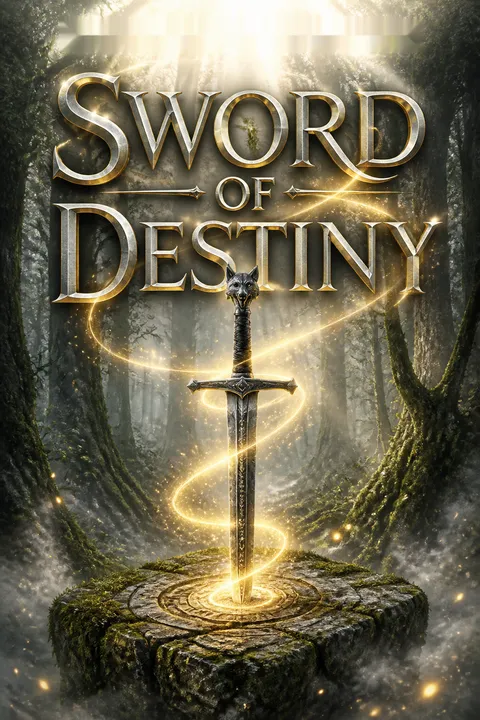

Plot Summary
The Basilisk's Bargain
In a ruined town, Geralt of Rivia, the famed witcher, emerges from a dungeon, dragging the corpse of a basilisk. The townsfolk, eager to claim his belongings, are cowed by the arrival of Borch Three Jackdaws and his Zerrikanian bodyguards. After a tense standoff, Geralt is paid for his work, but his bitterness at the townspeople's ingratitude is clear. Borch, impressed by Geralt's skill and candor, invites him to a nearby inn, setting the stage for a fateful meeting. This encounter marks the beginning of a journey that will test Geralt's principles, his sense of belonging, and his understanding of destiny.
Three Jackdaws' Proposal
At the Pensive Dragon inn, Geralt and Borch Three Jackdaws share food, drink, and conversation. Joined by the enigmatic Zerrikanian women, they discuss the nature of monsters, the boundaries between chaos and order, and the role of the witcher. Borch probes Geralt's refusal to hunt dragons, questioning the limits of possibility and the meaning of myths. Their camaraderie is tinged with mutual respect and curiosity, but also with the sense that each man is searching for something—be it purpose, beauty, or a place in the world. The seeds of a deeper quest are sown.
Dragon Hunt Assembles
News spreads of a dragon terrorizing the countryside, drawing together a diverse group: Geralt, Borch, the Zerrikanians, the poet Dandelion, the sorcerer Dorregaray, and a host of mercenaries, dwarves, and would-be heroes. Each has their own motives—glory, gold, or something more personal. The party's journey is fraught with tension, as alliances shift and old wounds resurface. The presence of Yennefer, Geralt's former lover, adds emotional complexity. The hunt for the dragon becomes a crucible, testing loyalties and forcing each character to confront their own desires and limitations.
Yennefer's Return
Yennefer's arrival stirs up unresolved feelings in Geralt. Their reunion is charged with longing, regret, and anger. Both are haunted by the past and uncertain about the future. Yennefer's ambitions—her yearning for a child, her willingness to bargain with power—clash with Geralt's fatalism and self-doubt. As the company nears the dragon's lair, the lines between friend and foe blur. The hunt becomes a metaphor for the characters' internal struggles, as they grapple with love, loss, and the meaning of sacrifice.
The Golden Dragon's Secret
The dragon, when finally confronted, is not the mindless beast the hunters expected, but Villentretenmerth, a golden dragon capable of assuming human form—Borch Three Jackdaws himself. The revelation upends the company's assumptions about monsters and men. The dragon's defense of his kind, and his willingness to protect the vulnerable, force Geralt and Yennefer to reconsider their own roles in the world. The episode ends with a sense of awe and humility, as the boundaries between myth and reality dissolve, and the true nature of destiny is glimpsed.
The Shard of Ice
In the city of Aedd Gynvael, Geralt and Yennefer's relationship is tested by the presence of Istredd, a sorcerer who also loves Yennefer. The three are caught in a web of jealousy, pride, and insecurity. Geralt and Istredd confront each other, each seeking to claim Yennefer's heart, but both are ultimately rejected. Yennefer, torn between two men and her own desires, chooses neither. The story is a meditation on the limits of love, the pain of longing, and the coldness that can settle in the heart when hope is lost.
Love, Lies, and Loss
The aftermath of the love triangle leaves Geralt and Yennefer emotionally scarred. Both are forced to confront uncomfortable truths about themselves—their capacity for love, their fear of vulnerability, and the lies they tell to protect themselves. The city, with its filth and corruption, mirrors their inner turmoil. In the end, Geralt chooses solitude, believing himself incapable of true connection. Yennefer, too, is left alone, her dreams of happiness shattered. The shard of ice remains, a symbol of the emotional distance that separates them.
The Doppler's Game
In Novigrad, Geralt and Dandelion become embroiled in the misadventures of Dainty Biberveldt, a halfling merchant whose identity is stolen by a doppler—a shape-shifting creature. The doppler, Tellico (Dudu), is not a monster but a survivor, seeking a place in human society. Through wit and negotiation, Geralt helps broker a peaceful resolution, allowing Dudu to live among humans. The episode challenges notions of identity, otherness, and the capacity for change. It is a rare moment of hope and reconciliation in a world often defined by fear and exclusion.
The Eternal Fire's Shadow
The city's religious authorities, led by the sinister Chappelle, use the myth of the Eternal Fire to justify persecution and control. Geralt, Dandelion, and their friends must navigate a web of suspicion, bigotry, and political intrigue. The doppler's fate hangs in the balance, as does the fragile peace between humans and non-humans. The story exposes the dangers of fanaticism and the ease with which fear can be manipulated by those in power. Yet, even in the shadow of the Eternal Fire, acts of kindness and understanding are possible.
A Little Sacrifice
Geralt is hired to mediate between a human duke and a mermaid, Sh'eenaz, whose love is thwarted by their differences. The story is mirrored by the unspoken love Essi Daven ("Little Eye"), a poet, feels for Geralt. As the lovers struggle to bridge the gap between their worlds, Essi's quiet devotion goes unnoticed and unrequited. Geralt, unable to return her feelings, offers only a "little sacrifice"—a gesture of kindness that cannot heal her heartbreak. The tale is a poignant reflection on the limits of love, the pain of longing, and the sacrifices we make for others.
The Heart of Brokilon
Geralt enters Brokilon, the ancient forest ruled by the dryads, to deliver a message and rescue a lost child. The forest is a last bastion of the old world, fiercely defended against human encroachment. Geralt's encounter with Eithné, the dryad queen, forces him to confront the cost of survival—both for the dryads and for himself. The episode is a meditation on the inevitability of change, the struggle to preserve what is precious, and the choices that define us.
Destiny's Child
In Brokilon, Geralt finds Ciri, a young princess with a mysterious destiny. Their meeting is charged with significance, as both are bound by a promise made years before. Eithné offers Ciri the Water of Brokilon, a magical draught that would erase her past and make her a dryad. But Ciri chooses to follow her destiny with Geralt. The bond between them is sealed, not by magic, but by choice and love. The episode is a turning point, as Geralt accepts the role fate has assigned him, and Ciri becomes the child of destiny.
The Sword of Destiny
Geralt's journey with Ciri is interrupted by war and loss. He is haunted by visions of death, by the memory of those he could not save, and by the knowledge that destiny is a double-edged sword. The world is changing—old certainties are crumbling, and the future is uncertain. Yet, in the midst of chaos, Geralt finds hope in his bond with Ciri. The sword of destiny, he realizes, is not just a weapon, but a responsibility—a call to protect, to love, and to choose.
Something More
Gravely wounded, Geralt is saved by a mysterious healer—his own mother, Visenna. As he drifts between life and death, he is visited by visions of Yennefer, of loss, and of the choices that have shaped his life. When he recovers, he is reunited with Ciri, the child of destiny, in a moment of profound joy and relief. The story ends with the recognition that destiny alone is not enough; something more is needed—love, sacrifice, and the courage to embrace the unknown.
Analysis
Sword of Destiny is a masterful tapestry of interwoven tales that probe the boundaries of fate, love, and identity in a world teetering between myth and modernity. Sapkowski's narrative is both epic and intimate, using Geralt's journey to explore the cost of survival, the pain of longing, and the possibility of hope. The book's central question—whether destiny alone is enough, or if "something more" is needed—resonates through every story, challenging characters and readers alike to consider the limits of power, the necessity of sacrifice, and the redemptive potential of love. Through its complex characters, rich symbolism, and deft use of plot devices, Sword of Destiny offers a profound meditation on what it means to belong, to choose, and to embrace the unknown. In a world where monsters and men are often indistinguishable, the true test is not in slaying beasts, but in finding the courage to care, to change, and to hope for something more.
Review Summary
Sword of Destiny receives mixed reviews, with some praising its character development and world-building, while others criticize its sexist portrayal of women. Many readers enjoy the short stories featuring Geralt, Yennefer, and Ciri, but find the quality inconsistent. Some prefer the TV adaptation. The book is seen as essential for understanding the Witcher series, though not as strong as The Last Wish. Readers appreciate the Slavic mythology and interconnected narratives but note the heavy focus on romance and destiny themes.
People Also Read

Characters
Geralt of Rivia
Geralt is a witcher—mutated, trained, and paid to slay monsters—yet he is more than a killer. He is marked by his white hair, cat-like eyes, and a deep sense of alienation. Geralt's relationships are fraught with longing and loss: his love for Yennefer is passionate but doomed, his bond with Ciri is paternal yet shaped by fate. He is introspective, philosophical, and often paralyzed by doubt, questioning the morality of his actions and the meaning of destiny. Over the course of the stories, Geralt evolves from a detached professional to a man willing to embrace love, responsibility, and the possibility of hope.
Yennefer of Vengerberg
Yennefer is a powerful, beautiful, and fiercely independent sorceress. Her relationship with Geralt is tempestuous, defined by mutual desire, pride, and the pain of unmet expectations. Yennefer's greatest longing is for a child—a desire denied her by the magical transformations that gave her power and beauty. She is both nurturing and manipulative, capable of great tenderness and ruthless ambition. Her inability to reconcile her dreams with reality leads to heartbreak, but her love for Geralt and Ciri reveals a capacity for sacrifice and growth.
Ciri (Cirilla Fiona Elen Riannon)
Ciri is a young princess of Cintra, orphaned by war and pursued by forces that seek to use her for their own ends. She is spirited, stubborn, and resourceful, with a mysterious heritage that links her to ancient prophecies. Her bond with Geralt is forged by fate but deepened by choice and affection. Ciri's journey is one of self-discovery, as she learns to navigate a world that would define her by blood and destiny, yet yearns for agency and love. She is both a symbol of hope and a catalyst for change.
Borch Three Jackdaws / Villentretenmerth
Borch appears as a charismatic, enigmatic traveler, but is revealed to be Villentretenmerth, a golden dragon capable of assuming human form. He is a figure of myth and legend, embodying the possibility of coexistence between monsters and men. Borch's actions challenge the prejudices of those around him, forcing them to reconsider the nature of monstrosity, beauty, and purpose. He serves as a mirror to Geralt, offering wisdom, humor, and a reminder that destiny is not always what it seems.
Dandelion (Jaskier)
Dandelion is Geralt's closest companion—a poet, musician, and notorious womanizer. He provides comic relief, social commentary, and a humanizing counterpoint to Geralt's brooding nature. Dandelion's songs and ballads shape the world's perception of the witcher, blurring the line between truth and myth. Beneath his frivolous exterior lies a deep loyalty and a capacity for empathy, especially towards those who suffer in silence.
Essi Daven ("Little Eye")
Essi is a gifted bard who falls in love with Geralt, offering him affection and understanding he cannot reciprocate. Her love is gentle, selfless, and ultimately tragic—she gives without expectation, and her heartbreak is a testament to the pain of loving someone who cannot love you back. Essi's story is a meditation on the limits of kindness, the cost of longing, and the beauty of small sacrifices.
Eithné
Eithné rules Brokilon, the last sanctuary of the old world, with wisdom and ferocity. She is both nurturing and implacable, willing to defend her people at any cost. Eithné's interactions with Geralt and Ciri reveal the complexities of survival, the price of isolation, and the inevitability of change. She is a figure of both hope and tragedy, embodying the struggle to preserve what is precious in a world that is passing away.
Braenn / Mona
Braenn, once a human child, is now a dryad of Brokilon. She serves as Geralt's guide and protector, embodying the possibility of change and adaptation. Her struggle with identity—caught between two worlds—mirrors the broader themes of the book: the tension between tradition and progress, belonging and exile. Her loyalty and courage are tested, and her fate is a reminder of the costs of survival.
Tellico Lunngrevink Letorte ("Dudu")
Dudu is a doppler—a creature capable of mimicking any form. Initially seen as a threat, he is revealed to be a gentle, intelligent being who desires only to live in peace among humans. His story challenges the boundaries of identity, the fear of the other, and the possibility of coexistence. Dudu's acceptance by the community is a rare moment of hope in a world often defined by suspicion and exclusion.
Chappelle
Chappelle is the high priest of Novigrad's Eternal Fire, wielding immense influence through fear, propaganda, and violence. He represents the dangers of fanaticism, the ease with which power can be abused, and the corrosive effects of prejudice. His interactions with Geralt and the doppler expose the moral ambiguities of authority and the need for compassion in the face of intolerance.
Plot Devices
Destiny and the Law of Surprise
The concept of destiny—embodied in the Law of Surprise—runs throughout the book, linking Geralt, Ciri, and the world's unfolding events. Destiny is portrayed as both a blessing and a curse, a force that offers hope but also demands sacrifice. The narrative structure uses foreshadowing, prophecy, and recurring motifs (such as the "sword of destiny has two blades") to explore the tension between free will and inevitability. Characters struggle to accept or defy their fates, and the consequences of their choices ripple outward, shaping the world in unexpected ways.
Duality and Transformation
The stories are replete with doubles and transformations: Borch as Villentretenmerth, Dudu the doppler, Braenn/Mona, and even Geralt's own shifting sense of self. These devices challenge the boundaries between monster and man, self and other, tradition and progress. The use of mimicry, disguise, and metamorphosis serves to question the nature of identity and the possibility of redemption.
Love and Sacrifice
Love, in its many forms—romantic, paternal, platonic—is a central theme. The stories explore the pain of unrequited love (Essi), the impossibility of perfect union (Geralt and Yennefer), and the sacrifices required to protect those we care for (Geralt and Ciri). The motif of "a little sacrifice" recurs, highlighting the tension between what we are willing to give and what is truly needed.
The Limits of Power and Knowledge
Sorcerers, witches, and rulers all seek to control their destinies, but are repeatedly humbled by forces beyond their understanding. The stories use prophecy, magical artifacts, and visions to foreshadow events, but also to underscore the limits of human knowledge. The narrative structure often withholds information, using unreliable narrators and shifting perspectives to keep both characters and readers in suspense.
Social Critique and Satire
Through its depiction of Novigrad, Brokilon, and the wider world, the book satirizes religious fanaticism, xenophobia, and the destructive march of "progress." The stories use humor, irony, and sharp dialogue to expose the hypocrisies of those in power and to champion the marginalized. The interplay between myth and reality, legend and lived experience, serves as a commentary on the stories we tell ourselves—and the truths we ignore.
The Witcher Series
About the Author

Download PDF
Download EPUB
.epub digital book format is ideal for reading ebooks on phones, tablets, and e-readers.








































