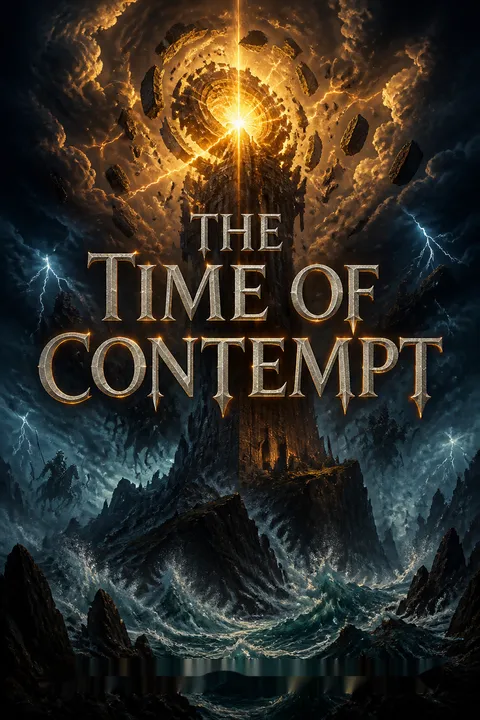

Plot Summary
War Whispers in the Air
The world is on the brink of war, with armies mobilizing and alliances fraying. Royal messengers like Aplegatt sense the change, as kings begin to distrust their sorcerous advisors, reverting to old methods of communication. Rumors swirl of the death of Princess Cirilla (Ciri, Falka), the Lion Cub of Cintra, and of strange omens—cows bleeding, the Wild Hunt riding, and a black knight haunting the land. The roads are dangerous, with monsters and Scoia'tael guerrillas lurking. Amidst this, Geralt, the witcher, is drawn into the web of political intrigue, seeking answers about Ciri and the forces hunting her.
The Lion Cub's Secret
Ciri, the last of Cintra's royal line, travels in secret with Yennefer, her sorceress guardian. Her bloodline makes her a pawn in the power games of kings and mages, as her existence threatens the balance of power. Codringher and Fenn, shadowy investigators, reveal to Geralt that Ciri is the Child of the Elder Blood, a figure of prophecy, and that multiple factions—Nilfgaard, sorcerers, and northern kings—seek her for their own ends. The truth of her lineage, tangled with ancient curses and elven prophecies, makes her both a target and a potential destroyer or savior.
Conspiracies and Council Fires
Yennefer and Ciri arrive in Gors Velen, where the city buzzes with rumors of war and the upcoming Conclave of Mages on Thanedd Isle. The sorcerers, divided by ambition and loyalty, prepare for a council that may decide the fate of nations. Yennefer maneuvers to secure Ciri's safety, arranging for her to attend Aretuza, the school for enchantresses. Meanwhile, Geralt investigates the shadowy Rience and his master, learning that the lines between friend and foe are blurred, and that betrayal may come from any side.
The Isle of Thanedd Beckons
Ciri's journey takes her to Thanedd, the seat of magical power, where she is to be enrolled at Aretuza. The island is a place of beauty and danger, its halls filled with secrets and rivalries. Ciri's presence stirs old prophecies and new ambitions, as mages debate her fate. She struggles with her own fears and desires, torn between obedience to Yennefer and her longing for freedom and belonging. The island's peace is fragile, threatened by the gathering storm of politics and prophecy.
Market Day in Gors Velen
A day of freedom in the bustling market exposes Ciri to the world's dangers and prejudices. She witnesses the cruelty of humans toward non-humans, the zealotry of priests, and the casual violence of the city. A confrontation with a caged wyvern turns deadly, forcing Ciri to use her witcher training to save lives. Her actions draw unwanted attention, and she narrowly escapes capture, realizing that her every move is watched and that her destiny is inescapable.
Bonds of Love and Destiny
In the tranquil setting of Hirundum, Geralt and Yennefer are reunited, their love rekindled by Ciri's intervention. Their bond, forged in hardship and longing, is tested by the burdens of destiny and the threats closing in on Ciri. They share moments of vulnerability and hope, dreaming of a peaceful life together. Yet, the world's demands and the looming conflict on Thanedd force them to confront the reality that love alone may not be enough to protect those they cherish.
The Conclave's Shattered Peace
The Conclave of Mages, meant to bring order, descends into chaos as hidden agendas erupt. Philippa Eilhart and her allies move against Vilgefortz and the traitorous sorcerers allied with Nilfgaard. Tissaia de Vries, torn by loyalty and principle, makes a fateful decision that unleashes violence. The halls of Garstang become a battlefield, with spells and swords clashing, and the Scoia'tael invading. Ciri, caught in the maelstrom, is forced to flee, her powers awakening in terror and desperation.
Betrayal at Garstang
The coup at Garstang exposes the deep fractures among the mages. Friends turn on each other, and the anti-magic protections are shattered. Vilgefortz reveals his true allegiance, orchestrating the slaughter with the help of Francesca and the Scoia'tael. Geralt, trying to protect Ciri, is grievously wounded by Vilgefortz. Yennefer is captured, and the Brotherhood of Sorcerers is destroyed. The events on Thanedd mark the end of an era, as the north's last hope for unity is consumed by betrayal and blood.
The Wild Hunt Rides
Fleeing the carnage, Ciri is pursued by the spectral Wild Hunt, a harbinger of doom. Haunted by visions of the black knight and the burning of Cintra, she is driven to the edge of madness. Her flight leads her to the Tower of Gulls, where she is drawn into a magical portal. The boundaries between dream and reality blur, as prophecy and fear entwine. The Hunt's pursuit is relentless, symbolizing the inescapable nature of fate and the darkness gathering over the world.
The Tower of Gulls
At the summit of Tor Lara, Ciri faces her destiny. The portal, a relic of elven magic, offers escape but also uncertainty. With enemies closing in and her powers surging uncontrollably, she steps through, vanishing from the world she knows. Her disappearance marks a turning point, as those who sought to use or protect her are left to reckon with the consequences. The Tower stands as a symbol of lost innocence and the price of prophecy.
The Desert's Burning Trial
Cast into the desolate Korath desert, Ciri faces a trial of survival. Tormented by thirst, hunger, and hallucinations, she is pushed to the brink of death. Her only companion is a unicorn foal, Little Horse, whose presence offers hope and companionship. Together, they battle monstrous creatures and the unforgiving elements. Ciri's latent magic flares in desperation, but she is forced to confront the cost of power and the meaning of mercy. The desert forges her anew, stripping away the last vestiges of childhood.
The Rats of the Marches
Rescued by a band of young outlaws known as the Rats, Ciri adopts the name Falka and embraces a life of rebellion. The Rats, each scarred by war and loss, become her new family. Together, they defy the authorities, living by their own code and waging war on a world that has rejected them. Ciri's skills and ferocity earn her respect, but the violence and amorality of her new companions challenge her sense of self. The line between victim and perpetrator blurs, as she is drawn deeper into the time of contempt.
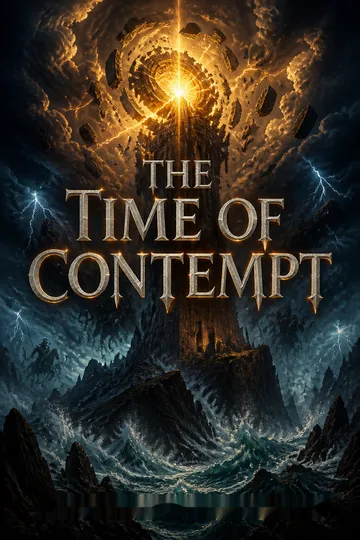
The Time of Contempt
The war between Nilfgaard and the northern kingdoms rages, leaving devastation in its wake. Betrayal, opportunism, and brutality become the norm, as alliances shift and old certainties crumble. The sorcerers are scattered, the kings are powerless, and the common people suffer. Ciri, now Falka, embodies the spirit of the age—hardened, vengeful, and alone. The prophecy of the Child of the Elder Blood looms, as the world teeters on the brink of destruction and rebirth.
The Emperor's Game
In Nilfgaard, Emperor Emhyr var Emreis manipulates events with cold precision. He seeks Ciri for his own purposes, orchestrating betrayals and alliances to secure his rule. A false Ciri is presented at court, while the real one remains at large. Emhyr's agents, including the ruthless Stefan Skellen, hunt for her, eliminating all obstacles. The emperor's ambitions are bound to prophecy and blood, as he seeks to control the future through the Child of the Elder Blood.
The Child of Elder Blood
Ciri's heritage as the Child of the Elder Blood becomes central to the world's fate. Her powers, tied to ancient elven magic and prophecy, make her both a weapon and a threat. Those who seek to use her—kings, mages, and emperors—are themselves ensnared by the forces they hope to control. Ciri's journey is one of self-discovery and resistance, as she struggles to define her own destiny amid the expectations and fears of others.
The End of Innocence
The events of Thanedd, the horrors of the desert, and the brutality of life with the Rats strip away Ciri's innocence. She is forced to kill, to endure betrayal and abuse, and to make choices that haunt her. Her transformation is both a loss and a liberation, as she claims agency in a world determined to shape her. The scars she bears are both physical and spiritual, marking the end of childhood and the birth of something new and dangerous.
The World in Ashes
The northern kingdoms are ravaged by Nilfgaard's armies, their cities burned and their people enslaved or slaughtered. Alliances are betrayed, and the old order collapses. The elves, granted a hollow victory in Dol Blathanna, are forced to betray their own kin. The sorcerers, once the guardians of balance, are broken and scattered. The world is remade in fire and blood, as the time of contempt fulfills its promise of destruction.
Alone, Yet Not Alone
Though battered and changed, Ciri survives. Among the Rats, she finds a semblance of belonging, even as she is haunted by the prophecy that dogs her steps. Her journey is far from over, and the forces that seek her are relentless. Yet, in the darkness, she discovers resilience, cunning, and the will to endure. The time of contempt has not destroyed her; it has forged her into something new—a survivor, a fighter, and a symbol of hope and fear for a world in turmoil.
Analysis
A meditation on power, innocence, and the cost of survivalThe Time of Contempt is a searing exploration of a world on the brink of collapse, where the old certainties of honor, loyalty, and justice are swept away by war, ambition, and prophecy. Sapkowski's narrative is both epic and intimate, weaving together the fates of nations and the inner lives of his characters. At its heart is Ciri, whose journey from innocence to experience mirrors the world's descent into chaos. The novel interrogates the nature of power—magical, political, and personal—and the ways it corrupts and destroys. It is unflinching in its depiction of violence and betrayal, yet also attuned to moments of love, hope, and resilience. The time of contempt is not merely an era of cruelty, but a crucible in which new identities and possibilities are forged. The story warns of the dangers of prophecy and the allure of easy answers, urging instead a recognition of complexity, ambiguity, and the necessity of choice. In the end, survival is not a matter of purity or heroism, but of adaptation, solidarity, and the refusal to surrender to despair.
Review Summary
The Time of Contempt receives mixed reviews, with many praising its complex plot, character development, and political intrigue. Readers appreciate the focus on Ciri and Yennefer, though some miss Geralt's prominence. The book's darker themes and unexpected twists are noted, along with improved worldbuilding. Critics mention dense politics and numerous characters as potential drawbacks. Overall, fans of the series find it a strong entry, while newcomers may struggle with its complexity. The audiobook narration by Peter Kenny is highly praised.
People Also Read


Characters
Geralt of Rivia
Geralt, the white-haired witcher, is a monster slayer by trade but a father by choice. His stoic exterior masks deep compassion and a fierce sense of responsibility, especially toward Ciri, whom he regards as his daughter. Geralt is caught between his desire for neutrality and the demands of destiny, forced to navigate a world where every choice has consequences. His love for Yennefer and Ciri is both his strength and vulnerability, driving him to acts of courage and sacrifice. Throughout the novel, Geralt's journey is one of painful growth, as he confronts his limitations and the impossibility of remaining aloof in a world consumed by war and betrayal.
Cirilla (Ciri, Falka)
Ciri is the last heir of Cintra, marked by prophecy as the Child of the Elder Blood. Her journey is one of transformation—from a hunted princess to a witcher's ward, a student of magic, a fugitive, and finally a member of the outlaw Rats. Ciri's psyche is shaped by trauma, loss, and the constant threat of exploitation. She is fiercely independent, resourceful, and resilient, but also haunted by nightmares and a longing for belonging. Her powers, both magical and prophetic, make her a target and a symbol, but her greatest struggle is to define herself amid the expectations and fears of others. Ciri's arc is a descent into the time of contempt, where innocence is lost and survival demands hard choices.
Yennefer of Vengerberg
Yennefer is a formidable enchantress, renowned for her beauty, intelligence, and willpower. Her relationship with Geralt is passionate and tumultuous, marked by love, pride, and mutual wounds. As Ciri's guardian, Yennefer is both nurturing and demanding, determined to protect and shape the girl's destiny. Her own past is one of pain and ambition, and she is driven by a need for control and meaning. Yennefer's involvement in the political machinations of the mages places her at the heart of the novel's conflicts, and her ultimate fate is one of sacrifice and uncertainty. She embodies the costs of power and the complexities of love.
Vilgefortz of Roggeveen
Vilgefortz is a sorcerer of immense talent and charm, whose true allegiance is to himself and his vision of power. He orchestrates the coup at Thanedd, betraying the Brotherhood and aligning with Nilfgaard for personal gain. Vilgefortz is a master of manipulation, using prophecy, politics, and violence to achieve his ends. His confrontation with Geralt is both physical and philosophical, representing the clash between cynicism and idealism. Vilgefortz's actions set in motion the destruction of the old order and the unleashing of the time of contempt.
Emhyr var Emreis
Emhyr, the White Flame Dancing on the Barrows of his Foes, is the emperor of Nilfgaard and the architect of the continent's upheaval. Cold, calculating, and relentless, he seeks to secure his dynasty by capturing Ciri and fulfilling the prophecy of the Elder Blood. Emhyr's machinations extend to every corner of the world, as he manipulates allies and enemies alike. His pursuit of Ciri is both political and personal, and his willingness to use deception—including presenting a false Ciri—reveals his moral flexibility. Emhyr is the embodiment of the new order rising from the ashes of the old.
Philippa Eilhart
Philippa is a leading member of the Brotherhood of Sorcerers, renowned for her intelligence, ambition, and ruthlessness. She orchestrates the coup against Vilgefortz and the traitorous mages, seeking to preserve the north's independence. Philippa is a master of intrigue, willing to sacrifice friends and principles for the greater good as she sees it. Her relationship with Geralt is one of wary respect, and her actions shape the fate of the mages and the kingdoms. Philippa's pragmatism and adaptability allow her to survive the time of contempt, but at great personal and moral cost.
Tissaia de Vries
Tissaia is the former rectoress of Aretuza, revered for her wisdom and dedication to the ideals of magic. She is torn between loyalty to her students and the realities of power, ultimately making a fateful decision that unleashes chaos at Garstang. Tissaia's inability to reconcile principle with pragmatism leads to her downfall, and her suicide is a poignant symbol of the end of an era. She represents the tragedy of those who cannot adapt to the time of contempt, and her legacy haunts those who survive her.
Francesca Findabair
Francesca, the Daisy of the Valleys, is both a powerful sorceress and the leader of the free elves. Her alliance with Nilfgaard secures a homeland for her people but at the cost of betraying the Scoia'tael and her own ideals. Francesca is a figure of both hope and compromise, embodying the complexities of survival in a world hostile to her kind. Her beauty and charisma mask deep wounds and difficult choices, and her story is one of bittersweet victory and enduring loss.
Codringher and Fenn
Codringher and Fenn are partners in a clandestine agency, specializing in uncovering secrets and manipulating information. Their investigation into Ciri's lineage and the prophecies surrounding her brings them into deadly conflict with powerful forces. Codringher's pragmatism and Fenn's scholarship make them formidable, but their pursuit of profit and truth ultimately leads to their violent deaths. They represent the dangers of knowledge in a world where ignorance is often safer.
The Rats (Giselher, Kayleigh, Mistle, Iskra, Reef, Asse)
The Rats are a gang of young outlaws, each driven by trauma, loss, and a thirst for freedom. They live by their own code, rejecting the world that has rejected them. Their camaraderie offers Ciri a sense of belonging, but their violence and amorality challenge her values. The Rats are both victims and perpetrators, shaped by the time of contempt into symbols of its lawlessness and allure. Their influence on Ciri is profound, marking her final transformation from innocence to experience.
Plot Devices
Prophecy and the Elder Blood
The narrative is propelled by the prophecy of the Child of the Elder Blood, a figure destined to bring destruction or renewal. Ciri's lineage, tied to elven and human royalty, makes her the focal point of competing ambitions. The prophecy is both a source of hope and fear, shaping the actions of kings, mages, and emperors. Its ambiguity allows for multiple interpretations, fueling paranoia and violence. The motif of prophecy underscores the tension between fate and free will, as characters struggle to assert agency in a world seemingly governed by destiny.
Political Intrigue and Betrayal
The novel is structured around a web of conspiracies, betrayals, and shifting loyalties. The Conclave of Mages, intended as a forum for unity, becomes a battleground for competing factions. The coup at Garstang, the invasion of the Scoia'tael, and the machinations of Nilfgaard all reveal the fragility of trust and the pervasiveness of self-interest. Foreshadowing is used extensively, with rumors, dreams, and omens hinting at impending disaster. The narrative's structure mirrors the chaos of the world, with multiple perspectives and intersecting plotlines converging in moments of crisis.
Coming of Age and Loss of Innocence
Ciri's journey from sheltered princess to hardened survivor is the emotional core of the novel. Her experiences—training as a witcher, studying magic, enduring betrayal and violence, and joining the Rats—strip away her innocence and force her to confront the realities of power and survival. The motif of the lost child recurs, as Ciri seeks belonging and agency in a world determined to use her. Her transformation is both a personal tragedy and a reflection of the world's descent into the time of contempt.
Magical Realism and Surrealism
The novel employs magical realism and surrealism to convey the psychological and metaphysical dimensions of its characters' journeys. Ciri's visions, the Wild Hunt, and the chaotic portal at Tor Lara all serve to destabilize the boundaries between reality and imagination. These devices heighten the sense of uncertainty and inevitability, reinforcing the themes of prophecy and fate. The use of magic is both a source of wonder and terror, reflecting the double-edged nature of power.
Narrative Structure and Multiperspectivity
The story unfolds through the perspectives of Geralt, Ciri, Yennefer, and a host of secondary characters. This multiperspectivity allows for a rich exploration of motives, fears, and desires, and emphasizes the interconnectedness of personal and political destinies. The structure is non-linear, with flashbacks, dreams, and parallel plotlines converging in moments of revelation and crisis. The use of letters, songs, and historical documents adds layers of meaning and irony, inviting the reader to question the reliability of any single narrative.
The Witcher Series
About the Author

Download PDF
Download EPUB
.epub digital book format is ideal for reading ebooks on phones, tablets, and e-readers.








































