
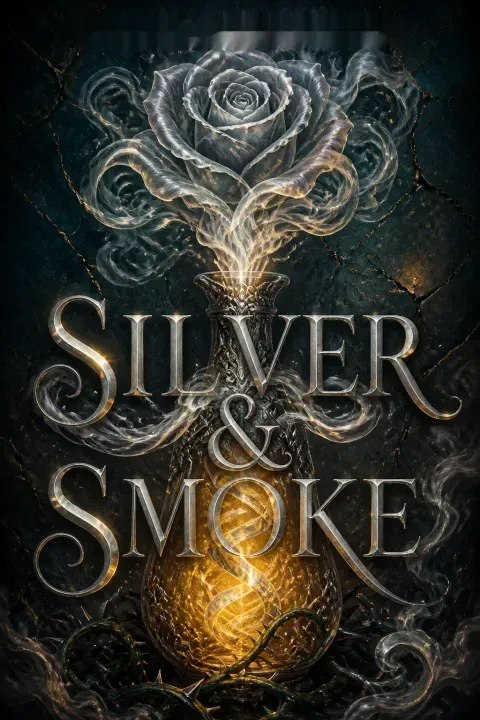


Plot Summary
Prologue
Before the story, an ancient prophecy foretells: 'Gold will turn to silver in a blaze of iron and embers, giving rise to ancient power long forgotten.' The words come from the Seer Queen of Aveum, a kingdom far to the north.
Their meaning remains obscure: gold into silver, iron and embers, a power that the midrealms has not seen in centuries. No one yet knows what vessel will carry this transformation, or whose bond will reshape the fate of the five kingdoms.
This prophecy functions as a narrative promise and a structural key. It names the very transformation the book must deliver: gold becoming silver. The imagery is alchemical (base metals transmuting into precious ones) and elemental (iron, embers), foreshadowing a union of warrior strength and storm magic. The phrase 'ancient power long forgotten' hints at something older than the sovereign magic of the kingdoms, something that predates the shadow war and its corruptions. The prophecy is conspicuously not about conquest or destruction. It is about metamorphosis. By placing these lines before Chapter 1, the author primes the reader to watch for a relationship that will literally change color, and a power that emerges not from taking, but from giving.
The Poisoner's Impossible Choice
Lord Lucian Devereux3 corners Wren1 in the Drevenor archives with devastating news: the Warsword Torj Elderbrock2 has been poisoned during a rescue mission, and only Lucian3's alchemists possess the formula for an antidote. His price is Wren1's hand in marriage to his son Darian.4 The engagement must be public, convincing, and immediate. If she refuses or makes Darian4 look the fool, Torj2 dies.
Wren,1 a master poisoner herself, understands the bitter irony. She agrees to the deal but privately vows to find another cure, placing her faith in the silvertide roses amplified by her storm magic. She meets Torj2 secretly afterward, presses a custom-forged Naarvian steel dagger into his hands, and promises to save him without revealing the cost.
The opening establishes the book's central tension: Wren must publicly perform a lie to privately preserve the truth of her love. Lucian exploits the very bond he cannot see, weaponizing Wren's devotion against her. The dagger scene accomplishes multiple things at once: it shows Torj's craftsmanship and care (he had the blade altered for her), it introduces the inscription 'Iron & Embers' which echoes the prophecy, and it demonstrates how the couple's intimacy now must exist in stolen moments and coded gestures. This is a romance structured like a spy thriller: every glance is monitored, every touch is evidence.
A Betrothal of Masks
At the lavish engagement celebration, Wren1 moves through crowds of nobles with Darian4's arm around her waist, smiling on command while Lord Lucian3 watches from the shadows like a hawk. She and Kipp8 have strategized: they will use the Devereux resources to build an army for Delmira while buying time to cure Torj.2 At the war council afterward, Wren1 explains the strategic importance of the silvertide roses.
Whoever controls them controls the only countermeasure to Silas7's dark alchemy. She also reveals that shadow artefacts were stolen from Drevenor during an earlier attack, which Silas7 is now using to amplify his power. Darian4 pledges his bannermen to her cause, and Wren1 announces her intention to reclaim her kingdom.
Wren's performance of the docile noblewoman is a tactical deployment of the very stereotypes that have constrained her. She weaponizes the expectations of the patriarchal nobility: let them see a smiling bride, not a strategist. The war council scene reveals the double-edged nature of the silvertide roses, which can cure or amplify depending on their use. This botanical ambiguity mirrors Wren herself: alchemist and poisoner, healer and killer. The revelation about the stolen artefacts introduces a crucial asymmetry: every battle Silas wins makes him stronger because he can harvest residual shadow magic.
A Mace in the Sand
While Wren1 tours noble estates, Torj2 and Wilder6 investigate outer villages where Silas7's influence has spread like a disease. They discover ordinary people transformed into feral, violence-crazed creatures reminiscent of the howlers from the shadow war. The corruption is not forced recruitment but something more insidious: those who broke bread with a stranger become addicted to bloodshed.
Into their camp stumbles Senna Cross, a villager carrying a heavy canvas sack. Inside is Vernich the Bloodletter11's legendary mace, caked with gore, and a pouch containing three severed fingers still wearing Ashlyn Graves13's distinctive spiked rings. Two more Warswords are presumed dead.
The discovery of Vernich's mace functions as a narrative gut punch. Warswords are meant to be nearly unkillable, living symbols of the midrealms' strength. Finding one's weapon abandoned in the sand is like finding a fallen flag. The severed fingers introduce Graves in absentia, a character who will later emerge very much alive and fiercer than the rumors suggest. The village corruption plotline develops the theme of shadow magic as addiction: Silas does not need to brainwash followers when he can simply make violence irresistible. This is warfare as pharmacology, and it makes the silvertide cure not just a weapon but a detoxification.
The Viper Unmasked
During a wedding dress fitting that sends Wren1 into a panic, Torj2 finds her alone before a mirror. Their passion overtakes them inside a curtained alcove, and Darian4 walks in on them. But instead of fury, he offers dry amusement and locks the door. When Lord Lucian3 arrives moments later, Darian4 conceals the lovers and engages his father3 in a damning conversation about their plans: control Wren,1 claim Delmira's resources, and establish a Devereux dynasty.
After Lucian3 leaves, Darian4 explains everything to a shocked Torj.2 He has spent decades secretly undermining his father. He saved Torj2's grandmother Vara15 from Lucian3's wrath decades ago, spiriting her away. She is still alive. This is why Wren1 trusts him.
This is the novel's most structurally elegant sequence. The dressing room becomes a theater of revelations stacked like nesting dolls: first the erotic tension between Wren and Torj, then the comic interruption, then the political eavesdropping, then the emotional bombshell about Grandmother Vara. Darian's true role recontextualizes every previous interaction with him. His performative cruelty was protective camouflage. The scene also dramatizes a theme the novel returns to: the difference between seeming and being. Darian seems a villain but acts as a guardian. Lucian seems a patron but schemes as a predator. The masks the characters wear are not deceptions but defenses.
Drevenor Ablaze
Word arrives that Silas7's forces march on Drevenor. Wren1 and the Warswords race back to find the academy under assault. They fight through the burning building to rescue Dessa,9 who has barricaded herself in Wren1's quarters with her research notes.
Wren1 makes a devastating decision: rather than let Silas7 claim the shadow artefacts and alchemical secrets within, she and Thea5 channel their storm magic into the great tree at the academy's heart, turning it into a lightning conduit that tears the building apart from its foundations. But Silas7 himself appears through the smoke. When Wren1 hurls lightning at him, his body absorbs it. The veins beneath his skin writhe black. He is not just blocking her magic; he is feeding on it.
The destruction of Drevenor is an act of strategic self-immolation. Wren burns her own history (the workshop where she mastered alchemy, the gardens where her magic flourished, the library where she studied) to prevent a greater catastrophe. This is the painful calculus of asymmetrical warfare: give up what you love to deny it to the enemy. Silas's revelation as a magic consumer rather than a mere blocker shifts the entire strategic landscape. Every time Wren or Thea use storm magic against him, they strengthen their opponent. The sisters must now fight with one hand tied behind their backs, unable to deploy their greatest weapon without feeding the monster they face.
Vows in the Chain Locker
Aboard the ship sailing toward Thezmarr, Torj2 finds Wren1 in the chain locker where she has been struggling to write her confession to the midrealms. He has not come to discuss politics. He asks her to marry him, right then, with the captain as witness. Wren1 accepts.
Their union is consummated immediately afterward, fierce and desperate, the soul bond flaring gold between them as they take what may be their last private moment before war consumes everything. They tell no one except Kipp8 and a handful of trusted allies. The marriage must remain secret while the engagement to Darian4 still serves its strategic purpose. But the vows are real, and the bond pulses stronger for them.
The secret marriage is an act of rebellion against every force trying to control them: Lucian's blackmail, political necessity, the war itself. By exchanging vows in the ship's most utilitarian space (surrounded by anchor chains, not flowers), they reclaim the sacred from the strategic. The chain locker setting is symbolically perfect: they are literally in the ship's foundations, binding themselves with vows as the anchor chain binds the vessel. The marriage also creates dramatic irony for the reader. Every subsequent scene where Wren plays Darian's fiancée is now shadowed by the knowledge that she is already Torj's wife. The lie has become a double lie, and the truth is a secret weapon.
Clifftop Warsword Wedding
At Thezmarr, Thea5 announces she and Wilder6 will marry immediately. The ceremony takes place on the very cliffs where she first spied on him years ago as a shieldbearer. Malik, Wilder6's brother, escorts Thea5 down the aisle with his aging dog at his side. Kipp8 officiates, having won the privilege in a bet years earlier.
Wren1 gives Thea5 a throwing star forged from Naarvian steel and treated with incapacitating poison. The couple exchanges simple silver bands and vows that speak of visions, adventures, and the impossibility of enough time. Torj2 watches from the edges, aching with the knowledge that he cannot publicly claim Wren1 as Thea5 claims Wilder.6 But through their bond, Wren1's voice reaches him: she belongs to him.
The wedding functions as both celebration and contrast. Thea and Wilder's public joy throws into sharp relief the secrecy Wren and Torj must endure. The Naarvian steel throwing star Wren gifts her sister is more than a weapon: it is a symbol of the dual identity every woman warrior must carry (deadly and beautiful, sharp and ceremonial). The setting on the cliffs, where Thea's journey as a warrior began, closes a circle. But the chapter's deepest note is Torj's isolation. He stands at the periphery of happiness, unable to touch his own wife, watching another man's ring on her finger. The bond becomes his only sanctuary, a private cathedral where their love can exist unmasked.
A Village of the Dead
The company arrives at an eerily silent port town where every man, woman, and child lies dead. There are no sword wounds, no signs of struggle. The bodies simply dropped where they stood. Wren1 recognizes the faint floral scent immediately: oleander. Someone poisoned the town well.
Silas7 has staged a massacre using Wren1's own signature method, knowing that her past as the Poisoner1 (the vigilante who executed corrupt nobles after the shadow war) makes her the obvious suspect. Lord Briar, whose relative governed the town, begins asking pointed questions about Wren1's activities in the years after the war. Kipp8 urges her to get ahead of the story, to tell the people her truth before Silas7 tells his version.
Silas's strategy here is psychologically sophisticated. He does not simply attack Wren; he hijacks her own narrative. By using poison (historically coded as a woman's weapon, as the midrealms chronicles note), he exploits the very gender prejudices Wren has fought against. The massacre also weaponizes her moral complexity against her. Wren did kill corrupt nobles. She did take justice into her own hands. The truth is complicated, and Silas knows that complexity is a liability in wartime propaganda. Kipp's advice to preempt the narrative with her own confession recognizes that in the information war, silence is surrender. Truth, even partial and messy, is better than letting your enemy define you.
Bait in a Livestock Cage
Kipp8 devises a decoy operation: Wren,1 Cal,16 and Kipp8 stage an abandoned camp designed to lure a large enemy unit away from Dorinth. Wren1 conjures a lightning storm as a beacon, then sends Cal16 and Kipp8 away when the enemy arrives. She is struck on the head, manacled, and thrown into a livestock cage.
The soldiers test the camp's abandoned wine on her first; she drinks without flinching, her body long since immunized to the particular toxin she laced it with. Hours pass as the enemy carouses. One by one, they begin bleeding from the eyes and nose, collapsing into the campfires. When silence falls, Wren1 picks the manacles with her hairpin, steps over Donovan's corpse, and smiles at his frozen face.
This sequence is a masterclass in dramatic irony and delayed payoff. We know Wren is the poisoner; the soldiers do not. Every leer, every crude joke they make at her expense becomes a countdown to their own deaths. The cage works on multiple symbolic levels: she is prisoner, bait, and Trojan horse simultaneously. The hairpin (introduced in earlier flashback as her weapon of choice against Sebastos Barlowe) returns as her escape tool, a satisfying loop of Chekhov's gun. Most importantly, this chapter recasts Wren's passivity as agency. She does not fight her way out; she waits. Her weapon is not strength but patience, a distinctly alchemical virtue that the novel has been building since the epigraph from Alchemy Unbound in Chapter 1.
The Rose Field Burns
Torj2 leads the main assault on the ruined capital. The combined forces of Thezmarr, Harenth, and the Devereux bannermen sweep through the city gates, overwhelming Silas7's skeleton garrison. But during the fighting, Wilder6 is struck by a cloud of shadow alchemy and collapses, his Furies-given Warsword power completely drained from his body.
Wren1 administers her silvertide cure, and his strength returns. The relief is short-lived. Kipp8's shout draws them to the city's edge, where the vast field of silvertide roses (their only hope of mass-producing the cure) is engulfed in flames. Silas7 has burned it all. Wren1 watches the silver petals blacken and curl, the cure turning to ash before her eyes. Her one path to saving Torj2 is gone.
The burned rose field is the novel's emotional nadir, the moment when the central quest (find cure, save Torj) appears to fail definitively. It is also the pivot point that forces the narrative to find a different resolution than the one it has been promising. The reader has been trained to believe the roses are the answer; their destruction is a narrative betrayal that mirrors Wren's own despair. Wilder's temporary power loss and restoration serves as a proof of concept: the cure works, which makes losing the means to produce it even more devastating. The chapter also establishes a new urgency. Without the roses, every dose of the cure is irreplaceable. They are fighting a war of attrition with a finite ammunition supply.
The Bear Slayer's Fury
With battle still smoldering, Lucian3 appears in Wren1's tent with a white wedding gown. Her fake engagement, he declares, has gone on long enough. When she hesitates, he seizes her, tearing at her clothes, determined to force her into the dress and the marriage.
Wren1 freezes, her magic failing her in the grip of old terror. Then the tent wall rips open. Torj2 hurls Lucian3 through the canvas into the mud and lifts him by the throat, bellowing for all the camp to hear that Lucian3 has laid hands on his wife.1
The confession detonates through the camp. Darian4 performs outrage, striking Torj2 to maintain his cover. Lucian3 burns the poison formula in retaliation. The Devereux allies withdraw. Wren1 and Torj2 stand exposed, married, and abandoned by half their army.
This scene is the convergence of every pressure the novel has been building. The soul bond, the secret marriage, the fake engagement, Lucian's blackmail, Torj's illness: all of it collides in a tent on a battlefield. Torj's outburst is not strategic but instinctive. He cannot watch another man touch Wren, and that inability is both his greatest liability and his most authentic self. The cost is immediate and catastrophic: the army shrinks, the allies vanish, and the poison formula (which may never have existed) turns to ash. But there is liberation in the wreckage. The lie is over. Whatever comes next, they will face it as who they truly are: not a poisoner and a Warsword hiding in shadows, but a queen and her husband standing in the light.
Crowned in the Ruins
As Silas7's main army marches on Dorinth, Audra12 arrives with grim news: Tver refuses to send forces, citing the absence of a crowned queen. The coronation cannot wait. In the shattered throne room of her ancestors, Wren1 kneels on broken stone. Audra12 reads the oath from the Constitution of the Founding Furies.
The crown that Thea5 places on Wren1's head is deceptively simple: a slender band of Naarvian silver, forged from the dagger Malik once gave Thea.5 The steel that once carried the inscription 'Beware the fury of a patient Delmirian' now circles a queen's brow. Torj2 kneels before her, offering his war hammer in fealty. Their silver bond, still hidden, hums between them like a second vow.
The coronation transforms the novel's symbolic vocabulary. Naarvian steel, previously associated with weapons and warfare, becomes the material of sovereignty. The dagger that was meant for combat is repurposed for rule. This alchemical transmutation of object into symbol mirrors the larger prophecy: gold into silver, weapon into crown. The ruined throne room itself is a powerful setting: Wren is crowned not in glory but in rubble, suggesting that her reign will be defined by reconstruction rather than conquest. Torj's public kneeling completes the inversion of the novel's opening. In Chapter 1, he asked how to serve her. Now, before the assembled forces, he answers his own question.
Brothers in the Warren
Before the final battle, the company is ambushed in a narrow ravine. As enemy forces close from both ends, a familiar spiked club crushes the enemy commander's throat. Vernich Warner,11 very much alive, emerges from the shadows with his daughter Ashlyn Graves13 at his side.
He leads them to the Warren, an underground settlement beneath Delmira where two hundred refugees have been living for decades, waiting for their kingdom to be reclaimed. Among them are Guardians of Thezmarr, amateur alchemists, and families who fled the original fall of Delmira.
Vernich11 has been recruiting, preparing. He also presents Wren1 with a torn enemy mask, which she analyzes and discovers contains grooves designed to prolong the effects of alchemy and magic absorption.
Vernich's return is the novel's most satisfying reversal. The character presumed dead for hundreds of pages reappears not as a victim but as a general, having spent his absence building the very reinforcements Wren needs. The Warren itself is a brilliant piece of worldbuilding: a community that has waited generations for a ruler to return, preserving Delmirian identity underground like roots beneath a fire. Wren's analysis of the mask bridges her alchemical expertise with military intelligence. The grooves are not decorative; they are functional, designed to trap and prolong magical effects. This mechanical detail makes Silas's power feel more like engineering than sorcery, which in turn makes it feel more defeatable.
Silver Rising
The final battle collapses into chaos. Silas7 emerges from hidden tunnels with his true army, having used the common folk as disposable pawns. Talemir14 and the shadow-touched arrive on membranous wings. Torj,2 burning through his last vials of strengthening potion, charges Silas7 and is struck by four arrows.
Wren1 screams and leaps from the parapet, her magic and his Furies-given strength channeling together. On the blood-soaked ground, they reach for each other. The golden thread of their soul bond pulses, shimmers, and transmutes into brilliant silver.
The shadow alchemy shattering against it like glass. Torj2's wounds seal closed. The poison that has been killing him for months dissolves. The prophecy fulfills itself not through conquest but through union. Gold has turned to silver in a blaze of iron and embers.
The silver bond transformation is the novel's theological climax, the moment the prophecy becomes flesh. Crucially, it is not achieved through violence or ritual but through proximity: Wren and Torj reaching for each other across the carnage. This is the 'ancient power long forgotten' that the prophecy promised: not a weapon, but a connection so pure it purifies everything it touches. The imagery is deliberately alchemical. The bond is a distillation, burning away the corrupt (the poison, the shadow magic) and leaving only the essential. This reframes the entire narrative. The silvertide roses were never the cure; they were a metaphor for what Wren herself could do. She did not need to find healing; she needed to become it.
The Kingsbane's Skull
Empowered by the silver bond, Wren1 advances on Silas.7 She reveals his true identity to his own army: he is not a man of the people but Andor Terling,7 Prince of Naarva, waging a war of revenge for a perceived betrayal between their mothers.
The People's Vanguard, realizing they have been manipulated by royalty posing as a revolutionary, drop their weapons in horror. Silas7 tries to summon Wren1's magic, but the silver bond cannot be corrupted or consumed. He throws everything at her: boulders, debris, alchemical vials.
Wren1 closes the distance. She tries her poisoned hairpin; he boasts of his immunity. So she reaches for Torj2's war hammer. With all of his Furies-given strength flowing through her, she swings. Silas7's skull caves inward. The shadow alchemy dissipates like ink in water.
Silas's death is notable for what it is not: it is not elegant, not alchemical, not clever. It is blunt force trauma delivered with a weapon she should not be able to lift. The war hammer is the most masculine-coded object in the novel's arsenal, and Wren wields it through the bond, through Torj's strength flowing into her body. This is the final refutation of every man who told her what she could and could not do. The revelation of Silas's identity is the rhetorical kill that precedes the physical one. By exposing him as a prince, she strips him of his populist credibility. His army does not need to be defeated; it needs to be disillusioned. The war ends not when the last soldier falls but when the first soldier realizes he has been lied to.
The Ladies' Luncheon
Days after the battle, Lucian3 requests an audience with Queen Wren.1 He claims he was under Silas7's mind control, the same power King Leiko suffered during the shadow war. He offers his vast resources to rebuild Delmira in exchange for a royal pardon.
Wren1 listens politely, then serves him tea from an unassuming ceramic pot with two chambers. The Ladies' Luncheon Teapot, her invention from years past, allows one person to drink safely while the other receives a fatal dose. She assures Lucian3 the tea is a preventative against empath manipulation.
He drinks. She drinks from the same pot. Two days later, Lord Lucian Devereux3 dies of natural causes. Darian4 inherits the Devereux fortune and dedicates it to Delmira's reconstruction. The poison was elegant, untraceable, and administered by a queen1 who never stopped smiling.
Lucian's death is the novel's final and most satisfying act of narrative justice. He is killed not in battle (which would honor him) nor by Torj's hand (which would gratify him) but by Wren's oldest, most intimate weapon. The teapot, introduced as a relic of her Poisoner past, returns as the instrument of her royal future. The mechanism is diabolically clever: she drinks from the same pot, eliminating suspicion. The poison mimics natural causes, eliminating evidence. This is power as Wren has always understood it: patient, precise, invisible. The chapter also completes Darian's arc from seeming antagonist to secret ally to legitimate heir. The Devereux name, once a source of corruption, is redeemed through the son who spent decades waiting for his father to fall.
Epilogue
Six weeks after the war, Wren1 and Torj2 hold their public wedding at the cottage in Delmira. Kipp8 officiates before all their friends: Thea,5 Wilder,6 Cal,16 Dessa,9 Zavier,10 Audra,12 Talemir,14 Darian,4 Farissa, and the newly arrived Grandmother Vara.15 Wren1 wears a simple gown with lavender in her hair and her potion belt at her waist.
Torj2 has given her a kitten with black fur and green eyes, a creature as fierce and stubborn as she is. He kneels in the grass and slides his mother's ring onto her finger, asking her to marry him again where everyone can see.
The silver bond glows between them, visible to all, as the new flag of Delmira (a silvertide rose against a lightning-struck war hammer) flies overhead. The kingdom is rebuilding. The roses are being replanted. Drevenor will rise again. Wren Embervale,1 alchemist, poisoner, queen, has everything she fought for: her crown, her kingdom, and the Warsword2 who has loved her for thirteen years.
The epilogue is structured as a series of returns and restorations. The wedding that was secret becomes public. The grandmother who was lost is found. The kitten Torj swore he would never want becomes the gift he gives. Every deprivation the couple endured (hidden touches, stolen vows, the ring Wren could not wear) is reversed and healed in the open air. The new flag synthesizes the novel's twin symbols: the rose (healing, alchemy, Wren's domain) and the war hammer (strength, protection, Torj's domain). They are no longer separate. The epilogue's emotional core is the word 'replanting.' The silvertide roses will grow again, not wild and accidental but intentional and cultivated. This is the novel's final argument: what is burned can be regrown. What is lost can be rebuilt. What is secret can, at last, be celebrated.
Analysis
At its core, Silver & Smoke is a novel about the difference between power that is taken and power that is given. Silas the Kingsbane7 builds his empire through extraction: he drains magic from rulers, strength from Warswords, loyalty from the desperate. He consumes. Lucian Devereux3 operates the same way, treating Wren1 as a resource to be acquired, Torj2 as a problem to be eliminated. Both antagonists view relationships as zero-sum transactions where one person's gain requires another's loss. The novel's argument, delivered through every plot thread, is that this worldview is both morally bankrupt and strategically doomed. The silver bond does not defeat Silas7 because it is stronger in raw force. It defeats him because it is the product of mutual surrender rather than conquest. Wren1 pours her storm magic into Torj;2 Torj2 pours his Furies-given strength into Wren.1 Neither is diminished. Both are magnified. The novel's alchemical vocabulary is not decorative but structural. Distillation is the recurring metaphor: the process of boiling something down until only its essence remains. Wren1 distills cures from roses, truth from lies, justice from corruption. The soul bond itself is a kind of distillation, burning away the impurities (poison, fear, secrecy) until only the essential connection remains. The book asks what happens when love itself becomes the active agent in the crucible. The answer is silver light that shatters shadow. The secondary theme is the cost of masks and the liberation of removing them. Every major character wears one: Wren1 as the besotted fiancée, Darian4 as the loyal son, Silas7 as the man of the people, Vernich11 as the dead legend, Graves13 as the Warsword with no father. The climaxes are not just military but revelatory. Silas7 falls when his identity is exposed, not when his body is broken. Wren1 wins not by hiding her past as the Poisoner1 but by confessing it to the common folk in letters distributed across the midrealms. Darian4 steps into his inheritance only after his father3's mask of respectability is stripped away. The novel argues that secrecy is a necessary survival strategy under tyranny, but it cannot be the foundation of a just reign. The epilogue's public wedding, with the silver bond visible for all to see, is the final unmasking. What was hidden is celebrated. What was stolen is returned. What was burned will be replanted.
Review Summary
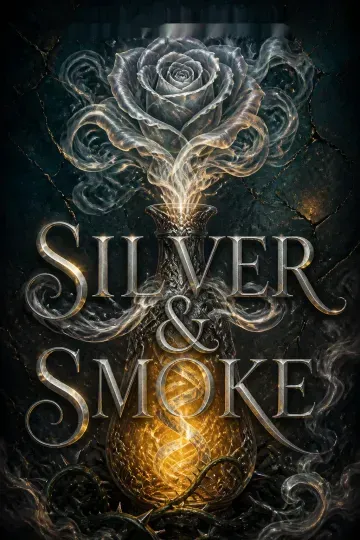
Silver & Smoke, the final book in The Ashes of Thezmarr trilogy, receives overwhelmingly positive reviews with a 4.36 rating. Readers praise the epic conclusion to Wren and Torj's romance, highlighting intense yearning, forbidden love, and soul bonds. The dual narration audiobook earns acclaim. Reviewers love the found family dynamics, action-packed plot, and strong character development, particularly Wren's growth as FMC. Some note excessive spice scenes and pacing issues in the first half. The ending satisfies fans, though many desire spin-offs featuring beloved side characters like Kipp and Cal.
People Also Read
Characters
Wren Embervale
Alchemist Queen of DelmiraWren is a storm wielder, a master poisoner, and the rightful heir to the fallen kingdom of Delmira. She spent five years after the shadow war as a vigilante assassin, methodically executing the corrupt nobles who funded the conflict. Now at Drevenor Academy, she has pivoted toward healing, seeking a cure for dark alchemy using silvertide roses amplified by her magic. She is pragmatic to the point of ruthlessness, willing to deceive, poison, and sacrifice her own happiness to protect those she loves. Her deepest wound is survivor's guilt: her friends Sam and Ida died because she asked them to stay behind during the war. This makes her fiercely self-reliant, reluctant to ask for help, and prone to carrying unbearable burdens alone. Her relationship with Torj2 terrifies her not because she doubts his love but because she cannot bear to lose anyone else. She is, fundamentally, a healer who learned to kill, and the tension between those identities drives every decision she makes.
Torj Elderbrock
Wren's soul-bonded Warsword husbandKnown as the Bear Slayer, Torj is the most senior remaining Warsword of the original cohort. He grew up in the slums of Tver with an abusive father who beat his mother to death, a trauma that forged his protective instincts into something ferocious and sometimes suffocating. He has loved Wren1 since he met her in the Bloodwoods thirteen years ago, but his rigid warrior code and fear of vulnerability kept him at a distance for over a decade. The soul bond between them, a golden thread of shared sensation and mental communication, both anchors and torments him. When Silas7 poisons him specifically to hurt Wren1, Torj's instinct is to hide his deterioration, to be strong for her even as his body fails. He would rather die fighting than live as a burden. His arc in this book is learning that true strength means accepting help, that love means letting someone see you broken.
Lord Lucian Devereux
Manipulative noble patriarchLucian is a man who views people as assets and relationships as transactions. He controls through information, leverage, and the threat of violence. His son Darian4 exists to extend his legacy; his bannermen exist to fund his ambitions. He blackmails Wren1 into the engagement knowing exactly how to apply pressure: threaten Torj2's life, dangle the cure, and monitor every move. His hatred of Torj2 is personal and class-based; he sees the Warsword as gutter-born filth unworthy of influence. Despite his polished manners, Lucian is physically coercive when words fail. He tears Wren1's clothes when she hesitates to obey, revealing the brute beneath the nobleman. His fatal flaw is arrogance: he believes his wealth and status make him untouchable, and he underestimates Wren1's patience and creativity in equal measure.
Darian Devereux
Secret ally and double agentDarian has spent his entire adult life playing the charming, shallow nobleman while secretly dismantling his father3's power from within. He saved Torj2's grandmother Vara15 decades ago, spiriting her away when Lucian3 would have killed her for helping Darian's mother escape domestic abuse. This secret has been his heaviest burden and his deepest act of love for the brother he lost when he sent Torj2 away to protect him. His engagement to Wren1 is a mutual deception: she needs the Devereux resources and the poison formula, he needs her help untangling the legal traps Lucian3 has set around his inheritance. Darian hides his true self behind a mask of wit and flirtation, but beneath it he is weary, principled, and quietly heroic.
Thea Embervale
Wren's Warsword sisterThe Shadow of Death is everything Wren1 is not: bold where Wren1 is calculating, physical where Wren1 is cerebral, publicly fierce where Wren1 is privately dangerous. As the midrealms' first female Warsword in decades, she shattered the gender barriers of Thezmarr through sheer combative brilliance. Her marriage to Wilder Hawthorne6 is the culmination of a love forged through apprenticeship, betrayal, war, and a year-long hunt across the midrealms. Thea carries Anya's death as a wound that has scarred over but never fully healed. Her role in this book is both warrior and witness: she fights at Wren1's side while watching her sister1 navigate a political cage Thea herself would have simply smashed. She melts Malik's Naarvian steel dagger to forge Wren1's crown, a sacrifice that symbolizes the passing of one form of strength into another.
Wilder Hawthorne
Thea's husband and fellow WarswordThe Hand of Death survived the Scarlet Tower, a prison that broke lesser warriors. He is Torj2's closest brother-in-arms and the only other man who understands what it means to love an Embervale sister5. His calm steadiness balances Thea5's volatility, and his presence often serves as a bridge between Torj2's stoicism and the chaos around them. When shadow alchemy temporarily strips his Furies-given power during the battle for Dorinth, his vulnerability becomes a proof of concept for Wren's cure but also a terrifying glimpse of what Torj2 faces daily.
Silas the Kingsbane
Usurper and dark alchemistBorn Andor Terling, Prince of Naarva, Silas transformed himself into a revolutionary figurehead while hiding his royal identity behind an alchemically enhanced mask. He blames the Embervale family for Naarva's suffering, believing Wren1's mother abandoned his kingdom to darkness. His power is twofold: he is a summoner who can absorb magic from others, and a master of shadow alchemy who can corrupt ordinary people into violence-addicted soldiers. His methodology is psychologically cruel: he targets Torj2 specifically to hurt Wren1, stages a mass poisoning to frame her, and uses the tunnels beneath Delmira to trap her army. His fatal weakness is the very thing that drives him: he cannot imagine power that is given freely rather than taken.
Kipp Snowden
Master strategist and loyal friendKipp is the son of the Fox (a legendary spymaster) and the architect of every major tactical victory in the novel. He plans the decoy camp, designs the trap that poisons five hundred enemy soldiers, and orchestrates the distribution of Wren1's confession letters across the midrealms. Beneath his relentless humor and alcoholism jokes, he is fiercely competent and deeply loyal. He tracked down Grandmother Vara15 at Wren1's request, arranged the secret marriage on the ship, and preserved Vernich11's mace from the funeral pyre 'just in case.' His dream of building a tavern called Professor's Corner in Delmira is the novel's most earnest expression of postwar hope.
Dessa
Wren's alchemist friend and researcherDessa is the foil to Wren1's darkness: bright, earnest, and unfailingly kind. She came to Drevenor to find a cure for her father's memory loss. She stays to help Wren1 save Torj2. Her alchemical specialty is design rather than poison, but she adapts quickly, even creating an illegal strengthening potion based on Silas7's own dark alchemy so that Torj2 can keep fighting. She drugged Lucian3 with vale lotus pollen so Wren1 and Torj2 could have time together, a moment of sly mischief that reveals steel beneath her gentle exterior. She represents the future of alchemy the novel imagines: rigorous but compassionate, precise but unafraid of moral complexity.
Zavier Terling
Prince of Naarva, Silas's brotherZavier carries the weight of his brother7's atrocities as a personal failure. He spent months believing he could redeem Silas7, only to realize the brother he loved died long ago and what remains is a monster wearing his face. His summoning magic mirrors Silas7's but is used for defense rather than consumption. Zavier's knowledge of Silas7's psychology proves crucial: he identifies the shadow alchemy's effects, explains the masks' function, and provides the emotional intelligence that helps Wren1 understand how to defeat his brother. His friendship with Wren1, forged in Drevenor's workshops, represents the new alliance between Naarva and Delmira that will replace their mothers' broken one.
Vernich Warner
The Bloodletter, resurrected WarswordVernich is the oldest surviving Warsword, a man so brutal that his nickname is a warning. He was presumed dead after his mace was found at a massacre site, but in truth he escaped captivity and spent months in the Warren, a hidden underground settlement beneath Delmira, recruiting and preparing for Wren1's arrival. He has a daughter, Ashlyn Graves13, whom he did not know existed until she sought him out after becoming a Warsword herself. His arc is one of reluctant tenderness: the Bloodletter who crushed skulls for decades learns to be a father and, grudgingly, a mentor to a new generation.
Audra Delaney
Guild Master of ThezmarrAudra commands the warrior guild with an iron will and a strategist's mind. She reformed Thezmarr's gender policies after the shadow war, opening the ranks to women. Her authority is absolute but never tyrannical; she defers to Wren1's expertise on alchemy and Kipp8's on strategy while maintaining final command of Thezmarrian forces. She crowns Wren1 using the Constitution of the Founding Furies, lending institutional legitimacy to the coronation.
Ashlyn Graves
Vernich's Warsword daughterGraves is a Warsword of the new cohort, tall and muscular with shorn sides and an elaborate braided crown. She lost two fingers during the same capture that nearly killed her father11. Her presence in the Warren reveals that she has been fighting alongside Vernich11 all along, a silent partnership. Kipp8's instant infatuation with her provides the novel's lightest comic relief.
Talemir Starling
Shadow Prince, winged WarswordTalemir was once the Prince of Hearts. After being partially transformed by shadow magic, he became the Shadow Prince, a winged warrior married to the Naarvian ranger Drue. He leads the shadow-touched community from Ciraun, raising a son with wings and grappling with the midrealms' persistent bigotry toward his people. Only thirty of his kind answer the call to fight, a bitter reminder of how poorly the kingdoms repaid their sacrifice in the previous war.
Grandmother Vara
Torj's long-lost grandmotherVara is a healer who ran a women's shelter in Tver, helping victims of domestic abuse. She helped Darian4's mother escape Lucian3's violence, an act of courage that put her own life at risk. Darian4 saved her by spiriting her away, and she has spent decades moving from place to place, staying hidden to protect Darian4's mother. Her reunion with Torj2 at the wedding epilogue closes the novel's oldest wound: the boy who lost his family finds his grandmother alive.
Cal Whitlock
Flaming Arrow WarswordCal is the youngest Warsword in the core group, an archer whose precision is legendary. He was Torj2's protégé and remains fiercely loyal despite Torj2's gruffness. His flaming arrows are a signature weapon, used to set funeral pyres alight and cover tactical retreats. His shoulder wound during the decoy mission forces him to fight left-handed, a limitation he overcomes with characteristic determination.
Plot Devices
The Soul Bond
Mental and physical tether between loversA magical connection between Wren1 and Torj2 that manifests as a visible golden thread. It allows them to communicate telepathically, share physical sensations, and sense each other's emotions across vast distances. The bond is ancient and instinctive, older than the sovereign magic of the kingdoms. Torj2 initially tried to break it to protect Wren1 from feeling his pain, but the bond resists severance. In the climax, when Wren1 and Torj2 reach for each other amid the battle, the bond transmutes from gold to silver and gains a new property: purification. It burns the poison from Torj2's body, heals his arrow wounds, and shatters the shadow alchemy Silas7 hurls at them. This transformation fulfills the Seer Queen's prophecy.
Silvertide Roses
Cure and potential weapon against shadow magicLuminescent white roses native to Delmira that grow in soil touched by Wren1's storm magic. When properly distilled, they produce a counter-alchemy that can neutralize the effects of shadow magic, restoring drained Warsword powers and protecting against corruption. Whole roses fed to shadow magic amplify it instead, making them a double-edged botanical resource. Silas7 systematically burns every known field except the one outside Dorinth, which he destroys during the battle. The roses' destruction forces the narrative to find the true cure (the silver bond) rather than the chemical one. By the epilogue, Wren1 has ordered hundreds of new fields planted across her kingdom.
Shadow Alchemy
Corrupted power that drains and enslavesA twisted form of alchemy created by Silas7 using remnants harvested from old battlefields: wraith bones, talons, and other monster remains from the previous shadow war. When ingested or inhaled, it amplifies aggression in ordinary people, eventually transforming them into feral, violence-addicted soldiers similar to the howlers of the previous war. Silas7 also uses it to drain the Furies-given strength from Warswords and the sovereign magic from rulers, absorbing their power into himself through his summoning abilities. His alchemist commanders wear obsidian masks with grooved interiors designed to prolong the alchemy's effects. The masks function as magical reservoirs, trapping the stolen power against the wearer's skin.
The Prophecy
Foreshadowing the bond's transformationA two-line prophecy from the Seer Queen of Aveum, recorded before the events of the novel: 'Gold will turn to silver in a blaze of iron and embers, giving rise to ancient power long forgotten.' The 'gold' refers to the golden soul bond between Wren1 and Torj2. The 'iron' is Torj2's war hammer and the Naarvian steel of Wren1's crown and dagger. The 'embers' is Wren1 herself (Torj2's nickname for her). The 'silver' is the transformed bond that purifies poison and shadow. The 'ancient power' is the bond's purification ability, older and more fundamental than the sovereign magic that rulers wield. The prophecy is fulfilled during the final battle when the bond changes color and saves Torj2's life.
The Ladies' Luncheon Teapot
Undetectable assassination toolA ceramic teapot with two internal chambers, invented by Wren1 during her years at Thezmarr. One chamber holds a safe liquid; the other holds a poisoned one. By controlling which chamber pours, the server can drink safely while the guest receives a fatal dose. Wren1 used an earlier version to execute the corrupt former Guild Master Osiris after the shadow war. In this novel, she uses a replica to poison Lord Lucian Devereux3, serving him tea that she claims is a preventative against mind control. Because she drinks from the same pot, no one suspects foul play. Lucian3 dies two days later of 'natural causes.' The teapot is the perfect instrument for Wren1's form of justice: elegant, untraceable, and utterly lethal.
The Ashes of Thezmarr Series
Download PDF
Download EPUB
.epub digital book format is ideal for reading ebooks on phones, tablets, and e-readers.








































