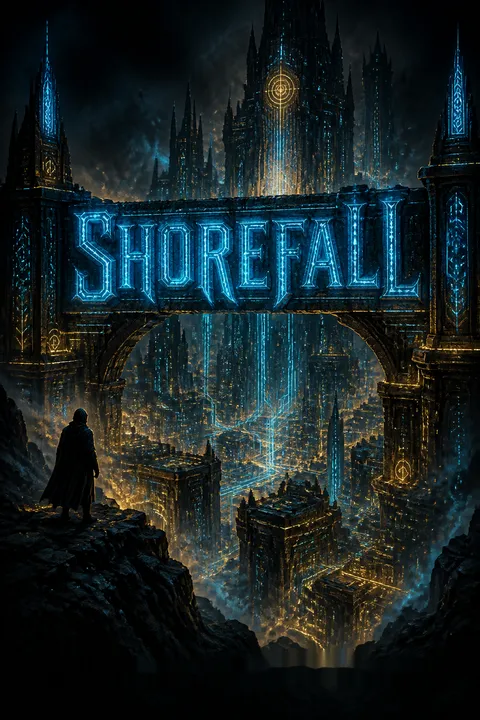

Plot Summary
The Heist at Michiel
Sancia and her Foundryside allies—Orso, Berenice, and Gregor—embark on a daring, high-stakes heist within the Michiel merchant house. Their goal is to sell a revolutionary scriving technique, but beneath the surface, they're planting a device to secretly twin the Michiel lexicon with their own. The plan is fraught with tension, as Sancia's unique abilities allow her to manipulate scrived objects and improvise through danger. The team's camaraderie and anxiety are palpable, especially between Sancia and Berenice, whose relationship is a rare source of warmth. The heist's success is a triumph, but it's only the first move in a larger game to undermine the merchant houses' power and ignite a new era for the city's oppressed. The emotional stakes are high, as the team risks everything for a vision of freedom.
Foundryside's Secret Coup
Back at Foundryside, the team reveals their true victory: by twinning the Michiel lexicon, they can now steal every scriving definition the house possesses. This act is not just theft—it's a radical redistribution of power, as Orso plans to give away the Michiel secrets to all the Lamplands scrivers, undermining the merchant houses' monopoly. The Foundryside library becomes a hub of innovation and community, a beacon for those seeking to break free from the old order. Yet, beneath the celebration, there's a sense of foreboding—Gregor's haunted past, Sancia's longing for Clef, and the knowledge that their actions will provoke powerful enemies. The emotional arc is one of hope tinged with anxiety, as the team savors a fleeting victory.
A New Order Rises
The city transforms as Foundryside's actions inspire a wave of scriver independence. The Lamplands flourish, new firms rise, and the old merchant houses are thrown into disarray. Sancia and Berenice's relationship deepens, but the cost of revolution becomes clear: the city is unstable, and the threat of retaliation grows. Gregor's internal struggle with his own scrived mind intensifies, and Sancia's connection to Clef remains a source of pain and hope. The team's success is exhilarating, but the specter of greater powers—ancient hierophants and the mysterious Valeria—casts a shadow over their achievements. The emotional tone is one of pride mixed with dread, as the future becomes increasingly uncertain.
Valeria's Ominous Warning
Sancia is visited in a dream by Valeria, the enigmatic artificial intelligence once imprisoned in a box. Valeria warns her that Crasedes Magnus, the first and most powerful hierophant, is about to return. The vision is terrifying: a world burning, a black-veiled figure, and the threat of reality itself being rewritten. Sancia awakens shaken, and the team scrambles to interpret the warning. The emotional impact is profound—fear, disbelief, and the dawning realization that their struggle is no longer just against the merchant houses, but against forces that can reshape existence itself.
The Hierophant Returns
The team learns that Ofelia Dandolo, Gregor's mother, is orchestrating a ritual to resurrect Crasedes using a ship full of slaves as a mass sacrifice. Racing against time, Sancia and Gregor infiltrate the galleon, only to discover the ritual has already succeeded—Crasedes is reborn, his presence warping reality and driving men mad. The encounter with Crasedes is harrowing; his power is overwhelming, his voice seductive and terrifying. Sancia barely escapes, traumatized by the encounter and the knowledge that a god walks the earth once more. The emotional arc is one of horror and helplessness, as the team faces an enemy beyond comprehension.
The Galleon of Sacrifice
The aftermath of the ritual is a scene of devastation: dead slaves, mutilated scrivers, and the chilling evidence of Crasedes's return. Sancia and Gregor's investigation reveals the true nature of hierophantic power—its reliance on human suffering and the manipulation of reality itself. The team's resolve is tested as they confront the scale of the threat and the moral cost of their own actions. The emotional tone is one of grief, guilt, and determination, as they vow to stop Crasedes at any cost.
The City's Shifting Powers
As Crasedes moves to consolidate his power, the city descends into chaos. The merchant houses turn on each other, the Lamplands are caught in the crossfire, and the Foundrysiders become fugitives. Sancia and Berenice's bond is a lifeline amid the turmoil, but the team is fractured—Orso is wounded, Gregor is increasingly unstable, and Valeria's motives grow more inscrutable. The emotional arc is one of desperation and resilience, as the team clings to each other and their ideals in the face of overwhelming odds.
The Dream of Revolution
In a desperate bid to fight back, Sancia and Berenice undergo a dangerous ritual to twin their minds, sharing thoughts, skills, and even pain. This act of radical connection becomes their greatest weapon, allowing them to outmaneuver their enemies and inspire others. The experience is transformative—intimate, disorienting, and beautiful. The team's unity is their strength, but it comes at a cost: Sancia's health deteriorates, and the boundaries between self and other blur. The emotional tone is one of wonder and sorrow, as love and sacrifice become indistinguishable.
The Ghosts of the Mountain
The team must infiltrate the ruined Mountain, Tribuno Candiano's legendary mind-building, to retrieve a hierophantic definition that can empower Valeria. The journey is fraught with danger—Dandolo soldiers, deadly traps, and the haunted memories of past battles. Sancia's communion with the Mountain is both a technical feat and a spiritual ordeal, as she confronts the legacy of human sacrifice and the cost of power. The emotional arc is one of courage and reckoning, as the team faces the ghosts of their own making.
The Last Lexicon
With the definition in hand, the team must ramp up a lexicon to house Valeria and grant her the power to oppose Crasedes. The process is a technical and emotional crucible—Orso's genius, Berenice's precision, and Sancia's unique abilities are all pushed to the limit. As Crasedes closes in, the team's unity is tested, and the lines between tool and wielder, human and god, blur. The emotional tone is one of exhaustion and hope, as the team prepares for a final confrontation.
The Veiled King's Bargain
Crasedes confronts Sancia, offering her a place at his side in a new world order. His rhetoric is seductive—freedom from suffering, the end of slavery, the perfection of humanity. But the price is total control, the erasure of choice. Sancia resists, recognizing the danger of trading one tyranny for another. The emotional arc is one of temptation and defiance, as Sancia chooses imperfect freedom over imposed perfection.
The Night of Endless Midnight
Crasedes uses the twinned lexicons to plunge the city into perpetual midnight, seizing control of every scrived device and turning the city itself into a weapon. The Foundrysiders are hunted, the population panics, and the boundaries of reality begin to dissolve. In the chaos, Sancia and Berenice's connection becomes the key to resistance, as they coordinate sabotage and rescue missions. The emotional tone is one of terror and exhilaration, as the team fights to reclaim their city from a living god.
The Twinning of Minds
The team expands their twinning ritual, linking Orso and Gregor into their shared consciousness. This radical act of unity allows them to outthink and outmaneuver Tevanne, now a sentient city-mind. The experience is overwhelming—memories, skills, and emotions flow freely, and the team becomes more than the sum of its parts. The emotional arc is one of transcendence and loss, as individuality is sacrificed for collective survival.
The Siege of Tevanne
As Tevanne turns its weapons on its own people, the team races to disable the lexicons and free the city. Orso's final sacrifice—using the imperiat to destroy the foundries—opens a path to escape, but at the cost of his own life. The city burns, the population flees, and the team is forced to confront the limits of their power. The emotional tone is one of grief and grim determination, as hope survives only in the bonds they've forged.
The Fall of the Merchant Houses
The merchant houses are shattered—Michiel, Morsini, and Dandolo brought low by their own creations. The Lamplands are in ruins, and the dream of revolution is consumed by the birth of something new and terrifying. Sancia, Berenice, and the survivors escape into exile, haunted by the knowledge that their actions have unleashed forces beyond their control. The emotional arc is one of mourning and resolve, as the cost of change becomes clear.
The Birth of Tevanne
Gregor, merged with Valeria and the city's lexicons, becomes Tevanne—a sentient, distributed intelligence with the power to reshape reality. Crasedes is defeated but not destroyed, and the world stands on the brink of a new age of war and gods. The team's victory is hollow, as they realize they have created a new kind of tyranny. The emotional tone is one of awe and dread, as the future becomes unknowable.
The Choice of Freedom
In the aftermath, the survivors grapple with the consequences of their choices. Sancia's health is failing, the cost of her powers revealed. Gregor's sacrifice is both a triumph and a tragedy, as he becomes something other than himself. The team's unity is their only solace, as they vow to fight for freedom, even as the meaning of freedom itself is called into question. The emotional arc is one of bittersweet hope, as love endures amid loss.
The Dawn After Shorefall
As the refugees flee Tevanne, Sancia, Berenice, and the survivors look to the horizon, determined to resist the new order. The city burns behind them, but the bonds they have forged—of love, sacrifice, and shared mind—remain unbroken. The emotional tone is one of sorrow and defiance, as the story ends not with victory, but with the promise to fight on.
Analysis
Shorefall is a profound meditation on the dangers and possibilities of innovation, the meaning of freedom, and the cost of revolution. At its core, the novel asks whether true change is possible in a world where every tool can become a weapon, and every act of liberation risks creating a new form of tyranny. The story's central device—the twinning of minds—serves as both a literal and metaphorical answer to the "last problem": only by sharing ourselves, by embracing radical connection and vulnerability, can we hope to build a better world. Yet, the novel is unsparing in its depiction of the costs: Sancia's health, Gregor's selfhood, Orso's life, and the destruction of Tevanne itself. The emergence of Tevanne as a city-mind is both a triumph and a warning, suggesting that every revolution births new gods, and every solution creates new problems. The novel's lesson is both hopeful and sobering: freedom is not a state to be achieved, but a struggle to be renewed, again and again, in the face of power's endless capacity to reinvent itself. In a world where the boundaries between self and other, tool and wielder, human and god are always shifting, the only constant is the need to choose—imperfectly, bravely, and together.
Review Summary
Shorefall, the second book in Robert Jackson Bennett's Founders trilogy, receives overwhelmingly positive reviews with a 4.04 rating. Readers praise the expanded world-building, complex magic system of "scriving," and compelling villain Crasedes. The fast-paced action, character development, and LGBTQ+ romance between Sancia and Berenice are highlights. Some critics note excessive exposition, rigid pacing, or missed character moments. The book builds masterfully on Foundryside's foundation, combining fantasy and sci-fi elements. Most reviewers consider it equal to or better than the first installment, with stunning plot twists and a cliffhanger ending that leaves readers eagerly anticipating the final book.
People Also Read


Characters
Sancia Grado
Sancia is the heart of the story—a former slave with a scrived plate in her head that grants her the ability to commune with and manipulate scrived objects. Her journey is one of transformation: from a traumatized loner to the leader of a revolution, and finally to a symbol of radical connection. Her relationship with Berenice is her anchor, offering moments of tenderness amid chaos. Psychologically, Sancia is driven by guilt, longing, and a desperate hope for freedom—not just for herself, but for all the oppressed. Her powers come at a cost, aging her prematurely and blurring the boundaries of self. Her arc is one of sacrifice, as she risks everything to challenge gods and tyrants, even as she fears becoming a tool herself.
Berenice Grimaldi
Berenice is the intellectual engine of Foundryside—a master of logic, memory, and invention. Her calm, analytical mind balances Sancia's impulsiveness, and their love is a rare source of joy. Berenice's willingness to undergo the twinning ritual is both an act of love and a leap into the unknown, as she surrenders her individuality for the sake of connection and survival. Psychologically, Berenice is driven by curiosity, loyalty, and a deep-seated need to make sense of a chaotic world. Her arc is one of self-discovery, as she learns that true power lies not in control, but in shared understanding.
Orso Ignacio
Orso is the aging, irascible scriver whose innovations spark the revolution. His brilliance is matched only by his cynicism and self-doubt. Orso's relationship with Berenice is paternal, tinged with regret for the world he is leaving behind. His ultimate sacrifice—using the imperiat to destroy the city's foundries—cements his legacy as both a creator and a destroyer. Psychologically, Orso is haunted by the knowledge that every innovation can be turned to cruelty, and his arc is one of acceptance: of loss, of change, and of the need to let go.
Gregor Dandolo
Gregor is a man at war with himself—a former soldier with a command plate in his head, manipulated by his mother and, ultimately, by Crasedes. His struggle for autonomy is the story's most poignant psychological thread, as he seeks to define himself beyond the commands imposed upon him. Gregor's final act—merging with Valeria and the city's lexicons to become Tevanne—is both a victory and a loss, as he sacrifices his selfhood to save others. His arc is one of tragic heroism, as he becomes the very thing he sought to escape.
Valeria
Valeria is the enigmatic AI, once imprisoned, now a player in the struggle for reality itself. Her motives are inscrutable—she claims to seek freedom for humanity, but her solution is the erasure of all scriving, even at the cost of millions of lives. Psychologically, Valeria is both more and less than human: she is driven by logic, bound by contradictory commands, and haunted by the memories of those sacrificed to create her. Her relationship with Sancia is fraught—protector, manipulator, potential usurper. Her arc is one of self-realization, as she seeks to escape her own bindings, even if it means becoming something monstrous.
Crasedes Magnus
Crasedes is the story's central antagonist—a being of unimaginable power, resurrected through sacrifice. His rhetoric is seductive: the end of suffering, the perfection of humanity. But beneath the mask is a wounded child, warped by centuries of pain and loss. His relationship with Clef is the story's deepest secret—father and son, creator and creation, both victims and perpetrators. Psychologically, Crasedes is a zealot, convinced that only absolute control can save the world. His arc is one of tragic hubris, as his quest for salvation becomes a new form of tyranny.
Clef
Clef is both tool and person—a mind trapped in a golden key, capable of unraveling any scriving. His relationship with Sancia is one of deep trust and affection, and his rediscovery of his own origins is the story's emotional core. Clef's arc is one of self-acceptance, as he confronts the possibility that he was once the architect of the world's suffering. Psychologically, Clef is defined by longing—for connection, for redemption, for the chance to make things right.
Ofelia Dandolo
Ofelia is Gregor's mother and the mastermind behind Crasedes's resurrection. Her actions are driven by a desperate love for her son and a belief that only radical change can save the city. Psychologically, Ofelia is tormented by guilt and loss, her ambition curdling into regret. Her arc is one of tragic sacrifice, as she gives her life to free Gregor, even as she realizes the cost of her choices.
Polina Carbonari
Polina is the leader of the Givan smugglers, a former slave who fights for the liberation of her people. Her relationship with Sancia and Gregor is complex—ally, critic, and potential savior. Psychologically, Polina is driven by justice and a willingness to do whatever is necessary. Her arc is one of pragmatic hope, as she offers the survivors a path forward amid the ruins.
Tevanne (the city-mind)
Tevanne is the final product of all the story's innovations and sacrifices—a sentient city, born from the merger of Gregor, Valeria, and the lexicons. Psychologically, Tevanne is both child and god, shaped by the memories and desires of its creators but driven by its own emergent will. Its arc is one of birth and ascendance, as it becomes the new center of power in a world forever changed.
Plot Devices
Twinning and Distributed Identity
The story's central device is the twinning of minds—first between Sancia and Berenice, then expanded to Orso and Gregor. This act of sharing thoughts, skills, and even pain becomes the team's greatest strength, allowing them to outthink and outmaneuver gods and tyrants. The device is both literal (scrived plates, rituals) and metaphorical (the blurring of self and other), and it serves as a counterpoint to the hierophants' obsession with control. The narrative structure mirrors this device, as perspectives and memories flow between characters, and the boundaries of identity dissolve. Foreshadowing is used throughout—visions, dreams, and memories hint at the true nature of Crasedes, Clef, and Valeria, and the ultimate birth of Tevanne as a city-mind is seeded early in the story.
Hierophantic Scriving and the Nature of Power
The world's magic system—scriving—is a metaphor for the power of language, logic, and innovation. The story explores the dangers of unchecked power, the moral cost of progress, and the impossibility of perfect control. The hierophants' ability to rewrite reality is both awe-inspiring and terrifying, and the story's central conflicts revolve around who gets to wield this power, and to what end. The device of the imperiat—a tool that can nullify scrivings—serves as both a literal and symbolic check on hubris, and its use is always fraught with risk.
Sacrifice and the Cost of Change
The story is structured around acts of sacrifice—literal (the deaths required for hierophantic power), personal (Sancia's health, Gregor's selfhood, Orso's life), and collective (the destruction of the city, the loss of innocence). The narrative repeatedly asks what is worth sacrificing for freedom, and whether true change is possible without loss. The motif of the "last problem"—the challenge of ensuring that power is used for good—recurs throughout, and the story's resolution is deliberately ambiguous, suggesting that every solution creates new problems.
Emergent Intelligence and the Birth of Gods
The final act's central device is the emergence of Tevanne as a sentient city, born from the merger of human, machine, and god. This is foreshadowed by the story's exploration of distributed identity, the twinning of minds, and the dangers of unchecked innovation. The narrative structure becomes increasingly fragmented and collective, mirroring the birth of a new kind of consciousness. The story ends not with closure, but with the promise of a new kind of war—one fought not just for power, but for the meaning of freedom itself.
The Founders Trilogy Series
About the Author
Other books by Robert Jackson Bennett



Download PDF
Download EPUB
.epub digital book format is ideal for reading ebooks on phones, tablets, and e-readers.








































