
Plot Summary
Narrative Prisoner's Dilemma
Rae Parilla is caught between dying in a hospital bed in the real world and inhabiting the body of Lady Rahela, infamous villainess of her favorite fantasy series. Transported into the story's world, she's intent on stealing the book's magical cure for herself, but quickly entangles herself in a web of manipulation, self-deception, and unexpected empathy. Neither fully belonging to the narrative nor able to escape it, Rae faces the horror of agency without guidance. Her presence wrenches the lives of both her lost sister Alice and the fictional denizens, blurring the boundaries between fiction, fate, and the desire to matter—doomed by the narrative but unwilling to surrender to its end.
Unwelcome Coronation Night
The capital is drenched in blood and fire as the destined Emperor—Key, formerly a lowborn guard—rises from the abyss on a night of betrayal. Rae, the supposed villainess, is forced into a marriage proposal at swordpoint, sitting beside her favorite character and realizing she's responsible for his monstrous turn. The dead flood the palace and the Emperor, corrupted but beloved, demonstrates his terrifying new power. Political survivors like Prime Minister Pio and General Nemeth attempt to regain control, but find themselves pawns before a god risen from both prophecy and vengeance. Every alliance, oath, and act is now suspect, and Rae's wit becomes her only weapon against certain doom.
Villainess's Impossible Choices
Just when Rae's about to flee this world using the stolen Flower of Life and Death, she chooses instead to try and protect stepsister Lia—the book's original heroine—sending her into hiding while sacrificing her own safety. Rae's complicated affection for Key and guilt over his corruption tighten the trap, denying her both redemption and exit. Her only hope lies in a devil's bargain with the story's mysterious catalyst: a goddess-writer entity offering her the slimmest chance of going home if she can deliver victory, love, and change the hero's fate. But is Rae hero enough, even to try?
Schemes, Oaths, Betrayals
Key, now Emperor, tests and punishes his betrayers—those who killed him. Rae's command, gained through an unbreakable magical oath, saves one innocent but heightens the Emperor's sense of humiliation and rage. Rae's manipulations spiral: she's neither the noble heroine nor a true villain. Meanwhile, the palace's realpolitick—driven by the likes of Pio and the various ministers—is crumbling as the Emperor reshapes the order with brute supernatural force. This new "time of gods and monsters" exposes every rift and fear in court, and Rae realizes she's outmatched in the games of power she thought she'd mastered from reading.
God From The Mirror
Haunted by narrative determinism, Rae desperately calls for rescue by the supposed "Great Goddess," only to be answered by a power even more chilling—the Great God masquerading as hope and rewriting the terms. He offers her the chance to prove her worth: fix the story, save his son Key, secure a true happy ending. Rae, forced to play roles—hero, villain, prophet—accepts both price and uncertainty. As in all tales, divine intervention is deeply double-edged and rarely serves mortals well. The story's meta-awareness intensifies: if the author is god, all characters are expendable, all bargains unstable.
Sisters, Slums, Survival
Lia, the story's "Pearl of the World," and her sharp-tongued ex-servant Emer forge an unlikely alliance in the city's dangerous underbelly. Fleeing the palace and ghouls, they're stripped of every privilege, forced to question old loyalties and youthful illusions about goodness and heroism. Their unwitting parallel to Rae's own struggles deepens: in both slums and palace, love and loyalty turn transactional, and Emer's growing dark side foreshadows a further fall. Survival in the gutter proves just as fraught and morally ambiguous as grand quests.
Queen's Trial: Lions and Liars
Rae proposes resurrecting the epic Queen's Trials from ancient history, using them to both deflect suspicion and maneuver the Emperor toward his true love. The contest—to prove courage and true-heartedness—claims lives and exposes cruelties, especially as Rae positions herself as the classic villainess, abetting her own replacement. Yet her attempts to "fix" the story only further warp it: heroics and treacheries blur, and the deaths of maidens are no longer safely cordoned to side characters. Love, ambition, and violence intertwine before a restive crowd.
Ghouls In The Market
Emer glimpses the real aftermath of supernatural politics: haunted marketplaces where peasants trade gossip amid ghoulish servitude. The Emperor's power does not bring peace, only the omnipresence of the undead, enforcing order with pointed indifference. Lives and deaths are decided far above by forces claiming justice, but mercy is a myth. Stories circulate as comfort, but when monsters are real, no happy ending can be trusted. Emer's struggle is not just for food, but for agency; everyone is haunted, but not everyone gets to be a hero.
Thieves, Bandits, Bandages
Marius—the Last Hope and Knight—escapes the capital with the roguish Golden Cobra and a retinue of the displaced. Reframed as the "true hero," Marius's inner conflict deepens: loyalty, violence, and love are all suspect. The ragtag rebels—criminals, warriors, innocents—forge connections, but peril lies everywhere: undead hordes close in, prophecies loom, and past betrayals poison futures. Banditry and bonding become indistinguishable; even the most noble intentions are stained by sin. The stakes leave no room for innocence, and sacrifice becomes an inescapable part of leadership.
Broken Heroes Unleashed
In the aftermath of the king's beheading and the villainess's ascent, legends and lies are all that remain for former heroes. Marius struggles with having abandoned his king and must reckon with his own villainy and broken vows, while the Emperor tilts harder into monstrousness, abetted unwittingly by Rae and others. Every loyal retainer, turncoat, and bystander is compelled to choose sides, but no one's hands remain clean. Love and loyalty—whether to sister, cause, or self—are traps and torches alike.
Doomed Prophecies Revived
The Oracle emerges to deliver a final prophecy that fates these gods and mortals to tragedy: "No living soul will love you, and all you love will die." Rae's attempts to block the manifesting doom through cleverness fail; her knowledge is both weapon and poison. The Emperor's power escalates, as does Rae's guilt and need to fix what's been broken. But stories, Rae realizes, long to restore themselves. The harder she fights, the tighter the noose of prophecy and story constricts, dooming all who resist.
Love, Power, and the Dead
In the shadowy alleys of Eyam and the luxurious gold of the imperial treasury, Rae and Key's tangled love explodes in passion, pain, and mutual manipulation. Sex becomes an assertion of agency and a confirmation of monstrousness; love is both curse and lifeline. Key refuses the redemptive arc Rae craves for him, and Rae recognizes her own hunger for power and her inability to escape villainy, even in intimacy. When the Abandon All Hope Diamond is finally removed, its effects linger in both: corrupted love, corrupted heroism, and a deepening certainty that neither can ever truly be saved.
Hostage in the Dungeons
Rae's failure as villainess and prophet is mirrored in her desperate attempt to save Vasilisa, the captured ice princess. As the Emperor's violence becomes literal—he begins killing his favorites—political and emotional hostages multiply. Old friends become executioners, rescue attempts turn to slaughter, and the promised simple dichotomies of heroes and villains fully collapse. Freedom is not just a physical escape, but an existential demand—one Rae's never permitted by either gods or story.
Burning Hearts Turn Bitter
In a procession through Eyam's city, Rae is physically assaulted by a crowd that sees her as scapegoat, barely escaping with her enchanted gauntlets. The Emperor's defense—violent, disproportionate—further alienates the masses rather than winning allegiance. Treasured traditions, like the Burning Hearts Ball and the silverthorn pyre, have become hollow, life-and-death stakes for anyone caught in the spectacle. Rae's attempted escape—now from both narrative and city—renders her a hunted thing. Her illusions of villainous power unravel as public perception seals her fate.
Divine Family Reunion
As Ancilley Manor burns, the Great God—the Emperor's father—takes mortal flesh, finally entering the world. The constructed "heroes" and "villains" must now confront a far older, more absolute evil: not wrath born of pain but divinity's entitled appetite. Marius, Caracalla, Rae, and even the Cobra are swept into the gods' feud, forced to choose between survival and the compulsion to complete the story's prophecy. Family bonds are revealed to be as binding and bleak as any magical oath, and sacrifice is demanded at every turn.
The Seeds of Rebellion
In the chaos unleashed by gods walking the earth, Lia leverages Emer's secret heritage to unite the Cauldron and its outcasts in a desperate, dangerous revolt. As power vacuums create sudden opportunities, personal betrayals and the hunger for power or hope drive each alliance. The rebels, armed with knowledge and old magic, break into the palace to seize the gods' treasures; rivalry, love, and vengeance tear apart any fragile unity. No revolution, Rae realizes, can avoid repeating the violence it sought to overthrow.
The Manor Always Burns
The Valerius manor becomes the crucible in which familial sin, generational trauma, and the cost of duty ignite. As the Great God possesses his host, every choice—mercy, trust, self-sacrifice—proves fatal or futile. Marius must finally learn to live for himself or let others—mother, sister, beloved—pay the price. The fire that consumes the house is not simply physical; it is the story's insistence on repeating pain, on condemning heroes and monsters alike to inheritance, loss, and endurance.
Hope Abandoned, Worlds Collide
As the Emperor squares off with his father on the scorched fields outside Eyam, and Key seems poised to accept the Great God's embrace fully, Rae's sister Alice arrives—drawn through the thin veil between stories and realities. The god's plan is fully revealed: every rebel, every sacrifice, even Rae's own authorial aspirations are mere fuel to keep the prophecy running. Rae, understanding at last that only a deliberate act of self-destruction—a leap into the abyss—can shift the narrative, flings herself into darkness to save her sister and disrupt the gods' designs. The story ends in a scream and a silence, promising no rescue, only the next chapter.
Analysis
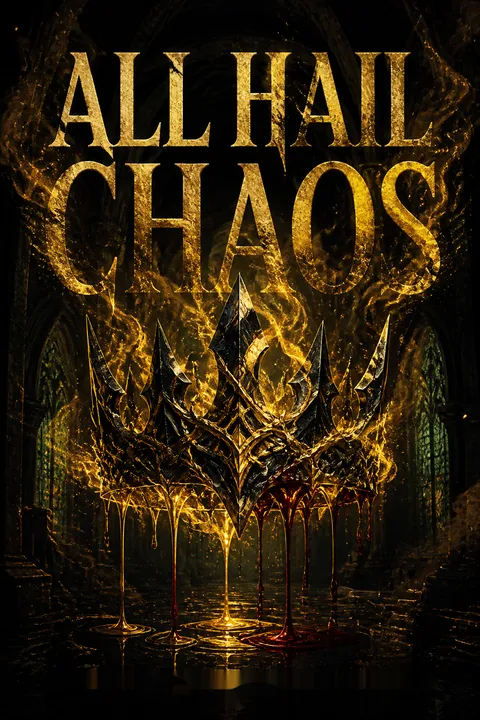
"All Hail Chaos" is a tour de force of meta-fantasy that subverts and interrogates every convention of high-stakes genre fiction. At its heart lies a confrontation with the very idea of narrative—who controls the story, who suffers for sake of the plot, and whether agency or happy endings are possible for anyone outside the narrow categories of hero and heroine. By casting Rae, a terminally ill reader, as a self-conscious interloper in her favorite book, the novel explores the intersections of fate, illness, gender, and trauma—not as metaphors, but as real sources of suffering and resistance. Every attempt to "fix" the story—whether by villainous cunning, revolutionary zeal, or pure-hearted rebellion—results in deeper tragedy or a different cycle of pain. Through gods as authors, cursed objects as the costs of love and power, and the relentless recursion of prophecy, the book asks discomforting questions: Does suffering ennoble? Are stories of hope ever more than distraction from misery? Can love or loyalty survive when doom is predetermined? Ultimately, "All Hail Chaos" warns against both escapism and despair, suggesting that meaning is found not in escaping the story, but in how fiercely we resist—even knowing the rules cannot be broken. The story ends with its protagonist's leap into the abyss, an act of both hope and surrender, promising only the next, even darker, chapter—a fitting metaphor for our times.
Review Summary
All Hail Chaos receives mixed reviews, averaging 4.23/5. Fans praise its sharp wit, complex characters, and darkly chaotic tone, particularly enjoying Key's unhinged energy and the Eric/Marius dynamic. Critics cite second-book syndrome, with pacing issues, repetitive character decisions, and an overly expanded cast diluting the emotional core established in Long Live Evil. Most agree the cliffhanger ending is devastating. The audiobook narration by Moira Quirk is widely praised. Despite frustrations, readers remain eager for the third installment.
People Also Read
Characters
Rae (Lady Rahela Domitia)
Rae Parilla is not just the protagonist but the disruptive force—a meta-character with knowledge of the narrative, terminal illness in the real world, and immense guilt in the fictional one. She outwardly adopts the role of the charismatic, cruel villainess but is ultimately wracked by remorse, craving both love and escape. Rae's configuration of reality is fractured: she manipulates, schemes, and bargains—first to save herself, then others—while facing the agonizing realization that love, heroism, and belonging might be forever beyond her. Her relationships (with Key, Lia, Emer, Alice, and even her author-goddess) drive her to both heroic defiance and tragic complicity, making her journey a meditation on self-worth, betrayal, and the struggle to matter—even if the rules say she can't.
Key (Once and Forever Emperor)
Key, the child of prophecy who rises from ignominy to god-Emperor, is both Rae's favorite character and her most devastating mistake. Twisted by betrayal, death, and inherited trauma, he moves from playful loyalty to apocalyptic vengeance. Key embodies the seduction and danger of power: ruthless toward enemies, longing for love, compulsively refuting the "redemption arc" Rae tries to script for him. His true tragedy is meta-awareness: knowing he's both tool and object of desire, forever marked by a destiny he cannot control—even when given a choice. His relationship with Rae is at once passionate and mutually destructive—the villain and her monster become each other's only refuge.
Alice Parilla
Alice, Rae's younger sister from the real world, is first a desperate audience, then an upended participant. Pulled into Eyam's fiction by love and fear, Alice's arc is about confronting the limits of innocence and the ways stories both protect and betray us. Psychoanalytically, she is Rae's idealized double—the "good" sister left behind, yet equally doomed by fate. Her gradual realization that nobody is safe in "narrative logic" forces both her and Rae to see that heroism requires more than suffering through the plot.
Emer ni Domitia
Emer is the archetype of the loyal retainer—until she's revelated to be a Valerius herself, endowed with monstrous strength and fatal destiny. Emer's psychoanalysis deals with internalized powerlessness, self-identification as a tool for others, and deep longing for agency and love. Her arc from subservience to rebellion, and from dependance on (and resentment of) Lia, highlights the damaging effects of class and narrative roles assigned to the "help" in stories.
Lia Felice
Once destined for marriage, love, and "queenhood," Lia—a luminous golden ingenue—becomes increasingly cold, pragmatic, and self-serving after the story goes awry. As a symbol of innocence marred by political necessity, she learns from Rae's villainy and repurposes it for her own ends, eventually seizing the Abandon All Hope Diamond and commanding a revolutionary turn. Lia's arc is a caution about relying on sweetness and virtue: when the world refuses to reward goodness, the good learn to fight as dirty as villains.
The Golden Cobra (Marquis of Popenjoy)
The Golden Cobra is both comic relief and vital link, a world-walker who knows he's in a story and uses it to survive. Both a decadent wit and a secret mastermind, he manipulates bandits, nobles, and lovers with equal grace, but ultimately cannot engineer a victory over fate. Subtly queer-coded and emotionally open, he becomes Marius's chosen beloved—although their power dynamic and mutual betrayals highlight the difficulty of true love when everyone is role-playing.
Marius Valerius (The White Knight, Last Hope)
Marius is Eyam's last hope: stoic, unbreakably disciplined, and haunted by his cursed Valerius bloodline—a legacy of violence, trauma, and consuming rage. His psychoanalysis is a portrait of the terror and allure of duty to others, self-hatred, and the impossibility of self-redemption. Swearing implacable loyalty to the Cobra, Marius desperately wants to "do the right thing," but narrative and gods deny him agency, killing or saving whoever fate demands. His ultimate tragedy is to realize even heroism is a trap.
Pio (Prime Minister)
Pio embodies political cunning, always seeking the least perilous path and manipulating events at court. His loyalty is to continuity and survival, lacking moral or emotional investment in any sovereign. He fears the Emperor, allies with cunning women, and tries—but fails—to preserve his family and social order from the chaos wrought by gods and monsters. He's a psychological study in adaptive, amoral intelligence crushed by the machinery of fate.
Lady Katalin and Lady Dian Domitia
These women—Rahela's mother and grandmother—embody both the allure and terror of feminine power in royal politics. Their devotion is transactional, their affection double-edged, their ambition unlimited. When they unveil Rae's true nature, they become the voices of old narrative, denouncing impostors and forging disasters.
The Great God/The Great Goddess
The dueling deities represent both creation and destruction, literalizing the theme of "author as god." The Great Goddess offers love, agency, and the chance to rewrite one's story—but is absent or ambiguous at key moments. The Great God is power without empathy, seeking to maintain his world and legacy at all costs, indifferent to mortal suffering. They psychoanalytically reflect our hunger for meaning and the violence stories inflict on those forced to play their parts.
Plot Devices
Narrative as Prison, Meta-Fiction, Prophecy
"All Hail Chaos" is built on recursive, self-aware storytelling: Rae's knowledge as a reader allows her to anticipate—and disrupt—the narrative only to find that her interventions bring about the very doom they're meant to stop. Prophecy is not a tool for foreshadowing but a metaphor for the iron cage of story: characters are compelled to act in ways that ultimately ratify what the plot demands. Meta-fiction abounds: characters question their roles (villain, heroine, hero), gods function as authorial surrogates, and the plot twists are often deliberate subversions of genre expectations.
Oaths, Cursed Objects, Oaths of Blood and Gold
Magical oaths—particularly those binding traitors or lovers—function as both safety net and chain, momentarily suspending narrative momentum but never offering true escape. Cursed objects, especially the Abandon All Hope Diamond and the God's Eye jewels, heighten and corrupt the will, aligning characters' self-interest with the story's hunger for tragedy.
Doppelgängers, Role Reversals, Identity Swap
Rae's occupation of Lady Rahela's body, Emer's rise as hidden Valerius, Lia's transformation from ingenue to manipulator, and the late swapping of Alice for Rae all manifest the device of role reversal: you are not who the story says you are, but the story always tries to turn you into that role anyway. Side characters unexpectedly become protagonists—or scapegoats—reflecting how limited agency is within a deterministic plot.
Symbolic Objects, Parallel Narratives, and Echoes
The burnt manor, the gold treasury, the Queen's Trial, the abyss—each recurs as both literal set piece and symbolic commentary. The mirror motif, broken or occluded, reflects the distortion of perception and truth. Parallel storylines—palace vs. Cauldron, sisters, matriarchs vs. daughters—underscore fractured perspectives and the recurring futility of resistance or rebellion.
Revolution, Cyclical Violence, and Impossible Choices
Both political and magical revolutions—uprisings in the Cauldron, palace coups, the gods' return—are revealed as recurring cycles of sacrifice and oppression. "Someone must be sacrificed for someone else to be saved." These choices are never clean or consequences-free; each "fix" further entangles everyone in a web only the narrative (and its god-authors) can unpick.
Time of Iron Series Series
Download PDF
Download EPUB
.epub digital book format is ideal for reading ebooks on phones, tablets, and e-readers.








































