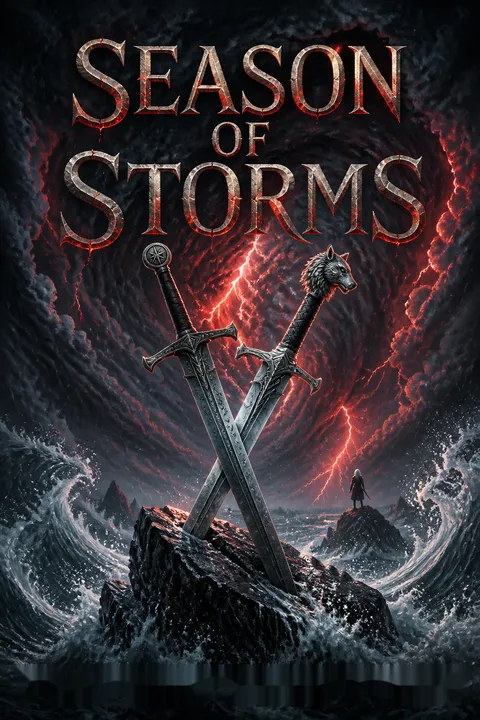

Plot Summary
Monsters in the Shadows
The story opens with Geralt, the famed witcher, tracking a monstrous arachnomorph preying on travelers. He saves a mother and child, but the rescue is bittersweet—he used them as bait, and the girl's father dies. The encounter sets the tone: monsters lurk in the world's shadows, and witchers are the only line of defense. Yet, even as Geralt slays the beast, he is haunted by guilt and the knowledge that his actions, though necessary, leave scars. The storm that follows is both literal and symbolic, foreshadowing the chaos and moral ambiguity that will soon engulf Geralt's life.
Witcher Framed and Imprisoned
After his victory, Geralt is drawn into the city's corrupt bureaucracy. He is framed for embezzlement by a new administrator, Smulka, who manipulates the system for personal gain. Geralt's reputation as a witcher is used against him, and he is arrested, his swords confiscated. In prison, he faces prejudice and violence, but his stoic resilience prevails. The legal proceedings are a farce, exposing the deep-seated mistrust and scapegoating of witchers. Geralt's only hope lies in the intervention of mysterious benefactors and the loyalty of old friends.
Swords Stolen, Allies Found
Released on bail paid by the enigmatic sorceress Coral, Geralt discovers his swords have been stolen from the city's deposit. The theft is a calculated blow—without his swords, Geralt is vulnerable, both physically and psychologically. He is harassed by corrupt guards and attacked by thugs who know he is unarmed. Dandelion, his ever-faithful bard friend, arrives, offering comic relief and practical help. Together, they navigate the city's dangers, seeking clues to the swords' whereabouts and unraveling the web of intrigue that ensnares them.
Coral's Game of Power
Geralt confronts Coral, the sorceress who both imprisoned and freed him. Their encounter is charged with tension, attraction, and mutual suspicion. Coral reveals she is acting on behalf of powerful wizards with secret plans involving Geralt. She admits to using her influence to test and control him, but her motives remain ambiguous. Their relationship becomes intimate, blurring the lines between alliance and manipulation. Coral's world is one of political games, magical power, and personal vendettas, and Geralt is both a pawn and a player.
The City's Web of Lies
As Geralt and Dandelion investigate, they encounter layers of corruption in Kerack. Officials, merchants, and even the city's elite are entangled in schemes of theft, bribery, and betrayal. Geralt's missing swords become a symbol of his lost agency, and every attempt to recover them is met with new obstacles. The city's power struggles mirror the larger conflicts between mages, royals, and criminals. Geralt's sense of justice is tested as he navigates a world where truth is elusive and trust is a rare commodity.
Dandelion's Loyalty and Schemes
Dandelion's loyalty shines as he uses his connections to help Geralt. He negotiates with his cousin, the royal instigator Ferrant, and even purchases a replacement sword for Geralt. Dandelion's wit and resourcefulness provide both practical support and emotional grounding. Yet, his involvement also draws him into danger, as the city's intrigue threatens to consume them both. Their friendship is a beacon amid the darkness, reminding Geralt of the value of human connection in a world rife with betrayal.
The Sorcerers' Secret Experiments
Geralt is summoned to Rissberg Castle, home to a cabal of wizards led by the legendary Ortolan. The mages' obsession with progress has led them to dangerous experiments—hybrid monsters, genetic manipulation, and forbidden goetia (demon-summoning). Geralt learns that the recent massacres in the Foothills are the work of a rogue mage, Sorel Degerlund, who has unleashed a demon or worse. The wizards' arrogance and moral blindness are laid bare, as they prioritize their research over human life, and Geralt is forced to confront the consequences of unchecked magical ambition.
Demon in the Foothills
Tasked with stopping the killings, Geralt patrols the haunted Foothills, aided by the local constable Torquil and a werewolf ally, Dussart. The investigation reveals a pattern of ritualistic slaughter, pointing to a mage possessed by a demon. The true horror is not just the supernatural threat, but the complicity and cowardice of the magical establishment, who would rather cover up the crimes than face the truth. Geralt's pursuit is relentless, but he is hampered by political interference and the ever-present threat of betrayal.
The Hunt for the Killer
The trail leads Geralt to a hidden laboratory, where he faces Sorel Degerlund and his monstrous creations. Degerlund, a product of Rissberg's twisted ambitions, confesses to the murders, blaming his actions on Ortolan and the other mages. The confrontation is brutal—Geralt, aided by Dussart, battles hybrid abominations and finally strangles Degerlund, ending the reign of terror. Yet, the victory is hollow, as the wizards move quickly to cover up the scandal, scapegoating Geralt and erasing the evidence of their own guilt.
Betrayal at Rissberg Castle
Instead of gratitude, Geralt faces betrayal. The Rissberg mages, desperate to protect their reputation, sue Geralt for breach of contract and attempt to discredit him. Allies like Pinety and Tzara are forced out, while the true architects of the tragedy remain unpunished. Geralt's disillusionment with the magical elite is complete—he sees that power, whether magical or mundane, is always self-serving. The episode leaves him embittered, but also more determined to follow his own code, regardless of the world's hypocrisy.
The Auction and Lost Swords
The search for his stolen swords leads Geralt to Novigrad, where they are being auctioned at the prestigious Borsodi house. The auction is a spectacle of greed and vanity, with nobles and merchants vying for rare treasures. Geralt is too late—the swords are sold to a mysterious buyer, and the trail goes cold. The loss is deeply personal, symbolizing the erosion of his identity and the futility of his quest for justice in a corrupt world. Yet, hope lingers, as old friends and unexpected allies continue to support him.
The Vulpess and the River
Geralt is hired to protect a merchant expedition on the river, tasked with rescuing a child kidnapped by a vulpess—a magical fox spirit. The mission is fraught with danger and moral ambiguity. The vulpess's illusions trap the ship in a deadly swamp, and the crew's greed and cruelty lead to tragedy. Geralt's attempts to mediate fail, and the vulpess exacts a terrible revenge. The episode is a meditation on the limits of power, the consequences of hubris, and the enduring need for compassion, even in the face of monstrousness.
Storms and Succession
As Geralt returns to Kerack, the city is rocked by a violent storm and a political coup. King Belohun is assassinated by a magical medallion, and his sons are exiled or executed in a ruthless power grab by the exiled prince Viraxas and his lover, Ildiko Brackley. The city's elite scramble to survive, and Geralt is caught in the crossfire. The storm is both a natural disaster and a metaphor for the upheaval of power, sweeping away the old order and leaving chaos in its wake.
The Fall of Kerack
With Viraxas on the throne, Kerack descends into xenophobia, purges, and repression. Sorcerers like Coral are forced to flee, and the city's cosmopolitan spirit is crushed. Geralt, disillusioned and wounded, helps rescue survivors from the storm's devastation. The city's fall is both tragic and inevitable—a microcosm of the world's larger cycles of violence and renewal. Amid the ruins, Geralt finds moments of grace and connection, but also the bitter knowledge that justice is fleeting and the powerful rarely pay for their crimes.
Farewells and New Beginnings
In the aftermath, Geralt says farewell to Coral, Mozaïk, and Dandelion. Relationships forged in crisis are tested by loss and change. Coral, forced into exile, reflects on the cost of power and the limits of love. Mozaïk, wounded but resilient, chooses her own path. Dandelion, ever the survivor, offers comfort and perspective. Geralt, restored to his swords by Yennefer's intervention, contemplates the meaning of his journey and the burdens he carries. The chapter is a meditation on memory, regret, and the possibility of renewal.
Legends and Illusions
The story closes with a frame narrative: Nimue, a young girl inspired by tales of Geralt, journeys through a changed world a century later. She encounters a white-haired stranger who saves her from a monster, echoing Geralt's deeds. The encounter blurs the line between legend and reality, suggesting that the witcher's spirit endures wherever darkness threatens the innocent. The cycle of stories continues, as new generations seek meaning, hope, and courage in the face of evil. The legend of Geralt of Rivia lives on, a light in the darkness.
Analysis
Season of Storms is a meditation on power, corruption, and the enduring need for moral courage in a world where darkness is never fully banished. Sapkowski uses Geralt's journey—stripped of his swords, framed by the powerful, and betrayed by those he serves—to explore the limits of justice and the cost of integrity. The novel is both a prequel and a coda to the Witcher saga, filling in gaps while reflecting on the nature of legend and the persistence of evil. Its structure—episodic, digressive, and layered with frame narratives—mirrors the complexity of its themes: the cyclical nature of violence, the ambiguity of progress, and the fragility of hope. The characters are drawn with psychological depth, their relationships marked by longing, betrayal, and moments of grace. The plot devices—framing, lost swords, magical experiments, political intrigue—are not just engines of suspense, but vehicles for philosophical inquiry. In the end, the novel suggests that while institutions may fail and heroes may fall, the spirit of resistance endures wherever people refuse to surrender to darkness. The legend of the witcher is not just a story of monsters and magic, but a testament to the power of memory, the necessity of compassion, and the possibility of renewal.
Review Summary
People Also Read




Characters
Geralt of Rivia
Geralt is a witcher—a mutant trained from childhood to hunt monsters, but also a man burdened by conscience and alienation. He is stoic, sardonic, and fiercely independent, yet deeply loyal to his friends. Geralt's journey in Season of Storms is one of loss and resilience: stripped of his swords, framed by corrupt officials, and betrayed by those in power, he persists in seeking justice and meaning. His relationships with Coral, Dandelion, and Mozaïk reveal his capacity for love and vulnerability, even as he is repeatedly used and discarded by the powerful. Geralt's code—never to kill humans unless absolutely necessary—sets him apart, but also isolates him. His arc is one of hard-won wisdom: the world is irredeemably flawed, but small acts of courage and kindness matter.
Dandelion (Julian Pankratz)
Dandelion is Geralt's closest friend, a bard whose wit, charm, and resourcefulness often save the day. He is a master of words and manipulation, using his social connections to help Geralt navigate political intrigue. Dandelion's loyalty is unwavering, even when it puts him in danger. He provides comic relief, but also emotional depth, reminding Geralt of the value of friendship and art in a brutal world. Dandelion's own ambitions and romantic escapades add texture to the narrative, and his ballads ensure that Geralt's legend endures.
Lytta Neyd (Coral)
Coral is a powerful mage, both ally and adversary to Geralt. She is manipulative, pragmatic, and fiercely intelligent, using her beauty and magic to influence the city's politics. Her relationship with Geralt is complex—part attraction, part rivalry, part genuine connection. Coral's actions are driven by both personal ambition and a sense of responsibility to her magical order. She is capable of both cruelty and compassion, and her arc explores the costs of power, the limits of loyalty, and the loneliness of those who live by their own rules.
Mozaïk
Mozaïk is Coral's apprentice, a young woman marked by both magical talent and vulnerability. She is caught between the ambitions of her mistress and her own longing for agency and love. Mozaïk's relationship with Geralt is tinged with admiration and unrequited affection, and she suffers for her involvement with him. Her arc is one of survival and self-discovery, as she learns to navigate the dangers of the magical world and assert her own identity.
Sorel Degerlund
Degerlund is the embodiment of Rissberg's moral decay—a brilliant but amoral sorcerer whose experiments unleash horror on the world. He is narcissistic, manipulative, and ultimately monstrous, using both magic and science to justify his crimes. Degerlund's arc is a cautionary tale about the dangers of unchecked ambition and the ease with which power corrupts. His confrontation with Geralt is both a physical and philosophical battle, exposing the dark heart of magical progress.
Pinety (Algernon Guincamp)
Pinety is one of the few sorcerers at Rissberg who retains a sense of morality and responsibility. He aids Geralt in the investigation, risking his own position and safety. Pinety's arc is one of growing disillusionment with the magical establishment, culminating in his forced exile. He represents the possibility of integrity within a corrupt system, and his friendship with Geralt is marked by mutual respect and shared disillusionment.
Frans Torquil
Torquil is the local lawman in the Foothills, a man of principle and tenacity. He aids Geralt in the hunt for the killer, despite being outmatched by magical forces. Torquil's injury and subsequent sidelining highlight the vulnerability of ordinary people in a world shaped by the powerful. His arc is one of stoic endurance and a longing for justice, even when the system is stacked against him.
King Belohun
Belohun is the aging king of Kerack, obsessed with succession and control. He is manipulative, misogynistic, and ultimately undone by his own machinations. His death triggers the city's descent into chaos, and his legacy is one of instability and betrayal. Belohun's arc is a study in the corrosive effects of power and the futility of trying to control fate.
Viraxas
Viraxas is Belohun's exiled son, who returns to seize the throne through violence and intrigue. He is cold, calculating, and utterly ruthless, using both mercenaries and political manipulation to achieve his ends. Viraxas's rise marks the end of Kerack's fragile order and the triumph of might over right. His arc is a warning about the cyclical nature of power and the ease with which old injustices breed new ones.
Nimue
Nimue is a young girl living a century after Geralt's time, inspired by the legends of the witcher. Her journey frames the novel, connecting past and future, myth and reality. Nimue's arc is one of aspiration and wonder, as she seeks to become a sorceress and carry forward the legacy of those who fought against darkness. Her encounter with a white-haired stranger blurs the line between legend and life, suggesting that the spirit of the witcher endures wherever courage is needed.
Plot Devices
Framing and False Accusation
The novel uses the device of false accusation to strip Geralt of his agency and force him into a web of intrigue. The framing is both a plot catalyst and a commentary on societal prejudice against outsiders. It exposes the ease with which power can manipulate truth and the vulnerability of those who live on the margins.
Lost and Recovered Swords
Geralt's swords are more than weapons—they are extensions of his self, his profession, and his place in the world. Their theft and eventual recovery mirror his journey through loss, humiliation, and restoration. The swords' passage through the hands of thieves, merchants, and auctioneers is a metaphor for the commodification of heroism and the erosion of meaning in a corrupt society.
Magical Experiments and Unintended Consequences
The secret experiments at Rissberg Castle drive the central mystery and provide a critique of unchecked scientific and magical ambition. The creation of hybrid monsters and the summoning of demons are both literal and symbolic acts of transgression, leading to tragedy and cover-up. The device allows for exploration of themes of progress, responsibility, and the limits of knowledge.
Political Intrigue and Succession
The city's succession crisis, coup, and purge are both plot engine and allegory. The shifting alliances, betrayals, and reversals of fortune reflect the instability of the world and the futility of seeking justice through institutions. The device is used to heighten tension, create reversals, and underscore the novel's themes of power and corruption.
Frame Narrative and Legend
The use of a frame narrative, with Nimue's quest a century later, situates Geralt's story within a larger mythic context. The blurring of legend and reality, and the suggestion that the witcher's spirit endures, provide both closure and openness. The device allows for reflection on the nature of storytelling, memory, and the persistence of hope.
Illusion and Reality
Throughout the novel, illusions—magical and psychological—shape events and perceptions. The vulpess's illusions on the river, the political theater in Kerack, and the personal deceptions of the characters all serve to question what is real and what is constructed. The device is used to create suspense, misdirection, and thematic resonance.
The Witcher Series
About the Author

Download PDF
Download EPUB
.epub digital book format is ideal for reading ebooks on phones, tablets, and e-readers.








































