
Plot Summary
Prophecy and Cold Feet
On the day of his wedding, Tuoni, the God of Death, is plagued by doubts. He seeks counsel from the ancient giant Vipunen, who cryptically refuses to clarify whether Hanna, his mortal bride, is truly the prophesied one destined to unite the land and save his kingdom. The prophecy looms: a mortal who can touch Death, whose union will either bring salvation or destruction. As Death wrestles with his vulnerability and the pain of past betrayals, a sudden attack on his castle signals that the prophecy is already in motion. The attack is a diversion—Hanna is gone, and Death's world is upended by her choice to leave him on their wedding day.
The Wedding Escape
Hanna, torn between her love for her father and her growing connection to Death, is whisked away from the altar by Rasmus, a shaman and her childhood friend. Their escape is perilous, riding a skeletal unicorn through a supernatural storm conjured by Death's rage. Hanna's guilt and confusion mount as she questions her own desires and the rightness of her choice. The weather itself reflects Death's emotional turmoil, and Hanna senses the cost of her betrayal. As they flee, Hanna's ability to communicate telepathically with magical creatures hints at her latent power, while the storm's violence foreshadows the consequences of her decision.
Storms and Pursuit
Death returns to his ruined castle, seething with humiliation and heartbreak. He interrogates his loyal unicorn Sarvi and his daughter Lovia, piecing together Hanna's escape and Rasmus's true parentage—he is Louhi's son, born of shadow magic and shaman blood. Death's anger is volcanic, but beneath it lies pain and longing. He vows to retrieve Hanna, torn between punishing her and fulfilling the prophecy. Meanwhile, Hanna and Rasmus are captured by Bone Stragglers—skeletal outcasts who believe Hanna is Salainen, the prophesied child of shadow destined to destroy Death and bring chaos. The prophecy's ambiguity deepens, and Hanna's identity is thrown into question.
Bone Stragglers' Prophecy
The Bone Stragglers mistake Hanna for Salainen, a shadow-born daughter of Louhi, and recite the Prophecy of Three: a shaman's three children—one to raise the Old Gods, one to unite with Death, and one to destroy him. Rasmus and Hanna are forced to confront their own origins and the possibility that they are siblings, both children of the shaman Torben. The prophecy's threads entangle them, and their escape is only possible through the intervention of Sammalta, a sentient mycelium goddess. The boundaries between self and shadow, prophecy and free will, begin to blur as Hanna's sense of self unravels.
Mycelium Truths
In the underground lair of Sammalta, Hanna and Rasmus learn the truth of their parentage: both are Torben's children, but Rasmus is also Louhi's son, making him a being of both shaman and demon blood. The revelation shatters their trust and forces Hanna to confront her own identity. Sammalta hints at Hanna's latent magic and the importance of bloodlines, while the prophecy's implications grow more dire. The siblings' bond is tested, and the weight of destiny presses down, as they realize they are both pawns and players in a cosmic struggle.
Sibling Revelations
The siblings' relationship is strained by the revelation of Rasmus's demonic heritage. Hanna's sense of betrayal is matched by Rasmus's own confusion and pain. As they journey toward the portal home, the storm intensifies—Death's grief and rage made manifest. Rasmus is possessed by Louhi's magic, turning on Hanna in a violent attack. Their flight ends in disaster as their unicorn companion, Alku, is lost to Oblivion, and Hanna is captured by Louhi herself. The prophecy's darkness closes in, and Hanna's agency is stripped away.
Louhi's Trap
Louhi, Death's ex-wife and the architect of the uprising, reveals her true power and cruelty. She tortures Hanna, both physically and psychologically, taunting her with the prophecy and her own helplessness. Rasmus is enslaved by his mother, his will broken. Hanna's only hope comes in the form of her selenite knife—a weapon that responds to her touch and wounds Louhi. In a desperate moment, Death arrives, rescuing Hanna and wounding Louhi, but the cost is high. The lines between love and vengeance, fate and choice, are drawn in blood.
Death's Fury Unleashed
Death, torn between love and betrayal, brings Hanna back to his castle. His anger is cold and calculated; he cannot forgive her for leaving, yet he cannot let her go. Their marriage is consummated in a ceremony of blood and pain, binding their fates together. But Death's trust is shattered, and he punishes Hanna by casting her into the oubliette—a pit of darkness and forgetting. Hanna's isolation is both physical and existential, forcing her to confront her own worth and the meaning of her choices.
The Oubliette's Lesson
In the oubliette, Hanna is visited by her loyal Deadmaiden Raila and Death's daughter Lovia, who risk punishment to care for her. The experience humbles Hanna, stripping away her illusions and forcing her to reckon with her own desires and fears. She emerges from the darkness changed, determined to claim her place as queen and to demand respect from Death. Their confrontation is raw and honest, culminating in a sexual and emotional reckoning that redefines their relationship. Hanna's power and agency begin to awaken.
Training with Vipunen
Hanna begins training with Vipunen, the ancient giant, learning to fight blind and to wield her selenite knife. The training is grueling, but it unlocks her latent abilities—her magic, her resilience, her connection to the land. Vipunen reveals that Hanna is not merely mortal or shaman-born; she is the daughter of a Goddess, her true mother unknown. This revelation reframes Hanna's entire existence and the prophecy itself. She is no longer a pawn but a potential queen in her own right, capable of changing the fate of the underworld.
The Shadow Self
Death, preparing for war, creates his Shadow Self—a magical double that can act independently, allowing him to be in two places at once. The Shadow Self is both a weapon and a vulnerability, as it can be possessed by others. Death and Hanna's relationship deepens as they explore the boundaries of trust, power, and desire. Their union becomes both a political alliance and a genuine partnership, but the threat of betrayal and the prophecy's shadow loom ever larger.
The Underworld Gathering
A council of the underworld's gods and goddesses is called to uncover Hanna's true parentage and to address the threat of Louhi and the uprising. The gathering is fraught with tension, old rivalries, and the weight of prophecy. Hanna's status as a half-goddess is confirmed, but her mother's identity remains a mystery. The gods debate the meaning of the Prophecy of Three and the roles of Hanna, Rasmus, and Salainen. Alliances are forged and suspicions sown, as the fate of the underworld hangs in the balance.
Bone Match Deceptions
At the Bone Match—a gladiatorial spectacle in the city of Inmost—Death and Hanna make a public appearance to solidify their rule and quell rumors of the uprising. Death's Shadow Self is used in a ruse to fake the fulfillment of the prophecy, planning to touch Hanna in front of the crowd and prove her invulnerability. But the plan is subverted when Louhi possesses the Shadow Self, turning the deception into a deadly trap. The spectacle becomes a battleground for power, identity, and survival.
Salainen's Betrayal
Hanna is lured away by the possessed Shadow Self and attacked. Louhi, in Death's body, attempts to violate and kill her, but Hanna's training and selenite knife allow her to fight back. In the chaos, Hanna encounters Salainen—her shadow twin, created by magic and abandoned at birth. Salainen reveals the truth of their origins and her own role as the Kaaos-bringer, destined to destroy Death and remake the underworld. Hanna is imprisoned with Death's lifeless body, as Salainen and Louhi seize power.
Death in the Dark
Trapped in darkness with Death's corpse, Hanna is consumed by grief and regret. She confesses her love for Death, realizing too late the depth of her feelings. In a moment of desperation, she presses his bare hand to her cheek, risking her own life. The act of love and vulnerability becomes a catalyst, and a miraculous light fills the cell. Death is resurrected, their bond transcending prophecy and fate. Hanna's wings—golden and radiant—emerge, marking her as the Daughter of the Sun.
Resurrection and Wings
In the liminal space between life and death, Hanna and Death are united in body and soul. Their love and sacrifice fulfill the true meaning of the prophecy—not as pawns of fate, but as co-creators of a new order. Hanna's transformation is complete: she is no longer merely a mortal, a shaman's daughter, or a queen by marriage. She is a goddess in her own right, with the power to shape the destiny of the underworld. Their union is both an ending and a beginning, as the story closes on the promise of renewal and the dawn of a new era.
Daughter of the Sun
Emerging from the darkness, Hanna and Death face an uncertain future. The prophecy has been rewritten by their choices, their love, and their willingness to embrace vulnerability and change. Hanna's true heritage as the Daughter of the Sun is revealed, hinting at even greater power and responsibility to come. The underworld is forever changed, and the struggle for balance, justice, and love continues. Their story is not over, but they have claimed their place as rulers—and as partners—at the heart of the world's most ancient mysteries.
Analysis
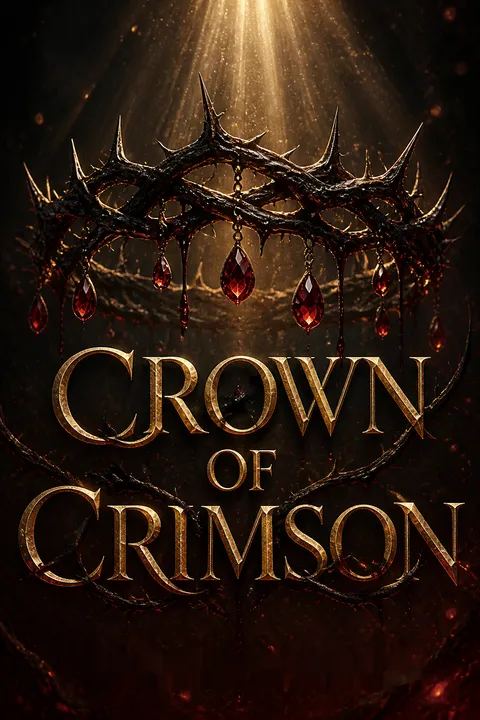
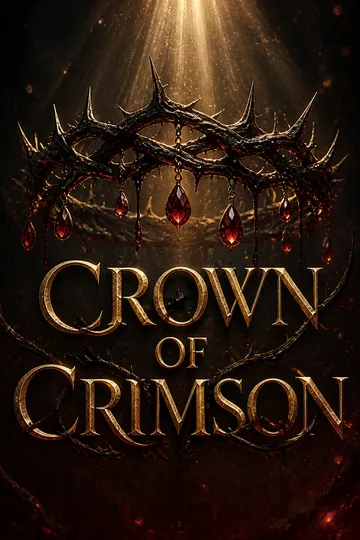
Crown of Crimson is a dark, lush, and psychologically rich fantasy that interrogates the nature of destiny, power, and love. Drawing on Finnish mythology and the archetypes of the underworld, the novel reimagines the hero's journey as a process of integration—of shadow and self, fate and agency, love and pain. The Prophecy of Three serves as both a narrative engine and a philosophical challenge, forcing the characters to confront the limits of prophecy and the necessity of choice. Hanna's arc—from reluctant pawn to empowered queen, from mortal to goddess—embodies the novel's central lesson: true power comes not from birthright or prophecy, but from the willingness to embrace vulnerability, to love, and to change. Death's journey mirrors hers, as he learns to relinquish control and accept the possibility of happiness. The novel's use of magical realism, sentient landscape, and ritual underscores the interconnectedness of all things, while its exploration of trauma, betrayal, and forgiveness grounds the fantasy in emotional truth. Ultimately, Crown of Crimson is a story about the courage to face the darkness within and without, and the transformative power of love to rewrite even the most ancient of destinies.
Review Summary
Crown of Crimson by Karina Halle receives mixed reviews averaging 4.06/5 stars. Readers praise the Finnish mythology setting, steamy romance between Hanna and Death (Tuoni), atmospheric world-building, and Death's POV chapters. Many highlight the intense chemistry and spice level, particularly chapter 19's controversial threesome scene involving Death's shadow self. Common criticisms include predictable plot, excessive sexual content overshadowing character development, problematic relationship dynamics, confusing family relations, and pop culture references in fantasy settings. While some found it better than book one, others felt it lacked the first book's magic. The cliffhanger ending left readers eager for book three.
People Also Read
Characters
Hanna Heikkinen
Hanna begins as a mortal woman driven by love for her father and a fierce sense of justice. Her journey is one of self-discovery, as she is thrust into the underworld and forced to confront her own fears, desires, and hidden power. Psychoanalytically, Hanna embodies the struggle between agency and fate, vulnerability and strength. Her relationships—with Death, Rasmus, and her own shadow twin—mirror her internal conflicts. Through pain, betrayal, and love, she awakens to her true identity as the Daughter of the Sun, a goddess capable of reshaping destiny. Her arc is one of transformation: from pawn to queen, from victim to creator, from mortal to divine.
Tuoni (Death)
Tuoni is a complex figure: ancient, powerful, and deeply scarred by betrayal and loss. His rule over Tuonela is marked by both ruthlessness and longing for connection. His relationship with Hanna is fraught with mistrust, passion, and the weight of prophecy. Psychoanalytically, Death is the embodiment of the shadow self—both literally and figuratively—struggling to reconcile his need for control with his yearning for love. His journey is one of vulnerability, as he learns to trust, to forgive, and to accept his own humanity. Through Hanna, he is resurrected not just in body, but in spirit, becoming a true partner and king.
Rasmus
Rasmus is the red-haired shaman, Hanna's childhood friend and, as revealed, her half-brother. Torn between loyalty to Hanna and the dark pull of his mother Louhi, Rasmus embodies the struggle between light and shadow, free will and manipulation. His magical heritage makes him both powerful and vulnerable, a key figure in the prophecy. His arc is tragic: he is used by Louhi, possessed, and ultimately lost to the forces of chaos. Yet his love for Hanna and his own search for identity give him depth and pathos.
Louhi
Louhi is the former Goddess of Death, Death's ex-wife, and the architect of the uprising. She is a figure of pure ambition, cruelty, and cunning, wielding shadow magic and manipulating her children as pawns. Psychoanalytically, Louhi represents the devouring mother archetype, the force of destruction and transformation. Her relationship with Death is one of mutual hatred and fascination, while her connection to Rasmus and Salainen is marked by exploitation. Louhi's power is both seductive and terrifying, a reminder of the dangers of unchecked ambition.
Salainen
Salainen is Hanna's magical twin, created by shadow magic and abandoned at birth. She is the embodiment of the prophecy's darkest aspect: the one destined to destroy Death and bring chaos. As Hanna's mirror, Salainen forces her to confront her own fears, guilt, and potential for darkness. Psychoanalytically, Salainen is the repressed self, the part of Hanna that must be integrated or destroyed. Her arc is one of vengeance and longing, a tragic figure shaped by abandonment and manipulation.
Lovia
Lovia is Death's daughter, a lesser goddess tasked with ferrying the dead. She is both ally and foil to Hanna, embodying the struggle between duty and desire. Lovia's longing for freedom and her complicated relationship with her parents reflect the generational tensions at the heart of the story. Her loyalty to Hanna and her willingness to defy Death mark her as a figure of hope and change.
Sarvi
Sarvi is Death's sentient, skeletal unicorn, a relic of the old gods. Fiercely loyal, telepathic, and bloodthirsty, Sarvi serves as both advisor and protector. Symbolically, Sarvi represents the untamed forces of nature and the power of ancient magic. His relationship with Death and Hanna is one of mutual respect and occasional comic relief, grounding the story's darker themes.
Vipunen
Vipunen is the primordial giant who trains Death and Hanna, dispensing cryptic wisdom and shaping the course of destiny. He is both mentor and manipulator, withholding crucial information to preserve the natural order. Psychoanalytically, Vipunen is the archetype of the wise old man, the gatekeeper of transformation. His role is to challenge, provoke, and ultimately empower the protagonists.
Raila
Raila is Hanna's personal Deadmaiden, a figure of quiet strength and resilience. She risks punishment to care for Hanna in the oubliette, embodying the power of loyalty and compassion in a world of betrayal. Her background as an escapee from Inmost gives her a unique perspective on suffering and survival.
Tuonen
Tuonen is Death's son, a lesser god tasked with ferrying the dead. He provides levity and perspective, his irreverence masking a deeper longing for purpose and connection. His relationship with Hanna is playful and occasionally flirtatious, highlighting the complexities of family and duty in the underworld.
Plot Devices
Prophecy of Three
The Prophecy of Three is the central plot device, weaving together the destinies of Hanna, Rasmus, and Salainen. Its ambiguity—three children of a shaman, each with a different fate—creates tension, mistrust, and the possibility of both salvation and destruction. The prophecy is used to manipulate characters, justify actions, and foreshadow key events. Its true meaning is only revealed through the characters' choices, subverting the idea of destiny as fixed and immutable.
Duality and the Shadow Self
The motif of duality runs throughout the novel: Death and his Shadow Self, Hanna and Salainen, light and darkness, love and betrayal. The creation of Death's Shadow Self is both a practical tool and a metaphor for the integration of the shadow—the repressed, dangerous aspects of the self. The possession and corruption of the Shadow Self by Louhi dramatize the dangers of unchecked power and the necessity of self-knowledge.
Magical Realism and Sentient World
The underworld is a sentient, magical realm where weather, animals, and even fungi respond to the emotions and actions of the characters. Telepathic communication with unicorns, sentient mycelium, and magical weapons blur the boundaries between self and world, reinforcing the theme of interconnectedness. The landscape itself becomes a character, reflecting and amplifying the psychological states of the protagonists.
Blood Magic and Ritual
Blood magic and ritual pervade the narrative, from the wedding ceremony to the creation of the Shadow Self. These rituals are both sources of power and sites of vulnerability, demanding sacrifice and binding characters together. The repeated motif of cutting, bleeding, and healing underscores the costs of transformation and the dangers of unchecked ambition.
Narrative Structure and Perspective
The novel alternates between Hanna's and Death's perspectives, allowing for deep psychological exploration and the juxtaposition of internal and external conflict. The use of first-person narration, stream-of-consciousness, and direct address creates intimacy and immediacy, drawing the reader into the characters' struggles. The structure mirrors the themes of duality and integration, as the protagonists must learn to see through each other's eyes.
Underworld Gods Series Series
About the Author

Download PDF
Download EPUB
.epub digital book format is ideal for reading ebooks on phones, tablets, and e-readers.








































