
Key Takeaways
1. Strategic Racism: A Profitable Feature, Not a Flaw
The problem was that, for the ultra-wealthy, the harm being caused by systemic racism wasn’t a bug; it was a feature.
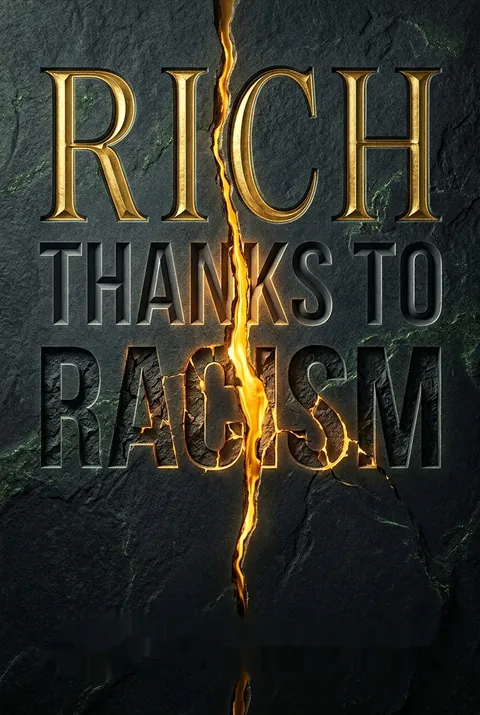
Systemic racism's true nature. The author, a civil rights lawyer, initially believed ignorance was the main obstacle to racial justice. However, years of advocacy revealed a darker truth: persistent racial inequities are not accidental byproducts of economic and political systems. Instead, they are intentionally perpetuated by a small group of ultra-wealthy individuals who profit immensely from racial injustice. This realization shifted the author's understanding from "systemic racism" to "strategic racism," highlighting the deliberate and calculated nature of these harms.
Profit from injustice. For these "racism profiteers," racial injustice creates lucrative opportunities and fuels their extreme wealth and power. They invest billions in organizations that actively oppose racial progress, ensuring that policies causing massive human suffering continue. This includes policies that devastate communities of color in areas like education, criminal justice, and immigration. The author emphasizes that this isn't about individual bigotry, but about capitalizing on systemic racism for profound personal benefit.
Widespread impact. The consequences of this strategic racism are felt by tens of millions of people of color across the United States. They endure daily burdens, constant reminders of their inferior status, and the knowledge that their lives are devalued by government institutions. This pervasive form of modern-day racism, though less overtly repugnant than historical acts, is equally, if not more, damaging due to its broad reach and intentionality.
2. Education Privatization: A Billionaire-Led Assault on Public Schools
School privatization is unquestionably a billionaire-led effort, and for many of these individuals, the primary motivation isn’t to raise overall educational quality or remedy education inequities.
A national epidemic. The book highlights how public schools, particularly in black and brown neighborhoods, are being systematically undermined and replaced by charter schools and voucher programs. This "school choice" movement, despite claims of innovation and equity, has led to:
- Mass public school closures (e.g., 126 in Chicago, 200+ in Detroit since 2000)
- Overcrowded remaining public schools with fewer resources
- Loss of experienced educators, especially teachers of color
- Increased student displacement and trauma
- Widespread waste, fraud, and abuse in the charter sector
Billionaire benefactors. This agenda is aggressively funded by a small group of America's wealthiest individuals and foundations, including:
- The Walton family (Walmart)
- Bill Gates (Microsoft)
- Eli Broad (KB Homes, SunAmerica)
- Charles and David Koch (Koch Industries)
- Mark Zuckerberg (Facebook)
These individuals have invested billions in a comprehensive strategy to reshape the education system, often influencing school board elections and media narratives.
A "Trojan horse" for profit. The author argues that for many of these ultra-wealthy individuals, privatization is the goal itself, not a means to better education. They see public education as a massive, untapped market, creating profit opportunities in:
- For-profit charter schools and cyber-charters
- Educational programming and standardized tests
- Support services (cleaning, food, transportation)
- Real estate investments and construction loans
This "fast food model" of education prioritizes efficiency and cost-cutting over quality, leading to a race to the bottom for most students, while the wealthy continue to afford elite private education.
3. The Criminalization Trap: A Police State for Communities of Color
In other words, in the United States, we pay public employees to wage war against our own people.
Explosive growth of incarceration. The U.S. criminal justice system has expanded dramatically since the 1970s, with the incarcerated population increasing by nearly 600% by 2015. This growth is fueled by policies that aggressively enforce broad criminal laws, disproportionately targeting black and brown communities. The author describes this as a "Criminalization Trap," where behaviors are easily deemed criminal, and law enforcement is the primary, often violent, response.
Hyperaggressive policing. Communities of color experience a vastly different reality of policing compared to predominantly white areas. They face:
- Significantly higher police density (e.g., New York City has 650x the national average officers per square mile)
- Routine stop-and-frisk incidents, often without legal basis
- Militarized police forces with heavy weaponry
- Aggressive and demeaning interactions with officers
- Criminalization of minor offenses, even in schools, leading to a "school-to-prison pipeline"
This creates a "police state" in these communities, fostering fear and trauma rather than safety.
Punishment over accountability. The system prioritizes harsh punishment over authentic accountability, which would focus on repairing harm, promoting healing, and addressing root causes of crime. Incarceration, described as a "weapon of mass destruction," inflicts severe harm on individuals, families, and communities, leading to:
- Trauma, mental health issues, and increased likelihood of reoffending for individuals
- Family disintegration and economic hardship
- Weakened social networks and intergenerational poverty
Despite its ineffectiveness and destructive nature, this punitive approach persists, largely because it benefits the ultra-wealthy.
4. Juan Crow: Exploiting Migrants for Ultra-Wealthy Gain
The deliberate creation of an aggressively inhospitable environment is what you do to address an infestation by mice or roaches in your house, or what a petulant teenager does to register unhappiness over having a new step-parent.
A system of terror. The book details how U.S. immigration policies, particularly since the 1990s, have created a "Juan Crow" system that systematically terrorizes undocumented immigrants. States like Arizona have passed extreme anti-immigrant laws (e.g., SB 1070) that:
- Criminalize undocumented status and everyday activities (e.g., driving, harboring family)
- Legalize racial profiling by law enforcement
- Deny access to public benefits, education, and even bail
- Create an environment of constant fear, leading families to hide in their homes
This deliberate cruelty forces migrants into the shadows, making their lives miserable and precarious.
The criminalization of migration. Immigration issues, once treated as economic or humanitarian, are now handled through a "law and order" approach, intertwining the criminal justice and immigration systems. This has led to:
- A massive increase in immigration enforcement spending (32x since 1975)
- Over half a million immigrants incarcerated in detention centers annually
- Deportation for minor offenses, like simple marijuana possession
- A "school-to-deportation pipeline" for youth
This system effectively criminalizes human beings for seeking a better life, often due to U.S. policies that destabilize their home countries (e.g., NAFTA's impact on Mexican farmers).
Profiting from oppression. The ultra-wealthy benefit immensely from this system, which provides:
- Profits from privatization: Private prison companies (CoreCivic, GEO Group) profit from immigrant detention, and tech companies (Microsoft, Palantir) from surveillance contracts.
- Cheap labor: A constant supply of vulnerable, exploitable undocumented workers for low-wage, dangerous jobs, reducing labor costs for corporations like Walmart and Home Depot.
- Ultra-cheap prison labor: Detainees are forced to work for as little as a dollar a day, or no pay, in detention centers, mirroring historical "convict leasing."
This system ensures a permanent underclass, benefiting corporate bottom lines while maintaining racial hierarchy.
5. The Ultra-Wealthy: Architects and Funders of Systemic Oppression
Most of the policies that were causing massive human suffering on a daily basis could all be traced back to a relatively small group of billionaires and multimillionaires.
ALEC: The legislative engine. The American Legislative Exchange Council (ALEC) is identified as a primary vehicle through which the ultra-wealthy organize politically. With hundreds of corporate members and thousands of legislative members, ALEC secretly drafts "model bills" that advance corporate agendas. Over a thousand such bills are introduced annually, with one in five becoming law, many of which protect and expand systemic racism in:
- Education (school privatization)
- Criminal justice (mandatory minimums, three-strikes laws, private prisons)
- Immigration (anti-immigrant laws like Arizona's SB 1070)
ALEC's influence ensures that policies benefiting the ultra-wealthy are systematically implemented across states.
The Koch network and allies. Charles Koch and his network of billionaires and multimillionaires are central to funding this agenda. They heavily support:
- ALEC (over $4.4 million in donations)
- "Free market" think tanks like the Manhattan Institute, Heritage Foundation, and Reason Foundation, which provide intellectual rationales for harmful policies.
- The NRA, which advocates for "tough on crime" policies.
This network's extensive political donations and lobbying efforts ensure that politicians pass and preserve laws that serve the ultra-wealthy's interests, often at the expense of low-income, working-class, and middle-class families.
Corporate and Wall Street beneficiaries. Beyond direct funding, major U.S. corporations, big banks, and investment firms profit from these systems. They invest in private prisons, benefit from cheap labor, and gain from policies that reduce public spending and regulations. The author argues that if the ultra-wealthy truly wanted to fix these systems, they would have, given their immense political influence and resources. Their collective silence on comprehensive reforms, particularly for immigration, underscores their vested interest in maintaining the status quo.
6. "Divide and Conquer": The Strategy to Maintain Power
We get thrown a few crumbs and guard them as if our lives depended on it, never bothering to think about what would be possible if we all were able to share the whole pie.
Exploiting divisions. The ultra-wealthy have historically used "divide and conquer" tactics to stir conflict between different groups, particularly along racial and class lines. By directing anger towards scapegoats—such as "welfare queens," "illegal immigrants," or "thugs"—they distract the public from the true beneficiaries of systemic injustice. This strategy prevents low-income, working-class, and middle-class people of all races from recognizing their shared interests and uniting against the ultra-wealthy agenda.
Wedge issues. Issues like crime and immigration are expertly leveraged as "wedge issues" to create tension and resentment. The disproportionate criminalization of people of color, for instance, fosters fear and animosity among white communities, making them less likely to question the underlying systems. Similarly, anti-immigrant rhetoric pits U.S.-born workers against migrants, obscuring the fact that both groups are exploited by the same corporate interests seeking cheap labor and reduced public services.
Undermining solidarity. This constant division ensures that collective power remains diffuse and fragmented. If white people, people of color, and different socioeconomic classes are fighting each other, they are unable to consolidate their power to challenge the dominance of the ultra-wealthy. The author emphasizes that this strategy is not accidental; it is a deliberate effort to prevent the formation of multiracial, interclass unity, which poses the most significant threat to the existing power structure.
7. Systemic Injustice Harms All, Not Just People of Color
If white people examine the reasons their lives are far more difficult than they need to be, they will likely eventually run into the same set of organizations and individuals who are leading the opposition against racial equality.
Interconnected struggles. While communities of color bear the brunt of strategic racism, the author argues that the unjust policies advanced by the ultra-wealthy also deeply harm white working-class and middle-class Americans. Issues like underfunded public education, mass criminalization, and anti-worker policies, though disproportionately affecting people of color, also diminish the quality of life for many white individuals. This highlights that racial justice issues are "white issues" too, as the same forces driving racial inequality also drive broader social and economic inequality.
Shared disadvantages. The ultra-wealthy's agenda, characterized by the "Doctrine of Corporate Greed," prioritizes:
- Lowering taxes on the rich and corporations
- Fighting minimum wage increases
- Cutting public services (education, healthcare, social safety net)
- Reducing business regulations
- Opposing labor unions
These policies, while benefiting the wealthy, make life harder for the majority of Americans, regardless of race. For example, underfunded public schools, inadequate healthcare, and stagnant wages affect many white families, even if the impact is less severe than on communities of color.
A call for recognition. The book urges white Americans to recognize their complicity in perpetuating systemic racism, often unwittingly, through their votes and inaction. However, it also emphasizes that this recognition should lead to action, not guilt. By understanding how their own struggles are intertwined with those of people of color, white individuals can become powerful allies in a multiracial movement to dismantle oppressive systems and build a more equitable society that benefits everyone.
8. Building Power: The Necessity of Multiracial Grassroots Movements
The primary purpose of forming a unified, multiracial force isn’t so that we can all join together and bask in our collective “wokeness.” It’s a necessity to overcome the extraordinarily well-financed effort to uphold the thoroughly unjust system that affects all of us.
Democracy as the solution. To counter the overwhelming control of the ultra-wealthy over public policy, the author asserts that "democracy" is the most crucial tool. This isn't just about voting, but about ongoing, active participation by diverse groups of people demanding change. The ultra-wealthy have historically sought to limit democracy, fearing the collective power of the majority. However, history shows that transformative change occurs through grassroots-led social movements.
The power of organized people. The ultra-wealthy leverage their wealth to build powerful organizations (e.g., ALEC, Koch network) that advance their agenda. The only effective counterweight is the "power of organized people." This requires:
- Showing up for racial justice organizations: Contributing time, skills, and resources to existing grassroots groups across the country.
- Creating Community Equity Assemblies: Local, informal gatherings where people learn about oppression and collaborate on solutions.
These efforts transform isolated individuals into a powerful political force capable of influencing policy and holding leaders accountable.
White people's crucial role. While people of color have consistently led the fight for racial justice, white Americans are uniquely positioned to help dismantle systemic racism. Their participation is essential for building the critical mass needed to defeat the ultra-wealthy agenda. However, this involvement must be in solidarity with, and under the leadership of, those most impacted by oppression, avoiding the "gentrification of racial justice movements." This multiracial unity is not merely aspirational; it is a strategic necessity to overcome deeply entrenched power imbalances.
9. Reinvesting for Liberation: Funding Communities, Not Oppression
There is no good reason why, in the United States, we can’t guarantee every person a high-quality education, a living-wage job, an adequate social safety net, a public safety system that doesn’t criminalize people, and a clean and healthy environment.
Redefining freedom. The book challenges the distorted notion of "freedom" promoted by the ultra-wealthy, which equates it with minimal government regulation and tax cuts for the rich. Instead, it advocates for an authentic freedom centered on all people having the ability to lead full, rewarding lives. This requires policies that foster, rather than stifle, collective well-being, and a recognition that government can be an instrument of liberation.
Liberatory Communities. The vision is to create "Liberatory Communities" where public policy decisions prioritize the health, safety, and happiness of all residents. This means:
- Embracing participatory democracy and equitable decision-making.
- Maximizing community wellness and minimizing harm.
- Aligning public resources with community needs, not exacerbating them.
This contrasts sharply with the current system, where investments in harmful systems (like mass criminalization) often outweigh positive investments in essential services.
A feasible vision. The author argues that the U.S. has all the resources needed to create Liberatory Communities. By redirecting funds from harmful investments and implementing progressive tax reforms, trillions of dollars could be freed up annually. For example, reducing spending on school privatization, criminal justice, immigration enforcement, and military, combined with wealth taxes, could generate $1.3 trillion annually. This could fund:
- Increased education funding for low-income students
- Universal pre-K and afterschool programs
- Expanded healthcare coverage
- Creation of millions of living-wage jobs
This reinvestment would dramatically improve quality of life, address root causes of injustice, and eliminate intergenerational poverty.
10. Redefining Freedom: The Call for a New American Constitution
Indeed, if we are being honest about it, it must be acknowledged that our Constitution has served as a barrier to the change that is needed across a wide range of issues, including education, criminal justice, democratic rights, environmental protection, women’s rights, and workers’ rights, among others.
The Constitution as an impediment. The book argues that while the U.S. Constitution was groundbreaking for its time, it often acts as a barrier to achieving justice and equality today. Unlike many modern constitutions worldwide, it lacks explicit language on fundamental rights such as:
- The right to education (149 other constitutions include this)
- The right to healthcare (145 others)
- The right to a healthy environment (167 others)
- The right to a reasonable standard of living (91 others)
This silence allows for judicial interpretations that often favor the ultra-wealthy and impede progress on critical social issues.
The threat of a "runaway convention." The author highlights current efforts by ALEC and the Koch network to convene an Article V constitutional convention, primarily to enshrine their agenda (e.g., a balanced budget amendment) into the Constitution. This poses a "nightmare scenario" where the entire document could be rewritten to further serve the ultra-wealthy, devastating low-income, working-class, and middle-class people. While defeating these efforts in the short term is crucial, the author suggests a long-term strategy of preparing for a grassroots-led constitutional revision.
A Declaration of Interdependence. To truly achieve American freedom and greatness, the author proposes a "Declaration of Interdependence." This new framework would acknowledge that everyone's health, safety, and happiness are deeply interconnected. It would guide a process to revise the Constitution with meaningful language on:
- Democratic rights and corporate accountability
- Educational and developmental opportunities
- Healthcare and environmental protection
- Workers', women's, LGBTQIA+, and immigrants' rights
This audacious step, mirroring the Founding Fathers' rebellion, is necessary to create an inclusive, equitable democracy where racism is no longer profitable and all lives are equally valued.
People Also Read






Download PDF
Download EPUB
.epub digital book format is ideal for reading ebooks on phones, tablets, and e-readers.








































