
Key Takeaways
1. The Unattainable Ideal of American Motherhood
It became crystal clear to me that you could do everything that American society pressures you to do as an individual and as a mother, and if anything goes wrong, not only are you on your own, but you will also be either tacitly or explicitly blamed for your deviation.
Historical roots. American motherhood ideals are deeply rooted in centuries of unrealistic, elitist, and bigoted expectations, constantly shape-shifting but always demanding self-abnegation. From colonial pious white women to 19th-century "republican mothers" raising virtuous citizens, the core expectation has been a mother's complete devotion and sacrifice. This historical trajectory has consistently praised mothers insincerely, ignored their contributions, or actively demonized them based on their social standing.
Evolving demands. The "perfect mother" has evolved from a colonial woman churning butter with a baby at her heels to a modern "supermom" seamlessly blending work, wellness, and home. This ideal often portrays a thin, blond woman who effortlessly manages remote schooling, meditates at 5 AM, and maintains a gleaming home, all while performing as an "ideal worker" with no family responsibilities. These individualistic and superficial pressures have nothing to do with a mother's private relationship with her children or her values.
Individual blame. This pervasive culture ensures that if anything deviates from this impossible ideal—be it a difficult pregnancy, mental health struggles, or career setbacks—the mother is blamed. The author's own early pregnancy struggles, including severe vomiting and depression, highlighted how even doing "everything right" according to societal pressures still left her isolated and blamed when things went wrong. This individualistic blame ignores the systemic lack of support for mothers in the United States, which offers less to parents than any other wealthy nation.
2. Pregnancy: A Battle Between Ideal and Reality
I had this perception I would feel ecstatic and joyous and I’d be a goddess floating on a cloud.
The "sparkle" myth. Many women envision pregnancy as a time of perfect happiness, Instagrammable beauty, and profound fulfillment, expecting to "sparkle" with an angelic glow. This idealized image, often perpetuated by social media influencers, creates immense pressure to feel and appear joyful, even when the reality is far from it. The author's personal experience of severe hyperemesis and depression during pregnancy starkly contrasted with this expectation, leading to feelings of failure and humiliation.
Physical and mental toll. The reality for millions of pregnant women is often uncomfortable, frightening, and even life-threatening, with significant physical and mental health challenges.
- 7-20% experience perinatal anxiety and depression.
- Up to 3% suffer from hyperemesis gravidarum (extreme morning sickness), the most common reason for first-trimester hospitalization.
- Hundreds of American women die from pregnancy complications annually, with Black and Native women facing disproportionately higher risks.
These struggles are compounded by guilt, as mothers feel bad about feeling bad, internalizing the cultural message that unhappiness during pregnancy is a personal failing.
Pandemic's silver lining. Ironically, the COVID-19 pandemic offered an unexpected reprieve for some pregnant women, particularly white-collar workers with the privilege to work from home. Reduced social obligations, comfortable clothing, and the ability to rest without judgment led to less stress and, in some studies, a decrease in premature births. This "natural experiment" highlighted how societal pressures to be an "ideal worker" during pregnancy actively harm women's health, underscoring the need to prioritize maternal well-being over performative expectations.
3. Motherhood's Identity Shift and the Pressure to Self-Sacrifice
In this framing, if a mother’s needs are in conflict with a child’s needs, she is automatically supposed to sacrifice herself, even if the gains to the child may be small and poorly understood compared with the cost to the mother, which may be substantial.
"Total motherhood." The moment a woman becomes a mother, society expects a profound identity shift where her needs and desires are suppressed for the perceived "best" interests of the baby, a concept termed "total motherhood." This moral code demands mothers optimize every aspect of their children's lives, starting in the womb, and automatically sacrifice themselves when their needs conflict with their child's. The author's struggle with breastfeeding, and her decision to stop after two weeks due to pain and anxiety, was met with societal judgment, highlighting this pressure.
Guilt and isolation. This expectation of self-abnegation leads to widespread guilt and isolation among mothers. They feel guilty for:
- Continuing to work or leaving their children in others' care.
- Experiencing postpartum depression or not feeling magically transformed by motherhood.
- Not conforming to perfectly heteronormative, naturalistic, and pristine community ideals.
Even when mothers intellectually recognize the flaws in these ideals, the internalized pressures cause significant emotional and physical costs.
Community as a lifeline. While some "mom groups" can be judgmental, many mothers find essential solace and connection online and in person, especially during difficult times like NICU stays, fertility struggles, or miscarriages. These communities provide understanding, practical advice, and a space to share truths without judgment, allowing mothers to feel like "full people" beyond their children. However, the lack of broader societal and governmental support for parents in the U.S. means that maintaining an identity outside of "mother" requires immense extra effort and resources.
4. Workplaces Penalize Mothers, Forcing Impossible Choices
The world turns to women for mothering, and this fact silently attaches itself to many a job description.
The "ideal worker" trap. American workplaces are largely structured around the "ideal worker" norm—someone who works full-time and overtime with minimal time off for family responsibilities. This model, historically based on men with stay-at-home spouses, inherently conflicts with the realities of motherhood. Even in executive roles, women often find themselves performing "emotional labor," acting as support systems and smoothing over miscommunications, a role subconsciously assigned due to societal expectations of women as "mothering" figures.
The motherhood penalty. Mothers consistently "fare worse in the labor market" than men or childless women, experiencing a "motherhood penalty."
- They earn 5-7% lower wages per child.
- They are 100% less likely to receive callbacks for advertised jobs.
- They are offered $11,000 lower salaries for the same qualifications.
This penalty stems from deeply held beliefs that mothers are less competent or committed, and if they act assertively, they are penalized for being "cold." For low-income mothers, this translates into cruel realities like "just in time" scheduling, which makes childcare impossible and leads to financial instability.
Impossible compromises. The lack of federally mandated paid family leave and affordable childcare forces mothers into impossible compromises. Many return to work weeks after childbirth, or cut back hours, often against their will, leading to emotional distress and financial strain. The author's own experience of needing to hide her second pregnancy to secure a job, and a colleague's secret birth, highlight the systemic failure. Even doctors and dentists, who care for others' health, often lack paid leave, demonstrating how pervasive this issue is across professions.
5. Social Media Amplifies Unrealistic Maternal Ideals
Instead, we exalted the same old-fashioned ideals, and then weaponized them against mothers who don’t conform.
The "avalanche of information." The internet provides an overwhelming "avalanche of information" on parenting, much of it unverified and morally charged, making even minor decisions seem high-stakes. This, combined with the proliferation of anti-science misinformation, contributes to parental anxiety and distress. The author's goal to create an evidence-based, unbiased parenting platform at the New York Times aimed to counter this, but the underlying cultural pressures remained.
Curated perfection. Social media, particularly Instagram and TikTok, has become a primary venue for "momfluencers" who predominantly project an image of white, thin, wealthy, and Christian mothers with perfectly curated lives. Even "perfectly imperfect" or "real talk" moms often reinforce these beauty and femininity norms. This "Exhibitor Economy" compensates mothers for the performance of care work, not the actual labor, creating a multibillion-dollar industry built on aspirational, often unattainable, lifestyles.
Psychological toll. This constant exposure to curated perfection, coupled with the monetization of motherhood, takes a significant psychological toll on mothers, leading to anxiety, jealousy, shame, and guilt. Even when mothers don't respect the influencers, the comparison can be deeply damaging. The lack of diversity in compensated momfluencers also perpetuates racial inequities, as marketers often overlook or stereotype Black mothers, denying them the same "aspirational" platform.
6. The Pandemic Exposed America's Broken Support Systems for Mothers
When the shit hit the fan during the COVID-19 pandemic, and all the rickety systems of care, school, and health collapsed in an instant, we all learned how alone we were.
Systemic collapse. The COVID-19 pandemic brutally exposed the fragility of America's "rickety systems of care, school, and health," leaving mothers isolated and unsupported. Schools and childcare centers shuttered, forcing millions of mothers out of the workforce or into unsustainable 24/7 work-parenting-education shifts. The author's personal experience of managing remote learning, her parents' illness, and her own anxiety, despite her privilege, underscored the profound isolation.
"Disaster domesticity." The pandemic led to "disaster domesticity," where traditional gender roles were reinforced, and mothers disproportionately bore the burden of increased domestic labor and childcare.
- Fathers experienced a "fatherhood premium," with lower layoff rates than mothers or childless individuals.
- 1.4 million more mothers were out of paid work by January 2021 compared to pre-pandemic levels.
- Surveys showed increased support for traditional gender roles, with mothers expected to earn money and stay home with young children.
This created immense stress, debt, and mental health issues for mothers, particularly low-income and single mothers, and those with children with special needs.
Long-term fallout. The economic and emotional fallout continues to disproportionately affect mothers. Many remain in debt, struggle with unsustainable work hours, and face ongoing childcare shortages. The lack of consistent federal support, like the enhanced Child Tax Credit, exacerbates precariousness. The pandemic also devastated children's mental health and education, with significant learning loss, especially among vulnerable populations, adding to mothers' stress and despair.
7. Embracing Maternal Ambivalence as a Path to Freedom
Ambivalence means “quite contradictory impulses and emotions towards the same person co-exist. The positive and negative components sit side by side and remain in opposition.”
Normalizing mixed feelings. The most essential takeaway for mothers is to accept and sit with ambivalence—their own and others'. Maternal ambivalence is not indifference but the co-existence of contradictory impulses and emotions, such as adoration and rage, towards the same person. This is a normal, natural, and eternal aspect of motherhood, historically documented in women's diaries and letters for centuries, yet often suppressed by modern ideals.
Shedding guilt. The constant pressure to express only "perfect love" for children, coupled with the fear of being found out as "less than perfect," layers immense guilt onto mothers' already eternal exhaustion. This guilt prevents mothers from being truly honest about their experiences and from channeling their energy into meaningful change. By acknowledging and accepting ambivalence, mothers can begin to shed this debilitating guilt.
Reclaiming selfhood. Dehumanizing cultural conditioning forces mothers to erase parts of themselves. Embracing ambivalence allows mothers to be fully human, recognizing that their identity is not solely defined by their children. This self-acceptance is crucial for mental well-being and for finding the energy and will to advocate for a more supportive future, rather than constantly questioning their fitness as mothers.
8. Meaningful Change Requires Political, Workplace, and Cultural Shifts
We owe it to the next generation of mothers to keep advocating for changes that might not benefit our families in the near term.
Political momentum. Despite political wrangling, there is growing bipartisan support for policies that benefit families, such as childcare and paid leave.
- 74% of voters prioritize childcare and early learning.
- 80% of voters support federal funding for childcare and paid family leave.
- Five states have passed paid leave legislation since 2016, showing momentum.
The pandemic made it clear to many leaders that the current system is untenable, inspiring calls for a "Marshall Plan for Moms" and universal child allowances to address child poverty and maternal well-being.
Workplace transformation. Workplaces must evolve beyond the "ideal worker" norm to support caregivers.
- Implement paid caregiving leave for all workers, not just parents, to prevent the "motherhood penalty" and support those caring for sick or elderly loved ones.
- Model leave-taking from the top down to normalize its acceptance.
- Offer "radical flexibility" (e.g., shorter workweeks, control over hours, subsidized childcare) and provide advance notice for schedules.
Recognizing that childcare and schools are essential for a functioning economy, many companies are now acknowledging the need for policies that better support caregivers.
Cultural revolution. The most challenging, yet crucial, shift is cultural. Mothers must reject centuries-old ideals of selfless, immaculate motherhood and embrace diverse family structures and parenting styles.
- Support and affirm each other's values, avoiding judgment.
- Communicate honestly with partners about equitable domestic and caregiving responsibilities, actively training the outside world to engage fathers.
- Engage in community activism, from local school board meetings to broader social justice efforts, to build supportive "villages."
By shedding guilt and channeling energy into collective action, mothers can fight for a future where they are not exhausted into silence, but empowered by allies in their lives, workplaces, and government.
Review Summary
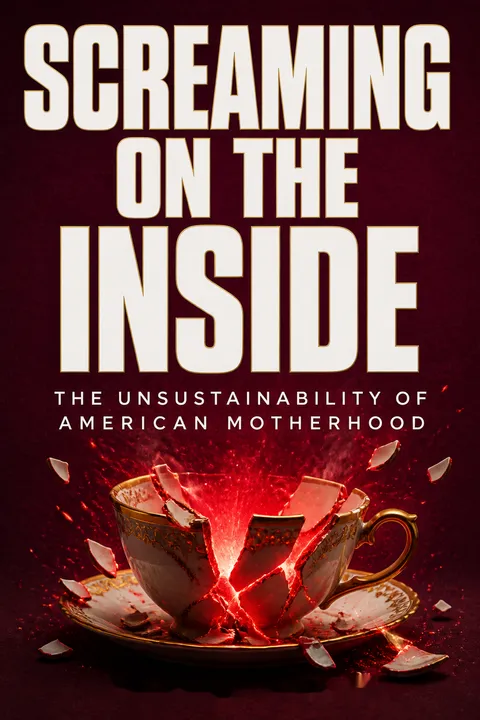
Screaming on the Inside received mixed reviews. Many readers found it relatable and appreciated its historical context and research on motherhood challenges. However, some criticized the author's judgmental tone, particularly regarding social media influencers. The book was praised for addressing unsustainable expectations placed on mothers but criticized for lacking diversity and solutions. Some felt it was too focused on white, upper-middle-class experiences. Overall, readers found it thought-provoking but divisive, with some feeling validated and others feeling attacked or misrepresented.
People Also Read









Download PDF
Download EPUB
.epub digital book format is ideal for reading ebooks on phones, tablets, and e-readers.








































