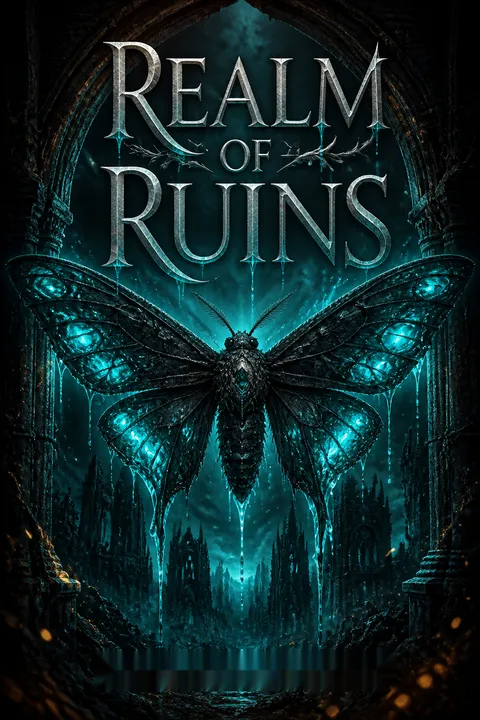

Plot Summary
Shadows of the Water
Valory Braiosa, a royal descendant without magic, endures bullying and exclusion at the academy for elicromancers. Her birthday approaches, but she feels the weight of her family's expectations and her own lack of power. The Water, a magical rite granting power and immortality, looms as both hope and threat. Valory's cousin Ivria, haunted by fear, is approved for the Water but dreads her fate. The world is at peace, but old magic stirs, and Valory's longing for acceptance and purpose grows ever more desperate.
The Unchosen Heir
During Valory's birthday celebration, Ivria slips away to face the Water alone, convinced she will die. Valory follows, trying to save her, but both are swept into the Water's ancient magic. Ivria is lost, and Valory, against all odds, survives—yet emerges without the expected elicrin stone. The Water vanishes, leaving only ruin and confusion. Valory's survival is a scandal, and the loss of the Water shakes the foundation of the realm's magical order.
A Birthday and a Death
Ivria's death devastates the royal family. Valory is blamed by some, especially Ander, Ivria's brother, who accuses her of interfering and causing the Water's disappearance. The court is divided, and Valory is isolated, her lack of a stone making her an outcast. The Conclave, the magical governing body, prepares to judge her, and the realm mourns not only Ivria but the loss of the Water—the source of all new magic.
The Water's Judgment
Valory faces the Conclave, who debate her intentions and the consequences of her actions. Some see her as a dangerous anomaly, others as a victim of circumstance. Unable to confiscate a stone she never received, they sentence her to house arrest, watched by a Neutralizer. The realm's future is uncertain, and Valory's own power is wild and untested. She is haunted by guilt, grief, and the knowledge that she is now something new—neither mortal nor elicromancer.
Aftermath and Accusation
Valory's confinement is interrupted by family visits and political intrigue. She learns of a stolen artifact and a secretive group called the Summoners, who seek to resurrect an ancient evil. The realm is fracturing: old alliances are strained, and the loss of the Water has left everyone vulnerable. Valory is summoned to the Realm Alliance for judgment, and her journey south begins, shadowed by betrayal and the threat of dark magic.
The Conclave's Verdict
Valory, accompanied by her grandmother and allies, travels through a realm on the brink. She visits the Lorenthi sisters in Volarre, only to be drawn into their family's troubles and the schemes of their brother Devorian, who is entangled with the Summoners. The artifact—a tablet inscribed with forbidden runes—becomes the focus of a resurrection ritual, and Valory is forced to confront the consequences of magic unleashed.
Exile and Unrest
Devorian's attempt to use the tablet's spell backfires, transforming him into a beast and unleashing chaos. Valory is blamed for the disaster, and the Summoners' true purpose becomes clear: to awaken the Lord of Elicromancers, a tyrant from legend. The realm is beset by unnatural disasters—plagues, storms, and waves—heralding the return of ancient darkness. Valory's power grows, but so does her fear of what she might become.
The Summoners' Plot
At the Realm Alliance, Valory is accused and betrayed by those she once trusted. The Lorenthi sisters turn on her, and the court is thrown into chaos by disaster and suspicion. Amid the turmoil, Valory meets Mercer, a mysterious elicromancer with visions of the past and a connection to the ancient evil. Together, they uncover the truth of the Summoners' bargain and the nature of the threat facing Nissera.
The Prince and the Tablet
Mercer reveals he is a Prophet from the Archaic Age, sent forward in time by Callista, a legendary time-walker. The tablet's runes are a contract with the sea witches, binding the Lord of Elicromancers in slumber. The Summoners have broken the contract, and Valory, with Mercer's help, bargains with the sea folk to learn the truth. The cost is high, and the realm's fate hangs on Valory's ability to master her unique power.
Awakening the Ancient Evil
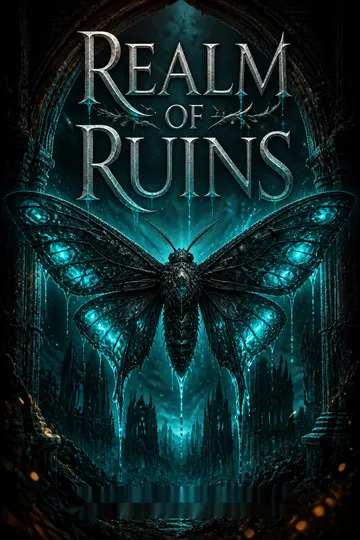
The Lord of Elicromancers—Emlyn Valmarys, the Moth King—returns, wielding the power to steal and bestow elicrin gifts. His servant Tilmorn, Mercer's brother, is bound to him by compulsion and pain. The realm is ravaged by blights and plague, and Valory and her companions are hunted as traitors. Betrayal within the Realm Alliance leaves Valory isolated, and the Moth King's influence spreads, corrupting the very heart of Nissera.
The Blight and the Plague
Valory and her friends flee through a realm beset by disease and violence. Kadri is struck by the blight, and only the intervention of the hidden fay saves her. In the sanctuary of Wenryn, Valory learns from Malyrra, the ancient fairy queen, the true history of the Moth King and the cost of the contract that once bound him. The fay heal Kadri, but the price is sorrow and longing. Valory and Mercer's bond deepens, but the path ahead is fraught with sacrifice.
The Realm in Ruins
Returning to Arna, Valory finds her home corrupted. The Conclave, now in league with the Summoners, has overthrown King Tiernan and installed Prosper as a puppet king. Valory is betrayed by Ander and Jovie, and Mercer is captured and tortured. The realm's last hope rests on Valory's power—the legacy of the Water—and her willingness to become both destroyer and redeemer.
The Fay's Hidden Sanctuary
Valory's journey through the fay's sanctuary reveals the true nature of her magic: she is the living vessel of the Water, able to judge, destroy, and transform. The fay's history with the Moth King and the contract's bloody origins are laid bare. Valory must accept the darkness within herself and the burden of choice, even as she is forced to confront the cost of victory.
The Moth King's Tower
Valory storms Darmeska, aided by her friends and the fay. The city is a slaughterhouse, its people compelled to violence by the Moth King's magic. Valory fights her way to the tower, where she faces Emlyn Valmarys, Tilmorn, and Jovie. The Moth King offers her a bargain: peace in exchange for surrender. But Valory, guided by love and loss, refuses. In a final act of will, she breaks the compulsion, destroys Valmarys, and frees the realm from his tyranny.
The Power to Choose
With the Moth King dead, Valory is faced with the aftermath: the deaths of loved ones, the wounds of betrayal, and the burden of power. She chooses mercy for Tilmorn, redemption for Mercer, and justice for the traitors. The realm begins to heal, but Valory knows that peace is fragile and must be guarded by those willing to make hard choices. She claims her place as queen, not by right of blood, but by the power to choose.
The Fall of Tyrants
Valory returns to Arna, deposes the corrupt Conclave, and claims the throne as King Tiernan's heir. She metes out justice to Prosper, Ander, and Neswick, ending their reign of terror. The realm is shaken but begins to rebuild. Valory's friends and allies find new purpose, and the legacy of the Water is secured. The age of tyrants ends, and a new era begins.
The Queen Ascends
Valory, scarred but unbroken, ascends the throne. She is joined by Mercer, Kadri, Glisette, and the survivors of the old order. The realm is forever changed, but hope endures. Valory's power is not just to destroy, but to transform—to choose mercy, justice, and love. The story ends with the promise of renewal, the memory of sacrifice, and the dawn of a new age.
Analysis
A modern fairy tale of power, trauma, and agencyRealm of Ruins is a meditation on the costs and responsibilities of power, set in a world where magic is both inheritance and curse. Through Valory's journey—from powerless outcast to the living vessel of the Water—the novel interrogates the nature of worth, the dangers of unchecked ambition, and the possibility of redemption. The story is deeply psychological, exploring grief, guilt, and the longing for acceptance. It subverts traditional fantasy tropes: the chosen one is not chosen for greatness, but for her capacity to choose; the villain is not a monster, but a man shaped by fear and isolation; the true victory is not in conquest, but in mercy and transformation. The narrative warns against the seductions of power and the perils of nostalgia for lost glory, urging instead a vigilant, compassionate stewardship of the future. In the end, Realm of Ruins is a story about the courage to face darkness—within and without—and the hope that, through choice and change, even a realm in ruins can be remade.
Review Summary
Realm of Ruins receives an average rating of 3.77 out of 5 stars. Readers praise the immersive fantasy world, compelling characters, and seamless integration of fairy tale elements like Beauty and the Beast and The Little Mermaid. Many appreciate protagonist Valory's character development and the fast-paced plot. The magic system and political intrigue are highlights. However, some find the story oversaturated with fantasy elements, the villain underdeveloped, and the pacing occasionally slow. Several readers note it surpasses or disappoints compared to the first book. Most agree it's an enjoyable fantasy adventure perfect for those seeking fairy tale retellings.
People Also Read
Characters
Valory Braiosa
Valory is the protagonist, a royal descendant who grows up feeling inadequate and powerless in a world where magic is both birthright and burden. Her journey is one of self-discovery, grief, and transformation. Initially desperate for acceptance, she is thrust into the center of a magical catastrophe when she survives the Water's trial without a stone, inadvertently destroying the source of new magic. Haunted by guilt and blamed by many, Valory's arc is defined by her struggle to master a wild, destructive power that is also the realm's last hope. Her relationships—with Ivria, Ander, Mercer, and her family—are fraught with love, betrayal, and loss. Ultimately, Valory becomes the living embodiment of the Water's judgment, learning that true power lies in the ability to choose: to destroy, to transform, and to show mercy.
Mercer Fye
Mercer is a mysterious elicromancer from the Archaic Age, sent forward in time by Callista. His gift of prophecy is both a blessing and a curse, burdening him with visions of suffering and the knowledge of his own family's fate. Mercer's past is marked by trauma: his brother Tilmorn was enslaved by the Moth King, and Mercer himself was nearly sacrificed to bind the ancient evil. His relationship with Valory is complex—he is both her guide and her equal, and their bond is forged through shared pain and hope. Mercer's arc is one of redemption, as he learns to trust, love, and forgive, even as he faces the darkness of his own history.
Ivria Ermetarius
Ivria is Valory's cousin and closest friend, gifted with the ability to sense danger. Her fear of the Water and her own fate leads her to a fatal choice, setting the story's events in motion. Ivria's death is a wound that never fully heals for Valory, and her legacy is one of both warning and hope. She represents the cost of expectation and the tragedy of those who cannot escape the burdens placed upon them.
Ander Ermetarius
Ander is Ivria's brother and Valory's cousin, a model elicromancer and royal. His grief over Ivria's death curdles into resentment and blame toward Valory. Ander's arc is a descent into complicity, as he becomes a tool of the corrupt Conclave and the Summoners. His inability to question authority or see beyond his own pain makes him both a tragic figure and an antagonist, ultimately destroyed by the very system he upholds.
Glisette Lorenthi
Glisette begins as a frivolous, self-absorbed princess, but the realm's collapse and her own suffering force her to grow. She becomes a loyal ally to Valory, enduring wounds and loss with unexpected courage. Glisette's arc is one of transformation: from envy and vanity to sacrifice and leadership. Her relationship with her sisters, especially Ambrosine, is a mirror of the realm's own struggle between self-interest and the greater good.
Kadri Lillis
Kadri, a mortal noblewoman from Erdem, is Valory's steadfast friend. Her journey is marked by vulnerability—she is struck by the blight and saved only by the fay's intervention, at the cost of lasting sorrow. Kadri's arc explores the pain of exile, the search for belonging, and the possibility of love beyond boundaries. Her relationship with Rynna, the fay, is a rare thread of hope and healing in a world torn by magic and violence.
Tilmorn Fye
Tilmorn is Mercer's older brother, once noble and brave, now bound to the Moth King by compulsion and pain. His gift—the ability to take and bestow elicrin powers—makes him both weapon and victim. Tilmorn's arc is one of suffering, manipulation, and eventual redemption. Freed by Valory's mercy, he becomes a healer and a symbol of the possibility of forgiveness, even for those most deeply corrupted.
Emlyn Valmarys (The Moth King)
Valmarys is the resurrected Lord of Elicromancers, a half-fay, half-elicromancer whose power lies in his ability to steal and bestow magic. His childhood was marked by isolation and fear, shaping him into a master of manipulation and cruelty. Valmarys's arc is a study in the dangers of unchecked power and the emptiness of conquest. He is ultimately destroyed not by brute force, but by Valory's acceptance of her own power and the choice to end his cycle of violence.
Jovie Neswick
Jovie, once a powerless student at the academy, becomes a devoted follower of the Moth King and a vessel for stolen magic. Her resentment of Valory and the elite drives her to cruelty and betrayal. Jovie's arc is a cautionary tale of envy, ambition, and the dangers of seeking power at any cost. Her death is both tragic and inevitable, a mirror of what Valory might have become.
Glend Neswick
Glend Neswick, Jovie's father, is a mortal who orchestrates the resurrection of the Moth King, driven by ancestral devotion and personal ambition. His manipulation of the Conclave and the Realm Alliance enables the realm's downfall. Neswick's arc is one of fanaticism and the corrupting influence of power, ultimately destroyed by the very magic he sought to control.
Plot Devices
The Water and Elicrin Stones
The Water is the source of elicromancer power, granting stones that bestow magic and immortality. Its trial is both a test of worth and a death sentence for the unworthy. The destruction of the Water is the inciting incident, unraveling the realm's magical order and setting Valory on her path. The elicrin stones, both active and retired, are symbols of power, legacy, and the dangers of ambition. The Water's sentience and its final choice—to make Valory its vessel—are the story's central plot device, blending prophecy, fate, and agency.
The Summoners and the Resurrection Spell
The Summoners, worshippers of the Lord of Elicromancers, are the hidden hand behind the realm's collapse. Their theft of the tablet and the resurrection ritual unleash ancient evil and disrupt the balance of power. The spell's cost—blood, suffering, and the breaking of a contract with the sea folk—serves as both literal and metaphorical warning about the dangers of tampering with forces beyond comprehension. The resurrection plot is a vehicle for exploring the cyclical nature of power, the allure of forbidden knowledge, and the price of hubris.
Prophecy, Visions, and Time
Mercer's prophetic visions, Callista's time-walking, and the recurring theme of fate versus choice structure the narrative. Prophecy is both a burden and a weapon, shaping characters' actions and self-perceptions. The story interrogates whether destiny is fixed or made, and whether knowledge of the future is a blessing or a curse. The interplay of past, present, and future—embodied in characters like Mercer and Callista—creates a sense of inevitability, even as Valory ultimately asserts her agency.
Compulsion, Betrayal, and Agency
Compulsion—magical and psychological—runs through the story: Tilmorn's enslavement, Valmarys's manipulations, the Conclave's decrees, and the social pressures on Valory and her peers. Betrayal by family, friends, and institutions is a recurring motif, forcing characters to confront the limits of loyalty and the necessity of self-determination. The narrative structure uses foreshadowing, parallel arcs, and reversals to heighten tension and underscore the theme that true power lies not in domination, but in the freedom to choose.
The Nissera Chronicles Series Series
Download PDF
Download EPUB
.epub digital book format is ideal for reading ebooks on phones, tablets, and e-readers.








































