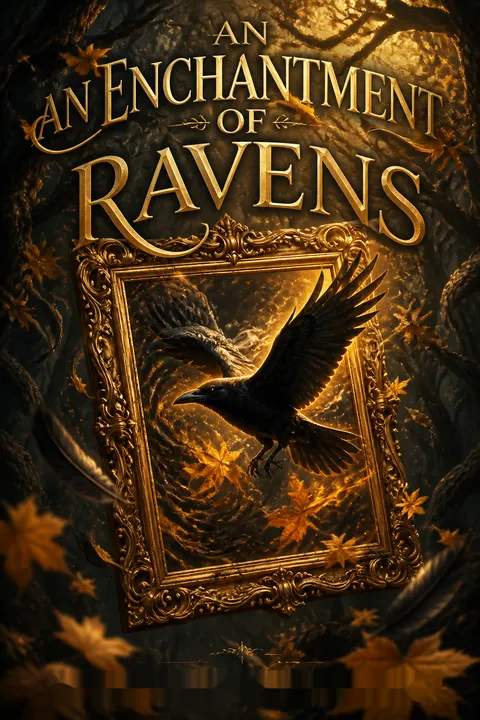

Plot Summary
The Portrait Crafter's Bargain
In the perpetual summer of Whimsy, Isobel is renowned for her portraits, which the fair folk covet for their inability to create true art. She barters her Craft for practical enchantments, wary of the fair folk's twisted gifts. Her careful life is upended when Gadfly, a powerful and enigmatic fairy, commissions her and warns that the elusive autumn prince, Rook, will soon seek her services. Isobel's world is one of beauty and peril, where a single misstep in a bargain can mean disaster. Her family—her aunt Emma and her two sisters, once goats enchanted into children—rely on her caution and skill. The arrival of the autumn prince signals a change, and Isobel senses the winds of fate shifting, even as she clings to the routines that have kept her safe.
The Autumn Prince Arrives
Rook's arrival is both thrilling and terrifying. He is unlike any other fair one Isobel has met—restless, curious, and strangely sincere. Their first session is marked by awkwardness and fascination, as Isobel struggles to capture his likeness and the elusive quality in his eyes. Rook is both vain and vulnerable, and Isobel is drawn to the wildness he represents, the promise of change in her stagnant world. Their interactions are laced with tension, humor, and the ever-present threat of fairy caprice. When a fairy beast attacks Isobel, Rook saves her, revealing both his power and the dangers lurking at the edge of Whimsy. Their connection deepens, setting the stage for a relationship that will defy the boundaries of their worlds.
Dangerous Commissions and Warnings
As Isobel continues her work, she becomes increasingly aware of the dangers posed by her growing reputation. The fair folk's interest in her Craft is not merely aesthetic; it is a hunger for something they cannot possess. Rook's commission is fraught with peril, as he insists on a portrait that reveals more than his glamour allows. Isobel's careful negotiations for payment—always practical, never vain—are a shield against the fair folk's manipulations. Yet, the boundaries between artist and subject blur, and Isobel finds herself drawn into Rook's world. Warnings from Gadfly and the appearance of deadly fairy beasts hint at deeper currents of conflict among the courts, and Isobel realizes that her Craft may be the key to forces she barely understands.
A Growing Connection
Over weeks of portrait sessions, Isobel and Rook grow closer, their banter giving way to genuine affection and mutual curiosity. Isobel is captivated by Rook's glimpses of vulnerability and the sorrow she senses beneath his glamour. Rook, in turn, is fascinated by Isobel's humanity, her creativity, and her refusal to be dazzled by fairy enchantments. Their relationship is a dance of trust and restraint, shadowed by the knowledge that love between mortal and fairy is forbidden by the Good Law. As Isobel struggles to capture Rook's true self in her art, she begins to see the cracks in the fair folk's perfection—and the cost of their immortality. The threat of the Wild Hunt and the encroaching dangers of the fairy courts loom ever closer.
Sorrow in the Prince's Eyes
During their final portrait session, Isobel finally understands the flaw in Rook's eyes: a deep, human sorrow that should not exist in a fair one. This revelation shakes her, as she realizes that Rook is not immune to the pain and longing that define mortal life. Their connection becomes undeniable, but so does the danger. The Good Law forbids love between their kinds, and the penalty is death—unless the mortal drinks from the Green Well, losing her humanity forever. The portrait Isobel creates is a masterpiece, capturing Rook's soul and exposing his secret to the world. When the Wild Hunt's horn sounds, Rook is forced to leave, and Isobel is left heartbroken, her life forever changed by what she has seen and felt.
The Wild Hunt's Pursuit
Rook returns, furious and betrayed, believing Isobel has sabotaged his reputation with her portrait. He drags her into the autumnlands to stand trial, using fairy magic to compel her. Their journey is fraught with peril: the Wild Hunt pursues them, and the forest itself is alive with ancient dangers. Isobel's quick thinking and knowledge of fairy weaknesses—like iron—help her survive, but she is forced to rely on Rook, even as their trust is shattered. The Wild Hunt's hounds and the terrifying Huntsman, Hemlock, close in, and Isobel must navigate the treacherous rules of fairy politics and magic. The journey through the autumnlands is both a physical and emotional trial, testing the limits of their bond.
Into the Autumnlands
Isobel and Rook's flight takes them deep into the heart of fairy territory, where the seasons are alive and the landscape is both beautiful and deadly. Rook's power is immense, but even he is vulnerable in the face of the Wild Hunt and the corruption spreading from the summerlands. Isobel's resourcefulness and courage are tested as she faces fairy beasts, blighted forests, and the ever-present threat of betrayal. Their journey is a crucible, forging a partnership built on necessity, trust, and a growing, forbidden love. The boundaries between mortal and fairy blur, and Isobel must confront the reality of what it means to love someone who is not, and can never be, fully human.
The Barrow Lord's Curse
In the blighted summerlands, Isobel and Rook encounter a Barrow Lord—a monstrous fairy beast born of mass graves and ancient sorrows. The battle is harrowing, nearly costing Rook his life and leaving him grievously wounded. Isobel's ingenuity and bravery are crucial in defeating the Barrow Lord, but the encounter leaves them both changed. Rook's vulnerability is laid bare, and Isobel must care for him as he recovers, deepening their emotional connection. The blight in the summerlands is revealed to be a symptom of the Alder King's neglect, and the fairy courts are on the brink of chaos. The journey becomes a race against time, as Isobel and Rook seek safety and a way to break the cycle of violence and decay.
Trust, Betrayal, and Escape
As Rook heals, he and Isobel confront the truth of their feelings and the impossibility of their situation. The threat of the Good Law hangs over them, and the only escape seems to be the Green Well—a fate Isobel cannot accept. Their journey brings them to the spring court, where they must hide their love and navigate the treacherous politics of fairy society. Isobel's Craft becomes a weapon and a shield, as she is asked to paint portraits that capture human emotion, something the fair folk both crave and fear. Betrayals and shifting alliances abound, and Isobel must decide whom to trust, knowing that any misstep could mean death for both her and Rook.
The Spring Court's Masquerade
In the spring court, Isobel is feted as a guest of honor, but the glittering surface hides deadly currents. The fair folk are fascinated by her ability to paint true emotion, and her portraits begin to affect them in unexpected ways, awakening feelings long forgotten. The masquerade ball is a turning point: Isobel and Rook's love is exposed, breaking the Good Law and sealing their doom. The court turns on them, and the Wild Hunt descends, led by Hemlock and the Alder King's will. Isobel's only hope is her Craft, and the courage to defy the rules of both mortal and fairy worlds. The masquerade becomes a crucible of truth, love, and sacrifice.
Crafting Human Emotion
Isobel's portraits, infused with genuine human emotion, begin to unravel the fabric of fairy society. The fair folk, long starved for feeling, are both enthralled and disturbed by the emotions her art evokes. Some are awakened to rage, sorrow, or joy for the first time in centuries. Isobel realizes that her Craft is not just a gift, but a power that can challenge the very nature of the fair folk. As the consequences of her art ripple through the courts, Isobel must confront the responsibility of her talent and the danger it brings. Her love for Rook becomes both her greatest strength and her greatest vulnerability, as the fairy world teeters on the brink of transformation.
The Green Well's Temptation
With the Good Law broken, Isobel is given a terrible choice: drink from the Green Well and become a fair one, losing her humanity but saving herself and Rook, or refuse and face death. The Green Well is revealed as a trap, a false paradise that strips mortals of their souls and creativity. Isobel's refusal is an act of defiance, a declaration that her humanity—and her Craft—are worth more than eternal life. The fairy courts are thrown into chaos, and Isobel's decision sets in motion a chain of events that will change both mortal and fairy worlds forever. The power of choice, and the courage to remain true to oneself, become the heart of Isobel's journey.
Breaking the Good Law
Isobel and Rook's love, now undeniable, is a direct violation of the Good Law. The fairy courts demand justice, and the Alder King himself is awakened to pass judgment. Gadfly, revealed as a master manipulator, has orchestrated events to bring about this moment, hoping to end the Alder King's stagnant rule. Isobel and Rook are offered a cruel choice: one must die, or Isobel must become a fair one. Refusing both, Isobel uses her Craft and the iron dagger—secretly provided by Gadfly—to destroy the Green Well and challenge the Alder King's power. The act is both a sacrifice and a revolution, breaking the cycle of fairy tyranny and opening the door to change.
The Alder King's Judgment
The Alder King, ancient and unfeeling, is confronted by Isobel and Rook in a battle of wills, magic, and art. Isobel's portrait, capturing the king's lost humanity and sorrow, becomes a weapon more powerful than any sword. With the iron dagger, she strikes a mortal blow, ending his reign and the endless summer that has stifled Whimsy and the fairy courts. The world is transformed: autumn comes at last, and the fairy courts are freed from the Alder King's oppressive rule. Isobel and Rook's defiance is both a personal victory and a revolution, proving that love, art, and humanity can change even the oldest and most unyielding powers.
The Power of Craft
In the aftermath of the Alder King's fall, Isobel's Craft is recognized as a force capable of reshaping the world. The fairy courts are thrown into upheaval, and the boundaries between mortal and fairy are forever altered. Isobel and Rook, now free from the Good Law, must navigate the challenges of their new roles as leaders and lovers. The cost of their victory is great—loss, pain, and the burden of responsibility—but the promise of change and renewal is greater. The power of art, choice, and love is affirmed, and the world is set on a new path, where mortals and fair folk alike must learn to live with the consequences of freedom.
Autumn's New Sovereigns
With the Alder King gone, Rook is named king of the autumn court, and Isobel becomes his queen—not through marriage alone, but through the power and courage she has shown. Their love, once forbidden, is now a symbol of the new order. The seasons turn at last, and Whimsy is freed from its endless summer. Isobel's family is safe, and the fairy courts must reckon with the changes wrought by her Craft. The future is uncertain, but filled with possibility. Isobel and Rook face it together, determined to build a world where art, love, and humanity are valued above all.
Home, Healing, and Hope
In the aftermath, Isobel and Rook return to Whimsy, where they begin to heal from their ordeals. Isobel's family is reunited, and the scars of the past are slowly mended. Rook, now mortal in some ways, learns to live with loss and love. Isobel's Craft continues to shape the world, and her story becomes a legend—a tale of courage, defiance, and the transformative power of art. The promise of autumn, of change and renewal, lingers in the air. Isobel and Rook look to the future, not for a happily ever after, but for a life lived boldly, with hope, love, and the freedom to choose their own destinies.
Analysis
Margaret Rogerson's An Enchantment of Ravens is a luminous meditation on the power of art, the necessity of change, and the courage to remain true to oneself in the face of overwhelming pressure. Through Isobel's journey, the novel explores the tension between mortality and immortality, the allure and danger of perfection, and the cost of denying one's humanity. The fair folk, with their beauty and power, are revealed to be hollow and stagnant, unable to create or feel as mortals do. Isobel's Craft is both a gift and a revolution, awakening emotions in the fair folk and challenging the ancient order. The love story between Isobel and Rook is both a personal and political act of defiance, breaking the Good Law and setting in motion the end of the Alder King's reign. The novel's central lesson is that art, love, and choice are inherently human—and that these qualities, though fleeting, are more powerful than any enchantment or immortality. In a world obsessed with beauty and permanence, An Enchantment of Ravens affirms the value of imperfection, vulnerability, and the willingness to embrace change. The story's resolution is not a simple happily ever after, but a promise of new beginnings, where hope, creativity, and the freedom to choose one's own path are the greatest enchantments of all.
Review Summary
People Also Read
Characters
Isobel
Isobel is a seventeen-year-old portrait artist whose Craft is so exceptional that the fair folk covet her work, despite their inability to create true art themselves. She is practical, clever, and deeply protective of her family—her aunt Emma and her two sisters, March and May, who were once goats. Isobel's greatest strength is her humanity: her empathy, creativity, and refusal to be seduced by fairy glamour. She is cautious in her dealings with the fair folk, always bargaining for practical enchantments rather than dangerous gifts. Over the course of the story, Isobel's courage and resourcefulness are tested as she is drawn into the deadly politics of the fairy courts. Her love for Rook, the autumn prince, is both her greatest vulnerability and her greatest strength, forcing her to confront the boundaries between mortal and fairy, art and magic, love and law. Isobel's journey is one of self-discovery, sacrifice, and the affirmation of her own worth and power.
Rook
Rook is the enigmatic and powerful prince of the autumn court, long absent from Whimsy and shrouded in legend. He is restless, vain, and fiercely proud, but beneath his glamour lies a deep well of sorrow and longing for something he cannot name. Rook is fascinated by Isobel's humanity and her art, which reveal to him emotions he has never truly felt. His relationship with Isobel is transformative, awakening in him a capacity for love, vulnerability, and self-sacrifice that defies the rules of his kind. Rook's journey is one of self-acceptance and change, as he learns to embrace both his power and his flaws. His willingness to risk everything for Isobel—and to challenge the ancient order of the fairy courts—marks him as a true leader, and ultimately, a king unlike any before him.
Gadfly
Gadfly is a powerful and ancient fair one, later revealed to be the prince of the spring court. He is charming, enigmatic, and endlessly patient, orchestrating events from behind the scenes with a master's touch. Gadfly's fascination with human Craft is genuine, but his motives are always layered and inscrutable. He is both a patron and a puppet master, guiding Isobel and Rook toward the confrontation that will end the Alder King's rule. Gadfly's actions are driven by a desire for change, but his methods are ruthless, and he is unafraid to use others as pawns in his schemes. Despite his manipulations, Gadfly recognizes the value of humanity and art, and his respect for Isobel's Craft is sincere. He is a symbol of the ambiguous morality of the fair folk: capable of both great kindness and great cruelty, always serving his own vision of the future.
Emma
Emma is Isobel's aunt and the only true parental figure in her life after the death of her parents. A skilled healer, Emma is practical, loving, and fiercely protective of her family. She struggles with her own grief and guilt, turning to tinctures and routine to cope with the losses she has endured. Emma's relationship with Isobel is complex: she is both a source of strength and a reminder of the responsibilities and sacrifices that come with love. Emma's wisdom and understanding are crucial in helping Isobel navigate the dangers of the fairy world, and her unwavering support is a touchstone for Isobel's humanity.
March and May
March and May are Isobel's younger sisters, once goats transformed into children by a drunken fairy's whim. Their origins make them both indestructible and immune to fairy magic, but they struggle to adapt to human life. Mischievous, impulsive, and fiercely loyal, the twins are a source of chaos and joy in Isobel's life. Their presence is a constant reminder of the unpredictable nature of fairy magic, and their resilience in the face of adversity is a testament to the strength of family. March and May's journey is one of learning, growth, and the forging of unbreakable bonds.
Hemlock
Hemlock is the master of the Wild Hunt and a formidable figure in the winter court. She is ancient, powerful, and bound by the horn's call to hunt and kill. Hemlock's existence is one of endless pursuit, and her interactions with Isobel and Rook are marked by both menace and a strange, wistful longing for something beyond her nature. She is both an antagonist and a victim, trapped by the rules of her world and the will of the Alder King. Hemlock's story is a meditation on fate, duty, and the possibility of change, even for those who seem beyond redemption.
Foxglove
Foxglove is a prominent member of the spring court, known for her beauty, cunning, and ruthlessness. She is both a rival and a symbol of the dangers of fairy society, where power is maintained through manipulation and appearances. Foxglove's interactions with Isobel are marked by jealousy and contempt, but she is also deeply affected by the emotions Isobel's portraits awaken in her. Foxglove's fate is a cautionary tale about the cost of denying one's humanity and the emptiness at the heart of fairy immortality.
Aster
Aster is a former human who drank from the Green Well and became a fair one. She is gaunt, haunted, and obsessed with collecting books, desperate to remember the humanity she has lost. Aster's interactions with Isobel are both a warning and a plea: she is living proof of the Green Well's true cost, and her rage and sorrow are awakened by Isobel's art. Aster's story is a tragic reflection of what Isobel might become, and her final act of defiance is a testament to the enduring power of human emotion.
The Alder King
The Alder King is the immortal sovereign of the fairy courts, whose endless summer has stifled change and growth. He is ancient, unfeeling, and utterly alien, ruling through fear and the Good Law. The blight in the summerlands and the proliferation of fairy beasts are symptoms of his neglect and the rot at the heart of his reign. The Alder King's confrontation with Isobel and Rook is the climax of the story, a battle between the old order and the possibility of renewal. His defeat marks the end of an era and the beginning of a new age for both mortals and fair folk.
Lark
Lark is Gadfly's "niece," a young fair one whose enthusiasm and naivety mask the potential for cruelty inherent in her kind. She is fascinated by mortals and eager to befriend Isobel, but her games are dangerous, and her understanding of consequences is limited. Lark's actions are a reminder of the unpredictable nature of the fair folk, and her loyalty to Isobel in the end is a small but significant sign of change within the fairy courts.
Plot Devices
The Power and Price of Craft
The central plot device is Isobel's Craft—her ability to paint true human emotion, something the fair folk crave but cannot create. Her art becomes a mirror, exposing the flaws and sorrows the fair folk hide behind their glamour. The act of painting is both a negotiation and a risk, as each portrait is a potential act of rebellion against the fairy order. The narrative structure is built around Isobel's commissions, each one deepening her entanglement in fairy politics and her relationship with Rook. Foreshadowing is woven through the recurring warnings about the Green Well, the dangers of fairy bargains, and the consequences of breaking the Good Law. The story uses classic fairy tale motifs—bargains, transformations, forbidden love—but subverts them through Isobel's agency and the transformative power of art. The climax hinges on the use of Craft as a weapon against the Alder King, proving that creativity, emotion, and choice are forces capable of reshaping even the most ancient and immutable powers.
About the Author
Other books by Margaret Rogerson
Download PDF
Download EPUB
.epub digital book format is ideal for reading ebooks on phones, tablets, and e-readers.








































