
Plot Summary
Mountains No Crow Crosses
The story opens with a forbidding mountain range, so daunting that not even crows dare to cross it. This natural barrier separates two kingdoms, making trade and travel nearly impossible. Yet, beneath these mountains, dwarfs—creatures of magic and resilience—find their own secret ways, tunneling through the earth. Their journey is not for riches alone, but for a gift: the finest silks for their beloved queen. The sense of isolation and the dwarfs' unique perspective on value and distance set the stage for a tale where boundaries, both physical and magical, are meant to be crossed, and where the extraordinary is hidden beneath the ordinary.
Dwarfs Beneath the World
Three dwarfs, each with their own quirks and priorities, traverse the dark, secret tunnels beneath the mountains. Their mission is to procure a magical gift for the queen, believing that the journey's difficulty imbues the present with meaning. Emerging into a troubled world, they find a village in panic, its people haunted by rumors of a spreading sleep. The dwarfs' magical nature makes them immune to the fear that grips the humans, but their curiosity and loyalty to the queen draw them into the heart of the unfolding mystery. Their journey is both literal and symbolic, bridging worlds above and below, waking and sleeping.
Queen's Wedding Looms
The young queen, on the eve of her wedding, contemplates the end of her freedom. The impending marriage feels like a closing door, a surrender to inevitability. She is surrounded by preparations and expectations, yet her mind is restless, haunted by the sense that her choices are slipping away. The queen's internal struggle is palpable—she is a ruler, a woman, and a symbol, all at once. The hammering of carpenters below echoes her own heartbeat, a reminder that time is running out and that her destiny, like the kingdom's, is on the brink of transformation.
Sleep Spreads Like Plague
The dwarfs arrive at an inn to find it crowded with anxious villagers. Rumors swirl of a sleeping sickness spreading from the north, a curse that began with a princess in a distant castle. The sleep is relentless, claiming people and animals alike, moving inexorably closer. The villagers debate the origins—witch, fairy, or enchantress—but all agree on the danger. The sleep is not natural; it is a magical affliction, contagious and unstoppable. The dwarfs, immune to its effects, become witnesses to a world succumbing to enchantment, and the queen is drawn into the crisis by their report.
Tales in the Taproom
In the inn, stories are exchanged: of a princess cursed to sleep, of roses growing wild, of heroes lost to thorns and darkness. The villagers' fear is palpable, their hope nearly extinguished. The queen learns that the sleep is spreading faster, threatening her own kingdom. The tales are not just entertainment—they are warnings, histories, and prophecies. The queen's resolve hardens as she listens, realizing that action is required. The dwarfs' pragmatic questions cut through the superstition, seeking the truth behind the legend. The taproom becomes a crucible where myth and reality collide, forging the queen's next move.
The Queen's Choice
Faced with the encroaching sleep, the queen makes a fateful decision: she will not marry, not yet. Instead, she dons armor, takes up her sword, and prepares to confront the curse. She delegates her rule, reassures her fiancé, and sets out with the dwarfs. Her choice is both personal and political—a rejection of passive destiny in favor of active agency. The queen's courage and sense of responsibility shine through, as she chooses the uncertain path of heroism over the safe confines of tradition. Her journey is a rebellion against inevitability, a declaration that there are always choices.
Through Tunnels and Shadows
The queen and the dwarfs travel through the dwarfs' tunnels, emerging into a world transformed by sleep. The landscape is eerie—villages abandoned, people frozen in unnatural slumber, cobwebs spun by tireless spiders. The queen's memories of her own magical sleep surface, blending past and present. The dwarfs' magical immunity and the queen's unique history make them the only ones able to resist the spell's pull. Their journey is marked by vigilance and exhaustion, as they struggle to stay awake and press onward. The darkness they traverse is both literal and psychological, a test of will and identity.
Sleepers and Spiders
As the queen and dwarfs move through the sleeping world, they notice strange phenomena: sleepers who move in unison, whispering in their dreams; spiders weaving webs undisturbed; the landscape itself seeming to conspire against the waking. The queen is unsettled by the way the sleepers respond to her presence, as if some deeper magic is at work. The boundaries between dream and reality blur, and the queen's resolve is tested by fatigue and hallucination. The dwarfs' practical interventions—slapping her awake, keeping watch—are all that keep her from succumbing. The world is a labyrinth of enchantment, and every step is a battle against oblivion.
City of Sleepwalkers
The travelers enter a grand city, its streets filled with sleepwalkers—thousands of people moving in slow, dreamlike pursuit. The city is both beautiful and grotesque, a monument to the power of the curse. The queen and dwarfs are pursued by the sleepwalkers, forced to flee through alleys and over bridges. The scale of the enchantment becomes clear: this is not a localized affliction, but a spreading plague that threatens all civilization. The queen's compassion and pragmatism are tested as she refuses to fight the innocent, choosing escape over violence. The city is a warning of what awaits if the curse is not broken.
Roses and Thorns
The journey leads to the Forest of Acaire, where the cursed castle lies hidden behind walls of thorns and roses. The approach is fraught with danger—skeletons of past heroes hang in the thorns, and the very air is thick with sleep. The queen and dwarfs struggle against the magical fog, their minds clouded and their bodies heavy. The queen's blood, drawn by a thorn, becomes a talisman against the spell. Using fire and sword, they cut through the barrier, risking everything to reach the heart of the enchantment. The roses are both beautiful and deadly, symbols of the curse's seductive power.
The Old Woman's Vigil
Inside the castle, an old woman—once a princess—remains awake, sustained by bitterness and memory. She tends the sleeping inhabitants, scavenges for food, and rails against her fate. Her life is a cycle of survival and regret, haunted by the moment she was cursed. The old woman's presence is a reminder that the curse is not just magical, but deeply personal—a theft of agency, dreams, and time. Her loneliness and resilience are poignant, and her role as both victim and potential savior becomes crucial as the story unfolds. She is the living memory of the castle's tragedy.
The Castle's Heart
The queen and dwarfs reach the highest tower, where the sleeping girl lies on a bed, untouched by time. The old woman is captured, and the queen prepares to break the spell. The atmosphere is tense, charged with the weight of decades of sleep and suffering. The queen's kiss awakens the girl, but the true nature of the curse is revealed: the sleeper is not a victim, but the source of the enchantment, feeding on the dreams and lives of others to sustain her youth and power. The confrontation is not just physical, but moral and existential—a battle for the soul of the kingdom.
The Spindle's Secret
The queen discovers the spindle, still imbued with dark magic. The old woman recounts how she was tricked into touching it, her life and sleep stolen by the enchantress. The spindle is not just a tool, but a vessel of power, binding the fates of all who sleep. The queen realizes that the only way to break the curse is to turn the magic against its creator. The spindle becomes a symbol of sleep and choice—once used to enslave, now wielded to liberate. The old woman's story is a revelation, exposing the true cost of the enchantress's power.
The True Enchantress
The awakened girl, beautiful and ageless, reveals herself as the true enchantress. She confesses to feeding on the dreams and lives of the sleepers, growing stronger with each passing year. Her innocence is a mask; her eyes betray ancient malice. She offers the queen power and partnership, tempting her with the promise of ruling continents. The queen recognizes the same hunger for adoration and control that once consumed her own stepmother. The enchantress's power is seductive, but rooted in theft and manipulation. The queen's resistance is an act of self-definition, a refusal to become complicit in the cycle of exploitation.
The Queen's Defiance
The queen refuses the enchantress's offer, recalling the hard-won lesson of resisting those who demand love and obedience. She sees through the enchantress's charm, recognizing the emptiness at its core. The queen's defiance is quiet but absolute—she will not rule beneath another, nor will she perpetuate the curse. Her strength lies in her ability to choose, to define herself against the expectations of others. The enchantress's power falters in the face of this resistance, and the balance of magic begins to shift. The queen's act is both personal and political, a rejection of tyranny in all its forms.
The Old Woman's Revenge
The queen gives the spindle to the old woman, who uses it to wound the enchantress. The magic, turned inward, unravels the spell. The old woman, whose life was stolen, reclaims her agency in a final act of courage. The enchantress's power collapses, her beauty and youth dissolving into dust. The sleepers awaken, confused and free. The old woman, exhausted, finally rests. The breaking of the curse is not a triumphant victory, but a bittersweet release—a restoration of choice, but at great cost. The queen's compassion and the old woman's sacrifice are the true sources of salvation.
Awakening and Ashes
The queen and dwarfs burn the spindle and thread, destroying the last remnants of the curse. The air is thick with the smell of old magic, and the world feels lighter, cleansed. The queen is offered a return to her kingdom, her wedding, and the life she left behind. Yet she hesitates, changed by her journey. The awakening is both literal and metaphorical—a release from enchantment, but also from expectation. The queen's silence is contemplative, her sense of possibility renewed. The ashes of the spindle are buried, a final act of closure.
Eastward Into Freedom
Instead of returning west to her kingdom and the waiting wedding, the queen chooses to walk east, into the unknown. The dwarfs follow, trusting her judgment. Her decision is quiet but profound—a rejection of prescribed destiny in favor of self-determination. The story ends not with a marriage or a coronation, but with a journey, open-ended and full of possibility. The queen's choice is a declaration of freedom, a reminder that there are always new paths to walk, new stories to write. The night is dark, but the future is hers to shape.
Analysis
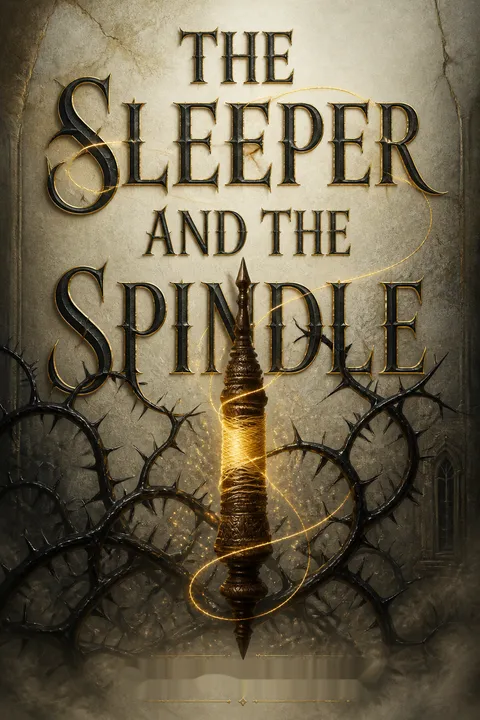
Neil Gaiman's "The Sleeper and the Spindle" is a masterful reimagining of classic fairy tales, blending elements of "Sleeping Beauty" and "Snow White" into a story that is both familiar and radically new. At its heart, the book is a meditation on agency, choice, and the dangers of passivity—both personal and societal. Gaiman subverts traditional roles, making the queen a proactive hero and the sleeping princess a predatory villain. The spreading sleep becomes a metaphor for the seductive allure of surrendering one's will, while the queen's journey is a testament to the power of self-determination. The story's feminist undertones are clear: women are not objects to be rescued or possessed, but agents of their own destinies. The ending, with the queen choosing an unknown path over a prescribed future, is a powerful affirmation of freedom and possibility. Gaiman's prose is rich with symbolism and psychological depth, inviting readers to question the stories they inherit and to seek their own awakenings.
Review Summary
The Sleeper and the Spindle is a reimagining of classic fairy tales by Neil Gaiman, featuring stunning illustrations by Chris Riddell. Readers appreciate the feminist twist on Snow White and Sleeping Beauty, with a strong female protagonist. The dark, gothic atmosphere and unexpected plot twists captivate many, though some find the story too short or underdeveloped. While most praise the beautiful artwork and production quality, opinions on the narrative itself are mixed. Some readers felt let down by the marketing's implication of LGBT representation, which is minimal in the actual story.
People Also Read

Characters
The Queen
The queen is a young woman on the cusp of marriage and adulthood, burdened by the weight of expectation and tradition. Her relationship with the dwarfs is one of mutual respect and affection, rooted in shared history. Psychologically, she is torn between duty and desire, haunted by her own experience of magical sleep. Her journey is one of self-discovery, as she rejects passive roles and embraces active agency. The queen's development is marked by courage, compassion, and a refusal to be defined by others' expectations. She emerges as a symbol of autonomy, choosing her own path even when it defies convention.
The Dwarfs
The three dwarfs are magical beings, immune to the curse that afflicts humans. Their relationship with the queen is familial, shaped by years of shared adventures. Each dwarf has a distinct personality—practical, humorous, and steadfast—but all are united by loyalty and a sense of duty. Psychologically, they are grounded and unflappable, providing stability in a world turned upside down. Their development is subtle, as they move from bystanders to active participants in the breaking of the curse. The dwarfs embody the virtues of resilience, resourcefulness, and quiet heroism.
The Old Woman (Former Princess)
Once a princess, now an old woman, she has survived decades of wakefulness in a world of sleep. Her relationship to the enchantress is that of victim and unwilling accomplice; to the queen, she is both a warning and a guide. Psychologically, she is shaped by bitterness, regret, and a fierce will to survive. Her development culminates in an act of sacrifice, reclaiming her stolen agency and breaking the curse. The old woman represents the cost of enchantment—the loss of dreams, time, and self—but also the possibility of redemption through courage.
The Enchantress (Sleeping Girl)
The golden-haired girl appears innocent and vulnerable, but is in fact the source of the curse. Her relationship to the sleepers is parasitic; to the queen, she is both tempter and adversary. Psychologically, she is defined by a relentless hunger for youth, beauty, and control, masking ancient malice behind a childlike facade. Her development is a study in the corrupting influence of power and the emptiness of stolen vitality. The enchantress's downfall is precipitated by her inability to inspire genuine love or loyalty, and her reliance on coercion and theft.
The Queen's Fiancé
The queen's betrothed is a minor but significant character, representing the life and destiny the queen is expected to embrace. His relationship with the queen is affectionate but conventional, rooted in societal expectation rather than passion. Psychologically, he is supportive but passive, accepting the queen's decision to postpone the wedding. His presence serves to highlight the queen's struggle for autonomy and the limitations of traditional roles. He is less a fully realized character than a symbol of the path not taken.
Goodmaster Foxen
Foxen is the dwarfs' friend and the innkeeper who provides shelter and information. His relationship to the main characters is that of a helpful ally, grounded in the everyday realities of village life. Psychologically, he is practical, generous, and resilient, embodying the common sense and endurance of ordinary people in extraordinary times. His role is to anchor the story in the world of the living, providing a contrast to the magical and the cursed.
The Sleepwalkers
The sleepwalkers are the mass of people affected by the curse, moving in eerie unison, their individuality subsumed by the enchantress's power. Their relationship to the main characters is that of both threat and warning—a reminder of what is at stake. Psychologically, they represent the dangers of passivity, conformity, and the loss of agency. Their awakening at the story's end is a restoration of selfhood and possibility.
The Spiders
The spiders, ever awake, weave webs over the sleepers and the world. Their relationship to the curse is ambiguous—they are unaffected, continuing their work regardless of human fate. Psychologically, they symbolize the passage of time, the persistence of life, and the indifference of nature to human suffering. Their presence adds an eerie, dreamlike quality to the story, reinforcing the sense of a world suspended between life and death.
The Bandits
The bandits encountered in the forest are both victims and threats, sleep-talking in unison and attacking the queen. Their relationship to the main characters is adversarial, but their actions are not their own. Psychologically, they represent the way the curse warps and corrupts, turning people into instruments of the enchantress's will. Their fate is a warning of the dangers of losing oneself to external control.
The Queen's Stepmother (in memory)
Though deceased, the queen's stepmother appears in memories and visions, embodying the seductive dangers of power and the demand for adoration. Her relationship to the queen is formative, shaping the queen's understanding of autonomy and resistance. Psychologically, she is both a cautionary tale and a source of strength, her legacy prompting the queen to reject the enchantress's offer. She represents the internal struggle against manipulation and the importance of self-definition.
Plot Devices
Fairy Tale Subversion
Gaiman employs the structure of familiar fairy tales—Sleeping Beauty, Snow White—but subverts expectations at every turn. The princess is not a passive victim, but the villain; the queen is not a damsel, but a hero. The dwarfs are not mere helpers, but active agents. This subversion challenges readers to question the roles assigned by tradition and to seek deeper truths beneath the surface of familiar stories.
Magical Realism and Dream Logic
The story unfolds in a world where magic is both wondrous and dangerous, where sleep and waking, dream and reality, are constantly in flux. The spreading sleep is both a literal curse and a metaphor for passivity and loss of agency. The narrative structure mirrors this uncertainty, with shifting perspectives, unreliable memories, and hallucinatory encounters. Foreshadowing is woven throughout, as the queen's own history of magical sleep prepares her for the final confrontation.
Symbolism of Sleep and Choice
Sleep in the story is not rest, but imprisonment—a state of suspended animation, vulnerability, and theft. Waking is an act of will, a reclaiming of selfhood. The queen's journey is a metaphor for the struggle to remain conscious and autonomous in a world that seeks to lull and control. The spindle, roses, and thorns are all symbols of the dangers and possibilities inherent in choice.
Feminist Reinterpretation
The story centers women's experiences, choices, and relationships, rejecting the passivity and objectification of traditional fairy tales. The queen's refusal to marry, her leadership, and her ultimate choice to walk east are acts of self-definition. The enchantress's hunger for power is exposed as hollow, and the old woman's sacrifice is honored. The narrative structure supports this reinterpretation, giving voice and agency to characters who are often silenced.
About the Author


Download PDF
Download EPUB
.epub digital book format is ideal for reading ebooks on phones, tablets, and e-readers.








































