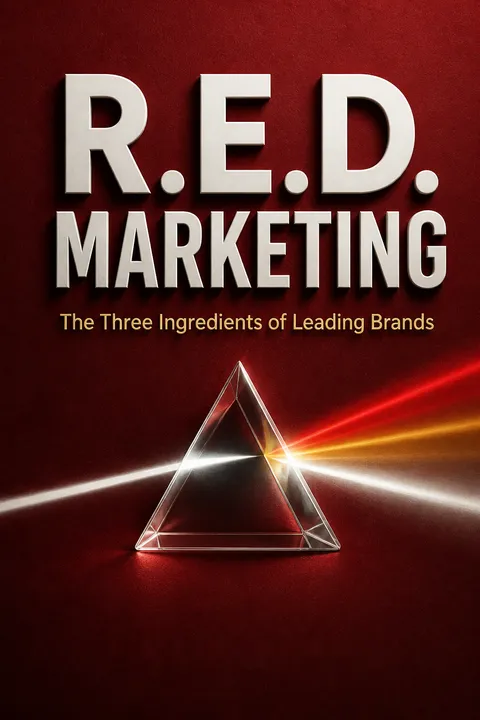

Key Takeaways
1. R.E.D. is the Proven Framework for Marketing Success
All three elements are important, and when you deploy them simultaneously you get the Oatly effect: the very real potential of massive share gains.
A Unified System. R.E.D. (Relevance, Ease, Distinctiveness) is a codified, logical, and practical marketing system developed by Yum!'s Collider Lab, proven to deliver real results in today's hypercompetitive marketplace. It moves beyond anecdotal observations and outdated theories, integrating the latest science-based discoveries in consumer behavior with real-world marketing experience across 150 countries. This framework provides a clear map for marketers to navigate complex challenges and drive sustainable growth.
Transformative Results. Under the R.E.D. methodology, Yum! Brands experienced explosive growth, expanding from 43,000 to 50,000 restaurants and doubling its share price from $50 to $100 in just five years. Taco Bell alone saw its annual sales soar from $6 billion to an unbelievable $10 billion in the same period. This success demonstrates R.E.D.'s ability to revolutionize brand building and communication, even during challenging times like the COVID-19 pandemic, which served as a stress test for its underlying brilliance.
Beyond Simplistic Solutions. R.E.D. rejects the notion of a single "silver bullet" marketing solution, instead combining seemingly incompatible theories—like Byron Sharp's emphasis on mass reach and Douglas Holt's focus on cultural meaning—into one coherent, actionable system. It provides a comprehensive approach that addresses the art and science of marketing, ensuring brands are not only seen and understood but also deeply integrated into consumers' lives. By focusing on these three interconnected pillars, R.E.D. offers 95% of what a marketer needs to succeed.
2. Challenge Outdated Marketing Beliefs to Drive Real Growth
The endless books on neuromarketing are fun, but most legitimate neuroscientists cringe in horror at the claims these marketers make.
Debunking Myths. Many traditional marketing philosophies, such as "brand love," "purpose-driven marketing," and "reason to believe" (RTB), are often based on anecdotal observations and authors' belief systems rather than scientific evidence. These concepts, while appealing on the surface, frequently lead to generic, forgettable campaigns that fail to move the needle on sales. For instance, the idea that consumers "love" their toaster brand is a fallacy; true desire stems from functional or cultural relevance, not an artificial emotional connection.
The Flaws of Purpose. While a company's internal purpose can be noble and inspiring for employees, using it as a cornerstone for marketing strategy rarely works. Unless a brand is genuinely first-to-market with a unique, distinctive purpose (like Patagonia or Dove's "Real Beauty"), it risks blending into a sea of competitors making similar, often unbelievable, claims. Consumers, operating on Daniel Kahneman's "System 1" (fast, intuitive) thinking, prioritize ease and value over altruistic brand statements, as evidenced by Amazon's dominance despite its environmental impact.
Beyond Rational Arguments. The "Reason to Believe" approach, which attempts to logically convince consumers of a product's superiority, is largely discredited because humans are fundamentally irrational decision-makers. While we excel at post-rationalizing our choices, these logical justifications rarely influence initial purchasing behavior. Instead, effective marketing leverages distinctive brand assets to build salience, making a brand memorable and easily recalled, rather than relying on defensive, fact-based arguments that consumers often ignore.
3. Focus on the "Wave" of Reaction, Not Just the "Pebble" of the Campaign
The wave is the reaction to the initial splash. Meaning, how people start talking (or not) about the campaign or brand. That’s real marketing.
Impact Over Intention. Instead of obsessing over the minutiae of a marketing campaign (the "pebble"), smart marketers focus on the broader impact and conversation it generates (the "wave"). This means prioritizing the audience's reaction and subsequent discussion over the precise wording or visual elements of the creative itself. The goal is to create a ripple effect that grows into a "marketing tsunami," driving widespread awareness and engagement.
Instinct-Driven Innovation. Collider Lab champions an "Ideas First" approach, starting with personal observations and hypotheses about a brand and its users, then testing these ideas. This contrasts sharply with traditional "blank slate" research, which often yields generic insights because consumers themselves don't always know or can't articulate their true desires. Instinct, courage, and bold action, as exemplified by Greg Creed's decision to pursue "Fourth Meal" for Taco Bell, are more effective than endless, directionless qualitative studies.
Distinctively Off Beats Perfectly Right. It's more crucial to fully commit to an idea that is distinctive, even if it's slightly "off" or unconventional, than to settle for a "correct" but bland and forgettable campaign. Blandness ensures invisibility, while a bold, clear direction, even if controversial, generates attention and memorability. Brands like Mentos with its "Freshmaker" ads or Poo-Pourri's candid toilet humor demonstrate that owning a unique, even awkward, space can be far more effective than striving for universal, uninspiring acceptance.
4. Cultural Relevance: Align Your Brand with Evolving Herd Identities
This is the key point. We’re saying brands are more than just distinctive and functional, but that “more” is not “emotionally connected to my consumer.” That “more” is actually, “this product is a standard-bearer of a cultural identity that I as a consumer can use to build my identity and belong to a herd.”
Identity and Belonging. Cultural relevance is about giving consumers a reason to feel connected to your brand by offering a symbol that allows them to identify with a particular "herd" they belong to or aspire to join. This goes beyond mere emotional connection; it's about a brand's "symbolic load" that helps consumers construct their identity. For example, Oatly milk's success isn't just about taste; it's about aligning with the aspirational class's desire for ethical, planet-friendly consumption, making an Oatly T-shirt a badge of cultural identity.
Evolving Cultural Codes. Consumer tastes, interests, and belief systems are constantly in flux, leading to the evolution of "cultural codes":
- Residual code: What worked in the past.
- Dominant code: What works now.
- Emerging code: What will work in the future.
Brands must actively observe and adapt to these shifts. Taco Bell, for instance, recognized the shift from "food as fuel" (1990s grunge era) to "food as experience" (the rise of Instagram foodie culture), pivoting its strategy to offer shareable, exciting products like the Doritos Locos Taco.
Uncovering Subconscious Desires. Effective cultural relevance research moves beyond direct questioning, which often elicits rationalizations rather than true motivations. Collider Lab uses subconscious qualitative methodologies, such as projective techniques (e.g., asking consumers to select images or personify brands), to uncover deeper beliefs and biases. Engaging cultural experts—professors, influencers, artists—and observing pop culture trends also provides invaluable insights into emerging cultural codes, enabling brands to anticipate and shape future consumer desires.
5. Functional Relevance: Expand Category Use Occasions (CUOs) Distinctively
The more CUOs you’re known for, the more share you have in the marketplace.
Growth Through Utility. Functional relevance means a product provides a specific function a customer needs or wants, and expanding these "Category Use Occasions" (CUOs) is the primary driver of brand growth. Data consistently shows a near 1:1 relationship: the more CUOs a brand is associated with in consumers' minds, the greater its market share. Nike's expansion from running shoes to basketball, soccer, and athleisure, compared to Brooks Running's narrow focus, illustrates the power of broad CUO ownership.
The Folly of Segmentation. While it seems logical to segment consumers into distinct groups and tailor marketing to each, this approach often backfires. Segmentation creates "Mini Brands" with diluted distinctiveness, sacrificing the benefits of mass reach and consistent messaging. Human behavior is inconsistent; a "Driven Cleaner" for laundry detergent might become a "Lax Launderer" depending on life circumstances. Instead of chasing fickle segments, marketers should focus on identifying and distinctively owning as many CUOs as possible across the entire consumer base.
Strategic CUO Expansion. Growing CUOs requires a methodical approach that builds upon existing brand strengths without overstretching. Unilever's shift from "bar soap group" to "personal washing group" for Dove, or Taco Bell's realization of "portability" as a key CUO, opened doors for new product development. Innovations like KFC Australia's "Go Bucket" (shrinking an iconic asset for snacking) or Taco Bell's "Nacho Fries" (making a non-distinctive product distinctive) demonstrate that successful CUO expansion is about finding logical extensions that are executed in a unique, ownable, and consistent way.
6. Social Relevance: Be the "Party-Talk Worthy" Pop Culture Moment
By creating stunts or activations that are funny, strange, or remarkable, we give our consumers something to talk about, and a chance to engage or connect with each other.
Leveraging Human Nature. Social relevance taps into two fundamental human tendencies: "Social Proof" (we trust friends/influencers more than brands) and the "Availability Heuristic" (easily recalled information feels more important). When a brand generates buzz and becomes a topic of conversation, it gains credibility and perceived importance. Kylie Jenner's billion-dollar beauty brand, built almost exclusively on social media, exemplifies the immense power of leveraging social proof and influencer trust.
The Power of "Party-Talk Worthy." To achieve social relevance, brands must create moments that are so unexpected, timely, or entertaining that consumers feel compelled to share them with friends and colleagues. This "party-talk worthy" content provides social capital to the sharer, making them appear smart, cool, or dialed-in. Examples include:
- KFC Australia's "Buckethead Army" at cricket matches, turning product packaging into a cultural phenomenon.
- Taco Bell's "Taco Liberty Bell" April Fool's prank, generating massive buzz and reinforcing its rebel image.
- Pizza Hut Taiwan's "Bubble Tea pizza" flash offers, creating insider excitement.
Five Paths to Social Relevance. Brands can actively cultivate social relevance through various strategies:
- Be part of the Entertainment: Integrate the brand directly into popular culture (KFC WWE wrestling match).
- Be the Good Citizen: Align with noble causes in a distinctive way (Lacoste's endangered species polos).
- Be Useful: Offer unexpected benefits (IKEA's pregnancy test ad).
- Be the Instigator: Provoke conversation or respond boldly to events (KFC UK's "FCK" chicken shortage ad).
- Be the Pop Culture Creator: Collaborate with other brands or personalities to generate buzz (Taco Bell x Forever 21 clothing line).
7. Ease is Everything: Remove Friction for Effortless Purchase
Ease is everything. In fact, ease is everything to the point where R.E.D. was originally called EDR, until Lluis Ruiz Ribot, KFC’s CMO in India, pointed out that R.E.D. was infinitely more distinctive (and sounded less like the music your kids are stream-ripping as we speak).
The Ultimate Disruptor. Ease is the most powerful component of R.E.D., capable of driving overnight growth and disrupting entire industries. Humans are inherently lazy, consistently choosing the path of least resistance even if it means compromising on other preferences. Companies that prioritize making their products physically and mentally available, while minimizing friction in the purchasing journey, consistently win. Amazon's dominance, for instance, stems from its relentless innovation in removing friction, from one-click ordering to "Just Walk Out" technology.
Friction Points and Cognitive Dissonance. Friction can be physical (multiple clicks, long lines) or psychological (too many choices, uncertainty). Identifying and eliminating these obstacles is key. Moreover, ease leverages "cognitive dissonance": when consumers make an easy choice that contradicts their beliefs (e.g., Ken eating Snickers instead of preferred Vosges chocolate), they rationalize their behavior, effectively convincing themselves they like the easier option. This "Benjamin Franklin Effect" means ease can change attitudes more effectively and cheaply than advertising.
Innovative Ease Solutions. QSRs constantly innovate to enhance ease:
- Contactless Curbside Pickup: Pizza Hut's pandemic response, making ordering safe and predictable.
- Zero Click Apps: Domino's, streamlining ordering to mere seconds.
- Multi-lane Drive-thrus: KFC Australia, dramatically increasing speed and capacity.
- Digital Storefronts: KFC China's WeChat integration, allowing anyone to create a KFC store and order with geo-location, effectively expanding store count overnight.
These innovations create permanent habit shifts, as customers, once over the initial learning curve, stick with the easiest option.
8. Easy to Notice: Build Salience Through Broad, Emotionally Responsive Media
If you are able to link your ad with an emotional response, then the memory of that marketing impression stays salient.
Beyond Targeted Marketing. "Easy to Notice" is about ensuring your brand is mentally available and top-of-mind when a purchasing decision arises. This is achieved through effective media efficacy and memorable creative. Critically, this means rejecting the mirage of hyper-targeted niche marketing, which, despite promises of "zero wastage," is incredibly expensive (often 5x-20x higher CPMs) and detrimental to long-term brand building. Mass-reach media, even with "wastage," builds memory structures across a broad consumer base, including crucial light users who drive significant sales and represent future growth.
The Power of Salience. Advertising works by creating and reinforcing "memory structures" in people's minds, ensuring that when a need arises, your brand "leaps" to the forefront. This salience is built through consistent campaigns delivered over the long term to all category users. The "Law of Buyer Moderation" highlights that heavy users often become lighter, and vice versa, making it vital to maintain broad awareness rather than solely focusing on a narrow segment of current heavy users. Mass audiences consistently yield higher ROI over the long term, making traditional TV still a powerful medium, even for digital-first brands like TikTok.
Emotional Response, Not Connection. To make advertising memorable and salient, it must trigger an emotional response. This isn't about fostering "emotional connection" or "brand love," but about creating a distinct feeling—joy, fear, humor, disgust—that links the ad to a "flashbulb memory." When a consumer experiences an emotional reaction to an ad, that memory becomes more mentally accessible. So, when their dishwasher breaks, the memory of a funny or poignant ad for your brand, even if the emotion was negative, makes your product more likely to be recalled and considered.
9. Distinctiveness is Non-Negotiable: Be Unique, Ownable, and Consistent
Distinctiveness is critical because 80 percent of marketers spend most of their time trying to nail that differentiation message of why you would choose a legacy luggage brand over Away, or another theme park over Disney.
The Core of Memorability. Distinctiveness is the final, crucial piece of R.E.D., ensuring your brand stands out, is not mistaken for competitors, and maintains a consistent voice. It's built on three pillars:
- Unique: Stands apart from others in the category.
- Ownable: Can realistically be claimed and defended by your brand long-term.
- Consistent: Applied visually and emotionally across all touchpoints and over time.
This focus on how a message is delivered, rather than just what it says, is paramount. Without distinctiveness, even breakthrough creative can be misattributed, wasting media spend and failing to build lasting memory structures.
Memory Structures and Attribution. Distinctive brand assets—like a vintage Coke bottle, the Colonel's image, a specific jingle, or a unique color scheme—build long-term memory structures in consumers' minds. These structures are invaluable because they ensure correct attribution. A Nielson survey found 75% of consumers cannot correctly identify an ad's brand the day after viewing it, but highly distinctive campaigns can achieve up to 95% correct attribution. Brands that abandon their distinctive assets for the sake of "newness" (e.g., Gap's logo change, New Coke, Tropicana's rebrand) often face consumer backlash and sales decline, proving that consistency beats fleeting relevance.
The Colonel's Comeback. KFC's revival under Kevin Hochman exemplifies the power of distinctiveness. Despite internal resistance and a decade of declining sales, Hochman resurrected the Colonel, leveraging his quirky, eccentric, and utterly unique persona as a multifaceted distinctive asset. By consistently recasting the Colonel in new, often controversial, ways while maintaining his core character and other brand assets (bucket, red and white, "Finger Lickin' Good"), KFC generated buzz and dramatically increased sales. Greg Creed's mantra, "I would rather be hated and loved than ignored," underscores the courage needed to embrace distinctiveness.
10. Rejuvenate or Create Distinctive Brand Assets for Lasting Impact
When you find it, the trick is to figure out how to bring it to life in a new, interesting, and provocative way. This is our secret sauce for distinctiveness.
Unearthing Hidden Gems. One powerful approach to distinctiveness is to rejuvenate existing brand assets. This involves sifting through archives for old campaigns, logos, characters, or brand myths that can be reframed for a contemporary audience. Barbie's turnaround, for example, involved rediscovering its founder's quote about "women having choices" to pivot its cultural relevance, leading to diverse dolls and empowering campaigns that resonated with modern moms. This process requires vision to see potential in assets that might seem outdated or burdened by past baggage.
Evaluating Assets with the "Three As". To determine which assets are worth investing in, conduct a "distinctive brand asset study" that evaluates them on three dimensions:
- Awareness Strength: How many people know the asset (bubble size).
- Attribution Strength: How correctly people link it to your brand (horizontal axis).
- Attention Strength: How disruptive and attention-grabbing it is (vertical axis).
Assets in the upper-right quadrant (high attention, high attribution) are major assets, while small bubbles in this quadrant represent potential gold mines for investment. This diagnostic helps prioritize which assets to build and defend, ensuring a focused approach.
Creating New Distinctive Assets. If existing assets are lacking, new ones can be created from scratch. Successful strategies include:
- Creating a Character: Like the Geico Gecko or the M&M's characters.
- Building a Distinctive Brand World: Glossier or Skittles' "Taste the Rainbow" universe.
- Consistent Ad Frameworks: Mastercard's "Priceless" or Snickers' "You're not you when you're hungry" provide predictable, memorable structures.
- Sticky Jingles/Taglines: "Finger Lickin' Good" or "They're Great!"
- Owning Key Sounds, Products, Stunts, Causes, Shapes, or Rituals: Taco Bell's "bong," the KFC bucket, Red Bull's extreme sports, or Oreo's "Twist, Lick, Dunk."
The Starburst Pink Freeze drink, born from a seemingly silly question, became a distinctive co-branded hit by leveraging unique color and flavor in a new format.
11. Cultivate an Organization that Nurtures Distinctive Creativity
Killing the politics of a marketing department can result in some interesting work.
Diverse Minds, Bold Ideas. Creating distinctiveness requires a specific organizational culture and structure. It starts with assembling a diverse team, including "PhD dropouts" and individuals with unconventional backgrounds, to ensure a wide range of perspectives and cultural references. The "Collider Lab" philosophy emphasizes that the biggest innovations emerge when disparate worlds and backgrounds collide, fostering an environment where surprising observations and breakthrough ideas can flourish.
Streamlined Creative Process. To avoid "dissecting the frog"—where great ideas are watered down by endless approvals—organizations must:
- Align on Objectives: Ensure everyone, from CEO to junior staff, understands and values distinctiveness.
- Avoid Prescriptive Briefs: Brief for the overarching campaign, not individual products, to maintain consistency.
- Limit "Chefs": Empower a core duo (CMO/Marketing Leader and Creative Director) to drive the creative vision, reducing committee-driven mediocrity.
- Clear Vision: Provide sharp guidelines and "is/is nots" to empower teams while maintaining brand integrity.
- Reduce Approval Layers: Streamline decision-making to prevent creative ideas from being diluted by too many stakeholders. Oatly's "Department of Mind Control" exemplifies radical autonomy for creative output.
Measure and Take Smart Chances. Distinctiveness thrives in an environment that embraces risk and measures success with appropriate KPIs. Traditional copy testing, which relies on rational judgment, is often counterproductive. Instead, focus on unaided top-of-mind awareness and post-run ad testing (for breakthrough, attribution, and relevance). Leaders like David Gibbs (Yum! CEO) emphasize that fear kills distinctiveness; organizations must be willing to take "smart chances" and accept that not every bold idea will be a slam dunk. The success of the Old Spice Man campaign, initially controversial, proved that being "hated and loved" is better than being ignored.
12. Identify and Solve Your Keystone Problem with Bold Conviction
Don’t try to boil the ocean.
Focus on the Keystone. When a brand faces multiple challenges, the instinct to tackle everything at once is counterproductive. Instead, identify the "keystone problem"—the single core issue that, once resolved, will create a domino effect of positive change across the organization. This approach, inspired by Charles Duhigg's "The Power of Habit" and Alcoa's turnaround, allows for focused effort and builds crucial momentum. Success in one area reinvigorates teams and opens doors for further solutions.
The Four Cs Analysis. To pinpoint the keystone problem, conduct a comprehensive "Four Cs" analysis, using R.E.D. as the analytical lens:
- Consumer: Understand their current mindset, fears, hopes, and how external factors (e.g., economic downturns, cultural trends) shape their behavior.
- Category: Analyze competitors' growth/decline, their promises, and evolving CUOs.
- Culture Code: Decode the dominant and emerging cultural codes impacting your category.
- Brand: Examine your brand's history, current perception, and how it stacks against competitors in terms of CUOs and cultural alignment.
This messy, multi-angle approach, often involving diverse team members and external experts, helps uncover the underlying issues.
Prioritize and Act Boldly. After the Four Cs analysis, identify the single most critical problem. For KFC España, despite financial pressures, the keystone problem was a severe lack of distinctiveness, leading to brand invisibility. Their marketing leaders, Jesus Cubero and Pablo Calavia, boldly pivoted to a highly distinctive "chicken chicken" campaign, which, despite its absurdity, generated double-digit growth. This initial success created momentum, allowing the team to try even more daring things. The key is to pick a problem, solve it with conviction, and rally the entire organization around that singular goal, understanding that momentum is everything in driving transformative change.
Review Summary
R.E.D. Marketing receives mixed reviews, with an overall rating of 3.91 out of 5. Positive reviews praise the book's actionable insights, engaging case studies, and simple yet effective marketing framework. Critics appreciate its fresh perspectives on branding and segmentation. However, many negative reviews focus on the authors' connection to Yum! Brands and its controversial animal welfare practices, questioning the ethics and relevance of their marketing advice. Some readers find the content repetitive or too focused on Yum! Brands examples.
People Also Read







Download PDF
Download EPUB
.epub digital book format is ideal for reading ebooks on phones, tablets, and e-readers.








































