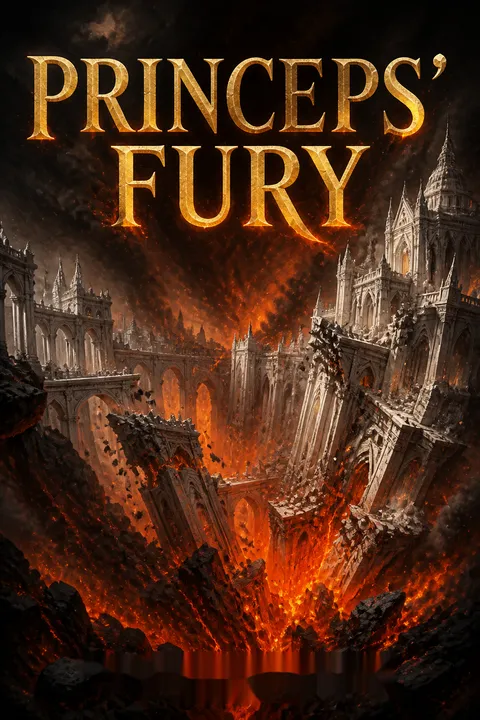

Plot Summary
Shieldwall's Last Stand
High Lord Antillus Raucus leads his legion in a brutal battle against the relentless Icemen at the Shieldwall. The enemy's numbers are unprecedented, and the legion is on the brink of collapse. Raucus's furycrafting unleashes a storm of fire and lightning, rallying his men and turning the tide, but the cost is heavy. The victory is hollow, marked by the loss of many lives and the knowledge that the enemy's strength is growing. Raucus's exhaustion and sense of futility foreshadow the greater threats looming over Alera, as he is called away to yet another desperate front, leaving no time to mourn or rest.
Chains of Gold and Choice
Gaius Octavian (Tavi), now Princeps, prepares to escort the Canim back to their homeland. He negotiates with Captain Demos, a former slaver, offering golden chains in exchange for a promise never to traffic in slaves again. This act of practical idealism cements Tavi's reputation as a leader who values both justice and results. The fleet sets sail, with Tavi's companions—Kitai and Maximus—by his side, and the uneasy alliance with the Canim leader Varg. The journey is fraught with tension, as Tavi's seasickness and the looming threat of storms mirror the uncertainty of the mission and the fragile peace between Alera and the Canim.
Shadows in the Wilderness
In the devastated lands near Kalare, Aleran scouts encounter a new, horrifying threat: the Vord have returned, and they are evolving. The patrol is ambushed by monstrous, insectile creatures and taken hosts, and only Ehren, a Cursor, escapes to warn the First Lord. The Vord's ability to use furycrafting is revealed, signaling a catastrophic escalation. The sense of dread is palpable as the survivors realize that the old enemy has become something far more dangerous, and the Realm is unprepared for the scale and cunning of the new Vord invasion.
The Vord Awaken
Ehren's warning reaches Gaius Sextus, the First Lord, who is forced to confront the reality that the Vord have mastered furycrafting. The implications are dire: the enemy can now wield the very power that defines Aleran civilization. Gaius's response is swift and secretive, as he withholds the full truth from the Senate and High Lords, hoping to buy time and maintain unity. The chapter is heavy with the weight of secrets, the burden of leadership, and the knowledge that the Realm stands on the edge of annihilation.
Storms and Secrets at Sea
Tavi's fleet is battered by a monstrous storm, scattering ships and testing the resolve of all aboard. Amidst the chaos, Tavi and Magnus uncover maps revealing the true scale of Canim civilization—vastly larger and more complex than Alera ever imagined. The storm is both literal and metaphorical, as old prejudices and assumptions are swept away. The survivors regroup, but the losses are severe, and the journey to the Canim homeland becomes a race against time and the elements, with trust and understanding between the two peoples hanging by a thread.
The Senate's Reckoning
Gaius Sextus convenes the Senate and High Lords, revealing the Vord invasion and the devastation already wrought. The assembly is wracked by denial, fear, and political maneuvering, as old rivalries threaten to undermine the Realm's response. The testimony of Lady Veradis, whose family and lands have been ravaged, brings the horror home. Aquitaine seizes the moment to position himself as a hero, offering his legions and leadership, while Gaius manipulates events to ensure unity—at the cost of truth and transparency. The Realm is mobilized, but the seeds of future conflict are sown.
War Council and Deceit
Gaius tasks Bernard and Amara with a suicidal mission: to infiltrate Vord-occupied territory and discover the source of their new furycrafting. Isana is sent north to broker peace with the Icemen, hoping to free the Shieldwall legions for the southern war. The council is a web of alliances, betrayals, and personal stakes, as each character is forced to confront their own loyalties and fears. The sense of impending doom is sharpened by the knowledge that the Vord are always one step ahead, and that the Realm's survival may depend on impossible choices.
Orders from the First Lord
Bernard and Amara set out on their perilous journey, their love and determination tested by the horrors they witness. Isana, accompanied by Lady Placida and Doroga, faces the challenge of negotiating with the Icemen, whose culture and history are alien and mistrustful. Gaius, increasingly frail and haunted by his own mortality, orchestrates the defense of the Realm with ruthless pragmatism. The chapter is suffused with the pain of separation, the weight of duty, and the hope that even in the darkest times, individual courage can make a difference.
The Canim Homeland Revealed
Tavi's fleet, battered and diminished, finally reaches the Canim coast—only to find the land in chaos. The Shuarans, masters of the mountains, are besieged by the Vord, and the once-mighty Canim civilization is on the brink of extinction. Tavi and Varg must navigate a labyrinth of Canim politics, suspicion, and ancient grudges, as they seek permission to land and repair their ships. The scale of the Vord devastation is revealed, and the uneasy alliance between Alerans and Canim is tested by both external threats and internal divisions.
Shuar's Reluctant Welcome
Tavi and Varg are forced to negotiate with Lararl, the Shuaran Warmaster, who is torn between duty to his people and the instinct to sacrifice outsiders for survival. The Alerans become prisoners, caught in a web of Canim honor and Vord infiltration. The true horror of the Vord's conquest is laid bare: entire Canim ranges have fallen, and the survivors are few. Tavi's ingenuity and willingness to risk everything for an alliance are put to the test, as he must convince both friend and foe that cooperation is the only hope for survival.
Prisoners and Alliances
As the Vord breach the Shuaran defenses, Tavi, Varg, and their companions are forced into a fragile alliance. The Hunters—Canim assassins—play a pivotal role, blurring the lines between enemy and ally. The group embarks on a dangerous mission to strike at the heart of the Vord infestation, using stealth, cunning, and the hard-won trust between Aleran and Canim. The emotional stakes are high, as old wounds and new loyalties collide, and the fate of two civilizations hangs in the balance.
The Vord's New Power
Bernard and Amara witness the Vord's mastery of furycrafting firsthand, as Ceres falls in a cataclysm of fire and blood. The Vord's ability to enslave Aleran crafters with discipline collars and drugs is revealed, turning the Realm's greatest strength into a weapon against itself. The horror of the Vord's methods is matched only by the despair of the survivors, as the last strongholds fall and the enemy's numbers seem endless. The chapter is a meditation on the cost of war, the fragility of hope, and the resilience of love in the face of annihilation.
Ceres Falls, Hope Fades
The Legions, led by Gaius and Aquitaine, are forced into a desperate retreat, pursued by the Vord across a landscape of ruin. The causeways are cut behind them, severing the Realm's arteries and stranding countless refugees. The death of High Lord Rhodes and the loss of Ceres mark the end of an era, as the Realm's invincibility is shattered. Gaius's health fails, and the burden of leadership grows heavier. The survivors are haunted by guilt, grief, and the knowledge that the old world is gone forever.
The Price of Peace
Isana's mission to the Icemen reaches a turning point, as she confronts both the legacy of hatred and the possibility of reconciliation. The peace talks are fraught with misunderstanding, cultural barriers, and the ever-present threat of violence. Isana's empathy and courage, combined with Doroga's mediation, begin to break down centuries of enmity. The cost is high, as old wounds are reopened and new sacrifices demanded, but the first fragile steps toward peace are taken, offering a glimmer of hope in a world consumed by war.
The Queen's Gambit
Tavi and his companions undertake a daring assault on the Vord queen's hive, using disguise, deception, and the element of surprise. The queen, now more human and more cunning than ever, nearly turns the tables, but the combined efforts of Aleran and Canim—especially the Hunters—prevail. The battle is brutal and costly, with losses on both sides, but the queen is slain, disrupting the Vord's coordination and buying precious time for the defenders. The victory is bittersweet, as the survivors are forced to confront the price of their actions and the knowledge that the war is far from over.
The Heart of Shuar
With the Vord's queen dead, the defenders of Shuar stage a desperate retreat to the coast, pursued by the remnants of the enemy. The city of Molvar becomes the last bastion, as Aleran and Canim work together to build ice ships—massive, furycrafted vessels capable of carrying thousands. The evacuation is a race against time, fire, and the relentless Vord. The bonds forged in battle are tested as old grievances resurface, but the shared struggle for survival creates a new sense of unity. The chapter is a testament to the power of cooperation and the will to endure.
The Enemy Within
In the ruins of Ceres, Amara is captured and subjected to the Vord's methods of control. The collared Brencis and the corrupted Lady Aquitaine serve the queen, who now wears Kitai's face and wields terrifying power. The process of breaking and enslaving Aleran crafters is revealed in all its horror, as Amara fights to retain her identity and resist the overwhelming pleasure and pain of the discipline collar. The struggle is both physical and psychological, as the boundaries between self and other, loyalty and survival, are blurred.
The Last Stand of Shuar
The defenders of Molvar make their last stand, holding the Vord at bay long enough for the evacuation to succeed. The battle is a symphony of fire, blood, and sacrifice, as Aleran and Canim fight side by side against impossible odds. The ice ships, a marvel of furycrafting and ingenuity, become the vessels of salvation, carrying the survivors away from a dying land. The chapter is a meditation on loss, resilience, and the hope that can be found even in the ashes of defeat.
The Fall of Alera Imperia
The Vord reach the heart of the Realm, and Gaius Sextus makes his final stand. Poisoned by betrayal and weakened by age, he unleashes the fury of the earth itself, destroying Alera Imperia in a cataclysmic eruption that consumes both the city and the enemy. The act is both a victory and a tragedy, as the capital is lost and the survivors are left to pick up the pieces. The chapter is a requiem for a world that can never be restored, and a call to find meaning in the face of overwhelming loss.
Exodus and New Dawn
The refugees of Alera gather in the north, led by Aquitaine, Isana, and the remnants of the Legions. The Realm is fractured, its future uncertain, but the bonds forged in suffering offer a chance for renewal. Tavi and his companions return from Canea, bringing with them the Canim survivors and the promise of a new alliance. The final moments are marked by reflection, grief, and the faint glimmer of hope that even in the darkest times, a new dawn is possible—if the survivors can find the courage to build it together.
Analysis
Princeps' Fury is a meditation on the collapse and rebirth of civilizations, the necessity of change, and the power of empathy in the face of annihilation. Jim Butcher uses the epic fantasy canvas to explore the psychological cost of leadership, the dangers of tradition untempered by compassion, and the possibility of reconciliation between former enemies. The Vord, as an ever-evolving threat, force the characters—and by extension, the reader—to confront the limits of their own assumptions and the need for adaptability. The novel's structure, with its interwoven perspectives and escalating crises, mirrors the chaos of war and the complexity of human (and inhuman) relationships. The lessons are clear: survival depends on unity, on the willingness to sacrifice for others, and on the courage to hope even when hope seems lost. In a modern context, the story resonates as a call to break cycles of hatred, to embrace diversity, and to find strength in cooperation. The emotional arc, from despair to the faint glimmer of a new beginning, is both a warning and an inspiration—reminding us that even in the darkest times, the choices we make define the world we leave behind.
Review Summary
Princeps' Fury, the fifth book in Jim Butcher's Codex Alera series, receives largely positive reviews with a 4.38/5 rating. Readers praise the engaging characters, especially protagonist Tavi, and the intensifying action as the series approaches its conclusion. The Vord remain compelling antagonists. Some critics note the book feels like a transition volume with excessive battle descriptions and find the traditional epic fantasy elements predictable. A few consider it their least favorite installment, citing slow pacing and unbelievable plot points. Overall, fans appreciate Butcher's world-building and character development, eagerly anticipating the final book.
People Also Read




Characters
Gaius Octavian (Tavi)
Tavi, once a furyless farm boy, has grown into the Princeps of Alera—a leader defined by empathy, ingenuity, and a refusal to accept the limits of tradition. His relationships with Kitai, Maximus, and Varg reveal a mind that values both loyalty and adaptability. Tavi's psychological journey is one of self-doubt transformed into conviction, as he learns to wield power not through brute force, but through understanding, negotiation, and the courage to risk everything for the greater good. His development is marked by the tension between his Aleran heritage and his outsider's perspective, making him uniquely suited to unite disparate peoples against a common threat.
Kitai
Kitai, daughter of the Marat chieftain Doroga, is Tavi's equal in wit, courage, and unconventional thinking. Her Marat heritage gives her a unique perspective on Aleran society, often challenging its assumptions and exposing its blind spots. Kitai's relationship with Tavi is both passionate and pragmatic, rooted in mutual respect and shared danger. Psychologically, she embodies adaptability and the willingness to embrace change, serving as both a foil and a catalyst for Tavi's growth. Her loyalty is fierce, but never blind, and her presence is a constant reminder that survival depends on seeing the world as it is, not as one wishes it to be.
Gaius Sextus
Gaius Sextus is the embodiment of Aleran authority—ruthless, brilliant, and burdened by the weight of history. His relationship with Tavi is complex, marked by secrecy, regret, and a desperate hope for redemption. Psychologically, Gaius is driven by a sense of duty that borders on obsession, willing to sacrifice anything and anyone for the Realm's survival. His final acts are both heroic and tragic, as he chooses annihilation over surrender, leaving a legacy of both unity and devastation. His death marks the end of an era, forcing the survivors to find new ways of leading and living.
Isana
Isana is the emotional heart of the story—a woman whose compassion and strength are tested by loss, betrayal, and the demands of leadership. Her journey from steadholt matron to First Lady is marked by sacrifice and the refusal to abandon hope, even in the face of overwhelming odds. Isana's relationships—with Tavi, Bernard, Araris, and the Icemen—reveal a capacity for empathy that transcends boundaries. Psychologically, she is defined by resilience and the courage to confront both her own pain and the suffering of others, making her a symbol of the possibility of reconciliation and renewal.
Bernard
Bernard, Isana's brother and Amara's husband, is a man of action and integrity. His experience as a forester and soldier grounds him in the realities of survival, while his love for Amara and loyalty to his family drive him to acts of quiet heroism. Bernard's psychological strength lies in his ability to adapt, to find hope in the face of despair, and to lead by example. His relationship with Amara is a source of both vulnerability and strength, and his willingness to risk everything for those he loves is a testament to the enduring power of ordinary courage.
Amara
Amara's journey is one of transformation—from idealistic agent to hardened survivor. Her experiences in the Vord-occupied lands force her to confront the limits of her own power and the depths of human cruelty. Amara's relationship with Bernard is a source of solace and motivation, while her encounters with Rook, Brencis, and Lady Aquitaine test her resolve and identity. Psychologically, Amara is defined by her refusal to surrender, her capacity for empathy, and her willingness to make hard choices for the greater good.
Varg
Varg is both enemy and ally, a leader whose sense of honor and loyalty to his people mirrors Tavi's own. His psychological complexity lies in his ability to adapt to changing circumstances, to recognize the value of cooperation, and to challenge the prejudices of both his own kind and the Alerans. Varg's relationship with Tavi evolves from suspicion to respect, and his willingness to risk everything for the survival of his people is both tragic and inspiring. He embodies the possibility of reconciliation between former enemies, and the strength that comes from shared struggle.
Antillus Raucus
Raucus is the quintessential Aleran warlord—fierce, proud, and burdened by the losses of endless conflict. His relationship with Isana, and his struggle to reconcile duty with compassion, reveal a man trapped by the expectations of his role and the scars of his past. Psychologically, Raucus is driven by guilt, loyalty, and a desperate need to protect his people, even at the cost of his own happiness. His eventual willingness to change, to trust, and to fight for a future beyond endless war, marks a profound transformation and a hope for the Realm's renewal.
Aquitainus Attis
Aquitaine is both antagonist and ally, a man whose ambition is matched only by his competence. His rivalry with Gaius and Tavi is rooted in both personal grievance and genuine concern for the Realm. Psychologically, Aquitaine is a study in the dangers and necessities of power—willing to do whatever is required, but haunted by the cost. His leadership in the final battles is both heroic and self-serving, and his willingness to accept Tavi's claim to the throne is a measure of his growth and the possibility of unity in the face of extinction.
The Vord Queen
The Vord queen is the embodiment of the unknown—an enemy that adapts, learns, and becomes ever more dangerous. Her psychological development is marked by the absorption of human traits—ambition, jealousy, cunning—making her both more relatable and more terrifying. Her ability to enslave, corrupt, and destroy is a mirror of the darkest aspects of humanity, and her presence forces every character to confront the limits of their own morality, identity, and will to survive.
Plot Devices
Duality of War and Alliance
The narrative structure of Princeps' Fury is built on the tension between old enmities and the necessity of cooperation. The Alerans and Canim, once mortal foes, are forced into alliance by the greater threat of the Vord. This device is mirrored in the personal relationships between Tavi and Varg, Isana and the Icemen, and even in the uneasy truce between Aquitaine and the rest of the Realm. The story uses foreshadowing—such as the early hints of the Vord's new power and the political machinations in the Senate—to build a sense of inevitability and urgency. The use of parallel missions (Tavi's journey to Canea, Isana's peace talks, Bernard and Amara's infiltration) creates a tapestry of perspectives, each contributing to the overarching theme that survival depends on breaking cycles of hatred and embracing change.
Evolution of the Enemy
The Vord's ability to learn furycrafting and enslave Aleran crafters is a central plot device, raising the stakes and rendering old tactics obsolete. This evolution is mirrored in the characters' own growth—Tavi's transition from outsider to leader, Isana's transformation from healer to diplomat, and Varg's shift from enemy to ally. The narrative structure uses escalating threats and reversals—such as the fall of Ceres, the betrayal of Lady Aquitaine, and the destruction of Alera Imperia—to keep the characters and readers off balance, emphasizing the need for adaptability and resilience.
Sacrifice and the Cost of Leadership
The story is replete with moments of sacrifice—Gaius's destruction of the capital, Isana's challenge to Raucus, Bernard and Amara's willingness to risk everything for the truth. These sacrifices are not only physical but psychological, as characters are forced to confront their own limitations, betrayals, and the consequences of their choices. The use of discipline collars, the breaking of crafters, and the corruption of former allies serve as both literal and symbolic representations of the cost of war and the fragility of identity.
Hope Amidst Despair
Despite the overwhelming darkness, the narrative structure consistently plants seeds of hope—through acts of compassion, moments of understanding between enemies, and the forging of new alliances. The final exodus from Canea, the fragile peace with the Icemen, and the survival of key characters all serve as foreshadowing for the possibility of renewal. The story's cyclical structure—ending with both loss and the promise of a new dawn—reinforces the theme that even in the ashes of destruction, the potential for rebirth endures.
Codex Alera Series

About the Author
Other books by Jim Butcher







Download PDF
Download EPUB
.epub digital book format is ideal for reading ebooks on phones, tablets, and e-readers.








































