
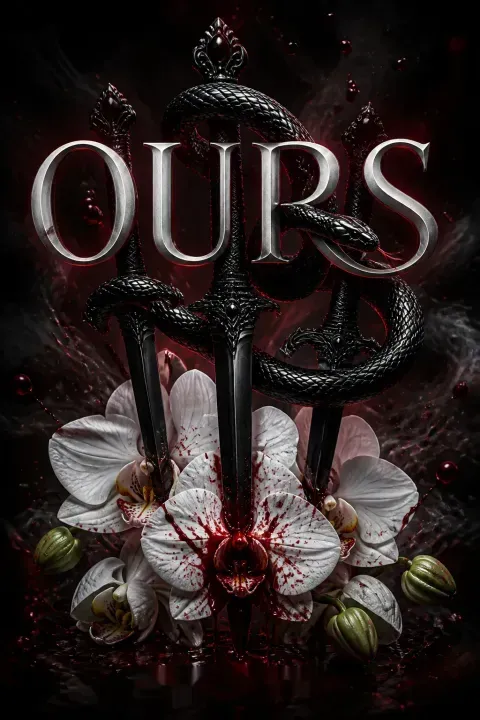


Plot Summary
Father's Gun, Mother's Bullet
Tobias2 lies wounded in the forest, his own father's gun trained on him. The crack of a different weapon splinters the dark. Elle Castlemaine8 steps from the trees, her shot blooming red across Creed's stomach. She tells Tobias2 to give Ryth1 up, that his stepsister is as good as dead, then vanishes. Tobias2 should kill his father. He cannot pull the trigger.
Nick4 arrives, and together they drag the bleeding man through a cut fence, load him into a waiting car, and race to a Rossi9 warehouse. Their father whispers apologies. Tobias2 demands to know how to save Ryth1 from The Order. Creed's last words before he dies: only a dead man can get her free. The doctor Lucas DeLuca10 arrives too late to help, only to take the body away.
This opening sequence establishes the story's core wounds: parental betrayal, impotent rage, and the umbilical pull of blood. Tobias's inability to execute his own father, despite the man's attempt to kill him, reveals the psychological prison of filial duty. Elle's cold pragmatism (using her shot to escape, not to save) foreshadows her own brokenness. The brothers are left with nothing but a cryptic clue and a corpse, forced to rely on strangers. The scene is a baptism in violence that redefines family: the ones who threaten you are blood, the ones who save you become more.
The Cruelest Lie
Inside The Order, Caleb3 holds a catatonic Ryth.1 Guards drag them to a new room, and The Priest delivers the blow: Tobias2 was killed during the failed rescue. Ryth1 screams, beats against the glass door, then crumples. Caleb3 catches her. He knows it may be a lie, but does not tell her yet.
Instead, he pulls her against his bare chest and carries her when she can no longer walk. In the sterile cell, he strips off her red negligee (a mark of her violation), dresses her in fleece, and kneels to kiss her stomach. His tenderness is a counterpoint to the institutional cruelty. When she refuses the drugged food, he takes a bite first to prove it safe.
The lie functions as a psychological experiment in breaking Ryth. The Order understands that love is a weapon: by 'killing' Tobias, they hope to hollow her out, make her pliable. Caleb's instinct is not to deny the lie immediately but to absorb her grief, to become her anchor. His physical care (redressing her, offering himself as a taster) reclaims her body from the institution. The scene also deepens Caleb's own arc: he is the brother who knows how to dwell in darkness, and he will later use that capacity to reach Ryth in places the others cannot. The 'red' she sheds becomes a symbol of her discarded victimhood.
A Mother's Secret Diary
While Nick4 scrubs his father's blood from the kitchen floor, Tobias2 showers in silence. The brothers drive to their family home, now hollow without Ryth.1 Nick4 searches Elle's8 bedroom, finds a small black clutch hidden in the closet. Inside is a leather-bound notebook.
Her handwritten entries confess the unspeakable: Ryth1 was bred, her innocence cultivated so she could be traded to The Order as bait. Elle8 wrote of her own despair, of Jack's7 love that she could not return, of running out of time. As the brothers absorb the horror, Nick's4 phone rings. Jack Castlemaine's7 voice comes through: he wants to help save his daughter.
The diary transforms the narrative from a simple rescue mission into a generational horror story. Elle is both perpetrator and victim, a woman who chose self-preservation over maternal instinct but who was herself a product of the same system. The discovery also reframes Jack: the man Ryth believes is her biological father is actually an adoptive protector, a truth that will later shatter her identity. Nick's instinct to scour the house for information, to literally scrub away his father's stain while uncovering his stepmother's, demonstrates his role as the family's strategic, cleaning conscience. The phone call from Jack is the first glimmer of an exit, however compromised.
Jack Walks In Alone
Ryth1 waits in the cold night air outside The Order's massive black doors, the words 'The Order' carved above her. Headlights approach. Jack Castlemaine7 steps out of the car and her composure shatters; she runs into his arms. But the reunion is a transaction. Jack7 turns to The Principal and agrees to the terms he negotiated: his own captivity in exchange for Ryth1 and Caleb.3
He orders Caleb3 to take her far away and never come back. As guards handcuff him, Ryth1 screams, trying to break free. Caleb3 drags her toward the gate, where Nick4 and a ghost, Tobias2 (alive, limping but alive), wait by a sedan. She collapses into Tobias's2 arms as her father7 disappears into the compound.
Jack's sacrifice is the narrative's first major inversion: a parent who actually protects. Unlike Elle, who used Ryth as currency, and Creed, who would have killed his sons, Jack willingly walks into the monster's lair. This act redefines fatherhood for Ryth and provides a template of selfless love that the brothers will later emulate. The moment is also a devastating double vision: Ryth is freed but orphaned in the same breath. The image of Tobias, whom she believed dead, materializing in the headlights, offers a resurrection that parallels her own escape. It is the book's emotional hinge: losses and returns, all laced with the knowledge that safety is purchased with someone else's suffering.
The Hidden Bullet Wound
They flee The Order in a battered sedan, then switch to a vehicle Jack7 stashed in a remote barn. Tobias2 hides the agony in his thigh, but at a late-night diner, after a frantic, possessive encounter with Ryth1 in the bathroom, his body gives out. He crumples in the parking lot. Nick4 calls the only number they have: Lucas DeLuca,10 the doctor who disposed of their father's body.
Lucas10 directs them to his grandfather's secluded cabin. By the time the black Range Rover arrives, Tobias2 is barely conscious. Lucas,10 with help from his stepsister Kit, cuts the bullet from Tobias's2 thigh on a stainless steel table as Ryth1 holds his hand. Afterwards, Ryth1 asks Lucas10 to teach her trauma medicine: she never wants to feel helpless again.
Tobias's refusal to acknowledge his injury is a metaphor for his emotional state: he will bury any pain to remain the protector, even as it kills him. The diner bathroom sex, urgent and raw, is a reclamation of life right before his collapse, a refusal to be weakened. The introduction of Lucas and Kit offers a mirror family: a protective stepbrother and his curious stepsister, whose unspoken tension parallels the Banks brothers' own. Ryth's decision to learn medicine marks a turning point in her arc. No longer content to be the protected, she begins acquiring the skills to keep her men alive, transforming her trauma into capability.
Brothers at Each Other's Throats
The fragile peace shatters when Tobias,2 following sounds in the woods, witnesses Caleb3 dominating Ryth1 against a fallen tree. He sees not comfort but the same brother who delivered her to The Order. Later, Tobias2 confronts Caleb3 with fists and a gun, blaming him for every horror. The fight spills into the cabin driveway.
Ryth1 steps between them and speaks the truth that silences them both: when The Order told her Tobias2 was dead, she wanted to die too. Caleb3 brought her back not by apology but by giving her the darkness she needed. She declares that none of them broke her; they each saved her in different ways. The revelation forces Tobias2 to reckon with the fact that his absence, not his presence, was when she needed saving most.
This confrontation externalizes a conflict that has simmered since the brothers first shared Ryth. Tobias's fury is fueled by jealousy but masks a deeper terror: that he was not enough, that someone else could give her what he could not. Ryth's confession reframes the question entirely. She does not need a single savior; she needs all of them, each offering a different register of love. The scene also complicates the morality of Caleb's methods. His darkness is not abuse but attunement: he meets her in the place The Order created, using the language of control to help her reclaim bodily autonomy. The brothers must learn that loving Ryth means accepting that they are plural, never singular.
The Recording That Could Destroy Her
Caleb3 disappears early one morning, returning hours later under a cloud of suspicion. He confesses: Ben Rossi9 sent him to track Killion,11 the man who purchased Ryth's1 'training.' The reason is devastating. Killion11 has circulated a recording of the assault, the one where Ryth1 screamed for her brothers.
When they play the audio on speaker in the garage, the sound of her begging, the sickening grunts, fills the air. Ryth1 stands frozen, then crumbles. But from the ashes of humiliation rises a new resolve. She tells them she wants to kill Killion11 herself. Nick,4 Tobias,2 and Caleb,3 each shattered by hearing her violation, agree immediately. This will not be hidden. It will be answered.
The recording functions as a weaponized memory, a piece of trauma The Order can replay to control Ryth indefinitely. Making the brothers listen is an act of radical vulnerability: Ryth lets them into her worst moment, knowing it will wound them but also bind them. Their response (not pity, but a shared thirst for blood) transforms the dynamic. She is no longer the passive victim they must protect; she becomes an agent of her own revenge. The scene also highlights the difference between how men and women experience humiliation: for Ryth, the rape is not the deepest shame; it is being seen as ruined by the men she loves. Their decision to hunt alongside her is the absolution no words could provide.
Knife to the Monster's Throat
The plan is simple: Ryth1 knocks on Killion's11 door as a supposed runaway, her brothers and Ben's9 ex-military men hidden outside. Killion,11 believing he can reclaim his three-million-dollar investment, lets her in. Seconds later, he shoves her against the wall, tearing at her clothes.
But Ryth1 is not the same girl from The Order. She stalls until gunfire erupts, then pulls the knife from her boot and presses it to his throat, forcing him to call off his guards. The brothers storm in, executing his security team with ruthless precision.
Ryth1 kneels over Killion,11 opens his shirt with the blade, and presses the point against his groin, remembering his threats. Tobias2 finishes him with a single bullet to the head. They search the house but find no master recording.
The execution of Killion is a dark wish-fulfillment that the book earns through pages of suffering. Ryth's use of the knife, guided by Lucas's anatomy lessons, is a literalization of her reclaimed agency. She does not merely witness his death; she participates, however symbolically, in the act that answers his violation. Tobias's final shot, delivered while looking at Ryth, is an act of love in their brutal lexicon. The missing recording, however, denies them full closure. The video still exists somewhere, a phantom limb of trauma that keeps the threat alive and foreshadows that eliminating one monster does not dismantle the system. The scene also reveals the brothers' comfortable brutality: they are not heroes, just men who love a woman enough to become monsters.
Attack on the Rossi Mansion
Just after Ryth1 reads her mother's diary, armed intruders in balaclavas breach the mansion. The brothers fight hand-to-hand as the dog Rebel savages one attacker. Caleb3 takes a bullet to the shoulder. Ryth,1 with no time to panic, stabs a gunman with a butcher knife. They survive, but Ben Rossi9 calls with grim news: The Order ambushed Elle8 at Pier Ten, executing her before his men could intervene.
Simultaneously, there has been an explosion at The Order's compound, and Jack7 has escaped. But the killers tracked Ryth1 to the mansion, meaning something (likely the brand on her hip) is broadcasting her location. They abandon the safehouse and race to meet Jack7 at a warehouse in the Silks District.
This sequence is a brutal acceleration, collapsing the family's illusion of safety. Elle's death, while arguably deserved given her betrayal, lands on Ryth as another abandonment. The revelation that Ryth herself carries a tracker (the brand she received at The Order, the 'H inside the O' on her pelvis) reconfigures her body as a weapon aimed at those she loves. It is a literalization of survivor's guilt: her very existence draws danger. The mansion fight also completes Ryth's transformation from protected to protector; she kills without hesitation now, earning her place among the brothers not just as lover but as equal. The explosion at The Order hints at larger forces (London, King) manipulating events from the shadows.
Trapped in the Silks District
They rendezvous with Jack7 and Ben9 at a derelict factory, but The Order's vehicles converge within minutes. Gunfire erupts from all sides. Tobias2 takes a grazing bullet. Ben9 is shot in the shoulder, his bodyguard Neon dragging him away. Jack7 fights alongside them, but ammunition dwindles. Ryth1 empties her magazine and reaches for the last clip.
They pull back into the warehouse, but more enemies arrive, headlights cutting off retreat. Ryth1 knows what she must do and starts to step forward, intending to surrender herself to save the others. Tobias2 slams her against the wall, forbidding it. He would rather die. The situation is impossible. Then a door opens and two platinum-haired twins emerge, offering an exit.
This is the narrative's darkest hour, deliberately engineered to strip away all options except the one the hidden antagonist (London) wants. Ryth's willingness to surrender mirrors Jack's sacrifice and confirms her growth: she now values their lives above her own. Tobias's refusal, conversely, is the climax of his character arc, the moment he chooses love over survival, proving that the man who once terrorized her would now end the world for her. The sudden appearance of the twins (London's sons) is a deus ex machina that reveals the true scale of the conspiracy. They are not saved by luck; they are precisely placed pieces in a game that has been running longer than anyone realized.
London's Twisted Rescue
The twins lead the family to an adjacent warehouse where a pile of corpses waits: decoys meant to fake their deaths. London St. James6 strides in, Vivienne5 at his side, and explains the terms with chilling calm.
He has been watching everything, orchestrating the attack, the rescue, the exits. The price for Ryth1 and her brothers' freedom is Jack's7 permanent captivity. Jack,7 who has already traded himself once, agrees without hesitation.
Ryth1 begs, but Jack7 presses a napkin into her hand, a bank account number he saved for her, and tells her to become the woman she was meant to be. London's6 men hold off The Order's reinforcements while the family is bundled into a car. As they speed away, the warehouse detonates behind them, erasing all trace.
London's intervention reframes the entire narrative: the Banks brothers were never central to the chess game; they were pawns London manipulated to pressure Vivienne into submission. The decoy bodies are a grim promise that their old lives are over. Jack's second sacrifice completes his arc as the one parent who refused to fail, even at the cost of his own future. The napkin, a scrap of paper carrying fifty million dollars, is both a fortune and a talisman: it represents Jack's hope that Ryth might one day escape not just physically but financially, beholden to no one. The explosion is a symbolic cremation of their past identities. From this point, Ryth, Tobias, Caleb, and Nick cease to exist as Castlemaine and Banks; they become the names London provided.
The Napkin and Fifty Million
They drive through the night, trading the bullet-riddled vehicle for a new truck at dawn. At a truck stop, they shower, change, and begin to shed the smoke and blood. Ryth,1 using Tobias's2 phone, calls the bank from the napkin. The balance staggers her: fifty million dollars. Nick,4 who liquidated his entire portfolio to fund their flight, insists the money remain untouched.
It is her safety net, a way out if she ever wants one. Ryth1 refuses the implication; she is never leaving. Tobias,2 meanwhile, has found a brochure for a new mountain community called Tutum, a name Caleb3 translates as 'safe' from Latin. With new passports bearing names like Stevie, Hunter, Adrian, and Samuel, they point the truck toward the mountains.
The fifty million is not just a plot convenience; it is the narrative's final commentary on autonomy. Jack's gift ensures that Ryth will never be financially dependent on her brothers, however much they love her. Nick's insistence that she keep it separate, that she have an 'out,' is the ultimate act of love: he wants her to choose them freely, every day, not because she has no options. The decision to head to Tutum, a town whose very name means safety, is an act of hope in a world that has offered little. The new names are costumes, but the core identity (the four of them as a unit) remains untouched. This is not an ending of arrival but of departure, a promise of a life finally lived on their own terms.
Ours in the Darkness
In a roadside motel, exhaustion and relief crack open into desperate need. Not one of them can bear to be alone. The brothers and Ryth1 fall into bed together, but this is not the urgent claiming of before. It is slower, more deliberate, a ritual of survival. Nick4 holds her steady; Caleb3 sinks her into his darkness; Tobias2 anchors her with possessive words.
She takes from each of them what she requires, and in return, she gives them the one thing The Order could never touch: her freely offered heart. After, they lie tangled, the connecting door between rooms propped open. No more separation. Nick4 promises her forever. She believes him. They have bled together, killed together, and now they will build together.
This scene is the book's true emotional climax, transcending the external action. The sex is not titillation but a somatic processing of trauma, a reclamation of bodies that have been invaded, wounded, and marked. Each brother's distinct style (Nick's gentle command, Caleb's controlled darkness, Tobias's raw possessiveness) meets a different fracture in Ryth's psyche, knitting her back into wholeness. The open door between the motel rooms is a small gesture that carries enormous thematic weight: the walls between them, the secrecy, the jealousy, have all been dismantled. The family unit is no longer a dangerous impossibility but a chosen reality, forged in the crucible of shared ordeal.
Epilogue
Vivienne5 watches the taillights vanish, abandoned on the warehouse floor with London's6 hand locked around her arm. She never got to say goodbye. As The Order's bullets shatter the back window of their escape car, London6 shields her body with his own, then drags her into a separate vehicle. Jack7 is bundled into another car and driven away, his future with London6 uncertain.
Back at the St. James mansion, London6 stalks Vivienne5 up the stairs. She tries to invoke the contract, the one that forbids him from touching her, but he pins her against the steps and growls two words: fuck the contract. His mouth crashes onto hers. She is his now, and the game he has played to own her has only just begun.
The epilogue reorients the story as the first act of a larger saga, positioning London as the true architect of the narrative's resolution and Vivienne as his next conquest. Her arc in this book traces a path from captive to defiant prisoner to someone who wields her submission as a weapon; London's final kiss is both a violation and a promise of the dark, obsessive romance to come. Jack's fate is left ambiguous, a loose thread purposefully dangled. The epilogue also confirms that The Order is not defeated, merely inconvenienced, and that the world the Banks brothers escaped still grinds on, consuming new victims. This is not a happily-ever-after; it is a strategic retreat into a different kind of war.
Analysis
Ours operates at the fraught intersection of dark romance, trauma fiction, and mafia thriller, using the 'why choose' trope not merely as titillation but as a structural argument about how shattered people reassemble. Ryth's1 three brothers are not interchangeable lovers; they are distinct therapeutic interventions. Tobias2 offers her a mirror of her own rage, a permission to be angry rather than broken. Caleb3 provides attunement to the darkness The Order implanted, using controlled dominance to transform violation into consensual intensity. Nick4 represents the steady horizon, a future not defined by crisis. Together, they form a relational prosthetic for the family she never had. The novel's true antagonist is not The Order or Killion11 or even London;6 it is the intergenerational transmission of trauma. Elle's diary reveals that she was bred, that Ryth1 was bred, that the cycle was meant to continue. The brothers' love is the circuit breaker. By choosing her, by killing for her, by liquidating their assets and erasing their names, they sever the lineage. The sexual content, explicit and frequent, is the novel's primary mode of character development. Sex is how trust is tested, how control is negotiated, how grief is metabolized. It is also how the brothers learn to share, moving from jealousy to a functional polyamorous unit. That transition is messy, violent, and not fully resolved, but the book argues that messy is sufficient. The ending is deliberately incomplete: they are fleeing, not settling; the tracker may still be inside her; London6 remains a threat. But the final image of the open motel room door, the four of them tangled together, asserts a provisional hope. Home is not a place; home is the people who would burn the world to keep you warm.
People Also Read



Characters
Ryth Castlemaine
Survivor turned lioness, their stepsisterRyth arrives on the Banks brothers' doorstep a quiet, damaged girl, delivered by a mother who sees her only as currency. Over the months that follow, she becomes the gravitational center of three violent men. Her core wound is a lifetime of being used: by The Order, by her mother8, by the breeding program that created her. Yet she transforms that victimhood into a ferocious will to protect those she loves. She learns trauma medicine from Lucas10, kills without flinching, and ultimately demands her brothers meet her as an equal rather than a possession. Her emotional arc moves from passive survival (hiding in pantries, enduring Killion's11 assault) to active, blood-soaked reclamation. Her love is not monogamous but is absolute, binding all three brothers into a chosen family.
Tobias Banks
The volatile protector, her first tormentorTobias is rage given form. He hated Ryth1 when she arrived, blamed her for disrupting his already shattered family, and expressed that hatred through cruelty. But that cruelty was a mask for terror: terror of loss, of vulnerability, of becoming his father. His journey is the most dramatic, from the brother who would have broken her to the brother who would burn the world for her. He kills for her without hesitation. His possessiveness is suffocating, but it comes from a place of profound fear that she will be taken again. He hides a bullet wound rather than appear weak, then collapses. He is the first to see her as theirs, and the last to accept sharing her. His speech patterns (little mouse, princess) are attempts to contain her, but she refuses the cage.
Caleb Banks
The dark anchor, keeper of her shadowsCaleb is the brother who understands darkness because he lives in it. A lawyer by training, he is controlled, precise, and utterly merciless when pushed. His guilt over delivering Ryth1 to The Order (even to infiltrate) nearly destroys him, but it also makes him the only one who can reach her when she retreats into trauma. He uses dominance and pain as a language to communicate safety, meeting her in the place The Order created. His emotional arc resolves when Tobias2 and Nick4 finally see his methods not as perversion but as attunement. He is the quietest of the three, but his stillness holds the greatest threat. His love for Ryth1 is expressed through service: carrying her, feeding her, taking her into the void and bringing her back.
Nick Banks
The steady strategist, her future plannerNick is the brother who holds the family together through sheer will. He scrubs his father's blood off the floor, liquidates his entire portfolio to fund their escape, and insists that Ryth's1 inheritance remain untouched as her safety net. His love is the least theatrical but perhaps the most radical: he wants her to have the freedom to leave, even as he promises her forever. He is gentle in bed but commanding in crisis, the one who keeps a level head when Tobias2 and Caleb3 are tearing at each other. His arc is about learning to accept that loving Ryth1 means sharing her, that his quiet devotion is not diminished by the presence of his brothers. He is the architect of their future, finding Tutum, arranging new identities, ensuring they will survive.
Vivienne Brooks
Defiant captive, London's obsessionVivienne is a survivor of The Order's training program, a woman so accustomed to being nobody's priority that she has built herself into a fortress. Her arc in this book is a descent into a different kind of captivity: London St. James's6 house, where he dresses her, monitors her, and slowly breaks down her resistance not through violence but through exposure to his power and her own undeniable attraction. She is the friend Ryth1 made in hell, and her loyalty to Ryth1 (watching her escape, even slapping London6) proves there is a core of light beneath the defiance. Her fate is left trembling at the edge of a dark romance of her own.
London St. James
Puppeteer, Vivienne's obsessed captorLondon is the shadow antagonist of the novel, a man of immense wealth, surveillance capabilities, and unknown motives. He abducts Vivienne5 from The Order under a contract that forbids him from touching her, but his obsession is palpable in every interaction. He arranges the rescue of Ryth1 and her brothers not out of charity but as a lever to force Vivienne's5 submission. His twin sons, Carven and Colt, are his enforcers, but he is the mind. His threat is not physical immediacy but total control: he watches, he waits, he moves pieces until the only option is surrender. The epilogue reveals his endgame: Vivienne's5 complete ownership, contract or no contract. He is urbane, middle-aged, and utterly terrifying.
Jack Castlemaine
Ryth's adoptive father, self-sacrificing protectorJack is not Ryth's1 biological father, but he is the only parent who ever chose her. He worked for Benjamin Rossi9, tangled himself in the secrets of a man called King, and ultimately gave himself to The Order twice to buy Ryth's1 freedom. His sacrifice is the moral counterweight to Elle's8 betrayal and Creed's murderousness. The diary reveals he loved Elle8 deeply, but she could not love him back; instead, he poured that love into Ryth1. The fifty million dollars he leaves her is the accumulated hope of a lifetime. His fate with London6 remains uncertain, but his legacy is secure: he taught Ryth1 what it means to be loved without condition.
Elle Castlemaine
Ryth's mother, a product and perpetratorElle is the novel's tragic monster. Bred by The Order herself, she passed that trauma onto Ryth1, grooming her daughter as a offering to buy her own escape. She slaps Ryth1 when confronted, kills Creed Banks to facilitate her own flight, and ultimately dies at The Order's hands when she tries to defect. Her diary reveals the self-loathing beneath the cruelty: she saw Ryth's1 innocence as a resource, but also knew she was damning herself. She is a mirror of what Ryth1 might have become: a mother who chose survival over love.
Benjamin Rossi
Mafia boss, family ally and protectorBen is the head of the Stidda Mafia and a surrogate father to the Banks brothers, especially Tobias2. He provides safehouses, weapons, and eventually his own mansion. His loyalty to Jack7 and the brothers is unwavering, even as his own organization faces threats from Haelstrom Hale and The Order. He is shot during the warehouse ambush, and his fate is left uncertain but likely survivable. His relationship with Lazarus (his son, mentioned but not present) hints at a wider mafia universe.
Lucas DeLuca
Trauma doctor, reluctant allyLucas is an emergency physician with his own dark connections who removes the bullet from Tobias's2 thigh and teaches Ryth1 basic trauma medicine. His stepsister Kit is his world, and his wariness around the Rossi9 name suggests a complicated history. He represents a competent, moral presence in a world of violence.
Killion
Ryth's purchaser, a sadistic client of The OrderKillion is a wealthy, vile man who paid three million dollars for a virgin and received Ryth1, already intimate with her brothers. His assault in the training room is recorded, and he leaks the footage to regain leverage. He underestimates Ryth1 entirely, believing she is a broken toy. He dies with her knife at his groin and Tobias's2 bullet in his skull.
Plot Devices
The Order
Secret trafficking and breeding organizationThe Order is an institution that trains women (dressed in black, white, or red) for wealthy clients, operating from a fortified compound. Its leaders include The Principal, The Teacher, and The Priest, who enforce brutal training regimes. The organization is connected to powerful figures like Haelstrom Hale and London St. James6. Its ultimate goal appears to be a breeding program, producing women conditioned for submission. The Order serves as the novel's primary antagonist, relentlessly pursuing Ryth1 after her escape, using trackers, hit squads, and psychological warfare. The explosion engineered by London6 at the end damages but likely does not destroy it.
Elle's Leather Diary
Reveals the breeding program and Ryth's originHidden in a black satin clutch in Elle's8 closet, the diary contains her handwritten confessions about Ryth's1 true purpose. Elle8 writes that Ryth's1 innocence was cultivated to make her 'perfect for them,' and that she was 'backed into a corner,' using Ryth1 as bait. The diary also confirms that Jack7 is not Ryth's1 biological father and hints at a larger breeding program run by The Order. Nick4 discovers it early, but Ryth1 reads it later, triggering an identity crisis. The diary is the story's Rosetta Stone, translating the conspiracy from shadowy threats into explicit, horrifying detail.
The Brand and Microchip
Tracking device implanted in Ryth's hipDuring her initial captivity, The Order carved a tattoo into Ryth's1 lower abdomen: an 'H' inside an 'O'. It is later revealed or strongly implied that this brand contains a microchip tracker, allowing The Order to locate her no matter where she flees. The device is the reason the safehouse and warehouse are compromised. Ryth's1 realization that her own body endangers her family is a devastating psychological blow. The tracker is never explicitly removed on-page, leaving an open question about future vulnerability.
Killion's Video Recording
Blackmail material of Ryth's assaultDuring Ryth's1 time at The Order, Killion11 arranged for her assault to be filmed. He later leaks the video to regain leverage after she escapes, sending it to Benjamin Rossi9 as a threat. The recording, which captures Ryth1 screaming for her brothers, becomes the catalyst for the revenge plot. Although Killion11 denies having a master copy before he dies, the existence of the video remains a lingering threat, symbolizing the inescapability of trauma in the digital age.
London St. James's Contract
Legal document forbidding him to 'use' VivienneLondon6 acquired Vivienne5 from The Order under a formal contract that restricts him from physically violating her, a detail she clings to as her only protection. The contract is a source of tension throughout the novel, as London6 finds ways to humiliate and control her without technically breaching its terms. In the epilogue, he explicitly repudiates the contract, declaring 'fuck the contract' before kissing her, signaling that the rules of the game have changed.
Blood Ties Series



Download PDF
Download EPUB
.epub digital book format is ideal for reading ebooks on phones, tablets, and e-readers.








































