
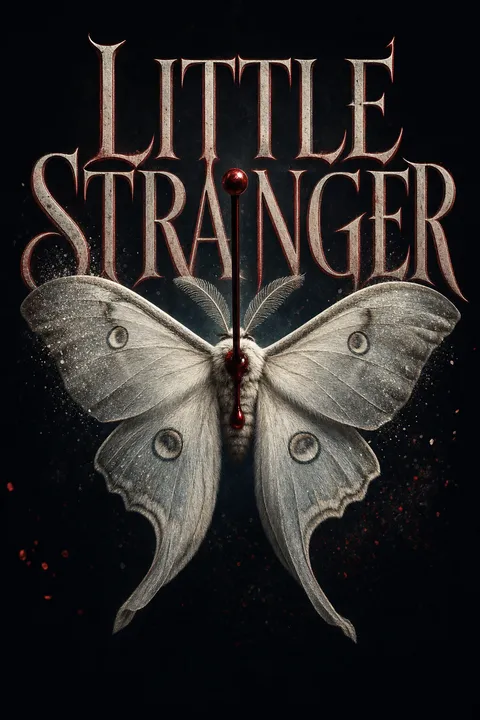


Plot Summary
Mine, He Wrote
Seven-year-old Olivia1 bounces in sparkly pink shoes at the airport, waiting for the brother her adoptive parents have flown in from overseas. The boy2 who arrives carries a plastic bag instead of a suitcase, has wild black curls, and communicates only through sign language — a language Olivia1 doesn't yet understand.
He drags her to a bathroom before their parents can react, pressing his palm to his own chest and pointing at her with an intensity that frightens her. Their father, Jamieson Vize,4 a criminal defense attorney, threatens to send the boy back if he misbehaves again. In the car, the boy stares at Olivia1 the entire drive. That night, sharing a bedroom, she hands him crayons. He writes one word: Mine.
Skull Against the Wall
By sixteen, their closeness has become a problem. After Malachi2 kissed Olivia1 during a board game, their mother Jennifer3 — a judge — relocated him to the opposite end of the manor. She privately reveals his ASPD diagnosis and begins arranging marriage dates with wealthy young men: first Adam,7 then Parker,5 heir to their father's4 business partner. Olivia1 is furious but powerless.
When she merely talks to Adam7 at a gas station, Malachi2 storms in and slams his head into the wall three times, blood splattering the tile. Adam7 doesn't press charges — on one condition: Olivia1 must go to dinner with him. Their mother3 happily adds another name to the rotation. Malachi2 signs to Olivia1 that he will kill anyone who touches her. She believes him.
The Tent's Dangerous Game
On a family camping trip, Malachi2 asks to see Olivia's1 body — promising not to touch. She invents rules: honest answers earn her removing clothes, dishonest ones cost him his. The game accelerates past any boundary she planned. She ends up naked while he kneels inches away, pupils swallowing the blue of his eyes.
When she pleasures herself under his gaze, he asks to taste her; she presses glistening fingers to his lips and he sucks them clean. He lunges for a kiss — she blocks his mouth with her palm. Furious, he grabs her throat when she turns off the torch, not realizing she's just hung up on a mute person mid-sentence by killing the light he needs to sign. They sleep inches apart in silence. He punishes her with weeks of cold nothing.
Teach Me How to Kiss
After those silent weeks and a date he says ended immediately, Malachi2 climbs back through Olivia's1 window. He claims he's never kissed anyone. He asks her to teach him how. She agrees under a pinky promise of secrecy, telling herself it's a favor for her socially stunted brother. Their first real kiss stops time — she shows him gentle, then deeper, then places his hand on her throat because she likes to be choked.
He slams her onto her back and devours her with zero hesitation. Over the following months, the lessons escalate into oral encounters in showers, fingering in closets, grinding in garages — all maintained under the fragile fiction that she's preparing him for future partners. Their mother3 plays music one wall away, oblivious.
Five Grand and a Bat
Jennifer3 secretly paid Parker5 five thousand dollars to take Olivia's1 virginity as proof of her commitment to the marriage arrangement. Parker,5 entitled and coked-up, invites Olivia1 to a basement gathering and offers her to his ten friends, backhanding her when she resists.
Olivia1 texts Malachi2 her location. He arrives with five masked friends carrying bats and dismantles the room — breaking Parker's5 legs, shoving a bat handle down another man's throat. Back at the manor, the truth about the payment erupts.
Their father4 is livid at Jennifer.3 For the first time in his life, Malachi2 signs to Jamieson4 calling him Dad, and the man's rage softens into something closer to stunned gratitude. The Parker5 arrangement dissolves. Jennifer3 pivots to Adam7 as Olivia's1 future husband.
The Locker Room Lie
In the cheer locker room, Olivia1 overhears teammates discussing Anna8 — a fellow cheerleader — bragging about sleeping with Malachi.2 They speculate about whether the mute guy2 moans, whether his rumored piercings are real, whether Anna's8 still seeing him. The foundation of everything Olivia1 believed collapses: he told her he'd never been intimate, that she was teaching a virgin.
She storms to the parking lot, calls him, and sobs that he's a manipulative freak who tricked his own sister into sexual acts. She tells him she hates him and that he'll never touch her again. On the other end, Malachi2 breathes heavily but cannot force a word past his lips. He texts asking where she is. She tells him to go to hell and hangs up.
Down Every Single Step
Malachi2 waits in Olivia's1 dark room. She slaps him, hurls a perfume bottle, and grabs his signing hands — physically silencing his only voice. His mouth shapes syllables, trying to say her name aloud. Nothing coherent comes. Their violent confrontation twists into raw passion on the hallway floor. Their father4 finds them at the top of the grand staircase and tries to wrench Malachi2 away.
He spits in his face, beats him with bare fists, then kicks him down every step. With Jamieson4 bleeding and unconscious at the bottom, Malachi2 has sex with Olivia1 over their father's prone body. She calls emergency services and tells her brother to run. He's arrested. She testifies against him in court. The sentence: eight years for attempted murder.
The Phantom Across the Street
Eight years pass. Released from prison for six months, Malachi2 has been renting the apartment directly across from Olivia's.1 Hidden cameras blanket her home. He drugs her wine nightly, bathes her unconscious body, washes her strawberry-scented hair, tidies her apartment, and reads the private journal where she confesses her darkest fantasies — including ones about him.
She wakes sore and confused, finding mysterious chocolates, displaced objects, and missing apples she can't explain. Olivia1 now works as her mother's3 legal assistant, and Jennifer3 has arranged yet another marriage — this time to a businessman's son named Xander.10
When Olivia1 approaches a helmeted biker parked outside her building and hands over her number, he offers one word: Kai. She's never heard Malachi's2 voice. She invites this stranger to a Halloween festival.
Run, Little Stranger
At the festival, a figure in a gas mask pins Olivia1 between rusted tractors, presses a screwdriver to her pulse, and whispers the name Kai. He tips his head toward the cornfield: run. She kicks off her heels and sprints barefoot through the stalks. He counts to twenty, then gives chase.
What follows in the dirt is brutal — the screwdriver turned instrument of pain and pleasure, terror knotted with arousal she can't suppress. He chloroforms her. She wakes chained in a farmhouse basement: shackled wrists, collar at her throat, spreader bar forcing her legs apart.
Over days of captivity, he burns his initials into her skin with cigarettes and lets his tarantula crawl across her face. She swears her brother2 will come for him. He snaps the locket from her neck, studies the childhood photo inside, and asks if she loves the boy in it.
Four Syllables on His Knees
During sex, Olivia1 stares through the balaclava's eye holes and whispers his real name. She peels the mask away and sees Malachi's2 face — eight years older, black hair falling wild, jaw shadowed with stubble. She traces every feature with trembling fingers. Then she kisses him.
He tells her Anna8 lied; Olivia1 was his first and only. She believes him. But afterward, she says she doesn't love him, insists his diagnosis means he can't love her properly, and reminds him she's contractually bound to marry Xander.10
He plays back her own voicemails — drunken recordings where she sobbed that she loved him and begged him to come find her. She still refuses. Malachi2 drops to his knees and speaks her name clearly for the first time in his life — all four syllables, unbroken. She squeezes past him and walks out.
Epilogue
In the two weeks since Olivia1 walked away, Malachi2 vanished — cameras removed, phone disconnected, a note confessing to the spiked wine left on her counter. Now she walks down the aisle toward Xander,10 a stranger in a suit, wearing a dress she hates. She stops midway.
She tells her father4 she loves Malachi.2 Jennifer3 nods. Jamieson,4 gripping his walking stick, kisses her cheek and tells her to be happy. Olivia1 drops the bouquet, tears off her veil, and runs barefoot from the church. A cab delivers her to the farmhouse.
Malachi2 stands shirtless at the gate, frozen in disbelief. She launches into his arms and pours out everything she couldn't say before — that she chose him, that she wants a life only with him. He speaks her name clearly, tells her he loves her, then grins toward the tree line.
Analysis
Little Stranger operates as a case study in what happens when two people shaped by identical traumas develop radically different survival architectures — and then become the only person who can reach inside the other's. Olivia,1 rescued from starvation and the death of her infant brother, learns to perform compliance: she smiles, agrees to dates, keeps the family peace. Malachi,2 arriving mute and already flagged as dangerous, learns to assert control: he watches, he owns, he strikes. Their attraction isn't incidental to their damage — it's produced by it. They are the only two people in their world who understand what it means to be acquired rather than born into love.
The novel's most provocative structural move is its POV shift. Part One, told through Olivia's1 perspective, frames the relationship as a slow-burn forbidden romance with genuine mutual discovery. Part Two, switching to Malachi's2 internal monologue, retroactively recontextualizes everything: the lessons he requested may have been manipulation; his nightly visits involve drugging and assault; his devotion is clinically indistinguishable from pathological control. The reader must hold both truths simultaneously — he loves her and he's dangerous, she wants him and she should flee — without the comfort of moral resolution.
Rivers also interrogates the institution of family itself. The Vize parents,3 ostensibly rescuers, sell their daughter's virginity, weaponize marriage as social currency, and physically abuse their son while calling it discipline. Malachi's2 violence is horrifying, yet it exists on a continuum with the family's own transactional brutality. The arranged marriages are not merely outdated traditions — they're another system of ownership dressed in legal agreements rather than chains.
Ultimately, the novel asks whether love defined outside social norms is inherently destructive, or whether the structures designed to prevent it inflict greater harm. It refuses a clean answer. That refusal is the point.
Review Summary
Little Stranger received mixed reviews, with ratings ranging from 1 to 5 stars. Many readers found the book shocking, taboo, and morally questionable due to its portrayal of a foster sibling relationship and explicit sexual content. Some praised the dark romance elements and found it entertaining, while others were disturbed by the graphic scenes and lack of plot. Criticisms included poor writing, underdeveloped characters, and excessive shock value. The book sparked intense reactions, with some readers loving the forbidden aspects and others feeling traumatized.
People Also Read








Characters
Olivia Vize
Sister who can't look awayAdopted into the Vize family after surviving severe neglect and the death of her infant brother, Olivia carries the psychic architecture of early abandonment—a desperate need to be loved warring with an instinct to serve others' expectations. A former cheerleader turned legal assistant, she's bright and social on the surface but harbors dark fantasies she knows spring from somewhere broken. Her attachment to Malachi2 functions as both anchor and abyss: he's the one person who makes her feel chosen rather than acquired. She oscillates between fierce protectiveness of him and genuine terror of what their connection means. Her compliance with arranged marriages masks deep rage at being treated as currency. Olivia's central conflict is whether she'll perform normalcy forever or claim the one thing that feels real.
Malachi Vize
Mute who speaks in possessionSelectively mute since age five, Malachi communicates through sign language and violence—two systems that, in his psychology, serve the same function: asserting existence in a world that tried to erase him. Diagnosed with ASPD at fifteen, he processes attachment through ownership rather than empathy, yet his fixation on Olivia1 transcends clinical labels. He doesn't simply want her; he experiences her absence as suffocation. His refusal to speak isn't merely trauma—it's a fortress against a world that mocked him before Olivia1 learned his language. He's capable of extraordinary tenderness—washing her hair, learning piano—and savage cruelty within the same hour. Malachi doesn't understand his emotions well enough to regulate them, making him simultaneously the most devoted and most dangerous person in Olivia's1 life.
Jennifer Vize
Mother who trades daughtersA judge by profession and controlling maternal figure by instinct, Jennifer genuinely loves both adopted children but responds to Malachi's2 volatility with fear disguised as pragmatism. She orchestrates Olivia's1 arranged marriages and secretly pays for her daughter's virginity to be taken, rationalizing each transaction as protection. Her warmth is real but conditional—she'll sacrifice Olivia's1 autonomy to preserve family status while calling it love.
Jamieson Vize
The heavy-handed patriarchA prominent criminal defense attorney who is physically harsh with Malachi2 while calling Olivia1 his angel. Jamieson embodies institutional masculinity: controlling and status-obsessed, yet capable of genuine emotion when his defenses crack. His complicated relationship with Malachi2 holds both contempt and a buried wish for connection, evidenced by his stunned reaction when Malachi2 finally addresses him as Dad.
Parker
Paid suitor turned predatorThe entitled, cocaine-fueled son of Jamieson's4 business partner, Parker accepted money from Jennifer3 to take Olivia's1 virginity. He views her as purchased property and casually offers her to his friends. His cruelty at a basement party triggers Malachi's2 most justified act of violence and exposes the corruption underlying the Vize family's marriage traditions.
Abigail
Olivia's loyal best friendOlivia's1 purple-haired best friend since age thirteen and fellow cheerleader. She provides normalcy and humor as a grounding counterpoint to the darkness consuming Olivia's1 home life.
Adam
The reluctant gentle suitorOne of Olivia's1 arranged dates, Adam is sweet and nervous. Later revealed to be gay, he went along with the arrangement unwillingly and chose not to press charges after Malachi's2 gas station assault.
Anna
The rumor that breaks themA cheerleading teammate whose alleged sexual relationship with Malachi2 becomes the catalyst for the siblings' catastrophic breakup. The truth behind her claims remains disputed until much later.
Molly
The younger foster sisterA young foster child who joins the Vize family after Malachi's2 imprisonment, rescued from drug-addicted parents in circumstances mirroring Olivia's1 own childhood.
Xander
The contractual groomOlivia's1 arranged fiancé secured through a business deal between families. Arrogant and shallow, he once told Olivia1 to lose weight before they could be intimate.
Plot Devices
Malachi's Selective Mutism
Communication as vulnerabilityMalachi's2 refusal to speak since age five makes sign language his sole means of expression, transforming every conversation into a visual act requiring the other person's eyes. This creates a power dynamic where anyone who looks away, turns off a light, or grabs his hands effectively silences him—a violation Olivia1 commits at the story's most critical moments without fully understanding its cruelty. His mutism functions as both shield and prison, making Olivia1 the only person who consistently listens. The device builds toward its most charged manifestation when Malachi2 practices speaking her four-syllable name in isolation, struggling with pronunciation and stuttering. His rare attempts at vocalization carry the weight of a man dismantling his own fortress brick by brick.
The Lessons Framework
Deniability for forbidden desireWhen Malachi2 claims total sexual inexperience and asks Olivia1 to teach him, the framework provides both siblings with a psychological alibi. Each escalation—from kissing to oral sex to increasingly rough encounters—is framed as instruction rather than incest, allowing Olivia1 to cross boundaries while telling herself she's helping her brother prepare for future partners. The pretense also gives Malachi2 permission to be vulnerable without admitting desire. The entire construct becomes a weapon when Olivia1 discovers rumors suggesting Malachi2 was never inexperienced at all, reframing every lesson as calculated manipulation. Whether the rumors are true or not, the device reveals how desire can disguise itself as generosity—and how fragile that disguise truly is.
Strawberry Shampoo
Sensory thread of obsessionFrom childhood, Malachi2 compulsively smells Olivia's1 strawberry-scented hair—rubbing strands between his fingers, burying his face in it during every encounter. When she once switched brands, he threw out the replacement and restocked her bathroom with the original scent. The shampoo functions as his emotional anchor, a sensory constant in a world he cannot vocally navigate. For Malachi2, who processes experience through observation and physical sensation rather than language, scent becomes his most intimate form of communication. The ritual—sniffing, touching, washing—is simultaneously tender and possessive, revealing a man whose version of love manifests through obsessive attention to one small detail that keeps her recognizable to him.
Hidden Cameras
Control disguised as devotionMalachi2 plants cameras in Olivia's1 bedroom during their teenage years, watching her through screens. She discovers and removes some; he tells her she missed others. The cameras represent his need to possess her existence even—especially—when she hasn't consented to being observed. They enable him to study her private moments: her journal entries, her emotional states, her body. The surveillance system also reflects the broader family dynamic, where everyone monitors and manages Olivia1. In a household where her mother3 arranges her sexual encounters and her father4 controls her future, Malachi's2 cameras are simply the most literal version of a family that treats watching as a form of ownership.
The Tarantula
Weaponized phobia, tenderness invertedMalachi's2 pet tarantula exploits Olivia's1 lifelong arachnophobia, creating a power dynamic unique to their relationship. He uses the spider to frighten her into his arms, engineering physical closeness through terror. The creature functions as an extension of Malachi2 himself—something most people find repulsive and misunderstood, handled with gentle care only by him. Olivia's1 revulsion toward the spider mirrors her conflicted feelings about its owner: instinctive recoil tangled with attraction to the person holding it. The tarantula becomes a recurring instrument for testing her limits, revealing how fear and desire intertwine in their dynamic—and how Malachi2 instinctively understands that making Olivia1 afraid is one way to keep her close.
FAQ
Synopsis & Basic Details
What is Little Stranger about?
- Taboo Romance Explored: Little Stranger is a dark, taboo romance centered on the complex relationship between foster siblings, Olivia and Malachi, exploring themes of forbidden desire, obsession, and the blurred lines between love and control.
- Psychological Depths Explored: The story delves into the psychological complexities of its characters, particularly Malachi's mutism and possessiveness, and Olivia's internal conflict between her desires and societal expectations.
- Journey of Betrayal and Redemption: The narrative follows their tumultuous journey, marked by betrayal, separation, and a twisted reunion, ultimately questioning the nature of their bond and the possibility of redemption.
Why should I read Little Stranger?
- Intense Emotional Journey: Readers seeking an emotionally charged and psychologically intense experience will find Little Stranger compelling, as it explores the darker aspects of love and obsession.
- Unconventional Romance: The book offers an unconventional romance that challenges traditional notions of love and relationships, pushing boundaries and exploring taboo themes.
- Complex Character Dynamics: The intricate dynamics between Olivia and Malachi, as well as the supporting characters, provide a rich and thought-provoking narrative that will keep readers engaged.
What is the background of Little Stranger?
- Contemporary Setting: The story is set in a contemporary time, with no specific historical or geographical context, allowing the focus to remain on the characters and their relationships.
- Cultural Norms Subverted: The narrative subverts traditional cultural norms surrounding family and relationships, exploring the taboo nature of the bond between foster siblings.
- Psychological Focus: The background emphasizes the psychological impact of trauma and abuse on the characters, particularly Malachi's mutism and possessiveness, which are central to the plot.
What are the most memorable quotes in Little Stranger?
- "Mine.": This single word, written by Malachi as a child, foreshadows his possessive nature and the central theme of ownership and control in their relationship.
- "You're mine.": This phrase, repeated by Malachi, encapsulates his obsessive love for Olivia and his belief that she belongs to him, highlighting the dark and possessive nature of their bond.
- "Run, little stranger.": This line, spoken by Malachi during their twisted reunion, encapsulates the dangerous game of fear and desire that defines their relationship, blending attraction and terror.
What writing style, narrative choices, and literary techniques does Leigh Rivers use?
- First-Person Perspective: The story is primarily told from Olivia's perspective, allowing readers to intimately experience her internal conflicts, desires, and emotional turmoil.
- Foreshadowing and Symbolism: Rivers employs subtle foreshadowing and recurring symbols, such as the color black and the recurring motif of spiders, to enhance the story's themes and create a sense of unease.
- Non-Linear Timeline: The narrative uses flashbacks and shifts in time to reveal the characters' past and the evolution of their relationship, adding depth and complexity to the plot.
Hidden Details & Subtle Connections
What are some minor details that add significant meaning?
- Strawberry Scent: Olivia's strawberry-scented hair products become a recurring motif, symbolizing her innocence and purity, which Malachi is both drawn to and wants to corrupt.
- The Piano: The piano, where Malachi first kisses Olivia, represents their shared history and the beginning of their forbidden relationship, later becoming a symbol of their lost innocence.
- The Spider: Malachi's pet tarantula, Spikey, symbolizes his dark and possessive nature, as well as Olivia's fear and fascination with him, reflecting their complex dynamic.
What are some subtle foreshadowing and callbacks?
- Early Possessiveness: Malachi's early possessiveness, such as writing "Mine" and pulling Olivia away from their parents, foreshadows his later obsessive behavior and controlling nature.
- The Kiss at the Piano: The innocent kiss at the piano as children is a callback to their later, more intense and forbidden kisses, highlighting the evolution of their relationship.
- The Hair Sniffing: Malachi's habit of sniffing Olivia's hair, established early on, becomes a recurring motif that signifies his possessive and obsessive nature, and his need to claim her.
What are some unexpected character connections?
- Anna's Role: Anna, initially a minor character, becomes a catalyst for the central conflict, highlighting how seemingly insignificant actions can have major consequences on the main characters.
- The Parents' Complicity: The parents' actions, particularly Jennifer's willingness to arrange Olivia's marriage, reveal a hidden layer of complicity in the societal pressures that contribute to the central conflict.
- Adam and Parker: The two suitors, Adam and Parker, serve as foils to Malachi, highlighting the contrast between his possessive nature and the more conventional expectations of romantic relationships.
Who are the most significant supporting characters?
- Jennifer Vize: As the adoptive mother, Jennifer's actions, though often misguided, significantly impact Olivia and Malachi's lives, highlighting the complexities of parental love and control.
- Abigail: Olivia's best friend, Abigail, provides a sense of normalcy and support, offering a contrast to the intense and often isolating nature of Olivia's relationship with Malachi.
- Jamieson Vize: The adoptive father, Jamieson, represents the strict societal expectations and the controlling forces that shape Olivia and Malachi's lives, adding to the tension and conflict.
Psychological, Emotional, & Relational Analysis
What are some unspoken motivations of the characters?
- Malachi's Need for Control: Malachi's mutism and possessiveness stem from a deep-seated need for control, rooted in his past trauma and a desire to protect Olivia, even if it means isolating her.
- Olivia's Desire for Acceptance: Olivia's willingness to engage in the "lessons" with Malachi stems from a desire for acceptance and connection, as well as a fascination with the darker aspects of her own desires.
- Jennifer's Fear of Loss: Jennifer's actions, such as arranging Olivia's marriage, are driven by a fear of losing control and a desire to protect her family, even if it means sacrificing her children's happiness.
What psychological complexities do the characters exhibit?
- Malachi's ASPD: Malachi's diagnosis of ASPD (Antisocial Personality Disorder) adds a layer of complexity to his character, highlighting his lack of empathy and his tendency towards manipulative and violent behavior.
- Olivia's Internal Conflict: Olivia's internal conflict between her desire for Malachi and her awareness of the taboo nature of their relationship creates a psychological tension that drives her actions.
- Trauma's Impact: Both Olivia and Malachi's past traumas significantly impact their psychological states, shaping their behaviors and their relationships with each other and the world around them.
What are the major emotional turning points?
- The Betrayal: Olivia's betrayal of Malachi, leading to his imprisonment, is a major emotional turning point, shattering their bond and setting the stage for their twisted reunion.
- The Reunion: The reunion between Olivia and Malachi, marked by his kidnapping and her captivity, is a major emotional turning point, forcing them to confront the depths of their desires and obsessions.
- The Confession: Olivia's confession of love for Malachi at her wedding is a major emotional turning point, highlighting her willingness to defy societal expectations and embrace her forbidden desires.
How do relationship dynamics evolve?
- From Siblings to Lovers: The relationship between Olivia and Malachi evolves from a sibling bond to a complex and forbidden love, marked by possessiveness, desire, and a constant push and pull.
- Power Dynamics: The power dynamics between Olivia and Malachi shift throughout the story, with Malachi often exerting control, but Olivia also asserting her agency and desires.
- Parental Influence: The parental influence, particularly Jennifer's attempts to control Olivia's life and Jamieson's strictness, creates tension and conflict, shaping the characters' choices and relationships.
Interpretation & Debate
Which parts of the story remain ambiguous or open-ended?
- Malachi's True Feelings: The extent of Malachi's capacity for love and empathy remains ambiguous, leaving readers to question whether his actions are driven by genuine affection or a need for control.
- Olivia's Future: The ending leaves Olivia's future somewhat open-ended, with readers left to wonder whether her choice to be with Malachi will lead to happiness or further turmoil.
- The Nature of Their Bond: The true nature of Olivia and Malachi's bond remains open to interpretation, with readers left to debate whether their relationship is a genuine love story or a destructive obsession.
What are some debatable, controversial scenes or moments in Little Stranger?
- The "Lessons": The "lessons" between Olivia and Malachi, where they explore their forbidden desires, are controversial, raising questions about consent, manipulation, and the blurring of boundaries.
- Malachi's Violence: Malachi's violent actions, particularly his attack on Adam and his treatment of Olivia, are highly debatable, challenging readers to reconcile his brutality with his capacity for love.
- The Ending: The ending, where Olivia chooses to be with Malachi despite his past actions, is controversial, raising questions about the nature of love, forgiveness, and the acceptance of morally gray characters.
Little Stranger Ending Explained: How It Ends & What It Means
- Olivia's Choice: The ending sees Olivia choosing to be with Malachi, despite his past actions and the societal disapproval, highlighting her willingness to embrace her forbidden desires and defy expectations.
- Rejection of Societal Norms: The ending rejects traditional notions of love and relationships, suggesting that true love can exist outside the boundaries of societal norms and expectations.
- Ambiguous Future: The ending leaves the future of Olivia and Malachi's relationship ambiguous, with readers left to wonder whether their love will lead to happiness or further turmoil, emphasizing the complex and unpredictable nature of their bond.
The Web of Silence Duet Series


About the Author
Other books by Leigh Rivers


Download PDF
Download EPUB
.epub digital book format is ideal for reading ebooks on phones, tablets, and e-readers.








































