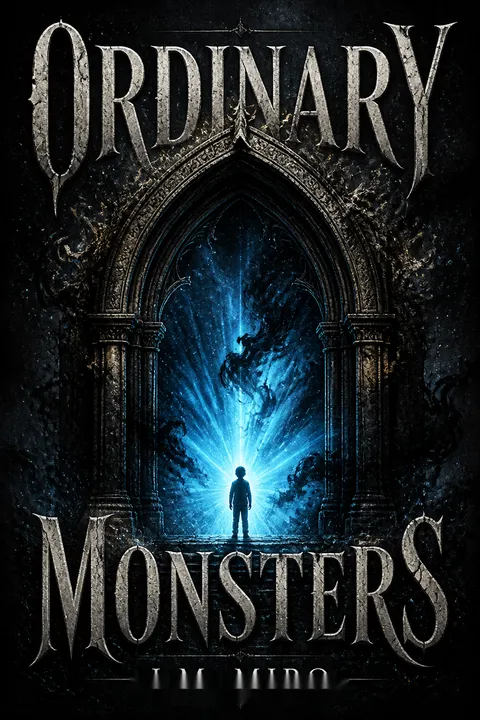
Plot Summary
Lost and Foundlings
In the rain-soaked English countryside, Eliza Grey flees a life of abuse and violence, stumbling upon a glowing, orphaned baby in a boxcar. Naming him Marlowe, she claims him as her own, forging a fierce, protective bond. Their journey through Victorian England is one of survival, hiding from those who would punish Eliza for her past and those who seek the extraordinary child. The world is harsh, but Eliza's love for Marlowe is unwavering, even as she fears the strange blue light that sometimes emanates from his skin. Their story is one of resilience, the desperate hope for safety, and the first flickers of the supernatural in a world that punishes difference.
Gifts in the Shadows
Across the Atlantic, Charlie Ovid endures brutal imprisonment in Mississippi, his miraculous ability to heal from any wound making him both a spectacle and a threat. Rescued by Alice Quicke and Frank Coulton, agents of the mysterious Cairndale Institute, Charlie is swept into a world where children with strange talents are sought, studied, and sometimes feared. The Institute's reach is global, its motives ambiguous, and its methods sometimes ruthless. As Charlie and other gifted children are gathered, the line between salvation and exploitation blurs, and the children's powers—healing, shining, invisibility, and more—become both their shield and their curse.
The Gathering of Talents
Marlowe grows under the care of Brynt, a tattooed giantess, and the reverend, finding a home among society's outcasts. But safety is fleeting. Alice Quicke, a tough, haunted detective, is hired to find Marlowe, now performing in a traveling circus. The search for these "talents" is relentless, driven by the Cairndale Institute's enigmatic Dr. Berghast and his London proxy, Mrs. Harrogate. Each child is marked by trauma and difference, their gifts both wondrous and dangerous. The Institute's agents, and darker forces, close in, and the children's fates become entwined with secrets stretching back generations.
The Institute's Secrets
At Cairndale, a remote Scottish manor, the children are promised sanctuary and education. But the Institute is a place of secrets, built atop the orsine—a gateway between the living and the dead. Dr. Berghast's obsession with the drughr, a monstrous entity from the other side, drives his experiments and his recruitment of talents. The children, including Charlie, Marlowe, Komako, Ribs, and Oskar, form fragile bonds as they navigate lessons, rivalries, and the ever-present threat of being used as tools in Berghast's war against the darkness. The manor's walls hold memories of past tragedies, and the children sense that their safety is an illusion.
Monsters Among Us
The world outside Cairndale is no safer. Jacob Marber, a former agent turned monster, stalks the children, driven by grief and corrupted by the drughr. His companion, Walter, is transformed into a litch—a living corpse, both pitiable and terrifying. The Institute's enemies are not only external; betrayal and violence lurk within. The children witness the cost of difference: exploitation, fear, and the ever-present threat of being consumed—literally and figuratively—by those who would use their gifts for their own ends. The line between protector and predator blurs, and the children must decide whom to trust.
The Litch Awakens
Walter's transformation into a litch marks a turning point. No longer fully human, he becomes a tool for Jacob Marber and the drughr, his hunger and violence barely contained. The litch's rampage through London's underbelly leaves a trail of horror, and his presence at Cairndale signals the collapse of the Institute's fragile defenses. The children, once students, become prey. The litch's existence is a warning: the Institute's attempts to control the supernatural have unleashed forces beyond their understanding, and the children's gifts may not be enough to save them.
Pursued Across Continents
The children's journey is one of constant flight—across England, America, and back again. Alice Quicke and Coulton risk everything to shepherd the children to safety, but the forces arrayed against them are relentless. Marber and the drughr pursue them, driven by ancient hungers and personal vendettas. The children's powers are both weapon and liability, drawing attention and danger. Along the way, they encounter allies and enemies, each with their own motives. The cost of survival is high, and the children are forced to confront the darkness within themselves as well as without.
The Shining Boy's Truth
Marlowe's true nature is revealed: born in the land of the dead, the child of the drughr, he is both a miracle and a threat. His shining is not merely a gift but a beacon, drawing the attention of those who would use or destroy him. The revelation shatters the fragile sense of belonging he has found, and he is forced to confront the possibility that he is a monster. Yet, in the face of betrayal and violence, Marlowe chooses compassion and sacrifice, determined to protect his friends and close the orsine, even at the cost of his own freedom.
The Spider's Web
The children, led by Komako and Ribs, uncover the Institute's darkest secrets: the glyphic, or Spider, whose dreaming maintains the barrier between worlds, is dying. The Institute's experiments on children, the disappearances, and the creation of glyph-twisted exiles are revealed. The children's rebellion is born of necessity and courage—they must act to save themselves and the world. Guided by visions and desperate hope, they seek to seal the orsine, even as the adults around them falter and betray. The children's agency, forged in trauma, becomes the story's moral center.
The Drughr's Return
The drughr, a being of pure hunger and malice, returns to the world of the living, drawn by Marlowe's power and Berghast's obsession. Jacob Marber, now more monster than man, is both servant and victim of the drughr. The Institute's defenses collapse, and the children and their allies are forced into a final confrontation with the darkness. The battle is both physical and metaphysical, a struggle for the soul of the world. Sacrifice, betrayal, and unexpected heroism shape the outcome, and the cost is measured in blood and loss.
The Orsine Opens
With the glyphic's death, the orsine tears open. The dead pour through, and the world is threatened with annihilation. The children's only hope is to seal the gateway, but doing so requires unimaginable sacrifice. Marlowe, guided by the spirit of Brynt, chooses to descend into the orsine, using his unique power to close the breach. The living and the dead, the monstrous and the miraculous, are bound together in a moment of transformation. The world is remade, but not without loss.
Betrayals and Sacrifices
In the chaos, old alliances are shattered and new ones forged. Berghast's true motives are revealed—he seeks not only to destroy the drughr but to absorb its power, becoming something new and terrible. Mrs. Harrogate, Alice, and the children must choose between vengeance and mercy, between survival and hope. Sacrifices are made—some willing, some not. The children's courage and compassion become the story's last defense against despair. In the end, it is not power but love and loyalty that shape the world's fate.
The Burning of Cairndale
Cairndale burns. The Institute, once a sanctuary, is reduced to ruins. The children and their allies flee, pursued by monsters and haunted by loss. The survivors—Charlie, Alice, Komako, Ribs, Oskar, and others—gather in the aftermath, changed by what they have seen and done. The world is not saved, not entirely, but the worst has been averted. The cost is high: friends lost, innocence shattered, the future uncertain. Yet in the ashes, the possibility of healing and new beginnings remains.
Into the Land of the Dead
Charlie, now stripped of his healing power, and the others mourn Marlowe, lost in the land of the dead. Yet hope persists. The children, once victims, are now agents of their own fate. They resolve to find a way to reach Marlowe, to bridge the worlds once more. The story ends not with triumph but with determination—a promise that the struggle against darkness, both within and without, will continue. The land of the dead is all around, but so too is the possibility of redemption.
The Last Door Closes
The survivors gather in London, haunted by memory and loss. The Institute is gone, but the children's bonds endure. They are changed—older, sadder, but not defeated. The world is still full of monsters, but also of ordinary miracles: friendship, courage, the refusal to give up hope. The last door closes, but others may yet open. The story ends with a question, not an answer—a challenge to the reader to imagine what comes next.
What Remains
In the quiet after the storm, the children and their guardians reckon with what has been lost and what might still be saved. The world is scarred, but not destroyed. The children's journey is not over; the search for Marlowe, for healing, for a place to belong, continues. Ordinary monsters, they are both more and less than the world believes. In the end, what remains is not power, but love—the only force strong enough to shape the future.
Analysis
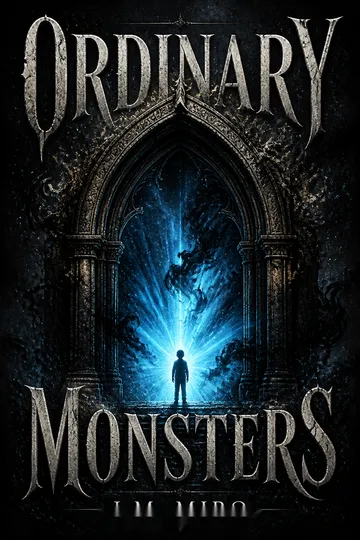
Ordinary Monsters is a sweeping, gothic fantasy that interrogates the boundaries between life and death, power and vulnerability, and the meaning of monstrosity
At its heart, the novel is about children who are different—marked by trauma, gifted with powers that set them apart—and the adults who would save, use, or destroy them. The Cairndale Institute, with its promises of sanctuary and its hidden cruelties, is a microcosm of institutional power: well-intentioned but ultimately complicit in the very violence it claims to oppose. The story's monsters—litches, drughr, and even the corrupted Berghast—are not simply external threats but reflections of the characters' own pain, grief, and longing for connection. The children's journey is one of survival, agency, and the forging of chosen family in a world that fears and exploits difference. The novel's greatest lesson is that power, whether supernatural or mundane, is never enough; it is love, loyalty, and the willingness to sacrifice for others that offer the only hope of redemption. In the end, Ordinary Monsters is a story about the cost of being extraordinary in an ordinary world—and the courage it takes to choose compassion over fear.
Review Summary
Ordinary Monsters receives mixed reviews with an average 3.78/5 rating. Readers praise its atmospheric Victorian gothic setting, complex characters, and unique magic system about children with supernatural "talents" attending Cairndale Institute. Many appreciate the emotional depth and memorable scenes, noting the book stays with them long after finishing. However, critics cite significant issues: excessive length (672 pages), slow pacing, sprawling cast, and confusing plot elements. Some find it derivative of X-Men and similar works, while others struggle with the 24+ hour audiobook. Despite flaws, fans value its world-building and found-family themes, eagerly anticipating the trilogy's continuation.
People Also Read
Characters
Marlowe
Marlowe is the heart of the story—a boy found glowing in a boxcar, raised by Eliza and later Brynt, and pursued for his miraculous ability to heal and shine with blue light. His origins are extraordinary: born in the land of the dead, the child of the drughr, he is both miracle and threat. Marlowe's journey is one of longing for belonging, haunted by the fear that he is a monster. His relationships—with Eliza, Brynt, Charlie, and Alice—are marked by love, loss, and sacrifice. Marlowe's greatest act is his selfless choice to seal the orsine, saving the world at the cost of his own freedom. His arc is one of innocence, suffering, and the hope that even the most "monstrous" can choose compassion.
Charlie Ovid
Charlie is a Black teenager with the power to heal from any wound, a gift that makes him both invulnerable and isolated. Orphaned, abused, and imprisoned, he is rescued by Alice and Coulton and brought to Cairndale. Charlie's journey is one of self-discovery, friendship, and loss. He forms deep bonds with Marlowe and the other children, but is haunted by guilt and the fear of abandonment. His healing power is both a blessing and a curse, and its loss at the story's end forces him to confront his own vulnerability. Charlie's arc is one of resilience, loyalty, and the search for family in a world that fears difference.
Alice Quicke
Alice is a world-weary, fiercely independent detective, scarred by a traumatic childhood and her mother's religious mania. Hired to find Marlowe, she becomes the children's protector, risking everything to shepherd them to safety. Alice is skeptical, pragmatic, and slow to trust, but her loyalty is unwavering. Her relationship with Marlowe and Charlie softens her, revealing a capacity for love and sacrifice. Alice's arc is one of redemption—she confronts her own darkness, faces monsters both literal and figurative, and chooses to fight for those who cannot fight for themselves.
Brynt
Brynt is a tattooed giantess, an outcast who becomes Marlowe's protector and surrogate mother. Her strength is both physical and emotional; she is haunted by dreams and by the knowledge that she cannot shield Marlowe from the world's cruelty. Brynt's love is fierce, her loyalty absolute. She sacrifices herself to save Marlowe and the others, her spirit guiding Marlowe in his final act. Brynt embodies the story's theme that family is chosen, not given, and that love can be an act of defiance.
Dr. Henry Berghast
Berghast is the enigmatic head of Cairndale, a man driven by the desire to control the supernatural and defeat the drughr. His motives are complex: part savior, part exploiter, he is both protector and threat to the children. Berghast's obsession blinds him to the cost of his actions, leading to betrayal, violence, and ultimately his own destruction. He is a study in the dangers of unchecked ambition and the moral ambiguity of those who would do evil for the sake of good.
Jacob Marber
Once a talent-finder for Cairndale, Jacob is consumed by grief and corrupted by the drughr. His powers over dust make him formidable, but it is his emotional wounds that drive him to monstrosity. Jacob is both villain and tragic figure, his actions shaped by loss and manipulation. His relationship with Marlowe is fraught—he seeks to save the boy, but is ultimately an instrument of destruction. Jacob's arc is a warning about the cost of unchecked pain and the seduction of power.
Mrs. Margaret Harrogate
Mrs. Harrogate is Berghast's London proxy, a woman of intelligence, ruthlessness, and hidden compassion. She manages the Institute's affairs, recruits talents, and navigates the moral gray areas of her work. Harrogate is both complicit in and critical of Berghast's actions. Her relationship with Alice is one of mutual respect and challenge. Harrogate's arc is one of reckoning—she confronts the consequences of her choices and ultimately sacrifices herself in the battle against Berghast and the drughr.
Komako Onoe
Komako is a Japanese girl with the power to manipulate dust, haunted by the loss of her sister and her own exile. She is intelligent, cautious, and fiercely protective of her friends. Komako's journey is one of agency—she uncovers the Institute's secrets, leads the children's rebellion, and refuses to be a victim. Her relationship with Charlie is marked by mutual respect and the possibility of healing. Komako embodies the story's theme of resilience in the face of trauma.
Eleanor "Ribs" Ribbon
Ribs is a streetwise, irreverent girl with the power to become invisible. Her humor masks deep wounds, and her loyalty to her friends is absolute. Ribs is both comic relief and moral compass, challenging authority and refusing to accept the world's cruelty. Her arc is one of belonging—she finds family among the other talents and proves that even the most overlooked can be heroes.
Oskar Czekowisz
Oskar is a shy Polish boy with the power to animate flesh, creating the loyal giant Lymenion. He is sensitive, fearful, and desperate for connection. Oskar's journey is one of courage—he faces his fears, stands by his friends, and uses his power to protect rather than harm. His relationship with Lymenion is a metaphor for the story's central question: what makes a monster, and what makes a person?
Eliza Grey
Eliza is the young woman who finds and raises Marlowe in his earliest years, fleeing her own traumatic past while protecting the glowing child. Her love for Marlowe is fierce and unwavering, even as she fears the supernatural forces that surround him. Eliza's journey is one of survival and maternal devotion, establishing the found family theme that echoes throughout the story.
Plot Devices
Dual Worlds and the Orsine
The orsine—a gateway between the world of the living and the land of the dead—is the story's central plot device. It is both literal and symbolic, representing the thin veil between life and death, the known and the unknown, the monstrous and the ordinary. The orsine's opening and closing drive the narrative's major conflicts, shaping the fates of the children and the adults who seek to control them. The duality of worlds is mirrored in the characters' internal struggles: belonging and exile, power and vulnerability, love and fear.
Talents as Metaphor
The children's supernatural abilities—healing, shining, invisibility, dustwork, flesh animation—are both plot devices and metaphors for difference, trauma, and resilience. Their powers set them apart, making them targets for exploitation and violence, but also sources of hope and agency. The Institute's attempts to control and "study" these talents reflect broader themes of othering, institutional abuse, and the dangers of unchecked authority.
The Drughr and the Litch
The drughr, an ancient evil from the land of the dead, and the litch, a deathless, corrupted being, are both literal monsters and symbols of the story's psychological darkness. They embody the consequences of grief, loss, and the refusal to let go. Their presence drives the plot's horror elements, but also forces the characters to confront their own capacity for monstrosity and mercy.
Found Family and Sacrifice
The children's relationships—with each other and with their adult protectors—are the story's emotional core. The theme of found family recurs throughout, challenging the idea that blood or origin determines belonging. Sacrifice—willing and unwilling—is a recurring plot device, shaping the story's climaxes and resolutions. The children's willingness to risk everything for each other is both their greatest strength and their greatest vulnerability.
Narrative Structure and Foreshadowing
The novel's structure—shifting between past and present, multiple points of view, and interludes from the land of the dead—creates a sense of inevitability and mounting tension. Foreshadowing is used to build dread: dreams, visions, and the glyphic's warnings hint at coming catastrophe. The story's nonlinear revelations mirror the characters' own journeys toward understanding and agency.
The Talents Trilogy Series
Download PDF
Download EPUB
.epub digital book format is ideal for reading ebooks on phones, tablets, and e-readers.








































